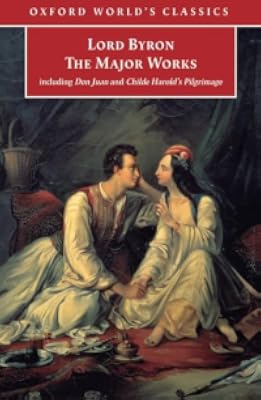
Lord Byron: The Major Works (Oxford World's Classics)
by Lord Byron
On This Page
Description
This volume brings together a collection of Byron's poetry and prose, including poems, letters, journals, and transcripts of conversations, and gives the reader an insight into his work and thinking.Tags
Recommendations


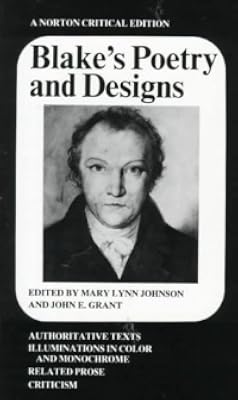
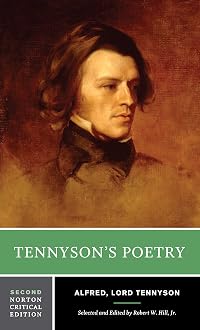
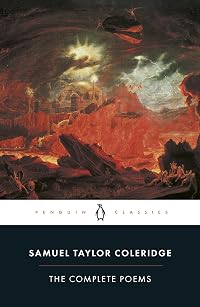
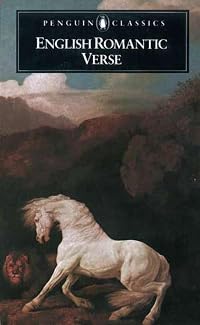
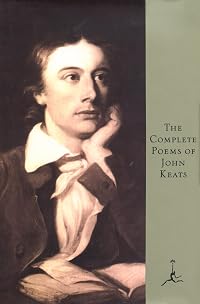
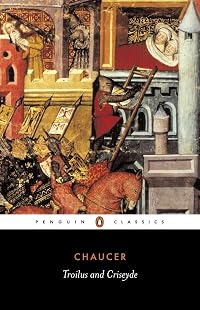
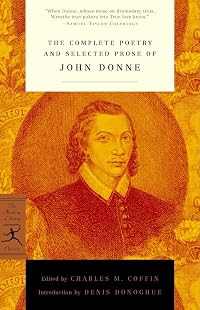


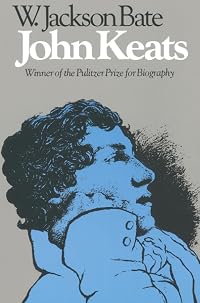

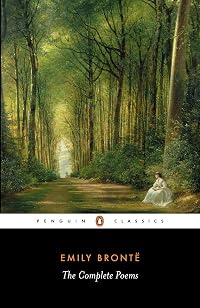

Member Recommendations

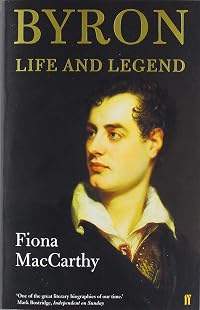
anonymous user Older (1881), extensive and thematically organised selection of short poems and extracts from longer ones. Fascinating introductory essay by Matthew Arnold which puts to shame modern Byronic scholars as far as charm, liveliness and insight are concerned. Available online.
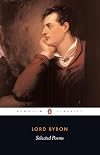
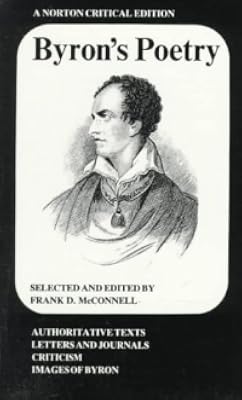
anonymous user If you're willing to sacrifice Don Juan, this is the most comprehensive one-volume selection of Byron's poetry. Contains the complete Childe Harold, English Bards and Scotch Reviewers, The Vision of Judgment, Manfred, all tales, stories and fables (The Giaour, The Bride of Abydos, Lara, The Corsair, Beppo, Mazeppa and The Prisoner of Chillon), even such rarities like The Waltz, The Blues, The Siege of Corinth and Sardanapalus, and a good deal of shorter poems. The notes aren't terribly extensive, but the book is only 830 pages long.
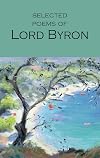
anonymous user The Wordsworth edition is a briefer and cheaper introduction to Lord Byron. It's not up there with the Oxford and Penguin editions, but for its price it's quite nice. It contains the full texts of The Corsair and English Bards and Scotch Reviewers, from both of which Jerome McGann offers only excerpts.
Member Reviews
Byron has been my favorite Romantic poet--as he was during the Romantic period--since I have been able to read with ease (say, since grad school).
His "English Bard and Scotch Reviewers" sets the standard for English Satire since Jonson and Dryden. It is very funny at the expense of an intellectual elite much less doubtful than ours today. We need another Byron.
His "Don Juan" is without equal in English literature; maybe Ariosto's similar in Italian, though I think Byron more witty.Recounting his high school (Brit, "college") he diminishes his achievement,
"For there one learns--'tis not for me to boast,
Though I acquired-- but I pass over that,
As well as all the Greek I since have lost,
I always say there's the place--but 'Verbum show more sat'..."
He ends the First Canto with his parody 18C "address to the reader":
"But for the present, gentle reader! and
Still gentler purchaser! the bard-- that's I
Must, with permission, shake you by the hand...
'Go, little book, from this my solitude!
I cast thee on the waters--go thy ways!
And if, as I believe, thy vein be good,
The world will find thee after many days.'
When Southey's read, and Wordsworth understood,
I can't help putting in my claim to praise--
The first four rhymes are Southey's, every line:
For God's sake, reader! take them not for mine!"
His Canto II takes Juan (rhymes with "new one") on maritime adventure, where his ship is dismasted, on its side. The Longboat is readied for a twenty people, out of 300 aboard.
"...while this
Was going on, some people were unquiet,
That passengers would find it much amiss
To lose their lives, as well as spoil their diet."
Next stanza begins, "There's nought, no doubt, so much the spirit calms
As rum and true religion..."(II. 34).
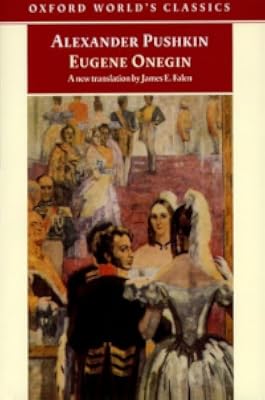
Byron's, and his Don Juan's, main literary legacy is the greatest of all Russian poems, Евгений Онегин. I have read perhaps one-fourth of Pushkin's great work in Russian, and it has struck me as a cross between Byron and Wordsworth.
Since I have spent many hours translating Latin and Renaissance Latin, I admire Byron's exact critiques of classical poets like the epigrammatic satirist Martial--"the nauseous epigram of Martial" according to Don Juan's/ Byron's mother.
I could add much, but it gets late/early. show less
His "English Bard and Scotch Reviewers" sets the standard for English Satire since Jonson and Dryden. It is very funny at the expense of an intellectual elite much less doubtful than ours today. We need another Byron.
His "Don Juan" is without equal in English literature; maybe Ariosto's similar in Italian, though I think Byron more witty.Recounting his high school (Brit, "college") he diminishes his achievement,
"For there one learns--'tis not for me to boast,
Though I acquired-- but I pass over that,
As well as all the Greek I since have lost,
I always say there's the place--but 'Verbum show more sat'..."
He ends the First Canto with his parody 18C "address to the reader":
"But for the present, gentle reader! and
Still gentler purchaser! the bard-- that's I
Must, with permission, shake you by the hand...
'Go, little book, from this my solitude!
I cast thee on the waters--go thy ways!
And if, as I believe, thy vein be good,
The world will find thee after many days.'
When Southey's read, and Wordsworth understood,
I can't help putting in my claim to praise--
The first four rhymes are Southey's, every line:
For God's sake, reader! take them not for mine!"
His Canto II takes Juan (rhymes with "new one") on maritime adventure, where his ship is dismasted, on its side. The Longboat is readied for a twenty people, out of 300 aboard.
"...while this
Was going on, some people were unquiet,
That passengers would find it much amiss
To lose their lives, as well as spoil their diet."
Next stanza begins, "There's nought, no doubt, so much the spirit calms
As rum and true religion..."(II. 34).
Byron's, and his Don Juan's, main literary legacy is the greatest of all Russian poems, Евгений Онегин. I have read perhaps one-fourth of Pushkin's great work in Russian, and it has struck me as a cross between Byron and Wordsworth.
Since I have spent many hours translating Latin and Renaissance Latin, I admire Byron's exact critiques of classical poets like the epigrammatic satirist Martial--"the nauseous epigram of Martial" according to Don Juan's/ Byron's mother.
I could add much, but it gets late/early. show less
All passion, intensity and fire, Byron cuts a swathe through the Regency era's lights, literature and ladies. He does so in a style that is the most beautiful and high prose you will ever read; magnificent curving arcs of words that could have come straight from the proud mouth of an archangel (or Lucifer himself). Of course, he occasionally descends into petty back-stabbing, misogyny and generally seems to be a bit of a spoilt child with too much time on his hands, but you can forgive him that just for Childe Harold's Pilgrimage alone.
This book claims to contain most of Lord Byron's major works and it certainly is a full volume, weighing in at over 1000 pages in paperback format. The larger works include the above-mentioned Pilgrimage show more and Don Juan. These take up at least 700 pages themselves. The remaining space is occupied by Manfred - a rather Nietzschean work about a magician; the Giaour - a tale of unrepentant love and loss; Mazeppa - a story of a man whose fortunes fall and rise dramatically; Beppo - a Venetian affaire de cour; Cain - an intense retelling of the biblical tale with Manichean overtones, and assorted shorter poems. There are also fifty pages of assorted correspondence with various individuals. The book comes equipped with a very short introduction (for a book of 1000 pages), a chronology of Byron's life, an index and end notes. There is very little in the way of explanation of why pieces are included and the end notes are mostly helpful but often explain the obvious while leaving the obscure, obscure. If you like books that contain no analysis, this is for you, but if you want things explained you will do better with something else.
Personally, I preferred the intensity and vision of Childe Harold, Cain and the Giaour to the more sarcastic and occasionally contrived style of Don Juan. Byron is at his best describing beauty - be it nature, art or woman. And much, if not all, of what he writes about is related to the fairer sex. You should write what you know about, they say, and Byron certainly knew women - in both the intellectual and biblical sense. His love affairs raged across all of Europe and brought him condemnation from his peers - particularly his dalliance with his half-sister. His books are full of the worship of the beauty of women and he objectifies them in a way that is entirely politically incorrect in our day and age and likely was then as well. If you can get past the fact that he seems like a teenage boy in rut most of the time, his descriptive powers, characterization, wit, sheer beauty and nobility of expression are sure to please. show less
This book claims to contain most of Lord Byron's major works and it certainly is a full volume, weighing in at over 1000 pages in paperback format. The larger works include the above-mentioned Pilgrimage show more and Don Juan. These take up at least 700 pages themselves. The remaining space is occupied by Manfred - a rather Nietzschean work about a magician; the Giaour - a tale of unrepentant love and loss; Mazeppa - a story of a man whose fortunes fall and rise dramatically; Beppo - a Venetian affaire de cour; Cain - an intense retelling of the biblical tale with Manichean overtones, and assorted shorter poems. There are also fifty pages of assorted correspondence with various individuals. The book comes equipped with a very short introduction (for a book of 1000 pages), a chronology of Byron's life, an index and end notes. There is very little in the way of explanation of why pieces are included and the end notes are mostly helpful but often explain the obvious while leaving the obscure, obscure. If you like books that contain no analysis, this is for you, but if you want things explained you will do better with something else.
Personally, I preferred the intensity and vision of Childe Harold, Cain and the Giaour to the more sarcastic and occasionally contrived style of Don Juan. Byron is at his best describing beauty - be it nature, art or woman. And much, if not all, of what he writes about is related to the fairer sex. You should write what you know about, they say, and Byron certainly knew women - in both the intellectual and biblical sense. His love affairs raged across all of Europe and brought him condemnation from his peers - particularly his dalliance with his half-sister. His books are full of the worship of the beauty of women and he objectifies them in a way that is entirely politically incorrect in our day and age and likely was then as well. If you can get past the fact that he seems like a teenage boy in rut most of the time, his descriptive powers, characterization, wit, sheer beauty and nobility of expression are sure to please. show less
I have a friend who says she ranks Lord Byron above all the English Romantic poets--even above Keats. I can't agree, even though reading through this I understand why she would. She thinks Keats sometimes overwrought. I don't agree really. What can I say, he sings to me. The only poem of Keats I don't like is Edymion, his one epic poem, and one even Keats admitted was problematic. Even that has lines to relish: "A thing of beauty is a joy forever."
Not that there aren't some gorgeous verse of Byron that can rank with the best of Keats--Byron's most famous poem arguably is "She Walks in Beauty"--notably it's short. As are almost all the other poems of his I'd count as favorites: "Darkness," "Prometheus," "Ode to Napoleon Bonaparte," show more "We'll Go No More a-Roving." "By the Rivers of Babylon We Sat Down and Wept," "I Would I Were a Careless Child." Byron is a more varied poet than Keats; Byron wrote in an astonishing variety of forms and lengths--I have to give him snaps for that. But maybe because of that experimental quality, unlike with Keats, I found a lot more misses than hits with Byron. To me Byron too often wore out his welcome at longer lengths. There was an exception though, and one that goes to the heart of his appeal--to me and to my friend. That poem was his epic Don Juan. It was funny, snarky, catty, witty, and like Dante, Byron is not afraid to take things to a personal level with personalities he knew--have a stanza:
He, Juan (and not Wordsworth), so pursued
His self-communion with his own high soul,
Until his mighty heart, in its great mood,
Had mitigated part, though not the whole
Of its disease; he did the best he could
With things not very subject to control,
And turn'd, without perceiving his condition,
Like Coleridge, into a metaphysician.
My friend thinks Keats all too earnest. And I admit there's something charming and refreshing in a Romantic poet that doesn't take things too seriously, who has a sense of humor. On the other hand, Don Juan, his comic masterpiece, remained uncompleted at his death. And I can't say I can put it up there quite with the epic poems I've loved, the works of Homer, Vergil, Dante--even Milton for all his flaws. I do recommend giving Byron a try. His poems deserve to be better known, and he deserves to be better known than the poet of just "She Walks in Beauty" and the man known as "mad, bad and dangerous to know." show less
Not that there aren't some gorgeous verse of Byron that can rank with the best of Keats--Byron's most famous poem arguably is "She Walks in Beauty"--notably it's short. As are almost all the other poems of his I'd count as favorites: "Darkness," "Prometheus," "Ode to Napoleon Bonaparte," show more "We'll Go No More a-Roving." "By the Rivers of Babylon We Sat Down and Wept," "I Would I Were a Careless Child." Byron is a more varied poet than Keats; Byron wrote in an astonishing variety of forms and lengths--I have to give him snaps for that. But maybe because of that experimental quality, unlike with Keats, I found a lot more misses than hits with Byron. To me Byron too often wore out his welcome at longer lengths. There was an exception though, and one that goes to the heart of his appeal--to me and to my friend. That poem was his epic Don Juan. It was funny, snarky, catty, witty, and like Dante, Byron is not afraid to take things to a personal level with personalities he knew--have a stanza:
He, Juan (and not Wordsworth), so pursued
His self-communion with his own high soul,
Until his mighty heart, in its great mood,
Had mitigated part, though not the whole
Of its disease; he did the best he could
With things not very subject to control,
And turn'd, without perceiving his condition,
Like Coleridge, into a metaphysician.
My friend thinks Keats all too earnest. And I admit there's something charming and refreshing in a Romantic poet that doesn't take things too seriously, who has a sense of humor. On the other hand, Don Juan, his comic masterpiece, remained uncompleted at his death. And I can't say I can put it up there quite with the epic poems I've loved, the works of Homer, Vergil, Dante--even Milton for all his flaws. I do recommend giving Byron a try. His poems deserve to be better known, and he deserves to be better known than the poet of just "She Walks in Beauty" and the man known as "mad, bad and dangerous to know." show less
This edition presents the most comprehensive selection of Byron's poetry and prose ever collected in a single volume. The poetry section includes the complete texts of his masterpieces, "Childe Harold's Pilgrimage" and "Don Juan," as well as representative examples of his satires, tales, plays and short poems. Among the selected prose entries are letters, journal excerpts, essays, and other formal prose. These texts are, in every case, based on the most recent and authoritative editorial work, and incorporate many corrections to both poetry and prose. Byron offers readers the unique opportunity to appreciate the dual literary achievment of one of the romantic period's most flamboyant and most influential artists.
more like BI-ron
Ratings
Members
- Recently Added By
Lists

University literature
145 works; 5 members

The Works of Lord Byron
46 works; 1 member

Books Read in 2009
464 works; 11 members

Books Read In 2009
43 works; 1 member
Author Information

848+ Works 12,205 Members
English poet and dramatist George Gordon, Lord Byron was born January 22, 1788, in London. The boy was sent to school in Aberdeen, Scotland, until the age of ten, then to Harrow, and eventually to Cambridge, where he remained form 1805 to 1808. A congenital lameness rankled in the spirit of a high-spirited Byron. As a result, he tried to excel in show more every thing he did. It was during his Cambridge days that Byron's first poems were published, the Hours of Idleness (1807). The poems were criticized unfavorably. Soon after Byron took the grand tour of the Continent and returned to tell of it in the first two cantos of Childe Harold (1812). Instantly entertained by the descriptions of Spain, Portugal, Albania, and Greece in the first publication, and later travels in Belgium, Germany, Switzerland, and Italy, the public savored Byron's passionate, saucy, and brilliant writing. Byron published the last of Childe Harold, Canto IV, in 1818. The work created and established Byron's immense popularity, his reputation as a poet and his public persona as a brilliant but moody romantic hero, of which he could never rid himself. Some of Byron's lasting works include The Corsair, Lara, Hebrew Melodies, She Walks In Beauty, and the drama Manfred. In 1819 he published the first canto of Don Juan, destined to become his greatest work. Similar to Childe Harold, this epic recounts the exotic and titillating adventures of a young Byronica hero, giving voice to Byron's social and moral criticisms of the age. Criticized as immoral, Byron defended Don Juan fiercely because it was true-the virtues the reader doesn't see in Don Juan are not there precisely because they are so rarely exhibited in life. Nevertheless, the poem is humorous, rollicking, thoughtful, and entertaining, an enduring masterpiece of English literature. Byron died of fever in Greece in 1824, attempting to finance and lead the Byron Brigade of Greek freedom fighters against the Turks. (Bowker Author Biography) show less
Some Editions
Series
Belongs to Publisher Series
Work Relationships
Contains
Cain by Lord Byron
Beppo by Lord Byron
Common Knowledge
- People/Characters
- Childe Harold; Ivan Mazepa; Don Juan; Manfred; Cain
- First words
- Byron was born in London the year before the French Revolution broke out in Paris in 1789; he died in Greece in 1824.
- Last words
- (Click to show. Warning: May contain spoilers.)...my attack has not returned--and I am fighting it off with abstinence and exercise and thus far with success--if merely casual it is all very well.
- Original language
- English
- Disambiguation notice
- This collection, edited by Jerome J. McGann, was first published as Byron (1986) in the series "The Oxford authors". It was reissued in the "Oxford world's classics" series as The major works (2000).
Classifications
Statistics
- Members
- 890
- Popularity
- 30,484
- Reviews
- 5
- Rating
- (4.17)
- Languages
- English
- Media
- Paper, Ebook
- ISBNs
- 6