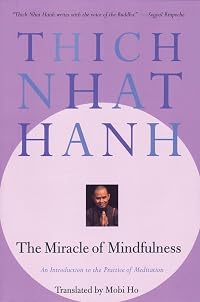
The Miracle of Mindfulness
by Thich Nhat Hanh
On This Page
Description
Religion & Spirituality. Self-Improvement. Nonfiction. In this beautiful and lucid guide, Zen master Thich Nhat Hanh offers gentle anecdotes and practical exercises as a means of learning the skills of mindfulness-being awake and fully aware. From washing the dishes to answering the phone to peeling an orange, he reminds us that each moment holds within it an opportunity to work toward greater self-understanding and peacefulness.Tags
Recommendations


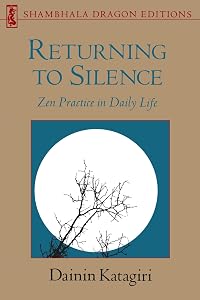
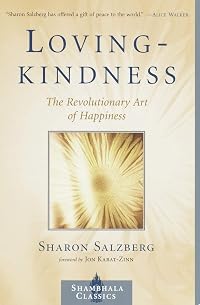
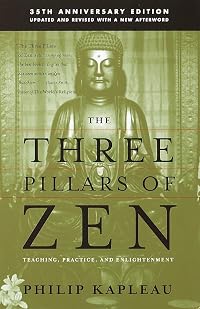
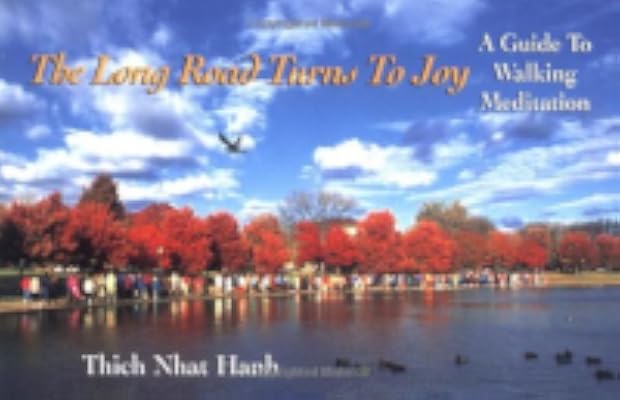


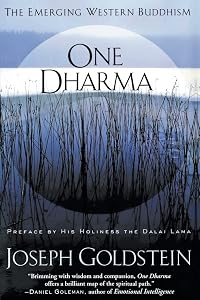

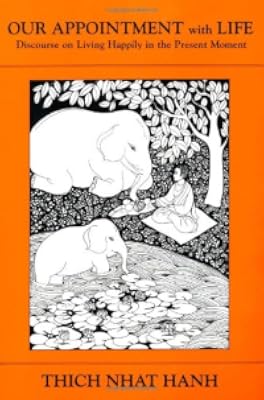
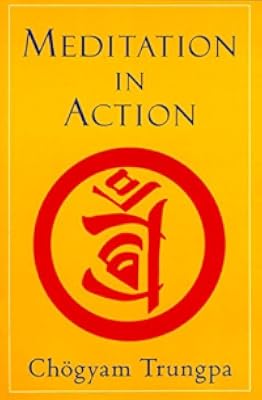
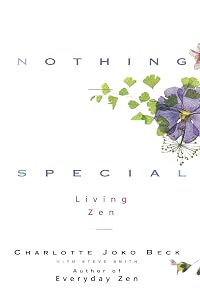
Member Recommendations
10% Happier: How I Tamed the Voice in My Head, Reduced Stress without Losing My Edge, and Found Self-Help That Actually Works - A True Story by Dan Harris
tootstorm Harris, a news anchor who famously broke down from stress on camera, waded through thousands of pages of new age nonsense in order to find something 'real' -- meditation. A great, funny memoir detailing his experiences with learning meditation, often feeling like an idiot in doing so.
20
Member Reviews
I love this book! The Miracle of Mindfulness is a gentle, beautiful guide to meditation and living fully in the present. Thich Nhat Hanh’s writing is calm, clear, and profoundly grounding. The exercises are simple but effective, making it easy to incorporate mindfulness into even the busiest days.
That said, some sections felt repetitive, and readers looking for a highly structured or step-by-step meditation manual might wish for more detailed guidance. The book is more reflective and philosophical than technical.
Still, it’s deeply inspiring. Reading it felt like having a patient teacher guiding me toward awareness and peace in everyday life. It’s a small book with a big impact, one I find myself returning to again and again.
That said, some sections felt repetitive, and readers looking for a highly structured or step-by-step meditation manual might wish for more detailed guidance. The book is more reflective and philosophical than technical.
Still, it’s deeply inspiring. Reading it felt like having a patient teacher guiding me toward awareness and peace in everyday life. It’s a small book with a big impact, one I find myself returning to again and again.
This classic text on meditation from Buddhist monk and renown peace activist, Thich Nhat Hanh is just as essential and powerful as everyone says it is. Written as a long letter to a fellow monk in Vietnam from his exile in France in 1974, this is a readable mix of practical suggestions and anecdotal teachings with a grounding in traditional Buddhism. It includes exercises and advice on focusing and harnessing your breath, sitting to meditate, washing your dishes and drinking your tea, compassion for others, meditation on death, and (one of my favorites) meditation as a pebble sinking down to rest at the bottom of a pond. Emblematic of Nhat Hanh's focus on "engaged Buddhism," these mindfulness practices are done with the goal of show more positively affecting change in the world and with other people and not just for the benefit of the practitioner.
Mindfulness practice is mainstream to the extreme these days, and I think if you find a way of digging into meditation and mindfulness that works for you, you should go for it. While I had dabbled in meditation prior to my metastatic breast cancer diagnosis, I've been deliberately digging a little deeper and have become interested in learning more about the Buddhist foundations of the practice. This book is a must read if you are travelling down that same road, and it is one I know I'll return to often. show less
Mindfulness practice is mainstream to the extreme these days, and I think if you find a way of digging into meditation and mindfulness that works for you, you should go for it. While I had dabbled in meditation prior to my metastatic breast cancer diagnosis, I've been deliberately digging a little deeper and have become interested in learning more about the Buddhist foundations of the practice. This book is a must read if you are travelling down that same road, and it is one I know I'll return to often. show less
With how widespread Thích Nhất Hạnh's name is in the new age world, I completely misunderstood who he was and what he taught. Hanh's Miracle of Mindfulness is a series of translated letters from 1968 -- written while exiled from Vietnam -- instructing young monks overseas on meditation. His 'mindfulness' isn't the confusing buzzword it is today, but simply a way to inch towards the Buddhist idea of enlightenment.
I expected scam artistry akin to Eckhart Tolle or Deepak Chopra, not legitimate Buddhist teachings. There's still a few lines of woo-woo that don't mean anything (to me, at least), but the majority of Hanh's Buddhist ideas reject the nonsense of religious text and simply want the the reader to be self-aware: Recognize their show more emotions and the emotions of others; the causes of social strife and personal discomfort; the is-ness of all things.
[N.B. This review includes images, and was formatted for my site, dendrobibliography -- located here.]
It's a straight, beautiful series of meditations to wash away one's anxieties, starting with the most basic step in meditation: Be conscious of one's breathing. Focus on the act of breathing. Focus on any act one's doing and enjoy it -- walking, doing the dishes, the laundry -- because all moments in life could and should be enjoyable.
The book concludes with a useful step-by-step guide on each method of meditation without the letters' contexts -- a great reference for when one needs reminders.
Hanh's writing is succinct, and makes the reader feel beautiful without asking for anything in return. Highly recommended. show less
I expected scam artistry akin to Eckhart Tolle or Deepak Chopra, not legitimate Buddhist teachings. There's still a few lines of woo-woo that don't mean anything (to me, at least), but the majority of Hanh's Buddhist ideas reject the nonsense of religious text and simply want the the reader to be self-aware: Recognize their show more emotions and the emotions of others; the causes of social strife and personal discomfort; the is-ness of all things.
[N.B. This review includes images, and was formatted for my site, dendrobibliography -- located here.]
It's a straight, beautiful series of meditations to wash away one's anxieties, starting with the most basic step in meditation: Be conscious of one's breathing. Focus on the act of breathing. Focus on any act one's doing and enjoy it -- walking, doing the dishes, the laundry -- because all moments in life could and should be enjoyable.
The book concludes with a useful step-by-step guide on each method of meditation without the letters' contexts -- a great reference for when one needs reminders.
Hanh's writing is succinct, and makes the reader feel beautiful without asking for anything in return. Highly recommended. show less
A few weeks ago a friend shared a meditation app. These times have been depressing for me and I found myself more anxious than I normally am, which says a lot, and so after years of uncertainty and suspicion about meditation, I began using the app.
There are three reasons why I looked at meditation distrustfully, the first one being the commercialisation of the practice. The second being that ever since I gave up on religion I avoid a lot of things that would be labelled spiritual. The third being my (rightful?) association of meditation with monks; the first time I saw a monk was in an Encyclopedia and it was the famous picture of the burning monk Thich Quang Duc whose protest was frightening for a nine year old boy, and like in many show more scenarios where we don't understand, I was fascinated and scared of these people who could endure flames to call attention to and denounce injustice and persecution.
All this is to say and explain that I held prejudices against this wonderful practice before I encountered it. There was little asked of me physically and financially so I went for it, the app helped, I could focus better, things were less scattered, but it felt incomplete. And then I remembered the name of a famous Vietnamese monk who wrote about meditation and this led me to the first Thich Nhat Hahn book that I've read.
This book has been helpful. I believe the teachings here of interdependence, empathy, understanding of the world around us, pacifism, paying attention to our well being are/should be universal. With remarkable gentleness, grief, death, life, community and more aspects of the human experience are delved into and in such a way that any person of any religion or even irreligious, can find useful. Then the learning and practice of mindfulness in itself is so incredible that no review could do justice to this ancient and wise way of living. show less
There are three reasons why I looked at meditation distrustfully, the first one being the commercialisation of the practice. The second being that ever since I gave up on religion I avoid a lot of things that would be labelled spiritual. The third being my (rightful?) association of meditation with monks; the first time I saw a monk was in an Encyclopedia and it was the famous picture of the burning monk Thich Quang Duc whose protest was frightening for a nine year old boy, and like in many show more scenarios where we don't understand, I was fascinated and scared of these people who could endure flames to call attention to and denounce injustice and persecution.
All this is to say and explain that I held prejudices against this wonderful practice before I encountered it. There was little asked of me physically and financially so I went for it, the app helped, I could focus better, things were less scattered, but it felt incomplete. And then I remembered the name of a famous Vietnamese monk who wrote about meditation and this led me to the first Thich Nhat Hahn book that I've read.
This book has been helpful. I believe the teachings here of interdependence, empathy, understanding of the world around us, pacifism, paying attention to our well being are/should be universal. With remarkable gentleness, grief, death, life, community and more aspects of the human experience are delved into and in such a way that any person of any religion or even irreligious, can find useful. Then the learning and practice of mindfulness in itself is so incredible that no review could do justice to this ancient and wise way of living. show less
This new edition of The Miracle of Mindfulness, by Thich Nhat Hanh, published by Beacon Press is, for me, a reintroduction to the beloved classic. This beautiful hardback edition contains photographs of the Zen Master and calligraphy rendered by him. Nhat Hanh’s words are perhaps even more timely now than they were when this work was first translated and published in the 1970s. With quiet wisdom, stories, exercises, and insightful compassion Thich Nhat Hanh gently guides the reader in mindfulness, using attention and breath to stay in the present moment. Highly recommend for those interested in meditation or wishing to find inner calm in a chaotic world.
 This review was written for LibraryThing Early Reviewers.
The subtitle is "an introduction to the practice of meditation." That's a bit misleading. This is a lot more than a value-free manual. The introduction tells us this the main text was originally a long letter from Thich Nhat Hanh to a fellow Buddhist monk in Vietnam in the midst of the war in 1975. Hanh, exiled from Vietnam, worked against the war and was nominated by Martin Luther King for the Nobel Peace Prize.
Translated into English under his supervision by a friend, you can't sever this from its Buddhist context. There's a lot about Buddhist philosophy here--even a discussion about such issues at the "naive" depiction of the faith in Hesse's Siddharta. The last chapter consists of a "Selection of Buddhist Sutras" (which I found show more impenetrable). The writing is lucid, but even though written in deceptively simple language, a lot of the concepts are pretty sophisticated and I think take repeated reading to really understand. Mind you, this isn't an introduction to Buddhism per se. This isn't the place to find an overview of the religion and the focus is on meditation and "mindfulness."
Hanh's concept of meditation and mindfulness doesn't necessarily mean what you do in a lotus position while going "ohm." He means by it living in the moment and fully alert even as you drink tea or wash dishes. "Mindfulness frees us of forgetfulness and dispersion and makes it possible to live fully each minute of life." Not that he doesn't see a place for more formal meditation, and he provides several practical exercises, particularly focusing on the breath. "Our breath is the bridge from out body to our mind... it alone is the tool which can bring them both together."
My introduction to meditation actually was in the mandatory Religion class in my Catholic high school. I remember feeling silly as we were directed to go "ohm." Later I'd be reintroduced to the practice when I took Yoga classes. I remember feeling frustrated as I was told to clear my mind of all thought--which I thought impossible. So it was interesting and useful that it's not what Hanh directs. He says rather when you have thoughts during meditation, you acknowledge the thought--or feeling. "The essential thing is not to let any feeling or thought arise without recognizing it in mindfulness, like a palace guard who is aware of every face that passes in the front corridor."
It's an interesting and useful book if you're curious about meditation and Buddhism, written clearly and succinctly--the main text of the book is only about a hundred pages. Although to get much out of it means reading with mindfulness--repeatedly, slowly, taking notes--and practicing the exercises. And in that regard, I think it does help to do it with others rather than just try to work through the book by yourself. show less
Translated into English under his supervision by a friend, you can't sever this from its Buddhist context. There's a lot about Buddhist philosophy here--even a discussion about such issues at the "naive" depiction of the faith in Hesse's Siddharta. The last chapter consists of a "Selection of Buddhist Sutras" (which I found show more impenetrable). The writing is lucid, but even though written in deceptively simple language, a lot of the concepts are pretty sophisticated and I think take repeated reading to really understand. Mind you, this isn't an introduction to Buddhism per se. This isn't the place to find an overview of the religion and the focus is on meditation and "mindfulness."
Hanh's concept of meditation and mindfulness doesn't necessarily mean what you do in a lotus position while going "ohm." He means by it living in the moment and fully alert even as you drink tea or wash dishes. "Mindfulness frees us of forgetfulness and dispersion and makes it possible to live fully each minute of life." Not that he doesn't see a place for more formal meditation, and he provides several practical exercises, particularly focusing on the breath. "Our breath is the bridge from out body to our mind... it alone is the tool which can bring them both together."
My introduction to meditation actually was in the mandatory Religion class in my Catholic high school. I remember feeling silly as we were directed to go "ohm." Later I'd be reintroduced to the practice when I took Yoga classes. I remember feeling frustrated as I was told to clear my mind of all thought--which I thought impossible. So it was interesting and useful that it's not what Hanh directs. He says rather when you have thoughts during meditation, you acknowledge the thought--or feeling. "The essential thing is not to let any feeling or thought arise without recognizing it in mindfulness, like a palace guard who is aware of every face that passes in the front corridor."
It's an interesting and useful book if you're curious about meditation and Buddhism, written clearly and succinctly--the main text of the book is only about a hundred pages. Although to get much out of it means reading with mindfulness--repeatedly, slowly, taking notes--and practicing the exercises. And in that regard, I think it does help to do it with others rather than just try to work through the book by yourself. show less
how did i get so far from this stuff? this book fell into my hands when i really needed it, as books tend to do. but, that said, while some of it really resonates, a lot of it just didn't. i tried to read this book as slowly as possible (or it would be about an hour's read), and i partially succeeded in that, and even did some of the exercises. others i'll refer back to later. it'll sound funny (or pretentious or unenlightened or like i'm a jerk) to say this, but i wish this had a little more depth, or maybe he wouldn't have lost me the few times he did.
Members
- Recently Added By
Lists

Buddhism, books there in
23 works; 4 members

Tonikat reading completed on Librarything journals
329 works; 2 members

Books Read in 2018
4,360 works; 110 members

Books About Non-Abrahamic Religions
98 works; 2 members

spirituality & consciousness
22 works; 1 member

spirituality and self growth
84 works; 1 member
Author Information

497+ Works 42,862 Members
Thich Nhat Hanh was born in central Vietnam on October 11, 1926. He entered Tu Hieu Temple as a novice monk at the age of sixteen. During the Vietnam War, he was part of a movement called "engaged Buddhism", which combines traditional practices with nonviolent civil disobedience. For this, he was exiled by both the Communist and non-Communist show more governments and was nominated by Martin Luther King, Jr. for the Nobel Peace Prize in 1967 for his efforts to reconcile North and South Vietnam. He is a teacher, author, poet, and peace activist. He has written over 100 titles on meditation, mindfulness and Engaged Buddhism, as well as poems, children's stories, and commentaries on ancient Buddhist texts. His books include The Heart of the Buddha's Teaching: An Introduction to Buddhism, Peace Is Every Step, The Miracle of Mindfulness, The Art of Power, True Love and Anger, Vietnam: Lotus in a Sea of Fire, and Living Buddha, Living Christ. He founded a retreat in France called Plum Village. (Bowker Author Biography) show less
Some Editions
Awards and Honors
Notable Lists
Common Knowledge
- Canonical title
- The Miracle of Mindfulness
- Original title
- Phép lạ của sự tỉnh thức
- Original publication date
- 1975
- Important events
- Vietnam War
- First words
- Yesterday Allen came over to visit with his son Joey.
- Quotations
- Joy and peace are the joy and peace possible in this very hour of sitting. If you cannot find it here, you won't find it anywhere.
...the true enemies were not people, but ideology, hatred, and ignorance. - Last words
- (Click to show. Warning: May contain spoilers.)Contemplate to see that awakened people, while not being enslaved by the work of serving living beings, never abandon their work of serving living beings.
- Blurbers
- Borysenko, Joan
- Original language
- Vietnamese
Classifications
- Genres
- Religion & Spirituality, Nonfiction, General Nonfiction, Philosophy
- DDC/MDS
- 294.3443 — Religion Other religions Buddhism/Hinduism Buddhism Buddhism - practice Religious experience, life, practice Worship, meditation, yoga
- LCC
- BQ5618 .V5 .N4813 — Philosophy, Psychology and Religion Buddhism Buddhism Practice of Buddhism. Forms of worship Religious life Devotion. Meditation. Prayer
- BISAC
Statistics
- Members
- 3,261
- Popularity
- 5,225
- Reviews
- 61
- Rating
- (4.06)
- Languages
- 11 — Danish, Dutch, English, French, German, Italian, Korean, Portuguese, Spanish, Swedish, Vietnamese
- Media
- Paper, Audiobook, Ebook
- ISBNs
- 56
- UPCs
- 2
- ASINs
- 30
