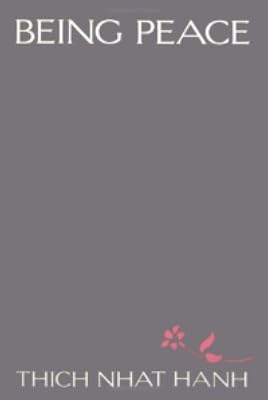
Being Peace
by Thich Nhat Hanh
On This Page
Description
An ideal starting point for those interested in Buddhism, Being Peace contains Thich Nhat Hanh's teachings on peace and meditation. Using real examples from his own life, as well as poems and fables, Nhat Hanh explains his key practices for living "right in the moment we are alive." These lessons are taught with fine writing and sparkling phrases that draw the reader in and make Being Peace an audiobook that encourages multiple listenings. Still as timely as when it was first published over show more twenty-five years ago, Being Peace is a revelation for anyone concerned with the state of the world and the quality of life. show lessTags
Recommendations
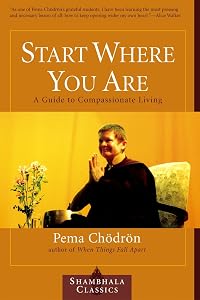









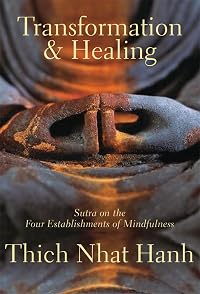
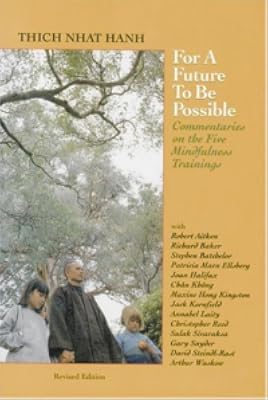

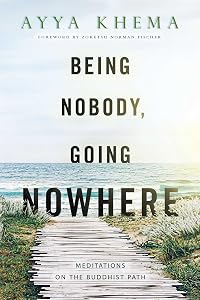
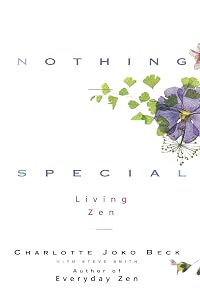
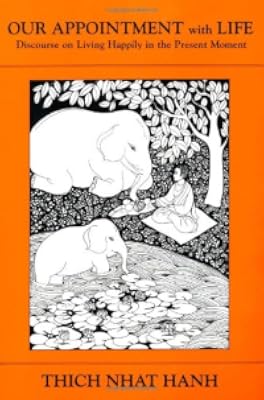
Member Recommendations
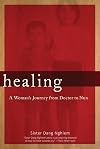
krazy4katz Sister Dang Nghiem came from Vietnam to the US, studied to be a doctor, then decided to train as a nun under Thich Nhat Hanh. Beautiful book.
Member Reviews
Originally published in 1987, Being Peace outlasts its post-Vietnam, Reagan-Era milieu for the most part. No doubt the many references to nuclear proliferation will seem a bit dated, but the wisdom is that suffering is indeed universal and timeless, so we need not jump far to find the proliferations and crises of our own time. Further, anyone aware of Nhat Hanh's work with the Vietnamese boat people will understand that this is not some monastic who sat on a cushion away from society, but instead a powerfully invested human being. For those skeptical about Buddhism, this book does much to explain that one should not be looking for "a Buddha from the outside" but instead, " it is our "own Buddha that calls us."
Thich Nhat Hanh is show more surprisingly witty at moments, slipping in a surreptitious lesson in a parenthetical comment: "The technique (if we must speak of a technique), is to be alive...". His blend of storytelling, poetry, and prose, makes this primer on some basic sutras and concepts of Buddhism extremely accessible. There are definitely worldly pleasures about which he has some strong feelings, and initially I rolled my eyes a bit at his disdain for television. However, when he says "telling the television to come colonize us"--that language made me understand. It isn't television, but how we use it to escape from the present, or rather WHEN we use it to escape from the present. He doesn't soapbox on this particular point, but I did find myself wondering what he thought of audiobooks...
Nhat Hanh died in January (2022), and we lost a voice that managed to move beyond dogma toward a practical understanding of being, really. In a rather slim volume (or short audiobook, if you prefer), he offers precepts (or rather "mindfulness trainings") of Thiền Buddhism, parsing (a bit) that which is monastic and that which can be followed by the layperson. I struggled a bit with his explanation regarding awareness of injustice, but not taking sides. His point, if I understand it, is that it isn't about absolution or even forgiveness, but to understand the universality of suffering and existence of compassion. This may be something I never quite internalize. However, I was very much struck by Mindfulness Training no. 11, wherein he compares compassion to a North Star---it is there to light the way and we move toward it, but like the North Star, we do not arrive AT it. This may seem like a more fanciful way to espouse "it is the journey, not the destination", and it is, but the poetry of his language seems more meaningful than your typical inspirational poster or Pinterest meme. His poem "Please call me by my true names" is a powerful moment, and I'd invite anyone to go to the Plum Village website to listen to him read it: https://plumvillage.org/articles/plea...
"I still arrive, in order to laugh and to cry,/to fear and to hope" he tells us in the poem. He quips later in the book "Don't just do something, sit there." And by the time we reach that point of learning, we get that it isn't some sort of cutesy verbal trinket because he has put much spirit and energy into explaining what "sit" means in the meditation tradition. We understand that a smile is a gift of the spirit, not an indication of happiness. Edoardo Ballerini captures the spirit of Nhat Hanh's voice, which truly smiles at us, like a Buddha. In fact, he tells us that if we must bring a Buddha home to adorn our breathing space, to be sure to find one that is smiling and relaxed. If we do not find such a beautiful Buddha, he tells us, then we should find a flower instead, because the flower is a Buddha.
This is not a book for someone looking for a guide to serious practice. It is, however, a book full of wisdom and grace, that can make connections for us if we just take the time to listen. show less
Thich Nhat Hanh is show more surprisingly witty at moments, slipping in a surreptitious lesson in a parenthetical comment: "The technique (if we must speak of a technique), is to be alive...". His blend of storytelling, poetry, and prose, makes this primer on some basic sutras and concepts of Buddhism extremely accessible. There are definitely worldly pleasures about which he has some strong feelings, and initially I rolled my eyes a bit at his disdain for television. However, when he says "telling the television to come colonize us"--that language made me understand. It isn't television, but how we use it to escape from the present, or rather WHEN we use it to escape from the present. He doesn't soapbox on this particular point, but I did find myself wondering what he thought of audiobooks...
Nhat Hanh died in January (2022), and we lost a voice that managed to move beyond dogma toward a practical understanding of being, really. In a rather slim volume (or short audiobook, if you prefer), he offers precepts (or rather "mindfulness trainings") of Thiền Buddhism, parsing (a bit) that which is monastic and that which can be followed by the layperson. I struggled a bit with his explanation regarding awareness of injustice, but not taking sides. His point, if I understand it, is that it isn't about absolution or even forgiveness, but to understand the universality of suffering and existence of compassion. This may be something I never quite internalize. However, I was very much struck by Mindfulness Training no. 11, wherein he compares compassion to a North Star---it is there to light the way and we move toward it, but like the North Star, we do not arrive AT it. This may seem like a more fanciful way to espouse "it is the journey, not the destination", and it is, but the poetry of his language seems more meaningful than your typical inspirational poster or Pinterest meme. His poem "Please call me by my true names" is a powerful moment, and I'd invite anyone to go to the Plum Village website to listen to him read it: https://plumvillage.org/articles/plea...
"I still arrive, in order to laugh and to cry,/to fear and to hope" he tells us in the poem. He quips later in the book "Don't just do something, sit there." And by the time we reach that point of learning, we get that it isn't some sort of cutesy verbal trinket because he has put much spirit and energy into explaining what "sit" means in the meditation tradition. We understand that a smile is a gift of the spirit, not an indication of happiness. Edoardo Ballerini captures the spirit of Nhat Hanh's voice, which truly smiles at us, like a Buddha. In fact, he tells us that if we must bring a Buddha home to adorn our breathing space, to be sure to find one that is smiling and relaxed. If we do not find such a beautiful Buddha, he tells us, then we should find a flower instead, because the flower is a Buddha.
This is not a book for someone looking for a guide to serious practice. It is, however, a book full of wisdom and grace, that can make connections for us if we just take the time to listen. show less
Thich Nhat Hanh’s message of creating peace and a better world by starting with oneself. It’s a simple message which seems obvious and the book is a quick read, but it’s much harder to put into practice and live.
Nhat Hahn says to practice breathing and smiling – meditate - and you can be calm, peaceful, and happy. Take care of and be compassionate to oneself first, in order to then take care of and be compassionate to others. Change your views on what is pleasant and unpleasant, and live in this moment. Be open-minded to all perspectives, including those of your perceived enemy. (Written in 1987, this last one includes references to understanding the USSR perspective in addition to America’s, and both the white and black show more ‘sides’ in South Africa, but of course examples abound in any age).
It’s interesting to compare these 14 precepts outlined in the chapter on “Interbeing”, which I trim down for brevity’s sake, to the Ten Commandments; you tell me which ones are better words to live by:
1. Do not be bound to any doctrine, theory, or ideology; they are just guide, not absolute truths.
2. Avoid being narrow-minded; be ready to learn throughout your entire life.
3. Do not force others to take your views.
4. Confront suffering in the world; do not avoid it.
5. Do not accumulate wealth while millions are hungry; live simply and share with others.
6. Learn to look at others with deep compassion, including those who cause anger and hatred.
7. Practice breathing and mindfulness.
8. Do not utter words that create discord; make efforts to resolve conflicts.
9. Always speak truthfully and constructively.
10. Do not use the Buddhist community for personal gain or profit.
11. Do not live with a vocation that is harmful to humans and nature.
12. Do not kill, and do not let others kill.
13. Do not steal; respect the property of others.
14. Handle your body with respect, and do not use it as an instrument.
There are portions of the text that are a little on the simple side, and at times it’s a bit ‘too much’, e.g. “Even if I just clap my hands, the effect is everywhere, even in far away galaxies.”
I’m also of mixed mind in the example of forgiveness to sea pirates who raped a 12-year old girl, a boat person, which was followed by her jumping into the ocean to drown herself. Perhaps this is true enlightenment, to conceive of the life of the sea pirate in a meditation, to imagine growing up in his world and to be him, and to therefore to not condemn him; on the other hand, perhaps it’s lunacy. Is there any limit to forgiveness? Torture, sadism, cruelty, genocide? Hitler? But Nhat Hahn’s point is well put in his poem Please Call Me By My True Names; he believes himself to be a part of all things, and to be one with all people, including the girl and the pirate. Rather than condemn and hate in response, it’s more helpful to understand how it came about, and to forgive.
Quotes:
On meditation, this is a good one while doing MBSR-based breathing exercises:
“Breathing in, I calm my body.
Breathing out, I smile.
Dwelling in the present moment
I know this is a wonderful moment.”
On knowledge, reminding me of the Zen saying, ‘cease to cherish your opinions’:
“In Buddhism, knowledge is regarded as an obstacle to understanding, like a block of ice that obstructs water from flowing. It is said that if we take one thing to be the truth and cling to it, even if truth itself comes in person and knocks at our door, we won’t open it. For things to reveal themselves to us, we need to be ready to abandon our views about them.”
On peace, though to me they seem different types of peace, and both valid:
“It is not by going out for a demonstration against nuclear missiles that we can bring about peace. It is with our capacity of smiling, breathing, and being peace that we can make peace.”
On sex:
“Sexual expression should not happen without love and commitment. In sexual relationships be aware of future suffering that may be caused.” show less
Nhat Hahn says to practice breathing and smiling – meditate - and you can be calm, peaceful, and happy. Take care of and be compassionate to oneself first, in order to then take care of and be compassionate to others. Change your views on what is pleasant and unpleasant, and live in this moment. Be open-minded to all perspectives, including those of your perceived enemy. (Written in 1987, this last one includes references to understanding the USSR perspective in addition to America’s, and both the white and black show more ‘sides’ in South Africa, but of course examples abound in any age).
It’s interesting to compare these 14 precepts outlined in the chapter on “Interbeing”, which I trim down for brevity’s sake, to the Ten Commandments; you tell me which ones are better words to live by:
1. Do not be bound to any doctrine, theory, or ideology; they are just guide, not absolute truths.
2. Avoid being narrow-minded; be ready to learn throughout your entire life.
3. Do not force others to take your views.
4. Confront suffering in the world; do not avoid it.
5. Do not accumulate wealth while millions are hungry; live simply and share with others.
6. Learn to look at others with deep compassion, including those who cause anger and hatred.
7. Practice breathing and mindfulness.
8. Do not utter words that create discord; make efforts to resolve conflicts.
9. Always speak truthfully and constructively.
10. Do not use the Buddhist community for personal gain or profit.
11. Do not live with a vocation that is harmful to humans and nature.
12. Do not kill, and do not let others kill.
13. Do not steal; respect the property of others.
14. Handle your body with respect, and do not use it as an instrument.
There are portions of the text that are a little on the simple side, and at times it’s a bit ‘too much’, e.g. “Even if I just clap my hands, the effect is everywhere, even in far away galaxies.”
I’m also of mixed mind in the example of forgiveness to sea pirates who raped a 12-year old girl, a boat person, which was followed by her jumping into the ocean to drown herself. Perhaps this is true enlightenment, to conceive of the life of the sea pirate in a meditation, to imagine growing up in his world and to be him, and to therefore to not condemn him; on the other hand, perhaps it’s lunacy. Is there any limit to forgiveness? Torture, sadism, cruelty, genocide? Hitler? But Nhat Hahn’s point is well put in his poem Please Call Me By My True Names; he believes himself to be a part of all things, and to be one with all people, including the girl and the pirate. Rather than condemn and hate in response, it’s more helpful to understand how it came about, and to forgive.
Quotes:
On meditation, this is a good one while doing MBSR-based breathing exercises:
“Breathing in, I calm my body.
Breathing out, I smile.
Dwelling in the present moment
I know this is a wonderful moment.”
On knowledge, reminding me of the Zen saying, ‘cease to cherish your opinions’:
“In Buddhism, knowledge is regarded as an obstacle to understanding, like a block of ice that obstructs water from flowing. It is said that if we take one thing to be the truth and cling to it, even if truth itself comes in person and knocks at our door, we won’t open it. For things to reveal themselves to us, we need to be ready to abandon our views about them.”
On peace, though to me they seem different types of peace, and both valid:
“It is not by going out for a demonstration against nuclear missiles that we can bring about peace. It is with our capacity of smiling, breathing, and being peace that we can make peace.”
On sex:
“Sexual expression should not happen without love and commitment. In sexual relationships be aware of future suffering that may be caused.” show less
I read Being Peace about 20 years ago, and then again a couple of years ago. It was the first book by the Buddhist teacher and writer for me, and it is, I think, a seminal work, capturing in one short volume the essence of what he would go on to explicate in his many books since this one. The first time I read this book, I had never heard of Thich Nhat Hanh and was attracted to the title. I read it in a couple of sittings. The second time through, I read the book in short bursts, one per week, in the company of other people who also follow Thich Nhat Hanh's teachings. It took several months, and it was a more profound experience because each short segment has layers of meaning and feeling that take time to settle into the soul. Highly show more recommended as a first place to meet this wise teacher's work. show less
This book has actually changed my life for the better. It is helping me to be more mindful, less stressful, and to appreciate life on a deeper level. The author is a Buddhist monk, but the wisdom within is universal. I believe anyone would benefit from reading this, especially in today's noisy, fast-paced, multi-tasking world of information overload. There's no religious doctrine here, no political leaning - just simple but powerful zen. I listened to the audiobook, then immediately had to buy a hard copy so I can have it on hand to refer to when life gets tough. It's one of those books everyone should have.
Reading Thich Nhat Hanh is like being in a slow moving meditation in the warm sun. He has so much wisdom, which he is able to share with the reader so gently that it seems to float into your brain. I know I will come back to this book again. Lovely, lovely, lovely.
Anything by Thic Nhat Hanh is well worth reading, particularly if you are interested in the contemplative life. This book is no exception.
Since its publication in 1987, "Being Peace" has become a classic of contemporary religious literature. In his simple and readable style, Thich Nhat Hanh shows how our state of mind and body can make the world a peaceful place. We learn to transform the very situations that pressure and antagonize us into opportunities for practicing mindfulness.
Members
- Recently Added By
Author Information

507+ Works 43,186 Members
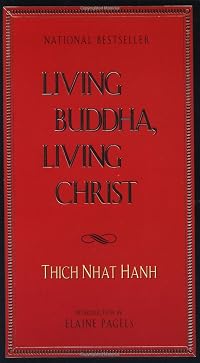
Thich Nhat Hanh was born in central Vietnam on October 11, 1926. He entered Tu Hieu Temple as a novice monk at the age of sixteen. During the Vietnam War, he was part of a movement called "engaged Buddhism", which combines traditional practices with nonviolent civil disobedience. For this, he was exiled by both the Communist and non-Communist show more governments and was nominated by Martin Luther King, Jr. for the Nobel Peace Prize in 1967 for his efforts to reconcile North and South Vietnam. He is a teacher, author, poet, and peace activist. He has written over 100 titles on meditation, mindfulness and Engaged Buddhism, as well as poems, children's stories, and commentaries on ancient Buddhist texts. His books include The Heart of the Buddha's Teaching: An Introduction to Buddhism, Peace Is Every Step, The Miracle of Mindfulness, The Art of Power, True Love and Anger, Vietnam: Lotus in a Sea of Fire, and Living Buddha, Living Christ. He founded a retreat in France called Plum Village. (Bowker Author Biography) show less
Some Editions
Awards and Honors
Common Knowledge
- Original publication date
- 1987; 1985-11-03 (oral teachings that became the book) (oral teachings that became the book)
- Epigraph
- "If we are peaceful, if we are happy,
we can blossom like a flower,
and everyone in our family,
our entire society,
will benefit from our peace." - First words
- Life is filled with suffering, but it is also filled with many wonders, like the blue sky, the sunshine, the eyes of a baby. To suffer is not enough. We must also be in touch with the wonders of life. They are written all ... (show all)around us, everywhere, any time.
- Publisher's editor
- Reineck, Gay
Classifications
- Genres
- Religion & Spirituality, Nonfiction, Philosophy, General Nonfiction
- DDC/MDS
- 294.3444 — Religion Other religions Dharmic religions Buddhism Buddhism - practice Religious experience, life, practice Religious life and practice
- LCC
- BQ5410 .N45 — Philosophy, Psychology and Religion Buddhism Buddhism Practice of Buddhism. Forms of worship Religious life
- BISAC
Statistics
- Members
- 1,434
- Popularity
- 16,529
- Reviews
- 14
- Rating
- (4.24)
- Languages
- 6 — Dutch, English, Finnish, French, Italian, Portuguese
- Media
- Paper, Audiobook, Ebook
- ISBNs
- 36
- ASINs
- 7