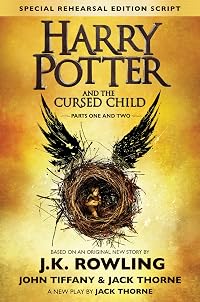
Harry Potter and the Cursed Child: Parts One and Two
by J. K. Rowling, Jack Thorne, John Tiffany
Harry Potter (8)
On This Page
Description
As an overworked employee of the Ministry of Magic, a husband, and a father, Harry Potter struggles with a past that refuses to stay where it belongs while his youngest son, Albus, finds the weight of the family legacy difficult to bear.Tags
Recommendations






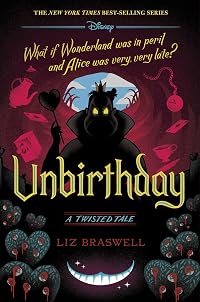
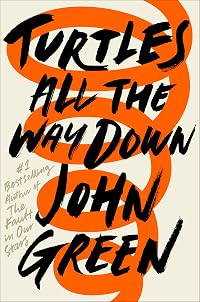
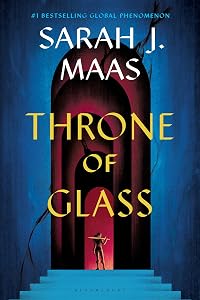

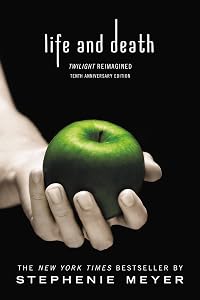

Member Recommendations

anonymous user A non-magical detective investigates a murder at the magical high school where her gifted sister teaches. Smart and fascinating examination of the tropes used in HP, including the Chosen One.
Member Reviews
Oooooh laaaaawd! I loved this story so much, though it was nowhere near the level of the main Potter books. It definitely reads like a fan fiction because I am fairly certain that I read multiple elements of this book in different fan fiction stories.
That being said, the die-hard Harry Potter nerd in me will always hanker for more stories from this universe. Rowling and those she worked with did an amazing job, and I would give anything to be able to see the play instead of just read the script. That being said, I feel that this would have made a much better novel than a script.
My heart sang at getting to see Hogwarts again and I loved seeing the adult versions of the characters I have loved. I thought Albus was a huge dick at first, show more but it was understandable (barely) knowing what we do about Harry and the pressures that inevitably put on Albus.
I rather enjoyed the varying scenes and only disagreed with one element (but hey, Rowling is queen of this world).
Overall, I think this book was an absolutely beautiful addition to the Potterverse. show less
That being said, the die-hard Harry Potter nerd in me will always hanker for more stories from this universe. Rowling and those she worked with did an amazing job, and I would give anything to be able to see the play instead of just read the script. That being said, I feel that this would have made a much better novel than a script.
My heart sang at getting to see Hogwarts again and I loved seeing the adult versions of the characters I have loved. I thought Albus was a huge dick at first, show more but it was understandable (barely) knowing what we do about Harry and the pressures that inevitably put on Albus.
I rather enjoyed the varying scenes and only disagreed with one element (but hey, Rowling is queen of this world).
Overall, I think this book was an absolutely beautiful addition to the Potterverse. show less
***spoiler alert. spoilers of a specific nature will be under cuts. you've been warned. spoiler alert.***
I went into this new Harry Potter play with no particular expectations except a niggling fear that it would feel wrong or tacked on and/or that it would in some way ruin Harry Potter. I was also a little skeptical of the format. Why a play rather than a novel (or novella) or a movie or some other form that we already know this world through? So when I sat down to read it yesterday morning I was delighted to look up around page thirty and say, somewhat wonderingly, "This is really good!"
This works as a play. I can't say that it would not work in some other format, but it feels like a play and I did not find the format disappointing or show more long for it to be presented otherwise. Rowling said something a while back about there being aspects of the story that meant it needed to be a play, and I can't quite put my finger on anything that makes me say, "Yep, that right there would not have worked any other way." But some of the elements do seem like they would be particularly suited to a stage performance with a live audience.The stage directions often indicate that the Dementors appear sort of in the audience, and I think that would be particularly effective. Voldemort's voice similarly sometimes seems like it is meant to come from behind or within the audience, and how creepy would that be? Also, the stage directions sometimes call for a fade to black, which you can do in a film (and not in a novel), but not in the same way you can in a theatre, where you can plunge the entire audience into complete darkness. I don't know that I would go so far as to say that the story requires these effects in a live performance, but I do think they probably enhance the story greatly.
I also think the emotional pitch of the story would lend itself particularly well to a stage performance. There's a lot of high emotion here that I think it would be easy to overdo in a film but which, done well, would be perfectly suited to the stage, where the actors and the audience can achieve a kind of rapport. Furthermore, while a talented writer should certainly be able to pull off this story in novel form, there's of course something to be said for understanding which medium will serve the story best. And I think this story would be best served by a visual medium.The plot revolves around the ways in which Harry and his younger son, Albus, fail to understand one another. Since neither of them fully understands why or how they do not understand the other, being able to watch them interact may be more effective and affecting than reading about it. Some of the scenes also struck me as the kind of thing that would work best visually. The moment when adult Harry must watch his mother die for him in the past while being held up by his wife and son is one such scene. I can so easily imagine this on stage, and in my imagination it is sublimely painful--one of those exquisite moments you sometimes experience watching a play where you feel for one moment that the actors have perfectly portrayed something real and every single person in the theatre is feeling the exact same thing in their own way in the exact same moment. And I can just as easily imagine it not working in a film. Too sharp, too produced, perhaps.
Of course, if you're reading the script, you're not experiencing all this in a visual medium, but somehow I think it still works better than it would have as a novel/la. The stage directions are there; one can "see" how it might be performed. For me, reading this script was a seamless, painless experience. I have some experience/training in reading plays, given my background, so this may be harder for readers who don't, but the script uses the stage directions very well to fill in what's happening for readers. In fact, I suspect the stage directions (at least in this version of the script that's been released for people to read, rather than to produce a play from) have been written specifically with readers who may never get to see the play in mind.
As for the story itself,I thought Delphi's motivation and background were a little bit "dropped in" (though the resulting climax where Harry had to take on the figure of Voldemort was wonderfully chilling) and the repeated time travel was perhaps a tiny bit silly, but the play uses it to great effect to explore both the Harry Potter world and a theme Rowling was interested in throughout the Harry Potter novels: acceptance of death. Albus goes back in time to try to save Cedric Diggory because Albus understands what it's like to be thought of as a "spare." But in saving Diggory, he destroys the future. Depending on what, exactly, he does in the past, the future is variably changed: sometimes Harry dies at the Battle of Hogwarts (thus meaning neither Albus nor Harry's other children are ever born (the story follows Albus's friends Scorpius in that future--gosh but I love Scorpius. He's such a marvelous combination of snarkiness and vulnerability, nerdiness and innocence); sometimes the great scheme of things is the same but Ron and Hermione never got married; sometimes Voldemort won and the world is a terrible, terrible place. The death of Cedric Diggory is perhaps one of the hardest in the Harry Potter novels to accept--he died for nothing, and simply because he was in the wrong place at the wrong time--but even this death we must accept. It does not do to try to meddle in such things. We see this theme again within the time travel when Harry must let Voldemort kill his parents; he cannot stop him, for then Voldemort would never have been weakened, might never have been defeated. The play stops shy of saying "everything happens for a reason." It's not that; it's not that there's a grand plan that we don't understand. It's that the way of the world is that time moves forward, that people die, that there are some things that we cannot change, and that we must learn to accept this. Even magic does not (can not, should not) change that.
This play is not for children. It's not that it's not appropriate for (older) children--I'd say any child who could handle the last three books could handle the play--but it is not designed for children. There is no childlike, delightful magic here. This is not a world in which everything will probably turn out okay. This play exists in an adult world, one wherefathers may mess up their sons simply because they can't find a way to understand them, a world where husbands weep in their wives' arms because they've hurt their shared child. Some fans may find this disappointing, but I thought it was an excellent addition to the Harry Potter world. The novels are mostly told from Harry's perspective, his perspective, even in the end, as a child. The play is not. The play feels like seeing this world as it may always have been, were you to look at it through the eyes of an adult. The goggles are off, and the horrible things of this world seem a little more fully, really horrible here, though I had no sense of this ruining the world for me, or unpleasantly dispelling any kind of illusion. It's simply another way of looking at it (a child's view of the world is not more correct than an adult's--just different, just focused differently). And I found that refreshing, found it a lovely commentary on the Harry Potter world we already know.
Some of that commentary tweaks perplexities of the novels in satisfying ways.Dumbledore, for instance, through his headmaster's portrait at Hogwarts, admonishes Harry for coming to him for advice about Albus. It's a wonderful moment of dragging into the light just how terrible Dumbledore was as a father figure for Harry. And at one point Ron basically says, "I don't have much to contribute here, but if Harry and Hermione are doing an unpopular, dangerous thing, I'm going too." Which sells Ron a little short, but is still a lovely echo of the dynamic of the novels. We see more fully, more realistically, the ways the Dursleys' abuse of Harry must have harmed him psychologically as a child. And Draco. Ah, Draco. Turns out he's an actual human being, with feelings and complexities and hey! he's not pure evil. The last few books hint at that, of course, but again. This is an adult view; those were a children's view. It's nice to see him as a three- dimensional figure. (In fact, seeing Draco more fully realized was one of the highlights of the play for me.)
I've seen some complaints in reviews that the characters don't feel like themselves in the play. I agree by way of disagreeing heartily. By which I mean, no, this wasn't like reading an eighth Harry Potter novel where we pick up with the characters a month or two after we last saw them and everything is familiar and lovely. It's nineteen years later. They've grown up. They've become adult versions of themselves. They've become maybe a little less silly, maybe a little more serious, much more responsible, a bit more sad, a bit more distracted, a good deal more careworn. Their joys have become more complex; their sadnesses have grown thornier. They've become adults. I love, love, love the Harry Potter novels, I love them for the way they are magical themselves and delightful, and I do not for one second think there's anything wrong with giving children that view or with adults enjoying it too. But there's room for seeing these characters this way as well, and I do not fault the play for portraying them thus.
In fact, after just one read (I feel a reread coming on, possibly very soon), I only have two quibbles (aside from a slight dissatisfaction with some minor machinations of the plot):1) Where are James and Lily (the youngers, that is, Harry's other children) while Harry and Ginny et al are trying to find missing Albus? I mean, presumably they're at Hogwarts, as school is in session, but there's never any mention of their parents telling them what's up, or reassuring them, or even asking them if they have any idea where Albus went. This might be a function of reading the script--and the rehearsal/possibly-not-final script at that--as one might see something in the background that explains what's up with the other kids when watching the play, but this really bothered me at one point. Like, hello? Harry? You're so worried about being a shitty dad to your one kid, maybe, like, check and make sure your other children aren't freaking out that their brother has disappeared? 2) For the first third of the book, I was one hundred percent sure that Albus and Scorpius were falling in love. Then we started getting hints that Albus isn't that way inclined but I was still one hundred percent sure Scorpius was falling for Albus. And then in the end it turns out both of them are all "Cool! Girls!" So. tired. of. people. erasing. their. own. homosexual. subtext. Look, I'll be the first to admit that I'm faster to see this kind of subtext than others, but husbeast, who is decidedly not, who, in fact, has been known to turn to me during a movie or TV show and say, "No, they aren't, stop it," looked up at about the one-third point and said, "They're in a romantic relationship, right?" So. Just. *makes the face I'm making*
This is the first time I've gotten to experience buying a Harry Potter book the day it came out, taking it home, and reading the whole thing. And it was glorious. I loved it. I loved getting to do it, and I loved the play itself. Recommended wholeheartedly. show less
I went into this new Harry Potter play with no particular expectations except a niggling fear that it would feel wrong or tacked on and/or that it would in some way ruin Harry Potter. I was also a little skeptical of the format. Why a play rather than a novel (or novella) or a movie or some other form that we already know this world through? So when I sat down to read it yesterday morning I was delighted to look up around page thirty and say, somewhat wonderingly, "This is really good!"
This works as a play. I can't say that it would not work in some other format, but it feels like a play and I did not find the format disappointing or show more long for it to be presented otherwise. Rowling said something a while back about there being aspects of the story that meant it needed to be a play, and I can't quite put my finger on anything that makes me say, "Yep, that right there would not have worked any other way." But some of the elements do seem like they would be particularly suited to a stage performance with a live audience.
I also think the emotional pitch of the story would lend itself particularly well to a stage performance. There's a lot of high emotion here that I think it would be easy to overdo in a film but which, done well, would be perfectly suited to the stage, where the actors and the audience can achieve a kind of rapport. Furthermore, while a talented writer should certainly be able to pull off this story in novel form, there's of course something to be said for understanding which medium will serve the story best. And I think this story would be best served by a visual medium.
Of course, if you're reading the script, you're not experiencing all this in a visual medium, but somehow I think it still works better than it would have as a novel/la. The stage directions are there; one can "see" how it might be performed. For me, reading this script was a seamless, painless experience. I have some experience/training in reading plays, given my background, so this may be harder for readers who don't, but the script uses the stage directions very well to fill in what's happening for readers. In fact, I suspect the stage directions (at least in this version of the script that's been released for people to read, rather than to produce a play from) have been written specifically with readers who may never get to see the play in mind.
As for the story itself,
This play is not for children. It's not that it's not appropriate for (older) children--I'd say any child who could handle the last three books could handle the play--but it is not designed for children. There is no childlike, delightful magic here. This is not a world in which everything will probably turn out okay. This play exists in an adult world, one where
Some of that commentary tweaks perplexities of the novels in satisfying ways.
I've seen some complaints in reviews that the characters don't feel like themselves in the play. I agree by way of disagreeing heartily. By which I mean, no, this wasn't like reading an eighth Harry Potter novel where we pick up with the characters a month or two after we last saw them and everything is familiar and lovely. It's nineteen years later. They've grown up. They've become adult versions of themselves. They've become maybe a little less silly, maybe a little more serious, much more responsible, a bit more sad, a bit more distracted, a good deal more careworn. Their joys have become more complex; their sadnesses have grown thornier. They've become adults. I love, love, love the Harry Potter novels, I love them for the way they are magical themselves and delightful, and I do not for one second think there's anything wrong with giving children that view or with adults enjoying it too. But there's room for seeing these characters this way as well, and I do not fault the play for portraying them thus.
In fact, after just one read (I feel a reread coming on, possibly very soon), I only have two quibbles (aside from a slight dissatisfaction with some minor machinations of the plot):
This is the first time I've gotten to experience buying a Harry Potter book the day it came out, taking it home, and reading the whole thing. And it was glorious. I loved it. I loved getting to do it, and I loved the play itself. Recommended wholeheartedly. show less
I bought this book.
I picked up Harry Potter and the Cursed Child and ended up reading for almost five hours straight, barely stopping until 2 AM. I saved just a little bit for the next day only because I couldn’t put it down. It was such an engaging continuation that, while written in play format, it still felt like it belonged to the Harry Potter universe.
What I loved most is how this story adds a layer of depth to the world without undoing anything from the original seven books. It gave me more time with characters I’ve missed, while keeping the heart of the series intact.
The highlights that stayed with me were deeply emotional. Dumbledore’s words,
“Be honest to those you love, show
reminded me of the vulnerability that lies at the core of Harry’s journey.
But what stole my heart was Scorpius Malfoy. His friendship, awkward charm, and bravery made him my favorite character in the play. His line,
“When the dementors were inside my head,Severus Snape told me to think of you. You may not have been there, Albus, but you were fighting, fighting alongside me,”
was one of the most powerful expressions of loyalty I’ve read in the series.
And then came the unexpected gift: seeing Snape again. To witness him conjure his Patronus, which I’ll never get tired of experiencing him cast a doe, Lily’s Patronus, was both heartbreaking and moving. His quiet strength shone through. Scorpius tells Snape,
“Thank you for being my light in the darkness.”
It was a perfect reminder of why Snape is such a complex and unforgettable character.
The line that lingers with me most is simple but profound:
“One person. All it takes is one person.”
That sums up the heart of Harry Potter for me, the idea that love, loyalty, and courage often begin with a person & can be fueled by a person to fight for.
Overall, The Cursed Child fits beautifully with the rest of the series. It doesn’t rewrite the past but instead gives us glimpses of growth, healing, and legacy, making it a worthy companion to the books. For me, it was emotional, nostalgic, and utterly captivating.
There are no spoilers in this review, just a description of my experience of reading the play.
Halfway through the play I was so excited that I made myself take an overnight intermission so I wouldn't consume the whole thing in an afternoon.
My excitement came partly from finally having something new in the Harry Potter story. It's been five years since I saw the final movie and nine years since I finished reading the series for the first time. Now here was something new but familiar, like the first episode of Star Trek TNG or the beginning of the Dark Knight Trilogy, except with J. K. Rowling's humour and emotional pull.
I was also excited by the originality of the ideas, the new possibilities that were opened up and the old certainties show more that were questioned. I've read the series twice. You can't do that and not have questions about Harry's relationship with Dumbledore or how other people felt about the number of people who died to save "The Boy Who Lived", or whether Hogwarts is really somewhere I'd want to send a child to. All of these are touched upon without getting into dogma or descending into insider jokes.
The next day, I finished the play and I was less enthusiastic. I enjoyed the play: the plot worked, the characters drew on my emotions and there was a lot of action crammed into a small time but somehow I didn't finish it with the high I had expected.
I've taken a few days to try and understand my response.
My first realisation was that, by the end of the play, I was mourning the 500 page novel it might have been. The novel would have given the ideas and the characters more time to blossom and have allowed more ambiguity and more room for interpretation. This is a powerful story not just of good and evil but of fathers and sons (and daughters) and how differently children and adults see the world, how hard it is, even with good will on both sides, for them to understand each other or to avoid hurting each other. In a novel, I would have savoured those things. Reading them as a play made me feel rushed to the point of feeling slightly cheated.
My second realisation was that that was largely my own fault. Way back in the 1980's, when the Greater London Council still ran Adult Education Courses that weren't vocational, I attended a set of evening classes based around Ronald Hayman's book, "How To Read A Play". In that course I learned that reading a play required me to use my imagination differently than when I read a novel. With a play, I needed to go beyond the text and think about how I would direct each scene. The script format tends to lead the reader to pay too much attention to the characters with lines but to stage the play I'd need to visualise where the non-speaking people where during a scene and what they were doing. I'd need to amplify the stage directions into something physical and something as influential as the soundtrack to a movie.
In my hunger for a new Harry Potter story, I'd forgotten everything I'd learned about reading a play all those years ago and I'd approached "Harry Potter And The Cursed Child" as if it were a novel with clumsy formatting. In effect, I failed to imagine half of the play and so cheated myself of some of its impact.
So I went back and read the second part of the play again and had a lot more fun. I still think there are points where it's a little heavy handed (but then I feel that way about a lot of plays) but the play itself works.
I think it works best for Harry Potter fans who are fully conversant with the previous seven books but with 450 million copies sold, there should be plenty of those.
If I was a more social person and a member of a book club, I'd suggest doing a read through of this play with members of the group taking particular parts. Even with an amateur sight reading, the thing would come to life in ways that only happen in your head if you read the play in the right way.
I think that, by making this a play rather than a book, J. K. Rowling has given Potter fans a much more social way of indulging our addiction. We can come together to perform or direct or light or stage or watch this play and it will be different every time. There is something quite wonderful in that. show less
Halfway through the play I was so excited that I made myself take an overnight intermission so I wouldn't consume the whole thing in an afternoon.
My excitement came partly from finally having something new in the Harry Potter story. It's been five years since I saw the final movie and nine years since I finished reading the series for the first time. Now here was something new but familiar, like the first episode of Star Trek TNG or the beginning of the Dark Knight Trilogy, except with J. K. Rowling's humour and emotional pull.
I was also excited by the originality of the ideas, the new possibilities that were opened up and the old certainties show more that were questioned. I've read the series twice. You can't do that and not have questions about Harry's relationship with Dumbledore or how other people felt about the number of people who died to save "The Boy Who Lived", or whether Hogwarts is really somewhere I'd want to send a child to. All of these are touched upon without getting into dogma or descending into insider jokes.
The next day, I finished the play and I was less enthusiastic. I enjoyed the play: the plot worked, the characters drew on my emotions and there was a lot of action crammed into a small time but somehow I didn't finish it with the high I had expected.
I've taken a few days to try and understand my response.
My first realisation was that, by the end of the play, I was mourning the 500 page novel it might have been. The novel would have given the ideas and the characters more time to blossom and have allowed more ambiguity and more room for interpretation. This is a powerful story not just of good and evil but of fathers and sons (and daughters) and how differently children and adults see the world, how hard it is, even with good will on both sides, for them to understand each other or to avoid hurting each other. In a novel, I would have savoured those things. Reading them as a play made me feel rushed to the point of feeling slightly cheated.
My second realisation was that that was largely my own fault. Way back in the 1980's, when the Greater London Council still ran Adult Education Courses that weren't vocational, I attended a set of evening classes based around Ronald Hayman's book, "How To Read A Play". In that course I learned that reading a play required me to use my imagination differently than when I read a novel. With a play, I needed to go beyond the text and think about how I would direct each scene. The script format tends to lead the reader to pay too much attention to the characters with lines but to stage the play I'd need to visualise where the non-speaking people where during a scene and what they were doing. I'd need to amplify the stage directions into something physical and something as influential as the soundtrack to a movie.
In my hunger for a new Harry Potter story, I'd forgotten everything I'd learned about reading a play all those years ago and I'd approached "Harry Potter And The Cursed Child" as if it were a novel with clumsy formatting. In effect, I failed to imagine half of the play and so cheated myself of some of its impact.
So I went back and read the second part of the play again and had a lot more fun. I still think there are points where it's a little heavy handed (but then I feel that way about a lot of plays) but the play itself works.
I think it works best for Harry Potter fans who are fully conversant with the previous seven books but with 450 million copies sold, there should be plenty of those.
If I was a more social person and a member of a book club, I'd suggest doing a read through of this play with members of the group taking particular parts. Even with an amateur sight reading, the thing would come to life in ways that only happen in your head if you read the play in the right way.
I think that, by making this a play rather than a book, J. K. Rowling has given Potter fans a much more social way of indulging our addiction. We can come together to perform or direct or light or stage or watch this play and it will be different every time. There is something quite wonderful in that. show less
Imagine the Harry Potter series and Back to the Future 2 had a child. Now imagine that that child was raised exclusively on Hallmark cards, and repeatedly dropped on its head. That will give you a sense of what this book/play is like.
Problems that I had with this book:
-A crazy number of plot holes (Characters know things that they have no reason to know, the book/play undermines or contradicts things that we've learned in the series, the plot holes resulting from time travel are big enough to drive a Delorean through).
-Characters are manipulated with comic ease-- Cedric Diggory has one bad day and goes on to become a murderer... really?
-The mushy hackneyed sentimentality that gets shoehorned in.
-So many problems with time travel-- why show more would J.K. Rowling want to revisit the worst part of her series?
And I get that this is a play, and you don't have the option of going into the exhaustive detail you would get in a book, but really... some of these mistakes are just sloppy.
I think the only reason that this would work well as a play is that some of the special effects seem like they'd be interesting to see, and when you're in the moment watching the actors I'm sure it's easier to overlook the massive plot holes and over emoted scenes. show less
Problems that I had with this book:
-A crazy number of plot holes (Characters know things that they have no reason to know, the book/play undermines or contradicts things that we've learned in the series, the plot holes resulting from time travel are big enough to drive a Delorean through).
-Characters are manipulated with comic ease-- Cedric Diggory has one bad day and goes on to become a murderer... really?
-The mushy hackneyed sentimentality that gets shoehorned in.
-So many problems with time travel-- why show more would J.K. Rowling want to revisit the worst part of her series?
And I get that this is a play, and you don't have the option of going into the exhaustive detail you would get in a book, but really... some of these mistakes are just sloppy.
I think the only reason that this would work well as a play is that some of the special effects seem like they'd be interesting to see, and when you're in the moment watching the actors I'm sure it's easier to overlook the massive plot holes and over emoted scenes. show less
Once upon a time, there was a bright-eyed, bushy-tailed 16-year-old who was force-fed Harry Potter and the Philosopher's Stone in German. She had tried to protest her way out of it, but being a chronic people-pleaser, she eventually gave in... and the rest is history.
For a complete account, please refer to my review of the original series.
I have ingested my fair share of fan fiction, containing almost all possible kinks er-- subject matter. Although I've never felt any particular desire to imagine Ron Weasley getting it on with house elves, there was plenty of other questionably written crap that I've read and reread over the course of 10+ years of fangirling... mainly of the Snape/Hermione romantic persuasion. When it came to the show more original works however, I was ready to move on.
So, you know... when a book's mere existence is held against it, there's bound to be some crashing and burning in store. I would like to say that I didn't expect anything in particular from Harry Potter and the Cursed Child, but that would be a bald-faced lie. I expected it to fail, and that it did: in a spectacular manner.
First, there is the matter of a special snowflake of a time turner, whose functioning principle is in stark contradiction to JK Rowling's own warning:
Next, there is the ridiculously perfect Delphi: pretty, mysterious, incredibly smart, home-schooled, with a quirky hipster-like hair color... need I go on?! This is what fan fiction aficionados call a Mary Sue. Only complete amateur fanfic authors use them, as any other self-respecting fan would promptly usher her into the house of Sparklypoo.
And last, but not least: ENOUGH WITH FUCKING BEING DISCOMBOBULATED! Try being disconcerted, confused, shocked, frozen, stupefied... whatEVERRRRR. Just get a thesaurus and go nuts!
And yet... for all my fervent wishes for failure, not EVERY aspect of this book was awful.
First: Scorpius Malfoy.
He is just THE most perfect character in the entire book, and possibly in the entire HP universe. Yes, of COURSE I'm shipping Al/Scorpius. What kind of noob fan do you take me for?!
Second: the general pacing and writing-style.
This was one of my fastest reads, despite it being written as a play, and hating 80% of its content. Aside from the overuse of the-adverb-that-SHALL-NOT-BE-NAMED, the entire writing flew naturally and... was quite addictive. Or maybe I'm just a masochist at heart.
Score: 2/5 stars
I confess, that I still can't quite reconcile with the fact that so many fans consider this book worthy of 4-5 stars. *cue incredulous huffing and puffing* Have you never read a single fanfiction?!
As much as you'd like to think otherwise that's what this book is. An incredibly lucky piece of fan fiction, that managed to get published as is, without the authors having to change names and back stories for copyright considerations. show less
For a complete account, please refer to my review of the original series.
I have ingested my fair share of fan fiction, containing almost all possible kinks er-- subject matter. Although I've never felt any particular desire to imagine Ron Weasley getting it on with house elves, there was plenty of other questionably written crap that I've read and reread over the course of 10+ years of fangirling... mainly of the Snape/Hermione romantic persuasion. When it came to the show more original works however, I was ready to move on.
So, you know... when a book's mere existence is held against it, there's bound to be some crashing and burning in store. I would like to say that I didn't expect anything in particular from Harry Potter and the Cursed Child, but that would be a bald-faced lie. I expected it to fail, and that it did: in a spectacular manner.
First, there is the matter of a special snowflake of a time turner, whose functioning principle is in stark contradiction to JK Rowling's own warning:
It was not realised for many years why time travellers over great distances never survived their journeys. All such experiments have been abandoned since 1899, when Eloise Mintumble became trapped, for a period of five days, in the year 1402. Now we understand that her body had aged five centuries in its return to the present and, irreparably damaged, she died in St Mungo’s Hospital for Magical Maladies and Injuries shortly after we managed to retrieve her.
see Time-Turner on Pottermore.
Next, there is the ridiculously perfect Delphi: pretty, mysterious, incredibly smart, home-schooled, with a quirky hipster-like hair color... need I go on?! This is what fan fiction aficionados call a Mary Sue. Only complete amateur fanfic authors use them, as any other self-respecting fan would promptly usher her into the house of Sparklypoo.
And last, but not least: ENOUGH WITH FUCKING BEING DISCOMBOBULATED! Try being disconcerted, confused, shocked, frozen, stupefied... whatEVERRRRR. Just get a thesaurus and go nuts!
And yet... for all my fervent wishes for failure, not EVERY aspect of this book was awful.
First: Scorpius Malfoy.
He is just THE most perfect character in the entire book, and possibly in the entire HP universe. Yes, of COURSE I'm shipping Al/Scorpius. What kind of noob fan do you take me for?!
Second: the general pacing and writing-style.
This was one of my fastest reads, despite it being written as a play, and hating 80% of its content. Aside from the overuse of the-adverb-that-SHALL-NOT-BE-NAMED, the entire writing flew naturally and... was quite addictive. Or maybe I'm just a masochist at heart.
Score: 2/5 stars
I confess, that I still can't quite reconcile with the fact that so many fans consider this book worthy of 4-5 stars. *cue incredulous huffing and puffing* Have you never read a single fanfiction?!
As much as you'd like to think otherwise that's what this book is. An incredibly lucky piece of fan fiction, that managed to get published as is, without the authors having to change names and back stories for copyright considerations. show less
I tried going in to reading this with no expectations but quite frankly I knew I wasn't going to like this. I was all for keeping this series as it was and not adding any prequels, sequels, or spinoffs. The fact that this play isn't even written by J.K. Rowling but based on a story she wrote with a couple of people rubs me the wrong way as well.
Initially when I first started reading this I was horrified at how repulsive I found it to be. It did not have the same magic of the series (I do not consider this whatsoever to be the eighth part of the series) and I was just baffled at how the characters were acting. This felt like a Harry Potter fan fiction that was turned into a play.
I do admit the more that I read it the less horrified show more and disgusted I was. The story does get a little better but still does have its outlandish moments. I don't want to give any spoilers away for you brave souls who want to read this. Maybe if I hadn't have loved the series as much as I did I may have actually enjoyed this more. As you can see from my review all this managed to do was turn me into a raving lunatic. show less
Initially when I first started reading this I was horrified at how repulsive I found it to be. It did not have the same magic of the series (I do not consider this whatsoever to be the eighth part of the series) and I was just baffled at how the characters were acting. This felt like a Harry Potter fan fiction that was turned into a play.
I do admit the more that I read it the less horrified show more and disgusted I was. The story does get a little better but still does have its outlandish moments. I don't want to give any spoilers away for you brave souls who want to read this. Maybe if I hadn't have loved the series as much as I did I may have actually enjoyed this more. As you can see from my review all this managed to do was turn me into a raving lunatic. show less
Members
- Recently Added By
Lists

Dishonorable Mentions of 2016
2 works; 1 member

Top Five Books of 2016
795 works; 228 members

Read in 2016
107 works; 7 members

mom
729 works; 1 member

Books Read in 2017
4,249 works; 130 members

Books Read in 2018
4,360 works; 110 members

Books Read in 2019
4,052 works; 110 members

Books Read in 2016
4,666 works; 197 members

2010s
241 works; 3 members

Plays I Like
230 works; 31 members

Harry Potter Books Ranked
8 works; 1 member

Contemporary Fantasy to Read
63 works; 5 members

Elaina's
183 works; 1 member

Check Library
178 works; 1 member

Other Wizard Fiction
45 works; 1 member

Best Fantasy Novels
821 works; 361 members
Author Information

371+ Works 1,034,208 Members
J. K. (Joanne Kathleen) Rowling was born in Gloucestershire, U. K. on July 31, 1965. She also writes fiction novels under the name of Robert Galbraith. Rowling attended Tutshill Primary and then went on to Wyedean Comprehensive where she was made Head Girl in her final year. She received a degree in French from Exeter University. She later took show more some teaching classes at Moray House Teacher Training College and a teacher-training course in Manchester, England. This extensive education created a perfect foundation to spark the Harry Potter series that Rowling is renowned for. After college, Rowling moved to London to work for Amnesty International, where she researched human rights abuses in Francophone Africa, and worked as a bilingual secretary. In 1992, Rowling quit office work to move to Portugal and teach English as a Second Language. There she met and married her husband, a Portuguese TV journalist. But the marriage dissolved soon after the birth of their daughter. It was after her stint teaching in Portugal that Rowling began to write the premise for Harry Potter. She returned to Britain and settled in Edinburgh to be near her sister, and attempted to at least finish her book, before looking for another teaching job. Rowling was working as a French teacher when her book, Harry Potter and the Philosopher's Stone was published in June of 1997 and was an overnight sensation. Harry Potter and the Philosopher's Stone won the British Book Awards Children's Book of the Year, was shortlisted for the Guardian Fiction Award, and received a Commended citation in the Carnegie Medal awards. She also received 8,000 pounds from the Scottish Arts Council, which contributed to the finishing touches on The Chamber of Secrets. Rowling continued on to win the Smarties Book Prize three years in a row, the only author ever to do so. At the Bologna Book Fair, Arthur Levine from Scholastic Books, bought the American rights to Harry Potter and the Philosopher's Stone for the unprecedented amount of $105,000.00. The book was retitled Harry Potter and the Sorcerer's Stone for it's American release, and proceeded to top the Best Seller's lists for children's and adult books. The American edition won Best of the Year in the School Library Journal, Publishers Weekly, Parenting Magazine and the Cooperative Children's Book Center. It was also noted as an ALA Notable Children's Book as well as Number One on the Top Ten of ALA's Best Books for Young Adults. The Harry Potter Series consists of seven books, one for each year of the main character's attendance at the Hogwarts School of Witchcraft and Wizardry. All of the books in the series have been made into successful movies. She is number 1 on the Hollywood Reporter's '25 Most Powerful Authors' 2016 list. She has also written Fantastic Beasts and Where to Find Them, Quidditch Through the Ages, and The Tales of Beedle the Bard. She won the 2016 PEN/Allen Foundation Literary Service Award. In 2016 she, along with Jack Thorne and John Tiffany, published the script of the play Harry Potter and the cursed child. It became an instant bestseller. Rowling's first novel for an adult audience,The Casual Vacancy, was published by Little Brown in September 2012. She made The New York Times Best Seller List with her title Very Good Lives: The Fringe Benefits of Failure and the Importance of Imagination. She published two bestselling fiction novels under the name of Robert Galbraith: The Cuckoo's Calling and The Silkworm. (Bowker Author Biography) show less

30+ Works 21,054 Members

2 Works 20,737 Members
Some Editions
Awards and Honors
Awards
Series

Work Relationships
Common Knowledge
- Canonical title
- Harry Potter and the Cursed Child: Parts One and Two
- Original title
- Harry Potter and the Cursed Child
- Original publication date
- 2016-07-31
- People/Characters
- Harry James Potter; Ginny Potter (nee Weasley); Ron Weasley; Albus Severus Potter; Hermione Jean Granger; Ronald Bilius "Ron" Weasley (show all 32); Draco Malfoy; Rose Granger-Wesley; Scorpius Malfoy; Delphini Diggory; Amos Diggory; James Sirius Potter; Cedric Diggory; Lily Luna Potter; Minerva McGonagall; Severus Snape; Albus Percival Wulfric Brian Dumbledore; James Potter; James Potter Jr.; Lily Potter; Delores Umbridge; Craig Bowker Jr.; Moaning Myrtle; Polly Chapman; Rubeus Hagrid; Yann Fredericks; Madam Hooch; Petunia Dursley; Dudley Dursley; Viktor Krum; Karl Jenkins; Bane
- Important places
- Hogwarts School of Witchcraft and Wizardry, Scotland, UK; Godric's Hollow, England, UK; King's Cross Station, London, England, UK; Ministry of Magic, London, England, UK; London, England, UK
- Related movies
- Harry Potter and the Cursed Child (2016 | Theatre, not movie - premiere: Palace Theatre, London, 30 July 2016)
- Dedication
- To Jack Thorne
who entered my world
and did beautiful things there.
--J.K. Rowling
For Joe, Louis, Max, Sonny, and Merle...wizards all...
--John Tiffany
To Elliot
As we rehearsed, he gurgled.
--Jack Thorne - First words
- A busy and crowded station, full of people trying to go somewhere. Amongst the hustle and bustle, two large cages rattle on top of two laden trolleys.
- Last words
- (Click to show. Warning: May contain spoilers.)HARRY I think it's going to be a nice day. He touches his son's shoulder. And the two of them - just slightly - melt together. ALBUS (smiles) So do I.
- Publisher's editor*
- Salamandra
- Original language
- English (UK) (UK)
- Canonical DDC/MDS
- 822.92; 822.914
- Canonical LCC
- PR6120.H67
*Some information comes from Common Knowledge in other languages. Click "Edit" for more information.
Classifications
Statistics
- Members
- 21,376
- Popularity
- 259
- Reviews
- 639
- Rating
- (3.34)
- Languages
- 26 — Arabic, Catalan, Chinese, Czech, Danish, Dutch, English, Estonian, Finnish, French, German, Greek, Hindi, Hungarian, Italian, Japanese, Farsi/Persian, Polish, Romanian, Russian, Slovenian, Spanish, Swedish, Turkish, Ukrainian, Portuguese (Brazil)
- Media
- Paper, Audiobook, Ebook
- ISBNs
- 113
- UPCs
- 2
- ASINs
- 31