On This Page
Description
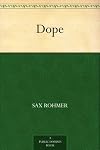
Think drug addition is solely a modern-day affliction? Think again. This century-old mystery novel is a testament to the fact that substance abuse has been around nearly as long as the substances themselves. As is often the case, increasing demand for illicit drugs has led to a spike in crime. Can this intrepid detective stem the tide?.
Tags
Recommendations














Member Reviews
Had no idea who Sax Rohmer was until I got my e-reader. He's the bloke what invented Fu Manchu. He must have been a cop in his previous life because the detail he gives on the use of cocaine etc in upper class London in the 1920s is a shocker - AND the details of the Chinatown opium dens. It could fall into the category of a police procedural but is saved by having some depth to the characters. Mind you, it was only Lady This and Lord That that were patronising the dens. Makes you wonder where the less posh went for their hit in this era. Excellent for getting a sense of London's Chinatown in the decadent '20s. Read only one Sax Rohmer per year, else they would all blend into one dope anthology! Do not read with red wine just before bed show more - vivid dreams . . . show less
Ratings
Members
- Recently Added By
Author Information

189+ Works 6,135 Members
Sax Rohmer was born in Birmingham, Warwickshire. At the age of 18, he adopted the name Sarsfield, the name of a famous Irish general admired by Rohmer's mother. He married Rose Elizabeth Knox in 1909 and, at his wife's insistence, began using the name Sax Rohmer for his fiction, eventually employing the pseudonym as his actual name. Rohmer was show more basically a self-taught scholar. He started writing as a journalist; his beat was the Limehouse underworld in London. Rohmer had a difficult time breaking into the professional fiction markets, but once he did, he became a household name for exotic adventure both in England and in America. Although his writing brought Rohmer success and money, he was never much of a businessman, and most of his wealth was squandered because of his extravagance and through financial mismanagement. Rohmer eventually moved to New York City. One of Rohmer's great intellectual interests was the occult and supernatural, and these elements frequently appeared as motifs in his fiction. His most famous creation was the evil oriental mastermind, Dr. Fu Manchu, first presented in the novel The Mystery of Fu Manchu in 1913 (later retitled The Insidious Dr. Fu Manchu for its American publication, also in 1913). Most espionage or adventure fiction exploits the social paranoias of its time, and Rohmer himself effectively tapped the Westerner's fear of the stereotyped "yellow peril" threat---the negatively perceived belief that Orientals will conquer the world. The Fu Manchu adventures were patterned, in part, after Arthur Conan Doyle's Sherlock Holmes stories. Rohmer's protagonists in these adventures, Sir Denis Nayland Smith and his companion Dr. Petrie, look very much like Doyle's Holmes and Watson, but, whereas Doyle centered his narratives on the heroes and specifically on the elaborate process of detection, Rohmer focused his attention on the villain and on slam-bang action. Fu Manchu was a master of both Western science and Eastern mysticism, and his efforts at world domination caused no end of problems for Smith and Petrie. In Fu Manchu, Rohmer had created the most famous villain in popular fiction (although Rohmer maintained that Fu Manchu was based on an actual Limehouse criminal). Despite Rohmer's use of outrageous racial stereotyping, many of his novels hold up well today and provide superior examples of how to create narrative pacing and suspense. (Bowker Author Biography) show less
Some Editions
Series

Belongs to Publisher Series
Work Relationships
Common Knowledge
- Canonical title
- Dope
- Original title
- Dope: a Story of Chinatown and the Drug Traffic
- Alternate titles
- Dope: a Tale of the Drug Traffic
- Original publication date
- 1919-09
- People/Characters
- "Red" Kerry
- Important places
- London, England, UK; Limehouse, London, England, UK
- First words
- Monte Irvin, alderman of the city and prospective Lord Mayor of London, paced restlessly from end to end of the well-appointed library of his house in Prince's Gate.
- Last words
- (Click to show. Warning: May contain spoilers.)You are down to toast Kismet, Margaret, but I am going to propose the health, long life and prosperity of Chief Inspector Kerry, of the Criminal Investigation Department."
- Disambiguation notice
- Originally serialized in Detective Story Magazine, July 22-September 9, 1919.
Classifications
Statistics
- Members
- 105
- Popularity
- 309,175
- Reviews
- 1
- Rating
- (4.04)
- Languages
- English, Portuguese
- Media
- Paper, Ebook
- ISBNs
- 21
- ASINs
- 14