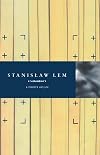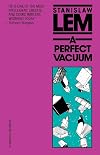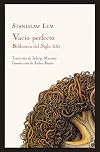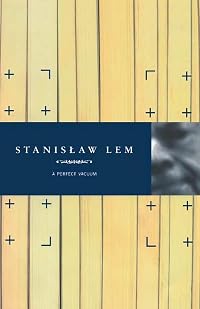
A Perfect Vacuum
by Stanisław Lem
On This Page
Description
Ingenious essays from "a Jorge Luis Borges for the Space Age, who plays in earnest with every concept . . . from free will to probability theory" ( The New York Times Book Review ). In A Perfect Vacuum , Stanislaw Lem steps outside of his fictional comfort zone to try his hand at reviewing the literature of others. The only catch is this: None of these books have actually been published--or even written--he just made them up. These sixteen satirical and brilliantly insidious commentaries on show more non-existent books cover the gamut of unconventional writing techniques: from a Joycean review that doggedly dissects every word to a critique that is written entirely in negatives to an analysis presented in fragments for the reader to assemble as he or she likes. Along the way, Lem presents his trademark examinations on topics ranging from modern art to computer technology to philosophy. At once a disarming delight and a clever mental exercise, A Perfect Vacuum lends credence to the assertion that Lem is "Harpo Marx and Franz Kafka and Isaac Asimov rolled up into one and down the white rabbit's hole" ( Detroit News ). show lessTags
Recommendations















Member Recommendations


Member Reviews
Laugh-out-loud hilarious. It feels like a funny Borges. Loved the stories. The last one is for physicists, and I wasn't as able to keep focused. But the ones about literary genre- make your own book, or angrilly addressing the reader, they were pure genius. There was also plenty of frustratingly relevant social criticism, and discussion of the role of AI and other new technologies.
Jeepers, this is fun. Lem dances the Borges (and acknowledges that he's doing so) and gives it his inimitable, vigorously mentated spin-dizzy. *A Perfect Vacuum* consists of "reviews" of books that don't actually exist. The reader -- at least this one -- can't help but wish some of them *did* exist (especially *Gigamesh* since I'm one of those weirdos who loves *Finnegans Wake*).
It helps that Lem has/had a wonderful translator in Michael Kandel -- I can't vouch for the accuracy of his translations since I don't know Polish, but I can certainly vouch for how well they read, and the two or three I've read read brilliantly.
It helps that Lem has/had a wonderful translator in Michael Kandel -- I can't vouch for the accuracy of his translations since I don't know Polish, but I can certainly vouch for how well they read, and the two or three I've read read brilliantly.
This isn't the first book of "reviews of books that don't exist" that I've read from Lem, but the other one seemed to veer off track and include a really long story that I didn't finish. This one was much better. These are really heavy ideas, not easy reading at all. I often found them entertaining, but sometimes they were just too much for me and dragged on. So if you're into big ideas and tough reads, then I would definitely say give it a read.
This may seem strange but while I was reading this, I kept thinking, "You know who would probably love this book? China Mieville, Umberto Eco and Salman Rushdie." I kept feeling like it could have been written by any of those 3 authors.
This may seem strange but while I was reading this, I kept thinking, "You know who would probably love this book? China Mieville, Umberto Eco and Salman Rushdie." I kept feeling like it could have been written by any of those 3 authors.
I'm not really impressed. Lem is a lousy reviewer, and a review of a non-existent book should if nothing else be an excellent review. A Perfect Vacuum starts out on a high note; the review of the partially fictional A Perfect Vacuum (heavily focused on the non-existent Introduction) is a good review, that, instead of being a mere plot summary, actually has the reviewer engage the author and the issues behind the book. "Being Inc.", on the other hand, is a limp science fiction plot summary; perhaps as Lem claims in back cover copy, he "capture[d] what was cognitively essential about [this] unwritten book", but he failed to capture what was artistically essential about the book. Plot summaries don't make good fiction, nor do they make show more good reviews. "U-Write-It" and "Toi" not only set up straw men to knock down, I have little idea of what they were straw men of. I bailed out a little more than half the book in page count, and 13 out of 16 reviews. The end of the book is lengthy philosophical essays (again, not reviews in any real sense), and it's content I'm not interested in wading through.
I know that I'm not exactly the intended audience; the back cover claims that he tackles "the French new novel, James Joyce, pornography, authorless writing and Dostoevsky", and I'm really only familiar with one of those. Two of the reviews definitely seem to be frontal attacks on James Joyce's Ulysses and Dostoevsky's The Idiot, respectively, so familiarity with those works may help. In the end, only two or three of these sections can honestly be called reviews, and the plot summaries and essays that fill the book don't make for good reading. show less
I know that I'm not exactly the intended audience; the back cover claims that he tackles "the French new novel, James Joyce, pornography, authorless writing and Dostoevsky", and I'm really only familiar with one of those. Two of the reviews definitely seem to be frontal attacks on James Joyce's Ulysses and Dostoevsky's The Idiot, respectively, so familiarity with those works may help. In the end, only two or three of these sections can honestly be called reviews, and the plot summaries and essays that fill the book don't make for good reading. show less
Reviews of nonexistent books. One is a book entitled “U Write It”, which is a literary erector set. Another is “Sexplosion”, in which three giant corporations sort of have sex and meet ruin. In “The New Cosmogony”, a purported Nobel winner provides an address which is nonsense, but sounds like erudition. And of course, there is “Rien du tout, ou la consequence”.
Stanislaw Lem shines a mirror upon the dark world of hypocrisy. He brings a kind of understanding to human idiocy.
Stanislaw Lem shines a mirror upon the dark world of hypocrisy. He brings a kind of understanding to human idiocy.
DNF at 50%
I expected something different - Lemian versions of M. John Harrison's great fictional short reviews in 'You Should Come With Me Now'. What we get instead often has more to do with the canon of literature (think Crusoe, Dostoevsky, etc.) than actual science fiction. The fictional reviews are dense, longwinded and have a lot of meta-literary stuff - and there're more tedious synopses than actual reviews, by the way.
'Pericalypse' and the introductione were great though, and there might still be gems in the second half of the book, but I lacked the stamina to hunt for them.
Weighing A Pig Doesn't Fatten It
I expected something different - Lemian versions of M. John Harrison's great fictional short reviews in 'You Should Come With Me Now'. What we get instead often has more to do with the canon of literature (think Crusoe, Dostoevsky, etc.) than actual science fiction. The fictional reviews are dense, longwinded and have a lot of meta-literary stuff - and there're more tedious synopses than actual reviews, by the way.
'Pericalypse' and the introductione were great though, and there might still be gems in the second half of the book, but I lacked the stamina to hunt for them.
Weighing A Pig Doesn't Fatten It
A collection of reviews of imaginary books, many of which make Ulysses seem devoid of ambition.
Members
- Recently Added By
Published Reviews
ThingScore 75
Lem's new book is the first book reviewed in this book of imaginary book reviews. Lem as not-Lem reviewing not-Lem as Lem, or perhaps Lem1 enclosing Lem2, or the other way about. The title of the book means that it is a book 'about nothing'. In that the books, reviewed do not, and cannot, exist, the reviews cannot exist either. Nor can my own review exist. Let us pretend that it does...
Lem is show more too constructive a writer to be able to demolish through absurdity. Besides, literature can now take absurdity in its stride. In his review of Mme Solange's Rien du tout, ou la consequence, we meet the anti-roman to end all. Fiction lies, because it is fictitious; therefore let us create a verifaction ofdenials: 'He was not born, consequently he was not named either; on account of this he neither cheated in school nor later got mixed up in politics.' ... You have some idea now of the games Lem is playing, but towards the end they become not literary, which is easy, but philosophico-scientific, which is hard. show less
Lem is show more too constructive a writer to be able to demolish through absurdity. Besides, literature can now take absurdity in its stride. In his review of Mme Solange's Rien du tout, ou la consequence, we meet the anti-roman to end all. Fiction lies, because it is fictitious; therefore let us create a verifaction ofdenials: 'He was not born, consequently he was not named either; on account of this he neither cheated in school nor later got mixed up in politics.' ... You have some idea now of the games Lem is playing, but towards the end they become not literary, which is easy, but philosophico-scientific, which is hard. show less
added by SnootyBaronet
Lists

Fakes, Forgeries, and Fictitious Authors
112 works; 4 members

Author Information

Polish science fiction writer Stanislaw Lem was born on September 12, 1921. A medical graduate of Cracow University, he is at home both in the sciences and in philosophy, and this broad erudition gives his writings genuine depth. He has published extensively, not only fiction, but also theoretical studies. His books have been translated into 41 show more languages and sold over 27 million copies. He gained international acclaim for The Cyberiad, a series of short stories, which was first published in 1974. A trend toward increasingly serious philosophical speculation is found in his later works, such as Solaris (1961), which was made into a Soviet film by Russian director Andrei Tarkovsky in 1972 and remade by Steven Soderbergh in 2002. He died on March 27, 2006 in Krakow at the age of 84. (Bowker Author Biography) show less
Some Editions
Awards and Honors
Series
Belongs to Publisher Series
Work Relationships
Common Knowledge
- Canonical title
- A Perfect Vacuum
- Original title
- Doskonała Próżnia
- Original publication date
- 1971 (Doskonała próżnia) (Doskonała próżnia); 1979 (A Perfect Vacuum) (A Perfect Vacuum)
- First words
- Reviewing nonexistent books is not Lem’s invention; we find such experiments not only in a contemporary writer, Jorge Luis Borges (for example, his “Investigations of the Writings of Herbert Quaine”), but the idea goes ... (show all)further back—and even Rabelais was not the first to make use of it. A Perfect Vacuum is unusual in that it purports to be an anthology made up entirely of such critiques.
- Last words
- (Click to show. Warning: May contain spoilers.)With these words of my teacher—not altogether skeptical, I think!—I conclude the lecture. Thank you.
Classifications
- Genres
- Fiction and Literature, Science Fiction
- DDC/MDS
- 891.85373 — Literature & rhetoric Literatures of other languages East Indo-European and Celtic literatures West and South Slavic languages (Bulgarian, Slovene, Polish, Czech, Slovak, Serbo-Croatian, and Macedonian) Polish Polish fiction 1919–1989 1945-1989
- LCC
- PG7158 .L39 .D613 — Language and Literature Slavic languages and literatures. Baltic languages. Albanian language Slavic. Baltic. Albanian Slavic Polish
- BISAC
Statistics
- Members
- 730
- Popularity
- 38,893
- Reviews
- 9
- Rating
- (3.98)
- Languages
- 8 — English, German, Japanese, Polish, Russian, Spanish, Swedish, Turkish
- Media
- Paper, Audiobook, Ebook
- ISBNs
- 22
- ASINs
- 12