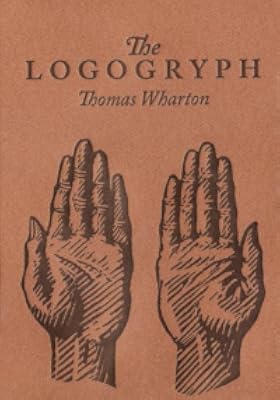
The Logogryph: A Bibliography of Imaginary Books
by Thomas Wharton
On This Page
Description
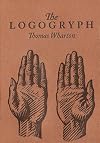
"The particular volume I’m looking for is nameless, lacking a cover, title page, or any other outward markings of identity. Over the centuries its leaves have known nothing but change. They have been removed, replaced, altered, lost. The nameless book has been bound, taken apart, and reassembled with the pieces of other dismembered volumes, until one could ask whether there is anything left of the original. Or if there ever was an original." So begins Thomas Wharton's book about books. show more What follows is a sequence of variations on the experience of reading and on the book a physical and imaginative object. One tale traces the origins of a fictional card game. Another tells of a duel between two margin scribblers. Roving across the globe and from parable to mystery, Wharton positions his reader between the covers of a book that is not. How are we to read the pieces that follow? As extraneous to the nameless book, as parts of it in its original form or perhaps as evidence that it has relocated to other existing volumes? The Logogryph takes its cues from magic realism and the techniques of cinematography. The result is a mind-bending caper through the process of reading, the relationships we establish with fictitious worlds and the possibility of worlds yet unread. Wharton indulges his reader with tales of fantastical cities where the only occupation is reading and of the plight of a protagonist suddenly dislodged from his own novel. And what becomes of the reader who reads all of this? This book is a Smyth-sewn paperback with a jacket and full sleeve. The text was typeset by Andrew Steeves in Caslon types and printed on Rolland Zephyr Laid paper. The jacket was printed letterpress. The inside features illustrations by Wesley Bates. show lessTags
Recommendations





Member Recommendations
CGlanovsky Excerpts and intimations of books that don't exist. A celebration of reading.
Member Reviews
I kept bouncing back and forth between feeling that the Logogryph was transcendent, and the feeling that it never quite lived up to its potential.
I think I will like it better on a second read, where I can leave my expectations behind and just experience the narrative.
The Logogryph reminds me quite a bit of Calvino's Cities and various Borges stories, but has its own form and feel.
Recommended only for readers who don't mind a narrative that wanders like a river, or hops about like a frog. Wharton's prose is lovely and his ideas very inventive. If you don't mind riding the winds, check this out.
I think I will like it better on a second read, where I can leave my expectations behind and just experience the narrative.
The Logogryph reminds me quite a bit of Calvino's Cities and various Borges stories, but has its own form and feel.
Recommended only for readers who don't mind a narrative that wanders like a river, or hops about like a frog. Wharton's prose is lovely and his ideas very inventive. If you don't mind riding the winds, check this out.
A bibliography of imaginary books and "a sort of a riddle" as defined on one of the first pages of the book. I could end my review here, and state that enough is said already. Maybe adding that the book was lovely, enjoyable and thoughtful, even though I'd understand if someone said it is merely annoying.
Logogryph consists of stories or passages of text that mostly seem to be unrelated - they mostly are about stories or books, though - even though there always is a feeling of the presence of the big plan, that there is something that puts the writings together.
In the beginning a boy gets lost, and ends up in a big garden of a big house where he befriends with the family that lives there, an English lady and her two children who are show more slightly older than the boy, an mostly absent father. He returns there time after time - until something happens in the family and things start to change.
On one his last visits to the family he is presented a big old suitcase full of old books, English classics & some historical texts.
This storyline is dropped for a while, and other kind of stories follow: the story of the inventor of paper, one about a travelling fransiscan who collects stories of the Mexican indigenous people soon after the conquest, an essay on Atlantean literary fashions, story of two avid readers who wage a verbal war in the margins of second-hand books, there are lists, stories about stories (in a very Borgesian way), stories about more books, and once in a while a short passage about the later life of the boy, who has become a writer, a father, an ex-husband, a dreamer... and then you get it: there is a big picture. show less
Logogryph consists of stories or passages of text that mostly seem to be unrelated - they mostly are about stories or books, though - even though there always is a feeling of the presence of the big plan, that there is something that puts the writings together.
In the beginning a boy gets lost, and ends up in a big garden of a big house where he befriends with the family that lives there, an English lady and her two children who are show more slightly older than the boy, an mostly absent father. He returns there time after time - until something happens in the family and things start to change.
On one his last visits to the family he is presented a big old suitcase full of old books, English classics & some historical texts.
This storyline is dropped for a while, and other kind of stories follow: the story of the inventor of paper, one about a travelling fransiscan who collects stories of the Mexican indigenous people soon after the conquest, an essay on Atlantean literary fashions, story of two avid readers who wage a verbal war in the margins of second-hand books, there are lists, stories about stories (in a very Borgesian way), stories about more books, and once in a while a short passage about the later life of the boy, who has become a writer, a father, an ex-husband, a dreamer... and then you get it: there is a big picture. show less
Perhaps not as good as the first two books of Mr. Wharton. But still and engrossing read.
Original Content and Plot
Ho scovato questo libro per caso, come spesso accade, e sono rimasta molto intrigata dalla trama. Un libro che parla di libri che vanno oltre i loro limiti: prometteva davvero di essere avvincente.
La prima metà lo è stata davvero. Ogni personaggio è così peculiare da far divorare una pagina dopo l'altra per saperne di più su di lui. Il castello del conte, poi, pieno di misteri, ingranaggi e libri rari è affascinante e promette sviluppi interessanti. Già pregustavo scenari pieni di significato quando sono arrivata alla seconda metà e il mio entusiasmo si è bruscamente raffreddato.
Qui, infatti, il romanzo perde il fascino del mistero e assume uno sconfortante guazzabuglio di azioni che vorrebbero essere avventure, ma hanno il show more solo merito di confondere il lettore, di fargli perdere il senso delle vicende (oltre che annoiarlo in alcuni punti). Un vero peccato, perché era un libro pieno di potenziale: a quale lettore non piacerebbe leggere la storia del libro infinito? show less
La prima metà lo è stata davvero. Ogni personaggio è così peculiare da far divorare una pagina dopo l'altra per saperne di più su di lui. Il castello del conte, poi, pieno di misteri, ingranaggi e libri rari è affascinante e promette sviluppi interessanti. Già pregustavo scenari pieni di significato quando sono arrivata alla seconda metà e il mio entusiasmo si è bruscamente raffreddato.
Qui, infatti, il romanzo perde il fascino del mistero e assume uno sconfortante guazzabuglio di azioni che vorrebbero essere avventure, ma hanno il show more solo merito di confondere il lettore, di fargli perdere il senso delle vicende (oltre che annoiarlo in alcuni punti). Un vero peccato, perché era un libro pieno di potenziale: a quale lettore non piacerebbe leggere la storia del libro infinito? show less
Aug 28, 2023Italian
Ni un essai, ni un roman, l'idée de ce livre était peut-être plus séduisante que sa réalisation. En fait, la quatrième de couverture et quelques entrevues et critiques promettaient tellement plus. J'ai aimé toutefois quelques-uns des passages, quelques-unes des idées, quelques-unes des élucubrations bibliophiles, plusieurs des livres impossibles. Je demeure sur ma faim, mais l'auteur et son imagination débridée m'ont mis en appétit de ces livres dignes de la bibliothèque de Borges.
[http://rivesderives.blogspot.ca/2017/03/logogryphe-une-bibliographie-de-livres.html]
[http://rivesderives.blogspot.ca/2017/03/logogryphe-une-bibliographie-de-livres.html]
Mar 9, 2017French
1
Ratings
Members
- Recently Added By
Lists

Best 21st Century Books (So Far)
679 works; 86 members

Metafiction
86 works; 23 members
International IMPAC Dublin Literary Award
179 works; 6 members

Used books to buy next
565 works; 1 member
Author Information

Awards and Honors
Common Knowledge
- Canonical title
- The Logogryph: A Bibliography of Imaginary Books
- Original publication date
- 2004
- People/Characters
- Elizabeth Weaver; Alec Weaver; Holly Weaver; Ts'ai Lun; Adam e'Aea; oMiAi (show all 16); John nnAI; Oa aO; Jenna Wembley; Huitzilopochtli; Vitziputzli; Strabo; Mithridates VI, King of Pontus; Odysseus; George Weaver; Terry Fox
- Quotations
- This book is not—as you had anticipated from the bas-relief depiction of a shipwreck on the cover—a novel about a castaway on a desert island. The novel is an island, and in reading it you become its solitary inhabitant.
A nervous, spasmodic, never utterly satisfying activity. A careful madness. A violent act of will, of escape, of refusal. A delay, a prolongation, an unending search.
Classifications
Statistics
- Members
- 214
- Popularity
- 153,253
- Reviews
- 6
- Rating
- (3.92)
- Languages
- English, French, Italian
- Media
- Paper
- ISBNs
- 4