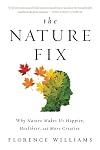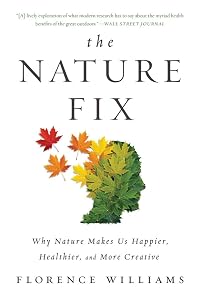
The Nature Fix: Why Nature Makes Us Happier, Healthier, and More Creative
by Florence Williams
On This Page
Description
Nature. Science. Self-Improvement. Nonfiction. For centuries, poets and philosophers extolled the benefits of a walk in the woods: Beethoven drew inspiration from rocks and trees; Wordsworth composed while tromping over the heath; Nikola Tesla conceived the electric motor while visiting a park. Intrigued by our storied renewal in the natural world, Florence Williams sets out to uncover the science behind nature's positive effects on the brain. From forest trails in Korea, to islands in show more Finland, to groves of eucalyptus in California, Williams investigates the science at the confluence of environment, mood, health, and creativity. Delving into completely new research, she uncovers the powers of the natural world to improve health, promote reflection and innovation, and ultimately strengthen our relationships. As our modern lives shift dramatically indoors, these ideas?and the answers they yield?are more urgent than ever. show lessTags
Recommendations
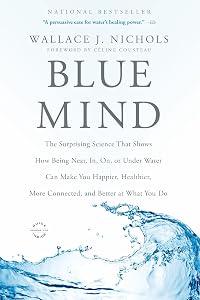

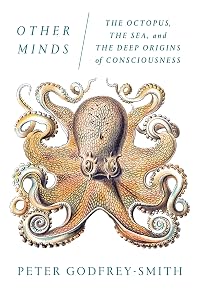
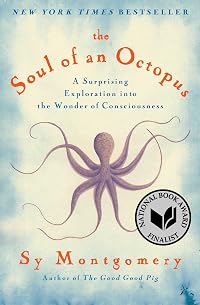
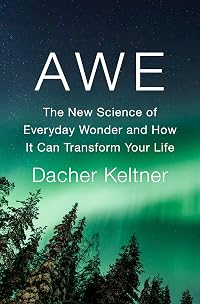
Member Recommendations
Member Reviews
[4.25] A friend has aptly dubbed me a “nature nerd.” I would sooner explore a river on my kayak or hike in a forest than watch an NFL playoff game or scarf down buttery popcorn in my neighborhood Regal. So is it any surprise that I’ve assigned 4+ stars to “The Nature Fix?” Williams’ book focuses on the terrain that intersects mental health and our environment. It’s an engaging, anecdote-laden ode to “the restorative effects of nature.”
The book is divided into five sections in a bid to help readers better absorb the voluminous material. I often take sketchy notes when I read personal growth/self-help books. I was surprised to discover that this set of notes exceeded 2,000 words (No worries: This review will 75% show more shorter!)
The underlying theme: spending time in nature – even short periods – have tangible physiological and psychological benefits. Williams, a journalist who has frequently written about the environment, spent two years researching the book and traveled to several fascinating venues around the world. She further bolsters her credibility when she points out numerous times that some studies and experiments have been inconclusive in documenting health benefits. Yet dozens of compelling examples lead to similar conclusions – that on average, people are happier, more creative and even more physically healthy when they spend some time outdoors.
My personal notes red-flag more than three dozen intriguing concepts and “fun facts,” only of a few of which will make the cut for this review. The author vividly explores the benefits of “forest bathing.” She examines the impact of noise, lamenting that it “may be the most pervasive pollutant in America.” She cites one expert who believes listening to several minutes of birdsong each day can have tangible benefits (I’ve had a small cottage in a lakefront community for decades where birds outnumber people at least 10 to 1. I’ve long thought that listening to birdsong on my deck helped me to feel more calm, mindful and creative. I now feel more confident that I wasn’t imagining things.)
Williams provides examples of attention restoration theory, illustrating how some programs have harnessed nature to help treat anxiety, depression and ADHD. She even discusses some concepts I’ve never pondered before. For example, I’ve never heard of “walking book clubs” where bookworms stroll through nature as they discuss a specific tome. I love it!
The author wisely acknowledges that “nature fixes” aren’t for everyone. She quotes Woody Allen who once quipped: “I love nature, I just don’t want to get any of it on me.”
If the book has one flaw, it’s that some passages trod over very similar turf. As a literary “minimalist,” I could have lived with 20% fewer examples and studies. But I quibble. “The Nature Fix” is thought-provoking and generally engaging. It may also be a persuasive tool that helps many readers who are unwittingly suffering from “nature deficit disorder.” show less
The book is divided into five sections in a bid to help readers better absorb the voluminous material. I often take sketchy notes when I read personal growth/self-help books. I was surprised to discover that this set of notes exceeded 2,000 words (No worries: This review will 75% show more shorter!)
The underlying theme: spending time in nature – even short periods – have tangible physiological and psychological benefits. Williams, a journalist who has frequently written about the environment, spent two years researching the book and traveled to several fascinating venues around the world. She further bolsters her credibility when she points out numerous times that some studies and experiments have been inconclusive in documenting health benefits. Yet dozens of compelling examples lead to similar conclusions – that on average, people are happier, more creative and even more physically healthy when they spend some time outdoors.
My personal notes red-flag more than three dozen intriguing concepts and “fun facts,” only of a few of which will make the cut for this review. The author vividly explores the benefits of “forest bathing.” She examines the impact of noise, lamenting that it “may be the most pervasive pollutant in America.” She cites one expert who believes listening to several minutes of birdsong each day can have tangible benefits (I’ve had a small cottage in a lakefront community for decades where birds outnumber people at least 10 to 1. I’ve long thought that listening to birdsong on my deck helped me to feel more calm, mindful and creative. I now feel more confident that I wasn’t imagining things.)
Williams provides examples of attention restoration theory, illustrating how some programs have harnessed nature to help treat anxiety, depression and ADHD. She even discusses some concepts I’ve never pondered before. For example, I’ve never heard of “walking book clubs” where bookworms stroll through nature as they discuss a specific tome. I love it!
The author wisely acknowledges that “nature fixes” aren’t for everyone. She quotes Woody Allen who once quipped: “I love nature, I just don’t want to get any of it on me.”
If the book has one flaw, it’s that some passages trod over very similar turf. As a literary “minimalist,” I could have lived with 20% fewer examples and studies. But I quibble. “The Nature Fix” is thought-provoking and generally engaging. It may also be a persuasive tool that helps many readers who are unwittingly suffering from “nature deficit disorder.” show less
I had been wanting to read this for a while because I find the concept of biophilia very intriguing, as well as the idea that exposure to the natural world can have tangible medical benefits in addition to promoting psychological well-being. I was disappointed in that I would have liked at least a few graphs and a discussion of just how much astronauts on the space station miss nature (hint: at least one of them plays recordings of mosquitoes buzzing), but there were a lot of interesting concepts here. Plus, there’s a good sense of humor running through it.
For example, the book described multiple studies by neuroscientists interested in how immersion in nature can affect the brain and included an account of a team of neuroscientists show more hiking and doing field work near Moab, Utah (near Arches National Park). I thought this story was pretty funny:
“During lunch atop warm boulders near the creek, I pulled out my flower guide. We lumbered down to gather around a white blossom on a stalk. Turns out there were quite a few of these on the laminated cared, and this one didn’t quite fit. “I think it’s a buckwheat,” said someone. “No look at the leaves. They’re pointy.”
“That’s gotta be this one, a milkvetch,” said Atchley, pointing to the card.
“Actually, it’s a stinking milkvetch.”
It was natural history by committee: educated guesses, disputes, and confident pronouncements that turned out to be wrong. It was probably a lot like doing brain science.” (Page 48).
I also found the discussion of growing noise pollution to be interesting. Before I read this, I did not know that the National Park Service had a mandate to preserve natural soundscapes in national parks. I am glad they are paying attention to this because, like the author and many others, I am also sensitive to noise pollution. In fact, one of my favorite things about going to large state or national parks is what I call “the blessed silence” – silence so deep that it seems you can not only hear the plants grow but also hear them think. Of course, I can understand that some noise can’t be helped – but its source had better not be a bunch of idiots disturbing the peace of a national park for no good reason.
The book also discussed the effects of birdsong on the human brain. I was surprised to learn that our brains are very similar to bird brains when it comes to hearing, processing, and creating language, and that we share more genes related to speech with songbirds than we do with any primates. Both humans and birds use the same neural area for their language centers, known as the arcopalladium in birds and the basal ganglia in humans. The basal ganglia are also known to regulate emotion, and it’s no coincidence that listening to music can cause emotional reactions. Apparently, so can listening to birdsong, as studies have shown that people who listen to birds singing consistently show improvements in both mood and mental alertness.
Finally, the book also brought up something I had never thought of before, although it makes sense now that I think about it. It’s very likely that different people have different tolerances when it comes to “doses” of nature. While some of this may be due to natural variation, it might also have something to do with what you’re used to. For example, the author is from Colorado, and the neuroscientist she talked to suggested that she might want more quiet and greater views because of it. She added, “nature [is] like caffeine, or heroin. You keep wanting more.” (Page 176). I would agree, and I would add that if you’re used to California, which contains a total of ten spectacular national parks, including the largest in the country, your dosage requirements could easily skyrocket to levels almost impossible to satisfy.
As an example, I’m from California, and here was my reaction to this quote, which referred to Singapore’s Gardens by the Bay park: “But the park’s piece de resistance is a grove of eighteen Supertrees that are entirely fake. Better than the real thing, they soar between 80 and 160 feet into the sky…” (Page 248). “Better than the real thing”? I would advise this author to visit, at the very least, Big Trees State Park in Calaveras, California. There, she would find real pines about the height of the fake trees she finds so impressive, interspersed with giant sequoia trees that utterly dwarf every other tree in the vicinity. We’re talking real trees bigger than blue whales – the largest single organisms on the planet. Every year, the General Sherman giant sequoia, in Sequoia National Park, adds enough wood to build a house. I’d also advise her to visit either Muir Woods, or better yet, Redwoods State and National Parks, both of which are home to towering coast redwoods – record setting trees approaching the physical limits of height for trees – and easily twice as tall as said fake trees. Coast redwoods and giant sequoias are native to California, so there aren’t just one or two of them in botanical gardens, or even eighteen (the number of fake trees in the gardens), but entire coast redwood forests. Giant sequoias tend not to be as dense because of their immense water requirements, but where there is enough water, they will also form groves. And to say that these trees are old is an understatement – many of them were centuries old when Chartres was under construction. If she is truly more impressed by steel “trees” 160 feet high and a few decades old than by real trees 350 feet high and a millennium old, it makes me want to start questioning everything else she’s written. At best, she seems to have a limited understanding of “the real thing.”
I’m standing next to some giant sequoias in Calaveras Big Trees State Park.
I’m standing on a trail through a forest of young coast redwoods near San Francisco. These second-growth trees probably aren’t much more than a hundred years old.
Welcome to God’s arboretum. These are the real things.
“Accept no substitutes, and don’t be fooled by imitations!” show less
For example, the book described multiple studies by neuroscientists interested in how immersion in nature can affect the brain and included an account of a team of neuroscientists show more hiking and doing field work near Moab, Utah (near Arches National Park). I thought this story was pretty funny:
“During lunch atop warm boulders near the creek, I pulled out my flower guide. We lumbered down to gather around a white blossom on a stalk. Turns out there were quite a few of these on the laminated cared, and this one didn’t quite fit. “I think it’s a buckwheat,” said someone. “No look at the leaves. They’re pointy.”
“That’s gotta be this one, a milkvetch,” said Atchley, pointing to the card.
“Actually, it’s a stinking milkvetch.”
It was natural history by committee: educated guesses, disputes, and confident pronouncements that turned out to be wrong. It was probably a lot like doing brain science.” (Page 48).
I also found the discussion of growing noise pollution to be interesting. Before I read this, I did not know that the National Park Service had a mandate to preserve natural soundscapes in national parks. I am glad they are paying attention to this because, like the author and many others, I am also sensitive to noise pollution. In fact, one of my favorite things about going to large state or national parks is what I call “the blessed silence” – silence so deep that it seems you can not only hear the plants grow but also hear them think. Of course, I can understand that some noise can’t be helped – but its source had better not be a bunch of idiots disturbing the peace of a national park for no good reason.
The book also discussed the effects of birdsong on the human brain. I was surprised to learn that our brains are very similar to bird brains when it comes to hearing, processing, and creating language, and that we share more genes related to speech with songbirds than we do with any primates. Both humans and birds use the same neural area for their language centers, known as the arcopalladium in birds and the basal ganglia in humans. The basal ganglia are also known to regulate emotion, and it’s no coincidence that listening to music can cause emotional reactions. Apparently, so can listening to birdsong, as studies have shown that people who listen to birds singing consistently show improvements in both mood and mental alertness.
Finally, the book also brought up something I had never thought of before, although it makes sense now that I think about it. It’s very likely that different people have different tolerances when it comes to “doses” of nature. While some of this may be due to natural variation, it might also have something to do with what you’re used to. For example, the author is from Colorado, and the neuroscientist she talked to suggested that she might want more quiet and greater views because of it. She added, “nature [is] like caffeine, or heroin. You keep wanting more.” (Page 176). I would agree, and I would add that if you’re used to California, which contains a total of ten spectacular national parks, including the largest in the country, your dosage requirements could easily skyrocket to levels almost impossible to satisfy.
As an example, I’m from California, and here was my reaction to this quote, which referred to Singapore’s Gardens by the Bay park: “But the park’s piece de resistance is a grove of eighteen Supertrees that are entirely fake. Better than the real thing, they soar between 80 and 160 feet into the sky…” (Page 248). “Better than the real thing”? I would advise this author to visit, at the very least, Big Trees State Park in Calaveras, California. There, she would find real pines about the height of the fake trees she finds so impressive, interspersed with giant sequoia trees that utterly dwarf every other tree in the vicinity. We’re talking real trees bigger than blue whales – the largest single organisms on the planet. Every year, the General Sherman giant sequoia, in Sequoia National Park, adds enough wood to build a house. I’d also advise her to visit either Muir Woods, or better yet, Redwoods State and National Parks, both of which are home to towering coast redwoods – record setting trees approaching the physical limits of height for trees – and easily twice as tall as said fake trees. Coast redwoods and giant sequoias are native to California, so there aren’t just one or two of them in botanical gardens, or even eighteen (the number of fake trees in the gardens), but entire coast redwood forests. Giant sequoias tend not to be as dense because of their immense water requirements, but where there is enough water, they will also form groves. And to say that these trees are old is an understatement – many of them were centuries old when Chartres was under construction. If she is truly more impressed by steel “trees” 160 feet high and a few decades old than by real trees 350 feet high and a millennium old, it makes me want to start questioning everything else she’s written. At best, she seems to have a limited understanding of “the real thing.”
I’m standing next to some giant sequoias in Calaveras Big Trees State Park.
I’m standing on a trail through a forest of young coast redwoods near San Francisco. These second-growth trees probably aren’t much more than a hundred years old.
Welcome to God’s arboretum. These are the real things.
“Accept no substitutes, and don’t be fooled by imitations!” show less
Truly more of a 3.5 stars than a 4 for me, BUT it definitely made me think and since I'm an earlier reviewer it seems mean to curve downwards.
I am reviewing an advance reading copy.
The strength of this book is the skill that Williams has with setting a scene. Her descriptions are very visual and engaging. My favorite chapters were about nature therapy and the role of nature within society in both Japan and Korea. She also does a good job of citing her sources, which is something that writers in the "popular science" genre sometimes really fail at. Similar to other popular science authors, (Mary Roach, for example), Williams is herself a character in her journey to learn more about "why nature makes us happier, healthier, and more show more creative." For the most part she comes across as earnest and self-aware, but if her voice gets under your skin early on, she can come across as a little annoying. I think that this is a problem that editing could definitely remedy, and it may not be a problem with the book when it is published.
The primary downfall of this book (or at least the advance reading copy) is that it seems to lack a real focus or narrative arch. Williams does a lot of research into LOTS of ways that humans interact with nature as well as studies looking into how nature impacts the moods and health of people. A ton of food for thought, but there isn't a clear journey. My opinion is that this book would have been more powerful if it were slightly less episodic.
I am passing this book along to my boyfriend (who bemoans our living in New York City and yearns for rural life) so I can say that I would recommend this book, especially to people who already hold some beliefs that green space is superior to urban/concrete space. It's also worth noting, however, that my coworker--a born and bred New Yorker--thought that The Nature Fix was a bunch of hooey.
**Update**
The boyfriend who hates city life *adored* Nature Fix and called it one of the best books he has read recently. He's a scientist, too, which I think speaks highly of Williams's ability to write clearly and use scholarly resources. For me, this book remains 3.5 although I haven't looked at a finished copy since my review. show less
I am reviewing an advance reading copy.
The strength of this book is the skill that Williams has with setting a scene. Her descriptions are very visual and engaging. My favorite chapters were about nature therapy and the role of nature within society in both Japan and Korea. She also does a good job of citing her sources, which is something that writers in the "popular science" genre sometimes really fail at. Similar to other popular science authors, (Mary Roach, for example), Williams is herself a character in her journey to learn more about "why nature makes us happier, healthier, and more show more creative." For the most part she comes across as earnest and self-aware, but if her voice gets under your skin early on, she can come across as a little annoying. I think that this is a problem that editing could definitely remedy, and it may not be a problem with the book when it is published.
The primary downfall of this book (or at least the advance reading copy) is that it seems to lack a real focus or narrative arch. Williams does a lot of research into LOTS of ways that humans interact with nature as well as studies looking into how nature impacts the moods and health of people. A ton of food for thought, but there isn't a clear journey. My opinion is that this book would have been more powerful if it were slightly less episodic.
I am passing this book along to my boyfriend (who bemoans our living in New York City and yearns for rural life) so I can say that I would recommend this book, especially to people who already hold some beliefs that green space is superior to urban/concrete space. It's also worth noting, however, that my coworker--a born and bred New Yorker--thought that The Nature Fix was a bunch of hooey.
**Update**
The boyfriend who hates city life *adored* Nature Fix and called it one of the best books he has read recently. He's a scientist, too, which I think speaks highly of Williams's ability to write clearly and use scholarly resources. For me, this book remains 3.5 although I haven't looked at a finished copy since my review. show less
I had been wanting to read this for a while because I find the concept of biophilia very intriguing, as well as the idea that exposure to the natural world can have tangible medical benefits in addition to promoting psychological well-being. I was disappointed in that I would have liked at least a few graphs and a discussion of just how much astronauts on the space station miss nature (hint: at least one of them plays recordings of mosquitoes buzzing), but there were a lot of interesting concepts here. Plus, there’s a good sense of humor running through it.
For example, the book described multiple studies by neuroscientists interested in how immersion in nature can affect the brain and included an account of a team of neuroscientists show more hiking and doing field work near Moab, Utah (near Arches National Park). I thought this story was pretty funny:
“During lunch atop warm boulders near the creek, I pulled out my flower guide. We lumbered down to gather around a white blossom on a stalk. Turns out there were quite a few of these on the laminated cared, and this one didn’t quite fit. “I think it’s a buckwheat,” said someone. “No look at the leaves. They’re pointy.”
“That’s gotta be this one, a milkvetch,” said Atchley, pointing to the card.
“Actually, it’s a stinking milkvetch.”
It was natural history by committee: educated guesses, disputes, and confident pronouncements that turned out to be wrong. It was probably a lot like doing brain science.” (Page 48).
I also found the discussion of growing noise pollution to be interesting. Before I read this, I did not know that the National Park Service had a mandate to preserve natural soundscapes in national parks. I am glad they are paying attention to this because, like the author and many others, I am also sensitive to noise pollution. In fact, one of my favorite things about going to large state or national parks is what I call “the blessed silence” – silence so deep that it seems you can not only hear the plants grow but also hear them think. Of course, I can understand that some noise can’t be helped – but its source had better not be a bunch of idiots disturbing the peace of a national park for no good reason.
The book also discussed the effects of birdsong on the human brain. I was surprised to learn that our brains are very similar to bird brains when it comes to hearing, processing, and creating language, and that we share more genes related to speech with songbirds than we do with any primates. Both humans and birds use the same neural area for their language centers, known as the arcopalladium in birds and the basal ganglia in humans. The basal ganglia are also known to regulate emotion, and it’s no coincidence that listening to music can cause emotional reactions. Apparently, so can listening to birdsong, as studies have shown that people who listen to birds singing consistently show improvements in both mood and mental alertness.
Finally, the book also brought up something I had never thought of before, although it makes sense now that I think about it. It’s very likely that different people have different tolerances when it comes to “doses” of nature. While some of this may be due to natural variation, it might also have something to do with what you’re used to. For example, the author is from Colorado, and the neuroscientist she talked to suggested that she might want more quiet and greater views because of it. She added, “nature [is] like caffeine, or heroin. You keep wanting more.” (Page 176). I would agree, and I would add that if you’re used to California, which contains a total of ten spectacular national parks, including the largest in the country, your dosage requirements could easily skyrocket to levels almost impossible to satisfy.
As an example, I’m from California, and here was my reaction to this quote, which referred to Singapore’s Gardens by the Bay park: “But the park’s piece de resistance is a grove of eighteen Supertrees that are entirely fake. Better than the real thing, they soar between 80 and 160 feet into the sky…” (Page 248). “Better than the real thing”? I would advise this author to visit, at the very least, Big Trees State Park in Calaveras, California. There, she would find real pines about the height of the fake trees she finds so impressive, interspersed with giant sequoia trees that utterly dwarf every other tree in the vicinity. We’re talking real trees bigger than blue whales – the largest single organisms on the planet. Every year, the General Sherman giant sequoia, in Sequoia National Park, adds enough wood to build a house. I’d also advise her to visit either Muir Woods, or better yet, Redwoods State and National Parks, both of which are home to towering coast redwoods – record setting trees approaching the physical limits of height for trees – and easily twice as tall as said fake trees. Coast redwoods and giant sequoias are native to California, so there aren’t just one or two of them in botanical gardens, or even eighteen (the number of fake trees in the gardens), but entire coast redwood forests. Giant sequoias tend not to be as dense because of their immense water requirements, but where there is enough water, they will also form groves. And to say that these trees are old is an understatement – many of them were centuries old when Chartres was under construction. If she is truly more impressed by steel “trees” 160 feet high and a few decades old than by real trees 350 feet high and a millennium old, it makes me want to start questioning everything else she’s written. At best, she seems to have a limited understanding of “the real thing.”
I’m standing next to some giant sequoias in Calaveras Big Trees State Park.
I’m standing on a trail through a forest of young coast redwoods near San Francisco. These second-growth trees probably aren’t much more than a hundred years old.
Welcome to God’s arboretum. These are the real things.
“Accept no substitutes, and don’t be fooled by imitations!” show less
For example, the book described multiple studies by neuroscientists interested in how immersion in nature can affect the brain and included an account of a team of neuroscientists show more hiking and doing field work near Moab, Utah (near Arches National Park). I thought this story was pretty funny:
“During lunch atop warm boulders near the creek, I pulled out my flower guide. We lumbered down to gather around a white blossom on a stalk. Turns out there were quite a few of these on the laminated cared, and this one didn’t quite fit. “I think it’s a buckwheat,” said someone. “No look at the leaves. They’re pointy.”
“That’s gotta be this one, a milkvetch,” said Atchley, pointing to the card.
“Actually, it’s a stinking milkvetch.”
It was natural history by committee: educated guesses, disputes, and confident pronouncements that turned out to be wrong. It was probably a lot like doing brain science.” (Page 48).
I also found the discussion of growing noise pollution to be interesting. Before I read this, I did not know that the National Park Service had a mandate to preserve natural soundscapes in national parks. I am glad they are paying attention to this because, like the author and many others, I am also sensitive to noise pollution. In fact, one of my favorite things about going to large state or national parks is what I call “the blessed silence” – silence so deep that it seems you can not only hear the plants grow but also hear them think. Of course, I can understand that some noise can’t be helped – but its source had better not be a bunch of idiots disturbing the peace of a national park for no good reason.
The book also discussed the effects of birdsong on the human brain. I was surprised to learn that our brains are very similar to bird brains when it comes to hearing, processing, and creating language, and that we share more genes related to speech with songbirds than we do with any primates. Both humans and birds use the same neural area for their language centers, known as the arcopalladium in birds and the basal ganglia in humans. The basal ganglia are also known to regulate emotion, and it’s no coincidence that listening to music can cause emotional reactions. Apparently, so can listening to birdsong, as studies have shown that people who listen to birds singing consistently show improvements in both mood and mental alertness.
Finally, the book also brought up something I had never thought of before, although it makes sense now that I think about it. It’s very likely that different people have different tolerances when it comes to “doses” of nature. While some of this may be due to natural variation, it might also have something to do with what you’re used to. For example, the author is from Colorado, and the neuroscientist she talked to suggested that she might want more quiet and greater views because of it. She added, “nature [is] like caffeine, or heroin. You keep wanting more.” (Page 176). I would agree, and I would add that if you’re used to California, which contains a total of ten spectacular national parks, including the largest in the country, your dosage requirements could easily skyrocket to levels almost impossible to satisfy.
As an example, I’m from California, and here was my reaction to this quote, which referred to Singapore’s Gardens by the Bay park: “But the park’s piece de resistance is a grove of eighteen Supertrees that are entirely fake. Better than the real thing, they soar between 80 and 160 feet into the sky…” (Page 248). “Better than the real thing”? I would advise this author to visit, at the very least, Big Trees State Park in Calaveras, California. There, she would find real pines about the height of the fake trees she finds so impressive, interspersed with giant sequoia trees that utterly dwarf every other tree in the vicinity. We’re talking real trees bigger than blue whales – the largest single organisms on the planet. Every year, the General Sherman giant sequoia, in Sequoia National Park, adds enough wood to build a house. I’d also advise her to visit either Muir Woods, or better yet, Redwoods State and National Parks, both of which are home to towering coast redwoods – record setting trees approaching the physical limits of height for trees – and easily twice as tall as said fake trees. Coast redwoods and giant sequoias are native to California, so there aren’t just one or two of them in botanical gardens, or even eighteen (the number of fake trees in the gardens), but entire coast redwood forests. Giant sequoias tend not to be as dense because of their immense water requirements, but where there is enough water, they will also form groves. And to say that these trees are old is an understatement – many of them were centuries old when Chartres was under construction. If she is truly more impressed by steel “trees” 160 feet high and a few decades old than by real trees 350 feet high and a millennium old, it makes me want to start questioning everything else she’s written. At best, she seems to have a limited understanding of “the real thing.”
I’m standing next to some giant sequoias in Calaveras Big Trees State Park.
I’m standing on a trail through a forest of young coast redwoods near San Francisco. These second-growth trees probably aren’t much more than a hundred years old.
Welcome to God’s arboretum. These are the real things.
“Accept no substitutes, and don’t be fooled by imitations!” show less
Liked this for how it got me to think about my relationship with nature, but I frequently found the author a bit smug, and the science--while I am all for this topic--seemed to need to be a little stronger. It is all couched in privilege as well, which Williams only acknowledges briefly at the very end. Also, it really pissed me off how dismissive she was of anti-depressants throughout the book. While I think getting out in nature is amazing and can be transformative (if it's your thing), I also think it is --O.K.-- to manage mood disorders with medication. Enough with this shaming already. Jeez.
If you go back millennia, the early human mind developed several elements to help it survive, fight or flight, communication and the ability to think strategically. Being immersed in the natural world all day must have had a deeper impact too as it is only over the past few years that the effects of us not having much contact with nature are becoming startlingly apparent.
There has always been a theory that being outdoors is good for you, but to prove that just being outdoors does have a real effect rather than just being hearsay. Florence Williams moved from Colorado to Washington DC and was missing the outdoors and open spaces decided to see how the evidence stacked up and to try some of these thongs out for herself. Her travels would show more take to the gardens of Singapore, to the Finnish forests, on a river trip with veterans suffering from PTSD, to investigate the 'Forest bathing' in Japan and how children with ADHD can dramatically reduce their drug intake by being outdoors for a period of time.
These are just a few of the many examples that she includes. They all have one common element though, being outdoors is good for your physical and mental health. This connection to nature is deep-rooted and as the evidence is now showing, essential. In this excellent book by Williams, she mixes solid science with a compelling narrative on all the benefits that others have gained from putting down the mobile device and getting outdoors. It needn't be a monumental hike across the uplands either, just spending a minimum of five hours a month, even around your local parks will have a noticeable difference to your well being. This book is not just highly recommended, but I would argue requisite reading. show less
There has always been a theory that being outdoors is good for you, but to prove that just being outdoors does have a real effect rather than just being hearsay. Florence Williams moved from Colorado to Washington DC and was missing the outdoors and open spaces decided to see how the evidence stacked up and to try some of these thongs out for herself. Her travels would show more take to the gardens of Singapore, to the Finnish forests, on a river trip with veterans suffering from PTSD, to investigate the 'Forest bathing' in Japan and how children with ADHD can dramatically reduce their drug intake by being outdoors for a period of time.
These are just a few of the many examples that she includes. They all have one common element though, being outdoors is good for your physical and mental health. This connection to nature is deep-rooted and as the evidence is now showing, essential. In this excellent book by Williams, she mixes solid science with a compelling narrative on all the benefits that others have gained from putting down the mobile device and getting outdoors. It needn't be a monumental hike across the uplands either, just spending a minimum of five hours a month, even around your local parks will have a noticeable difference to your well being. This book is not just highly recommended, but I would argue requisite reading. show less
The Nature Fix by Florence Williams is a look at the healing power of being in nature. Williams looks at rituals about nature across the globe, from “Forest Bathing” in Japan for stress relief to the common walking tours of Scotland. Williams explores the current research being done to study the nature effect on our psychological and physiological health. In particular, she discusses how sight, smell and sound in nature are particularly healing. With homage to Olmstead, Williams demonstrates that being in nature can help combat PTSD, ADHD, depression and stress. Time in the wilderness can heal your cardiovascular system and make you empirically more generous, positive and creative.
Not just a survey of current studies or waxing show more poetic about walks in the woods, Williams gives concrete advice. “Go outside, often, sometimes in wild places. Bring friends or not. Breathe.” For those of us who are type A and want more specifics, she suggests walking in the outdoors locally several times a week; with longer hikes in the woods once a month; and longer nature-centered vacations twice a year. As much as possible, surround yourself with trees and water, which are particularly healing. A fascinating and inspiring read.
I received an advanced copy of this book from the publisher via netgalley in exchange for an honest review. Thanks! show less
Not just a survey of current studies or waxing show more poetic about walks in the woods, Williams gives concrete advice. “Go outside, often, sometimes in wild places. Bring friends or not. Breathe.” For those of us who are type A and want more specifics, she suggests walking in the outdoors locally several times a week; with longer hikes in the woods once a month; and longer nature-centered vacations twice a year. As much as possible, surround yourself with trees and water, which are particularly healing. A fascinating and inspiring read.
I received an advanced copy of this book from the publisher via netgalley in exchange for an honest review. Thanks! show less
Members
- Recently Added By
Lists

Reading Glasses Podcast
410 works; 3 members
Author Information

9+ Works 1,203 Members
Florence Williams is a journalist and contributing editor to Outside magazine. Her work has appeared in the New York Times and National Geographic, among others. Her first book, Breasts: A Natural and Unnatural History, won the Los Angeles Times Book Prize in Science and Technology. She lives in Washington, DC.
Some Editions
Awards and Honors
Common Knowledge
- Dedication
- To my father, John Skelton Williams, for showing me the natural world in the first place. You always made it magical.
- First words
- I was hiking in Arches National Park when the Mappiness app in my phone pinged me.
Classifications
Statistics
- Members
- 692
- Popularity
- 41,349
- Reviews
- 18
- Rating
- (3.84)
- Languages
- English
- Media
- Paper, Audiobook, Ebook
- ISBNs
- 7
- ASINs
- 3