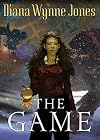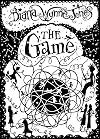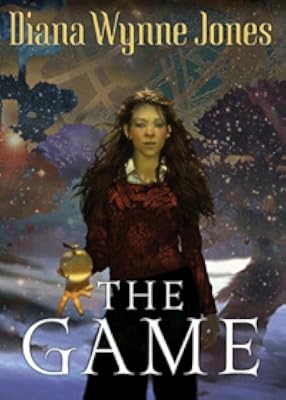
The Game
by Diana Wynne Jones
On This Page
Description
Sent to a boisterous family gathering in Ireland by her overly strict grandmother, orphaned Hayley feels out of place until her unruly cousins include her in a special game involving travel through the mythosphere, the place where all the world's stories can be found, and where some secrets of her past are revealed.Tags
Recommendations

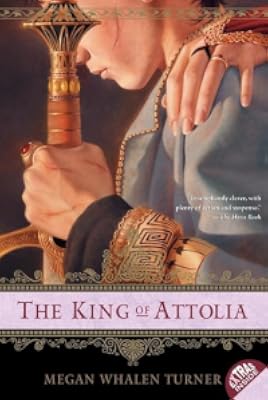
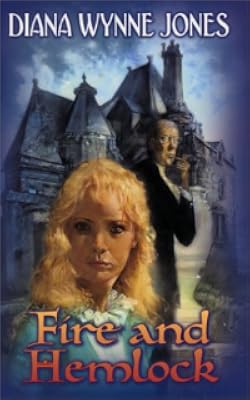
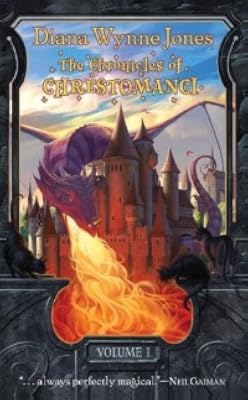
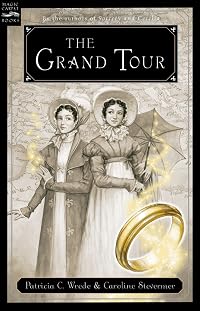




Member Recommendations

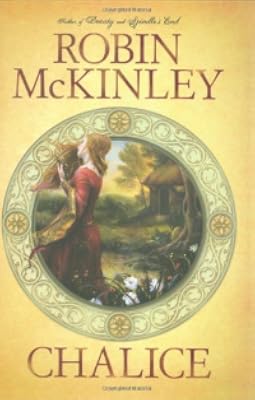
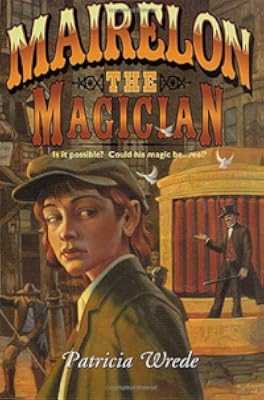
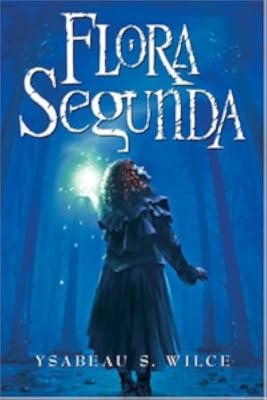
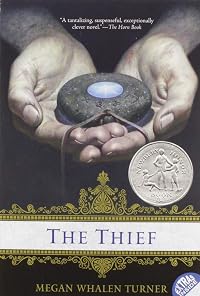
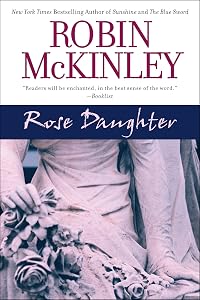
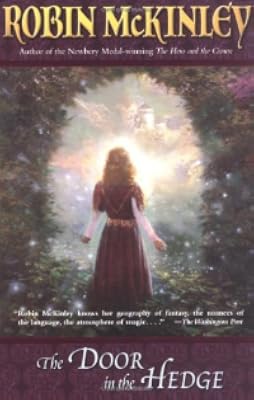
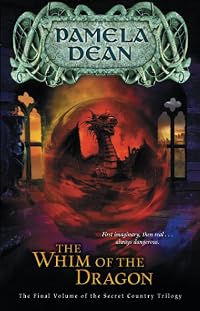
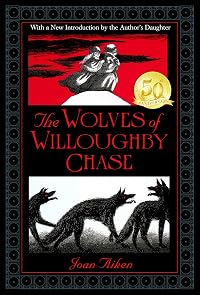
bmlg a young girl's quest among mythical creatures, themes of family alienation and reunion
Member Reviews
Definitely lesser-Diana Wynne Jones. The Game seems to have as plot as your average younger-skewing DWJ book except it’s about a hundred pages shorter, which really leaves out all the characterization and the slow build-up (so basically, arguably all the best parts of her work*) that usually form the filling of her opening-premise-and-crazy-explain-y-ending-with-several-identity-reversals-sandwich. The result is just so bland and oddly clipped that it feels like she found she didn’t really like the story as she was working it and just bundled up what she already had to move on to the next idea. It’s not totally without merit, however. I do really love how she describes the “mythosphere”, where all the stories people tell show more intermingle on a different plane. All the major types of stories reside nearby each other and recurrent themes and motifs and small changes are visible as crossing threads. It’s a mythologists dream come true!:
“This is the mythosphere. It's made up of all the stories, theories and beliefs, legends, myths and hopes, that are generated here on Earth. As you can see, it's constantly growing and moving as people invent new tales to tell or find new things to believe. The older strands move out to become these spirals, where things tend to become quite crude and dangerous. They've hardened off, you see.”
*It’s the characters and build-up that I think make a good DWJ novel. If the madcap ending actually makes sense and finalizes the concept of the whole book into something actually thought-provoking, now that’s a great one. show less
“This is the mythosphere. It's made up of all the stories, theories and beliefs, legends, myths and hopes, that are generated here on Earth. As you can see, it's constantly growing and moving as people invent new tales to tell or find new things to believe. The older strands move out to become these spirals, where things tend to become quite crude and dangerous. They've hardened off, you see.”
*It’s the characters and build-up that I think make a good DWJ novel. If the madcap ending actually makes sense and finalizes the concept of the whole book into something actually thought-provoking, now that’s a great one. show less
Thoroughly enjoyable fantasy romp from the mistress. Jones doesn’t subvert conventions, either: she just ignores them. Anything can happen, and her stories can go anywhere, and the whole solar system and the entire world of myth and magic are the playground in this novella.
This delightful little novel takes the reader on a rompt through Greek mythology in the form of a ridiculous family feud. Jones draws on constellations and planets to give life to an exuberant family who live under the thumb of Uncle Jolyon (Jupter's human-esque form) until a little upstart, Hayley )yes, the comet) rebels and put the old man back into his celestial place.
The myths that Jones draws on are some of the lesser known Greek myths, but reader don't need to have an in depth knowledge to enjoy little Hayley's antics and her uncle's mad dash to keep his power.
The myths that Jones draws on are some of the lesser known Greek myths, but reader don't need to have an in depth knowledge to enjoy little Hayley's antics and her uncle's mad dash to keep his power.
The concept of the mythosphere is a wonderful thing, typical of Diana Wynne Jones and full of creative potential. It is the place we go to in dreams, the realm of the Collective Unconscious, the landscape where mythical archetypes roam and Jungian symbols are to be encountered, collected and treasured. Hayley gets drawn into the mythosphere when she is sent by her grandparents to stay with relatives in Ireland, who have invented a pastime called the Game where they have to fetch back mythical objects against the clock. However, there are repercussions which not only put her in danger but also reveal who she really is and the nature of her large extended family.
Wonderful as the the concept is, and much as it saddens me to say it, this is show more not the most successful of Jones' novellas. There is a haunting quality to many of the characters but I never quite lose the feeling that they are mere personifications of abstract notions. The once novel but now ancient idea espoused by the 4th-century Euhemerus that the gods were merely deified human beings has been turned on its head here (not for the first time in her books), as spelt out by a final note. Just as, say, in 16th- and 17th-century masques Greek and Roman gods and goddesses were portrayed as fickle humans acting pretty much arbitrarily, so do Jones' characters behave contrary to their presumed elevated and cosmic statuses, acting out personal whims and displaying petty feelings about each other. As with many of the author's other novels humour and wit and insight and intricate plotting are all present in abundance, but here the final outcome is rather a let-down in terms of drama and consequence. In particular, the transference of Mediterranean deities to two Atlantic isles, thereby transforming them into petit bourgeoisie, overly diminishes them for no apparent reason.
This is not to say that this is a poor book: Jones seems never able not to draw you into her storytelling by combining familiar everyday situations with fairytale motifs, mixing the new with the old. However, with The Game she has fallen a little short of her usual high standards and our voracious expectations, to my disappointment.
http://calmgrove.wordpress.com/2012/10/15/gam/ show less
Wonderful as the the concept is, and much as it saddens me to say it, this is show more not the most successful of Jones' novellas. There is a haunting quality to many of the characters but I never quite lose the feeling that they are mere personifications of abstract notions. The once novel but now ancient idea espoused by the 4th-century Euhemerus that the gods were merely deified human beings has been turned on its head here (not for the first time in her books), as spelt out by a final note. Just as, say, in 16th- and 17th-century masques Greek and Roman gods and goddesses were portrayed as fickle humans acting pretty much arbitrarily, so do Jones' characters behave contrary to their presumed elevated and cosmic statuses, acting out personal whims and displaying petty feelings about each other. As with many of the author's other novels humour and wit and insight and intricate plotting are all present in abundance, but here the final outcome is rather a let-down in terms of drama and consequence. In particular, the transference of Mediterranean deities to two Atlantic isles, thereby transforming them into petit bourgeoisie, overly diminishes them for no apparent reason.
This is not to say that this is a poor book: Jones seems never able not to draw you into her storytelling by combining familiar everyday situations with fairytale motifs, mixing the new with the old. However, with The Game she has fallen a little short of her usual high standards and our voracious expectations, to my disappointment.
http://calmgrove.wordpress.com/2012/10/15/gam/ show less
Consider this Jones' version of a Strindberg dream play. It begins like many YA novels with a young orphaned girl, Hayley, who has been living with a mean aunt. The story begins when she is sent away to live with another set of aunts. The new house is full of precocious children, and bits of magic enter the scene. So far, typical. Then Hayley plays the Game and the mode of the story changes completely. Where the Game takes people, who the aunts are, and who Hayley is, is gradually revealed but I won't say more. I do wonder what the target audience made of this though.
It's Diana Wynne Jones. Of course it's recommended.
It's Diana Wynne Jones. Of course it's recommended.
Diana Wynne Jones on a bad day is still a wonderful treat - and this is not a bad day!
This is a delightful romp through mythology, touching stories from many different eras and traditions, but with a modern twist - the office work scene was hilarious. This reminded me quite a bit of The Eight Days of Luke, it had a similar sense of characters speeding down inevitable paths, yet doing things because they choose to, not because they are destined to. There are so many lovely touches, but they are difficult to describe without spoiling the story. The only off note was the ending, which while it resolved the story, it seemed a little rushed and abrupt emotionally.
This is a delightful romp through mythology, touching stories from many different eras and traditions, but with a modern twist - the office work scene was hilarious. This reminded me quite a bit of The Eight Days of Luke, it had a similar sense of characters speeding down inevitable paths, yet doing things because they choose to, not because they are destined to. There are so many lovely touches, but they are difficult to describe without spoiling the story. The only off note was the ending, which while it resolved the story, it seemed a little rushed and abrupt emotionally.
Raised by her grandparents since she was a baby, when her parents mysteriously went missing, Hayley is homeschooled, and kept away from other children. When she does something to upset her grandmother she is sent to her aunts in Ireland, where she discovers to her surprise that she has a very large extended family she knew nothing about. As she gets involved in "the game" played by her cousins, a game involving the magical mythosphere, she makes further startling discoveries about the nature of this family to which she belongs...
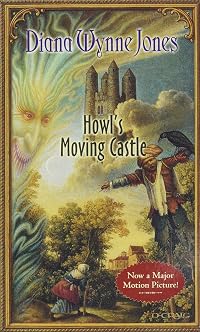
Although I have read and enjoyed quite a few of Diana Wynne Jones' fantasy novels for young people over the years - I have particularly fond memories of the Chronicles of Chrestomanci, as well as Howl's Moving show more Castle - I never happened to pick up The Game until it was assigned as a text in the course I took on the history of children's literature, while getting my masters a few years back. It utilizes Greek mythology, and to a lesser extent Russian folklore, in ways that are quite interesting and unique, and it kept me entertained, as I was reading. That said, it was not particularly memorable, and if I did not have the detailed notes I kept for all my class readings, I would struggle to recall anything beyond the vague outline. Certainly, none of the characters made a great impression upon me. Perhaps I will reread this, at some point, and change my mind, but overall I would not describe this as one of the author's better works. Recommended primarily to strong Diana Wynne Jones fans, and to readers who enjoy mythology-adjacent fantasy fiction. show less
Although I have read and enjoyed quite a few of Diana Wynne Jones' fantasy novels for young people over the years - I have particularly fond memories of the Chronicles of Chrestomanci, as well as Howl's Moving show more Castle - I never happened to pick up The Game until it was assigned as a text in the course I took on the history of children's literature, while getting my masters a few years back. It utilizes Greek mythology, and to a lesser extent Russian folklore, in ways that are quite interesting and unique, and it kept me entertained, as I was reading. That said, it was not particularly memorable, and if I did not have the detailed notes I kept for all my class readings, I would struggle to recall anything beyond the vague outline. Certainly, none of the characters made a great impression upon me. Perhaps I will reread this, at some point, and change my mind, but overall I would not describe this as one of the author's better works. Recommended primarily to strong Diana Wynne Jones fans, and to readers who enjoy mythology-adjacent fantasy fiction. show less
Members
- Recently Added By
Lists

Main Character is aged 10-19
362 works; 6 members

Books Read in 2017
4,249 works; 129 members

Books Read in 2022
5,168 works; 114 members

SFF standalone novellas with female protagonists
101 works; 4 members
Talk Discussions
Past Discussions
Found: YA fantasy-ish book with mythology themes/characters in Name that Book (August 2021)
Author Information

112+ Works 80,486 Members
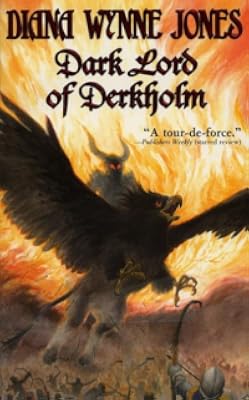
Diana Wynne Jones was born in London on August 16, 1934. In 1953, she began school at St. Anne's College Oxford and attended lectures by J. R. R. Tolkien and C. S. Lewis. After graduation, she created plays for children that were performed at the London Arts Theatre. Her first book was published in 1973. She wrote over 40 books during her lifetime show more including Dark Lord of Derkholm, Earwig and the Witch, and the Chrestomanci series. She won numerous awards including the Guardian Award for Children's Books in 1977 for Charmed Life, the Boston Globe-Horn Book Award in 1984 for Archer's Goon, the Mythopeic Award in 1999, the Karl Edward Wagner Award in 1999, and the Life Achievement Award from the World Fantasy Organization in 2007. Her book Howl's Moving Castle was adapted into an animated film by director Hayao Miyazaki, and the film was nominated for an Academy Award for Best Animated Feature. She died from lung cancer on March 26, 2011 at the age of 76. (Bowker Author Biography) show less
Some Editions
Awards and Honors
Awards
Work Relationships
Is contained in
Has as a commentary on the text
Common Knowledge
- Canonical title
- The Game
- Original publication date
- 2007
- People/Characters
- Hayley Foss; Uncle Jolyon; Grandma Foss; Grandad Foss; Martya; Flute (show all 11); Fiddle; Troy; Harmony; Aunt Ellie; Aunt May
- Important places
- The Mythosphere
- Dedication
- This one is for Frances
- First words
- When Hayley arrived at the big house in Ireland, bewildered and in disgrace, rain was falling and it was nearly dark.
- Last words
- (Click to show. Warning: May contain spoilers.)We can all do what we want to do. At last!
- Blurbers
- Gaiman, Neil; McKinley, Robin; Turner, Megan Whalen
Classifications
- Genres
- Fiction and Literature, Fantasy, Tween, Kids, Teen, Young Adult
- DDC/MDS
- 823.914 — Literature & rhetoric English & Old English literatures English fiction 1900- 1901-1999 1945-1999
- LCC
- PZ7 .J684 .G — Language and Literature Fiction and juvenile belles lettres Fiction and juvenile belles lettres Juvenile belles lettres
- BISAC
Statistics
- Members
- 899
- Popularity
- 29,938
- Reviews
- 42
- Rating
- (3.60)
- Languages
- English, French
- Media
- Paper, Ebook
- ISBNs
- 7
- ASINs
- 3