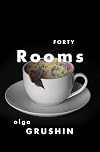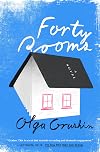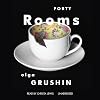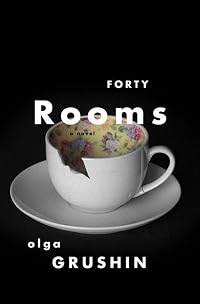
Forty Rooms
by Olga Grushin
On This Page
Description
Fiction. Literature. Totally original in conception and magnificently executed, Forty Rooms is mysterious, withholding, and ultimately emotionally devastating. Olga Grushin is dealing with issues of women's identity—of women's choices—that no modern novel has explored so deeply."Forty rooms" is a conceit: it proposes that a modern woman will inhabit forty rooms in her lifetime. They form her biography, from childhood to death. For our protagonist, the much-loved child of a late marriage, show more the first rooms she is aware of as she nears the age of five are those that make up her family's Moscow apartment. We follow this child as she reaches adolescence, leaves home to study in America, and slowly discovers sexual happiness and love. But her hunger for adventure and her longing to be a great poet conspire to kill the affair. She seems to have made her choice. But one day she runs into a college classmate. He is sure of his path through life and is protective of her, and they eventually drift into an affair and marriage.What follows are the decades of births and deaths, the celebrations, material accumulations, and home comforts—until one day, her children grown and gone, her husband absent, she finds herself alone except for the ghosts of her youth, who have come back to haunt and even taunt her. Compelling and complex, Forty Rooms is also profoundly affecting, its ending shattering but true. We know that Mrs. Caldwell (for that is the only name by which we know her) has died. Was it a life well lived? Quite likely. Was it a life complete? Does such a life ever really exist? Life is, after all, full of trade-offs and choices. Who is to say her path was not well taken? It is this ambiguity that is at the heart of this provocative novel. show lessTags
Recommendations



Member Reviews
This is the story of a woman’s life, traced through events in forty rooms over the years. She’s a Russian immigrant who dreams of being a poet, but puts those aspirations on the back burner to become a mother and housewife instead. In lesser hands, the story could have degenerated into banality, but Grushin’s writing is fresh and insightful - sometimes profound, sometimes funny, but always with a sense of artistry and skill.
Quotes:
On poetry:
“One might even argue that the poet’s primary function is to make the misery of the human condition more bearable by converting raw pain into the orderly music of verse…”
“’Published? But poets are not published, Mrs. Caldwell. You do not put a song in a book. Being a jali is a gift show more you carry to the people. You walk among your people singing them alive, keeping their roots nourished, teaching them who they are. The word jali, do you know what it means in my language? Blood. Yes. That is what it means. Poets are the true blood of their people.’”
On sex, a poem about her first time, I found it quite clever:
“Met.
‘Nyet.’
Bet.
Duet.
Pet.
Wet.
Not yet.
Beset.
Let.
Sweat.
Regret?
Not yet.
Cigarette.”
On solitude:
“And as I sat on the cold bathroom floor, struggling to chisel the poem’s true, muscular shape out of the awkward lump of fatty phrases and petulant sentiments, I already felt – rising slowly from within the muddy misery of loneliness – the hard, bright joy of my new-found solitude.”
On the universe:
“The night embraces me, cool and endless, and above me the stars are tiny holes in the darkness through which the light of eternity is pouring out. I can almost sense primordial stardust flowing through my veins. People are forever telling me that stars make them feel small, and I always nod noncommittally and wonder at the stuffy confinement of their minds.
Stars make me feel vast.”
On writing:
“For this, I know at last, is why I am here: to experience deeply, my senses a heartbeat away from exploding, then take everything I am feeling – the insignificance of being human, the enormity of being human, the intoxication of being young, the ache of being alone, the dizzy thrill of witnessing the steady rotation of the universe, the cozy warmth of a small wooden house teetering on the edge of a vast Russian forest, of an untamed Russian night – yes, take everything I am seeing and hearing and smelling, every dusty book, by a forgotten writer on a shelf, every furtive mouse scurrying under the floorboards, every sneeze of the domovoi, our old brownie, sifting through my childhood clothes in the cluttered attic, every nocturnal flower unfurling in the grass, every sound, every color, every fleeting impression – and use the best words I have to convey it all, to pin it all down, to snatch one single moment from the obvious flow of impersonal time and make it bright, make it personal, make it forever.”
“I wrote that I believed I could sometimes sense the essence of things – houses, books, faces, moments in time – that I sometimes caught of a whiff of their innermost souls, their unique smells, and that what I was hoping to do with my life was to render these impressions in words so vivid, so precise, that others could feel them too.” show less
Quotes:
On poetry:
“One might even argue that the poet’s primary function is to make the misery of the human condition more bearable by converting raw pain into the orderly music of verse…”
“’Published? But poets are not published, Mrs. Caldwell. You do not put a song in a book. Being a jali is a gift show more you carry to the people. You walk among your people singing them alive, keeping their roots nourished, teaching them who they are. The word jali, do you know what it means in my language? Blood. Yes. That is what it means. Poets are the true blood of their people.’”
On sex, a poem about her first time, I found it quite clever:
“Met.
‘Nyet.’
Bet.
Duet.
Pet.
Wet.
Not yet.
Beset.
Let.
Sweat.
Regret?
Not yet.
Cigarette.”
On solitude:
“And as I sat on the cold bathroom floor, struggling to chisel the poem’s true, muscular shape out of the awkward lump of fatty phrases and petulant sentiments, I already felt – rising slowly from within the muddy misery of loneliness – the hard, bright joy of my new-found solitude.”
On the universe:
“The night embraces me, cool and endless, and above me the stars are tiny holes in the darkness through which the light of eternity is pouring out. I can almost sense primordial stardust flowing through my veins. People are forever telling me that stars make them feel small, and I always nod noncommittally and wonder at the stuffy confinement of their minds.
Stars make me feel vast.”
On writing:
“For this, I know at last, is why I am here: to experience deeply, my senses a heartbeat away from exploding, then take everything I am feeling – the insignificance of being human, the enormity of being human, the intoxication of being young, the ache of being alone, the dizzy thrill of witnessing the steady rotation of the universe, the cozy warmth of a small wooden house teetering on the edge of a vast Russian forest, of an untamed Russian night – yes, take everything I am seeing and hearing and smelling, every dusty book, by a forgotten writer on a shelf, every furtive mouse scurrying under the floorboards, every sneeze of the domovoi, our old brownie, sifting through my childhood clothes in the cluttered attic, every nocturnal flower unfurling in the grass, every sound, every color, every fleeting impression – and use the best words I have to convey it all, to pin it all down, to snatch one single moment from the obvious flow of impersonal time and make it bright, make it personal, make it forever.”
“I wrote that I believed I could sometimes sense the essence of things – houses, books, faces, moments in time – that I sometimes caught of a whiff of their innermost souls, their unique smells, and that what I was hoping to do with my life was to render these impressions in words so vivid, so precise, that others could feel them too.” show less
A marvelous book. It moved me, engrossed me with its descriptive powers and its precise pinpointing of observations and ideas, at the same time confirming certain points about my own life.
A story of a woman who, in her youth, believed she "could sometimes sense the essence of things - houses, books, faces, moments in time - ... sometimes caught a whiff of their innermost souls, their unique smells", and she "was hoping .... to render these impressions in words so vivid, so precise, that others could feel them too", but who then wakes up to a different reality, struggles with it, trying to realize whether her life was wasted or not: "In our youth we believe ourselves so unique and our stories so original, yet we are all stuck running show more like hamsters on the wheel of time, all acting in the same play, and the roles or the play stay the same, only the actors switch places: one minute you are an ingenue charming an affable heir - the next, a matron used for comic relief in a scene of which you are no longer the protagonist." After all, "time... is the ultimate limitation placed on man" - as her imaginary muse/critic tells her. To the very end, this woman lives two lives (but don't we all?) - one in her head, one in reality. Despite all the regrets, moments of bitterness, tormenting questioning, it's such an uplifting book! I loved every moment of it. Wrote down tons of quotes, couldn't help myself... Here is one of the gems:
"And yet maturity offered other consolations, so much so that Mrs. Caldwell supposed she would choose not to relive her twenties if presented with the option. Among the varied advantages of middle age, you knew enough to accept being ordinary and to find much comfort in it, just as you knew enough to recognize the cliches for what they were and be able to laugh at them."
And I do agree with gbill's assessment that "in lesser hands, the story could have degenerated into banality...", but this author has certainly proved herself above that. show less
A story of a woman who, in her youth, believed she "could sometimes sense the essence of things - houses, books, faces, moments in time - ... sometimes caught a whiff of their innermost souls, their unique smells", and she "was hoping .... to render these impressions in words so vivid, so precise, that others could feel them too", but who then wakes up to a different reality, struggles with it, trying to realize whether her life was wasted or not: "In our youth we believe ourselves so unique and our stories so original, yet we are all stuck running show more like hamsters on the wheel of time, all acting in the same play, and the roles or the play stay the same, only the actors switch places: one minute you are an ingenue charming an affable heir - the next, a matron used for comic relief in a scene of which you are no longer the protagonist." After all, "time... is the ultimate limitation placed on man" - as her imaginary muse/critic tells her. To the very end, this woman lives two lives (but don't we all?) - one in her head, one in reality. Despite all the regrets, moments of bitterness, tormenting questioning, it's such an uplifting book! I loved every moment of it. Wrote down tons of quotes, couldn't help myself... Here is one of the gems:
"And yet maturity offered other consolations, so much so that Mrs. Caldwell supposed she would choose not to relive her twenties if presented with the option. Among the varied advantages of middle age, you knew enough to accept being ordinary and to find much comfort in it, just as you knew enough to recognize the cliches for what they were and be able to laugh at them."
And I do agree with gbill's assessment that "in lesser hands, the story could have degenerated into banality...", but this author has certainly proved herself above that. show less
It is no small feat to write a novel about one woman’s life that taps into the universality of all women’s lives but Olga Grushin accomplishes just that in her new novel, Forty Rooms. With a construct based on the belief that—
Forty is God’s way of testing the human spirit. It’s the limits of man’s endurance, beyond which you are supposed to learn something true
each chapter is a room at a point in the narrator’s life. The earliest rooms are from her perspective as a little girl and so are filled with the charm of a child’s mind—not knowing who exactly is bathing her only that the hands and voices are different, later believing her mother is a mermaid as she watches her dress…so much mystery in what we, as adults, see show more as mundane. Later she leaves Russia to attend college in the United States and her early dreams of being a poet crystallize into a fervent belief that this is what she is meant to do.
Anything. Everything. I’ve never even been anywhere. I want to throw myself into adventures. Plunge into the twentieth century before it runs out, so I can write about it in the fullness of experience. Because no one can discover anything new while staying within the four walls of a bookworm’s cell, never venturing out to taste joy or pain.
She leaves her library cubicle but not to be a poet. Instead, the rooms lead to a large home, four children, and two dogs by the time she is thirty-three. Along the way Forty Rooms shifts from being told by the narrator herself as ‘I’ to the story of ‘she’. It’s only in marriage that she gains a name for the first time and is Mrs. Caldwell for the rest of the novel. She’s defined by everything around her, but no longer by anything within her.
On the surface, Forty Rooms is the chronology of a life but beneath that is a contemplative study, much like Kate Chopin’s The Awakening or Virginia Woolf’s A Room of One’s Own. In the many conversations in the novel Grushin puts the spoken on the page, but what draws the reader in is the unspoken and the uncertainty as to what was said and what was only thought. In this way, the novel steals in quietly and without manipulation. There is no great drama or tragedy, only the motion of days lived and the dreams that are traded in ways, large and small, willingly and unwillingly, for the realities of life. Whether these compromises were necessary comes to light later when her husband says about their marriage
…I keep having this feeling that it could have been more if only you’d trusted your dumb prince with your frog skin or your swan wings or—whatever it was you turned into when you were alone. Because our life often felt—I don’t know—less than real somehow. Like you weren’t all here.
The novel encapsulates the fallibility of memory and of how we try and reconcile it to reality. There are people who float through the narrator’s life but it is difficult to know if they are real or simply her own conversations with herself. A mystery man visits her as a child and seems to encourage her poetry, but returns later to mock her feelings about her life
“Oh, and finding happiness in the small things, my dear, that’s really nothing to brag about—it’s the last consolation of those whose imagination has failed them”
Even this harshness, whether real or self-induced, is just one of many phases and while it may be a sentence, a complete room or many rooms, there is something for every woman in Forty Rooms; something she can see of her own life in the telling—a scene, an hour, years. This is a book of woman and is one of those rare instances where what an author has written says more about the reader than it does the writer. In Grushin’s words there is recognition and each one, perfectly placed to the next, twines into the heart. Forty Rooms is a deep breath of sadness exhaled as a sigh of acceptance. show less
Forty is God’s way of testing the human spirit. It’s the limits of man’s endurance, beyond which you are supposed to learn something true
each chapter is a room at a point in the narrator’s life. The earliest rooms are from her perspective as a little girl and so are filled with the charm of a child’s mind—not knowing who exactly is bathing her only that the hands and voices are different, later believing her mother is a mermaid as she watches her dress…so much mystery in what we, as adults, see show more as mundane. Later she leaves Russia to attend college in the United States and her early dreams of being a poet crystallize into a fervent belief that this is what she is meant to do.
Anything. Everything. I’ve never even been anywhere. I want to throw myself into adventures. Plunge into the twentieth century before it runs out, so I can write about it in the fullness of experience. Because no one can discover anything new while staying within the four walls of a bookworm’s cell, never venturing out to taste joy or pain.
She leaves her library cubicle but not to be a poet. Instead, the rooms lead to a large home, four children, and two dogs by the time she is thirty-three. Along the way Forty Rooms shifts from being told by the narrator herself as ‘I’ to the story of ‘she’. It’s only in marriage that she gains a name for the first time and is Mrs. Caldwell for the rest of the novel. She’s defined by everything around her, but no longer by anything within her.
On the surface, Forty Rooms is the chronology of a life but beneath that is a contemplative study, much like Kate Chopin’s The Awakening or Virginia Woolf’s A Room of One’s Own. In the many conversations in the novel Grushin puts the spoken on the page, but what draws the reader in is the unspoken and the uncertainty as to what was said and what was only thought. In this way, the novel steals in quietly and without manipulation. There is no great drama or tragedy, only the motion of days lived and the dreams that are traded in ways, large and small, willingly and unwillingly, for the realities of life. Whether these compromises were necessary comes to light later when her husband says about their marriage
…I keep having this feeling that it could have been more if only you’d trusted your dumb prince with your frog skin or your swan wings or—whatever it was you turned into when you were alone. Because our life often felt—I don’t know—less than real somehow. Like you weren’t all here.
The novel encapsulates the fallibility of memory and of how we try and reconcile it to reality. There are people who float through the narrator’s life but it is difficult to know if they are real or simply her own conversations with herself. A mystery man visits her as a child and seems to encourage her poetry, but returns later to mock her feelings about her life
“Oh, and finding happiness in the small things, my dear, that’s really nothing to brag about—it’s the last consolation of those whose imagination has failed them”
Even this harshness, whether real or self-induced, is just one of many phases and while it may be a sentence, a complete room or many rooms, there is something for every woman in Forty Rooms; something she can see of her own life in the telling—a scene, an hour, years. This is a book of woman and is one of those rare instances where what an author has written says more about the reader than it does the writer. In Grushin’s words there is recognition and each one, perfectly placed to the next, twines into the heart. Forty Rooms is a deep breath of sadness exhaled as a sigh of acceptance. show less
Brilliant, insightful, imaginative, philosophical and unique! This novel, written by Russian born Olga Grushin is an incredible read. It is a collection of short stories each taking place in a room that the narrator has lived in or spent time in during her lifetime. The stories initially are set in Russia and then move to America when the narrator travels there for college. There are so many life truths illustrated beautifully within this novel: the twists and turns life takes us on; it’s meaning; the perceptions of others as well as ourselves; the changing vision and perspective of life as we age; the rooms we choose to inhabit and their impact on us. This was so despite, or perhaps as a result of, the overwhelming use of show more fantasy/magical realism within the book.
This novel is so powerful and rich with language, metaphors, imagery, mirrors and reflections. There is so much depth to the novel added by the insertion thoughts that the various other characters are having; by repeating scenes with different scenarios, leaving it open to interpretation what might have actually transpired and what was fantasy; and of course by the magical or fantastical characters. The whole novel has a “dizzying,” dream-like quality to it. Many of the scenes occur, followed by Mrs. Caldwell waking up.
The novel is divided into parts which represent different time periods in Mrs. Caldwell’s life. Within each part are chapters representing the rooms within which each of the short stories occur. Forty rooms was very purposely chosen, as the narrator’s mother tells her: “Forty is God’s number for testing the human spirit. It’s the limit of man’s endurance, beyond which you are supposed to learn something true. Oh, you know what I mean- Noah’s forty days and nights of rain, Moses’ forty years in the desert, Jesus’ forty days of fasting and temptation. Forty of anything is long enough to be a trial, but it’s man-size too. In the Bible, forty years makes a span of one generation. Forty weeks makes a baby.”
In the beginning of the novel, the young Mrs. Caldwell hopes to achieve immortality. She wants only to write poetry and devote herself fully to that art. She is told by her Apollo that “the meaning of a single individual human life,.. consists of figuring out the one thing you are great at and then pushing mankind’s mastery of that one thing as far as you are able, be it an inch or a mile.” She really does work hard at her poetry and it seems all-consuming until she meets Paul and settles into married life, not even telling him her aspirations or love of writing poetry. She becomes a mother in a foreign country, with no friends and does not even learn to drive for quite some time. She seems to have lost herself and is trapped in her family life, and in so doing, her marriage starts to fail as well.
I loved that this novel encompassed an entire life. You watched the changes occurring from childhood through adulthood to the very end. It leaves you wondering how her life might have been under different circumstances or had she made different choices. As a mother to young children who has made career concessions of my own, I felt rapturously caught up in this novel waiting to hear the author’s final message or verdict on what might the right path be. I think this book is amazing! It is wonderfully written, incredibly insightful and sends a powerful message! I must say, this book would appeal much more to women than men and would make a great book club read.
For discussion questions, please visit www.book-chatter.com show less
This novel is so powerful and rich with language, metaphors, imagery, mirrors and reflections. There is so much depth to the novel added by the insertion thoughts that the various other characters are having; by repeating scenes with different scenarios, leaving it open to interpretation what might have actually transpired and what was fantasy; and of course by the magical or fantastical characters. The whole novel has a “dizzying,” dream-like quality to it. Many of the scenes occur, followed by Mrs. Caldwell waking up.
The novel is divided into parts which represent different time periods in Mrs. Caldwell’s life. Within each part are chapters representing the rooms within which each of the short stories occur. Forty rooms was very purposely chosen, as the narrator’s mother tells her: “Forty is God’s number for testing the human spirit. It’s the limit of man’s endurance, beyond which you are supposed to learn something true. Oh, you know what I mean- Noah’s forty days and nights of rain, Moses’ forty years in the desert, Jesus’ forty days of fasting and temptation. Forty of anything is long enough to be a trial, but it’s man-size too. In the Bible, forty years makes a span of one generation. Forty weeks makes a baby.”
In the beginning of the novel, the young Mrs. Caldwell hopes to achieve immortality. She wants only to write poetry and devote herself fully to that art. She is told by her Apollo that “the meaning of a single individual human life,.. consists of figuring out the one thing you are great at and then pushing mankind’s mastery of that one thing as far as you are able, be it an inch or a mile.” She really does work hard at her poetry and it seems all-consuming until she meets Paul and settles into married life, not even telling him her aspirations or love of writing poetry. She becomes a mother in a foreign country, with no friends and does not even learn to drive for quite some time. She seems to have lost herself and is trapped in her family life, and in so doing, her marriage starts to fail as well.
I loved that this novel encompassed an entire life. You watched the changes occurring from childhood through adulthood to the very end. It leaves you wondering how her life might have been under different circumstances or had she made different choices. As a mother to young children who has made career concessions of my own, I felt rapturously caught up in this novel waiting to hear the author’s final message or verdict on what might the right path be. I think this book is amazing! It is wonderfully written, incredibly insightful and sends a powerful message! I must say, this book would appeal much more to women than men and would make a great book club read.
For discussion questions, please visit www.book-chatter.com show less
Perplexing - is this a failed attempt to portray the life of a thwarted genius who chose conformity over capital-A Art, or is this an interestingly-flawed-occasionally-successful attempt to portray a mediocre nontalent with big dreams who eventually settles into a more conventional life? It's honestly hard to tell from the narrative, and there's A LOT in terms of "technique" going on here - mirror motifs, hallucinations or godly visions, best friends that nobody else can see, the way the narrative pulls back (is it disdain? isolation?) from the narrator by addressing her in more and more formal terms and including frequent parenthetical asides to other characters near the end...it kind of feels like a house of cards at the finish show more though, all flash and literary devices, not much there at its heart. show less
I love books that have unusual (but not weird) structures, and this book is certainly that, as it tells the story of Mrs Caldwell through the 40 rooms of her life. Perhaps this will largely appeal to those over 35 or 40--and maybe mostly to parents or other family caregivers. This book might make you cry--or almost cry. Mrs Caldwell (we don't know her first name, which is fitting within the story) expects things; plans things; and as we (us middle aged types and many others) know, planning life does not work. And we learn what happens to her plans and her life.
Hard to explain with no spoilers. But this is an amazing story, and the unusual structure makes it even stronger.
I expect to see this on short lists!
Hard to explain with no spoilers. But this is an amazing story, and the unusual structure makes it even stronger.
I expect to see this on short lists!
"For the first minute or two, I do nothing but luxuriate in the smell of the study. It is my favorite smell in the world, a noble smell..." (page 17) Wow. The way Grushin writes is dazzling, her descriptions mesmerize, the memory of her prose is unforgettable and rich.
Before I had even reached half-way through this book, I went looking for her other two books. This is my new favorite for 2016!
Before I had even reached half-way through this book, I went looking for her other two books. This is my new favorite for 2016!
Members
- Recently Added By
Lists

Kirkus Starred Fiction Reviews of Books Published in 2016
63 works; 3 members
Author Information

4+ Works 1,250 Members
Olga Grushin was born in Moscow, Russia in 1971. She moved to the United States as a teenager. Her first novel, The Dream Life of Sukhanov, won the New York Public Library Young Lions Fiction Award. Her other works include The Line and Forty Rooms. (Bowker Author Biography)
Awards and Honors
Distinctions
Classifications
Statistics
- Members
- 174
- Popularity
- 188,604
- Reviews
- 14
- Rating
- (3.99)
- Languages
- Chinese, English, Korean
- Media
- Paper, Audiobook, Ebook
- ISBNs
- 13
- ASINs
- 2