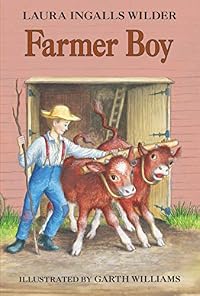
Farmer Boy
by Laura Ingalls Wilder
Little House: The Laura Years (2), Little House Novels, Chronological Order (The Laura Years — book 17)
On This Page
Description
Nine-year-old Almanzo lives with his family on a big farm in New York State at the end of the nineteenth century. He raises his own two calves, helps cut ice and shear sheep, and longs for the day he can have his own colt.Tags
Recommendations

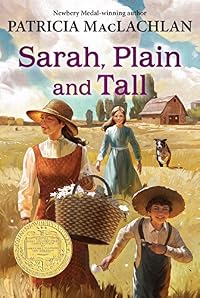
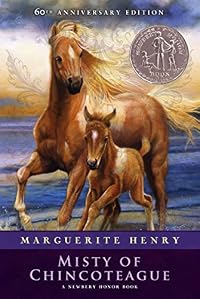
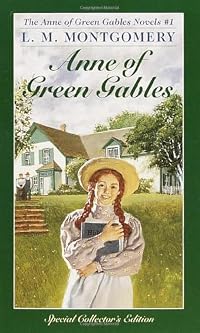
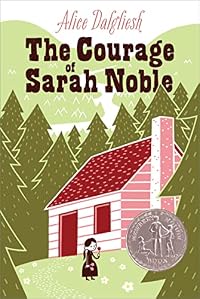
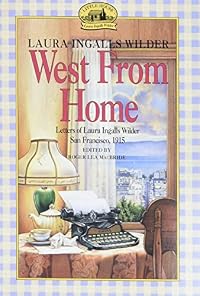
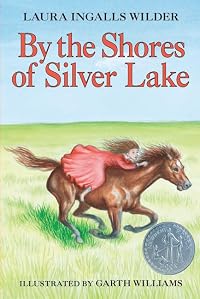
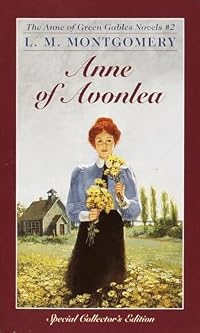
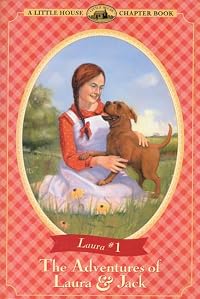
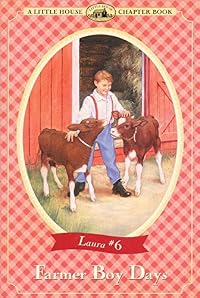

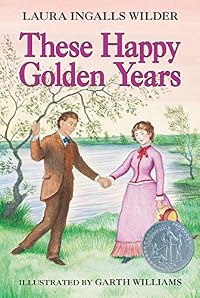
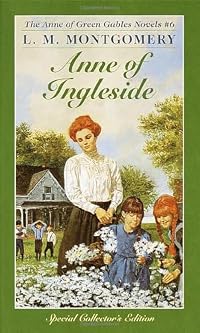
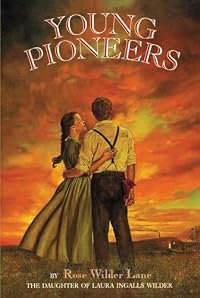
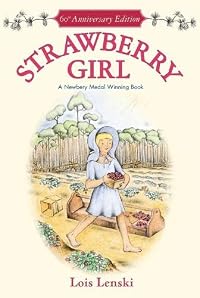

Member Recommendations
Member Reviews
I enjoyed this so much more than the first two. Almanzo just felt like such a more lively and interesting character. I guess that's possibly due to the opportunities of being male and possibly due to the opportunities of being rich, but it does make for a more interesting book. He loves his cows, and the horses, he works hard, and prefers doing things to sitting around in Sunday Best, he makes a few mistakes with his temper and his need to show off (or just sheer childish foolishness like feeding the pig toffee), but generally things work out well for him, he tries his best and the world rewards him for it.
They are so much richer than the Ingalls! I was amused by how surprised I was by talk of rooms, and completely flabberghasted when I show more realised they had a staircase! They keep ice all year so they can have ice cream in the summer!
Almanzo loves food. He does hard physical labour a lot of the time, and lives on a farm with fresh produce and great cooks, and the sheer amount of the book that revels in good food is almost overwhelming! Apple pie, doughnuts, maple sugar pancake stacks, whole hams - the farm is prosperous and flourishing and no-one is hungry here.
The start of this book is weirdly shocking, there are a group of boys at Almanzo's school who revel in beating up the school teacher (and have killed at least one school teacher doing this in the past!) but the new teacher is a friend of the murdered teacher, and attacks them with a bullwhip when they try it on him. Seriously!
I was losing momentum with these, but this lovely tale of training cows, feeling a pumpkin on milk, cutting ice and working hard all seasons to get the farm through the year was charming. show less
They are so much richer than the Ingalls! I was amused by how surprised I was by talk of rooms, and completely flabberghasted when I show more realised they had a staircase! They keep ice all year so they can have ice cream in the summer!
Almanzo loves food. He does hard physical labour a lot of the time, and lives on a farm with fresh produce and great cooks, and the sheer amount of the book that revels in good food is almost overwhelming! Apple pie, doughnuts, maple sugar pancake stacks, whole hams - the farm is prosperous and flourishing and no-one is hungry here.
The start of this book is weirdly shocking, there are a group of boys at Almanzo's school who revel in beating up the school teacher (and have killed at least one school teacher doing this in the past!) but the new teacher is a friend of the murdered teacher, and attacks them with a bullwhip when they try it on him. Seriously!
I was losing momentum with these, but this lovely tale of training cows, feeling a pumpkin on milk, cutting ice and working hard all seasons to get the farm through the year was charming. show less
Continuing my first ever read-through of this series, I enjoyed this book even more than the first one in the series. Almanzo is an endearing, hard-working boy, and I love how badly he wants to be just like his dad. I find Laura Ingalls Wilder's focus on how much food the Wilders had, as well as the variety of food, to be interesting, considering that her family in the previous book had just enough. The Wilders still worked hard for their food but this was clearly a comparatively wealthy family. And the ending, involving Almanzo deciding what to do with his sudden windfall, made me tear up. That thread of story culminating in such a great moment at the end is what elevated this book to be a new favorite for me!
My enjoyment of the book show more was greatly enhanced by the audiobook narrator. I'm still really loving Cherry Jones's performance in this series, as well as the fiddle music now and then, though it's not as prevalent was it was in the previous book. I highly recommend this book and series so far, for adults and kids alike. show less
My enjoyment of the book show more was greatly enhanced by the audiobook narrator. I'm still really loving Cherry Jones's performance in this series, as well as the fiddle music now and then, though it's not as prevalent was it was in the previous book. I highly recommend this book and series so far, for adults and kids alike. show less
I read this after I read most of the other books within this series, and this one stands out as one of my favorites. Unlike Laura, Almanzo comes from a better-off family, so he's not entirely the 'farm boy' on the cover, but he's not a spoiled city kid either. It was a really fun novel to read, but like the other Little House books, it needs to be understood within its context - when these events happened, and when this book was written - but is still a great book if you like the Little House series.
I got pretty hungry reading about all those food preparations. There's something wholesome about this old farm life where they had to make everything themselves - reminds me of Michael Pollan's food rule: "Eat all the junk food you want, as long as you cook it yourself." No processed food on this farm. Even when the dad is presented with a quicker way to harvest, he refuses. Why spend money on it when they can do it with a little more manual labour.
I've read FARMER BOY many times over the decades, but this is the first time I've listened to it. Don't listen to it if you're hungry, or the descriptions of those delicious-sounding Wilder meals will be torture.
As one who reads series in order every time, even when rereading, over the past 40 years I’ve gone from viewing _Farmer Boy_ as an interesting (and hunger-inducing!) interruption to Laura’s story to recognizing it as a fascinating contrast between life on an established farm and the unsettled life of a pioneer. In addition, this book does a good job of covering only a year of Almanzo’s boyhood yet still giving a clear picture of how his character developed into the man she would later marry.
One thing puzzled me on this rereading, though: why did the Wilders send all three older children to town for boarding school the same year?
One thing puzzled me on this rereading, though: why did the Wilders send all three older children to town for boarding school the same year?
I've never read the Little House on the Prairie books. When I found three of them, including this one, at a neighborhood yard sale, I couldn't resist paying .10 for each.
While some who don't understand the appeal of YA works may scoff at this series, I found this book to be delightfully refreshing.
The beauty and charm lies in the simplicity of rural farm life in the 19th century. Written from the perspective of ten year old Almanzo Wilder, there is a rhythm and lyrical quality throughout.
Nothing earth scattering occurs, and unlike many YA books where there is a coming of age theme, this story veers off the path of that direction and instead, like a babbling brook, quietly pulls the reader into the tale of a young man with a solid, show more hard-working family who care about each other and do what has to be done to make a living.
Harkening back to a time when the items we now call necessities were not available, there were charming descriptions of soft candle light shining through the window on hard crusted icy snow, of sleigh rides to church, of one room school houses, of planting seeds by hand and of sheering sheep, dying wool and sewing clothes.
This week was a bear at work and each night I arrived home tired and stressed, this was exactly what I needed to read -- a wonderful tale that provided relaxation and smiles.
Recommended show less
While some who don't understand the appeal of YA works may scoff at this series, I found this book to be delightfully refreshing.
The beauty and charm lies in the simplicity of rural farm life in the 19th century. Written from the perspective of ten year old Almanzo Wilder, there is a rhythm and lyrical quality throughout.
Nothing earth scattering occurs, and unlike many YA books where there is a coming of age theme, this story veers off the path of that direction and instead, like a babbling brook, quietly pulls the reader into the tale of a young man with a solid, show more hard-working family who care about each other and do what has to be done to make a living.
Harkening back to a time when the items we now call necessities were not available, there were charming descriptions of soft candle light shining through the window on hard crusted icy snow, of sleigh rides to church, of one room school houses, of planting seeds by hand and of sheering sheep, dying wool and sewing clothes.
This week was a bear at work and each night I arrived home tired and stressed, this was exactly what I needed to read -- a wonderful tale that provided relaxation and smiles.
Recommended show less
Members
- Recently Added By
Lists

Favorite Childhood Books
1,602 works; 516 members
1001 Children's Books You Must Read Before You Grow Up
774 works; 101 members
NPRs Ultimate Backseat Bookshelf: 100 Must-Reads for kids 9-14
222 works; 30 members

Childhood Favorites
427 works; 24 members
Honey For a Child's Heart
1,152 works; 25 members

Brightly Beaming Curriculum Books
281 works; 8 members
Ambleside Books
459 works; 18 members

Literature of Honor for Boys
91 works; 3 members

4th Grade Books
312 works; 5 members

Romalda Spalding's Writing Road To Reading
213 works; 3 members

Books We Loved As Children
603 works; 252 members

Books I've Read More Than Once
602 works; 49 members
Children's Literature 1900 - 1950 in order
413 works; 8 members

HMS: Make Your Child a Lover of Books, Ages 7-9
52 works; 2 members

Ambleside Y2
33 works; 1 member

Newbery Adjacent
747 works; 3 members

Our Favorite Banned Books
138 works; 122 members

children's/y.a. reclist
43 works; 2 members

Books Read in 2022
5,164 works; 113 members

In or About the 1930s
198 works; 27 members

Books Read in 2018
4,360 works; 110 members
Makes Me Want to Eat (or Drink)
39 works; 12 members

Books About Boys
175 works; 15 members

Unshelved Book Clubs
579 works; 5 members

Female Author
1,235 works; 67 members
Historical Fiction
889 works; 91 members

The Playful Pioneers
166 works; 1 member
Author Information

187+ Works 151,886 Members
Wilder was born near Pepin, Wisconsin; attended school in DeSmet, South Dakota; and became a teacher before she was 16, teaching for seven years in Dakota Territory schools. She and her husband, Almanzo Wilder, farmed near DeSmet for about nine years and then moved to Mansfield, Missouri, where they lived out the rest of their days. Wilder did not show more write her first book, Little House in the Big Woods, about her early years in Wisconsin, until late in life, on the urging of her daughter, Rose Wilder Lane. It was first published in 1932. She followed this with Farmer Boy (1933), a book about her husband's childhood in New York State. She then completed a series of books about her life as she and her family moved westward along the frontier. Little House on the Prairie (1935) records the family's move to Kansas. On the Banks of Plum Creek (1937) describes the family's move to Minnesota. By the Shores of Silver Lake (1939) records the family's move to South Dakota, as do the final three books in the series: The Long Winter, Little Town on the Prairie (1941), and These Happy Golden Years (1943), which ends with her marriage to Almanzo Wilder. Three of Wilder's books were published posthumously: On the Way Home, a diary of her trip to Mansfield; The First Four Years, an unfinished book about her first four years of marriage; and West from Home, letters she wrote on a visit to her daughter in San Francisco, none of them up to the quality of her earlier books. At her best, Wilder employs a clear, simple style, a wealth of fascinating detail, and a straightforward narrative style. Her tales of a strong, traditional frontier family that endures the hardships of the late eighteenth century are seen through the eyes of a child, which endears them to young readers. Her work is possibly the best example of historical realistic fiction for children. (Bowker Author Biography) show less
Some Editions
Awards and Honors
Series

Little House: The Laura Years
9 works (2)

Little House Novels, Chronological Order
4 works (The Laura Years — book 17)
Belongs to Publisher Series
Work Relationships
Is contained in
Has the (non-series) sequel
Has the adaptation
Has as a student's study guide
Common Knowledge
- Canonical title
- Farmer Boy
- Original title
- Farmer Boy
- Original publication date
- 1933 (1e édition originale américaine, Harper & Row) (1e édition originale américaine, Harper & Row); 1978 (1e traduction et édition français, Bibliothèque du Chat Perché, Flammarion) (1e traduction et édition français, Bibliothèque du Chat Perché, Flammarion)
- People/Characters
- Almanzo Wilder; Royal Wilder; Eliza Jane Wilder; Alice Wilder; James Wilder
- Important places
- Malone, New York, USA
- First words
- It was January in northern New York State, sixty-seven years ago.
- Quotations
- A farmer depends on himself, and the land and the weather. If you're a farmer, you raise what you eat, you raise what you wear, and you keep warm with wood out of your own timber. You work hard, but you work as you please, an... (show all)d no man can tell you to go or come. You'll be free and independent, son, on a farm.
- Last words
- (Click to show. Warning: May contain spoilers.)We'll take him out on a rope, first thing tomorrow morning, and you can begin to gentle him.
- Original language
- English
Classifications
- Genres
- Children's Books, Fiction and Literature
- DDC/MDS
- 813.52 — Literature & rhetoric American literature in English American fiction in English 1900-1999 1900-1945
- LCC
- PZ7 .W6461 .F — Language and Literature Fiction and juvenile belles lettres Fiction and juvenile belles lettres Juvenile belles lettres
- BISAC
Statistics
- Members
- 12,651
- Popularity
- 643
- Reviews
- 125
- Rating
- (4.05)
- Languages
- 10 — Danish, Dutch, English, Finnish, French, Indonesian, Japanese, Portuguese, Spanish, Swedish
- Media
- Paper, Audiobook, Ebook
- ISBNs
- 66
- UPCs
- 1
- ASINs
- 54