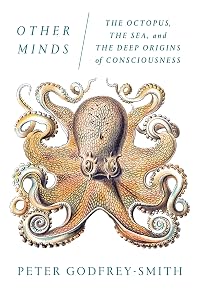
Other Minds: The Octopus, the Sea, and the Deep Origins of Consciousness
by Peter Godfrey-Smith
On This Page
Description
"Peter Godfrey-Smith is a leading philosopher of science. He is also a scuba diver whose underwater videos of warring octopuses have attracted wide notice. In this book, he brings his parallel careers together to tell a bold new story of how nature became aware of itself. Mammals and birds are widely seen as the smartest creatures on earth. But one other branch of the tree of life has also sprouted surprising intelligence: the cephalopods, consisting of the squid, the cuttlefish, and above show more all the octopus. New research shows that these marvelous creatures display remarkable gifts. What does it mean that intelligence on earth has evolved not once but twice? And that the mind of the octopus is nonetheless so different from our own? Combining science and philosophy with firsthand accounts of his cephalopod encounters, Godfrey-Smith shows how primitive organisms bobbing in the ocean began sending signals to each other and how these early forms of communication gave rise to the advanced nervous systems that permit cephalopods to change colors and human beings to speak. By tracing the problem of consciousness back to its roots and comparing the human brain to its most alien and perhaps most remarkable animal relative, Godfrey-Smith's Other Minds sheds new light on one of our most abiding mysteries." -- Goodreads.com summary. show lessTags
Recommendations


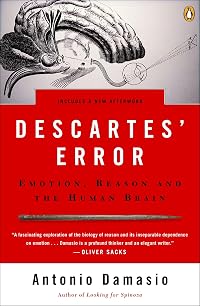
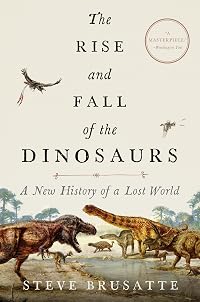
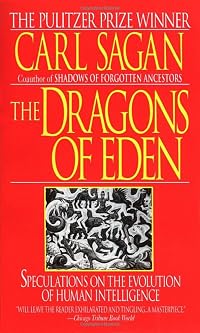
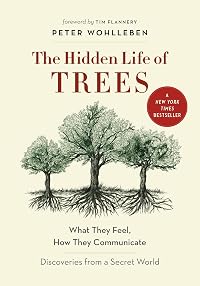


Member Recommendations
Member Reviews
This book turned me into an cephalopod nerd in the course of a single week. These creatures are so amazingly fascinating, and this book really does them justice. And, of course, as the title suggests, this book isn't just about cephalopods; it's about how they evolved, the intelligence that they've evolved, and how the differences between them and us can teach us about consciousness, both in ourselves, and in species very different from us. This is some deep, complicated stuff, and though this book challenged me in some of the more esoteric parts, I was engaged throughout, and learned a whole bunch, and had opinions on all of it by the end. Also there's a section about the evolutionary reason for why we age that was absolutely show more fascinating.
I never thought that I would feel so emotionally connected to cephalopods, but here we are. They're smart, they can recognize individual human beings, and apparently have strong opinions on us; there have been octopuses that would shoot water at anyone new who visited their lab, and other octopuses that would shoot water only at one specific person that they'd developed a strong dislike for. What's worse, by the time I finished the book, I had come to the realization that they're truly tragic figures. They can change color on a whim, and often display complex patterns on their skin that seem to mirror what's going on in their head, but they are colorblind. They can express what's going on in their heads on their skin, but can't see all of their skin, so the pictures on their skin haven't become an inward loop in their head like our voices have become in ours. Worst of all, they're the smartest animal on their entire branch of evolution, but they only live for two years before they start to spontaneously fall apart. They have so much going on in their strange, alien, brains, but they only live to mate once, and then fade away. It's incredibly moving, and only makes me love their strangeness, intelligence, and independence even more.
If you can't tell, I loved this book. I would definitely recommend it to anyone--unless, like one of my podcast co-hosts, octopuses freak you out. Then maybe skip this one? But I dare anyone to not be charmed by Charles, the octopus who absolutely refused to take part in a lever-pulling experiment, and instead broke the lever, pulled overhead lights down into his cage, and shot water at everyone.
This review first appeared on my blog. show less
I never thought that I would feel so emotionally connected to cephalopods, but here we are. They're smart, they can recognize individual human beings, and apparently have strong opinions on us; there have been octopuses that would shoot water at anyone new who visited their lab, and other octopuses that would shoot water only at one specific person that they'd developed a strong dislike for. What's worse, by the time I finished the book, I had come to the realization that they're truly tragic figures. They can change color on a whim, and often display complex patterns on their skin that seem to mirror what's going on in their head, but they are colorblind. They can express what's going on in their heads on their skin, but can't see all of their skin, so the pictures on their skin haven't become an inward loop in their head like our voices have become in ours. Worst of all, they're the smartest animal on their entire branch of evolution, but they only live for two years before they start to spontaneously fall apart. They have so much going on in their strange, alien, brains, but they only live to mate once, and then fade away. It's incredibly moving, and only makes me love their strangeness, intelligence, and independence even more.
If you can't tell, I loved this book. I would definitely recommend it to anyone--unless, like one of my podcast co-hosts, octopuses freak you out. Then maybe skip this one? But I dare anyone to not be charmed by Charles, the octopus who absolutely refused to take part in a lever-pulling experiment, and instead broke the lever, pulled overhead lights down into his cage, and shot water at everyone.
This review first appeared on my blog. show less
My public library had several copies of this recent book on the shelf, and the sexy title makes it easy to imagine why. Author Peter Godfrey-Smith is a professor of philosophy and a scuba diver, and he draws on both of these backgrounds, as well as related research in ethology and evolutionary biology. The main question addressed by the book is the nature of octopus consciousness: Does it exist, and how does it resemble and differ from ours? As Godfrey-Smith points out, of all of the animals we know with complex active nervous systems, the octopus is perhaps the most genealogically alien from us. Yet by virtue of its aquatic character, it is closer to our shared origins of life and consciousness than we are.
A surprising and gratifying show more element of this book is the discussion of the evolutionary basis of senescence. It turns out that this topic is highly apposite, since hardly any of the big cephalopod species discussed in this book have an ordinary lifespan of more than two years. The result is a strange paradox for human investigators who think of elaborate brains and nervous systems as being concerned with experience and memory. An octopus doesn't have time to acquire much of a life history.
Another apparent paradox has to do with the dramatic ability of the octopus (and even more so, its remote cousin the cuttlefish) to change its color. Although these creatures have camera-style eyes like humans do, they lack the optical equipment that allows vertebrates to visually distinguish color. The resolution to the enigma seems to have to do with the ways in which they may use their skin, rather than their eyes, to sense the colors in their environments.
The author's notes to the main text are given as end notes, indexed by page number. They are not called out in the body text itself, although they would be read most usefully with the material that they annotate. They do contain source references, but are mostly explanation and useful digression for issues simplified in the main text. I scanned them quickly at the end of reading the book, and I was irritated that they weren't footnotes, where I would have been sure to read with profit the ones most interesting to me. It's ironic that at a time when digital typesetting makes footnotes easy to produce, book marketing evidently forbids them.
The final chapter of Other Minds is "Octopolis," discussing an apparently unique para-social environment inhabited by octopuses off of eastern Australia, and this concludes with some environmentalist reflections on the perilous state of the oceans. Since this book was written in 2016, a second Australian octopus city ("Octlantis") has been discovered, and the evidence of human destruction of the oceans has become more stark. In particular, marine ecosystems are being ravaged by heat waves and the accumulation of plastics at previously unsuspected depths. show less
A surprising and gratifying show more element of this book is the discussion of the evolutionary basis of senescence. It turns out that this topic is highly apposite, since hardly any of the big cephalopod species discussed in this book have an ordinary lifespan of more than two years. The result is a strange paradox for human investigators who think of elaborate brains and nervous systems as being concerned with experience and memory. An octopus doesn't have time to acquire much of a life history.
Another apparent paradox has to do with the dramatic ability of the octopus (and even more so, its remote cousin the cuttlefish) to change its color. Although these creatures have camera-style eyes like humans do, they lack the optical equipment that allows vertebrates to visually distinguish color. The resolution to the enigma seems to have to do with the ways in which they may use their skin, rather than their eyes, to sense the colors in their environments.
The author's notes to the main text are given as end notes, indexed by page number. They are not called out in the body text itself, although they would be read most usefully with the material that they annotate. They do contain source references, but are mostly explanation and useful digression for issues simplified in the main text. I scanned them quickly at the end of reading the book, and I was irritated that they weren't footnotes, where I would have been sure to read with profit the ones most interesting to me. It's ironic that at a time when digital typesetting makes footnotes easy to produce, book marketing evidently forbids them.
The final chapter of Other Minds is "Octopolis," discussing an apparently unique para-social environment inhabited by octopuses off of eastern Australia, and this concludes with some environmentalist reflections on the perilous state of the oceans. Since this book was written in 2016, a second Australian octopus city ("Octlantis") has been discovered, and the evidence of human destruction of the oceans has become more stark. In particular, marine ecosystems are being ravaged by heat waves and the accumulation of plastics at previously unsuspected depths. show less
Rating: 3.5* of five
A deeply (!) enjoyable look at cephalopod minds, not brains but minds, in parallel to our own mammalian ones. I was absolutely enthralled by the author's discoveries made at a site he calls "Octopolis," a community of octopuses on the seafloor near Sydney, Australia.
One of the most interesting facets of the book to me was its explanation, in terms of existing evolutionary thought, of how and why cephalopods, animals that live a single mating cycle on average, developed the astoundingly complex signaling behaviors and apparent cognitive abilities they have. It's a wonderful and involving story.
That makes this sound like a four-and-a-half star book, doesn't it? I'm not going to beat about the bush, it would have been show more had it not wandered waaay too far down the human-mind-brain-consciousness rabbit hole without reaching any sort of conclusion that felt solid. In the space of this book, just over 200 pages of text plus index and notes, there is no chance that this could occur. So say "listen, there's about a bajillion petaflops of data I can't begin to pretend to digest for you, but here in 500 words is what *I* want you to know so you can see where I'm going with the parts about cephalopods."
The glossy-magazine version, in other words, would've served this book better and been less simultaneously overinforming and underrepresenting a hugely complex and contentious area of human-consciousness study. But I recommend reading the book because damn it feels good to learn about something unique from someone so warm, wise, and witty as Peter Godfrey-Smith. show less
A deeply (!) enjoyable look at cephalopod minds, not brains but minds, in parallel to our own mammalian ones. I was absolutely enthralled by the author's discoveries made at a site he calls "Octopolis," a community of octopuses on the seafloor near Sydney, Australia.
One of the most interesting facets of the book to me was its explanation, in terms of existing evolutionary thought, of how and why cephalopods, animals that live a single mating cycle on average, developed the astoundingly complex signaling behaviors and apparent cognitive abilities they have. It's a wonderful and involving story.
That makes this sound like a four-and-a-half star book, doesn't it? I'm not going to beat about the bush, it would have been show more had it not wandered waaay too far down the human-mind-brain-consciousness rabbit hole without reaching any sort of conclusion that felt solid. In the space of this book, just over 200 pages of text plus index and notes, there is no chance that this could occur. So say "listen, there's about a bajillion petaflops of data I can't begin to pretend to digest for you, but here in 500 words is what *I* want you to know so you can see where I'm going with the parts about cephalopods."
The glossy-magazine version, in other words, would've served this book better and been less simultaneously overinforming and underrepresenting a hugely complex and contentious area of human-consciousness study. But I recommend reading the book because damn it feels good to learn about something unique from someone so warm, wise, and witty as Peter Godfrey-Smith. show less
What is it like to be an octopus? No, really be an octopus?
Godfrey-Smith is a philosopher of science and scuba diver who uses the strange intelligence of octopuses as an entry into evolution, consciousness, and the meeting of minds across a gulf of time and space. Octopuses are legendary in aquarium circles for being avid tricksters, squirting people with jets of water, and breaking out of their tanks to eat fish in the middle of the night before stopping home. Yet for all their intelligence, they are poorly understood animals. Why are they so intelligent, and how does their unusual neural architecture support consciousness.
The last ancestor between all of chordates and mollusks was some kind of flatworm that lived over 600 millions show more years ago, with a few neurons and light sensitive patches. And while vertebrates evolved densely networked brains, octopuses and their relatives have a 'ladder' neural architecture, with each tentacle possessing nearly as many neurons as the central brain. Cuttlefish, those seemingly deep and serene minds, send images sparkling across their skin in ever changing patterns.
In the end, we are left with more questions than answers. But it surely wonderous that we share our planet with such a strange aquatic intelligence. show less
Godfrey-Smith is a philosopher of science and scuba diver who uses the strange intelligence of octopuses as an entry into evolution, consciousness, and the meeting of minds across a gulf of time and space. Octopuses are legendary in aquarium circles for being avid tricksters, squirting people with jets of water, and breaking out of their tanks to eat fish in the middle of the night before stopping home. Yet for all their intelligence, they are poorly understood animals. Why are they so intelligent, and how does their unusual neural architecture support consciousness.
The last ancestor between all of chordates and mollusks was some kind of flatworm that lived over 600 millions show more years ago, with a few neurons and light sensitive patches. And while vertebrates evolved densely networked brains, octopuses and their relatives have a 'ladder' neural architecture, with each tentacle possessing nearly as many neurons as the central brain. Cuttlefish, those seemingly deep and serene minds, send images sparkling across their skin in ever changing patterns.
In the end, we are left with more questions than answers. But it surely wonderous that we share our planet with such a strange aquatic intelligence. show less
Peter Godfrey-Smith’s book is part philosophical exploration of consciousness, part speculative evolution, and part nature writing. If I have any strong criticism of the book, it’s that if you expect an in-depth version of any one of those, you may be disappointed.
Octopuses are relatively new to us as intelligent creatures. The most familiar non-humans in that class are dolphins, apes, maybe whales. We have more recently, in the popular understanding, begun to see that not only more species — crows, parrots, honeybees, ants, octopuses and other cephalopods — are intelligent, but that the intelligence of other familiar animals — dogs, cats, squirrels, . . . — has long been under-rated.
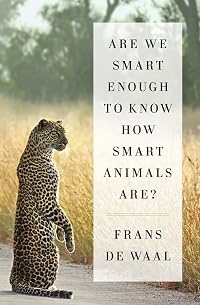
Franz de Waal’s book, Are We Smart show more Enough to Know How Smart Animals Are, is very much to the point. Other animals’ intelligence may be just different enough from our own that we don’t always immediately recognize it when we see it. But, given divergent evolutionary paths, that’s exactly as we should expect.
When we say that the octopus is “intelligent”, I think we have to be careful. We are accustomed, for example, to ranking the intelligence of one species against another — chimps are intelligent, but not as intelligent as us. Dolphins fit into the ranking somewhere.
But “intelligence” is not one thing. Intelligence, like other traits, evolves with conditions — environmental and internal challenges and opportunities. And those conditions are different for each species. The intelligence it evolves is also going to be different.
This point is all the more poignant with the octopus. It is “alien” — the evolutionary branching that separates us from the octopus is very old. Godfrey-Smith puts our common ancestor at about 600 million years in the past (as opposed to just 6 million years for chimps). That’s 594 million more years of evolutionary differentiation, augmented by differences in environment.
The octopus has a nervous system, but it’s very different from our own, with the majority of its neurons in its arms rather than in a central brain. It lives entirely under water. The species Godfrey-Smith studies has a lifespan of only one to two years. It is mostly asocial. It’s just very, very different from us. The intelligence we recognize in it is the intelligence we are prepared to recognize, based on similarities and overlaps with our own intelligence. But its intelligence is its intelligence, not ours. Not so much more or less than different, alien, in the proper sense of “alien.”
Recognizing that octopuses are intelligent, the natural question comes to mind — what would the conscious life of an octopus be like? Would it be at all like ours? Would, for example, there be the same kind of unity to experience and thought that we attribute to ourselves, given the octopus’s more distributed nervous system? Or would it be almost internally social, made up of inter-communicating fragments?
As a philosopher studying consciousness, Godfrey-Smith asks that question. As he puts it, following Thomas Nagel’s paper, What Is It Like to Be a Bat?, what is it like to be an octopus?
What the subjective experience of an octopus is like is necessarily speculative. That there IS something that it is like to be an octopus may be less so. Octopuses engage in complex, deliberative, and exploratory behaviors. Something is behind that. They react to pain, e.g., caring for a damaged arm. They appear to decide to do one thing rather than another.
What all of those things feel like to the octopus is another story, and that’s a very speculative one. For example, Godfrey-Smith, taking into account the relative independence of the octopus’s arms in its neural system, contrasts its behavior to our own through an analogy. On a spectrum between an orchestra directed by a conductor and an improvisational jazz group, the octopus’s subjective life would feel more like the improvisational group and ours more like the conductor-led group, with our central brain playing the conductor’s function.
This “feel” of consciousness is necessarily elusive, I think. The conductor vs. jazz group still doesn’t convey that “feel” to me (maybe partly because, while it’s relatively easy to imagine being a member of the orchestra or jazz group, it’s not so easy to imagine what it feels like to be the whole orchestra or jazz group). It is helpful, though — it does leverage what we know about the octopus to convey something of what may go on in its subjective experience.
Godfrey-Smith actually moves away from trying to convey that feel, and instead offers a sketch of how consciousness may evolve, exploiting concepts dealing with sensing, acting, and communicating, all over two scales — one external, in interactions between the animal and its physical and social environment, and one internal, in interactions within the animal itself — parts of its nervous system, its nervous system and other functional components,. . .
Speaking a little too glibly, on my part, the internalization of sensing leads to the complexity of the nervous system, while the internalization of communication leads to consciousness itself.
Much of Godfrey-Smith’s account of how consciousness arises paints consciousness as arising in response to the problems of loops in an animal's doing and sensing. A very simple behavior doesn’t pose such a problem — an animal senses and it reacts. It moves away from something that causes it harm or discomfort.
But more sophisticated behavior places animals in a environment that they continuously change through their own actions. When an animal moves closer or farther from an object it will change the apparent size of the object. But the animal signals itself that the change is due to its own activity, not a change in the object itself (this is accomplished through what are called “efference mechanisms”). Much less complex animals than humans (or octopuses) are capable of making this distinction between changes due to their own actions and changes in the environment.
More and more complex animals produce more and more complex loops of action and sensing — an example Godfrey-Smith gives is of a person writing a note as a reminder for themselves later. Such a thing calls not only upon an ability to distinguish changes in the world due to your own actions (the presence of the note), but also communication, in this case a communication between your present self and your future self.
Godfrey-Smith’s full account is too much for me to try to reproduce here, and even then it is only a sketch, not a detailed account. But he also provides references to others who are working on details in various aspects of the sketch he gives, in case you want to pursue these farther and in more depth.
All in all, the book doesn’t confine itself to any one perspective — sometimes philosophical (as in the “what is it like to be . . .” discussion), other times biological (as in the accounts he gives of the possible path of evolution that consciousness has taken), and other times more popular (as in the accounts he gives of his own first-hand experience observing, interacting, and playing with octopuses).
I think it serves very well as a taking-off point for any of those perspectives — you don’t need to be all that conversant with any one of them to start here, and starting here could take you to much greater depths. show less
Octopuses are relatively new to us as intelligent creatures. The most familiar non-humans in that class are dolphins, apes, maybe whales. We have more recently, in the popular understanding, begun to see that not only more species — crows, parrots, honeybees, ants, octopuses and other cephalopods — are intelligent, but that the intelligence of other familiar animals — dogs, cats, squirrels, . . . — has long been under-rated.
Franz de Waal’s book, Are We Smart show more Enough to Know How Smart Animals Are, is very much to the point. Other animals’ intelligence may be just different enough from our own that we don’t always immediately recognize it when we see it. But, given divergent evolutionary paths, that’s exactly as we should expect.
When we say that the octopus is “intelligent”, I think we have to be careful. We are accustomed, for example, to ranking the intelligence of one species against another — chimps are intelligent, but not as intelligent as us. Dolphins fit into the ranking somewhere.
But “intelligence” is not one thing. Intelligence, like other traits, evolves with conditions — environmental and internal challenges and opportunities. And those conditions are different for each species. The intelligence it evolves is also going to be different.
This point is all the more poignant with the octopus. It is “alien” — the evolutionary branching that separates us from the octopus is very old. Godfrey-Smith puts our common ancestor at about 600 million years in the past (as opposed to just 6 million years for chimps). That’s 594 million more years of evolutionary differentiation, augmented by differences in environment.
The octopus has a nervous system, but it’s very different from our own, with the majority of its neurons in its arms rather than in a central brain. It lives entirely under water. The species Godfrey-Smith studies has a lifespan of only one to two years. It is mostly asocial. It’s just very, very different from us. The intelligence we recognize in it is the intelligence we are prepared to recognize, based on similarities and overlaps with our own intelligence. But its intelligence is its intelligence, not ours. Not so much more or less than different, alien, in the proper sense of “alien.”
Recognizing that octopuses are intelligent, the natural question comes to mind — what would the conscious life of an octopus be like? Would it be at all like ours? Would, for example, there be the same kind of unity to experience and thought that we attribute to ourselves, given the octopus’s more distributed nervous system? Or would it be almost internally social, made up of inter-communicating fragments?
As a philosopher studying consciousness, Godfrey-Smith asks that question. As he puts it, following Thomas Nagel’s paper, What Is It Like to Be a Bat?, what is it like to be an octopus?
What the subjective experience of an octopus is like is necessarily speculative. That there IS something that it is like to be an octopus may be less so. Octopuses engage in complex, deliberative, and exploratory behaviors. Something is behind that. They react to pain, e.g., caring for a damaged arm. They appear to decide to do one thing rather than another.
What all of those things feel like to the octopus is another story, and that’s a very speculative one. For example, Godfrey-Smith, taking into account the relative independence of the octopus’s arms in its neural system, contrasts its behavior to our own through an analogy. On a spectrum between an orchestra directed by a conductor and an improvisational jazz group, the octopus’s subjective life would feel more like the improvisational group and ours more like the conductor-led group, with our central brain playing the conductor’s function.
This “feel” of consciousness is necessarily elusive, I think. The conductor vs. jazz group still doesn’t convey that “feel” to me (maybe partly because, while it’s relatively easy to imagine being a member of the orchestra or jazz group, it’s not so easy to imagine what it feels like to be the whole orchestra or jazz group). It is helpful, though — it does leverage what we know about the octopus to convey something of what may go on in its subjective experience.
Godfrey-Smith actually moves away from trying to convey that feel, and instead offers a sketch of how consciousness may evolve, exploiting concepts dealing with sensing, acting, and communicating, all over two scales — one external, in interactions between the animal and its physical and social environment, and one internal, in interactions within the animal itself — parts of its nervous system, its nervous system and other functional components,. . .
Speaking a little too glibly, on my part, the internalization of sensing leads to the complexity of the nervous system, while the internalization of communication leads to consciousness itself.
Much of Godfrey-Smith’s account of how consciousness arises paints consciousness as arising in response to the problems of loops in an animal's doing and sensing. A very simple behavior doesn’t pose such a problem — an animal senses and it reacts. It moves away from something that causes it harm or discomfort.
But more sophisticated behavior places animals in a environment that they continuously change through their own actions. When an animal moves closer or farther from an object it will change the apparent size of the object. But the animal signals itself that the change is due to its own activity, not a change in the object itself (this is accomplished through what are called “efference mechanisms”). Much less complex animals than humans (or octopuses) are capable of making this distinction between changes due to their own actions and changes in the environment.
More and more complex animals produce more and more complex loops of action and sensing — an example Godfrey-Smith gives is of a person writing a note as a reminder for themselves later. Such a thing calls not only upon an ability to distinguish changes in the world due to your own actions (the presence of the note), but also communication, in this case a communication between your present self and your future self.
Godfrey-Smith’s full account is too much for me to try to reproduce here, and even then it is only a sketch, not a detailed account. But he also provides references to others who are working on details in various aspects of the sketch he gives, in case you want to pursue these farther and in more depth.
All in all, the book doesn’t confine itself to any one perspective — sometimes philosophical (as in the “what is it like to be . . .” discussion), other times biological (as in the accounts he gives of the possible path of evolution that consciousness has taken), and other times more popular (as in the accounts he gives of his own first-hand experience observing, interacting, and playing with octopuses).
I think it serves very well as a taking-off point for any of those perspectives — you don’t need to be all that conversant with any one of them to start here, and starting here could take you to much greater depths. show less
And this is the problem I face with reviews: the constant return to the question of what the value of a book review is, what an evaluation of some amorphous potential experience could be to a stranger, to a friend, to a former fellow student. On a utilitarian basis, biographical information at the beginning of a review is extremely useful: this is who I am, this is what my background is, and as a result, this is what I think of this book.
So: I have not had formal science education past high school, instead studying English and writing. I’ve read a few pop culture books on animal behavior and cognition over the past few years. This was my favorite of those that I’ve read recently. Godfrey-Smith is unafraid to provide context, to show more reveal his own bias, to examine ideas linearly, one at a time, to examine the possibilities of where ideas come from and how theories on cognition have been supported and denied. His wandering observational path reminds me of how he describes the movement of the octopuses themselves, allowing the arms a little cognitive independence, not needing a linear path across the ocean floor, looping back to the den of the central questions in the book. It’s good nonfiction in a way that satisfies the sensibilities for traditional nonfiction that I developed from taking classes on it in college: the book has a narrative flow which reveals and follows the author’s thoughts as an organizing principle, it has many lush scenes and anecdotes, and the author clearly describes experiments, theories, and advanced technical details in a way accessible to the layman.
The top goodreads review for this book disagrees, and is written in a way that explains why: the reviewer was a biology major, so the science sections seem too basic to her, and the sections that tie this information together with reflection and philosophy seem tangential and unrelated. The reviewer does not understand basic prose that examines personal relation to information in a way that does not immediately agree or disagree with it. And maybe there’s validity to this argument; if you are looking for an analysis specifically of the mentality of the octopus, you will read this book and be disappointed. Another reviewer felt deceived by the fact that the author was a philosopher rather than a biologist, despite the clear announcement of this in the first phrase of the author’s biography on the back of the book, and the premise of authorship which seems obvious to me but clearly isn’t: the only thing you can assume about the author of a book, no matter the topic, is that they have written the book.
But I’ve had this disappointment myself, this feeling of betrayal by an author, and specifically when reading another octopus book: [b:The Soul of an Octopus: A Surprising Exploration Into the Wonder of Consciousness|22609485|The Soul of an Octopus A Surprising Exploration Into the Wonder of Consciousness|Sy Montgomery|https://i.gr-assets.com/images/S/compressed.photo.goodreads.com/books/1425611143l/22609485._SY75_.jpg|42099445], by Sy Montgomery. Montgomery is primarily a writer, and as a result the book contains a huge amount of their personal feelings on octopuses, to the exclusion of more rumination and exploration of octopuses themselves and what they experience. Other Minds was particularly satisfying to me because it inverted this ratio of information about octopuses to author’s thought. And for a scientist, I suppose, or a former biology student, I can see how this ratio was still not large enough; it is true that the book explored possibilities and connections to a wide variety of other animals, experiments, and theories rather than being restricted to only octopus-related peer-reviewed experiments.
So reviews, like any kind of cultural reaction, are precisely as interesting as they are useless. While I might disagree with another reviewer viscerally (and more strongly the more pile-ons the comment section collects) I can in fact take several valuable things from this contrast: I can get another perspective on the book, seeing potential weaknesses that I missed because of my pleasant impression, while at the same time understanding that this person and I have different taste in books, and take their further recommendations with that in mind. Ugh. Like the rest of life, disappointing when viewed maturely, all the satisfaction of a good yelling match about this book removed. In my opinion, the best octopus book I’ve read. show less
So: I have not had formal science education past high school, instead studying English and writing. I’ve read a few pop culture books on animal behavior and cognition over the past few years. This was my favorite of those that I’ve read recently. Godfrey-Smith is unafraid to provide context, to show more reveal his own bias, to examine ideas linearly, one at a time, to examine the possibilities of where ideas come from and how theories on cognition have been supported and denied. His wandering observational path reminds me of how he describes the movement of the octopuses themselves, allowing the arms a little cognitive independence, not needing a linear path across the ocean floor, looping back to the den of the central questions in the book. It’s good nonfiction in a way that satisfies the sensibilities for traditional nonfiction that I developed from taking classes on it in college: the book has a narrative flow which reveals and follows the author’s thoughts as an organizing principle, it has many lush scenes and anecdotes, and the author clearly describes experiments, theories, and advanced technical details in a way accessible to the layman.
The top goodreads review for this book disagrees, and is written in a way that explains why: the reviewer was a biology major, so the science sections seem too basic to her, and the sections that tie this information together with reflection and philosophy seem tangential and unrelated. The reviewer does not understand basic prose that examines personal relation to information in a way that does not immediately agree or disagree with it. And maybe there’s validity to this argument; if you are looking for an analysis specifically of the mentality of the octopus, you will read this book and be disappointed. Another reviewer felt deceived by the fact that the author was a philosopher rather than a biologist, despite the clear announcement of this in the first phrase of the author’s biography on the back of the book, and the premise of authorship which seems obvious to me but clearly isn’t: the only thing you can assume about the author of a book, no matter the topic, is that they have written the book.
But I’ve had this disappointment myself, this feeling of betrayal by an author, and specifically when reading another octopus book: [b:The Soul of an Octopus: A Surprising Exploration Into the Wonder of Consciousness|22609485|The Soul of an Octopus A Surprising Exploration Into the Wonder of Consciousness|Sy Montgomery|https://i.gr-assets.com/images/S/compressed.photo.goodreads.com/books/1425611143l/22609485._SY75_.jpg|42099445], by Sy Montgomery. Montgomery is primarily a writer, and as a result the book contains a huge amount of their personal feelings on octopuses, to the exclusion of more rumination and exploration of octopuses themselves and what they experience. Other Minds was particularly satisfying to me because it inverted this ratio of information about octopuses to author’s thought. And for a scientist, I suppose, or a former biology student, I can see how this ratio was still not large enough; it is true that the book explored possibilities and connections to a wide variety of other animals, experiments, and theories rather than being restricted to only octopus-related peer-reviewed experiments.
So reviews, like any kind of cultural reaction, are precisely as interesting as they are useless. While I might disagree with another reviewer viscerally (and more strongly the more pile-ons the comment section collects) I can in fact take several valuable things from this contrast: I can get another perspective on the book, seeing potential weaknesses that I missed because of my pleasant impression, while at the same time understanding that this person and I have different taste in books, and take their further recommendations with that in mind. Ugh. Like the rest of life, disappointing when viewed maturely, all the satisfaction of a good yelling match about this book removed. In my opinion, the best octopus book I’ve read. show less
What is the nature of intelligence and what are its signs? We often use humankind as the standard for questions like these but this book explores a distant branch of the tree of life for signs of intelligence; specifically the cephalopods, consisting of the squid, the cuttlefish, and above all the octopus. The author, Peter Godfrey-Smith, a distinguished philosopher of science and a skilled scuba diver, uses his encounters with these creatures as a jumping off point for exploring questions of evolution, consciousness, and intelligence among animals that are almost as alien as extra-terrestrial beings.
The story begins and largely continues in the oceans from which all life originally came. The evolution of seaborne groups of cells is show more explored as they gradually became more complicated creatures that were capable of sensing, acting, and signalling, The author identifies gradual evolutionary developments that led to nervous systems in creatures like mollusks. Some of these mollusks abandoned their shells and rose from the ocean floor gradually developing the greater intelligence needed to search for prey and survive. This evolution continued for millennia just as our forebears and other mammals developed on land.
The most fascinating aspect of this story is the search for and discovery of the nature of intelligence in cephalopods. Through observation the author identifies how the brain that is so compactly and centrally located in the human head appears to be spread out throughout the body of the octopus.
“In an octopus, the nervous system as a whole is a more relevant object than the brain: it’s not clear where the brain itself begins and ends, and the nervous system runs all through the body. The octopus is suffused with nervousness; the body is not a separate thing that is controlled by the brain or nervous system.” (p 75)
It seems that in an octopus the nervous system as a whole is equivalent to their brain. A relevant philosophical discussion about how to imagine this is conisidered in Thomas Nagel's famous essay, "What is it Like to Be a Bat?" (Philosophical Review, 1974).
Most interesting for this reader was the way that the evolution of cephalopods has mirrored our own evolution in some ways even as the organisms have developed differently in response to their environments. The author's interaction with a nest of octopuses, in itself a discovery, provided information about the difference of these animals, yet also led to identification of a level of intelligence that was both beyond any previously assumed and far different that that typical for mammals and most other creatures. These discoveries, including tentacles that are so full of neurons that they appear to think for themselves, solved some of the mysteries of these creatures and provided encouragement that further answers will be found. show less
The story begins and largely continues in the oceans from which all life originally came. The evolution of seaborne groups of cells is show more explored as they gradually became more complicated creatures that were capable of sensing, acting, and signalling, The author identifies gradual evolutionary developments that led to nervous systems in creatures like mollusks. Some of these mollusks abandoned their shells and rose from the ocean floor gradually developing the greater intelligence needed to search for prey and survive. This evolution continued for millennia just as our forebears and other mammals developed on land.
The most fascinating aspect of this story is the search for and discovery of the nature of intelligence in cephalopods. Through observation the author identifies how the brain that is so compactly and centrally located in the human head appears to be spread out throughout the body of the octopus.
“In an octopus, the nervous system as a whole is a more relevant object than the brain: it’s not clear where the brain itself begins and ends, and the nervous system runs all through the body. The octopus is suffused with nervousness; the body is not a separate thing that is controlled by the brain or nervous system.” (p 75)
It seems that in an octopus the nervous system as a whole is equivalent to their brain. A relevant philosophical discussion about how to imagine this is conisidered in Thomas Nagel's famous essay, "What is it Like to Be a Bat?" (Philosophical Review, 1974).
Most interesting for this reader was the way that the evolution of cephalopods has mirrored our own evolution in some ways even as the organisms have developed differently in response to their environments. The author's interaction with a nest of octopuses, in itself a discovery, provided information about the difference of these animals, yet also led to identification of a level of intelligence that was both beyond any previously assumed and far different that that typical for mammals and most other creatures. These discoveries, including tentacles that are so full of neurons that they appear to think for themselves, solved some of the mysteries of these creatures and provided encouragement that further answers will be found. show less
Members
- Recently Added By
Lists

Recommended Nature Writing
346 works; 180 members

Top Five Books of 2017
757 works; 231 members

Phi Beta Kappa reading list
260 works; 8 members

Books Read in 2017
4,249 works; 130 members

Books Read in 2020
4,379 works; 124 members

Books about Octopuses
23 works; 1 member

Favorite Animal Non-Fiction
293 works; 144 members

el
1,139 works; 1 member

In Our Time books
4,934 works; 2 members
Author Information

8+ Works 3,707 Members
Peter Godfrey-Smith is Professor of Philosophy at Harvard University.
Some Editions
Awards and Honors
Awards
Distinctions
The Guardian Book of the Day (2017-03-15)
Work Relationships
Is contained in
Common Knowledge
- Canonical title*
- Djupsinne : hur bläckfisken började tänka
- Original title
- Other Minds: The Octopus, The Sea, and the Deep Origins of Consciousness
- Alternate titles
- Other Minds
- Original publication date
- 2016
- Epigraph
- The demand for continuity has, over large tracts of science, proved itself to possess true prophetic power. We ought therefore ourselves sincerely to try every possible mode of conceiving the dawn of consciousness so that it ... (show all)may not appear equivalent to the irruption into the universe of a new nature, nonexistent until then.
—William James, The Principles of Psychology, 1890
The drama of creation, according to the Hawaiian account, is divided into a series of stages … At first the lowly zoophytes and corals come into being, and these are followed by worms and shellfish, each type being declared... (show all) to conquer and destroy its predecessor, a struggle for existence in which the strongest survive. Parallel with this evolution of animal forms, plant life
begins on land and in the sea—at first with the algae, followed by seaweeds and rushes. As type follows type, the accumulating slime of their decay raises the land above the waters, in which, as spectator of all, swims the octopus, the lone survivor from an earlier world.
—Roland Dixon, Oceanic Mythology, 1916 - Dedication
- For all those who work to protect the oceans
- First words
- On a spring morning in 2009, Matthew Lawrence dropped the anchor of his small boat at a random spot in the middle of a blue ocean bay on the east coast of Australia, and jumped over the side. He swam down on scuba to where th... (show all)e anchor lay, picked it up, and waited. The breeze on the surface nudged the boat, which started to drift, and Matt, holding the anchor, followed.
- Last words
- (Click to show. Warning: May contain spoilers.)There are many reasons for us to appreciate and care for the oceans, and I hope this book has added one. When you dive into the sea, you are diving into the origin of us all.
- Blurbers
- Mieville, China; Montgomery, Sy
- Original language
- English
*Some information comes from Common Knowledge in other languages. Click "Edit" for more information.
Classifications
Statistics
- Members
- 2,436
- Popularity
- 7,999
- Reviews
- 77
- Rating
- (3.79)
- Languages
- 11 — Chinese, Dutch, English, French, German, Italian, Lithuanian, Polish, Spanish, Swedish, Portuguese (Portugal)
- Media
- Paper, Audiobook, Ebook
- ISBNs
- 30
- ASINs
- 10