
Beyond This Horizon
by Robert A. Heinlein
On This Page
Description
Utopia has been achieved. Disease, hunger, poverty and war are found only in the history tapes, and applied genetics has brought a lifespan of over a century. But Hamilton Felix is bored. And he is the culmination of a star line; each of his last thirty ancestors chosen for superior genes. He is, as far as genetics can produce one, the ultimate man, yet sees no meaning in life. However, his life is about to become less boring. A secret cabal of revolutionaries plan to revolt and seize show more control. Knowing of Hamilton's disenchantment with the modern world, they want him to join their Glorious Revolution. Big mistake The revolutionaries are about to find out that recruiting a superman was definitely not a good idea. . . "Not only America's premier writer of speculative fiction, but the greatest writer of such fiction in the world." - Stephen King "There is no other writer whose work has exhilarated me as often and to such an extent as Heinlein." - Dean Koontz show lessTags
Recommendations





















Member Recommendations
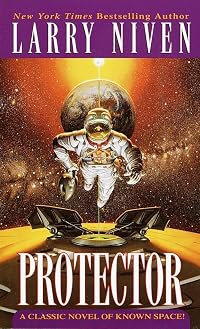
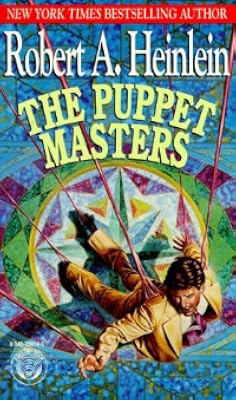
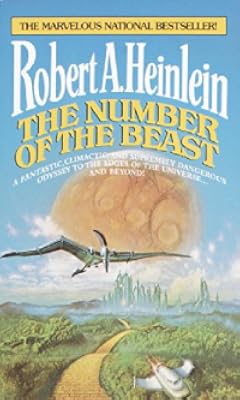
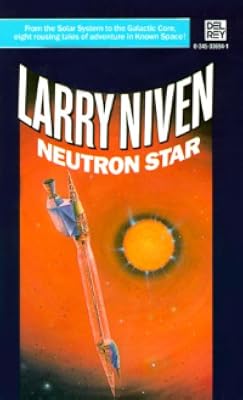
Carnophile Both works are SF novels featuring a person from roughly our era being reanimated in the future. Each sprinkles ruminations on political and economic matters throughout its story. Also, the brothers Kollin are plainly politically influenced by Heinlein.
Member Reviews
Here we have the story of a future dystopian society with shades of Brave New World-esque classism/racism at perhaps his penultimate peak and an effort to overthrow it and return to a darker time as seen through the eyes of our protagonists.
Beyond this Horizon is one of Heinlein's earlier, non-juvenile, works. While many of his later themes are present, its clear he's still working out some of his political and philosophical ideas.
As is the case with any Heinlein, there is certainly misogyny, an unfortunate seeming fondness for both libertarianism and fascism (somehow), and in this case some definite hints of racism/elitism/classism.
However, due to being an early work, I think this and several other works give us what may be hints that show more Heinlein perhaps did not agree as wholeheartedly with some of those distasteful ideas we believe due to his mouthpiece characters espousing them. Maybe even that, in some way, he's 'devil advocate'-ing these ideas and philosophy.
A good example of this is the oft-(partially)quoted by the NRA passage about a polite society being an armed society. Besides the issues with it only being a fragment of a quote, and lacking context, there are certainly contradictions presented here. From everything he wrote, we see Heinlein viewing being armed, and even personal violence, as perhaps fitting with interpretation of the quote presented by gun advocates. However, the individual making that statement in this very book insists he prefers to go unarmed, and that sort of personal violence should be considered crass and distasteful, that we would better off if no one was armed.
There are similar contradictions in his famously negative view of socialism and pro-capitalist/libertarian stance. While as usual characters may denigrate socialism vocally here, we also see that this post-scarcity utopian society only continues to function as a 'capitalist' one because annually wealth is redistributed among the population based on complex computations, and that the government is continually looking for projects that benefit and enrich society as a whole to throw money at, since 'production' is largely unnecessary. These are very socialist ideas, and presented in a very positive light...but are somehow still framed as being capitalist?
If for no other reason than looking at these contradictions that either indicate Heinlein is still working out his ideas, or had been playing devil's advocate all those years in some kind of grand jest, this is definitely worth reading. show less
Beyond this Horizon is one of Heinlein's earlier, non-juvenile, works. While many of his later themes are present, its clear he's still working out some of his political and philosophical ideas.
As is the case with any Heinlein, there is certainly misogyny, an unfortunate seeming fondness for both libertarianism and fascism (somehow), and in this case some definite hints of racism/elitism/classism.
However, due to being an early work, I think this and several other works give us what may be hints that show more Heinlein perhaps did not agree as wholeheartedly with some of those distasteful ideas we believe due to his mouthpiece characters espousing them. Maybe even that, in some way, he's 'devil advocate'-ing these ideas and philosophy.
A good example of this is the oft-(partially)quoted by the NRA passage about a polite society being an armed society. Besides the issues with it only being a fragment of a quote, and lacking context, there are certainly contradictions presented here. From everything he wrote, we see Heinlein viewing being armed, and even personal violence, as perhaps fitting with interpretation of the quote presented by gun advocates. However, the individual making that statement in this very book insists he prefers to go unarmed, and that sort of personal violence should be considered crass and distasteful, that we would better off if no one was armed.
There are similar contradictions in his famously negative view of socialism and pro-capitalist/libertarian stance. While as usual characters may denigrate socialism vocally here, we also see that this post-scarcity utopian society only continues to function as a 'capitalist' one because annually wealth is redistributed among the population based on complex computations, and that the government is continually looking for projects that benefit and enrich society as a whole to throw money at, since 'production' is largely unnecessary. These are very socialist ideas, and presented in a very positive light...but are somehow still framed as being capitalist?
If for no other reason than looking at these contradictions that either indicate Heinlein is still working out his ideas, or had been playing devil's advocate all those years in some kind of grand jest, this is definitely worth reading. show less
This book is densely packed with philosophical musings on the nature of society and of man. It is both utopian and dis-utopian. It shows what happens after a few centuries of selective genetic breeding-- not genetic engineering, precisely, but a long-term view of breeding to promote certain traits. But what happens when a "star line" person declines to procreate for philosophical reasons?
My favorite quotation: "An armed society is a polite society. Manners are good when one may have to back up his acts with his life." This is followed by an explanation of how dueling is good for natural selection. I love it!
This book shows its age well, with one significant exception. If you didn't know what year it was written in, you would not be show more able to guess within about 50 years. The significant exception is the treatment of women, who are allowed to be brilliant and have meaningful careers, and even be part of the highest level of policy makers-- but who nevertheless play a decidedly subsidiary role to the men whom the book is about. In this respect the book remains firmly rooted in the first half of the twentieth century. show less
My favorite quotation: "An armed society is a polite society. Manners are good when one may have to back up his acts with his life." This is followed by an explanation of how dueling is good for natural selection. I love it!
This book shows its age well, with one significant exception. If you didn't know what year it was written in, you would not be show more able to guess within about 50 years. The significant exception is the treatment of women, who are allowed to be brilliant and have meaningful careers, and even be part of the highest level of policy makers-- but who nevertheless play a decidedly subsidiary role to the men whom the book is about. In this respect the book remains firmly rooted in the first half of the twentieth century. show less
It's time to prepare for the 1943 retro Hugo awards that will be presented in 2018! (Why? Why not? Some books deserve love even if they're before the Hugos even began!)
In this case, novels published in 1942 are eligible. Books like C.S. Lewis's Screwtape Letters are technically eligible but really shouldn't be. There's nothing much SF about the religious satire.
On the other hand, I really enjoyed Olaf Stapledon's anti-novel and worldbuilding masterpiece The Darkness and the Light that came out this year and please imagine how thrilled I was to learn that Heinlein also published a bona fide adult-oriented novel, too!
He was generally known for his Juveniles by this point, so an early adult novel is something of a treat. And fortunately, show more his writing is always polished and clear and sometimes funny and always full of light agendas. It's Heinlein! He's a very opinionated man. :)
In this case, we're treated to science lessons on genetics and a superior-gene race of humanity planning on overthrowing the current Utopia. The hero is the ultimate perfect superman and I kept thinking about the Howard families in his later fiction, the prototype that gets so fully explored later.
We shouldn't forget the day. 1942.
Does this kind of story sound familiar? In Heinlein's case, it feels like a mirror to a huge segment of the American population that already agreed with the Eugenics movement and what was happening in Europe at the time. Maybe no one really understood the impact or scope or even the reality of the death camps, but everyone could see the implications and the stated goals. It was war and knowing the publishing field, there's a long stretch between when a writer finishes a text and when it actually gets put on the shelves. I'll assume for a moment that Pearl Harbor had not happened yet, or if it did, there was no way Heinlein could have fixed his novel to reflect America's sudden inclusion in the war.
However, it should be noted that he got all the salient points and sentiments RIGHT. It might have been a utopia like Stapledon's work but unlike Stapledon, he went the full "good story" option with interesting characters, exciting plots, cool snags, romance, and a big blowout. :)
Without even mentioning the Hugos or the need to find the best SF or Fantasy of 1942, I would have read this early Heinlein novel thinking that it's a very polished introduction to his later genetic-field obsession with longevity.
No Lazarus Long here, but enough ideas were packed in here to stand proudly with any of his later works. :)
Between Stapledon and Heinlein, I choose Heinlein for the sheer fun factor, the timeliness of the topic, the sophistication of the storytelling, and lastly, the idea. :) Stapledon might blow him out of the water for sheer scope and range of ideas and world-building and commentary, but Heinlein's soup had the perfect mix.
He's my main choice for the Hugo. :) So far. I'm still reading, however. :) show less
In this case, novels published in 1942 are eligible. Books like C.S. Lewis's Screwtape Letters are technically eligible but really shouldn't be. There's nothing much SF about the religious satire.
On the other hand, I really enjoyed Olaf Stapledon's anti-novel and worldbuilding masterpiece The Darkness and the Light that came out this year and please imagine how thrilled I was to learn that Heinlein also published a bona fide adult-oriented novel, too!
He was generally known for his Juveniles by this point, so an early adult novel is something of a treat. And fortunately, show more his writing is always polished and clear and sometimes funny and always full of light agendas. It's Heinlein! He's a very opinionated man. :)
In this case, we're treated to science lessons on genetics and a superior-gene race of humanity planning on overthrowing the current Utopia. The hero is the ultimate perfect superman and I kept thinking about the Howard families in his later fiction, the prototype that gets so fully explored later.
We shouldn't forget the day. 1942.
Does this kind of story sound familiar? In Heinlein's case, it feels like a mirror to a huge segment of the American population that already agreed with the Eugenics movement and what was happening in Europe at the time. Maybe no one really understood the impact or scope or even the reality of the death camps, but everyone could see the implications and the stated goals. It was war and knowing the publishing field, there's a long stretch between when a writer finishes a text and when it actually gets put on the shelves. I'll assume for a moment that Pearl Harbor had not happened yet, or if it did, there was no way Heinlein could have fixed his novel to reflect America's sudden inclusion in the war.
However, it should be noted that he got all the salient points and sentiments RIGHT. It might have been a utopia like Stapledon's work but unlike Stapledon, he went the full "good story" option with interesting characters, exciting plots, cool snags, romance, and a big blowout. :)
Without even mentioning the Hugos or the need to find the best SF or Fantasy of 1942, I would have read this early Heinlein novel thinking that it's a very polished introduction to his later genetic-field obsession with longevity.
No Lazarus Long here, but enough ideas were packed in here to stand proudly with any of his later works. :)
Between Stapledon and Heinlein, I choose Heinlein for the sheer fun factor, the timeliness of the topic, the sophistication of the storytelling, and lastly, the idea. :) Stapledon might blow him out of the water for sheer scope and range of ideas and world-building and commentary, but Heinlein's soup had the perfect mix.
He's my main choice for the Hugo. :) So far. I'm still reading, however. :) show less
Yeah, it's kind of a mess. And remember Heinlein has a certain sort of disturbingly sexist attitude, doesn't understand women at all - certainly the only armed one is seen as, erm, eccentric, to put it mildly.
Females don't need guns because men (aka people) are all about being protective and chivalrous... except when they're spanking the girls or otherwise dominating them, that is. I did like "Women will forgive anything. Otherwise the race would have died out long ago." And he gets a few other things right, like how to read that resource which replaces newspapers. And I appreciate his view of amiable eugenics, as it seems carefully thought out given the context of the times.
(For example, this was written a few years before it was show more figured out that genes are made of DNA, and well before the structure of DNA was determined to be the double helix. And so, the methods of genetic selection described are, erm, interesting.)
Heinlein is well-read, and clever. It could be argued that he's smart. He's not wise, though.
And finance is not his forte; is description of the Utopia in which nobody goes hungry and the government prints more money when statisticians tell it to is implausible. "A polite society is an armed society" is nonsense. The low incidence of atheism is quaint.
But mostly it's both BS and lame. I guess I'll keep working through the stack of Heinlein books I own, but without high hopes for the enjoyment I'd expect given his popularity, and given the fact that I do remember liking him when I was a teen.
Editing to add a comment I made below which imo needs to be seen more widely:
Bear in mind that there's a lot of even older fiction, for boys and girls, men and women, that is not so sexist and otherwise problematic.
"A product of its time" is something people with less understanding of history and the history of literature and storytelling say to excuse the weaknesses of the books they enjoy.
It's not a good argument for reading or recommending garbage. The state of SF today would be better had Heinlein less success. show less
Females don't need guns because men (aka people) are all about being protective and chivalrous... except when they're spanking the girls or otherwise dominating them, that is. I did like "Women will forgive anything. Otherwise the race would have died out long ago." And he gets a few other things right, like how to read that resource which replaces newspapers. And I appreciate his view of amiable eugenics, as it seems carefully thought out given the context of the times.
(For example, this was written a few years before it was show more figured out that genes are made of DNA, and well before the structure of DNA was determined to be the double helix. And so, the methods of genetic selection described are, erm, interesting.)
Heinlein is well-read, and clever. It could be argued that he's smart. He's not wise, though.
And finance is not his forte; is description of the Utopia in which nobody goes hungry and the government prints more money when statisticians tell it to is implausible. "A polite society is an armed society" is nonsense. The low incidence of atheism is quaint.
But mostly it's both BS and lame. I guess I'll keep working through the stack of Heinlein books I own, but without high hopes for the enjoyment I'd expect given his popularity, and given the fact that I do remember liking him when I was a teen.
Editing to add a comment I made below which imo needs to be seen more widely:
Bear in mind that there's a lot of even older fiction, for boys and girls, men and women, that is not so sexist and otherwise problematic.
"A product of its time" is something people with less understanding of history and the history of literature and storytelling say to excuse the weaknesses of the books they enjoy.
It's not a good argument for reading or recommending garbage. The state of SF today would be better had Heinlein less success. show less
My reactions to reading this novel in 1994. Spoilers follow.
I originally read this novel because it contains, David Brin said in an essay on gun control, Heinlein’s famous remark, “An armed society is a polite society.” I expected an extended rumination on the viability of a society which allows private force. Armed citizens, their duels, and the corresponding social conventions and manners are only a very small part of this part.
What this book really is the most extreme of Heinlein’s preoccupation with genetic influences on human behavior and his desire – as Charles Brown put it – to reconcile morals and religion. One of Heinlein’s political concerns – the nature and preservation of liberty – is also on display here show more with the idea of an armed citizenry, but this novel is a better exemplar of a rationalistic school of sf stories from the 40s and 30s pulps – especially Astounding – that featured societies centrally planned – either politically or economically or both. (In the most famous example – Isaac Asimov’s Foundation Trilogy – the society’s future is planned.).
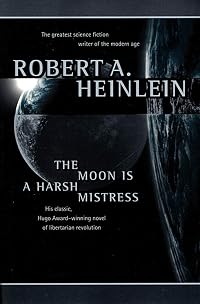
It seems to be a rather socialistic society, at least from the standpoint of government doles, a central planning organization (whose pretensions to complete knowledge, albeit aided by computers, would have F.A. Hayek smirking), diversion of money to projects that produce nothing and a scene featuring a man from the twentieth century who remarks the world is not run on Adam Smith’s principles. I can’t help thinking that this book was written at a time when Heinlein was somewhat enamored of communism.. Also, the society of his The Moon is a Harsh Mistress is noticeably more libertarian. It is also a society which concerns itself with state run eugenics. (Not in a coercive sense, though one genetic planner wishes she could force hero Hamilton Felix to reproduce.) Parents consciously try to genetically improve their children.
While the biological science and genetic manipulation technology have obviously dated, I’m not sure that some of Heinlein’s points on genetics – that some traits are the result of a complex of genes and some traits not easily linked to genetic influence – are invalid though, of course, he optimistically postulates being able to pin down genetic influences on math ability, for instance. Others receive large payments to be “control naturals” and take their chances with physical ailments genetically weeded out. The main thrust of all this is the betterment of the human race because, as Heinlein says, good times for the individual are not good times for the genetic hardiness of the race since natural selection pressure is functioning. Therefore, artificial selection must replace it. There is a brief description of the First Genetic Wars and the Second Genetic War where the “Empire of the Great Khans” produced genetically superior soldiers under a hive-like totalitarian state. They failed due to overspecialization.
Much of the story is taken up by a revolt of malcontents who wish to impose a coercive eugenics on society. They fail because they simply don’t have the intelligence to succeed and are motivated by fantasies which ignore the complexity of running this rather utopian state. In effect, they haven’t been bred for it like characters Claude Mordan and Monroe Alpha-Clifford (genetics and economic planners respectively). (I think this novel gets an unfair rap for allegedly stating that no revolution, in Darwinian terms, deserves to succeed that doesn’t succeed. I don’t see that as being stated.). Even more of the book is concerned with Hamilton’s existential crises as he wonders what the purpose of life is, what the point of humanity’s survival is, and why science concerns itself with only the how and not the why of existence. Pretty big – and, at least initially to Claude Mordan, unanswerable questions Mordan’s wife goes so far as to say only a psychopathic personality would dwell on them. But have no fear, science and rational planning comes up with the answer. Through the culmination of Mordan’s plan to marry Felix to his fifth cousin and advance the genetic “star line”, Felix learns that the purpose of life is to pass on a legacy physical and genetic, to help the race survive, and gain knowledge. One character embarks on a project to model, with mathematics and instrumentality – a “Grand Eidouranium – the entire universe to answer questions like the distribution of life. He marries his cousin and has kids.
It’s in this last respect that, to my mind, the novel becomes absurd in its faith not only in rational social planning but the power of science to answer every question – for Felix helps turn the resources of society loose on getting questions on the nature of telepathy and survival after death. Science, in this novel, can provide the answers to everything and plan and model everything. This may be one of the most extreme expressions of that trend in sf at the time.
Still, it was an interesting read. Stylistically, this story lacks the slickly inserted explication of Heinlein’s later works through there are plenty of lectures by characters. Heinlein’s characteristically dazzling and strange dialogue only shows up between Felix and his wife here. show less
I originally read this novel because it contains, David Brin said in an essay on gun control, Heinlein’s famous remark, “An armed society is a polite society.” I expected an extended rumination on the viability of a society which allows private force. Armed citizens, their duels, and the corresponding social conventions and manners are only a very small part of this part.
What this book really is the most extreme of Heinlein’s preoccupation with genetic influences on human behavior and his desire – as Charles Brown put it – to reconcile morals and religion. One of Heinlein’s political concerns – the nature and preservation of liberty – is also on display here show more with the idea of an armed citizenry, but this novel is a better exemplar of a rationalistic school of sf stories from the 40s and 30s pulps – especially Astounding – that featured societies centrally planned – either politically or economically or both. (In the most famous example – Isaac Asimov’s Foundation Trilogy – the society’s future is planned.).
It seems to be a rather socialistic society, at least from the standpoint of government doles, a central planning organization (whose pretensions to complete knowledge, albeit aided by computers, would have F.A. Hayek smirking), diversion of money to projects that produce nothing and a scene featuring a man from the twentieth century who remarks the world is not run on Adam Smith’s principles. I can’t help thinking that this book was written at a time when Heinlein was somewhat enamored of communism.. Also, the society of his The Moon is a Harsh Mistress is noticeably more libertarian. It is also a society which concerns itself with state run eugenics. (Not in a coercive sense, though one genetic planner wishes she could force hero Hamilton Felix to reproduce.) Parents consciously try to genetically improve their children.
While the biological science and genetic manipulation technology have obviously dated, I’m not sure that some of Heinlein’s points on genetics – that some traits are the result of a complex of genes and some traits not easily linked to genetic influence – are invalid though, of course, he optimistically postulates being able to pin down genetic influences on math ability, for instance. Others receive large payments to be “control naturals” and take their chances with physical ailments genetically weeded out. The main thrust of all this is the betterment of the human race because, as Heinlein says, good times for the individual are not good times for the genetic hardiness of the race since natural selection pressure is functioning. Therefore, artificial selection must replace it. There is a brief description of the First Genetic Wars and the Second Genetic War where the “Empire of the Great Khans” produced genetically superior soldiers under a hive-like totalitarian state. They failed due to overspecialization.
Much of the story is taken up by a revolt of malcontents who wish to impose a coercive eugenics on society. They fail because they simply don’t have the intelligence to succeed and are motivated by fantasies which ignore the complexity of running this rather utopian state. In effect, they haven’t been bred for it like characters Claude Mordan and Monroe Alpha-Clifford (genetics and economic planners respectively). (I think this novel gets an unfair rap for allegedly stating that no revolution, in Darwinian terms, deserves to succeed that doesn’t succeed. I don’t see that as being stated.). Even more of the book is concerned with Hamilton’s existential crises as he wonders what the purpose of life is, what the point of humanity’s survival is, and why science concerns itself with only the how and not the why of existence. Pretty big – and, at least initially to Claude Mordan, unanswerable questions Mordan’s wife goes so far as to say only a psychopathic personality would dwell on them. But have no fear, science and rational planning comes up with the answer. Through the culmination of Mordan’s plan to marry Felix to his fifth cousin and advance the genetic “star line”, Felix learns that the purpose of life is to pass on a legacy physical and genetic, to help the race survive, and gain knowledge. One character embarks on a project to model, with mathematics and instrumentality – a “Grand Eidouranium – the entire universe to answer questions like the distribution of life. He marries his cousin and has kids.
It’s in this last respect that, to my mind, the novel becomes absurd in its faith not only in rational social planning but the power of science to answer every question – for Felix helps turn the resources of society loose on getting questions on the nature of telepathy and survival after death. Science, in this novel, can provide the answers to everything and plan and model everything. This may be one of the most extreme expressions of that trend in sf at the time.
Still, it was an interesting read. Stylistically, this story lacks the slickly inserted explication of Heinlein’s later works through there are plenty of lectures by characters. Heinlein’s characteristically dazzling and strange dialogue only shows up between Felix and his wife here. show less
Okay, this one isn't new, and this isn't the first time I've read it. Some of the science in it was invalidated the year after it was first published, and social credit isn't a widely credited economic theory these days. I have severe doubts about the theory that "An armed society is a polite society"; it doesn't seem to be borne out by the experience of other societies where going armed and engaging in duels over perceived slights and offenses was the norm. It's still a charming and entertaining story, and you're missing a treat if you skip this one. And I do like the rather cantankerous Hamilton Felix.
Of course, if it were published for the first time today, it would probably be as a romance.
Of course, if it were published for the first time today, it would probably be as a romance.
Its a clunker of the novel that deserves begrudging respect. The science infomercials are tedious, the plot is absent. It is like it is super smart on some scientific elements and utterly moronic with some things like common sense, personal social skills, and entertainment. I'm glad I read it, I'm glad I never will read it again.
Members
- Recently Added By
Lists

1943 Retro-Hugo Eligible Novels
18 works; 2 members

Favorite Childhood Books
1,646 works; 518 members

Books Read in 2017
4,249 works; 129 members
Author Information

457+ Works 174,396 Members
Robert Anson Heinlein was born on July 7, 1907 in Butler, Mo. The son of Rex Ivar and Bam Lyle Heinlein, Robert Heinlein had two older brothers, one younger brother, and three younger sisters. Moving to Kansas City, Mo., at a young age, Heinlein graduated from Central High School in 1924 and attended one year of college at Kansas City Community show more College. Following in his older brother's footsteps, Heinlein entered the Navel Academy in 1925. After contracting pulmonary tuberculosis, of which he was later cured, Heinlein retired from the Navy and married Leslyn MacDonald. Heinlein was said to have held jobs in real estate and photography, before he began working as a staff writer for Upton Sinclair's EPIC News in 1938. Still needing money desperately, Heinlein entered a writing contest sponsored by the science fiction magazine Thrilling Wonder Stories. Heinlein wrote and submitted the story "Life-Line," which went on to win the contest. This guaranteed Heinlein a future in writing. Using his real name and the pen names Caleb Saunders, Anson MacDonald, Lyle Monroe, John Riverside, and Simon York, Heinlein wrote numerous novels including For Us the Living, Methuselah's Children, and Starship Troopers, which was adapted into a big-budget film for Tri-Star Pictures in 1997. The Science Fiction Writers of America named Heinlein its first Grand Master in 1974, presented 1975. Officers and past presidents of the Association select a living writer for lifetime achievement. Also, the Science Fiction and Fantasy Hall of Fame inducted Heinlein in 1998. Heinlein died in 1988 from emphysema and other related health problems. Heinlein's remains were scattered from the stern of a Navy warship off the coast of California. (Bowker Author Biography) show less
Some Editions
Awards and Honors
Awards
Distinctions
Series
Belongs to Publisher Series
Common Knowledge
- Canonical title
- Beyond This Horizon
- Original title
- Masters' Choice
- Original publication date
- 1942
- Dedication
- Laning, Caleb (For Cal, Mickey, and both J's)
- First words
- Hamilton Felix let himself off at the thirteenth level of the Department of Finance, mounted a slideway to the left, and stepped of the strip at a door marked:
BUREAU OF ECONOMIC STATISTICS
Office of Analysis an... (show all)d Prediction
Director
PRIVATE - Quotations
- An armed society is a polite society.
- Last words
- (Click to show. Warning: May contain spoilers.)The boy was a lot of fun now, and would be more interesting as he grew up - if he could refrain from wringing his cussed little neck in the meantime!
- Original language
- English
Classifications
Statistics
- Members
- 2,152
- Popularity
- 9,486
- Reviews
- 35
- Rating
- (3.31)
- Languages
- 8 — Czech, English, Finnish, French, German, Italian, Portuguese, Swedish
- Media
- Paper, Audiobook, Ebook
- ISBNs
- 36
- UPCs
- 1
- ASINs
- 47