On This Page
Description
The Unincorporated Man is a provocative social/political/economic novel that takes place in the future, after civilization has fallen into complete economic collapse. This reborn civilization is one in which every individual is incorporated at birth and spends many years trying to attain control over his or her own life by getting a majority of his or her own shares. Life extension has made life very long indeed.Now the incredible has happened: a billionaire businessman from our time, show more frozen in secret in the early twenty-first century, is discovered and resurrected, given health and a vigorous younger body. Justin Cord is the only unincorporated man in the world, a true stranger in this strange land. Justin survived because he is tough and smart. He cannot accept only part ownership of himself, even if that places him in conflict with a civilization that extends outside the solar system to the Oort Cloud.
People will be arguing about this novel and this world for decades.
. show less
Tags
Recommendations


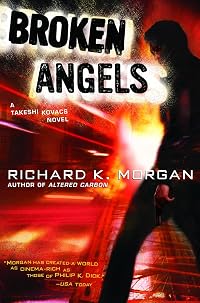
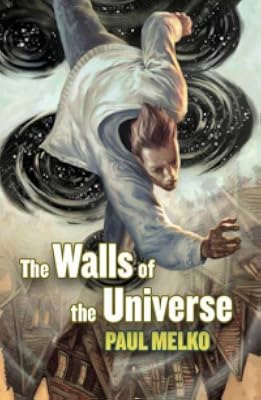
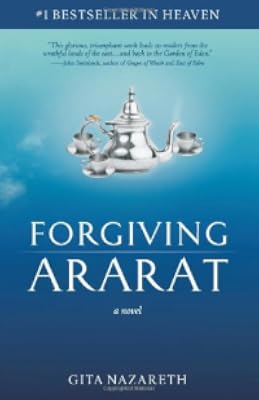
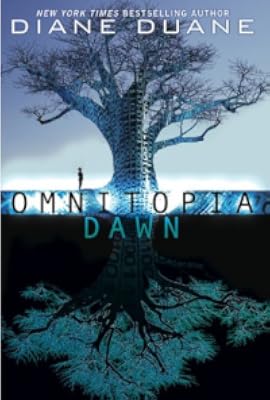
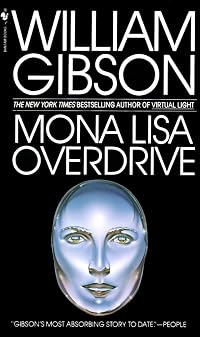
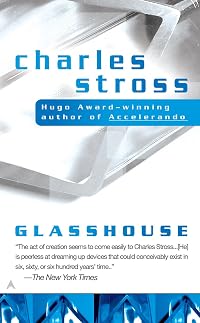
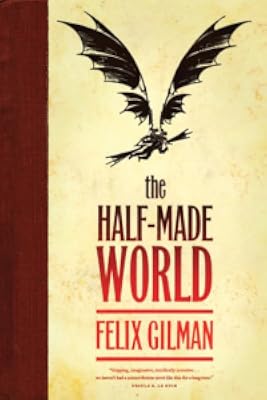
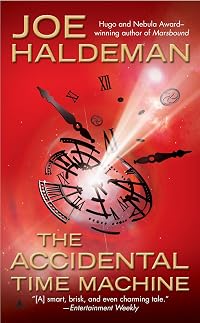


Member Recommendations
grizzly.anderson Heinlein makes much more than a straw man argument for minimal government and libertarianism.
10



Carnophile Both works are SF novels featuring a person from roughly our era being reanimated in the future. Both offer ruminations on political and economic matters. Also, the brothers Kollin are plainly politically influenced by Heinlein.
Member Reviews
I read a lot of business books. It's just something I enjoy... but not as much as a good sci-fi tale and this book combines both. The book is loaded with lots of ideas early on. Such as, ownership, property, government, investing, money, etc. It's a very 'free markets can heal the world if we'd just stay out of the way' will solve 99% of the world's issues if we'd let them. But as the story unfolds, it's individuals and people that have to take us the rest of the way.
The entire book is set in the future where everyone is self-incorporated. That is, as soon as you are born, the government gets a certain percentage stock in you, your parents and their friends probably take out some shares. As you grow older schools, classmates, the show more general public all invest in you, your life and your future, with the idea that if they help invest in your beginnings, once you become successful and rich you will buy them out to get majority ownership of yourself and they get rich. If you're unable to increase your self-stock's value, then they sell-off their stake in you. So a mining company could buy up all your stock and move you to the moon to mine ore or something like that.
But, introduced into this world is a savvy businessman unfrozen from the past... predating the incorporation period. So he is unincorporated, untaxed, not contributing to society as they see it. So what to do? Force him to incorporate and sell off parts of himself to business owners? Leave him alone and risk his "unalienable rights" thinking and talk to spark an uprising? Soon enough there is bloodshed, legal proceedings with businesses and governments aligning themselves against this man from the past.
It's a great concept and idea. Certainly one that gets people talking. Especially in this day of micro-payments and crowd-sourced funding many sites and non-profits are pursuing.
At a minimum, it's a fun sci-fi yarn. At the most, it will get you thinking, talking and looking at the good and bad of how things are run in America. show less
The entire book is set in the future where everyone is self-incorporated. That is, as soon as you are born, the government gets a certain percentage stock in you, your parents and their friends probably take out some shares. As you grow older schools, classmates, the show more general public all invest in you, your life and your future, with the idea that if they help invest in your beginnings, once you become successful and rich you will buy them out to get majority ownership of yourself and they get rich. If you're unable to increase your self-stock's value, then they sell-off their stake in you. So a mining company could buy up all your stock and move you to the moon to mine ore or something like that.
But, introduced into this world is a savvy businessman unfrozen from the past... predating the incorporation period. So he is unincorporated, untaxed, not contributing to society as they see it. So what to do? Force him to incorporate and sell off parts of himself to business owners? Leave him alone and risk his "unalienable rights" thinking and talk to spark an uprising? Soon enough there is bloodshed, legal proceedings with businesses and governments aligning themselves against this man from the past.
It's a great concept and idea. Certainly one that gets people talking. Especially in this day of micro-payments and crowd-sourced funding many sites and non-profits are pursuing.
At a minimum, it's a fun sci-fi yarn. At the most, it will get you thinking, talking and looking at the good and bad of how things are run in America. show less
Pretty good. There is a very interesting premise: A man from roughly our time goes into suspended animation and is re-animated several hundred years in the future, where veritably every person has sold stock in himself/herself.
Stock is like debt, except that instead of having to pay your creditors back a fixed amount, you have to pay them a certain fraction of your income. Someone who owns 1% of the stock of a corporation is entitled to receive 1% of the corporation's profits. Also - and much more importantly - a corporation's stockholders have the right to vote on certain decisions the corporation makes. If you own 1% of the stock, you control 1% of the votes.
Now imagine that other people had the right to make these decisions for you. show more For example, in this fictional universe, if you want to be a musician, but your stockholders think it's in their best interest for you to become an actuary, they can vote to force you to be an actuary! Horrible!
Our hero, having been born centuries before this became prevalent, is one of very few people who has no stockholders who own a stake in him. Some people really don't like this example of person who has the right to do whatever he wants, without being ensnared in the constraining legal and financial web of stock ownership. They fear the masses will be inspired by the example of this "Unincorporated Man" and will press to end stock ownership of individuals.
That's the basic set-up and conflict. I don't want to give any more specifics, to avoid spoilers.
Other comments:
• The main villain is one of the better-drawn ones I've seen in a long time.
• There is a very good surprise near the end.
• It would have been 4 stars, but for some didacticism, some incompletely-thought-out economics and politics, and a love angle that I somehow just didn't find interesting.
• Also, the divagation on virtual reality seemed like a setup for something that would reappear later in a big way, but it never did.
• And the ending is blatantly unresolved, plainly to set up a sequel, because we don't find out what happens to the villain. (Update: It turns out that there are three sequels. Not that there's anything wrong with that.)
• Overall, good, and the end seems to come faster than the 479 pages would suggest. show less
Stock is like debt, except that instead of having to pay your creditors back a fixed amount, you have to pay them a certain fraction of your income. Someone who owns 1% of the stock of a corporation is entitled to receive 1% of the corporation's profits. Also - and much more importantly - a corporation's stockholders have the right to vote on certain decisions the corporation makes. If you own 1% of the stock, you control 1% of the votes.
Now imagine that other people had the right to make these decisions for you. show more For example, in this fictional universe, if you want to be a musician, but your stockholders think it's in their best interest for you to become an actuary, they can vote to force you to be an actuary! Horrible!
Our hero, having been born centuries before this became prevalent, is one of very few people who has no stockholders who own a stake in him. Some people really don't like this example of person who has the right to do whatever he wants, without being ensnared in the constraining legal and financial web of stock ownership. They fear the masses will be inspired by the example of this "Unincorporated Man" and will press to end stock ownership of individuals.
That's the basic set-up and conflict. I don't want to give any more specifics, to avoid spoilers.
Other comments:
• The main villain is one of the better-drawn ones I've seen in a long time.
• There is a very good surprise near the end.
• It would have been 4 stars, but for some didacticism, some incompletely-thought-out economics and politics, and a love angle that I somehow just didn't find interesting.
• Also, the divagation on virtual reality seemed like a setup for something that would reappear later in a big way, but it never did.
• And the ending is blatantly unresolved, plainly to set up a sequel, because we don't find out what happens to the villain. (Update: It turns out that there are three sequels. Not that there's anything wrong with that.)
• Overall, good, and the end seems to come faster than the 479 pages would suggest. show less
Welcome to the world of The Unincorporated Man! It’s 350 years in the future, and most citizens are incorporated entities whose shares trade on the open market.
Do you think your class valedictorian is going to go far? Buy some of his shares today, while they’re still cheap! When he eventually becomes a hotshot executive, you’ll be entitled to dividends representing a share of his earnings!
How about those noisy neighbors next door? Can’t seem to get them to turn their stereo down? Maybe it’s time for a hostile takeover! Buy enough shares of them, and you can put a motion to their governing boards that they get rid of their stereo. Better yet, if you can leverage a majority ownership of them, you can make them move!
How about show more your sister-in-law? Does her new business idea have “flop” written all over it? Sell her short! No reason her failure shouldn’t be your profit! …just be sure to buy through an anonymous broker; if she catches wind of what you’re doing, it could make for an awkward Thanksgiving.
Does all of this sound kind of crazy? It’s the rich and complex world envisioned by co-authors Dani and Eytan Kollin. Here’s how it works: each citizen is incorporated at birth, with their personal portfolio divided up into a fixed 100,000 shares, which pay dividends (a fraction of earnings), and carry voting rights in the person’s major life decisions. In lieu of taxes, the government gets 5% of each person’s shares. Parents get a 20% stake in their children (and cannot sell those shares before the kids turn 21), both as compensation for raising them, and for disciplinary leverage. The remaining 75% belong to the individual, who will usually need to sell large lots to pay for his education and other major purchases. By the time most young people enter the workforce, they are only minority stakeholders in themselves, working for the day they can reclaim a majority position. In some ways, it is a very workable system; society prospers because shareholders have a stake in their fellow man’s success. The downside is of course the loss of autonomy that goes with constant accountability to shareholders. Without a majority position in oneself, shareholders can force unwanted career choices and other personal decisions on an individual, in the interest of improving profitability. If the person rebels and sabotages his portfolio (i.e. his life), stockholders can sue for mismanagement of their assets! Freedom from the tyranny of incorporation comes only to the few who attain the elusive dream of supermajority (71% ownership in one‘s self).
So who is the unincorporated man in all of this? He’s 21st century billionaire Justin Cord. After developing terminal cancer, Cord has himself frozen, Walt Disney-style, in cryogenic stasis. In the chaos of a global nuclear war, something called the “virtual reality plague” (explained later in the book) and a period of socioeconomic upheaval called “The Grand Collapse”, his stasis pod is lost down a remote mineshaft. Three hundred fifty years later, it is accidentally discovered, and he is revived. The company which revives him wants payment in the form of shares, but things get interesting when he refuses to incorporate. Through a plausible strategy, he’s managed to bring enough assets with him from the past, that he’s cash-flush. Plus, his odd situation makes him a minor celebrity, so he’s soon earning money on book deals and interviews. Why incorporate? Soon reality shows are following him around, and the average Joe is enviously dreaming about how cool it would be to have no accountability to shareholders. Before long, a minor political party taps into this public sentiment and makes unincorporation a political issue.
Naturally, the people and institutions with a vested interest in the incorporated system are determined to force Cord’s incorporation, and to castrate the nascent political uprising. Some of the details here are brilliant. There are two high-stakes court trials which hash out the question of Justin‘s right to refuse incorporation. I love that: a futuristic book without robot attacks, or bug-eyed aliens, whose battles all occur in court! I realize some of you out there might mistake this for “boring”, but it isn’t. There are some bizarre curves thrown in, which I couldn’t spoil if I wanted to, because it would take too long to explain the backstory. Suffice it to say that there is a LOT of corporate intrigue, and not everybody is who they appear to be. Additional confusion results from sentient artificially intelligent personal assistants, the bizarre effects virtual reality has on society, and nanotechnology which makes everything from buildings to peoples’ bodies fluid, dynamic, and constantly changing. It’s all really fun stuff to think about.
It wasn’t until the final third of the book, when the unincorporation movement began to spread, that I started to realize this novel has an ideological bent. It is Libertarian, but with an unconventional angle: it recognizes corporate power is as much a threat to individual liberty as governmental power. That’s something Ayn Rand (whose “objectivism” is really maniacal selfishness dressed up in Libertarian clothing) never considered. Then again, she also never considered writing a fast-paced and engaging story, set in a fascinatingly imaginative world, and populated by sympathetic and multidimensional characters who have interesting dialogue with each other. I only hope if they make a movie of The Unincorporated Man, they’ll let Rush do the soundtrack! show less
Do you think your class valedictorian is going to go far? Buy some of his shares today, while they’re still cheap! When he eventually becomes a hotshot executive, you’ll be entitled to dividends representing a share of his earnings!
How about those noisy neighbors next door? Can’t seem to get them to turn their stereo down? Maybe it’s time for a hostile takeover! Buy enough shares of them, and you can put a motion to their governing boards that they get rid of their stereo. Better yet, if you can leverage a majority ownership of them, you can make them move!
How about show more your sister-in-law? Does her new business idea have “flop” written all over it? Sell her short! No reason her failure shouldn’t be your profit! …just be sure to buy through an anonymous broker; if she catches wind of what you’re doing, it could make for an awkward Thanksgiving.
Does all of this sound kind of crazy? It’s the rich and complex world envisioned by co-authors Dani and Eytan Kollin. Here’s how it works: each citizen is incorporated at birth, with their personal portfolio divided up into a fixed 100,000 shares, which pay dividends (a fraction of earnings), and carry voting rights in the person’s major life decisions. In lieu of taxes, the government gets 5% of each person’s shares. Parents get a 20% stake in their children (and cannot sell those shares before the kids turn 21), both as compensation for raising them, and for disciplinary leverage. The remaining 75% belong to the individual, who will usually need to sell large lots to pay for his education and other major purchases. By the time most young people enter the workforce, they are only minority stakeholders in themselves, working for the day they can reclaim a majority position. In some ways, it is a very workable system; society prospers because shareholders have a stake in their fellow man’s success. The downside is of course the loss of autonomy that goes with constant accountability to shareholders. Without a majority position in oneself, shareholders can force unwanted career choices and other personal decisions on an individual, in the interest of improving profitability. If the person rebels and sabotages his portfolio (i.e. his life), stockholders can sue for mismanagement of their assets! Freedom from the tyranny of incorporation comes only to the few who attain the elusive dream of supermajority (71% ownership in one‘s self).
So who is the unincorporated man in all of this? He’s 21st century billionaire Justin Cord. After developing terminal cancer, Cord has himself frozen, Walt Disney-style, in cryogenic stasis. In the chaos of a global nuclear war, something called the “virtual reality plague” (explained later in the book) and a period of socioeconomic upheaval called “The Grand Collapse”, his stasis pod is lost down a remote mineshaft. Three hundred fifty years later, it is accidentally discovered, and he is revived. The company which revives him wants payment in the form of shares, but things get interesting when he refuses to incorporate. Through a plausible strategy, he’s managed to bring enough assets with him from the past, that he’s cash-flush. Plus, his odd situation makes him a minor celebrity, so he’s soon earning money on book deals and interviews. Why incorporate? Soon reality shows are following him around, and the average Joe is enviously dreaming about how cool it would be to have no accountability to shareholders. Before long, a minor political party taps into this public sentiment and makes unincorporation a political issue.
Naturally, the people and institutions with a vested interest in the incorporated system are determined to force Cord’s incorporation, and to castrate the nascent political uprising. Some of the details here are brilliant. There are two high-stakes court trials which hash out the question of Justin‘s right to refuse incorporation. I love that: a futuristic book without robot attacks, or bug-eyed aliens, whose battles all occur in court! I realize some of you out there might mistake this for “boring”, but it isn’t. There are some bizarre curves thrown in, which I couldn’t spoil if I wanted to, because it would take too long to explain the backstory. Suffice it to say that there is a LOT of corporate intrigue, and not everybody is who they appear to be. Additional confusion results from sentient artificially intelligent personal assistants, the bizarre effects virtual reality has on society, and nanotechnology which makes everything from buildings to peoples’ bodies fluid, dynamic, and constantly changing. It’s all really fun stuff to think about.
It wasn’t until the final third of the book, when the unincorporation movement began to spread, that I started to realize this novel has an ideological bent. It is Libertarian, but with an unconventional angle: it recognizes corporate power is as much a threat to individual liberty as governmental power. That’s something Ayn Rand (whose “objectivism” is really maniacal selfishness dressed up in Libertarian clothing) never considered. Then again, she also never considered writing a fast-paced and engaging story, set in a fascinatingly imaginative world, and populated by sympathetic and multidimensional characters who have interesting dialogue with each other. I only hope if they make a movie of The Unincorporated Man, they’ll let Rush do the soundtrack! show less
Brilliant, all-absorbing, speculative fiction about a billionaire from our time who wakes up from being cryo-frozen to find himself in a society where everyone is a corporation, your personal stock price determines your social value, and the universal desire is to find a way to become a majority holder of one's own stock.
For the crew of us who are equally fascinated by economics, sci-fi, politics, and questions of liberty, this book is made to order. It's smart and complicated, and the discussions of economics and politics are complex and thorough without being deadly dull.
There are gestures in the direction of a romance in the book, but it's fairly unpersuasive. Certainly, it's not where the authors put their real focus.
I'm in for the show more rest of the series. In fact, May (when book 2 comes out) can't get here fast enough. show less
For the crew of us who are equally fascinated by economics, sci-fi, politics, and questions of liberty, this book is made to order. It's smart and complicated, and the discussions of economics and politics are complex and thorough without being deadly dull.
There are gestures in the direction of a romance in the book, but it's fairly unpersuasive. Certainly, it's not where the authors put their real focus.
I'm in for the show more rest of the series. In fact, May (when book 2 comes out) can't get here fast enough. show less
So... meh. I give it three stars instead of two because it is a debut, and first books are (almost) always a bit rough.
Good stuff:
1.) I like new authors. New voices are good.
2.) There is a good story here... though, see below.
Main problems:
1.) Getting clubbed over the the head with repeated, repeated, repeated socio-political-economic talk; it's not as bad as e.g. Ayn Rand (maybe 3 - 4 pages is the worst here, no 20-ish pages diatribes), but that's not exactly praise.
2.) Paper thin characters; especially female characters. Even the nemesis is barely a caricature.
3.) Okay, this is just a pet peeve. "Narticles." Really? Don't coin words just to coin words. Man... "narticles." Why?
4.) Gaping holes in history. This isn't a problem per se, show more except the book goes into the history of this future in some detail. Key things in history don't make any sense: the 'VR Plauges' wiped out most of humanity because first world people all became, essentially, helpless hyper-addicts who died of starvation. Without the economic activity of the first world, the third world all starved. (Wait, what?) China and India and Turkey (I forget, actually, who the third player was) all nuked each other. (Really, just when the US and Europe self-destruct, then China and India decide to go to war?) What was left of the world was dominated by the 'Alaskan Federation', which united the world by force. Everyone is, apparently, some kind of American, just futurized (just how much ethnic cleansing was involved in the Alaskan Federation's take-over...?) One wonders what all of non-third world Africa, South America, Australia, etc. were doing, even in this skewed world history.
Oddly enough, this was one of the things that bothered me the most about this book: it's not just the Ayn Randishness, or the thin characters, or the ridiculous portrayal of current (real) society and government... its that I can't help but feel a kind of not-so-subtle... Xenophobia? No. Rascim? No. I don't think those, per se.... but something. It's the hyper-American-centric libertarian fantasy of it all... so jingoistic. That's it. It's the barely concealed American libertarian jingoism.
It so starkly jars with the real world that using the real world as a touch point in the book just keeps 'breaking the illusion' that this kind of SciFi needs.
Damn, I think I just convinced myself to lower this to two stars. show less
Good stuff:
1.) I like new authors. New voices are good.
2.) There is a good story here... though, see below.
Main problems:
1.) Getting clubbed over the the head with repeated, repeated, repeated socio-political-economic talk; it's not as bad as e.g. Ayn Rand (maybe 3 - 4 pages is the worst here, no 20-ish pages diatribes), but that's not exactly praise.
2.) Paper thin characters; especially female characters. Even the nemesis is barely a caricature.
3.) Okay, this is just a pet peeve. "Narticles." Really? Don't coin words just to coin words. Man... "narticles." Why?
4.) Gaping holes in history. This isn't a problem per se, show more except the book goes into the history of this future in some detail. Key things in history don't make any sense: the 'VR Plauges' wiped out most of humanity because first world people all became, essentially, helpless hyper-addicts who died of starvation. Without the economic activity of the first world, the third world all starved. (Wait, what?) China and India and Turkey (I forget, actually, who the third player was) all nuked each other. (Really, just when the US and Europe self-destruct, then China and India decide to go to war?) What was left of the world was dominated by the 'Alaskan Federation', which united the world by force. Everyone is, apparently, some kind of American, just futurized (just how much ethnic cleansing was involved in the Alaskan Federation's take-over...?) One wonders what all of non-third world Africa, South America, Australia, etc. were doing, even in this skewed world history.
Oddly enough, this was one of the things that bothered me the most about this book: it's not just the Ayn Randishness, or the thin characters, or the ridiculous portrayal of current (real) society and government... its that I can't help but feel a kind of not-so-subtle... Xenophobia? No. Rascim? No. I don't think those, per se.... but something. It's the hyper-American-centric libertarian fantasy of it all... so jingoistic. That's it. It's the barely concealed American libertarian jingoism.
It so starkly jars with the real world that using the real world as a touch point in the book just keeps 'breaking the illusion' that this kind of SciFi needs.
Damn, I think I just convinced myself to lower this to two stars. show less
I was instantly hooked by the synopsis of the book on the back cover and bought the first edition almost the moment it appeared on the market – a due credit to Dani Kollin as advertiser by profession, with undoubtedly a network of useful connections.
In the end, I was left with no regrets whatsoever.
The idea of absolutely deregulated market economy (forcefully imposed on us all by engineers of past, current and countless future economic crises IRL) rescuing the post-apocalyptic world (caused by viral escapism and religious fanaticism) is so novel , so intriguing and oh so timely – that it grants this novel high honor on its own merits alone!
Add to that the dream of some measure of immortality, a poisonous hope that maybe somehow one show more could wake up in a brave new world full of wonders long after one's flesh should have expired, and you have a book that will (I Insist) be remembered for ages to come.
Through the eyes of the main character, a reader is appalled by this personal incorporation, understandably naturally; yet the authors did a great job at playing the devil's advocate pointing out in great detail and with uncanny insight all the advantages of such system. In this new world – gone are the old ethnic prejudices, hatred, vindictiveness, lust for revenge, gone is the religious fanaticism (although, strangely, any form of spirituality is missing from this world as well... ), and as the consequences of the system, corporations and wealthy individuals are personally vested in making others grow into wealth and accomplishment (at the very least those that have been invested in), government is left on the sidelines and to dream up large long-term large-scale endeavors. A strangely believable utopia.
At first.
People being people, though, any system is corruptible and thus is corrupted, as we slowly discover through the pages of the book.
People being people, it only takes a catalyst to spark conflict, uprising, bloodshed, and sorrow(but strangely the authors left out regret ...), as we find out through the wonderfully choreographed movements of this sonata.
I gave the book full 5 stars, and was left very eager to see the debutants develop the premises and ideas established here, in the future volumes of the saga.
I eventually bought the remaining 3 volumes as soon as I could find them, — but to my disappointment, surprise and even appall! — the central subject(s) and original insight were abandoned with increasing carelessness in all following volumes.
Therefore I highly recommend this novel - The Unincorporated Man, but absolutely not the rest of the saga. And if after reading this book you wonder how it all ended, know — as it always does – with a whimper! show less
In the end, I was left with no regrets whatsoever.
The idea of absolutely deregulated market economy (forcefully imposed on us all by engineers of past, current and countless future economic crises IRL) rescuing the post-apocalyptic world (caused by viral escapism and religious fanaticism) is so novel , so intriguing and oh so timely – that it grants this novel high honor on its own merits alone!
Add to that the dream of some measure of immortality, a poisonous hope that maybe somehow one show more could wake up in a brave new world full of wonders long after one's flesh should have expired, and you have a book that will (I Insist) be remembered for ages to come.
Through the eyes of the main character, a reader is appalled by this personal incorporation, understandably naturally; yet the authors did a great job at playing the devil's advocate pointing out in great detail and with uncanny insight all the advantages of such system. In this new world – gone are the old ethnic prejudices, hatred, vindictiveness, lust for revenge, gone is the religious fanaticism (although, strangely, any form of spirituality is missing from this world as well... ), and as the consequences of the system, corporations and wealthy individuals are personally vested in making others grow into wealth and accomplishment (at the very least those that have been invested in), government is left on the sidelines and to dream up large long-term large-scale endeavors. A strangely believable utopia.
At first.
People being people, though, any system is corruptible and thus is corrupted, as we slowly discover through the pages of the book.
People being people, it only takes a catalyst to spark conflict, uprising, bloodshed, and sorrow(but strangely the authors left out regret ...), as we find out through the wonderfully choreographed movements of this sonata.
I gave the book full 5 stars, and was left very eager to see the debutants develop the premises and ideas established here, in the future volumes of the saga.
I eventually bought the remaining 3 volumes as soon as I could find them, — but to my disappointment, surprise and even appall! — the central subject(s) and original insight were abandoned with increasing carelessness in all following volumes.
Therefore I highly recommend this novel - The Unincorporated Man, but absolutely not the rest of the saga. And if after reading this book you wonder how it all ended, know — as it always does – with a whimper! show less
**2.5 Stars**
So this book was quite a ride with multiple interesting moments and others that I feel could have been cut.
First: I really enjoyed the world. It was interesting and I really liked seeing how things changed from the world that we currently inhabit. It was really well done.
Second: even though I enjoyed the world, I strongly feel that the book was way too long and because of the length, I feel that the writing/story suffered a bit. I often found myself drifting off and having to rewind the audio book.
Third: The characters were a little on the flat side. They were not terrible, but they weren't really all that compelling. I did rather enjoy Ohmahd (sp?) because he was witty and very loyal to his friends. The others were really show more a one track mind kind of cast.
Fourth: The themes were actually something that I enjoyed and sometimes found myself thinking about. I personally found the idea of incorporation horrifying and this world's version of slavery. The population's total acceptance of the system also left me feeling sick.
Over all, I do not feel compelled to continue with the series, but will most likely just look up summaries of the sequels. show less
So this book was quite a ride with multiple interesting moments and others that I feel could have been cut.
First: I really enjoyed the world. It was interesting and I really liked seeing how things changed from the world that we currently inhabit. It was really well done.
Second: even though I enjoyed the world, I strongly feel that the book was way too long and because of the length, I feel that the writing/story suffered a bit. I often found myself drifting off and having to rewind the audio book.
Third: The characters were a little on the flat side. They were not terrible, but they weren't really all that compelling. I did rather enjoy Ohmahd (sp?) because he was witty and very loyal to his friends. The others were really show more a one track mind kind of cast.
Fourth: The themes were actually something that I enjoyed and sometimes found myself thinking about. I personally found the idea of incorporation horrifying and this world's version of slavery. The population's total acceptance of the system also left me feeling sick.
Over all, I do not feel compelled to continue with the series, but will most likely just look up summaries of the sequels. show less
Members
- Recently Added By
Published Reviews
ThingScore 63
Science fiction is full of examples of books that are somewhat crudely written, but succeed because of the fascinating ideas they present. There are also numerous examples of novels that are compelling more for their prose style and characterization than in their utilization of any new or controversial ideas. The best science fiction novels, of course, combine both style and ideas into one show more great story. The Unincorporated Man, unfortunately, fails on both counts. show less
added by private library
Imagine the late, philosophical Heinlein crossed with cheesetastic 1980s Buck Rogers TV series, and you've got a good feel for political economy adventure novel The Unincorporated Man.
added by PhoenixTerran
Lists

Best Science Fiction Novels
816 works; 430 members

Top Five Books of 2013
1,562 works; 721 members

David Brin: Dire Warnings And Self-Preventing Prophecies
17 works; 3 members

Prometheus Award Winners
16 works; 1 member

Books Read in 2013
1,630 works; 51 members

Unshelved Book Clubs
579 works; 5 members
Author Information
8+ Works 1,038 Members
Some Editions
Awards and Honors
Awards
Series

Belongs to Publisher Series
Common Knowledge
- Canonical title
- The Unincorporated Man
- Original title
- The Unincorporated Man
- Original publication date
- 2009-04-01
- People/Characters
- Justin Cord; Neela Harper; Hektor Sambianco; Mosh McKenzie; Omad
- Important places
- New Orleans, Louisiana, USA; New York, New York, USA; Geneva, Geneva, Switzerland
- Important events
- The Great Collapse
- Dedication
- To Mom and Dad,
who assured us with their
unflinching belief, who steadied us
with their unending support, and
who inspired us with their undying love.
This book would not exist without you.
To my... (show all) beloved Deborah,
without whose patience, encouragement, and
endless support
this book could not have been written. I love you
more than the
stars in the sky and the sand in the sea.
To my children, Eliana, Yonatan, and Gavriel,
thank you for giving me the best job in the world. - First words
- Though he was filthy from head to toe, bloodied, and his skin shredded as thoroughly as a cat's scratching post, Omad couldn't suppress a grin.
- Last words
- (Click to show. Warning: May contain spoilers.)"We stay that way."
- Publisher's editor
- Hartwell, David G.
- Blurbers
- Sawyer, Robert J. ; Benford, Gregory ; Baker, Kage
Classifications
Statistics
- Members
- 671
- Popularity
- 42,943
- Reviews
- 22
- Rating
- (3.65)
- Languages
- English, French
- Media
- Paper, Audiobook, Ebook
- ISBNs
- 10
- ASINs
- 5