
Bodily Harm
by Margaret Atwood
On This Page
Description
"A powerfully and brilliantly crafted novel, Bodily Harm is the story of Rennie Wilford, a young journalist whose life has begun to shatter around the edges. Rennie flies to the Caribbean to recuperate, and on the tiny island of St. Antoine she is confronted by a world where her rules for survival no longer apply. By turns comic, satiric, relentless, and terrifying, Margaret Atwood's Bodily Harm is ultimately an exploration of the lust for power, both sexual and political, and the need for show more compassion that goes beyond what we ordinarily mean by love."--Amazon.com. show lessTags
Recommendations







































Member Reviews
Maybe because I listened to rather than read this, but it never seemed to entirely hold together. An odd blend of Atwood's dry intellectualizing of mundane social life and overt political topics. The climax was very powerful, though, and Laura will stay with me for a long time.
Not my favorite Atwood—she's at her drier and more intellectual here—but I appreciated the Banana Republic politics and the apolitical narrator's political awakening, if not the quasi-feminism. The scenes in the prison were memorable, and the character of Laura tragic in a very subtle way.
Not my favorite Atwood—she's at her drier and more intellectual here—but I appreciated the Banana Republic politics and the apolitical narrator's political awakening, if not the quasi-feminism. The scenes in the prison were memorable, and the character of Laura tragic in a very subtle way.
3.5 stars, rounded down.
I discovered this 1982 Margaret Atwood novel that I had not read. Imagine. Back in the 80s, I read them as fast as she released them. What I delved into was one of the most disturbing narratives and characters I have ever encountered. Renee is a third rate journalist; she writes travelogues. She has just had a mastectomy, thinks she might still be dying, has parted ways with her strange and self-centered boyfriend, and takes an assignment to write a piece on St. Antoine in the Caribbean. She is emotionally and physically compromised.
I thought Atwood had set the tale up to be about this woman’s travails dealing with her imagined loss of sexuality. That is an element, but oh my goodness, there is much more than show more that going on. When she arrives at this tumultuous island, there is political upheaval in the wind, as the people strive to thwart a Papa Doc kind of despotic ruler. Renee, unfortunately, arrives with the misnomer of “journalist” hanging over her and immediately is drawn into expectations and suspicions from the native population. I spent the second half of this novel wanting to scream at her “Are you crazy? What are you thinking? Don’t do it!”
Atwood has always been able to draw me in and hold me. Her style here is comic and tragic all in the same breath. She exposes the cruelty in man, the tools he uses against himself, his thirst for power, and his lack of compassion. Her women are under assault, they are being used, and they are foolishly complicit in their downfall. As Renee discovers, no one is excepted; all are vulnerable. show less
I discovered this 1982 Margaret Atwood novel that I had not read. Imagine. Back in the 80s, I read them as fast as she released them. What I delved into was one of the most disturbing narratives and characters I have ever encountered. Renee is a third rate journalist; she writes travelogues. She has just had a mastectomy, thinks she might still be dying, has parted ways with her strange and self-centered boyfriend, and takes an assignment to write a piece on St. Antoine in the Caribbean. She is emotionally and physically compromised.
I thought Atwood had set the tale up to be about this woman’s travails dealing with her imagined loss of sexuality. That is an element, but oh my goodness, there is much more than show more that going on. When she arrives at this tumultuous island, there is political upheaval in the wind, as the people strive to thwart a Papa Doc kind of despotic ruler. Renee, unfortunately, arrives with the misnomer of “journalist” hanging over her and immediately is drawn into expectations and suspicions from the native population. I spent the second half of this novel wanting to scream at her “Are you crazy? What are you thinking? Don’t do it!”
Atwood has always been able to draw me in and hold me. Her style here is comic and tragic all in the same breath. She exposes the cruelty in man, the tools he uses against himself, his thirst for power, and his lack of compassion. Her women are under assault, they are being used, and they are foolishly complicit in their downfall. As Renee discovers, no one is excepted; all are vulnerable. show less
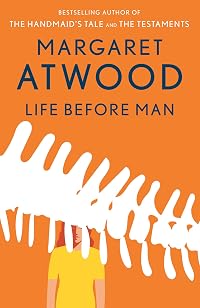
Happiness and cheer abound: Sure it does. It is very much not a good idea for a reader to attempt to psychoanalyze an author through their own works, because not only will you probably come to the wrong conclusions, but the ones you do come up with will probably creep you out just a little bit. To whit: Margaret Atwood probably is a delightfully cheery woman who quite enjoys life and all she encounters . . . however that sure doesn't come across in her novels. In her best novels the misery her characters suffer often eventually dovetails into a gloriously insightful epiphany of sorts. And in other cases you often feel like just guilty reading the book, after a while you get the impression by continuing to read you're furthering the show more character's Job-like troubles. Life Before Man was a bit of a downer but at least it was spread over four people . . . here poor Rennie has to take it all on the chin herself. Young woman journalist Rennie is sent to a Caribbean island to write a vacation type story . . . what happens is quite simply the vacation from hell. There's really no other way to put it. Nobody is what they seem, Rennie is totally out of place and things start getting very serious before anyone knows what's going on. However if that's all there was to the book then it would simply be a matter of plodding on to see what Ms Atwood is going to do next to poor Rennie. To save the story, Atwood details Rennie's crumbling relationship with her boyfriend, as well as her relationships with both her family and others . . . these quasi-flashbacks (some are given as monologues, though I'm not sure who she's talking to) are interspersed throughout the novel and are where the story truly shines. When she wants to Atwood can get right to the heart of a person and choose the exact right words to get the emotions right. The ending alone is one of the best examples of a stark prose style I've ever seen. So ignore the quasi-political intrigue plot and instead focus on a masterful character study by one of the few authors who know how to get such things right. The feelings she reveals may be painful but you can't argue that she's all that far off. show less
Bodily Harm is about Rennie, a journalist recovering from breast cancer. In an attempt to escape from reality, she takes a working vacation to the Caribbean islands of St. Agathe and St. Antione. There she becomes involved in the political turmoil of the region.
This book is similar to some of Atwood's other books in that you get bits and pieces of the story as you go and have to put them all together when you get to the end of the novel. Having read some of her more recent novels, it was obvious to me that in this earlier book she hadn't quite hit her stride yet. I didn't like this book as much as some of her others (like The Handmaid's Tale and The Blind Assassin), and I didn't think it was as good as her later work.
One of the main show more problems I had with it was that I didn't like Rennie because she constantly made stupid choices that put her in danger and continued on a self-destructive path even when she knew what she was doing was a bad idea. I can understand that she acted this way as a result of some form of post-traumatic stress disorder that came from her battle with cancer, but I just didn't feel any sympathy for her.
For fans of Atwood, this book is worth reading, but it's probably not the one to start with if you've never read her. show less
This book is similar to some of Atwood's other books in that you get bits and pieces of the story as you go and have to put them all together when you get to the end of the novel. Having read some of her more recent novels, it was obvious to me that in this earlier book she hadn't quite hit her stride yet. I didn't like this book as much as some of her others (like The Handmaid's Tale and The Blind Assassin), and I didn't think it was as good as her later work.
One of the main show more problems I had with it was that I didn't like Rennie because she constantly made stupid choices that put her in danger and continued on a self-destructive path even when she knew what she was doing was a bad idea. I can understand that she acted this way as a result of some form of post-traumatic stress disorder that came from her battle with cancer, but I just didn't feel any sympathy for her.
For fans of Atwood, this book is worth reading, but it's probably not the one to start with if you've never read her. show less
Is there a better novelist than Margaret Atwood? This one is very old ... and really good. The narrator-protagonist is a 32 year old Canadian woman, a magazine writer of living & style stories, who has experienced just about all she can take as a result of a bout with breast cancer that resulted in the removal of part of her breast, her love/desire for her surgeon after surgery & at the ending of a live-in relationship with a man who who could no longer feel close after the surgery left her feeling damaged.
She went to a small Caribbean island nation primarily to get away from her life, which she could only barely tolerate any longer, with its discouragement, depression, alienation & staleness as she experienced it. She had an intention show more to write an article about life on this backwater island that was seldom visited. As you might imagine, the trip did not go as she had hoped. On the final, tiny plane she meets - against her will - a man from the island. He clearly had a high opinion of himself and his clout in the island nation. She just wanted him to stop talking and go away. Upon reaching her hotel she encounters further indications that her trip will be far from relaxing or satisfying. Then, shortly, she meets another man - this one a North American - who is mysterious or complicated ... or deceptive. As time goes on, her view of who he is and what he is about changes several times. Naturally, there is a CIA component to the story.
I'll say no more. It is a finely written book (no surprise) with a very good story and clear character development. Among other things, Atwood expresses her strong beliefs about the character of men, as well as their damaging impact on women (which all rang true to me). I'm glad this book was recommended to me. show less
She went to a small Caribbean island nation primarily to get away from her life, which she could only barely tolerate any longer, with its discouragement, depression, alienation & staleness as she experienced it. She had an intention show more to write an article about life on this backwater island that was seldom visited. As you might imagine, the trip did not go as she had hoped. On the final, tiny plane she meets - against her will - a man from the island. He clearly had a high opinion of himself and his clout in the island nation. She just wanted him to stop talking and go away. Upon reaching her hotel she encounters further indications that her trip will be far from relaxing or satisfying. Then, shortly, she meets another man - this one a North American - who is mysterious or complicated ... or deceptive. As time goes on, her view of who he is and what he is about changes several times. Naturally, there is a CIA component to the story.
I'll say no more. It is a finely written book (no surprise) with a very good story and clear character development. Among other things, Atwood expresses her strong beliefs about the character of men, as well as their damaging impact on women (which all rang true to me). I'm glad this book was recommended to me. show less
I agree with other reviewers who said that the protagonist is a dumb protagonist. This was the author's intent, I suppose, to show a woman so discombobulated by her breast cancer and subsequent surgery, that she asked her editor for an assignment where she could go to forget her troubles for a bit. So she goes to an island in the Caribbean, that has recently shed British rule, and is having a local election. Politics are running extreme, with a couple different parties resorting to violence, and shenanigans with the Canadian aid sent there for the recent hurricane.
I Don't really feel much sympathy for the protagonist. Margaret Atwood is usually one of my favorite writers. So even when she has a bleh book, it's still got some parts that show more I liked, so here they are.
This one part reminded me so much of my childhood in Missouri. Old people love to talk about their illnesses, and in those days illnesses were fewer than they are nowadays, I'm talking about cancer, and nervous breakdowns, which were referred to as " collapses."
"One of Rennie's less pleasant fantasies about the future, on nights when she can't sleep, is that her mother will get some lingering disease and she'll have to go back to Griswold to take care of her, for years and years, for the rest of her life. She'll plead illness, they'll have a competition, the sickest one will win. That's how it's done in griswold, by the women at any rate. Rennie can remember her mother's church group in the front parlour, drinking tea and eating small cakes covered with chocolate icing and poisonous-looking mini-coloured sprinkles, discussing their own and other's debilities in hushed voices that blended pity, admiration and envy. If you were sick you were exempt: other women brought you pies and came to sit with you, commiserating, gloating. The only thing they liked better was a funeral."
Talking about her recently-broken-up relationship:
"That was what it had been at first: no mess, no in love. By the time she met Jake she decided she didn't much like being in love. Being in love was like running barefoot along a street covered with broken bottles. It was foolhardy, and if you got through it without damage it was only by sheer luck. It was like taking off your clothes at lunch time in a bank. It let people think they knew something about you that you didn't know about them, it gave them power over you. It made you visible, soft, penetrable; it made you ludicrous." show less
I Don't really feel much sympathy for the protagonist. Margaret Atwood is usually one of my favorite writers. So even when she has a bleh book, it's still got some parts that show more I liked, so here they are.
This one part reminded me so much of my childhood in Missouri. Old people love to talk about their illnesses, and in those days illnesses were fewer than they are nowadays, I'm talking about cancer, and nervous breakdowns, which were referred to as " collapses."
"One of Rennie's less pleasant fantasies about the future, on nights when she can't sleep, is that her mother will get some lingering disease and she'll have to go back to Griswold to take care of her, for years and years, for the rest of her life. She'll plead illness, they'll have a competition, the sickest one will win. That's how it's done in griswold, by the women at any rate. Rennie can remember her mother's church group in the front parlour, drinking tea and eating small cakes covered with chocolate icing and poisonous-looking mini-coloured sprinkles, discussing their own and other's debilities in hushed voices that blended pity, admiration and envy. If you were sick you were exempt: other women brought you pies and came to sit with you, commiserating, gloating. The only thing they liked better was a funeral."
Talking about her recently-broken-up relationship:
"That was what it had been at first: no mess, no in love. By the time she met Jake she decided she didn't much like being in love. Being in love was like running barefoot along a street covered with broken bottles. It was foolhardy, and if you got through it without damage it was only by sheer luck. It was like taking off your clothes at lunch time in a bank. It let people think they knew something about you that you didn't know about them, it gave them power over you. It made you visible, soft, penetrable; it made you ludicrous." show less
It's not my favorite Atwood book, but it is in no way a bad book.
The writing is fantastic and I love the constantly changing tone of the narration. Atwood exposes the human character in such a raw and chaotic way that it is almost impossible not to be swept away by her work. An interesting piece of fiction that explores sexual and political power in a way that truly makes the reader think.
The writing is fantastic and I love the constantly changing tone of the narration. Atwood exposes the human character in such a raw and chaotic way that it is almost impossible not to be swept away by her work. An interesting piece of fiction that explores sexual and political power in a way that truly makes the reader think.
Members
- Recently Added By
Published Reviews
Summary
A powerfully and brilliantly crafted novel, "Bodily Harm is the story of Rennie Wilford, a young journalist whose life has begun to shatter around the edges. Rennie flies to the Caribbean to recuperate, and on the tiny island of St. Antoine she is confronted by a world where her rules for survival no longer apply. By turns comic, satiric, relentless, and terrifying, Margaret Atwood's show more "Bodily Harm is ultimately an exploration of the lust for power, both sexual and political, and the need for compassion that goes beyond what we ordinarily mean by love. show less
A powerfully and brilliantly crafted novel, "Bodily Harm is the story of Rennie Wilford, a young journalist whose life has begun to shatter around the edges. Rennie flies to the Caribbean to recuperate, and on the tiny island of St. Antoine she is confronted by a world where her rules for survival no longer apply. By turns comic, satiric, relentless, and terrifying, Margaret Atwood's show more "Bodily Harm is ultimately an exploration of the lust for power, both sexual and political, and the need for compassion that goes beyond what we ordinarily mean by love. show less
added by tobiejonzarelli
Lists

Books Set in the Caribbean
18 works; 5 members

Literature About Women and Girls
394 works; 39 members
Author Information

283+ Works 198,870 Members
Margaret Atwood was born on November 18, 1939 in Ottawa, Canada. She received a B.A. from Victoria College, University of Toronto in 1961 and an M.A. from Radcliff College in 1962. Her first book of verse, Double Persephone, was published in 1961 and was awarded the E. J. Pratt Medal. She has published numerous books of poetry, novels, story show more collections, critical work, juvenile work, and radio and teleplays. Her works include The Journals of Susanna Moodie, Power Politics, Cat's Eye, The Robber Bride, Morning in the Buried House, the MaddAdam trilogy, and The Heart Goes Last. She has won numerous awards including the Prince of Asturias Award for Literature, the Booker Prize in 2000 for The Blind Assassin, the Giller Prize and the Premio Mondello for Alias Grace, and the Governor General's Award in 1966 for The Circle Game and in 1986 for The Handmaid's Tale, which also won the very first Arthur C. Clarke Award in 1987. She won the PEN Pinter prize in 2016 for her political activism. She was awarded the 2016 PEN Pinter Prize for the outstanding literary merit of her body of work. (Bowker Author Biography) show less
Some Editions
Awards and Honors
Series
Belongs to Publisher Series
Virago Modern Classics (125)
Fischer Taschenbuch (10293)
Work Relationships
Common Knowledge
- Canonical title
- Bodily Harm
- Original title
- Bodily Harm
- Original publication date
- 1981
- People/Characters
- Rennie Wilford
- Important places
- St. Antoine (fictional place); Ste. Agathe (fictional place); Toronto, Ontario, Canada; Griswold, Ontario, Canada
- Epigraph
- A man's presence suggests what he is capable of doing to you or for you. By contrast, a woman's presence ... defines what can and cannot be done to her.
John Berger, Ways of Seeing - Dedication
- For Jennifer Rankin, 1941-1979.
For Graeme, James and John. - First words
- This is how I got here, says Rennie.
- Last words
- (Click to show. Warning: May contain spoilers.)Instead she is lucky, suddenly, finally, she's overflowing with luck, it's this luck holding her up.
- Blurbers
- Greer, Germaine; Braine, John; French, Marilyn; Broyard, Anatole
- Original language
- English
Classifications
Statistics
- Members
- 2,090
- Popularity
- 9,868
- Reviews
- 29
- Rating
- (3.23)
- Languages
- 10 — Czech, Danish, Dutch, English, Finnish, French, German, Italian, Norwegian (Bokmål), Swedish
- Media
- Paper, Audiobook, Ebook
- ISBNs
- 48
- ASINs
- 18