
Cousin Kate
by Georgette Heyer
On This Page
Description
Georgette Heyer, bestselling Queen of Regency Romance, invites readers to an extraordinary Gothic tale of love, mystery, and intrigue.A surprising invitation
Kate Malvern is rescued from penury by her aunt Minerva, who brings her to stay at Staplewood. But the household is strange and strained—Kate's uncle lives in his own private wing, and her handsome, moody cousin Torquil lives in another.
A dark family secret
As bizarre events unfold and Kate begins to question the reasons for her show more aunt's unexpected generosity, she has no one to confide in but her cousin Philip. Sympathetic though he may appear, will he tell her what she most needs to know... before it's too late?
Praise for Cousin Kate:
"Miss Heyer serves up a very different sort of tale in the same period setting, nothing less than a full-fledged Gothic. And a very expert job she does of it, too, complete with a remote and forbidding country house, screams in the night, dark hints of something best left unmentioned... nicely leavened with wit, romance, and wonderful period slang."—Publishers Weekly
. show less
Tags
Recommendations




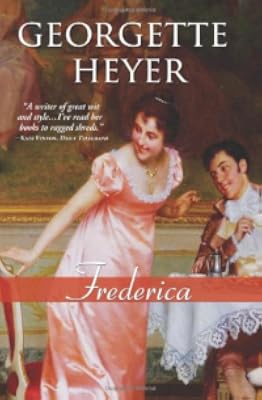
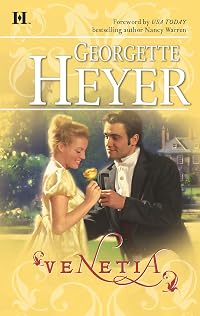


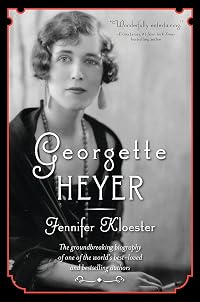















Member Recommendations

Member Reviews
Penniless Kate Malvern is invited to visit her rich relations at Staplewood, a sprawling ancestral estate. But does Aunt Minerva have an ulterior motive in hosting Kate? And does something hidden lurk behind Cousin Torquil's handsome face?
Cousin Kate is Georgette Heyer's attempt to write a Gothic novel chockablock full of locked doors, mutilated animals, and mad relatives. It lacks any of the daft characters or screwball humor from Heyer's earlier Regencies; instead, it is Very Very Serious. But after sacrificing her comedic strengths, Heyer doesn't do enough to embrace the absurd props typical of a Gothic novel. Cousin Kate has murders and madness, but the book presents them with an inescapable sense of restraint and taste -- which is show more fatal to a Gothic novel. I want more mutilated animals, god dammit!
But even viewed as a novel, rather than a specimen of genre, Cousin Kate is not a success. Nothing very much happens in the novel, so the plot must constantly regurgitate itself as protagonist Kate reviews plot points the audience still remembers from twenty pages ago. And Kate herself feels caught in traction. She begins the novel as a feisty and independent woman, but as soon as she gets to Staplewood, she begins transforming into a helpless and indecisive figure. People keep telling her to leave Staplewood, but she keeps hesitating, because if she left Staplewood, the novel would end. Reading the book feels like being stuck in limbo with Kate: she keeps discovering the same dread secrets and making the same half-hearted denials. Instead of ratcheting up the atmosphere of dread and horror, Cousin Kate placidly treads water.
Torquil -- young, mercurial, and violent -- is the most interesting character in the novel, but even though Kate spends her time wringing her hands ineffectually over Torquil's sad fate, Heyer presents him with a distant and uncompassionate eye. (This is typical for Heyer novels, which you shouldn't read for their generosity of spirit.)
So, is this the worst Heyer book I've read? Maybe. Powder and Patch was dire, but at least it had swashbuckling and a light heart. Cousin Kate is just dull. show less
Cousin Kate is Georgette Heyer's attempt to write a Gothic novel chockablock full of locked doors, mutilated animals, and mad relatives. It lacks any of the daft characters or screwball humor from Heyer's earlier Regencies; instead, it is Very Very Serious. But after sacrificing her comedic strengths, Heyer doesn't do enough to embrace the absurd props typical of a Gothic novel. Cousin Kate has murders and madness, but the book presents them with an inescapable sense of restraint and taste -- which is show more fatal to a Gothic novel. I want more mutilated animals, god dammit!
But even viewed as a novel, rather than a specimen of genre, Cousin Kate is not a success. Nothing very much happens in the novel, so the plot must constantly regurgitate itself as protagonist Kate reviews plot points the audience still remembers from twenty pages ago. And Kate herself feels caught in traction. She begins the novel as a feisty and independent woman, but as soon as she gets to Staplewood, she begins transforming into a helpless and indecisive figure. People keep telling her to leave Staplewood, but she keeps hesitating, because if she left Staplewood, the novel would end. Reading the book feels like being stuck in limbo with Kate: she keeps discovering the same dread secrets and making the same half-hearted denials. Instead of ratcheting up the atmosphere of dread and horror, Cousin Kate placidly treads water.
Torquil -- young, mercurial, and violent -- is the most interesting character in the novel, but even though Kate spends her time wringing her hands ineffectually over Torquil's sad fate, Heyer presents him with a distant and uncompassionate eye. (This is typical for Heyer novels, which you shouldn't read for their generosity of spirit.)
So, is this the worst Heyer book I've read? Maybe. Powder and Patch was dire, but at least it had swashbuckling and a light heart. Cousin Kate is just dull. show less
A couple of months ago, one of the used bookstores by me was shutting down. Sad! But it had all of it’s books on sale, and I was able to pick up three of Heyer’s books for 50 cents each; this was one of them. I don’t often see them available to buy used, so always pick them all up when I can and read them when I need a quick Heyer fix. I am now half-way through her regency romances. I don’t know if I’m excited for this fact or disappointed that I only have half left to go.
Cousin Kate tries very hard to be a gothic novel. It has some elements – the leading female being whisked away to a large manor that has it’s many secrets, a mad relative, being locked in a bedroom in the middle of the night, mysterious people being seen show more in the gardens in the middle of the night… but what it lacked was the atmosphere of a gothic novel. A good one would have the atmosphere positively permeating through the book… this one felt pastel-coloured and safe.
So if one doesn’t pay attention to the fact that this is trying to be gothic, it’s a fun romp of a novel… however, if one wants the gothic, this probably isn’t the best choice for you.
The main character, Kate, is quite likeable, as is Philip, our lovely hero. What I like most about Kate is that in the situation she has found herself, she remains very capable and doesn’t go into fits at the slight sense that something unusual is happening. She is able to handle most of her mad cousin’s mood swings, and is able to hold her own against her aunt, who turns out to be not as kind and benevolent as she originally seemed.
I really enjoyed the fact that we got to see more of the madness up close and personal – with my experience of the mad relative (mainly only Jane Eyre actually, now that I think about it) is someone locked away who only comes up in the middle of the night, or in some surreal kind of way. In Cousin Kate we get to see first-hand a character’s descent into madness… in every way from seemingly multiple personalities, to slaughtering of innocent animals, to harming other people… it was fascinating. There was no doubt from the beginning that this was all performed by the angelically beautiful Torquil, so the mystery that surrounds a gothic novel was also not really that present in the novel.
However – I can say that the ending did surprise me. Oh, not the happy romance part of it, but what happens to Kate’s relations. I didn’t see that coming at all.
The Bottom Line
Enjoyable if you start out not expecting a gothic novel. Like most of Heyer’s other novels, this is a quick read and a lot of fun. Definitely recommended. show less
Cousin Kate tries very hard to be a gothic novel. It has some elements – the leading female being whisked away to a large manor that has it’s many secrets, a mad relative, being locked in a bedroom in the middle of the night, mysterious people being seen show more in the gardens in the middle of the night… but what it lacked was the atmosphere of a gothic novel. A good one would have the atmosphere positively permeating through the book… this one felt pastel-coloured and safe.
So if one doesn’t pay attention to the fact that this is trying to be gothic, it’s a fun romp of a novel… however, if one wants the gothic, this probably isn’t the best choice for you.
The main character, Kate, is quite likeable, as is Philip, our lovely hero. What I like most about Kate is that in the situation she has found herself, she remains very capable and doesn’t go into fits at the slight sense that something unusual is happening. She is able to handle most of her mad cousin’s mood swings, and is able to hold her own against her aunt, who turns out to be not as kind and benevolent as she originally seemed.
I really enjoyed the fact that we got to see more of the madness up close and personal – with my experience of the mad relative (mainly only Jane Eyre actually, now that I think about it) is someone locked away who only comes up in the middle of the night, or in some surreal kind of way. In Cousin Kate we get to see first-hand a character’s descent into madness… in every way from seemingly multiple personalities, to slaughtering of innocent animals, to harming other people… it was fascinating. There was no doubt from the beginning that this was all performed by the angelically beautiful Torquil, so the mystery that surrounds a gothic novel was also not really that present in the novel.
However – I can say that the ending did surprise me. Oh, not the happy romance part of it, but what happens to Kate’s relations. I didn’t see that coming at all.
The Bottom Line
Enjoyable if you start out not expecting a gothic novel. Like most of Heyer’s other novels, this is a quick read and a lot of fun. Definitely recommended. show less
One of Georgette Heyer's most Gothic novels, Cousin Kate follows the story of the eponymous Kate Malvern, who finds herself almost penniless at age twenty-four. The unexpected kindness of her estranged half-aunt, Lady Minerva Broome, seems like a godsend, until Kate discovers that all is not as it should be at Broome Hall...
Although a great admirer of Heyer, I am forced to agree with those readers who opine that Cousin Kate is unsuccessful, both as a romance and as a thriller. The foreshadowing, such as it is, is far too obvious; and the romance too hurried. Philip Broome's conversion from contempt to adoration struck me as unconvincing, as did Cousin Torquil's madness. It's not that I had trouble believing that mental illness could be show more so tragically misunderstood and cruelly mistreated in the nineteenth century. What, after all, could have been more likely? But Heyer herself seems to advance some curious notions, such as Torquil's "spells" occurring near the full moon.
As always, I enjoyed Heyer's writing, whatever I may have thought of her narrative, so this was not an entire waste of time, although I would only recommend Cousin Kate to fellow Heyer enthusiasts. show less
Although a great admirer of Heyer, I am forced to agree with those readers who opine that Cousin Kate is unsuccessful, both as a romance and as a thriller. The foreshadowing, such as it is, is far too obvious; and the romance too hurried. Philip Broome's conversion from contempt to adoration struck me as unconvincing, as did Cousin Torquil's madness. It's not that I had trouble believing that mental illness could be show more so tragically misunderstood and cruelly mistreated in the nineteenth century. What, after all, could have been more likely? But Heyer herself seems to advance some curious notions, such as Torquil's "spells" occurring near the full moon.
As always, I enjoyed Heyer's writing, whatever I may have thought of her narrative, so this was not an entire waste of time, although I would only recommend Cousin Kate to fellow Heyer enthusiasts. show less
Kate Malvern is quite alone in the world, apart from her old nurse Sarah Nibbs. When Kate's job as a governess falls through due to her being entirely too young and attractive, Kate threatens to go into service as an abigail or seek work in a dressmaker's shop. Appalled at the idea, Sarah writes to one of Kate's estranged relations, Lady Minerva Broome, who immediately rushes to Kate's aid. Kate is whisked away to Staplewood, the ancestral home of the Broomes, where she is showered with gifts by her aunt. She does find, however, that things at Staplewood are a little . . . off. Though her aunt presents all the outward signs of affection, Kate can't help but find Lady Broome rather cold and calculating at heart. Her cousin Torquil is show more subject to abrupt changes of mood and occasionally alarming behavior. The servants are divided in their loyalties, and when Torquil's cousin Philip Broome arrives, Kate is unsure as to whether he can be trusted. As the ominous cloud over Staplewood grows, Kate may find herself in actual peril unless she can discern the truth.
I downloaded this book expecting another light Regency romance from Heyer, and was surprised (though not particularly disappointed) to discover the many gothic elements in this story: the penniless heroine, the large and gloomy house, the madman in the west wing, the sinister warnings. It doesn't quite manage to be a full-on Gothic, however, as it retains some of the humor characteristic to Heyer's work (Kate's handling of the hypochondriac housekeeper, temperamental chef, and stuck-up lady's maid in the midst of a crisis is amusing), and though the action does come to a violent and startling climax, Kate herself is never in much real danger. My main issue with this book is the insta-love nature of the romantic storyline -- too little page space is devoted to developing the relationship, so I never bought in to the two characters' attraction to each other. I did enjoy reading this book, but as it is atypical of the author's work, I would probably not recommend it as a starting point for reading Heyer, and would recommend it to fans of the author only with the caveat that it may not be quite what one might expect. show less
I downloaded this book expecting another light Regency romance from Heyer, and was surprised (though not particularly disappointed) to discover the many gothic elements in this story: the penniless heroine, the large and gloomy house, the madman in the west wing, the sinister warnings. It doesn't quite manage to be a full-on Gothic, however, as it retains some of the humor characteristic to Heyer's work (Kate's handling of the hypochondriac housekeeper, temperamental chef, and stuck-up lady's maid in the midst of a crisis is amusing), and though the action does come to a violent and startling climax, Kate herself is never in much real danger. My main issue with this book is the insta-love nature of the romantic storyline -- too little page space is devoted to developing the relationship, so I never bought in to the two characters' attraction to each other. I did enjoy reading this book, but as it is atypical of the author's work, I would probably not recommend it as a starting point for reading Heyer, and would recommend it to fans of the author only with the caveat that it may not be quite what one might expect. show less
“Cousin Kate” is a more serious – and at times sinister – offering than what Georgette Heyer usually serves up. It’s good in its way, however, I missed the consistent comedy that this author was so brilliant at.
That said, humour does still creep in here and there. I smiled at the way Kate’s nurse Sarah talks to her as if she’s (Kate) still a small child (Kate’s 24), with comments like, “Now you sit down there like a good girl.”
Kate is a likeable character, and is my favourite in the book, but unlike many other Heyer novels, none the characters are larger than life like, for example, they are in “Frederica” and “Black Sheep”.
I tend to find Heyer novels hit or miss, while this one lies somewhere in between. show more Good, but not great. show less
That said, humour does still creep in here and there. I smiled at the way Kate’s nurse Sarah talks to her as if she’s (Kate) still a small child (Kate’s 24), with comments like, “Now you sit down there like a good girl.”
Kate is a likeable character, and is my favourite in the book, but unlike many other Heyer novels, none the characters are larger than life like, for example, they are in “Frederica” and “Black Sheep”.
I tend to find Heyer novels hit or miss, while this one lies somewhere in between. show more Good, but not great. show less
Cousin Kate is a novel that gets mixed reviews from Georgette Heyer's loyal fans. The set-up feels quite correct to the period, comfortably Austenish, and then takes a turn that seems utterly out of place in the well-ordered gardens and tea parties of Regency England. Heyer may be true to human nature in the darker plot twists of this story, but human nature can be jarring sometimes when you meet it in lighthearted entertainment.
Twenty-four years old and alone in the world, pretty Kate Malvern is cautiously delighted when her long-estranged aunt takes an interest in her. Lady Broome of Staplewood is an imposing woman, but so very kind to her dear niece... maybe too kind. Lady Broome takes immense pride in her husband's isolated country show more estate at Staplewood, where the Broome line has been preserved unbroken for centuries. Kate soon befriends her cousin Torquil, a pettish but remarkably handsome young man who is tired of living under his mother's thumb. But she has less warmth toward another relation, Philip Broome, who warns her of vague danger and urges her to leave Staplewood. But is he—next in line to inherit, should Torquil die—trustworthy?
Things wear a bit thin. This was published in 1968 near the end of Heyer's career and though it is fairly well executed, the strange mix of Gothic undertones with a patently Regency period setting is odd. I generally love Gothic-toned tales, but when Regency characters find themselves Gothic situations, they fall rather flat (or behave foolishly; see Northanger Abbey!). Things are neatly tied off at the end with rather more rapidity than seems decent, and some of the relationships aren't developed in a believable way.
But having said all this, I certainly enjoyed the read. It's Heyer, after all, and she keeps you reading. And now I want a Sarah Nidd in my life! show less
Twenty-four years old and alone in the world, pretty Kate Malvern is cautiously delighted when her long-estranged aunt takes an interest in her. Lady Broome of Staplewood is an imposing woman, but so very kind to her dear niece... maybe too kind. Lady Broome takes immense pride in her husband's isolated country show more estate at Staplewood, where the Broome line has been preserved unbroken for centuries. Kate soon befriends her cousin Torquil, a pettish but remarkably handsome young man who is tired of living under his mother's thumb. But she has less warmth toward another relation, Philip Broome, who warns her of vague danger and urges her to leave Staplewood. But is he—next in line to inherit, should Torquil die—trustworthy?
Things wear a bit thin. This was published in 1968 near the end of Heyer's career and though it is fairly well executed, the strange mix of Gothic undertones with a patently Regency period setting is odd. I generally love Gothic-toned tales, but when Regency characters find themselves Gothic situations, they fall rather flat (or behave foolishly; see Northanger Abbey!). Things are neatly tied off at the end with rather more rapidity than seems decent, and some of the relationships aren't developed in a believable way.
But having said all this, I certainly enjoyed the read. It's Heyer, after all, and she keeps you reading. And now I want a Sarah Nidd in my life! show less
I thought I knew what to expect with Cousin Kate by Georgette Heyer, but the author really surprised me with this one. I wasn’t expecting her to deliver a Regency Romance with a touch of creepy Gothic suspense. Although I wasn’t totally able to embrace this combination, I applaud Ms. Heyer for trying.
Kate Malvern is an impoverished young woman who is between posts. Her old nurse goes behind her back and writes to her aunt of her circumstances and when her Aunt Minerva invites her to spend some time at Staplewood, Kate thinks this is the answer to her prayers. Unfortunately, before too long, Kate starts to question what is actually going on at this estate, her Aunt is a domineering, possessive woman who seems to be encouraging a show more relationship to develop between Kate and her son, Torquil. Torquil, in turn, is an excitable, uncontrollable young man given to extreme mood swings. After a number of odd and slightly dangerous incidents Kate realizes that she must leave. To complicate matters further Kate has fallen in love with Torquil’s other cousin, Philip. Can these two young people find happiness in such dark surroundings?
Cousin Kate was published in 1968 when Gothic romances were quite the thing. I believe the author wanted to show that she could hold her own against the likes of Victoria Holt, Phyllis Whitney and Mary Stewart. While I thought the romance between Kate and Philip was developed too quickly, and the ending was rather depressing, it is still always a treat to read a Georgette Heyer book. show less
Kate Malvern is an impoverished young woman who is between posts. Her old nurse goes behind her back and writes to her aunt of her circumstances and when her Aunt Minerva invites her to spend some time at Staplewood, Kate thinks this is the answer to her prayers. Unfortunately, before too long, Kate starts to question what is actually going on at this estate, her Aunt is a domineering, possessive woman who seems to be encouraging a show more relationship to develop between Kate and her son, Torquil. Torquil, in turn, is an excitable, uncontrollable young man given to extreme mood swings. After a number of odd and slightly dangerous incidents Kate realizes that she must leave. To complicate matters further Kate has fallen in love with Torquil’s other cousin, Philip. Can these two young people find happiness in such dark surroundings?
Cousin Kate was published in 1968 when Gothic romances were quite the thing. I believe the author wanted to show that she could hold her own against the likes of Victoria Holt, Phyllis Whitney and Mary Stewart. While I thought the romance between Kate and Philip was developed too quickly, and the ending was rather depressing, it is still always a treat to read a Georgette Heyer book. show less
Members
- Recently Added By
Lists

Favorite Georgette Heyer Novels, Ranked
49 works; 29 members

Best Family Stories
241 works; 22 members

Survey of Mysteries and Crime Fiction
96 works; 17 members

Crime and Mysteries to Read
746 works; 31 members

Recommended Horror and Dark Fiction by Women
81 works; 13 members

Best Sellers / Popular 1968
237 works; 5 members
Talk Discussions
Past Discussions
Can't remember the names of these books in Name that Book (August 2013)
Author Information

125+ Works 78,174 Members
Georgette Heyer was born on August 16, 1902 at Wimbledon, London. She wrote The Black Moth as a story for her brother Boris. Her father, impressed with his daughter's imagination, suggested that she prepare it to be published, which it was by Constable in 1921. Having scored an instant success with The Black Moth at the age of nineteen under her show more own name, Georgette Heyer, she experimented with a pseudonym, Stella Martin, for her third book, published by Mills & Boon. She continued writing and in 1925 she married Ronald Rougier, a mining engineer. After reasonable but not spectacular sales from her first few books the instant success of These Old Shades in 1926 brought her a solid source of income which was very necessary at the time since the family relied to a large extent on the income from Georgette Heyer's writing. She wrote over fifty books during her lifetime and created the Regency England genre of romance novels. She died on July 4, 1974 at the age of 71. (Bowker Author Biography) show less
Some Editions
Series
Belongs to Publisher Series
Common Knowledge
- Canonical title*
- Kate-serkku
- Original title
- Cousin Kate
- Original publication date
- 1968
- People/Characters
- Kate Malvern "Cousin Kate"; Lady Minerva Broome (paternal aunt of Kate); Philip Broome (Torquil's cousin); Torquil Broome (son of Sir Timothy and Lady Minerva); Mrs. Sarah Nidd; Sir Timothy Broome (show all 9); Dr. Delabole; Mr. Joe Nidd (husband of Sarah); Mr. Josiah Nidd (father of Joe)
- Important places
- Staplewood, England, UK (fictional); London, England, UK
- First words
- At no time during the twenty-four hours was the Bull and Mouth Inn a place of quiet or repose, and by ten o'clock in the morning, when the stage-coach from Wisbech, turning top-heavily out of Aldersgate, lumbered into its yar... (show all)d, it seemed, to one weary and downcast passenger at least, to be crowded with vehicles of every descripton, from a yellow-bodied post-chaise to a wagon, with its shafts cocked up and the various packages and bundles it carried strewn over the yard.
- Last words
- (Click to show. Warning: May contain spoilers.)"We shall eat our dinner, and after that I shall challenge you to a rubber of Piquet."
- Blurbers
- Drabble, Margaret; Fforde, Katie; Fenton, Kate
- Original language
- English
*Some information comes from Common Knowledge in other languages. Click "Edit" for more information.
Classifications
Statistics
- Members
- 1,490
- Popularity
- 15,609
- Reviews
- 45
- Rating
- (3.43)
- Languages
- 5 — English, Finnish, German, Italian, Swedish
- Media
- Paper, Audiobook, Ebook
- ISBNs
- 33
- UPCs
- 1
- ASINs
- 31