On This Page
Description
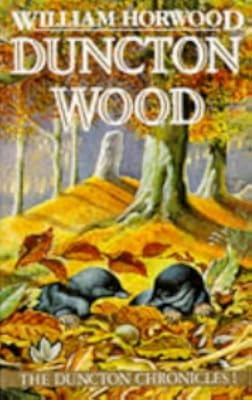
This is the story of a journey from oppression to freedom, from fear to great courage. For the moles of Duncton Wood live in the shadow of Mandrake, a cruel tyrant corrupted by absolute power. Only by putting his trust in the ancient Stone, forgotten symbol of a great spiritual past, can solitary Bracken find the strength to lead the way through darkness to light. When he falls in love with Rebecca, Mandrake's daughter, they and their friends must make life and death choices as their show more extraordinary search for freedom and truth begins... show lessTags
Recommendations

















Member Recommendations


Member Reviews
I first read this book when I was in junior school (which still surprises me, when I come back to some of the darkest bits) and if anyone asks 'what is your favourite book' it is this one that first comes to mind. It has shaped so many of the places I have visited and loved, and so much of the way I think about God and religion. I called my first dog Bracken.
I'm not sure I can write a review about whether it is actually a good book. Objectively, I can see things that people would not like about it. But the epic story of Bracken, Rebecca and Boswell, surviving plague and fire and always seeking love and the silence of the Stone is written deep on my heart.
I'm not sure I can write a review about whether it is actually a good book. Objectively, I can see things that people would not like about it. But the epic story of Bracken, Rebecca and Boswell, surviving plague and fire and always seeking love and the silence of the Stone is written deep on my heart.
I had very fond memories of loving this book (this series!) when I was probably a young teenager. I thought Milly would like it so we decided to read it together. It is fair to say I did not enjoy it as much this time around! Its really over-long, the religious allegory is pretty heavy handed, and why are the mole mating scenes so sensual and detailed??
Now, it is also a wide ranging animal saga with lots going on, and its still a pretty good adventure and Milly immediately wanted to move onto reading book 2. I just don't think I'm the target audience any more.
Now, it is also a wide ranging animal saga with lots going on, and its still a pretty good adventure and Milly immediately wanted to move onto reading book 2. I just don't think I'm the target audience any more.
I found this book deeply absorbing. It is considerably more anthropomorphic than Watership Down (Horwood's moles seem to have more cultural paraphernalia than Adams's rabbits), but it retains enough of that 'animal' feeling to give a frisson of alienness to the setting, and the characters and setting are beautifully delineated. When the author makes it this easy to identify with a young, slightly timid mole, then a big bad mole does become quite a believable and threatening villain, especially when an account of his tough background adds to the sense of depth. MB 15-vi-2007
Re-reading this, I am struck by how much the author shows his love, not only for his characters, but for the setting of English woodland in which much of the action show more takes place (and the Welsh wildlands too). The description is full of tiny observational snippets about where particular wild flowers grow, or which trees drop their leaves first in August. Combined with the curious melange of Anglo-Celtic myth and poetry, with a drop of Oriental mysticism and martial arts, and with a high emotional and spiritual tone, the result is still a compelling allegorical fantasy. Mrs Bookworm put this on the Out pile, but I am reluctant to part with it. MB 1-vii-2022 show less
Re-reading this, I am struck by how much the author shows his love, not only for his characters, but for the setting of English woodland in which much of the action show more takes place (and the Welsh wildlands too). The description is full of tiny observational snippets about where particular wild flowers grow, or which trees drop their leaves first in August. Combined with the curious melange of Anglo-Celtic myth and poetry, with a drop of Oriental mysticism and martial arts, and with a high emotional and spiritual tone, the result is still a compelling allegorical fantasy. Mrs Bookworm put this on the Out pile, but I am reluctant to part with it. MB 1-vii-2022 show less
Duncton Wood is the story of the moles who make their home in Barrow Vale in the Duncton forest. Mandrake, a powerful mole of fearsome size, rules the community with an iron first. It is whispered that he is a Siabod mole, born on the harsh slopes of the mountain during a blizzard that forced his mother to eat the rest of her litter to stay alive. But she too died after several days of the storm, and Mandrake alone survived. Because of this experience, Mandrake is a cruel dictator who seeks to tear down the community’s spiritual center, the Stone. When Hulver, one of the Duncton elders, stands up to Mandrake over the yearly Midsummer Eve ritual that is said at the Stone, he is brutally killed.
But unknown to Mandrake and his show more henchmoles, Hulver had met and started training a young mole to carry on the ritual — Bracken. Bracken is the son of one of Mandrake’s captains, Burrhead, but never excelled in the roughhousing and fighting that made his father proud of Bracken’s siblings. Bracken is always curious and exploring alone, and his wanderings eventually lead him to what is known as the Ancient System, a whole network of tunnels higher up on the mountain nearer the Stone. The Ancient System was abandoned many years ago, and with it the strong devotion to the Stone that marked the lives of the moles who lived there. Very few in Duncton now care to worship the Stone as their ancestors did. Bracken is drawn to the Stone in ways he does not understand, and though he starts with no clear purpose, Hulver’s death forces him to choose a side.
But this is not just Bracken’s story. Mandrake has many children, but only one that he loves: Rebecca. She is the daughter of Sarah, Mandrake’s favorite female, and she is very beautiful and full of the joy of living. Though Mandrake is harsh with her, it is because he cares about her — though neither he, she, nor anyone else would guess it. His fierce protection of her is very possessive, and he refuses to allow her to mate and litter as the other females her age do. When she does find a mate, Cairn of the Pasture moles, tragic consequences follow. Solitary Bracken is caught up in the tragedy through the Stone, where he crouches with Cairn as he dies.
Terrible events follow that affect not just Rebecca and Bracken, but the entire mole community. Many moles die from the battles and then the plague that sweeps the countryside. Bracken leaves Duncton Wood for Uffington, the holy center of the seven surrounding mole communities. It is on this journey that he meets Boswell of Uffington, a crippled mole who is to become his greatest friend. Through many different events, these two together with Rebecca eventually help to bring about the spiritual renewal of Duncton Wood and the other mole communities.
Horwood’s writing starts off very awkwardly. He has a habit of using fragments at the end of paragraphs, as if to emphasize something, but it fell rather flat for me. Like this. Fortunately it happened less and less as the story went on and things became more interesting. There is an inevitable awkwardness with replacing human terms with mole, such as “someone” becoming “somemole” and “no one” becoming “nomole,” among other tweaks. I could have done without those little touches (they were very distracting at first), but I got used to them as well as I continued reading. I didn’t care much for the poetry either.
Mole culture was well-drawn; Horwood does not attempt to overlay it entirely with human family structures and relationships. Mating is not for life and, with rare exceptions, couples do not live or stay together. Male moles fight sometimes to the death during the mating season for rights to a particular female, and the goal of a mole’s existence is to find and defend worm-rich territory (worms comprise the bulk of a mole’s diet). The spirituality was a bit — well — cliché, and one wonders how spiritual a big old boulder can really be… but I suppose we left reality at the door when we suspended disbelief enough to admit the possibility of talking, thinking, rational moles.
I was rather shocked at some of the content. Horwood graphically describes several matings (and… rapings, I guess they would be called), even to the point of detailing a scene of disturbing rape/incest. Some parts really made me want to put the book down; it was not tasteful. But I kept reading anyways, and those scenes did not repeat themselves. Other parts of the book were quite boring, such as the chapters in which Horwood describes every twist and turn that Bracken explores in the Ancient System. Other parts are quite action-packed and I breezed right through them. After awhile I started wondering what other trials Horwood could come up with… I mean, the moles have a reign of terror, a bloody rebellion, a terrible plague, then a ravaging fire… good grief, what’s left for the other books?
I’m actually not thrilled about reading the sequels, mostly because it sounds like Horwood creates a new set of baddies, fanatical extremist moles who worship the new religion of “the Word” as opposed to the old traditional worship of the Stones. Um yeah, that’s a pretty clichéd ploy: new (Christian) against old (pagan), simplistically drawn as old = good and new = bad. Horwood could at least have used a different name for this terrible new religion than “the Word,” which has strong Christian overtones (see the gospel of John, chapter one). But I suppose subtlety is not what Horwood is going for here.
All in all, this book read like an inferior version of Richard Adams’ Watership Down, or an adult (very adult) version of Brian Jacques’ Redwall books. I certainly enjoyed parts of it — the characters were very good, and the plot did keep me reading — but I don’t think it’s a book I will reread, because of the ugly parts and the generally blah prose. It certainly does not deserve some critic’s blurb of glowing comparison to The Lord of the Rings on the back cover. Please! Let’s not get carried away. Adult fans of Watership Down will likely enjoy this book, but find it does not have the staying power of that modern classic. show less
But unknown to Mandrake and his show more henchmoles, Hulver had met and started training a young mole to carry on the ritual — Bracken. Bracken is the son of one of Mandrake’s captains, Burrhead, but never excelled in the roughhousing and fighting that made his father proud of Bracken’s siblings. Bracken is always curious and exploring alone, and his wanderings eventually lead him to what is known as the Ancient System, a whole network of tunnels higher up on the mountain nearer the Stone. The Ancient System was abandoned many years ago, and with it the strong devotion to the Stone that marked the lives of the moles who lived there. Very few in Duncton now care to worship the Stone as their ancestors did. Bracken is drawn to the Stone in ways he does not understand, and though he starts with no clear purpose, Hulver’s death forces him to choose a side.
But this is not just Bracken’s story. Mandrake has many children, but only one that he loves: Rebecca. She is the daughter of Sarah, Mandrake’s favorite female, and she is very beautiful and full of the joy of living. Though Mandrake is harsh with her, it is because he cares about her — though neither he, she, nor anyone else would guess it. His fierce protection of her is very possessive, and he refuses to allow her to mate and litter as the other females her age do. When she does find a mate, Cairn of the Pasture moles, tragic consequences follow. Solitary Bracken is caught up in the tragedy through the Stone, where he crouches with Cairn as he dies.
Terrible events follow that affect not just Rebecca and Bracken, but the entire mole community. Many moles die from the battles and then the plague that sweeps the countryside. Bracken leaves Duncton Wood for Uffington, the holy center of the seven surrounding mole communities. It is on this journey that he meets Boswell of Uffington, a crippled mole who is to become his greatest friend. Through many different events, these two together with Rebecca eventually help to bring about the spiritual renewal of Duncton Wood and the other mole communities.
Horwood’s writing starts off very awkwardly. He has a habit of using fragments at the end of paragraphs, as if to emphasize something, but it fell rather flat for me. Like this. Fortunately it happened less and less as the story went on and things became more interesting. There is an inevitable awkwardness with replacing human terms with mole, such as “someone” becoming “somemole” and “no one” becoming “nomole,” among other tweaks. I could have done without those little touches (they were very distracting at first), but I got used to them as well as I continued reading. I didn’t care much for the poetry either.
Mole culture was well-drawn; Horwood does not attempt to overlay it entirely with human family structures and relationships. Mating is not for life and, with rare exceptions, couples do not live or stay together. Male moles fight sometimes to the death during the mating season for rights to a particular female, and the goal of a mole’s existence is to find and defend worm-rich territory (worms comprise the bulk of a mole’s diet). The spirituality was a bit — well — cliché, and one wonders how spiritual a big old boulder can really be… but I suppose we left reality at the door when we suspended disbelief enough to admit the possibility of talking, thinking, rational moles.
I was rather shocked at some of the content. Horwood graphically describes several matings (and… rapings, I guess they would be called), even to the point of detailing a scene of disturbing rape/incest. Some parts really made me want to put the book down; it was not tasteful. But I kept reading anyways, and those scenes did not repeat themselves. Other parts of the book were quite boring, such as the chapters in which Horwood describes every twist and turn that Bracken explores in the Ancient System. Other parts are quite action-packed and I breezed right through them. After awhile I started wondering what other trials Horwood could come up with… I mean, the moles have a reign of terror, a bloody rebellion, a terrible plague, then a ravaging fire… good grief, what’s left for the other books?
I’m actually not thrilled about reading the sequels, mostly because it sounds like Horwood creates a new set of baddies, fanatical extremist moles who worship the new religion of “the Word” as opposed to the old traditional worship of the Stones. Um yeah, that’s a pretty clichéd ploy: new (Christian) against old (pagan), simplistically drawn as old = good and new = bad. Horwood could at least have used a different name for this terrible new religion than “the Word,” which has strong Christian overtones (see the gospel of John, chapter one). But I suppose subtlety is not what Horwood is going for here.
All in all, this book read like an inferior version of Richard Adams’ Watership Down, or an adult (very adult) version of Brian Jacques’ Redwall books. I certainly enjoyed parts of it — the characters were very good, and the plot did keep me reading — but I don’t think it’s a book I will reread, because of the ugly parts and the generally blah prose. It certainly does not deserve some critic’s blurb of glowing comparison to The Lord of the Rings on the back cover. Please! Let’s not get carried away. Adult fans of Watership Down will likely enjoy this book, but find it does not have the staying power of that modern classic. show less
I picked this up at a used book store, primarily based on its very high rating at Beyond Reality, a scifi and fantasy rating site that I have followed for quite some time. It was somewhat of a best seller some 25 years ago, rather surprising for a 730-page fantasy about moles.
I found the first third of the book to be reasonably promising, but the last two thirds to be fairly weak. The book would have been better broken into two parts, the first leading up to, and more effectively addressing, the death of Mandrake, and the second focusing on Bracken and Boswell’s subsequent physical and spiritual journeys. The plot was very episodic, with little sense of continuity from episode to episode. And the occasional reference to future events show more told us that Bracken, Rebecca, and Boswell were all going to survive, eliminating any sense of suspense about their frequent brushes with danger.
Characterization is limited, with the two bad guys, Mandrake and Rune, being the most interesting characters in the book. Both of them meet sudden, unprepared and unsatisfying ends. The protagonists, Bracken and Rebecca, frequently act irrationally, bringing most of their problems on themselves. And the whole first near rape scene between Rebecca and Rune was almost offensive (she despises him but can't help herself because she is an animal "in heat").
The religious stuff is utterly unconvincing. I'm not sure whether Horwood is making fun of religion, or somehow sees this as a homily to devotion, but I thought it was just plain corny. show less
I found the first third of the book to be reasonably promising, but the last two thirds to be fairly weak. The book would have been better broken into two parts, the first leading up to, and more effectively addressing, the death of Mandrake, and the second focusing on Bracken and Boswell’s subsequent physical and spiritual journeys. The plot was very episodic, with little sense of continuity from episode to episode. And the occasional reference to future events show more told us that Bracken, Rebecca, and Boswell were all going to survive, eliminating any sense of suspense about their frequent brushes with danger.
Characterization is limited, with the two bad guys, Mandrake and Rune, being the most interesting characters in the book. Both of them meet sudden, unprepared and unsatisfying ends. The protagonists, Bracken and Rebecca, frequently act irrationally, bringing most of their problems on themselves. And the whole first near rape scene between Rebecca and Rune was almost offensive (she despises him but can't help herself because she is an animal "in heat").
The religious stuff is utterly unconvincing. I'm not sure whether Horwood is making fun of religion, or somehow sees this as a homily to devotion, but I thought it was just plain corny. show less
Some really long books align themselves with the circumstances of your own like - at least chronologically, and sometimes emotionally. Anytime I think of "War and Peace," for example, it's easy to transport myself back to the 1980s, and the cold apartment I had west of Boston, in the snow. I suspect it will be true of this book, as well. Not perfect but first rate. There was a brief period about 600 pages in where I was momentarily skeptical of the storyline and how the author would bring it all home. But it's a wonderful story, full of characters that I will always remember. It was a hard book to find! Surprising that there has not been a reprinting somewhere along the line.
As the tagline on the book suggests, this is "A clash of good and evil in the savage kingdom of moles." It bears comparison to Watership Down, but the moles are more anthropomorphic. As well as speaking, they worship the Stone, they scribe books and they have the capacity to love.
It is this capacity to love that brings us the story of Bracken and Rebecca, two moles who grow up in the Duncton Wood system. At the time of their birth, the system is being overthrown and then led by two evil moles - Mandrake and Rune. We learn over the course of the book that there are reasons for Mandrake's ability to be so cruel - his upbringing on the wild slopes of Siabod bred him that way - but Rune is pure evil.
Rune is perhaps the most interesting show more character in the book. I find Bracken a bit wishy-washy and whiny to start, and then slightly dense in the middle, and then hard to idenitfy with at the end. Rebecca is a sweet character, but I don't like the way she sighs in her speech.
This novel is all over the place regarding pacing. When Horwood is concentrating on the goings on in the Duncton system, describing the moles and their daily lives, he is at his strongest. These parts of the book fly by and I am never less than interested in what is happening to Mekkins and Rose and the Pasture moles.
At times Horwood goes into a whimsy of describing every tiny thing and there are a couple of occasions in the book that made me almost want to put it down in disgust - when Bracken is first exploring the Ancient System; when Boswell and Bracken journey to Siabod; when Bracken secretly attends the singing of the Song. These parts of the book really drag.
I also disliked greatly the descriptions of mating - these were far too sensual for what is, in essence, a book about animal (however human they may act at times). One instance in particular between Rune and Rebecca is almost obscene and made very, very difficult reading.
And the rape/incest scene that we get is a step too far. These parts of the book made me feel deeply uncomfortable and lead me to believe I would never want to re-read, however entertaining other parts of the book are.
And there are fun parts. The descriptions of the ever-changing woodland, the plants and the animals are superb - Horwood clearly has a great deal of sympathy and appreciation for the English countryside which comes out in his work. A number of his characters are excellent value for the entry fee - Mekkins is great fun; Rose is gentle and loving; Boswell is both mysterious and down-to-earth.
You have to suspend your disbelief massively in order to read this book. As well as the moles writing, they undertake massive journeys - Boswell and Bracken, in particular, travel from Duncton via Uffington to the heart of Wales. This is necessary from a plot point of view, but I just cannot pretend to belief that two little moles could accomplish this.
The worship of the Stone colours every little part of this book, which Horwood declares in his notes at the end is an allegory - probably for pagan worship. I understand that this only increases in the future books of the series, which disappoints me, because I found it a little too preachy.
All in all, a very uneven book, which was entertaining in parts, but couldn't hold my interest over the long haul. show less
It is this capacity to love that brings us the story of Bracken and Rebecca, two moles who grow up in the Duncton Wood system. At the time of their birth, the system is being overthrown and then led by two evil moles - Mandrake and Rune. We learn over the course of the book that there are reasons for Mandrake's ability to be so cruel - his upbringing on the wild slopes of Siabod bred him that way - but Rune is pure evil.
Rune is perhaps the most interesting show more character in the book. I find Bracken a bit wishy-washy and whiny to start, and then slightly dense in the middle, and then hard to idenitfy with at the end. Rebecca is a sweet character, but I don't like the way she sighs in her speech.
This novel is all over the place regarding pacing. When Horwood is concentrating on the goings on in the Duncton system, describing the moles and their daily lives, he is at his strongest. These parts of the book fly by and I am never less than interested in what is happening to Mekkins and Rose and the Pasture moles.
At times Horwood goes into a whimsy of describing every tiny thing and there are a couple of occasions in the book that made me almost want to put it down in disgust - when Bracken is first exploring the Ancient System; when Boswell and Bracken journey to Siabod; when Bracken secretly attends the singing of the Song. These parts of the book really drag.
I also disliked greatly the descriptions of mating - these were far too sensual for what is, in essence, a book about animal (however human they may act at times). One instance in particular between Rune and Rebecca is almost obscene and made very, very difficult reading.
And the rape/incest scene that we get is a step too far. These parts of the book made me feel deeply uncomfortable and lead me to believe I would never want to re-read, however entertaining other parts of the book are.
And there are fun parts. The descriptions of the ever-changing woodland, the plants and the animals are superb - Horwood clearly has a great deal of sympathy and appreciation for the English countryside which comes out in his work. A number of his characters are excellent value for the entry fee - Mekkins is great fun; Rose is gentle and loving; Boswell is both mysterious and down-to-earth.
You have to suspend your disbelief massively in order to read this book. As well as the moles writing, they undertake massive journeys - Boswell and Bracken, in particular, travel from Duncton via Uffington to the heart of Wales. This is necessary from a plot point of view, but I just cannot pretend to belief that two little moles could accomplish this.
The worship of the Stone colours every little part of this book, which Horwood declares in his notes at the end is an allegory - probably for pagan worship. I understand that this only increases in the future books of the series, which disappoints me, because I found it a little too preachy.
All in all, a very uneven book, which was entertaining in parts, but couldn't hold my interest over the long haul. show less
Members
- Recently Added By
Lists

Favorite Animal Fiction
359 works; 156 members
Nonhuman Protagonists
243 works; 35 members

BingoDOG - Animals in Adult Fiction
78 works; 20 members

infjsarah's wishlist
408 works; 2 members
Author Information

28+ Works 5,537 Members
Some Editions
Series

Belongs to Publisher Series
Common Knowledge
- Canonical title
- Duncton Wood
- Original publication date
- 1980
- People/Characters
- Bracken; Rebecca; Mandrake; Rune; Boswell
- Important places
- Duncton Wood; Uffington
- Dedication
- For Leslie, with my love
- First words
- September. A great grey storm swept its pelting rain up the pastures of Duncton Hill and then on into the depths of the oaks and beeches of Duncton Wood itself.
- Last words
- (Click to show. Warning: May contain spoilers.)As evening fell and they settled down into the first stage of their long journey, Tryfan thought to himself that if he ever did become a scribemole, then perhaps, with the Stone's grace, he might one day record all that Boswell was beginning now to tell him of the story of Bracken and his beloved Rebecca.
Classifications
- Genres
- Fiction and Literature, General Fiction, Fantasy
- DDC/MDS
- 823.914 — Literature & rhetoric English & Old English literatures English fiction 1900- 1901-1999 1945-1999
- LCC
- PZ4 .H8246 .D — Language and Literature Fiction and juvenile belles lettres Fiction and juvenile belles lettres Fiction in English
- BISAC
Statistics
- Members
- 1,112
- Popularity
- 22,849
- Reviews
- 18
- Rating
- (3.77)
- Languages
- 5 — Dutch, English, French, Italian, Polish
- Media
- Paper, Audiobook, Ebook
- ISBNs
- 18
- UPCs
- 1
- ASINs
- 14