
Graham Edwards (1) (1965–)
Author of Dragoncharm
For other authors named Graham Edwards, see the disambiguation page.
Series
Works by Graham Edwards
Riding The Drop 2 copies
Associated Works
Tagged
Common Knowledge
- Other names
- Curtis, Nick
- Birthdate
- 1965
- Gender
- male
- Occupations
- graphic designer
animator
artist
author - Nationality
- UK
- Birthplace
- Somerset, England, UK
- Places of residence
- Bournemouth, Dorset, England, UK
Nottingham, Nottinghamshire, England, UK - Associated Place (for map)
- England, UK
Members
Reviews
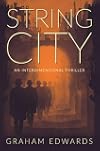
I received a free copy of this book via Netgalley, in exchange for an unbiased review.
Straight off the bat: I LOVE the world-building for this book. As a writer myself, world-building is an area of weakness for me, and I always get a little bit excited to see someone nailing that aspect of writing. If you are a world-building junkie, there is a lot to like, and the sheer scope of ambition is impressive. The science that underpins the setting is a good blend of fantastical, fresh, and show more believable, blending new and familiar elements alike (eg, dimension hopping and a lot of Greek myth). I also enjoyed the voice of the MC, having a fondness for noir (and it is VERY noir in atmosphere, despite the unusual setting.)
The MC is an intriguing character, and because I don't want to get into spoilers I'll avoid giving too many specifics here, but suffice to say he's had a rather colourful life and is in possession of a varied skill set.
However--and this is where my review strays into the realm of the subjective--he verges into being coy, at times. Zephyr, one of two sidekicks throughout the novel, has this to say about the MC:
"Talking to you is like peeling an onion. Every time I think I'm getting somewhere, it turns out to be just another layer."
...And that's often how I felt as well. The MC's past and history start out as a mystery, and usually unveiled in moments of crisis. For example (no spoilers), MC finds himself in a jam--so we dip into a flashback about the time he did X Y Z, which gave him X item or Y skill, which he then promptly utilises.
The reveals were funny/engaging, and well done. But too many of them began to feel like, the MC would always escape every impossible situation even if we as the reader could not see the way out, because he simply had an endless well of past experiences and items to draw on. Every time I thought I knew the limit of the MC's options, he would pull out something fresh, so I began to assume he would *always* do this, for every encounter.
I hope this makes sense, I feel I am not explaining very well! Either way, it's not a huge issue, and is very subjective as I said, but *for me* this meant some the tension didn't run as high as it might have done.
Overall I really enjoyed the book, though, and would certainly recommend it when it's out on shelves. Intrigued to see any sequels and what else the author does with the setting. show less
Straight off the bat: I LOVE the world-building for this book. As a writer myself, world-building is an area of weakness for me, and I always get a little bit excited to see someone nailing that aspect of writing. If you are a world-building junkie, there is a lot to like, and the sheer scope of ambition is impressive. The science that underpins the setting is a good blend of fantastical, fresh, and show more believable, blending new and familiar elements alike (eg, dimension hopping and a lot of Greek myth). I also enjoyed the voice of the MC, having a fondness for noir (and it is VERY noir in atmosphere, despite the unusual setting.)
The MC is an intriguing character, and because I don't want to get into spoilers I'll avoid giving too many specifics here, but suffice to say he's had a rather colourful life and is in possession of a varied skill set.
However--and this is where my review strays into the realm of the subjective--he verges into being coy, at times. Zephyr, one of two sidekicks throughout the novel, has this to say about the MC:
"Talking to you is like peeling an onion. Every time I think I'm getting somewhere, it turns out to be just another layer."
...And that's often how I felt as well. The MC's past and history start out as a mystery, and usually unveiled in moments of crisis. For example (no spoilers), MC finds himself in a jam--so we dip into a flashback about the time he did X Y Z, which gave him X item or Y skill, which he then promptly utilises.
The reveals were funny/engaging, and well done. But too many of them began to feel like, the MC would always escape every impossible situation even if we as the reader could not see the way out, because he simply had an endless well of past experiences and items to draw on. Every time I thought I knew the limit of the MC's options, he would pull out something fresh, so I began to assume he would *always* do this, for every encounter.
I hope this makes sense, I feel I am not explaining very well! Either way, it's not a huge issue, and is very subjective as I said, but *for me* this meant some the tension didn't run as high as it might have done.
Overall I really enjoyed the book, though, and would certainly recommend it when it's out on shelves. Intrigued to see any sequels and what else the author does with the setting. show less
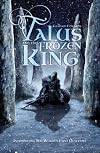
Well now, this book was a pleasant surprise. Meet Talus, touted by the book's description as the world's first detective, which is indeed as marvelous as it sounds. The book has the feel of a Sherlock Holmes type mystery set in an icy Iron Age inspired fantasy world, but what really clinches this one that our "detective" is a bard! If you don't know, I have a serious soft spot for those traveling poets and teller-of-tales types.
Written in the tradition of the classics by Conan Doyle or show more Christie, I found Talus and the Frozen King to be a very enjoyable whodunit complete with all the ingredients that makes a good mystery. Talus, a wanderer and collector of stories, is a clever man and not without his little quirks. Then, because every good detective needs a trusty friend and assistant, we have stalwart Bran, who is the Watson to his Sherlock. And just to tease this book even more, let's just say a true detective also needs an arch nemesis a la Moriarty, but that's all I'll say about that for now!
I very much enjoy stories like this. Talus and the Frozen King is a quick read, tightly told with a clear direction and goal in mind, but the author still leaves plenty of room to develop the characters and define the world around them. The setup is admittedly simple but still very well done; after all, most of the activity is mainly confined to an island, where the king of the local settlement has been found murdered under bizarre circumstances. No one is above suspicion in this plot-driven mystery, not even the king's six grieving sons, the women who love them, or the tribe's shaman, who all have their reasons to see the old ruler dead.
As the reader, I was given the chance to engage in the very same process of deduction as Talus carries out his investigation, through interviewing suspects or gathering and interpreting the clues. In the interim, I also got to learn more about Talus and Bran individually, discovering the motivations that drive them as well as the details behind their unique relationship. It added an extra layer to this story, rendering the situation more than just another mystery to be solved, because along the way I grew to care about these characters and became invested in them.
Nothing is as it seems. Names are a continually added to the suspect list, then scratched off again as more clues come to light. As death strikes left and right, you can practically feel the urgency in the atmosphere as times begins to run out. Of course, you're not going to be getting a ton of information about the wider world out there due to the tight focus of the plot, but we still get plenty about the culture, traditions and myths of Creyak island and its people, and for such a relatively short novel, I think it packs a lot of emotion and tension.
There aren't a lot of books like this out there, that's for sure. While there's a strong element of fantasy in this one, at it's heart it really is a variety of your good old detective story. The prehistoric ice age setting garners huge points from me, and like I mentioned, so does our protagonist being an eccentric bard. I think both mystery and fantasy readers alike will feel right at home with this one. A very entertaining and fast read. show less
Written in the tradition of the classics by Conan Doyle or show more Christie, I found Talus and the Frozen King to be a very enjoyable whodunit complete with all the ingredients that makes a good mystery. Talus, a wanderer and collector of stories, is a clever man and not without his little quirks. Then, because every good detective needs a trusty friend and assistant, we have stalwart Bran, who is the Watson to his Sherlock. And just to tease this book even more, let's just say a true detective also needs an arch nemesis a la Moriarty, but that's all I'll say about that for now!
I very much enjoy stories like this. Talus and the Frozen King is a quick read, tightly told with a clear direction and goal in mind, but the author still leaves plenty of room to develop the characters and define the world around them. The setup is admittedly simple but still very well done; after all, most of the activity is mainly confined to an island, where the king of the local settlement has been found murdered under bizarre circumstances. No one is above suspicion in this plot-driven mystery, not even the king's six grieving sons, the women who love them, or the tribe's shaman, who all have their reasons to see the old ruler dead.
As the reader, I was given the chance to engage in the very same process of deduction as Talus carries out his investigation, through interviewing suspects or gathering and interpreting the clues. In the interim, I also got to learn more about Talus and Bran individually, discovering the motivations that drive them as well as the details behind their unique relationship. It added an extra layer to this story, rendering the situation more than just another mystery to be solved, because along the way I grew to care about these characters and became invested in them.
Nothing is as it seems. Names are a continually added to the suspect list, then scratched off again as more clues come to light. As death strikes left and right, you can practically feel the urgency in the atmosphere as times begins to run out. Of course, you're not going to be getting a ton of information about the wider world out there due to the tight focus of the plot, but we still get plenty about the culture, traditions and myths of Creyak island and its people, and for such a relatively short novel, I think it packs a lot of emotion and tension.
There aren't a lot of books like this out there, that's for sure. While there's a strong element of fantasy in this one, at it's heart it really is a variety of your good old detective story. The prehistoric ice age setting garners huge points from me, and like I mentioned, so does our protagonist being an eccentric bard. I think both mystery and fantasy readers alike will feel right at home with this one. A very entertaining and fast read. show less
Pros: intricate mystery, interesting characters
Cons: slow opening, characters never seem to sleep
Talus, a widely travelled bard, and his companion, Bran, a former fisherman, arrive at a Northern island the day after their king has died. A quick examination of the body reveals that the king was murdered, and Talus offers to help find the killer.
Talus is basically a neolithic age Sherlock Holmes. He examines the evidence and observes the world closely to see what others miss. And while he show more doesn’t use much in the way of scientific deduction, he is highly observant and has a personality that alternates between charming (when he’s telling a story) and abrasive (when he’s exhorting Bran to pay attention and see what’s happening around him). Also like Sherlock, he’s not very good when it comes to relationship matters, and so tends to miss some of the human clues that crop up.
Which is where Bran comes in. Bran is hot tempered and still grieving the loss of his wife and the use of his right hand, which was seriously injured the day she died. He misses a lot of subtle clues but prompts Talus with regards to some of the more human elements of the case.
There are two strong women from the isles who have fairly prominent roles, while maintaining historical deference to the men around them.
The mystery is complex and while it takes a while for the more intricate details to come up, by the end of the book there’s quite a knot of intrigue to untangle.
This is historical fiction and the only fantasy style elements - if you can call them that - are the character’s beliefs in various gods and a judgement style afterlife.
My only complaint with the book is that the action takes place within a few days and the protagonists are constantly on the move. Even after Bran exclaims his exhaustion he and Talus never seem to actually sleep, as they deal with one crisis after another.
The book is fairly slow moving, focusing as much on character as on the mystery. If you like historical fiction and/or interesting mysteries, give this book a try. show less
Cons: slow opening, characters never seem to sleep
Talus, a widely travelled bard, and his companion, Bran, a former fisherman, arrive at a Northern island the day after their king has died. A quick examination of the body reveals that the king was murdered, and Talus offers to help find the killer.
Talus is basically a neolithic age Sherlock Holmes. He examines the evidence and observes the world closely to see what others miss. And while he show more doesn’t use much in the way of scientific deduction, he is highly observant and has a personality that alternates between charming (when he’s telling a story) and abrasive (when he’s exhorting Bran to pay attention and see what’s happening around him). Also like Sherlock, he’s not very good when it comes to relationship matters, and so tends to miss some of the human clues that crop up.
Which is where Bran comes in. Bran is hot tempered and still grieving the loss of his wife and the use of his right hand, which was seriously injured the day she died. He misses a lot of subtle clues but prompts Talus with regards to some of the more human elements of the case.
There are two strong women from the isles who have fairly prominent roles, while maintaining historical deference to the men around them.
The mystery is complex and while it takes a while for the more intricate details to come up, by the end of the book there’s quite a knot of intrigue to untangle.
This is historical fiction and the only fantasy style elements - if you can call them that - are the character’s beliefs in various gods and a judgement style afterlife.
My only complaint with the book is that the action takes place within a few days and the protagonists are constantly on the move. Even after Bran exclaims his exhaustion he and Talus never seem to actually sleep, as they deal with one crisis after another.
The book is fairly slow moving, focusing as much on character as on the mystery. If you like historical fiction and/or interesting mysteries, give this book a try. show less
...As a mystery I don't think it is the best I've ever read. Talus needs to do a bit too much explaining for the whole thing to make sense. That being said, the novel is a quick and entertaining read. Not heavy on history or bogged down by archaeologic detail, Edwards keeps the story going at a brisk pace. The mystery set before the reader in the opening chapters is fully resolved by the end of it but Talus and Bran clearly have a past and from what we get to see of it, I would be surprised show more if Edwards meant to keep it to a single volume. Talus and the Frozen King is an entertaining read that offers plenty of opportunities for further adventures. I for one, wouldn't mind seeing another one of these come my way.
Full Random Comments review show less
Full Random Comments review show less
Lists
Awards

You May Also Like


Associated Authors
Statistics
- Works
- 22
- Also by
- 3
- Members
- 591
- Popularity
- #42,465
- Rating
- 3.8
- Reviews
- 16
- ISBNs
- 33
- Languages
- 3