On This Page
Description
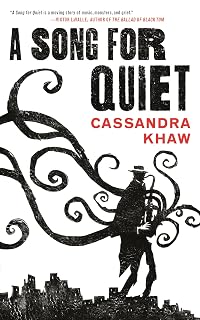
"Deacon James is a rambling bluesman straight from Georgia, a black man with troubles that he can't escape, and music that won't let him go. On a train to Arkham, he meets trouble -- visions of nightmares, gaping mouths and grasping tendrils, and a madman who calls himself John Persons. According to the stranger, Deacon is carrying a seed in his head, a thing that will destroy the world if he lets it hatch." p.4 of cover.Tags
Recommendations




Member Recommendations

Member Reviews
Just so you know, Cassandra Khaw's work is my aesthetic.
I mean this 100%.
This book makes me hurt with how viscerally, disgustingly, triumphantly good it is. It's Lovecraft elevated to human art instead of just dry cosmic musings; the characters in this book are so real you ache for them, you feel your own bile rise as they confront nameless horror. There is a such a strong thread of call-and-answer in this story, questions characters ask being asked of the reader as well, sacrifices the characters make turned into sacrifices the reader chooses too. It's a way of writing that I don't find often--the directness, the questions hidden in the void, the pulp and gore a reminder of what existence costs.
I say it so often I feel like I'm a show more broken record but Lovecraft without the actual Lovecraft is my favorite genre. Especially Lovecraft written by women, by people of color, by voices Lovecraft himself would have shouted silent in his sniveling way. This story is evidence of how powerful cosmic horror can be when the human isn't neglected, when the human is elevated, when humanity is given power too--nonsensical, horrifying, destructive power, sure, but power all the same--a place within the cosmic scale.
I recommend Cassandra Khaw's work 100% and I can't wait to read more. show less
I mean this 100%.
This book makes me hurt with how viscerally, disgustingly, triumphantly good it is. It's Lovecraft elevated to human art instead of just dry cosmic musings; the characters in this book are so real you ache for them, you feel your own bile rise as they confront nameless horror. There is a such a strong thread of call-and-answer in this story, questions characters ask being asked of the reader as well, sacrifices the characters make turned into sacrifices the reader chooses too. It's a way of writing that I don't find often--the directness, the questions hidden in the void, the pulp and gore a reminder of what existence costs.
I say it so often I feel like I'm a show more broken record but Lovecraft without the actual Lovecraft is my favorite genre. Especially Lovecraft written by women, by people of color, by voices Lovecraft himself would have shouted silent in his sniveling way. This story is evidence of how powerful cosmic horror can be when the human isn't neglected, when the human is elevated, when humanity is given power too--nonsensical, horrifying, destructive power, sure, but power all the same--a place within the cosmic scale.
I recommend Cassandra Khaw's work 100% and I can't wait to read more. show less
This story really could've been something. The blues mixed with Lovecraft. Definite potential.
We meet Deacon James while he's riding a train to Arkham, famed fictional city of Lovecraft's. Between his recent past and this quote, I connected with him right off the bat.
I was thinking that this might've been an update to Lovecraft's "The Music of Erich Zahn."
But then the story ran into problems. First off, Deacon himself. He struggled to carry the story. He got off to a great start, but then spent the rest of the story running in fear. I didn't need an action hero, but I wanted him to either confront his emotional burden or make a feint towards dealing with the social injustices he regularly encountered. His actions at the climax of the story might've been perceived that way, but it could also be perceived as surrender. I can't say anything more without spoiling it.
And the way Khaw handled him when he first encountered Ana seemed abrupt. There was no parley, no interpersonal recon. He instantly bonded with her as if she were a long lost daughter (That isn't hyperbole).
I was disappointed that Khaw didn't make use of Arkham besides name dropping. There's nothing in the story that really made use of it. This could be set in Anytown, USA, circa 1950.
I really liked Persons in the first book, but here he's pushed into a supporting role. While his narration in the first book could be a bit much at times, it always lent itself to the story. Maybe this book should've been published first with Persons' minor role serving as an introduction to the character, piquing the reader's interest to learn more.
In Hammers on Bone, Khaw used noir and metaphors to set the scene and help build the story towards its climax. But here the noir was replaced by a wall of purple prose. It was wonderful at times ("cutlery scraping over crockery"), as the above quotes hint at, but then it became repetitive. Later, it meandered like so much jazz improvisation that I lost all sense of what was going on. I had to re-read parts a couple of times, scrutinize sentences, to piece together what was actually happening, find some semblance of structure. It was there though, buried beneath a lovely purple blur.
The resolution proved unsatisfying, so all I was left with was a bunch of lovely prose. So, 2.5 stars rounded down because I needed more.
Buddy read with Nataliya and Carol. show less
We meet Deacon James while he's riding a train to Arkham, famed fictional city of Lovecraft's. Between his recent past and this quote, I connected with him right off the bat.
Deacon looks up as civilization robs the night of its endlessness, finger painting globs of light and farmhouses across the countryside.
I was thinking that this might've been an update to Lovecraft's "The Music of Erich Zahn."
Raw, unevenly syncopated, the music's a clatter of droning notes, looping into themselves, like a man mumbling a prayer.show more
...
No trace of the blues, no ghost of folk music, not even the wine-drunk laughter of big-city jazz or the thunder of gospel. Only
a hard lump of yearning that snags like fishbones in his throat as he plays, plays, plays, improvisation, frantically straining to wrench the bassline into familiar waters.
But then the story ran into problems. First off, Deacon himself. He struggled to carry the story. He got off to a great start, but then spent the rest of the story running in fear. I didn't need an action hero, but I wanted him to either confront his emotional burden or make a feint towards dealing with the social injustices he regularly encountered. His actions at the climax of the story might've been perceived that way, but it could also be perceived as surrender. I can't say anything more without spoiling it.
And the way Khaw handled him when he first encountered Ana seemed abrupt. There was no parley, no interpersonal recon. He instantly bonded with her as if she were a long lost daughter (That isn't hyperbole).
I was disappointed that Khaw didn't make use of Arkham besides name dropping. There's nothing in the story that really made use of it. This could be set in Anytown, USA, circa 1950.
I really liked Persons in the first book, but here he's pushed into a supporting role. While his narration in the first book could be a bit much at times, it always lent itself to the story. Maybe this book should've been published first with Persons' minor role serving as an introduction to the character, piquing the reader's interest to learn more.
In Hammers on Bone, Khaw used noir and metaphors to set the scene and help build the story towards its climax. But here the noir was replaced by a wall of purple prose. It was wonderful at times ("cutlery scraping over crockery"), as the above quotes hint at, but then it became repetitive. Later, it meandered like so much jazz improvisation that I lost all sense of what was going on. I had to re-read parts a couple of times, scrutinize sentences, to piece together what was actually happening, find some semblance of structure. It was there though, buried beneath a lovely purple blur.
The resolution proved unsatisfying, so all I was left with was a bunch of lovely prose. So, 2.5 stars rounded down because I needed more.
Buddy read with Nataliya and Carol. show less
My gods, I loved this! Deep DEEP Jazz meets gibbering horrors and the connections between memory, selflessness, and total sacrifice WITHIN the music.
The prose was jazz in its most intensely lyrical and dense and evocative!
Like... total purple prose, man. But here, it was absolutely gorgeous. Syncopated tune with counterbeats to a Cthuhlu horror eating memories even as the most delicious riff, harmony, and melody bridged two souls together on the stage.
Deep, emotional, utterly horrific. I imagined this as a riff on The Ballad of Black Tom, taken short, sharp, and as heartbreaking as the best set ever played, known to man or monster, used as a way to abort a gibbering horror JUST about to be born into this universe. :)
This is something of show more almost pure poetry. :)
HOLD NO PUNCHES! show less
The prose was jazz in its most intensely lyrical and dense and evocative!
Like... total purple prose, man. But here, it was absolutely gorgeous. Syncopated tune with counterbeats to a Cthuhlu horror eating memories even as the most delicious riff, harmony, and melody bridged two souls together on the stage.
Deep, emotional, utterly horrific. I imagined this as a riff on The Ballad of Black Tom, taken short, sharp, and as heartbreaking as the best set ever played, known to man or monster, used as a way to abort a gibbering horror JUST about to be born into this universe. :)
This is something of show more almost pure poetry. :)
HOLD NO PUNCHES! show less
I loved the beginning of the book. I love the combo of cosmic horror and noir crime novella.
But...Purple prose has limits and I hit the wall around the 75% mark. I slogged on. A formerly interesting character changed into a wild, vindictive Mary Sue! The plot fell apart into tiny, shining shards of black beetles scuttling about my little device. As the beetles fell to the floor, the book lay in villa covered ruins, covered in brown viscera, my hands limply falling to my side unable to wipe away the tears streaming down my sweaty face. The street grew quiet. My eyes still followed the nonsensical words spilling from the crazily powered electronic device, but it was only the words I saw, not meaning, as I contemplated what book I would show more read next.
I have no idea what happened at the end of the book except words. Ten pages of words. I think it had to do with the "power of lurve" or something. Can you even “Cthulhu fhtagn”? show less
But...Purple prose has limits and I hit the wall around the 75% mark. I slogged on. A formerly interesting character changed into a wild, vindictive Mary Sue! The plot fell apart into tiny, shining shards of black beetles scuttling about my little device. As the beetles fell to the floor, the book lay in villa covered ruins, covered in brown viscera, my hands limply falling to my side unable to wipe away the tears streaming down my sweaty face. The street grew quiet. My eyes still followed the nonsensical words spilling from the crazily powered electronic device, but it was only the words I saw, not meaning, as I contemplated what book I would show more read next.
I have no idea what happened at the end of the book except words. Ten pages of words. I think it had to do with the "power of lurve" or something. Can you even “Cthulhu fhtagn”? show less
After a buddy read of Khaw’s Lovecraftian-themed Hammers on Bone, we decided to try the subsequent novella. I was hopeful that a new protagonist–a bluesman–would provide a change from the odd vernacular and breathe some new notes into the relentless picture of decay. Unfortunately, though there are bits and pieces of stellar writing, there’s also a lot of self-indulgent and purple prose that becomes just so much scat when Khaw tries to take it into the metaphysical. Add to it a protagonist that is only reactive instead of active with a wandering plot, and it devolves into a mess.
“What Deacon wishes for, more than anything else, is someone to tell him what to do in this period between hurting and healing, neither here nor show more there, the ache growing septic.” The time and place aren’t clear as we listen to bluesman Deacon plucking out a tune while on a train, but it’s clear when visions of hungry mouths chase him into a different carriage that segregation is ongoing. He heads to a diner, keeping the planned performance he and his father had booked up in Arkham, and finds he can’t escape the music.
There are intriguing ideas here, particularly the idea of music as a medium for cracking the Lovecraftian gate open. But it isn’t very well executed. The story is third-person limited, so we’re in on Deacon’s thoughts. But then Khaw interrupts herself for self-indulgent description:
“This is what Deacon sees in the windows as he weaves between the carriages:
One: The landscape, blurred into protean shapes. Jagged peaks thickening to walls, valleys fracturing into ravines, black pines melting into blasted plains. In the sky, the stars swarm, an infection of white, a thousand cataracted eyes. There is nothing human here, no vestige of man’s influence. Only night, only blackness.
Two: His face, reflected in the cold glass. Deacon looks thinner than he remembers, grief gnawed, cheekbones picked clean of softness. His eyes are old from putting his pa into the soil and holding on to his mother as she cried bargains into his shoulder…
Three: Mouths, toothless, tongueless, opening in the windows, lesions on a leper’s back.”
Except for the part about his mother, we really get nothing from this, as a reader. Sure, all vivid sentences. But what’s the point? It’s an interlude, only it’s visual, not aural. There’s a couple more, one much shorter, so it’s not narrative device. It’s indulgent set-dressing.
The rest of the story is in the same vein. The plot is even less cohesive than the last; it’s sort of a typical supernatural episode or Lovecraftian short story. The characters are in service to the plot, so we actually learn very little; their motivation is in response to story needs. We need a world-breaker for a final confrontation? Sure, we’ll bring in one, and we’ll make them irresistible to Deacon, although I’m not sure why. John Persons (haha) is brought back from the first story, mostly to scare Deacon. As a story, I don’t think it holds up to any scrutiny at all, and is best read for the language and quickly passed on.
Many thanks to David and Nataliya for the buddy read, and I'm sure we'll have better luck on the next. show less
“What Deacon wishes for, more than anything else, is someone to tell him what to do in this period between hurting and healing, neither here nor show more there, the ache growing septic.” The time and place aren’t clear as we listen to bluesman Deacon plucking out a tune while on a train, but it’s clear when visions of hungry mouths chase him into a different carriage that segregation is ongoing. He heads to a diner, keeping the planned performance he and his father had booked up in Arkham, and finds he can’t escape the music.
There are intriguing ideas here, particularly the idea of music as a medium for cracking the Lovecraftian gate open. But it isn’t very well executed. The story is third-person limited, so we’re in on Deacon’s thoughts. But then Khaw interrupts herself for self-indulgent description:
“This is what Deacon sees in the windows as he weaves between the carriages:
One: The landscape, blurred into protean shapes. Jagged peaks thickening to walls, valleys fracturing into ravines, black pines melting into blasted plains. In the sky, the stars swarm, an infection of white, a thousand cataracted eyes. There is nothing human here, no vestige of man’s influence. Only night, only blackness.
Two: His face, reflected in the cold glass. Deacon looks thinner than he remembers, grief gnawed, cheekbones picked clean of softness. His eyes are old from putting his pa into the soil and holding on to his mother as she cried bargains into his shoulder…
Three: Mouths, toothless, tongueless, opening in the windows, lesions on a leper’s back.”
Except for the part about his mother, we really get nothing from this, as a reader. Sure, all vivid sentences. But what’s the point? It’s an interlude, only it’s visual, not aural. There’s a couple more, one much shorter, so it’s not narrative device. It’s indulgent set-dressing.
The rest of the story is in the same vein. The plot is even less cohesive than the last; it’s sort of a typical supernatural episode or Lovecraftian short story. The characters are in service to the plot, so we actually learn very little; their motivation is in response to story needs. We need a world-breaker for a final confrontation? Sure, we’ll bring in one, and we’ll make them irresistible to Deacon, although I’m not sure why. John Persons (haha) is brought back from the first story, mostly to scare Deacon. As a story, I don’t think it holds up to any scrutiny at all, and is best read for the language and quickly passed on.
Many thanks to David and Nataliya for the buddy read, and I'm sure we'll have better luck on the next. show less
this Persons Non Grata series features the occult detective John Persons. this short story's an inspired and seamless cross between hardboiled sf and lovecraftian horror, a version of a crossroads story, moody and evocative and well worth the read.
Members
- Recently Added By
Lists

2018 Hugo Eligible Novellas
33 works; 9 members
Author Information

Series

Common Knowledge
- Canonical title
- A Song for Quiet
- Original publication date
- 2017
- People/Characters
- John Persons
- Dedication
- To my papa, for teaching me how to tell stories. I wish you could have read this.
- First words
- The train rattles like teeth in a dead man’s skull as Deacon James sags against the window, hat pulled low over his eyes.
- Last words
- (Click to show. Warning: May contain spoilers.)It becomes a grief and a graciousness, a bittersweet gratitude, a relief that the suffering is gone, gone, and oh finally, a good man can sleep.
- Original language
- English
Classifications
Statistics
- Members
- 170
- Popularity
- 192,014
- Reviews
- 8
- Rating
- (3.63)
- Languages
- English
- Media
- Paper, Ebook
- ISBNs
- 2
- ASINs
- 1