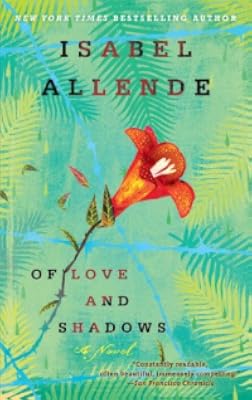
Of Love and Shadows
by Isabel Allende
On This Page
Description
A woman reporter in a Latin American country and a photographer are sent on a routine assignment. The two uncover a hideous crime, the revelation of which could challenge the terrorism of the military regime.Tags
Recommendations








Member Reviews
In an unidentified Latin American country that is under military dictatorship, journalist Irene Beltran and photographer Francisco Leal come together to uncover a horrible crime. Part love-story, this book blends elements of journalistic style with narrative fiction and is a political commentary about life under dictatorship. Love is a central theme in the book: love of country, romantic love, and love of family.
I loved this book and I am giving it a rare (for me) 5 star rating based on the emotional impact the book had on me. It is thus far, my favorite of Allende’s books. Allende is a master storyteller. I cried, felt infuriated, felt disgusted, and smiled. I thought she did a masterful job of combining horribly sad story elements show more with moments of love and beauty (the title perfectly captures this). I enjoyed the style of writing that at times read like a newspaper and at times like a novel. Allende is able to make us connect well with her characters by weaving past stories with present so that each character introduced is given their own backstory. This gives us insight into their current behaviors and how they are informed by past circumstances. The character development is wonderful. The growth of Irene from innocent, wealthy woman of few problems to a woman who opens her eyes to the realities of the world around her is brilliant. Some descriptions are beautiful and I loved the moments of love (romantic, familial, of country) that shined through in the midst of violence and repression. These moments of love made the truly horrible moments somewhat more tolerable. I also liked some of the contrasts she made between the effects of the dictatorship on the wealthy vs. the impoverished. I think she perfectly captured the willful “blindness” that those in power (whether due to financial or political reasons) often have toward unpleasant situations going on around them.
Note: I read this in Spanish and then read certain chapters in English (I got the English version from the library). The translation was fairly good and very accurate but I found the Spanish version flowed better, was more beautiful and emotional, and filled with more warmth. show less
I loved this book and I am giving it a rare (for me) 5 star rating based on the emotional impact the book had on me. It is thus far, my favorite of Allende’s books. Allende is a master storyteller. I cried, felt infuriated, felt disgusted, and smiled. I thought she did a masterful job of combining horribly sad story elements show more with moments of love and beauty (the title perfectly captures this). I enjoyed the style of writing that at times read like a newspaper and at times like a novel. Allende is able to make us connect well with her characters by weaving past stories with present so that each character introduced is given their own backstory. This gives us insight into their current behaviors and how they are informed by past circumstances. The character development is wonderful. The growth of Irene from innocent, wealthy woman of few problems to a woman who opens her eyes to the realities of the world around her is brilliant. Some descriptions are beautiful and I loved the moments of love (romantic, familial, of country) that shined through in the midst of violence and repression. These moments of love made the truly horrible moments somewhat more tolerable. I also liked some of the contrasts she made between the effects of the dictatorship on the wealthy vs. the impoverished. I think she perfectly captured the willful “blindness” that those in power (whether due to financial or political reasons) often have toward unpleasant situations going on around them.
Note: I read this in Spanish and then read certain chapters in English (I got the English version from the library). The translation was fairly good and very accurate but I found the Spanish version flowed better, was more beautiful and emotional, and filled with more warmth. show less
It is always a shock when you read an awful book by an author you previously adored. I loved The House of the Spirits and Eva Luna in high school. Now I'm wondering if my teenaged critical abilities were unsound or if Of Love and Shadows is a departure from form.
In theory, it may be possible to write about how a hero and a heroine are compelled to make love immediately after uncovering a mass grave, but Of Love and Shadows does not pull it off well. (Is it even theoretically possible? Does love bloom on the battlefield, Snake?) There is evidence of some greater aim to knit together love and hatred, lust and death, the affirmation and the denial of life, but the actual result reads like a romance novel with interludes of political show more oppression. No theme or motif can be missed, because Of Love and Shadows belabors each point a dozen times. No character is too minor for an extended summary of his or her life history. The novel is too rambling and florid by half. It fails to cohere.
Eva Luna worked (as far as I can remember) because it was about a Scheherazade-like writer of telenovelas, so the overblown absurdity was an integral part of her theatrical worldview. And The House of the Spirits meshed miraculous horrors with a very understated and clinical style: the autopsy at the beginning sets the tone for the rest of the novel. Of Love and Shadows...doesn't ever justify its contorted plot or redundant prose. show less
In theory, it may be possible to write about how a hero and a heroine are compelled to make love immediately after uncovering a mass grave, but Of Love and Shadows does not pull it off well. (Is it even theoretically possible? Does love bloom on the battlefield, Snake?) There is evidence of some greater aim to knit together love and hatred, lust and death, the affirmation and the denial of life, but the actual result reads like a romance novel with interludes of political show more oppression. No theme or motif can be missed, because Of Love and Shadows belabors each point a dozen times. No character is too minor for an extended summary of his or her life history. The novel is too rambling and florid by half. It fails to cohere.
Eva Luna worked (as far as I can remember) because it was about a Scheherazade-like writer of telenovelas, so the overblown absurdity was an integral part of her theatrical worldview. And The House of the Spirits meshed miraculous horrors with a very understated and clinical style: the autopsy at the beginning sets the tone for the rest of the novel. Of Love and Shadows...doesn't ever justify its contorted plot or redundant prose. show less
In dit schitterend verhaal dat zich afspeelt onder de dictatuur in Chili leer je het welgestelde gezin van Eusebio en Beatriz Beltrán met hun dochter Irene kennen, de geëmigreerde Spanjaarden professor Leal, zijn vrouw Hilda en vooral hun zonen José en Francisco en ook het arme gezin van Hipólito en Digna Ranquileo met vooral hun dochter Evangelina en zoon Pradelio.
De kennismaking gebeurt geleidelijk. Er is het verhaal van Evangelina, die bij haar geboorte verwisseld werd en iedere dag op hetzelfde uur in een soort trance geraakt. Beatriz werd door haar man in de steek gelaten en probeert dankzij een bejaardentehuis haar oude levensstandaard te behouden. Ze heeft het levenspad van haar dochter Irene uitgestippeld: een huwelijk met show more kapitein Gustavo Morante, dat Irene voor zich uit schuift. Professor Leal is na de burgeroorlog uit zijn geliefde Spanje gevlucht en krijgt het ook in Chili moeilijk, nadat Pinochet aan de macht is gekomen. Alhoewel Francisco met succes zijn studies psychologie heeft afgerond, kan hij enkel als fotograaf wat geld verdienen, zodat zijn familie de eindjes aan elkaar kan knopen.
Alle personages worden zo goed uitgewerkt, dat het is alsof je zelf in Chili rondloopt: je voelt hun leed, leeft met hen mee, voelt de spanning, houdt je hart vast... Prachtig hoe de verschillende levens elkaar kruisen!
Beatriz staat symbool voor de rijken die hun ogen sluiten voor het leed van de armen en voor de wreedheden van de dictatuur om toch maar hun oude leventje te kunnen verderzetten.
Irene ontwaakt uit de droom die haar moeder voor haar heeft gecreëerd en komt in een nachtmerrie terecht. Ze is journaliste en vecht verbeten om de waarheid aan het licht te brengen en brengt zo haar leven in gevaar. Ze dacht de liefde te kennen, maar is toch overdonderd als er nieuwe gevoelens ontluiken.
Professor Leal doet met zijn clandestiene drukpers een poging om de poten onder de dictatuur weg te zagen, maar het zijn vooral zijn zonen Francisco en José die ons een inkijk in het verzet geven.
Pradelio del Carmen Ranquileo toont uit welk materiaal het leger en de politie bestaan: jongens die niet voor zichzelf kunnen denken en die blij zijn bevelen te kunnen opvolgen.
"Ze hebben je wijsgemaakt dat je macht had, met het geluid van de luidsprekers in de kazerne hebben ze het in je kop gehamerd, ze hebben het je bevolen in naam van het vaderland en daarmee hebben ze jou je deel gegeven van de schuld, zodat je je handen niet meer in onschuld kunt wassen en voor altijd geketend blijft door schakels van bloed, arme Ranquileo."
Hij is niet de enige die aan de rechtvaardiging voor de wreedheden begint te twijfelen, maar door zijn verhaal komen de bewijzen voor de moorden naar boven en worden enkele verdwijningen opgelost. Het volk ontwaakt.
De kerk leren we hier van een totaal andere zijde kennen dan in "Bloemblad van zee". Chili tout court leer je op een andere manier kennen. Isabel Allende slaagt erin ons een blik in de ziel van haar vaderland te gunnen.
Het verhaal is goed uitgewerkt, de personages komen tot leven, we hebben tijd om ze te leren kennen en ik hou van haar schrijfstijl, dus voor mij 5 sterren waard! show less
De kennismaking gebeurt geleidelijk. Er is het verhaal van Evangelina, die bij haar geboorte verwisseld werd en iedere dag op hetzelfde uur in een soort trance geraakt. Beatriz werd door haar man in de steek gelaten en probeert dankzij een bejaardentehuis haar oude levensstandaard te behouden. Ze heeft het levenspad van haar dochter Irene uitgestippeld: een huwelijk met show more kapitein Gustavo Morante, dat Irene voor zich uit schuift. Professor Leal is na de burgeroorlog uit zijn geliefde Spanje gevlucht en krijgt het ook in Chili moeilijk, nadat Pinochet aan de macht is gekomen. Alhoewel Francisco met succes zijn studies psychologie heeft afgerond, kan hij enkel als fotograaf wat geld verdienen, zodat zijn familie de eindjes aan elkaar kan knopen.
Alle personages worden zo goed uitgewerkt, dat het is alsof je zelf in Chili rondloopt: je voelt hun leed, leeft met hen mee, voelt de spanning, houdt je hart vast... Prachtig hoe de verschillende levens elkaar kruisen!
Beatriz staat symbool voor de rijken die hun ogen sluiten voor het leed van de armen en voor de wreedheden van de dictatuur om toch maar hun oude leventje te kunnen verderzetten.
Irene ontwaakt uit de droom die haar moeder voor haar heeft gecreëerd en komt in een nachtmerrie terecht. Ze is journaliste en vecht verbeten om de waarheid aan het licht te brengen en brengt zo haar leven in gevaar. Ze dacht de liefde te kennen, maar is toch overdonderd als er nieuwe gevoelens ontluiken.
Professor Leal doet met zijn clandestiene drukpers een poging om de poten onder de dictatuur weg te zagen, maar het zijn vooral zijn zonen Francisco en José die ons een inkijk in het verzet geven.
Pradelio del Carmen Ranquileo toont uit welk materiaal het leger en de politie bestaan: jongens die niet voor zichzelf kunnen denken en die blij zijn bevelen te kunnen opvolgen.
"Ze hebben je wijsgemaakt dat je macht had, met het geluid van de luidsprekers in de kazerne hebben ze het in je kop gehamerd, ze hebben het je bevolen in naam van het vaderland en daarmee hebben ze jou je deel gegeven van de schuld, zodat je je handen niet meer in onschuld kunt wassen en voor altijd geketend blijft door schakels van bloed, arme Ranquileo."
Hij is niet de enige die aan de rechtvaardiging voor de wreedheden begint te twijfelen, maar door zijn verhaal komen de bewijzen voor de moorden naar boven en worden enkele verdwijningen opgelost. Het volk ontwaakt.
De kerk leren we hier van een totaal andere zijde kennen dan in "Bloemblad van zee". Chili tout court leer je op een andere manier kennen. Isabel Allende slaagt erin ons een blik in de ziel van haar vaderland te gunnen.
Het verhaal is goed uitgewerkt, de personages komen tot leven, we hebben tijd om ze te leren kennen en ik hou van haar schrijfstijl, dus voor mij 5 sterren waard! show less
While I get the fact that The Disappeared is a tragedy of epic proportions, and the world needed to sit up and notice when it was endemic in South America, to choose the medium of a shmaltzy, 1980s, Lady-Diana-hairstyle romance to portray it is just the wrong thing to do. It’s not equally tragic, but it’s somewhere on the scale.
Allende could write. For sure. I’m just not convinced, after two of her novels, that she could write well. This seems a shame for someone who apparently, according to the source of all knowledge (i.e. Wikipedia) “writes on a computer, working Monday through Saturday, 9:00 A.M. to 7:00 P.M.” If spending 84 hours a week produces the likes of this novel, then I for one am thankful she had all that time to show more edit. Goodness knows what state the book would have been if she’d knocked off early at 3 in the afternoon each day for a tequila.
So, there’s this country ruled by a military dictatorship but it’s a fictitious country, right? I mean, it can’t be Chile can it? Anyway, there’s this country and… no wait a minute… let’s cut the political scene and zoom in from this broad perspective to focus on one poor family struggling to survive with a husband who is a peripatetic circus entertainer (no kidding). They have a daughter who has fits. This, in the spiritual land that is South America, becomes something of a local attraction when it turns out that someone was apparently healed during one of her bouts.
Okay, let’s pan over to this couple working for a newspaper and start the shmaltz. He’s a young, handsome, intelligent photographer. She’s a young, handsome, intelligent journalist. Now, because this is post-Austen, we need some kind of reason why these two can’t get together so we can spend the rest of our efforts getting them together despite the odds (which we created in the first place.) Uhmmm… let’s see… oh yes… she’s engaged to this high up military guy (hark back to the politics) who she obediently loves without passion. See what she did there? Yep, gotta have that passion vacuum.
Right, the ingredients are prepared, let’s throw them together.
She and he head out to write a story on this epileptic girl and the military show up while she’s fitting and she kind of upsets one of them and so later gets abducted and disappears.
Having hauled ourselves up to the peak, we can now coast downhill to the finish gaining momentum all the way: investigate the disappearance, discover a cave full of bodies, risk their lives, fall out of obedience to the military guy and into a bed of passion with the photographer and then run for the hills. Sorted.
First off: a third of the novel is a waste of time. We actually don’t need to know anything at all about the girl who is abducted. In fact, it would have been more poignant had we started the book at the point of the investigation and then, like the investigators, piece together the stories of these apparently nameless corpses. Neither do we need the love story and scenes of sex in the moonlight which, quite frankly, insults the memory of the Disappeared in much the same way that a romance between investigators in the horrors of Auschwitz would denigrate the story of the victims.
More disturbing is the self-serving narrative. Allende has, from birth, been privileged, and there is little doubt that the character of Irene the journalist is based on her in some way because of the similarities in the narratives of their lives. As Irene, Allende had the wealth and connections that came with it, to flee. Those who ended up in caves of corpses did not. The tragedy of the Disappeared is that they were denied a hearing for their stories. If novelists are to deserve a voice, priority should surely be given to novelists who tell stories of the forcibly silenced. On the evidence of this novel, at least, that does not include Allende. show less
Allende could write. For sure. I’m just not convinced, after two of her novels, that she could write well. This seems a shame for someone who apparently, according to the source of all knowledge (i.e. Wikipedia) “writes on a computer, working Monday through Saturday, 9:00 A.M. to 7:00 P.M.” If spending 84 hours a week produces the likes of this novel, then I for one am thankful she had all that time to show more edit. Goodness knows what state the book would have been if she’d knocked off early at 3 in the afternoon each day for a tequila.
So, there’s this country ruled by a military dictatorship but it’s a fictitious country, right? I mean, it can’t be Chile can it? Anyway, there’s this country and… no wait a minute… let’s cut the political scene and zoom in from this broad perspective to focus on one poor family struggling to survive with a husband who is a peripatetic circus entertainer (no kidding). They have a daughter who has fits. This, in the spiritual land that is South America, becomes something of a local attraction when it turns out that someone was apparently healed during one of her bouts.
Okay, let’s pan over to this couple working for a newspaper and start the shmaltz. He’s a young, handsome, intelligent photographer. She’s a young, handsome, intelligent journalist. Now, because this is post-Austen, we need some kind of reason why these two can’t get together so we can spend the rest of our efforts getting them together despite the odds (which we created in the first place.) Uhmmm… let’s see… oh yes… she’s engaged to this high up military guy (hark back to the politics) who she obediently loves without passion. See what she did there? Yep, gotta have that passion vacuum.
Right, the ingredients are prepared, let’s throw them together.
She and he head out to write a story on this epileptic girl and the military show up while she’s fitting and she kind of upsets one of them and so later gets abducted and disappears.
Having hauled ourselves up to the peak, we can now coast downhill to the finish gaining momentum all the way: investigate the disappearance, discover a cave full of bodies, risk their lives, fall out of obedience to the military guy and into a bed of passion with the photographer and then run for the hills. Sorted.
First off: a third of the novel is a waste of time. We actually don’t need to know anything at all about the girl who is abducted. In fact, it would have been more poignant had we started the book at the point of the investigation and then, like the investigators, piece together the stories of these apparently nameless corpses. Neither do we need the love story and scenes of sex in the moonlight which, quite frankly, insults the memory of the Disappeared in much the same way that a romance between investigators in the horrors of Auschwitz would denigrate the story of the victims.
More disturbing is the self-serving narrative. Allende has, from birth, been privileged, and there is little doubt that the character of Irene the journalist is based on her in some way because of the similarities in the narratives of their lives. As Irene, Allende had the wealth and connections that came with it, to flee. Those who ended up in caves of corpses did not. The tragedy of the Disappeared is that they were denied a hearing for their stories. If novelists are to deserve a voice, priority should surely be given to novelists who tell stories of the forcibly silenced. On the evidence of this novel, at least, that does not include Allende. show less
The book centers around the families and lives of Irene and Francisco. Their relationship was interesting, the story the followed through the book was also interesting, but overall this book was not as strong as other Allende works. The political intrigue was well thought out, I enjoyed the idea of the disappeared people coming to light. I don't think the miracles of Evangelina was particularly important, and her relationship with her adoptive brother was jarring and didn't serve a plot purpose at all.
Imagine the horror of having your teenage daughter being roughly taken from your home by police and never seeing her again. That is just what Isabel Allende has imagined and written about in this book. Set in a South American country that is never called Chile this tale of desapercidos is fiction but must be based upon fact as the world now knows.
Irene Beltran was a journalist with a women's magazine engaged to a military man. She came from an upper class family and had unthinkingly gone about her business unperturbed by the military takeover of the government. Into her life comes Francisco Leal, an out of work psychologist who has decided to earn a living as a photographer. Working together Irene and Francisco visit the Ranquileo home show more in the country where the daughter, Evangelina, is reputed to work miracles during fits that occur once a day at noon. While there they witness a visit by the local police during which the police commander is humiliated when slight, young Evangelina picks him up bodily and throws him out of the house. When Irene and Francisco pay a return visit to the Ranquileos they learn that Evangelina was arrested by the police and has not returned home. The police commander says that Evangelina was released the morning after her arrest but no trace can be found of her. As Irene and Francisco continue to investigate they fall in love and when their search leads them to an abandoned mine the horror they find there is somewhat assuaged by making love for the first time. Their crusade to bring notice to the bodies hidden in the mine makes them dangerous to the military junta that governs the country. Escape to a democracy is their only chance to remain alive.
Even though Allende doesn't name Chile it is obvious that is the locale. Published in 1987 when the military government of Augusto Pinochet was still in power this book must have been dangerous for Allende. Of course, she was already on the government's list of wanted individuals and was living in exile but that would not have protected her if the Chilean government wanted to silence her. The horrific nature of the story is counterbalanced by lovely descriptions of the country and the love affair between Irene and Francisco. In fact, the description of the love scene between the two just after they discover the bodies in the mine is one of the best I have ever read. Highly recommended. show less
Irene Beltran was a journalist with a women's magazine engaged to a military man. She came from an upper class family and had unthinkingly gone about her business unperturbed by the military takeover of the government. Into her life comes Francisco Leal, an out of work psychologist who has decided to earn a living as a photographer. Working together Irene and Francisco visit the Ranquileo home show more in the country where the daughter, Evangelina, is reputed to work miracles during fits that occur once a day at noon. While there they witness a visit by the local police during which the police commander is humiliated when slight, young Evangelina picks him up bodily and throws him out of the house. When Irene and Francisco pay a return visit to the Ranquileos they learn that Evangelina was arrested by the police and has not returned home. The police commander says that Evangelina was released the morning after her arrest but no trace can be found of her. As Irene and Francisco continue to investigate they fall in love and when their search leads them to an abandoned mine the horror they find there is somewhat assuaged by making love for the first time. Their crusade to bring notice to the bodies hidden in the mine makes them dangerous to the military junta that governs the country. Escape to a democracy is their only chance to remain alive.
Even though Allende doesn't name Chile it is obvious that is the locale. Published in 1987 when the military government of Augusto Pinochet was still in power this book must have been dangerous for Allende. Of course, she was already on the government's list of wanted individuals and was living in exile but that would not have protected her if the Chilean government wanted to silence her. The horrific nature of the story is counterbalanced by lovely descriptions of the country and the love affair between Irene and Francisco. In fact, the description of the love scene between the two just after they discover the bodies in the mine is one of the best I have ever read. Highly recommended. show less
I have a weird fascination with this book. It's not Allende's best known by far, yet something about the characters really affected me. In many ways I feel like it takes the broad scope of politics, family, and magic of House of the Spirits and condenses it into a more manageable package.
Members
- Recently Added By
Published Reviews
This is a novel about institutional violence, of the sort perpetrated by authoritarian states; it is about human rights and their loss, and the difficulty of documenting that loss, so as to move the collective conscience of the world.
Allende has married the world of magic and political evil most credibly.
Allende has married the world of magic and political evil most credibly.
added by Varinukas
Isabel Allende is a writer of deep conviction, but she knows that in the end it is people, not issues, who matter most. The people in Of Love and Shadows are so real, their triumphs and defeats are so faithful to the truth of human existence, that we see the world in miniature. This is precisely what fiction should do.
added by Varinukas
Lists

1001 Books You Must Read Before You Die
1,448 works; 1,134 members

Best of World Literature
434 works; 51 members

Magic Realism
371 works; 52 members

Favorite Literary Love Stories
182 works; 100 members

Female Author
1,235 works; 67 members

My TBR
371 works; 3 members
Talk Discussions
Past Discussions
Group Read, October 2016: Of Love and Shadows in 1001 Books to read before you die (October 2016)
Author Information

88+ Works 84,727 Members
Isabel Allende was born in 1942 in Lima, Peru, the daughter of a Chilean diplomat. When her parents separated, young Isabel moved with her mother to Chile, where she spent the rest of her childhood. She married at the age of 19 and had two children, Paula and Nicolas. Her uncle was Salvador Allende, the president of Chile. When he was overthrown show more in the coup of 1973, she fled Chile, moving to Caracas, Venezuela. While living in Venezuela, Allende began writing her novels, many of them exploring the close family bonds between women. Her first novel, The House of the Spirits, has been translated into 27 languages, and was later made into a film. She then wrote Of Love and Shadows, Eva Luna, and The Stories of Eva Luna, all set in Latin America. The Infinite Plan was her first novel to take place in the United States. She explores the issues of human rights and the plight of immigrants and refugees in her novel, In The Midst of Winter. In Paula, Allende wrote her memoirs in connection with her daughter's illness and death. She delved into the erotic connections between food and love in Aphrodite: A Memoir of the Senses. In addition to writing books, Allende has worked as a TV interviewer, magazine writer, school administrator, and a secretary at a U.N. office in Chile. She received the 1996 Harold Washington Literacy Award. She lives in California. Her title Maya's Notebook made The New York Times Best Seller List in 2013. (Bowker Author Biography) show less
Some Editions
Awards and Honors
Awards
Notable Lists
Series
Belongs to Publisher Series
Work Relationships
Is contained in
Has the adaptation
Common Knowledge
- Canonical title*
- D'amore e ombra
- Original title
- De amor y de sombra
- Original publication date
- 1984
- People/Characters
- Irene Beltràn; Francisco Leal; Beatriz Alcantara; Eusebio Beltràn; Evangelina Ranquileo; Pradelio Ranquileo (show all 8); Digna Ranquileo; Gustavo Morante
- Important places
- Chile
- Related movies
- Of Love and Shadows (1994 | IMDb)
- Epigraph
- Only love with its science makes us so innocent.
- Violeta Parra - Dedication*
- ”Questa è la storia di una donna e di un uomo che si amarono in pienezza, evitando così un'esistenza banale. L'ho serbata nella memoria affinché il tempo non la sciupasse ed è solo ora, nelle notti silenziose di questo ... (show all)luogo, che posso infine raccontarla. Lo farò per quell'uomo e quella donna che mi confidarono le loro vite dicendo: prendi, scrivi, affinché non lo cancelli il vento.”
I.A. - First words
- The first sunny day of spring evaporated the dampness that had accumulated in the soil through the winter months, and warmed the fragile bones of old people who now could stroll the gentle orthopedic paths of the garden.
- Quotations
- "This is the story of a woman and a man who loved one another so deeply that they saved themselves from a banal existence. I have carried it in my memory, guarding it carefully so it would not be eroded by time, and it is onl... (show all)y now, in the silent nights of this place, that I can finally tell it. I do it for them, and for others who have confided their lives to me, saying: Here, write it, or it will be erased by the wind."
- Last words
- (Click to show. Warning: May contain spoilers.)And in the years that followed, those words would point the way to their destinies: we will return, we will return....
- Publisher's editor*
- Circulo de lectores
- Original language
- Spanish
*Some information comes from Common Knowledge in other languages. Click "Edit" for more information.
Classifications
Statistics
- Members
- 3,456
- Popularity
- 4,816
- Reviews
- 56
- Rating
- (3.68)
- Languages
- 20 — Danish, Dutch, English, Estonian, Finnish, French, German, Greek, Hungarian, Icelandic, Italian, Lithuanian, Norwegian (Bokmål), Norwegian, Polish, Portuguese, Russian, Spanish, Swedish, Turkish
- Media
- Paper, Audiobook, Ebook
- ISBNs
- 142
- ASINs
- 41