On This Page
Description
When a dark force begins to overtake the crumbling border walls of the Hokkaran Empire, an infamous Qorin warrior and a spoiled divine warrior princess set out to save their people and fufill the prophecy made at their birth.Tags
Recommendations
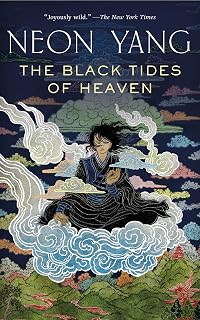



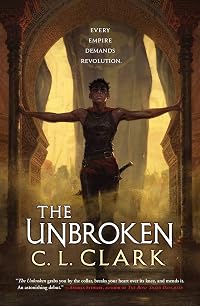
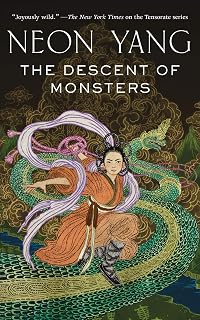

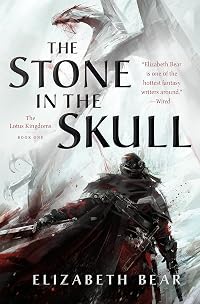
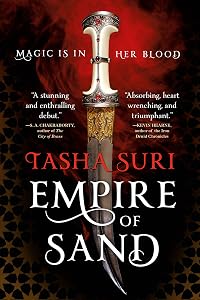


Member Recommendations
Member Reviews
This book is seeing a lot of negativity, primarily on account of two looming issues, which is a shame because otherwise there's a lot going for it. The author did a fine job at aiming for a more serious literary effort in the genre by making this a character-driven story rather than using the typical plot-driven approach. Episodic action is sprinkled throughout and the story has legs, but what clearly matters most are Shizuka, Shefali and their relationship. I wish more fantasy novels were written with this emphasis. The human condition is as much the province of genre fiction as any, if we're to buy George Martin's defence/description of fantasy as simply 'different furniture'. It's a focus that should be used more often.
Whether show more that's what the typical fantasy reader wants is the real question, when most expect a quick outline of world-threatening stakes, dense plotting, forward momentum, brisk action and light escapism. This particular orange should not be compared with apples while it so skillfully explores inner lives, provides just the right amount of descriptive detail, and features well chosen metaphors and similes for the characters using them. The author has yet to master her craft such that her prose will flow effortlessly, but none of the content feels too heavy-handed or too lightly considered.
The first issue is her contentious mix of Chinese, Mongolian and Japanese elements. Reviewers more in the know than myself have indicated a clear lack of research, and a problematic mirroring of actual history between these cultures without addressing its depth and complexities. It's an interesting case study in the danger of too closely echoing real-world cultures. The result is liable to offend people who possess more knowledge than the author does about them. More seriously, it may perpetuate stereotypes and prejudices when the mirrored culture can be easily deduced. I don't believe the author crossed the line of appropriation, but she ought to have found a beta reader who knew these cultures intimately and could identify sensitive content (e.g. "rice eater", "flat faced", etc.). It's unfortunate she committed herself to making this a series, as I'm not sure what she can do now to address these problems while maintaining consistency with what's established.
The second issue is that most of the book is taken up by the letter from Shefali. She is transparently relating a shared history for the reader's benefit instead of the letter's recipient, effectively turning the novel into one giant As-You-Know-Bob trope. I found it a distraction from Shefali's otherwise well-told story to be constantly aware of this, and I can't understand why it wasn't presented in some other way.
Compartmentalizing these macro-level drawbacks, I mostly appreciated the rest of what's here on the micro-level. I found some inconsistencies, and I'm not a fan of some elements, not to say they weren't done well. It's not as good as I wanted it to be, but it's maybe better than you've heard. show less
Whether show more that's what the typical fantasy reader wants is the real question, when most expect a quick outline of world-threatening stakes, dense plotting, forward momentum, brisk action and light escapism. This particular orange should not be compared with apples while it so skillfully explores inner lives, provides just the right amount of descriptive detail, and features well chosen metaphors and similes for the characters using them. The author has yet to master her craft such that her prose will flow effortlessly, but none of the content feels too heavy-handed or too lightly considered.
The first issue is her contentious mix of Chinese, Mongolian and Japanese elements. Reviewers more in the know than myself have indicated a clear lack of research, and a problematic mirroring of actual history between these cultures without addressing its depth and complexities. It's an interesting case study in the danger of too closely echoing real-world cultures. The result is liable to offend people who possess more knowledge than the author does about them. More seriously, it may perpetuate stereotypes and prejudices when the mirrored culture can be easily deduced. I don't believe the author crossed the line of appropriation, but she ought to have found a beta reader who knew these cultures intimately and could identify sensitive content (e.g. "rice eater", "flat faced", etc.). It's unfortunate she committed herself to making this a series, as I'm not sure what she can do now to address these problems while maintaining consistency with what's established.
The second issue is that most of the book is taken up by the letter from Shefali. She is transparently relating a shared history for the reader's benefit instead of the letter's recipient, effectively turning the novel into one giant As-You-Know-Bob trope. I found it a distraction from Shefali's otherwise well-told story to be constantly aware of this, and I can't understand why it wasn't presented in some other way.
Compartmentalizing these macro-level drawbacks, I mostly appreciated the rest of what's here on the micro-level. I found some inconsistencies, and I'm not a fan of some elements, not to say they weren't done well. It's not as good as I wanted it to be, but it's maybe better than you've heard. show less
 This review was written for LibraryThing Early Reviewers.
K. Arsenault Rivera's sweeping fantasy epic, The Tiger's Daughter, avoids overwhelming readers with too much exposition. Rather, it pulls you in with a deliberate approach and reveals a world molded by legendary currents and tradition that churn under the surface. Fundamentally, the relationship between two heroines, created in childhood and tested by challenges both human and otherworldly, is the link.
Rivera's depiction of their evolving relationship is the foundation of the book, firmly anchoring many of the most substantial obstacles in their personal loyalty. This is an investigation of how deep trust may sustain—even haunt—individuals in a volatile world, not merely another story of great powers colliding. The work does not show more waver in its slower, introspective periods; it frames the hopes and worries of the characters as absolutely vital components of the larger struggle.
The form could itself be an obstacle for some readers. If you would rather have a clear chronology, much of the story runs through letters and shifting memories may be confusing. As you separate out what is happening now from what occurred in the past, there is an adjustment period. Still, this method fosters intimacy as well. You feel as though you are rummaging through half-remembered letters and heartfelt missives of layers of meaning.
The Tiger's Daughter stands out, at the end, for skillful blending of personal stakes with major drama. It unfolds gently, allowing characters space to breathe and flourish rather than racing to the finish. You will discover a narrative aching with the echoes of a bond that defies fate long after the final page, if you are open to a deliberate pace and the occasional narrative oddity. show less
Rivera's depiction of their evolving relationship is the foundation of the book, firmly anchoring many of the most substantial obstacles in their personal loyalty. This is an investigation of how deep trust may sustain—even haunt—individuals in a volatile world, not merely another story of great powers colliding. The work does not show more waver in its slower, introspective periods; it frames the hopes and worries of the characters as absolutely vital components of the larger struggle.
The form could itself be an obstacle for some readers. If you would rather have a clear chronology, much of the story runs through letters and shifting memories may be confusing. As you separate out what is happening now from what occurred in the past, there is an adjustment period. Still, this method fosters intimacy as well. You feel as though you are rummaging through half-remembered letters and heartfelt missives of layers of meaning.
The Tiger's Daughter stands out, at the end, for skillful blending of personal stakes with major drama. It unfolds gently, allowing characters space to breathe and flourish rather than racing to the finish. You will discover a narrative aching with the echoes of a bond that defies fate long after the final page, if you are open to a deliberate pace and the occasional narrative oddity. show less
epic fantasy is normally not in my comfort zone so i was a bit wary going into this read. i did have a little trouble remembering who everyone was in relation to the main characters, but in general i found the world-building and the elements of fantasy pretty easy to follow and understand. (usually this means that it's fantasy-lite or pretty surface level, but this is actually more extensive.) i love epistolary novels but i don't love the conceit used here, where the letter writer (shefali) is recapping (for us) everything the letter reader (shizuka) already knows. here and there were things that would have been new information for shizuka, or new insight into something they experienced together, but this was more an info dump, and i show more don't favor those. i also had a hard time with the way the two main characters were initially written. i understand that they were gods/royalty/whatever, but they were not believably written as children. but they weren't supposed to be; i just didn't like how that was handled, personally.
that said, i loved their relationship and how they complemented each other. i loved shizuka's ego and shefali's quiet strength. also, this is beautifully written. one of the side characters is a poet and while infrequently rivera had to write in his voice or with his words, most of this book could have qualified. the language is fantastic. so much of the phrasing was just lovely; it sings. for me, the individual main characters, their relationship, and the writing carried this book. the battles and the demon fighting are not really my thing, but i found myself kind of enjoying even that aspect of this, probably because it wasn't the focus and because the writing was so exceptional. (except i really didn't like reading aboutall that happened with shefali after she became a blackblood, where the demon was actually changing her physically - the talons, the teeth, the ears, the eyes. i think there is some really good metaphoric stuff to think about here, and i do really like the way she talked about racism in the book, so maybe this actually has some relation to that; i'll have to give that more thought. or maybe this is just rivera's take on zombies, which i hate reading about.)
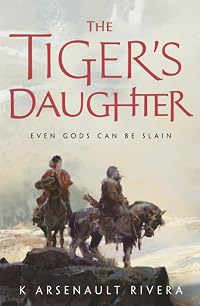
i don't think there is a lot of fantasy that isn't white/america/european centered, so it was really nice to read this eastern inspired take on a fantasy world. and to have such overtly queer characters was great. i expected that to be more hidden than it was. as to the way she talked about race - it was really clear that shefali was darker and her people (the qorin) were brown, and that that made a difference in how they were treated when they were with the hokkaran people. i really, really love the cover art but i wish that they had made shefali darker to better represent at least her race. (still, it is the gorgeous cover that made me pick up this book in the first place. wow.) my only remaining question, plot wise, isonce shizuka is empress, why can't she bring shefali back from exile? why does shefali still have to find the phoenix feather in order to return? as ruler, can't she overrule that?
this got in my head. i was really immersed in this world and these characters that she created. so i was really swept away by all of it. really swept away. show less
that said, i loved their relationship and how they complemented each other. i loved shizuka's ego and shefali's quiet strength. also, this is beautifully written. one of the side characters is a poet and while infrequently rivera had to write in his voice or with his words, most of this book could have qualified. the language is fantastic. so much of the phrasing was just lovely; it sings. for me, the individual main characters, their relationship, and the writing carried this book. the battles and the demon fighting are not really my thing, but i found myself kind of enjoying even that aspect of this, probably because it wasn't the focus and because the writing was so exceptional. (except i really didn't like reading about
i don't think there is a lot of fantasy that isn't white/america/european centered, so it was really nice to read this eastern inspired take on a fantasy world. and to have such overtly queer characters was great. i expected that to be more hidden than it was. as to the way she talked about race - it was really clear that shefali was darker and her people (the qorin) were brown, and that that made a difference in how they were treated when they were with the hokkaran people. i really, really love the cover art but i wish that they had made shefali darker to better represent at least her race. (still, it is the gorgeous cover that made me pick up this book in the first place. wow.) my only remaining question, plot wise, is
this got in my head. i was really immersed in this world and these characters that she created. so i was really swept away by all of it. really swept away. show less
This was beautiful and I loved it.
It won't necessarily be everyone's cup of tea. It's very epic fantasy: two heroes are born, destined to greatness together, they grow through early challenges, they slay demons, they are struck with hardships, they fight through, they confound the Powers That Be.
But at the same time, it is very not your standard epic fantasy. It is thick with style, told in an achingly intimate first-and-second person (as a letter written from one hero to the other) and simmered to a richness of emotional depth that I've rarely encountered in epic fantasy.
Bonus: a wonderful north-Asian setting, rife with details that felt very Chinese and Mongolian.
Double bonus: our two heroes are princesses, strong of will and show more striking in character.
So it might not be everyone's cup of tea, but I loved it outrageously and I suspect that for people who enjoy--who yearn for--that congruence of epic fantasy and emotional/style depth, it's going to be an enjoyable read at the very least.
If you're still wavering, Tor.com sampled the first four chapters, so you can try it out. show less
It won't necessarily be everyone's cup of tea. It's very epic fantasy: two heroes are born, destined to greatness together, they grow through early challenges, they slay demons, they are struck with hardships, they fight through, they confound the Powers That Be.
But at the same time, it is very not your standard epic fantasy. It is thick with style, told in an achingly intimate first-and-second person (as a letter written from one hero to the other) and simmered to a richness of emotional depth that I've rarely encountered in epic fantasy.
Bonus: a wonderful north-Asian setting, rife with details that felt very Chinese and Mongolian.
Double bonus: our two heroes are princesses, strong of will and show more striking in character.
So it might not be everyone's cup of tea, but I loved it outrageously and I suspect that for people who enjoy--who yearn for--that congruence of epic fantasy and emotional/style depth, it's going to be an enjoyable read at the very least.
If you're still wavering, Tor.com sampled the first four chapters, so you can try it out. show less
The Tiger's Daughter is the start of a promising new epic fantasy series set in a world quite a lot like early Chinese/Mongolian civilization. Rivera's writing is filled with passages that are a pleasure to read and characters that are interesting, though superhero-ish. All the elements are there for a fun, deep read. Unfortunately, all this promise fails to materialize; my most common thought while reading was to wonder when something was actually going to happen in the book. Even in spots that should have been suspenseful, there's just no sense of danger or urgency.
I think there's two reasons for this. First, the story-telling method Rivera chooses - a letter/book from one character to another retelling the events of their life show more really kills the tension. Clearly they survived, so the story can't really surprise easily. Also, the second person nature of the storytelling implies that the whole story is something the character should have already known. Second, the story suffers from the Superman problem - the main character is so powerful that there's a feel that nothing bad can happen, again killing any tension or suspense that might be developed.
Don't get me wrong - this isn't a bad book. It's just ultimately unsatisfying. I hope the following books can do better. show less
I think there's two reasons for this. First, the story-telling method Rivera chooses - a letter/book from one character to another retelling the events of their life show more really kills the tension. Clearly they survived, so the story can't really surprise easily. Also, the second person nature of the storytelling implies that the whole story is something the character should have already known. Second, the story suffers from the Superman problem - the main character is so powerful that there's a feel that nothing bad can happen, again killing any tension or suspense that might be developed.
Don't get me wrong - this isn't a bad book. It's just ultimately unsatisfying. I hope the following books can do better. show less
This review was written for LibraryThing Early Reviewers.The Tiger's Daughter is a fascinating work of Asian-inspired fantasy, following the adventures of two impetuous young women with divine abilities: Shefali, a woman of horse-bonded people of the steppes, and O-Shizuka, a spoiled royal. The world-building intrigued me with its thorough immersion in these different cultures. As the two women grow up, they become far more than friends--a major taboo--and then disaster befalls them. Their relationship is passionate and genuine (though as a reader, I really wanted to shake sense into Shizuka sometimes). Normally, I can predict how a plot develops, but this novel is full of genuine surprises right up to the very end.
That said, it was not an all together smooth read for me. Much of the book is show more told in the form of a letter written from Shefali to Shizuka, which means it's extensively in second person. At times, the narrative returns to Shizuka in the present. I found this back and forth to be confusing at times, especially through the first half of the book.
I was also puzzled by the use of familiar Asian place names and some items in this world. The names are slightly twisted but still recognizable. Since the world is otherwise so fresh and unique, I wasn't sure why the names were used in this way. It made me wonder if this is a far-future Earth or space colony; total guesses on my part. A map might have clarified this issue for me. My galley didn't include one, but perhaps the final published version will.
In all, a good read that brings a unique setting and strong passionate partnership to the epic fantasy genre. I am curious as to where the series will go from here. show less
That said, it was not an all together smooth read for me. Much of the book is show more told in the form of a letter written from Shefali to Shizuka, which means it's extensively in second person. At times, the narrative returns to Shizuka in the present. I found this back and forth to be confusing at times, especially through the first half of the book.
I was also puzzled by the use of familiar Asian place names and some items in this world. The names are slightly twisted but still recognizable. Since the world is otherwise so fresh and unique, I wasn't sure why the names were used in this way. It made me wonder if this is a far-future Earth or space colony; total guesses on my part. A map might have clarified this issue for me. My galley didn't include one, but perhaps the final published version will.
In all, a good read that brings a unique setting and strong passionate partnership to the epic fantasy genre. I am curious as to where the series will go from here. show less
** spoiler alert ** Disclaimer: I received a free copy from Tor as part of a Librarything giveaway/first read program. Also, spoilers.
I wanted to love this book. When I first started reading the novel, it was exactly what I needed. A novel where the chosen one or ones is/are female, I so need that, especially with all the movies and shows about men doing great things. The book drew me in right away, and the first night I did not want to put it down. The second day, I still enjoyed it, but I was a little confused by a few things – one of which was the setting and character names. The setting seemed to be a fantastical China. There was a wall that the mother of one of the characters destroyed. There seems to be one society that is de show more facto Chinese, and another that is de facto Mongol. There are steppes on the map for crying out aloud. The strange thing was that some of the names seemed to be Japanese. But I am not an expert on Japanese or Chinese culture. To be honest, the only reason I noticed that Japanese influence was because I had read Johnson, Dalkey, and the Tale of Heike. I do know, however, that any combination of Chinese and Japanese cultures (or any Asian culture with another for that matter) is problematic for several reasons, including what happened during WW II.
Then I read Laurelinvanyr’s review where she goes into detail about the problems with the names used in the novel as well as other cultural issues. I strongly suggest any potential reader of the book reads that review. It’s true that a counter to many of the points that Laurelinvanyr makes would be the simple “it is a fantasy setting that has been inspired by various cultures” excuse that is used for more than fantasy novels. It is also true that this is not the only book that has inaccuracies. Hell, you even get them in a book that is set in say America but written by a Brit. At the very least, there is not enough world building to account for the combination. Laurelinvanyr’s more knowledgeable review goes into far more detail about this problem (and there are other reviews that mention the same issues but in less detail. There is hardly only one review that raises the questions of bad research, cultural approbation and fetishism). Additionally, it is possible/very likely that the use of language and cultural comments by some characters was there to show racism between the Empire and Qorin. The problem is that racism is never really direct dealt with, at least on the part of the Qorin and not really very well in the Empire.
In addition to the question about the world building, there are other problems with the book, that are glaring from a structural and storytelling point of view only.
It is impossible to discuss these without spoilers, so this is your last spoiler warning.
The first problem is the conceit – the idea that whole book is one very long letter that one heroine writes to the other. This works in the beginning but makes no sense later on because why would you write such a detailed letter to someone who was there and experiencing most of what are you writing about with you? You wouldn’t. Not in such a detailed way. (There also is a section where it seems to take a character two years to make a bow, seriously). If this was an actual exchange of letters this would be different, but it isn’t.
The second problem is that because you know the letter is being written after the events described, you know the two central characters are going to be okay. This lack of tension might be replaced with the tension regarding whether they are going to get their happy ever after. Normally, it would be, but the question of whether love can overcome the forced separation is dealt with so quickly that there isn’t any. Not really.
To be honest, the second half of the book feels like little more than a set-up for the second volume. Part of the draw of the first part of the book is the idea that both heroines are somehow divine. This is important for two reasons. The first is that it explains the powers that each girl has (though one power is more developed). The second is it explains why despite the young age of both heroines (both are under eighteen for the whole book), they act so much older, for there is a long tradition in epics, regardless of culture, for such divine or semi-divine heroes to be older than their years. This semi-divine status seems forgotten when one of the characters becomes vampire like (something that most say they are frightened of but no one acts like it). It is to seek a cure for this problem that one woman journeys to what seems to be an Underworld. Sounds interesting, no? Happens entirely off page and is most likely a hook for the second novel in the series. But why would you read that when you know she succeeds? It was a total cheat of an ending.
And finally, there were two smaller things that disquieted me. The first is the relationship between an older woman and a young woman. It is unclear whether they are another lesbian couple, it is strongly suggested that they are. I don’t care that they are couple because of their gender. I have a problem with an adult, in this an aunt, sleeping with niece. I just do. Not only does violate the incest taboo that many culture, fantasy and otherwise, have, but quite frankly, there is something off putting by someone who is family member who helped raise you, taking you as a lover. I hate this when it is a man and woman relationship, and I still hate it when it is a woman/woman one. Sorry. Additionally, there is an incident of spousal abuse. One character is possessed/dealing with vampire traits when she attacks her girlfriend. That’s fine. It’s an interesting idea as is the struggle to contain the vampire cravings. Handled well it would have been a good thing to explore. But nope, everyone, even the woman who was almost struggled, seems to get over it in a few pages.
Promising start. Disappointing ending. show less
I wanted to love this book. When I first started reading the novel, it was exactly what I needed. A novel where the chosen one or ones is/are female, I so need that, especially with all the movies and shows about men doing great things. The book drew me in right away, and the first night I did not want to put it down. The second day, I still enjoyed it, but I was a little confused by a few things – one of which was the setting and character names. The setting seemed to be a fantastical China. There was a wall that the mother of one of the characters destroyed. There seems to be one society that is de show more facto Chinese, and another that is de facto Mongol. There are steppes on the map for crying out aloud. The strange thing was that some of the names seemed to be Japanese. But I am not an expert on Japanese or Chinese culture. To be honest, the only reason I noticed that Japanese influence was because I had read Johnson, Dalkey, and the Tale of Heike. I do know, however, that any combination of Chinese and Japanese cultures (or any Asian culture with another for that matter) is problematic for several reasons, including what happened during WW II.
Then I read Laurelinvanyr’s review where she goes into detail about the problems with the names used in the novel as well as other cultural issues. I strongly suggest any potential reader of the book reads that review. It’s true that a counter to many of the points that Laurelinvanyr makes would be the simple “it is a fantasy setting that has been inspired by various cultures” excuse that is used for more than fantasy novels. It is also true that this is not the only book that has inaccuracies. Hell, you even get them in a book that is set in say America but written by a Brit. At the very least, there is not enough world building to account for the combination. Laurelinvanyr’s more knowledgeable review goes into far more detail about this problem (and there are other reviews that mention the same issues but in less detail. There is hardly only one review that raises the questions of bad research, cultural approbation and fetishism). Additionally, it is possible/very likely that the use of language and cultural comments by some characters was there to show racism between the Empire and Qorin. The problem is that racism is never really direct dealt with, at least on the part of the Qorin and not really very well in the Empire.
In addition to the question about the world building, there are other problems with the book, that are glaring from a structural and storytelling point of view only.
It is impossible to discuss these without spoilers, so this is your last spoiler warning.
The first problem is the conceit – the idea that whole book is one very long letter that one heroine writes to the other. This works in the beginning but makes no sense later on because why would you write such a detailed letter to someone who was there and experiencing most of what are you writing about with you? You wouldn’t. Not in such a detailed way. (There also is a section where it seems to take a character two years to make a bow, seriously). If this was an actual exchange of letters this would be different, but it isn’t.
The second problem is that because you know the letter is being written after the events described, you know the two central characters are going to be okay. This lack of tension might be replaced with the tension regarding whether they are going to get their happy ever after. Normally, it would be, but the question of whether love can overcome the forced separation is dealt with so quickly that there isn’t any. Not really.
To be honest, the second half of the book feels like little more than a set-up for the second volume. Part of the draw of the first part of the book is the idea that both heroines are somehow divine. This is important for two reasons. The first is that it explains the powers that each girl has (though one power is more developed). The second is it explains why despite the young age of both heroines (both are under eighteen for the whole book), they act so much older, for there is a long tradition in epics, regardless of culture, for such divine or semi-divine heroes to be older than their years. This semi-divine status seems forgotten when one of the characters becomes vampire like (something that most say they are frightened of but no one acts like it). It is to seek a cure for this problem that one woman journeys to what seems to be an Underworld. Sounds interesting, no? Happens entirely off page and is most likely a hook for the second novel in the series. But why would you read that when you know she succeeds? It was a total cheat of an ending.
And finally, there were two smaller things that disquieted me. The first is the relationship between an older woman and a young woman. It is unclear whether they are another lesbian couple, it is strongly suggested that they are. I don’t care that they are couple because of their gender. I have a problem with an adult, in this an aunt, sleeping with niece. I just do. Not only does violate the incest taboo that many culture, fantasy and otherwise, have, but quite frankly, there is something off putting by someone who is family member who helped raise you, taking you as a lover. I hate this when it is a man and woman relationship, and I still hate it when it is a woman/woman one. Sorry. Additionally, there is an incident of spousal abuse. One character is possessed/dealing with vampire traits when she attacks her girlfriend. That’s fine. It’s an interesting idea as is the struggle to contain the vampire cravings. Handled well it would have been a good thing to explore. But nope, everyone, even the woman who was almost struggled, seems to get over it in a few pages.
Promising start. Disappointing ending. show less
This review was written for LibraryThing Early Reviewers.Members
- Recently Added By
Lists

Diversity in Fantasy and Science Fiction
219 works; 33 members

2018 Hugo Eligible Novels
170 works; 16 members

Female Protagonist
1,056 works; 57 members

Epic fantasy by female authors
47 works; 7 members

Books for a Queer Valentine's Day
46 works; 6 members

Modern Fantasy Novels based on Non-Western Mythology or Folklore
24 works; 7 members

Animals in the Title
498 works; 11 members

hypatian_kat to-read
429 works; 3 members

tumblr recommends Sci-Fi
35 works; 1 member

Kindle Fantasy/Science Fiction Re-Read
151 works; 1 member
Author Information

15+ Works 1,078 Members
Some Editions
Awards and Honors
Series

Work Relationships
Is contained in
Is abridged in
Common Knowledge
- Canonical title
- The Tiger's Daughter
- Original publication date
- 2017
- People/Characters
- Barsalayaa Shefali; O Shizuka
- Important places
- Hokkara
- Dedication
- To those who need to know they’re not alone
- First words
- Empress Yui wrestles with her broken zither.
- Last words
- (Click to show. Warning: May contain spoilers.)The rest can wait.
- Publisher's editor
- Weinberg, Miriam
- Blurbers
- Schwab, V. E.; Carey, Jacqueline; Maggs, Sam; Chokshi, Roshani; McGuire, Seanan
- Original language
- English
Classifications
Statistics
- Members
- 731
- Popularity
- 38,700
- Reviews
- 24
- Rating
- (3.78)
- Languages
- English
- Media
- Paper, Audiobook, Ebook
- ISBNs
- 4
- ASINs
- 2