The Best of All Possible Worlds: Mathematics and Destiny
by Ivar Ekeland
On This Page
Description
Optimists believe this is the best of all possible worlds. And pessimists fear that might really be the case. But what is the best of all possible worlds? How do we define it? Is it the world that operates the most efficiently? Or the one in which most people are comfortable and content? Questions such as these have preoccupied philosophers and theologians for ages, but there was a time, during the seventeenth and eighteenth centuries, when scientists and mathematicians felt they could show more provide the answer. This book is their story. Ivar Ekeland here takes the reader on a journey through scientific attempts to envision the best of all possible worlds. He begins with the French physicist Maupertuis, whose least action principle asserted that everything in nature occurs in the way that requires the least possible action. This idea, Ekeland shows, was a pivotal breakthrough in mathematics, because it was the first expression of the concept of optimization, or the creation of systems that are the most efficient or functional. Although the least action principle was later elaborated on and overshadowed by the theories of Leonhard Euler and Gottfried Leibniz, the concept of optimization that emerged from it is an important one that touches virtually every scientific discipline today. Tracing the profound impact of optimization and the unexpected ways in which it has influenced the study of mathematics, biology, economics, and even politics, Ekeland reveals throughout how the idea of optimization has driven some of our greatest intellectual breakthroughs. The result is a dazzling display of erudition--one that will be essential reading for popular-science buffs and historians of science alike. show lessTags
Recommendations











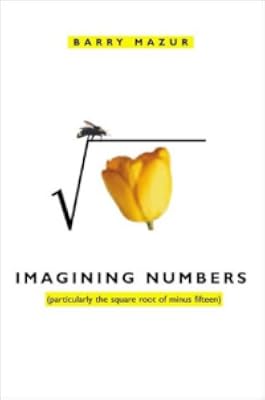

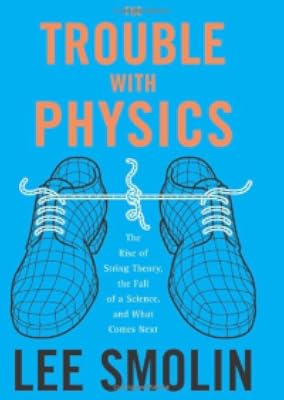
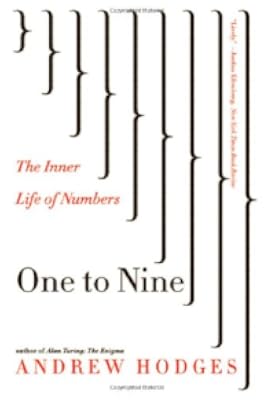
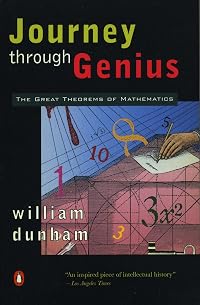
Member Recommendations
Member Reviews
An interesting mathematical history of ideas concerning an often overlooked physical principle: the principle of least action. Normally credited to French philosopher Maupertuis, this pseudo-deterministic principle says that the action performed in a system will be minimized as it moves from state to state. Since its conception, this principle has been superseded by a more correct version where the action is not minimal but stationary: that is, not having any first-order variation.
A view of mechanics since Galileo, centered on the notion of action (the dimension of Planck's constant h -- momentum times distance or, equivalently, energy times time). "Classical mechanics (including the stationary action principle) appear to be valid only in a thin layer of reality, trapped between the subatomic scale, which is ruled by quantum mechanics and the Feynman probabilities, and the human scale, which is ruled by thermodynamics and decaying entropy" (p 122). The book's last quarter meanders among woolly topics such as optimization in economics and societal issues.
Ratings
Members
- Recently Added By
Published Reviews
ThingScore 100
"Ekeland sets the tone of his beautifully written and enormously enjoyable book with its opening sentence: 'The optimist believes that this is the best of all possible worlds, and the pessimist fears that this might be the case.'"
added by cpg
Author Information

18 Works 567 Members
Ivar Ekeland is professor of mathematics and economics at the University of British Columbia and director of the Pacific Institute for Mathematical Sciences
Classifications
Statistics
- Members
- 98
- Popularity
- 328,262
- Reviews
- 2
- Rating
- (3.86)
- Languages
- 5 — Chinese, English, Finnish, French, Italian
- Media
- Paper
- ISBNs
- 6
- ASINs
- 1