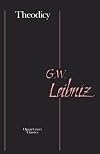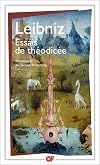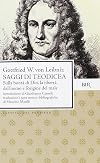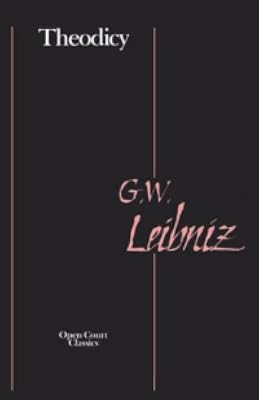
Theodicy: Essays on the Goodness of God, the Freedom of Man, and the Origin of Evil
by Gottfried Wilhelm Leibniz
On This Page
Description
"In order to be truly free, must you act arbitrarily? If an event did not happen, could it have happened? Since there is evil, and God could have made the world without evil, did God fail to pick the best course? Grappling with such simple£yet still intriguing£puzzles, Leibniz was able to present attractively his new theories of the real and the phenomenal, freewill and determinism, and the relation between minds and bodies. Theodicy was Leibniz's only book-length work to be published in show more his lifetime, and for many years the work by which he was known to the world. Fully at home with the latest scientific advances, Leibniz ultimately rejected the new atomistic philosophies of Descartes, Gassendi, and Hobbes, and drew upon the old cosmology of Aristotelian scholasticism. There could be no conflict, he argued, between faith and reason, freedom and necessity, natural and divine law. Ingeniously defending his postulate of pre-established harmony, Leibniz made important advances in the precise analysis of concepts"--Publisher description. show lessTags
Recommendations




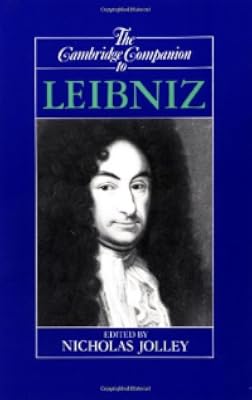


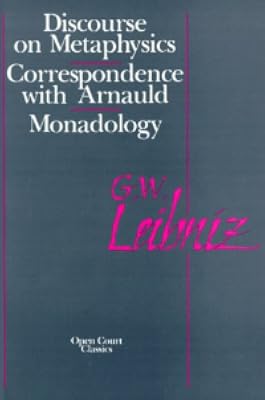




Member Recommendations
Member Reviews
Le terme de « théodicée » signifie étymologiquement « justice de Dieu » (du grec théos, Dieu, et dikè, justice), c’est un discours se proposant de « justifier la bonté de Dieu par la réfutation des arguments tirés de l’existence du mal dans ce monde, et par suite la réfutation des doctrines athées ou dualistes qui s'appuient sur ces arguments »[7]. Il est essentiel de souligner le principal enjeu de la théodicée leibnizienne. La question est d’abord : comment accorder l’existence du mal avec l’idée de la perfection générale de l’univers ? Mais, par delà les difficultés internes à la métaphysique leibnizienne, on trouve le problème suivant : comment accorder l’idée de la responsabilité ou de la show more culpabilité de l’homme dans le mal avec le sentiment que cet homme agit de la seule manière dont il était possible qu’il agît. La réponse de Leibniz au conflit entre nécessité et liberté est originale. L’exemple de Judas le traître, tel qu’il est analysé dans la section 30 du Discours de Métaphysique est éclairant : certes, il était prévisible de toute éternité que ce Judas-là dont Dieu a laissé l’essence venir à l’existence, pècherait comme il a péché, mais il n’empêche que c’est bien lui qui pèche. Le fait que cet être limité, imparfait (comme toute créature) entre dans le plan général de la création, et donc tire en un sens son existence de Dieu, ne le lave pas en lui-même de son imperfection. C’est bien lui qui est imparfait, de même que la roue dentée, dans une montre, n’est rien d’autre qu’une roue dentée : le fait que l’horloger l’utilise pour fabriquer une montre ne rend pas cet horloger responsable du fait que cette roue dentée n’est rien d’autre, rien de mieux qu’une roue dentée. Le principe de raison suffisante, parfois nommé principe de « la raison déterminante » ou le « grand principe du pourquoi », est le principe fondamental qui a guidé Leibniz dans ses recherches : rien n’est sans une raison qui explique pourquoi il est plutôt qu’il n’est pas, et pourquoi il est ainsi plutôt qu’autrement. Leibniz ne nie pas que le mal existe. Il affirme toutefois que tous les maux ne peuvent pas être moindres : ces maux trouvent leur explication et leur justification dans l’ensemble, dans l’harmonie du tableau de l’univers. « Les défauts apparents du monde entier, ces taches d’un soleil dont le nôtre n’est qu’un rayon, relèvent sa beauté bien loin de la diminuer ». (Théodicée, 1710 - parution en 1747). Répondant à Bayle, il établit la démonstration suivante: si Dieu existe, il est parfait et unique. Or, si Dieu est parfait, il est « nécessairement » tout-puissant, toute bonté et toute justice, toute sagesse. Ainsi, si Dieu existe, il a, par nécessité, pu, voulu et su créer le moins imparfait de tous les mondes imparfaits; le monde le mieux adapté aux fins suprêmes. En 1759, dans le conte philosophique Candide, Voltaire fait de son personnage Pangloss le porte-parole du providentialisme de Leibniz. Il y déforme volontairement sa doctrine en la réduisant à la formule: « tout est au mieux dans le meilleur des mondes possibles ». Cette formule ne se trouve pas dans l’œuvre leibnizienne. Jean-Jacques Rousseau rappellera à Voltaire l’aspect contraignant de la démonstration de Leibniz : « Ces questions se rapportent toutes à l’existence de Dieu. (…) Si l’on m’accorde la première proposition, jamais on n’ébranlera les suivantes; si on la nie, il ne faut pas discuter sur ses conséquences. » (Lettre du 18 août 1756). Toutefois le texte de Voltaire ne s'oppose pas à Leibniz sur un plan théologique ni métaphysique : le conte de Candide trouve son origine dans l'opposition entre Voltaire et Rousseau, et son contenu cherche à montrer que ce ne sont pas les raisonnements des métaphysiciens qui mettront fin à nos maux, faisant l'apologie d'une philosophie volontariste invitant les hommes à organiser eux-mêmes la vie terrestre et où le travail est présenté comme source de progrès matériels et moraux qui rendront les hommes plus heureux. show less
Dec 15, 2010French
Ratings
Members
- Recently Added By
Author Information

416+ Works 4,903 Members
Gottfried Wilhelm Leibniz, one of the last real polymaths, was born in Leipzig. Educated there and at the Universities at Jena and Altdorf, he then served as a diplomat for the Elector of Mainz and was sent to Paris, where he lived for a few years and came into contact with leading scientists, philosophers, and theologians. During a trip to show more England, he was elected to the Royal Society; he made a visit to Holland to meet Spinoza. Back in Germany he became librarian to the Duke of Brunswick, whose library was the largest in Europe outside the Vatican. From there he became involved in government affairs in Hanover and later settled in Berlin at the court of Queen Sophie Charlotte of Prussia. Leibniz was involved in the diplomatic negotiations that led to the Hanoverian succession to the English throne. From his university days he showed an interest in mathematics, logic, physics, law, linguistics, and history, as well as theology and practical political affairs. He discovered calculus independently of Newton and had a protracted squabble about which of them should be given credit for the achievement. The developer of much of what is now modern logic, he discovered some important physical laws and offered a physical theory that is close to some twentieth-century conceptions. Leibniz was interested in developing a universal language and tried to master the elements of all languages. Leibniz corresponded widely with scholars all over Europe and with some Jesuit missionaries in China. His philosophy was largely worked out in answer to those of other thinkers, such as Locke, Malebranche, Bayle, and Arnauld. Although he published comparatively little during his lifetime, Leibniz left an enormous mass of unpublished papers, drafts of works, and notes on topics of interest. His library, which has been preserved, contains annotations, analyses, and often refutations of works he read. The project of publishing all of his writings, undertaken in the 1920s by the Prussian Academy, was delayed by World War II but was resumed thereafter. It is not likely that the project will be completed in the twentieth century. (Bowker Author Biography) show less
Awards and Honors
Notable Lists
Series
Belongs to Publisher Series
Work Relationships
Is contained in
Is abridged in
Common Knowledge
- Original title
- Essais de Théodicée
- Original publication date
- 1709
Classifications
Statistics
- Members
- 349
- Popularity
- 90,175
- Reviews
- 2
- Rating
- (3.15)
- Languages
- 7 — English, French, German, Italian, Portuguese, Romanian, Spanish
- Media
- Paper, Ebook
- ISBNs
- 29
- ASINs
- 7