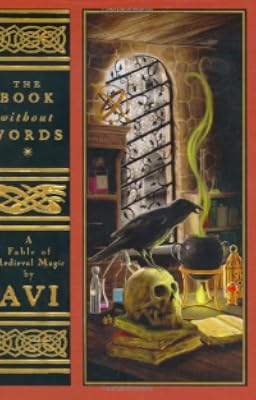
The Book Without Words: A Fable of Medieval Magic
by Avi
On This Page
Description
The Book Without Words appears to be a volume of blank parchment pages. But for a green-eyed reader filled with great desire, it may reveal the forgotten magical arts of making gold and achieving immortality. For generations, its magic has been protected from those who would exploit it. But on a terrible day of death and destruction, the Book Without Words falls into the hands of a desperate boy.Tags
Recommendations

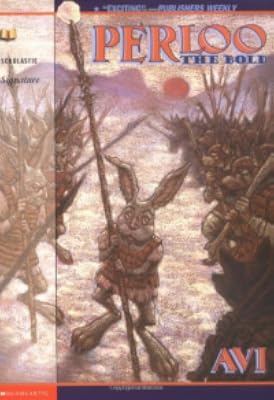
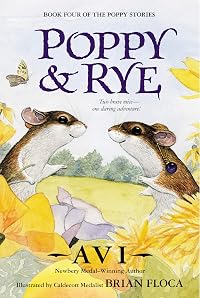
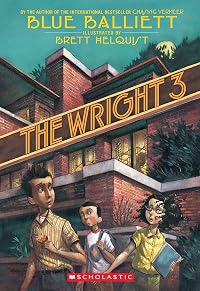
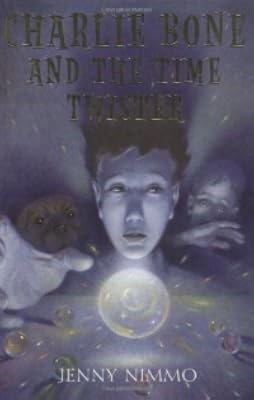

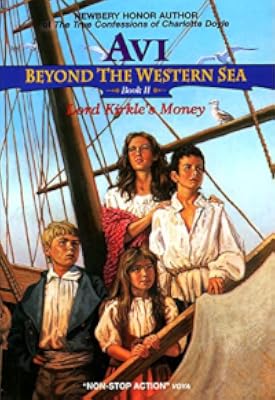

Member Recommendations
Member Reviews
Let's just call this the Middle Schooler's Philosophical Primer. Burdened by an extremely dreary beginning, the last third of this short "fable" really popped with imagery, suspense and enough Meaning-of-Life posturing to bring anyone back from the dead. Just before the book faded like a wisp of alchemical smoke, I found myself biting my nails, screaming "No!", and asking myself just what does it mean to live and live well. I could see myself having some very good discussions with the students about some of the issues raised. If you have a few minutes to spare (some to be bored, and some to be thrilled), read this book.
Although the spells involved are different, Sybil's predicament in The Book Without Words reminds me of that of Stephen, the orphan taken in by his cousin, Mr. Abney. Like Mr. Abney, the wizard Thorston who took in the orphaned Sybil has a sinister plan in mind for his young charge. Sybil and the wizard's talking crow, Odo need someone with green eyes to be able to read the Book Without Words.
Two boys turn up. One is Damian Perbeck, apprentice to local apothecary Mistress Weebly. He's a jerk. The other is brought by the Reeve [local magistrate]. Alfric is a timid orphan whom the Reeve bought for two pennies. Unlike Sybil, the boys can read.
Sybil learns more about the book from an elderly monk, Brother Wilfrid. Her elderly wizard stole show more the book from said monk when he was thirteen years old. The monk also tells her what will happen to her and Odo should Thorston succeed in swallowing all four of the magic stones he made. Good thing Thorston can swallow only one a day. The author makes Thorston's motive understandable, but I don't pity him.
The children are in a life-or-death situation. The Reeve plans to hang them if he doesn't get the secret of making gold. Well, he also plans to hang Thorston, but the wizard isn't worried about the threat.
The book is claustrophobic. The action mostly takes place inside Thorston's old stone house or its courtyard. John Curless' narration is effective, making me want to shout at Sybil and the boys while they're trying to figure out what to do to escape. It is set in Anglo-Saxon England, twenty years before the Norman Conquest. The village where it takes place, Fulworth, is a real village in Northumberland, about 20 miles south of York. The climax had me in considerable suspense, but the ending was quite satisfying. show less
Two boys turn up. One is Damian Perbeck, apprentice to local apothecary Mistress Weebly. He's a jerk. The other is brought by the Reeve [local magistrate]. Alfric is a timid orphan whom the Reeve bought for two pennies. Unlike Sybil, the boys can read.
Sybil learns more about the book from an elderly monk, Brother Wilfrid. Her elderly wizard stole show more the book from said monk when he was thirteen years old. The monk also tells her what will happen to her and Odo should Thorston succeed in swallowing all four of the magic stones he made. Good thing Thorston can swallow only one a day. The author makes Thorston's motive understandable, but I don't pity him.
The children are in a life-or-death situation. The Reeve plans to hang them if he doesn't get the secret of making gold. Well, he also plans to hang Thorston, but the wizard isn't worried about the threat.
The book is claustrophobic. The action mostly takes place inside Thorston's old stone house or its courtyard. John Curless' narration is effective, making me want to shout at Sybil and the boys while they're trying to figure out what to do to escape. It is set in Anglo-Saxon England, twenty years before the Norman Conquest. The village where it takes place, Fulworth, is a real village in Northumberland, about 20 miles south of York. The climax had me in considerable suspense, but the ending was quite satisfying. show less
A quick read that's full of atmosphere. This is a good read for those cold rainy days when you'd like to curl up with something and be totally absorbed in a different world. Avi calls the book a "fable," and it is reminiscent of that as it's embedded with lessons about greed, loyalty and power. Every now and then Avi slips in some dry commentary about those in power who perhaps shouldn't be, with subtle irony and humor that's almost reminiscent of Dickens in the way it calls attention to social injustice. I would recommend giving this little book a try.
This is a somewhat clever, although not as clever as it thinks it is, right.
Just the most striking thing: codependency is, The Way; ill-conscientiousness, right, is, The Way…. And rude little shits who aren’t polite, toil day and night, for their Master—Secular Satan: unlike their happy twins, who are good—but the rude one, just can’t fit anything into the schedule, other than implementing Secular Satan’s plans to disrupt the manners of the Commonwealth…. “But I’ll never tell you I despise you, darling. Then I would become worthless, like you! Let’s play, peek-a-boo!” “I’m thirty-five, Mother.” “Ah! And you let your chauffeur drive, because you’re thirty-five.” “You are mistaken.”
Right? “You show more write uncommonly quickly.” “You are mistaken. I write rather slowly.” Right? If you’re more codependent than Jane fucking Austen—you’re too codependent. “But at least I never ~swore~ at the children. All I did was communicate to them a felt sense of lack: of low worth! This is America!”
Yeah, and, in the similar vein, the Perfect Monk, the Mysterious Perfect Monk—he’s a little scary, right: but good for him; let’s socialize children to accept a little scariness in moral authority, you know…. And the Bad Alchemist: he’s bad, because he Wants Life, right? That is: he wants to Murder A Young Girl! (TM). Right? “Tell me you’re religious, without telling me that you’re religious.” “I hate the young and the old both: and both for their age, although really, it is something far more abstract—life; the power to be; the most lucid lines of abstract thought, can prove the horridness of these things!” “Yeah, ah…. Tell me a story.” “Ok: once, there was a Bad Alchemist….”
I guess that’s the accepted way of being a lay-preacher-novelist, right; housewives might read romance novels with stereotypical Bible pontification; maybe some people read other sorts of stereotypical or historic romances; most people are more likely to get their lay preaching, through novels ostensibly about something vaguely “pagan”—something suitably horrid, right…. I observe it; it’s hard to explain….
And yeah: all of the cultures of the Mediterranean are very important to all of medieval culture, right—but so much of life is sad. “Why not write something about Jews?” “(dismissive) No market for it: nobody likes Jews. ~Eye~ don’t like Jews, or at least I don’t know anything about our people. I guess that’s the thing: people don’t hate us, they just want us out of the way…. Wouldn’t it be fun, though, to write something vaguely religious….” “How, then?” “Well, I’ve always loved the rotting-fruit sickly sweetness of the English: it always reminds me of roses. And the Middle Ages, collapsing mildewy walls, to go with the rotting fruit—and then all that remains is to try to imply that, ~~wanting to be~~, is paganism, or; some weird thing like that—and also, murder.”
Yeah: it was a wonderful way to move product, Codependence is the Way, right; hopefully, it’s passed its sell-by date; although I have no faith in all that sort of thing. There’s always another lie….
But yeah: curious to have a girl main-character—although she’s very forgettable. She does very little; she has very few really striking qualities. She’s just kinda furniture that he hangs the plot on, right. And almost all of the other characters are males. It is nice to have a bird that talks; I guess if you read youth lit, as I call it—I’m too lazy to divide it into 4 or 5 categories: I don’t actually have kids, so the actual marketing divisions seem superfluous; and especially the transition into YA itself, from children’s-proper zone; and YA, 12-18; that has a lot of complexity layers, I bet…. And I’m not sure I have the patience, to figure it all out. But yeah: if you read a lot of youth lit, more than me, I’m sure that you’d take a talking animal almost without noticing that it looked different, but yeah: we don’t humanize animals enough; as a society.
So, there are good qualities. The bleak way the little functionary is painted with; society’s attitude towards the poor, that’s all done well enough. Although, if you think about it, that sort of thing can easily degenerate and rot, essentially, from healthy honesty about social BS, to the most classic sort of codependency of all—Dickens nonsense! (wailing) Oh, the poor! The poor! Society doesn’t love the weak! It is because people lack decency! There’s no religion, anymore! (There’s too many factories/alchemists, etc.) The powerful desire, too much, to BE! Oh, if only this world were not! If the children were never born, they would stay with the angels, and there would be no callous wicked rich men! (leaps up) I have discovered, a social policy, mommy! We must all be good! (nods)
Right?…. I don’t think that the thing with green eyes is colorist; people with green eyes really are strange…. I guess his way of explaining it, is that they’re, like life, or something. That’s not how I’d describe it. Still, in terms of “stories about magic”, it seemed slightly less vapid and fake, than the Ring, of Wagner—I’ll really have to explore the MUSIC, and the technical aspects; as literature…. Even Dickens did better, at understanding the gods: and he didn’t try—there was the improvement!…. Although yeah, Avi is always trying to give the impression of being wise, without ever actually have anybody say anything of substance, right….
But yeah; the codependent boy, who’s strange, and has desire—strangeness + desire, is a decent observation, of how things happen: but it’s like~ he has to be a wispy little wimp-male, who wants, Only To Know, right…. And no one ever respects that, right: it’s a terrible trick to play upon a child. Terribly polite, I suppose; but a terrible trick. Nothing is ever really accomplished, that way. You cannot desire MEANS: means are a Tool. You can only desire LIFE…. And if you don’t think there’s anything proper for children to want—you’ll become a rude little shit; you’re becoming a criminalistic old man; you’re become Secular Satan, Charlie Brown: unless you hate yourself!
Yeah, don’t write stories for them, then, if you don’t think they’re allowed to desire life and be happy; good talk….
Yeah: and yet the weird thing is, I might actually find a book by Avi and buy it—this wasn’t bought; not really; it was used—because it’s always, ALMOST good: and better than some books, I guess. He’s always ALMOST saying something wise. I don’t know much about the technical aspects of music, although I’m starting to explore it a little; likewise, I’ve always thought of novels as themes; perhaps characters, or emotions; philosophy, perhaps…. But I haven’t taught myself about the mechanics of building the machine which is the novel, and making all the gears fit together…. I don’t know; but as one suspects that Richard Wagner could construct good technical music, one suspects that Avi was good at the mechanics of writing: even if one couldn’t prove it, with actual mastery of these concepts.
And it seems neither one had much to say, of substance—and still less that was actually at all true; you know.
Clever: but not as clever, as it thinks it is.
…. It’s, Very, anti-pagan. I’ll spare you the details—it would be hard to read three lines without uncovering a little more ill-concealed anti-paganism, right: and the whole thing would be tiresome to read about. It’s not like it angered me, like “The Craft” (1996), did, right: although part—not all, but part—of that was the shock of finding, after all those years of being studiously pro-social, painfully pro-social, unusually taken with respecting everybody or whatever, until it became a sort of illness, right—God, is codependency a RELIGION, right…. From looking at this story, I’d have to say Yes! It’s its own religion!—…. And then, the first time you come to unambiguously disagree with society, as a whole, instead of just one of the disputing parts—what tiresome madness of liberal Christians, such as I was: criticizing people, but only by their own values they believe not in, right! How one tires of it! And then, society just…. UNLOADS, on you, right: HATES you…. I think I will stay a witch, though I’m not even sure I fit in with it all that ~perfectly~ well…. Just to spite the RAGE/controlling types…. And the weepy good ones, who hate most of all, that they were ever born, or that anyone else ever was, or that Earth itself exists: instead of just being Knowledge, it’s just…. Dirt, right: soil and grass and useless shit, you know: nothing profound about being alive, they tell me, like there’s something profound about subtle contempt, you know….
~These Silent Generation types who taught me as a small child of the 1990s really deceived me: I learn it more and more every day. But, as the Chicanos say: bueno. Good; moving on. I said I won’t give a line by line of the anti-paganism, though again: try to stitch a whole page or even more than two or three or four lines, right, where it isn’t there…. I’ll just say: it’s funny, you know—the only time these majority religion people seem REALLY happy, almost, being the religions of the modern world and the One Big God and everything, is when they are ranting and fighting and weeping and boasting about getting rid of and not being pagans, right…. Maybe that’s why they never re-wrote their Scriptures, after they took over the world, and there virtually stopped being anything else, right; that just…. Wouldn’t make them happy…. Of course, a TikTok generation does show the old aristocratic conservative type who likes Ancient Greece as the Idea of Conservatism has, ~some~ plausibility to his thesis, that if the customs of the people are changed, things will be worse in the end, than in the beginning, right…. And of course, one sees that a real honest to God ~nerdy~ snob, who’s isn’t faking liking all that better, or almost better, who knows, than smut, Really Does get smug pleasure out of being the Establishment Thinking Upon Which Authority and Legitimacy Rests: My, Aren’t I Important, right….
But really, it just wouldn’t make them happy, to forget that paganism ever were, right: fighting the pagans was the only time they were ever happy, right…. Paganism was their First Hate, and hate was almost their first passion: and they can never forget, right….
It’s like: life goes on because life is the reason for life—there is no other reason. And if you can’t stomach that, and instead have to go on lying about the futility of happiness and its lack of insight, or whatever…. Just see a doctor, right: you’re ill. Or better yet: don’t. First decide: what’s the point, and how do I decide, no?
(shakes) I will stay a witch, just because they try to subtly (or non-subtly) bully it from me, right…. (shakes head again). If you’ll excuse my language—and I know that the proper thing is to use only good language round about the children, and to subtly intimidate them: that’s what virtually all of the property owners have decided is proper, right—
But fuck those people, for trying to bully my faith from me, and to intimidate me. I don’t even know what is right and whether ANYBODY wants me, Christian or pagan, or anybody—but if the propriety bastards want to bully my faith from me: I’ll keep my faith to spite them, the cankerous old blights.
…. (closes book) It’s clever, but not as clever as it thinks it is.
(Buck-toothed banjo player) And that’s why ain’t nothing matter, but not getting too big for your britches! (he sits down to play the banjo, but somehow this leads to attacking someone, first with the banjo and then with a knife, and then stealing someone book and lighting it on—no, wait, improper: tossing it in the sea)
~To think some people were like that, who were more accustomed to speaking Latin than their mother’s tongue, and indeed there were people of that description, who were a bit like ‘too big for your britches’ talk, sort of people, that sort of bully: that’s what I think.
(shrugs) I mean, books are an investment, of many things, and they yield a certain result. The other thing, aside from committing their enemies’ books to the stormy North Atlantic, is basically worshipping books: even an ordinary history book becomes holy in a way that cooking dinner is debarred from being, right. (shrugs) You want to throw away your own book, because of what goes in and what goes out, fine. You try to throw away all of the enemy-making books, because you’re a good little boy: you’re stealing from society, karma’s Law is that someone something must steal from you. Hopefully it’ll just be their own brothers, or something, right: or maybe the rising oceans and the coming destruction, you know. God knows I hope that no one I really like treats those fuckers the way they treat us: still, really.
We are their First Hate: the only pleasure they ever get, comes in fighting us.
(shrugs) But if not as clever as it thinks it is, and if it’s epigrammatic pedagoguery isn’t as moral as it blithely assumes: it IS somewhat clever, in a way. Certainly in formal intelligence, formally plotting out the action of the story, it’s the work of an ‘expert’, if a deluded one, rught. show less
Just the most striking thing: codependency is, The Way; ill-conscientiousness, right, is, The Way…. And rude little shits who aren’t polite, toil day and night, for their Master—Secular Satan: unlike their happy twins, who are good—but the rude one, just can’t fit anything into the schedule, other than implementing Secular Satan’s plans to disrupt the manners of the Commonwealth…. “But I’ll never tell you I despise you, darling. Then I would become worthless, like you! Let’s play, peek-a-boo!” “I’m thirty-five, Mother.” “Ah! And you let your chauffeur drive, because you’re thirty-five.” “You are mistaken.”
Right? “You show more write uncommonly quickly.” “You are mistaken. I write rather slowly.” Right? If you’re more codependent than Jane fucking Austen—you’re too codependent. “But at least I never ~swore~ at the children. All I did was communicate to them a felt sense of lack: of low worth! This is America!”
Yeah, and, in the similar vein, the Perfect Monk, the Mysterious Perfect Monk—he’s a little scary, right: but good for him; let’s socialize children to accept a little scariness in moral authority, you know…. And the Bad Alchemist: he’s bad, because he Wants Life, right? That is: he wants to Murder A Young Girl! (TM). Right? “Tell me you’re religious, without telling me that you’re religious.” “I hate the young and the old both: and both for their age, although really, it is something far more abstract—life; the power to be; the most lucid lines of abstract thought, can prove the horridness of these things!” “Yeah, ah…. Tell me a story.” “Ok: once, there was a Bad Alchemist….”
I guess that’s the accepted way of being a lay-preacher-novelist, right; housewives might read romance novels with stereotypical Bible pontification; maybe some people read other sorts of stereotypical or historic romances; most people are more likely to get their lay preaching, through novels ostensibly about something vaguely “pagan”—something suitably horrid, right…. I observe it; it’s hard to explain….
And yeah: all of the cultures of the Mediterranean are very important to all of medieval culture, right—but so much of life is sad. “Why not write something about Jews?” “(dismissive) No market for it: nobody likes Jews. ~Eye~ don’t like Jews, or at least I don’t know anything about our people. I guess that’s the thing: people don’t hate us, they just want us out of the way…. Wouldn’t it be fun, though, to write something vaguely religious….” “How, then?” “Well, I’ve always loved the rotting-fruit sickly sweetness of the English: it always reminds me of roses. And the Middle Ages, collapsing mildewy walls, to go with the rotting fruit—and then all that remains is to try to imply that, ~~wanting to be~~, is paganism, or; some weird thing like that—and also, murder.”
Yeah: it was a wonderful way to move product, Codependence is the Way, right; hopefully, it’s passed its sell-by date; although I have no faith in all that sort of thing. There’s always another lie….
But yeah: curious to have a girl main-character—although she’s very forgettable. She does very little; she has very few really striking qualities. She’s just kinda furniture that he hangs the plot on, right. And almost all of the other characters are males. It is nice to have a bird that talks; I guess if you read youth lit, as I call it—I’m too lazy to divide it into 4 or 5 categories: I don’t actually have kids, so the actual marketing divisions seem superfluous; and especially the transition into YA itself, from children’s-proper zone; and YA, 12-18; that has a lot of complexity layers, I bet…. And I’m not sure I have the patience, to figure it all out. But yeah: if you read a lot of youth lit, more than me, I’m sure that you’d take a talking animal almost without noticing that it looked different, but yeah: we don’t humanize animals enough; as a society.
So, there are good qualities. The bleak way the little functionary is painted with; society’s attitude towards the poor, that’s all done well enough. Although, if you think about it, that sort of thing can easily degenerate and rot, essentially, from healthy honesty about social BS, to the most classic sort of codependency of all—Dickens nonsense! (wailing) Oh, the poor! The poor! Society doesn’t love the weak! It is because people lack decency! There’s no religion, anymore! (There’s too many factories/alchemists, etc.) The powerful desire, too much, to BE! Oh, if only this world were not! If the children were never born, they would stay with the angels, and there would be no callous wicked rich men! (leaps up) I have discovered, a social policy, mommy! We must all be good! (nods)
Right?…. I don’t think that the thing with green eyes is colorist; people with green eyes really are strange…. I guess his way of explaining it, is that they’re, like life, or something. That’s not how I’d describe it. Still, in terms of “stories about magic”, it seemed slightly less vapid and fake, than the Ring, of Wagner—I’ll really have to explore the MUSIC, and the technical aspects; as literature…. Even Dickens did better, at understanding the gods: and he didn’t try—there was the improvement!…. Although yeah, Avi is always trying to give the impression of being wise, without ever actually have anybody say anything of substance, right….
But yeah; the codependent boy, who’s strange, and has desire—strangeness + desire, is a decent observation, of how things happen: but it’s like~ he has to be a wispy little wimp-male, who wants, Only To Know, right…. And no one ever respects that, right: it’s a terrible trick to play upon a child. Terribly polite, I suppose; but a terrible trick. Nothing is ever really accomplished, that way. You cannot desire MEANS: means are a Tool. You can only desire LIFE…. And if you don’t think there’s anything proper for children to want—you’ll become a rude little shit; you’re becoming a criminalistic old man; you’re become Secular Satan, Charlie Brown: unless you hate yourself!
Yeah, don’t write stories for them, then, if you don’t think they’re allowed to desire life and be happy; good talk….
Yeah: and yet the weird thing is, I might actually find a book by Avi and buy it—this wasn’t bought; not really; it was used—because it’s always, ALMOST good: and better than some books, I guess. He’s always ALMOST saying something wise. I don’t know much about the technical aspects of music, although I’m starting to explore it a little; likewise, I’ve always thought of novels as themes; perhaps characters, or emotions; philosophy, perhaps…. But I haven’t taught myself about the mechanics of building the machine which is the novel, and making all the gears fit together…. I don’t know; but as one suspects that Richard Wagner could construct good technical music, one suspects that Avi was good at the mechanics of writing: even if one couldn’t prove it, with actual mastery of these concepts.
And it seems neither one had much to say, of substance—and still less that was actually at all true; you know.
Clever: but not as clever, as it thinks it is.
…. It’s, Very, anti-pagan. I’ll spare you the details—it would be hard to read three lines without uncovering a little more ill-concealed anti-paganism, right: and the whole thing would be tiresome to read about. It’s not like it angered me, like “The Craft” (1996), did, right: although part—not all, but part—of that was the shock of finding, after all those years of being studiously pro-social, painfully pro-social, unusually taken with respecting everybody or whatever, until it became a sort of illness, right—God, is codependency a RELIGION, right…. From looking at this story, I’d have to say Yes! It’s its own religion!—…. And then, the first time you come to unambiguously disagree with society, as a whole, instead of just one of the disputing parts—what tiresome madness of liberal Christians, such as I was: criticizing people, but only by their own values they believe not in, right! How one tires of it! And then, society just…. UNLOADS, on you, right: HATES you…. I think I will stay a witch, though I’m not even sure I fit in with it all that ~perfectly~ well…. Just to spite the RAGE/controlling types…. And the weepy good ones, who hate most of all, that they were ever born, or that anyone else ever was, or that Earth itself exists: instead of just being Knowledge, it’s just…. Dirt, right: soil and grass and useless shit, you know: nothing profound about being alive, they tell me, like there’s something profound about subtle contempt, you know….
~These Silent Generation types who taught me as a small child of the 1990s really deceived me: I learn it more and more every day. But, as the Chicanos say: bueno. Good; moving on. I said I won’t give a line by line of the anti-paganism, though again: try to stitch a whole page or even more than two or three or four lines, right, where it isn’t there…. I’ll just say: it’s funny, you know—the only time these majority religion people seem REALLY happy, almost, being the religions of the modern world and the One Big God and everything, is when they are ranting and fighting and weeping and boasting about getting rid of and not being pagans, right…. Maybe that’s why they never re-wrote their Scriptures, after they took over the world, and there virtually stopped being anything else, right; that just…. Wouldn’t make them happy…. Of course, a TikTok generation does show the old aristocratic conservative type who likes Ancient Greece as the Idea of Conservatism has, ~some~ plausibility to his thesis, that if the customs of the people are changed, things will be worse in the end, than in the beginning, right…. And of course, one sees that a real honest to God ~nerdy~ snob, who’s isn’t faking liking all that better, or almost better, who knows, than smut, Really Does get smug pleasure out of being the Establishment Thinking Upon Which Authority and Legitimacy Rests: My, Aren’t I Important, right….
But really, it just wouldn’t make them happy, to forget that paganism ever were, right: fighting the pagans was the only time they were ever happy, right…. Paganism was their First Hate, and hate was almost their first passion: and they can never forget, right….
It’s like: life goes on because life is the reason for life—there is no other reason. And if you can’t stomach that, and instead have to go on lying about the futility of happiness and its lack of insight, or whatever…. Just see a doctor, right: you’re ill. Or better yet: don’t. First decide: what’s the point, and how do I decide, no?
(shakes) I will stay a witch, just because they try to subtly (or non-subtly) bully it from me, right…. (shakes head again). If you’ll excuse my language—and I know that the proper thing is to use only good language round about the children, and to subtly intimidate them: that’s what virtually all of the property owners have decided is proper, right—
But fuck those people, for trying to bully my faith from me, and to intimidate me. I don’t even know what is right and whether ANYBODY wants me, Christian or pagan, or anybody—but if the propriety bastards want to bully my faith from me: I’ll keep my faith to spite them, the cankerous old blights.
…. (closes book) It’s clever, but not as clever as it thinks it is.
(Buck-toothed banjo player) And that’s why ain’t nothing matter, but not getting too big for your britches! (he sits down to play the banjo, but somehow this leads to attacking someone, first with the banjo and then with a knife, and then stealing someone book and lighting it on—no, wait, improper: tossing it in the sea)
~To think some people were like that, who were more accustomed to speaking Latin than their mother’s tongue, and indeed there were people of that description, who were a bit like ‘too big for your britches’ talk, sort of people, that sort of bully: that’s what I think.
(shrugs) I mean, books are an investment, of many things, and they yield a certain result. The other thing, aside from committing their enemies’ books to the stormy North Atlantic, is basically worshipping books: even an ordinary history book becomes holy in a way that cooking dinner is debarred from being, right. (shrugs) You want to throw away your own book, because of what goes in and what goes out, fine. You try to throw away all of the enemy-making books, because you’re a good little boy: you’re stealing from society, karma’s Law is that someone something must steal from you. Hopefully it’ll just be their own brothers, or something, right: or maybe the rising oceans and the coming destruction, you know. God knows I hope that no one I really like treats those fuckers the way they treat us: still, really.
We are their First Hate: the only pleasure they ever get, comes in fighting us.
(shrugs) But if not as clever as it thinks it is, and if it’s epigrammatic pedagoguery isn’t as moral as it blithely assumes: it IS somewhat clever, in a way. Certainly in formal intelligence, formally plotting out the action of the story, it’s the work of an ‘expert’, if a deluded one, rught. show less
Reviewed by Carrie Spellman for TeensReadToo.com
What defines a life? How can you know that you've really lived your life? These are questions that Sybil has never thought about, until now. Now that her master, Thorston, has died, and she and Odo, his talking bird, are likely to end up on the street. Unless they can figure out Thorston's secret for making gold.
Thorston was a magician. Not just an ordinary magician, but an alchemist, concerned with finding eternal life above all else. Now he's dead, and the few people who knew of his existence are left to define their own.
Odo thinks Sybil is dumb and useless, but he needs her to perform human functions like opening things and talking to people. Sybil thinks Odo is cruel and evil, but she show more needs him to help with the magic since he was with Thorston much longer than she was. A shaky alliance is born. The two acquire questionable aid from Alfric, a young beggar, and Damian, an herbal apprentice. Alfric has been sent by two different people who both want the same thing, though he doesn't now why or how. All he knows is that Sybil is the first person that has been kind to him since his parents died. Damian is out for his own share of the gold, and nothing else. They are all stuck inside Thorston's house, under constant watch of Bashcroft, the man in charge of law and order, who wants the secret of never-ending life. No one knows who to trust, or who holds the most knowledge. The only true key is Thorston, and he's not planning on sharing.
They are left to figure out who they all truly are, and find the true value of a life. show less
What defines a life? How can you know that you've really lived your life? These are questions that Sybil has never thought about, until now. Now that her master, Thorston, has died, and she and Odo, his talking bird, are likely to end up on the street. Unless they can figure out Thorston's secret for making gold.
Thorston was a magician. Not just an ordinary magician, but an alchemist, concerned with finding eternal life above all else. Now he's dead, and the few people who knew of his existence are left to define their own.
Odo thinks Sybil is dumb and useless, but he needs her to perform human functions like opening things and talking to people. Sybil thinks Odo is cruel and evil, but she show more needs him to help with the magic since he was with Thorston much longer than she was. A shaky alliance is born. The two acquire questionable aid from Alfric, a young beggar, and Damian, an herbal apprentice. Alfric has been sent by two different people who both want the same thing, though he doesn't now why or how. All he knows is that Sybil is the first person that has been kind to him since his parents died. Damian is out for his own share of the gold, and nothing else. They are all stuck inside Thorston's house, under constant watch of Bashcroft, the man in charge of law and order, who wants the secret of never-ending life. No one knows who to trust, or who holds the most knowledge. The only true key is Thorston, and he's not planning on sharing.
They are left to figure out who they all truly are, and find the true value of a life. show less
This was certainly an easy book to read, but I admit, it wasn't all that quick for me. I was not drawn into the story; I didn't much care for the main character of Sybil. I didn't feel any compassion toward her or her plight, and therefore, I was not pushed to turn pages as I often am in children's novels. There was very little heart in this story.
This was a random find in the bargain section at Borders. The cover had a very Edgar Allen Poe sense about it so I bought it. It was a quick read, definitely for kids, I would say ages 8-12. It was a good solid story taking place in medieval England. It's about alchemy, magic, and talking birds. I enjoyed it. I'm just disappointed the bird didn't say, "Nevermore" at any point in the story.
"A life unlived is like a book without words."
"A life unlived is like a book without words."
Members
- Recently Added By
Author Information

130+ Works 59,983 Members
Avi was born in 1937, in the city of New York and raised in Brooklyn. He began his writing career as a playwright, and didn't start writing childrens books until he had kids of his own. (Bowker Author Biography)
Awards and Honors
Notable Lists
Series
Belongs to Publisher Series
Common Knowledge
- Original publication date
- 2005-05-13
- People/Characters
- Thorston (wizard | alchemist); Brother Wilfrid; Sybil (Thorston's 13-yr-old servant); Odo (Thorston's talking raven); Ambrose Bashcroft (Reeve of Fulworth); Mistress Weebly (apothecary) (show all 8); Damian Perbeck (Mistress Weebly's apprentice); Alfric (orphan boy Bashcroft bought for two pennies)
- Important places
- Fulworth, Northumberland, England, UK; Northumberland, England, UK; England, UK
- Important events
- 1046
- Epigraph
- A life unlived is like a book without words. ~Old Proverb
- Dedication
- For Susan Raab
- First words
- It was in the year 1046, on a cold winter's night, when a fog, thick as wool and dank as a dead man's hand, crept up from the River Scrogg into the ancient town of Fulworth.
- Last words
- (Click to show. Warning: May contain spoilers.)The Book Without words remained where they left it — as unmarked as its pages.
Classifications
Statistics
- Members
- 897
- Popularity
- 30,193
- Reviews
- 18
- Rating
- (3.27)
- Languages
- English, German, Spanish
- Media
- Paper, Audiobook, Ebook
- ISBNs
- 22
- ASINs
- 6