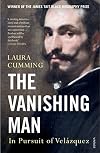
The Vanishing Velázquez: A 19th Century Bookseller's Obsession with a Lost Masterpiece
by Laura Cumming
On This Page
Description
From one of the world's most expert art critics, the incredible true story--part art history and part mystery--of a Velázquez portrait that went missing and the obsessed nineteenth-century bookseller determined to prove he had found it. When John Snare, a nineteenth-century provincial bookseller, traveled to a liquidation auction, he stumbled on a vivid portrait of King Charles I that defied any explanation. The Charles of the painting was young--too young to be king--and yet also too young show more to be painted by the Flemish painter to which the work was attributed. Snare had found something incredible--but what? His research brought him to Diego Velázquez, whose long-lost portrait of Prince Charles has eluded art experts for generations. Velázquez (1599-1660) was the official painter of the Madrid court, during the time the Spanish Empire teetered on the edge of collapse. When Prince Charles of England--a man wealthy enough to help turn Spain's fortunes--ventured to the court to propose a marriage with a Spanish princess, he allowed just a few hours to sit for his portrait. Snare believed only Velázquez could have met this challenge. But in making his theory public, Snare was ostracized, victim to aristocrats and critics who accused him of fraud, and forced to choose, like Velázquez himself, between art and family. A thrilling investigation into the complex meaning of authenticity and the unshakable determination that drives both artists and collectors of their work, The Vanishing Velázquez travels from extravagant Spanish courts in the 1700s to the gritty courtrooms and auction houses of nineteenth-century London and New York. But it is above all a tale of mystery and detection, of tragic mishaps and mistaken identities, of class, politics, snobbery, crime, and almost farcical accident. It is a magnificently crafted page-turner, a testimony to how and why great works of art can affect us to the point of obsession. show lessTags
Recommendations






































Member Recommendations

Member Reviews
[The Vanishing Velazquez] by [[Laura Cumming]]
[The Vanishing Velazquez] is a tribute to the 17th century Spanish artist, Diego Velazquez. Little is known about Velazquez except that he was the primary artist at the court of Philip IV and that he is revered by other artists for his realistic portraits and incredibly minimalist brushstroke and lack of reworking.
He is also revered by the author of this book, [[Laura Cumming]]. Her exuberance for his work jumps off every page and makes for an exciting and compelling reading experience. The story she has to tell is admittedly a little thin. She focuses on a portrait of Charles I that Velazquez supposedly did when Charles visited Spain before ascending the throne. There is enough evidence show more that this portrait was completed but it is lost track of until a bookseller and art lover, John Snare finds what he believes is the lost Velazquez portrait in 1845 at an estate sale. Cumming follows this story in an effort to unravel what was really happening with the benefit of modern research. Along the way she describes as much of Velazquez's life as is known and also analyzes his most famous works of art. Her descriptions of his art and his technique are very well done and I feel I learned a lot. I'd love to see some of these in person - the colored illustrations are beautiful but it would be amazing to see these in real life.
I thoroughly enjoyed this. Cumming's adoration is infectious and I couldn't put the book down. show less
[The Vanishing Velazquez] is a tribute to the 17th century Spanish artist, Diego Velazquez. Little is known about Velazquez except that he was the primary artist at the court of Philip IV and that he is revered by other artists for his realistic portraits and incredibly minimalist brushstroke and lack of reworking.
He is also revered by the author of this book, [[Laura Cumming]]. Her exuberance for his work jumps off every page and makes for an exciting and compelling reading experience. The story she has to tell is admittedly a little thin. She focuses on a portrait of Charles I that Velazquez supposedly did when Charles visited Spain before ascending the throne. There is enough evidence show more that this portrait was completed but it is lost track of until a bookseller and art lover, John Snare finds what he believes is the lost Velazquez portrait in 1845 at an estate sale. Cumming follows this story in an effort to unravel what was really happening with the benefit of modern research. Along the way she describes as much of Velazquez's life as is known and also analyzes his most famous works of art. Her descriptions of his art and his technique are very well done and I feel I learned a lot. I'd love to see some of these in person - the colored illustrations are beautiful but it would be amazing to see these in real life.
I thoroughly enjoyed this. Cumming's adoration is infectious and I couldn't put the book down. show less
This was absolutely maddening for the most part. I still have no idea what portrait John Snare found and became so obsessed with, or what actually happened to it, or if it even exists in any form. There are pictures of many of the Velazquez works discussed, which is good, but because neither the original nor any reproductions of the portrait are known to exist, there is no representation of the portrait that was the entire subject of the book. This author also seems to have never met a Velazquez she didn't like. I understand having a favorite artist, and a favorite piece (Las Meninas in this case) but this went way beyond that. Not that Velazquez wasn't a great artist (and I don't think that's really in dispute), but surely he must have show more had some artistic weaknesses, or perhaps a few portraits that just didn't turn out well. It almost looks like she's got an obsession of her own, both with Velazquez in general and with Las Meninas in particular. The book wasn't even supposed to be about Las Meninas, but she kept on talking about it in almost every chapter anyway. It was to the point that I think she should have just written a book about Las Meninas instead.
Loved the account of the trial(s), though, and it was easy to get caught up in John Snare's story. show less
Loved the account of the trial(s), though, and it was easy to get caught up in John Snare's story. show less
Beautifully written by someone familiar with the art world and Velasquez in particular. She turns a convoluted and ultimately sad story into an interesting lesson on the frailty of human judgement, the persistence of passion, and the fragility of art, as well as its power.
Author Laura Cumming combines what little is known about renowned Spanish court painter Diego Velázquez (1599-1660) with what little is known about John Snare, a nineteenth century British bookseller. Snare acquired what he believed to be a long-missing Velázquez portrait of King Charles I of England and lost everything--his family, his business, and his reputation--trying to protect it.
Cumming has done exhaustive research. She finds many ways to express her appreciation of the singularity of Velázquez's vision, his mastery of his art form, and his broad-minded view of humanity. But as a story, this book has its flaws. The narrative jumps from Velázquez to Snare and back again, giving it a disjointed quality. Because the historical show more record is incomplete, both the brilliant artist and the hapless bookseller remain mysterious figures.
Recommended primarily for readers who share the author's admiration of Velázquez and have some background in art and art history. show less
Cumming has done exhaustive research. She finds many ways to express her appreciation of the singularity of Velázquez's vision, his mastery of his art form, and his broad-minded view of humanity. But as a story, this book has its flaws. The narrative jumps from Velázquez to Snare and back again, giving it a disjointed quality. Because the historical show more record is incomplete, both the brilliant artist and the hapless bookseller remain mysterious figures.
Recommended primarily for readers who share the author's admiration of Velázquez and have some background in art and art history. show less
This book provides a biography of British bookseller John Snare (1808 – 1884) and a tribute to Spanish master painter Diego Velázquez (1599 – 1660). In 1846, Snare purchased an early portrait of Charles I (before he became King), paying very little for it. He believed it was a lost work by Velázquez. This artwork became an obsession throughout Snare’s lifetime. In attempting to prove it was a Velázquez, he displayed it, engaged in a legal battle for it, and suffered financial and domestic misfortune over it. This book documents his many tribulations that were at least in part caused by his passion for this painting. Along the way, the author offers details about the life and artistic vision of Diego Velázquez.
The author is show more obviously a huge fan of Velázquez. Her praise for the artist occasionally overshadows the story of the bookseller. Few details are available about the ultimate disposition of the painting, which leaves the ending a bit unsatisfying. I enjoyed learning about John Snare, a relatively unknown person of history and the artwork of Diego Velázquez. I think it requires an interest in art or art history to fully appreciate it. The writing is not quite as accomplished as I was expecting but I am glad I read it.
3.5 show less
The author is show more obviously a huge fan of Velázquez. Her praise for the artist occasionally overshadows the story of the bookseller. Few details are available about the ultimate disposition of the painting, which leaves the ending a bit unsatisfying. I enjoyed learning about John Snare, a relatively unknown person of history and the artwork of Diego Velázquez. I think it requires an interest in art or art history to fully appreciate it. The writing is not quite as accomplished as I was expecting but I am glad I read it.
3.5 show less
This was absolutely maddening for the most part. I still have no idea what portrait John Snare found and became so obsessed with, or what actually happened to it, or if it even exists in any form. There are pictures of many of the Velazquez works discussed, which is good, but because neither the original nor any reproductions of the portrait are known to exist, there is no representation of the portrait that was the entire subject of the book. This author also seems to have never met a Velazquez she didn't like. I understand having a favorite artist, and a favorite piece (Las Meninas in this case) but this went way beyond that. Not that Velazquez wasn't a great artist (and I don't think that's really in dispute), but surely he must have show more had some artistic weaknesses, or perhaps a few portraits that just didn't turn out well. It almost looks like she's got an obsession of her own, both with Velazquez in general and with Las Meninas in particular. The book wasn't even supposed to be about Las Meninas, but she kept on talking about it in almost every chapter anyway. It was to the point that I think she should have just written a book about Las Meninas instead.
Loved the account of the trial(s), though, and it was easy to get caught up in John Snare's story. show less
Loved the account of the trial(s), though, and it was easy to get caught up in John Snare's story. show less
In 1845, John Snare, owner of a bookshop in Reading, England, came across a painting offered at an estate sale auction that he believed to be a portrait of Charles I painted by Velazquez in 1623 when Charles I had traveled to Spain as a young man. Velazquez had been the official court painter for the Spanish royal family in the 17th century, and was, at the time Snare came across the painting, just becoming well-known in the rest of Europe. Snare ended up sacrificing everything--his family and livelihood included--for the sake of "his Velazquez."
This was a fascinating combination of art history and criticism with the solving of a mystery, both by Snare, and in the present day. I learned a lot about Velazquez and his world, and also a show more lot about the world of Victorian England--a time when art was normally only for the very wealthy and many of the great museums we can visit today to see great art were nonexistent.
There was an interesting story about how van Eyck's Marriage of Arnolfini came to reside in the National Gallery in London. It is one of my favorite paintings, and the first to introduce me to art. I first saw it in London when I was 17, and was mesmerized. I was lucky enough to visit it again on my trip in April). It had been residing in Spain, and was looted by Napoleon's armies. As they were fleeing Spain, the French army ran into Wellington, and abandoned some of what was considered "lesser" art on the battlefield. Wellington rescued The Marriage of Arnolfini and took it back to England. Later, the British offered to return the painting to Spain, but Spain declined.
I enjoyed this book.
3 stars show less
This was a fascinating combination of art history and criticism with the solving of a mystery, both by Snare, and in the present day. I learned a lot about Velazquez and his world, and also a show more lot about the world of Victorian England--a time when art was normally only for the very wealthy and many of the great museums we can visit today to see great art were nonexistent.
There was an interesting story about how van Eyck's Marriage of Arnolfini came to reside in the National Gallery in London. It is one of my favorite paintings, and the first to introduce me to art. I first saw it in London when I was 17, and was mesmerized. I was lucky enough to visit it again on my trip in April). It had been residing in Spain, and was looted by Napoleon's armies. As they were fleeing Spain, the French army ran into Wellington, and abandoned some of what was considered "lesser" art on the battlefield. Wellington rescued The Marriage of Arnolfini and took it back to England. Later, the British offered to return the painting to Spain, but Spain declined.
I enjoyed this book.
3 stars show less
Members
- Recently Added By
Lists

Club Read's Recommended Nonfiction Written by Women
618 works; 30 members

Not the NYT list of top 100 21st century books
100 works; 6 members
Author Information

5 Works 1,124 Members
Laura Cumming has been the art critic of the Observer since 1999. She has contributed to the London Evening Standard, the Guardian, and Vogue. Her book The Vanishing Velquez was longlisted for the Baillie Gifford Prize and was a New York Times bestseller. She lives in London.
Awards and Honors
Awards
Distinctions
Common Knowledge
- Canonical title
- The Vanishing Velázquez: A 19th Century Bookseller's Obsession with a Lost Masterpiece
- Original title
- The Vanishing Man: In Pursuit of Velázquez
- Alternate titles
- The Vanishing Velázquez: A 19th Century Bookseller's Obsession with a Lost Masterpiece
- Original publication date
- 2016
- People/Characters
- Velazquez
- Dedication
- For Hilla, Thea, Elizabeth and Dennis with all my heart
And in memory of the painter James Cumming - First words
- My father died quite suddenly when I was in my late twenties.
- Last words
- (Click to show. Warning: May contain spoilers.)And so the pamphlet joins a miscellany stitched together in a desiccated old volume interred on a library shelf, waiting for some twenty-first-century reader to find it.
- Original language
- English UK
Classifications
- Genres
- Art & Design, Nonfiction, General Nonfiction, History, Biography & Memoir
- DDC/MDS
- 759.6 — Arts & recreation Painting History, geographic treatment, biography Spain, Andorra, Gibraltar, Portugal
- LCC
- Z325 .S667 .C86 — Bibliography, Library Science and Information Resources Book industries and trade Bookselling and publishing
- BISAC
Statistics
- Members
- 383
- Popularity
- 81,242
- Reviews
- 13
- Rating
- (3.82)
- Languages
- Dutch, English, Italian, Spanish
- Media
- Paper, Audiobook, Ebook
- ISBNs
- 14
- ASINs
- 7