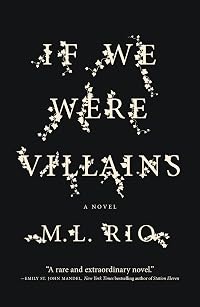
If We Were Villains
by M.L. Rio
On This Page
Description
Entreated to tell his side of the story to a detective who put him in prison a decade earlier for a murder he may not have committed, Oliver Marks describes his past as a Shakespearean actor in college whose rivalry with a castmate escalated in dangerous ways. They were seven Shakespearean actors at Dellecher Classical Conservatory, rivals exchanging roles and lovers. Until opening night on their fourth year, when the competition turned ugly and violence entered the scene. Then they faced show more their greatest acting challenge: convincing the police they were innocent. On the day Oliver Marks is released from jail, Detective Colborne is waiting at the door. After ten years, he wants to know the truth. show lessTags
Recommendations
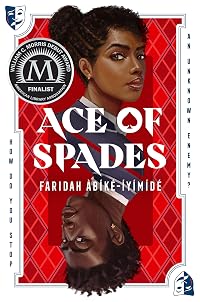
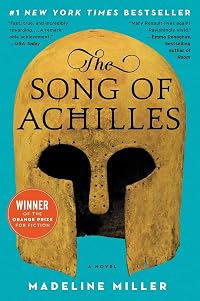
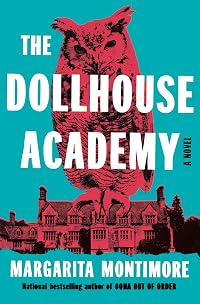
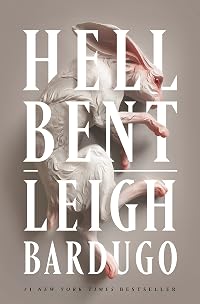

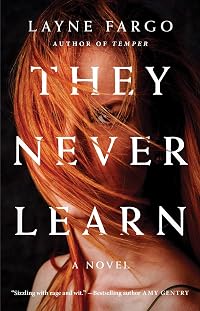
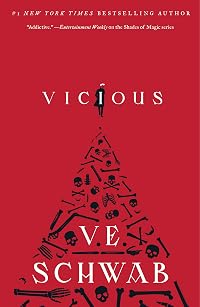
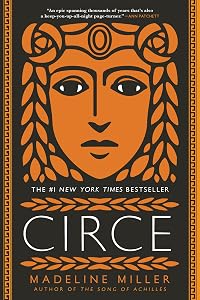
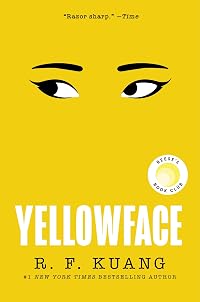
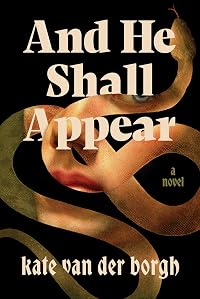
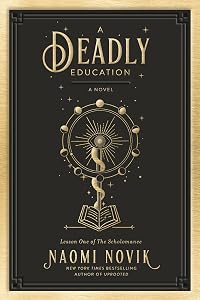
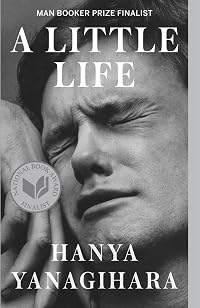
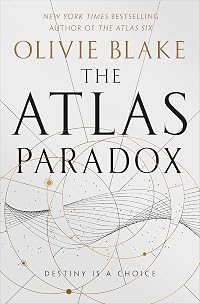
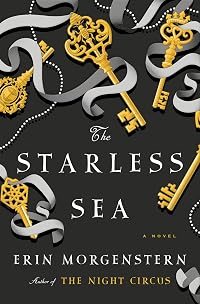
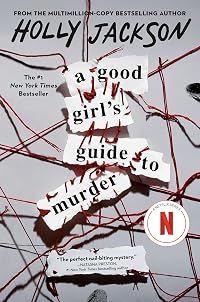
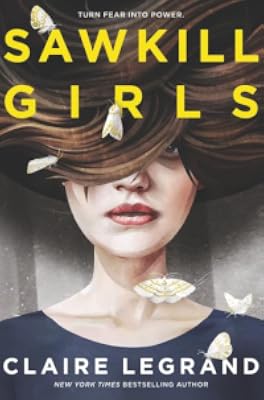
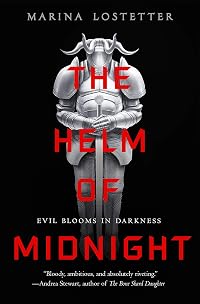
Member Recommendations
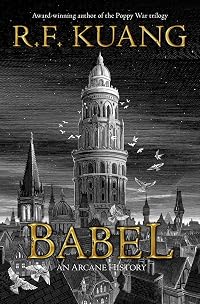
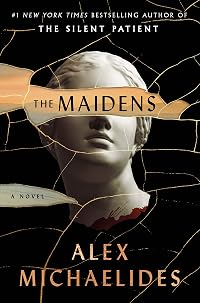
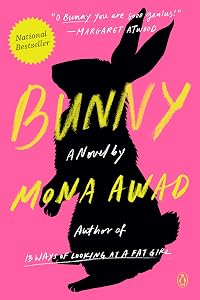
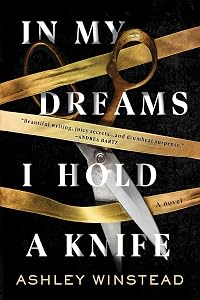
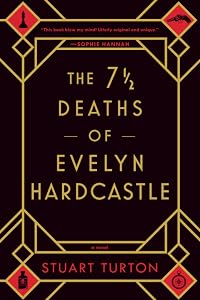
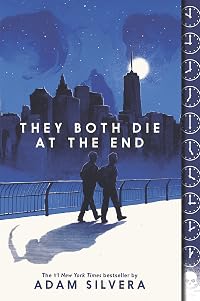
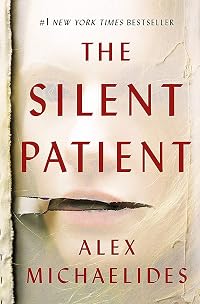
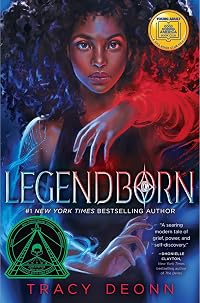
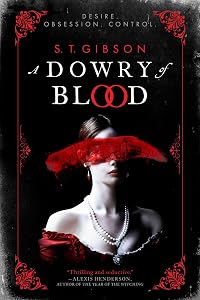
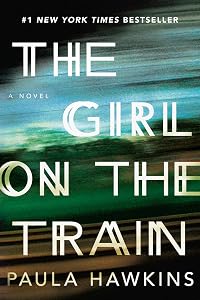
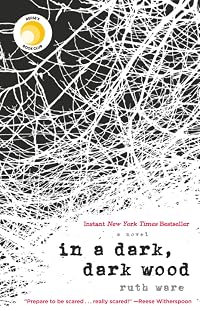
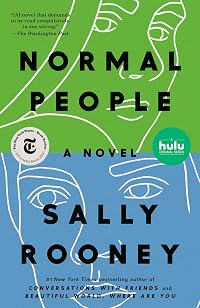
RiversideReader both books about friends at college who get caught up in a group crime
50
Lirmac Two books that explore creativity, crime and their connection to Shakespeare.
dmenon90 Academic setting, a group of young and close friends, possible hidden relationship between two members, a great tragedy that is their undoing, though in Alderman's book this tragedy is not a crime.
Member Reviews
If We Were Villains by M.L. Rio is a 2017 Flatiron Books publication.
This is a psychological thriller for deep thinkers. There is crime and there is punishment. There is mystery, suspense. There are intense characters, shallow ones too, those who are fatalistic and those who are tragic… just like a Shakespearean play.
Ten years ago, Oliver Marks was one of seven Shakespearean actors at the prestigious Dellecher Classical Conservatory. Today he is about to walk out of a prison cell for the first time in a decade. How did he end up behind bars?
That’s something Detective Colbourne would also like to know. He may have put Oliver in prison, but he knows there is more to the story than he's been told.
He can’t rest until he coaxes the show more entire story out of Oliver once and for all. With Colbourne retired, and with nothing else to lose, Oliver grants Colbourne his wish.
‘But that I am forbid/ To tell the secrets of my prison -house,/ I could a tale unfold whose lightest word/ Would horrow up thy soul.’
The story then flashes back ten years as Oliver walks us through the events that left him holding the bag for crimes he may or may not have been solely responsible for.
When one of the seven elite actors’ dies, the remaining six thespians are the very picture of innocence. It was an accident after all… wasn’t it? But, Detective Colbourne’s senses they know more than they are telling. Are they as innocent as they appear or are they harboring a dark secret- one that is eating away at them more and more with each passing day?
I tend to gravitate towards these types of stories, which are too few and far between, but I suppose that only makes me appreciate them even more when I stumble across one.
The Shakespearean allegory is well done, as the stage is set for the ultimate tragedy. Our little acting coalition is as thick as thieves, too close, too driven, too immersed within their own little thespian world to cope with reality as most of us know it, which leads to grave consequences, when they begin to become the roles they often play on stage. Jealousy, competition, unrequited love, anger and resentment stir the bubbling pot until ‘exuent omnes’.
I was so engrossed in Oliver’s tale, so mortified, so mesmerized and tantalized, and despite knowing most of the details of the crime in question, and that Oliver has obviously paid his debt, the suspense is still nearly unbearable, because I still didn't know WHY- or HOW things turned out this way. I was filled with such dread, I almost felt like I was back in Vermont at Hamden College listening to Richard Papen unfold a similarly horrifying tale of obsession.
But, as morally questionable as those standing center stage may be, as superficial and self-absorbed, or in some cases, as honorable, or heroic- the classic “Villains VS Heroes”, if you will, the story is haunting and left a painful ache in my heart.
“But that is how a tragedy like ours or King Lear breaks your heart- by making you believe that the ending might still be happy, until the very last minute.”
The author did an amazing job with presentation and ‘staging’, as such, and created a vivid atmosphere, perfect for settling in for a modern Shakespearean tragedy. If you are a fan of the Bard, you will really appreciate the way the dialogue mirrors the events as they unfold and of course the bittersweet irony.
This is not just a psychological thriller, it’s a literary novel filled with obsessions and angst, with beauty and horror, and a near pitch perfect delivery!
This is a debut novel, incredibly, and I for one am pretty much blown away!
Pulling out all the stars for this one! show less
This is a psychological thriller for deep thinkers. There is crime and there is punishment. There is mystery, suspense. There are intense characters, shallow ones too, those who are fatalistic and those who are tragic… just like a Shakespearean play.
Ten years ago, Oliver Marks was one of seven Shakespearean actors at the prestigious Dellecher Classical Conservatory. Today he is about to walk out of a prison cell for the first time in a decade. How did he end up behind bars?
That’s something Detective Colbourne would also like to know. He may have put Oliver in prison, but he knows there is more to the story than he's been told.
He can’t rest until he coaxes the show more entire story out of Oliver once and for all. With Colbourne retired, and with nothing else to lose, Oliver grants Colbourne his wish.
‘But that I am forbid/ To tell the secrets of my prison -house,/ I could a tale unfold whose lightest word/ Would horrow up thy soul.’
The story then flashes back ten years as Oliver walks us through the events that left him holding the bag for crimes he may or may not have been solely responsible for.
When one of the seven elite actors’ dies, the remaining six thespians are the very picture of innocence. It was an accident after all… wasn’t it? But, Detective Colbourne’s senses they know more than they are telling. Are they as innocent as they appear or are they harboring a dark secret- one that is eating away at them more and more with each passing day?
I tend to gravitate towards these types of stories, which are too few and far between, but I suppose that only makes me appreciate them even more when I stumble across one.
The Shakespearean allegory is well done, as the stage is set for the ultimate tragedy. Our little acting coalition is as thick as thieves, too close, too driven, too immersed within their own little thespian world to cope with reality as most of us know it, which leads to grave consequences, when they begin to become the roles they often play on stage. Jealousy, competition, unrequited love, anger and resentment stir the bubbling pot until ‘exuent omnes’.
I was so engrossed in Oliver’s tale, so mortified, so mesmerized and tantalized, and despite knowing most of the details of the crime in question, and that Oliver has obviously paid his debt, the suspense is still nearly unbearable, because I still didn't know WHY- or HOW things turned out this way. I was filled with such dread, I almost felt like I was back in Vermont at Hamden College listening to Richard Papen unfold a similarly horrifying tale of obsession.
But, as morally questionable as those standing center stage may be, as superficial and self-absorbed, or in some cases, as honorable, or heroic- the classic “Villains VS Heroes”, if you will, the story is haunting and left a painful ache in my heart.
“But that is how a tragedy like ours or King Lear breaks your heart- by making you believe that the ending might still be happy, until the very last minute.”
The author did an amazing job with presentation and ‘staging’, as such, and created a vivid atmosphere, perfect for settling in for a modern Shakespearean tragedy. If you are a fan of the Bard, you will really appreciate the way the dialogue mirrors the events as they unfold and of course the bittersweet irony.
This is not just a psychological thriller, it’s a literary novel filled with obsessions and angst, with beauty and horror, and a near pitch perfect delivery!
This is a debut novel, incredibly, and I for one am pretty much blown away!
Pulling out all the stars for this one! show less
I have a lot of feelings about this book. First off, the dark academia vibes were so incredibly on point and the writing was absolutely stunning. While I did find the amount of Shakespeare to be pretentious, I also feel as though the book wouldn’t have immersed me quite as much without it. The relationship between James and Oliver is so incredibly raw and painful to read but good god did I love the ambiguity. It was obvious from the start just how in love with James Oliver was, and I knew they wouldn’t get a real romantic scene together (not to say the final performance of King Lear wasn’t romantic) but somehow I almost preferred the lack of physical proof they were in love. It was also rather obvious to me that James was the one show more who killed Richard but that doesn’t mean I was constantly waiting to find out what had actually happened. If We Were Vilains very closely resembled The Secret History, but in every way that they were similar, they were also vastly different and it’s safe to say I enjoyed this book just as much as I thought I would. show less
First published at Booking in Heels.
I’ve heard it said that this is a poor man’s The Secret History, but that is profoundly unfair. It’s definitely marketed that way and, at first glance, the premise looks similar too. A group of pretentious, sheltered young academics, one of whom eventually dies. The tone is vaguely reminiscent too – it’s gothic and mysterious, and peppered with archaic references. However. It could be that I read The Secret History long enough ago that the majority of it has faded from memory, but I still think that If We Were Villains is different enough, and M.L. Rio skilled enough, that this book can completely stand on its own.
It did take me a while to figure out which character is which. There are seven show more people, three female and four male, and whilst the narrative does try to emphasise that Oliver is the nice one, Meredith is the sexy one, etc, it still took about a quarter of the novel to get it straight. I can’t say this bothered me overmuch, however. At that stage, you just need to know that there are seven of them and they’re under intense amounts of pressure. It does become clear by the time anything dramatic happens.
It’s a very emotional, but in a hidden restrained way? All the emotions are sort of bubbling beneath the surface, so you’re left to interpret them and it’s perfect. Hatred, jealousy, love, lust, suspicion, despair… It’s a book that never feels the need to say ‘Wren was feeling very jealous,’ as you know damn well how she’s feeling because you can see it. Even then though, it can be interesting trying to figure out why the characters are acting as they are. What are the links between the characters? What’s going on? Are they covering for each other? It’s so wonderfully crafted.
It’s very, very tense. It’s a slowbuild book – the tension and atmosphere builds so slowly that by the time I reached the ending, my heart was beating in my chest and I felt physically sick. What an ending. Both the conclusion of the original mystery, and the current-day ending with the detective are rough and gritty and… argh. I’m still having an adrenaline spike now.
It might have helped if I’d had a slightly better knowledge of Shakespeare. I was alright with the Macbeth and the Romeo and Juliet, but they also do King Lear and Caesar, and I have absolutely zero knowledge of those. They frequently talk in Shakespeare quotes and whilst you can usually puzzle out the meaning (and it doesn’t really affect your understanding of the plot if you don’t), it might have flowed a bit better if I could. I could have taken this as a spur to go and educate myself… but I didn’t.
I finished If We Were Villains in two sittings, and I only stopped reading the first time because I absolutely had to. I was glued to this. I actually clicked onto Amazon and bought my own copy when I was about four pages from the end. It’s the sort of book you need to own.
In short, I’d really recommend it. I’m not convinced that I don’t like If We Were Villains more than The Secret History, but I’d need to reread that to nail my colours to the mast. It’s a book I’ll definitely reread and it’ll be interesting to look at the story from a different perspective, considering I now know the conclusion. It’s subtly emotional, but also tense and nail biting. Do read this – but note that you’ll be up until 1am. show less
I’ve heard it said that this is a poor man’s The Secret History, but that is profoundly unfair. It’s definitely marketed that way and, at first glance, the premise looks similar too. A group of pretentious, sheltered young academics, one of whom eventually dies. The tone is vaguely reminiscent too – it’s gothic and mysterious, and peppered with archaic references. However. It could be that I read The Secret History long enough ago that the majority of it has faded from memory, but I still think that If We Were Villains is different enough, and M.L. Rio skilled enough, that this book can completely stand on its own.
It did take me a while to figure out which character is which. There are seven show more people, three female and four male, and whilst the narrative does try to emphasise that Oliver is the nice one, Meredith is the sexy one, etc, it still took about a quarter of the novel to get it straight. I can’t say this bothered me overmuch, however. At that stage, you just need to know that there are seven of them and they’re under intense amounts of pressure. It does become clear by the time anything dramatic happens.
It’s a very emotional, but in a hidden restrained way? All the emotions are sort of bubbling beneath the surface, so you’re left to interpret them and it’s perfect. Hatred, jealousy, love, lust, suspicion, despair… It’s a book that never feels the need to say ‘Wren was feeling very jealous,’ as you know damn well how she’s feeling because you can see it. Even then though, it can be interesting trying to figure out why the characters are acting as they are. What are the links between the characters? What’s going on? Are they covering for each other? It’s so wonderfully crafted.
It’s very, very tense. It’s a slowbuild book – the tension and atmosphere builds so slowly that by the time I reached the ending, my heart was beating in my chest and I felt physically sick. What an ending. Both the conclusion of the original mystery, and the current-day ending with the detective are rough and gritty and… argh. I’m still having an adrenaline spike now.
It might have helped if I’d had a slightly better knowledge of Shakespeare. I was alright with the Macbeth and the Romeo and Juliet, but they also do King Lear and Caesar, and I have absolutely zero knowledge of those. They frequently talk in Shakespeare quotes and whilst you can usually puzzle out the meaning (and it doesn’t really affect your understanding of the plot if you don’t), it might have flowed a bit better if I could. I could have taken this as a spur to go and educate myself… but I didn’t.
I finished If We Were Villains in two sittings, and I only stopped reading the first time because I absolutely had to. I was glued to this. I actually clicked onto Amazon and bought my own copy when I was about four pages from the end. It’s the sort of book you need to own.
In short, I’d really recommend it. I’m not convinced that I don’t like If We Were Villains more than The Secret History, but I’d need to reread that to nail my colours to the mast. It’s a book I’ll definitely reread and it’ll be interesting to look at the story from a different perspective, considering I now know the conclusion. It’s subtly emotional, but also tense and nail biting. Do read this – but note that you’ll be up until 1am. show less
When I described this book to one of my friends, she said "oh, it's dark academia genre - that's what my 16 year old calls it". I hadn't heard that description yet, but it certainly fits!
This book is a mystery/thriller set at a small arts college in Illinois. The main characters are fourth year acting students in an extremely competitive Shakespeare program. The class is whittled down each year and the talented seven are the last ones standing. They have become incredibly close over the four years, but are they friends? Tensions are seething and they are becoming violent with each other. The whole story, including the death of one of them and the aftermath, is being narrated by Oliver, who is telling the story to the detective who show more worked on the case after the detective is retired and Oliver has been released from prison. It's clear that Oliver, though he's been in jail, may not have been the actual killer. Or is it an unreliable narrator situation?
The seven have complicated relationships - they know tons about each other, but at the same time they are all keeping secrets. Meredith has been dating Richard (the one who dies) and she is beautiful and sexy and talented. Oliver and James are roommates and best friends, but Richard's death reveals some weaknesses in their friendship. Alexander is gay and increasingly using drugs and alcohol to numb himself. Wren and Filippa round out the group and try to bring a bit of grounding to the group.
The author does a fantastic job of creating a realistic group dynamic between these artistic young adults. They are competitive but also each other's support system. It's set in the 1990s and she gets that era just right (they were my college years while doing a music performance degree as well!). She gets how they are all at the age where they are trying to create themselves but also being pulled back into home situations with parents and siblings. AND she works tons of Shakespeare into the book. Of course the actual plays they are doing are part of it, but the group also has their own internal language that incorporates Shakespeare quotes and I found this totally realistic when I think of the actor friend groups I've been on the fringes of.
Definitely recommend this when you're looking for a mystery/suspense novel that is smart and engaging. show less
This book is a mystery/thriller set at a small arts college in Illinois. The main characters are fourth year acting students in an extremely competitive Shakespeare program. The class is whittled down each year and the talented seven are the last ones standing. They have become incredibly close over the four years, but are they friends? Tensions are seething and they are becoming violent with each other. The whole story, including the death of one of them and the aftermath, is being narrated by Oliver, who is telling the story to the detective who show more worked on the case after the detective is retired and Oliver has been released from prison. It's clear that Oliver, though he's been in jail, may not have been the actual killer. Or is it an unreliable narrator situation?
The seven have complicated relationships - they know tons about each other, but at the same time they are all keeping secrets. Meredith has been dating Richard (the one who dies) and she is beautiful and sexy and talented. Oliver and James are roommates and best friends, but Richard's death reveals some weaknesses in their friendship. Alexander is gay and increasingly using drugs and alcohol to numb himself. Wren and Filippa round out the group and try to bring a bit of grounding to the group.
The author does a fantastic job of creating a realistic group dynamic between these artistic young adults. They are competitive but also each other's support system. It's set in the 1990s and she gets that era just right (they were my college years while doing a music performance degree as well!). She gets how they are all at the age where they are trying to create themselves but also being pulled back into home situations with parents and siblings. AND she works tons of Shakespeare into the book. Of course the actual plays they are doing are part of it, but the group also has their own internal language that incorporates Shakespeare quotes and I found this totally realistic when I think of the actor friend groups I've been on the fringes of.
Definitely recommend this when you're looking for a mystery/suspense novel that is smart and engaging. show less
As someone holding a theatre degree from a small, private university, this book gave me chills. Beautifully written, it captivated from page 1! The sheer number of direct Shakespearean quotes included is astounding and the friends' manner of speaking is just downright fun for any fellow lovers of the bard. This raised nostalgia for old school days, but also warned of the dysfunctional emotional heights bred from putting too much pressure in a role. As Oliver says, Shakespeare's characters "live in a world of real extremes... it's not melodrama, though, they're not exaggerating. Every moment is crucial." And more, "A good Shakespearean actor... doesnt just SAY words, he FEELS them." And what thespian doesn't spend their lives forever show more chasing those impassioned moments? show less
A solid 3.5
While definitely a The Secret History derivative, If We Were Villains is kind of exactly what you would want in a "dark academia", character-heavy thriller. You have a beautiful, secluded campus (check), an obsessive student body (check), and a traumatizing point of conflict (check) only the rich and young could handle so poorly.
The first half of the book is a bit bland and wears it faults clealry on its sleeve, but these are hammered out as the novel picks up speed and raises the stakes. I had a lot of fun with this by the end and has left me with a similar book-hangover moment as The Secret History did, but obviously without that je ne sais quoi of intensity that made that work in particular so brilliant.
Anyway, the show more gratuitous Shakespeare quoting and underdeveloped class antagonism were the two weakest points of this work in my opinion, but my, oh my, that ending! It's a solid book coming from a 22-year-old writer, and while not life changing, is decent enough to pick up if you're in the mood for a sleazy, candle-lit thriller. show less
While definitely a The Secret History derivative, If We Were Villains is kind of exactly what you would want in a "dark academia", character-heavy thriller. You have a beautiful, secluded campus (check), an obsessive student body (check), and a traumatizing point of conflict (check) only the rich and young could handle so poorly.
The first half of the book is a bit bland and wears it faults clealry on its sleeve, but these are hammered out as the novel picks up speed and raises the stakes. I had a lot of fun with this by the end and has left me with a similar book-hangover moment as The Secret History did, but obviously without that je ne sais quoi of intensity that made that work in particular so brilliant.
Anyway, the show more gratuitous Shakespeare quoting and underdeveloped class antagonism were the two weakest points of this work in my opinion, but my, oh my, that ending! It's a solid book coming from a 22-year-old writer, and while not life changing, is decent enough to pick up if you're in the mood for a sleazy, candle-lit thriller. show less
***SPOILERS HIDDEN***
I was interested in reading If We Were Villains because I’d heard it’s like Donna Tartt’s [b:The Secret History|29044|The Secret History|Donna Tartt|https://i.gr-assets.com/images/S/compressed.photo.goodreads.com/books/1451554846l/29044._SY75_.jpg|221359], a book I adored. It does resemble that work in many ways: It’s narrated in the first person by a twenty-something male protagonist and is a literary mystery featuring a group of students in an uppercrust academic setting. When a crime occurs in their final school year, the kinship they’ve taken for granted is threatened. Unfortunately, these books are similar only in this superficial way. If We Were Villains has none of what makes The Secret History so show more gripping.
This is a strange addition to the mystery genre. On the one hand, I give M.L. Rio credit for writing a literary mystery from a unique angle; on the other, I don’t think there’s a way to blend the Bard and mystery without Shakespeare overload. A book about theater students demands that a certain amount of the story be devoted to describing their acting in plays, and for this book, it really helps to be passionate about Shakespeare. A few Shakespeare plays figure prominently, with pages devoted to recitation of dialogue and stage and costume description. The playwright is quoted liberally, and not just when the students are on stage; they constantly quote him to each other out of the blue, in the middle of conversations. It’s pretentious and comical at the same time. It slows things down as the quotes need to be interpreted. Rio holds a master's in Shakespeare studies and it looks like she was dead set on putting her extensive knowledge to use. Even the most avid Shakespeare fans may find their enthusiasm dampened and patience tested.
Mystery fans will be less than enthusiastic too. The story is organized nicely, with the flashbacks and present day complementing each other, but the pacing is off. This is much too slow for a mystery, a genre where the usual expectation is that the pacing will be brisk and the suspense level high. If We Were Villains is not only unsuspenseful but also somehow both hurried and slow. Clues and answers constantly feel right around the corner but instead are very stingily doled out. At the same time, momentum is disrupted repeatedly by detailed Shakespeare performances. Frustratingly, the resolution is farfetched--but only because agay-romance sub-plot that could have made the ending plausible wasn’t developed and came into play too late in the story. It feels thrown in to justify the improbable ending.
I don't know for sure whether Rio was inspired by The Secret History, but it seems like she was. Assuming so, in addition to copying its surface characteristics, she attempted to copy its structure, opening with a prologue narrated by the protagonist. Where Rio deviated from that model is exactly where her plotting is weak: Although in The Secret History the narrator names the crime victim in the present-day prologue, chapter one flashes back to the beginning, when the narrator meets the core character group. From there, characters are fleshed out and relationships established until the crime happens at the end, hitting hard.
In If We Were Villains, the story flashes back too, but the crime happens at the beginning--too early on, before the characters have been fleshed out and before their relationships to each other are clear. As a result, it’s impossible to become emotionally invested before the tragedy, and it therefore doesn’t hit hard. I never at any point felt sadness for the crime victim or pity for the rest of the group as it struggles in the aftermath. The characters remain one-dimensional and their relationships uninteresting right to the end, and my apathy also remained. This isn't to say If We Were Villains should have been a replica of The Secret History, but rather, the characteristics the two have in common are the most inconsequential.
I looked forward to reading this and wanted badly to love it. As a fan of Shakespeare, The Secret History, school settings, and close-knit character groups, I was absolutely positive I would. But although If We Were Villains is well-written, the dominant Shakespeare focus gets in the way and ultimately adds nothing; the similarities to The Secret History don’t matter; the characters are merely names; and the school setting lacks atmosphere. This is supposed to be a journey and a dramatic Shakespearean-like tragedy, but it’s just way too much Shakespeare and not enough mystery. show less
I was interested in reading If We Were Villains because I’d heard it’s like Donna Tartt’s [b:The Secret History|29044|The Secret History|Donna Tartt|https://i.gr-assets.com/images/S/compressed.photo.goodreads.com/books/1451554846l/29044._SY75_.jpg|221359], a book I adored. It does resemble that work in many ways: It’s narrated in the first person by a twenty-something male protagonist and is a literary mystery featuring a group of students in an uppercrust academic setting. When a crime occurs in their final school year, the kinship they’ve taken for granted is threatened. Unfortunately, these books are similar only in this superficial way. If We Were Villains has none of what makes The Secret History so show more gripping.
This is a strange addition to the mystery genre. On the one hand, I give M.L. Rio credit for writing a literary mystery from a unique angle; on the other, I don’t think there’s a way to blend the Bard and mystery without Shakespeare overload. A book about theater students demands that a certain amount of the story be devoted to describing their acting in plays, and for this book, it really helps to be passionate about Shakespeare. A few Shakespeare plays figure prominently, with pages devoted to recitation of dialogue and stage and costume description. The playwright is quoted liberally, and not just when the students are on stage; they constantly quote him to each other out of the blue, in the middle of conversations. It’s pretentious and comical at the same time. It slows things down as the quotes need to be interpreted. Rio holds a master's in Shakespeare studies and it looks like she was dead set on putting her extensive knowledge to use. Even the most avid Shakespeare fans may find their enthusiasm dampened and patience tested.
Mystery fans will be less than enthusiastic too. The story is organized nicely, with the flashbacks and present day complementing each other, but the pacing is off. This is much too slow for a mystery, a genre where the usual expectation is that the pacing will be brisk and the suspense level high. If We Were Villains is not only unsuspenseful but also somehow both hurried and slow. Clues and answers constantly feel right around the corner but instead are very stingily doled out. At the same time, momentum is disrupted repeatedly by detailed Shakespeare performances. Frustratingly, the resolution is farfetched--but only because a
I don't know for sure whether Rio was inspired by The Secret History, but it seems like she was. Assuming so, in addition to copying its surface characteristics, she attempted to copy its structure, opening with a prologue narrated by the protagonist. Where Rio deviated from that model is exactly where her plotting is weak: Although in The Secret History the narrator names the crime victim in the present-day prologue, chapter one flashes back to the beginning, when the narrator meets the core character group. From there, characters are fleshed out and relationships established until the crime happens at the end, hitting hard.
In If We Were Villains, the story flashes back too, but the crime happens at the beginning--too early on, before the characters have been fleshed out and before their relationships to each other are clear. As a result, it’s impossible to become emotionally invested before the tragedy, and it therefore doesn’t hit hard. I never at any point felt sadness for the crime victim or pity for the rest of the group as it struggles in the aftermath. The characters remain one-dimensional and their relationships uninteresting right to the end, and my apathy also remained. This isn't to say If We Were Villains should have been a replica of The Secret History, but rather, the characteristics the two have in common are the most inconsequential.
I looked forward to reading this and wanted badly to love it. As a fan of Shakespeare, The Secret History, school settings, and close-knit character groups, I was absolutely positive I would. But although If We Were Villains is well-written, the dominant Shakespeare focus gets in the way and ultimately adds nothing; the similarities to The Secret History don’t matter; the characters are merely names; and the school setting lacks atmosphere. This is supposed to be a journey and a dramatic Shakespearean-like tragedy, but it’s just way too much Shakespeare and not enough mystery. show less
Members
- Recently Added By
Published Reviews
ThingScore 100
In this strong and assured first novel, Rio crafts an intricate story about friendship, love, and betrayal. Recommended for readers who enjoy literary fiction by authors such as Tartt or Emily St. John Mandel.
added by ablachly
This novel about obsession at the conservatory will thoroughly obsess you.
added by ablachly
Lists

Dark Academia Novels
59 works; 11 members

Recommend the 20 best books you've read in the last five years
2,168 works; 606 members

to get
244 works; 2 members

Books Read in 2017
4,249 works; 130 members

Top Five Books of 2017
757 works; 230 members

Kirkus Starred Fiction Reviews of Books Published in 2017
412 works; 7 members
Top Five Books of 2018
802 works; 264 members

Books Read in 2021
5,361 works; 113 members

READ IN 2022
206 works; 2 members

Books Read in 2023
5,638 works; 147 members

Top Five Books of 2023
767 works; 317 members

Elaina's
183 works; 1 member

el
1,139 works; 1 member
Author Information

5+ Works 6,487 Members
Some Editions
Common Knowledge
- Canonical title
- If We Were Villains
- Original title
- If We Were Villains
- Original publication date
- 2017
- People/Characters
- Oliver Marks; Richard Stirling; Meredith Dardenne; Filippa Kosta; Alexander Vass; James Farrow (show all 11); Wren Stirling; Detective Joseph Colborne; Gwendolyn; Frederick Teasdale; Colin Hyland
- Important places
- Broadwater, Illinois; Dellecher Classical Consrvatory
- Dedication
- For the many weird and wonderful thespians whom I have had the good fortune to call my friends. (I promise this is not about you.)
- First words
- I sit with my wrists cuffed to the table and I think, But that I am forbid / To tell the secrets of my prison house, / I could a tale unfold whose lightest word / Would harrow up thy soul.
Siedzę z rękami przykutymi do stołu i myślę: Tajemnic mego więzienia nie mogę / Wyjawić - gdybym mógł, najmniejszy szczegół / Tej opowieści byłby ci torturą. - Quotations
- "You can justify anything if you can do it poetically enough."
- Last words
- (Click to show. Warning: May contain spoilers.)Exeunt omnes.
- Blurbers
- Mandel, Emily St. John; Sweeney, Cynthia D'Aprix
- Canonical DDC/MDS
- 813.6
- Canonical LCC
- PS3618.I564
Classifications
Statistics
- Members
- 5,548
- Popularity
- 2,402
- Reviews
- 121
- Rating
- (3.90)
- Languages
- 9 — Dutch, English, French, German, Italian, Polish, Portuguese, Spanish, Swedish
- Media
- Paper, Audiobook, Ebook
- ISBNs
- 35
- ASINs
- 10