On This Page
Description
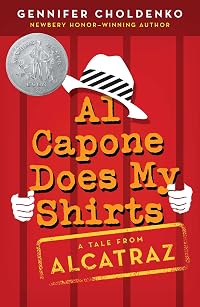
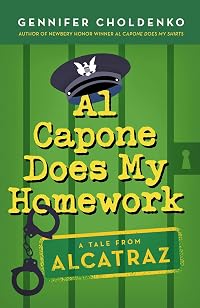
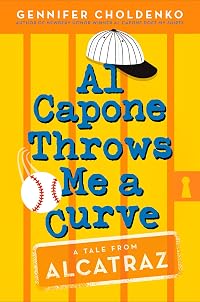
A twelve-year-old boy named Moose moves to Alcatraz Island in 1935 when guards' families were housed there, and has to contend with his extraordinary new environment in addition to life with his autistic sister.Tags
Recommendations







Member Recommendations
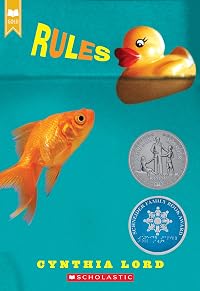
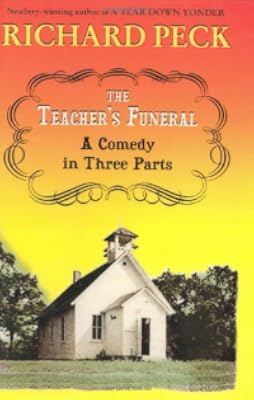
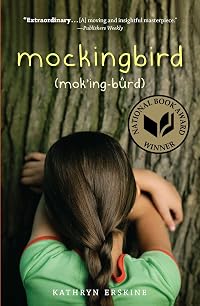
cammykitty Very short book that explains what it's like to have autism, and what you can do to help if you know someone with autism.
BookshelfMonstrosity With offbeat characters and distinctive settings, these well-paced, affecting and funny novels are about compassionate boys: Moose, caring for his autistic sister on Alcatraz Island (Al Capone); Stanley, who escapes from a juvenile detention camp to help another inmate (Holes).
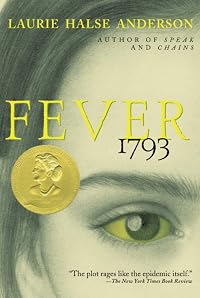
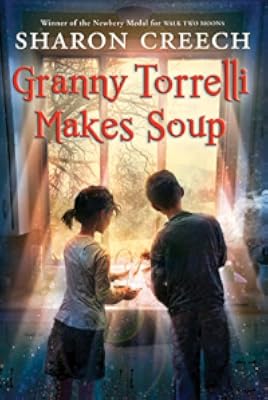
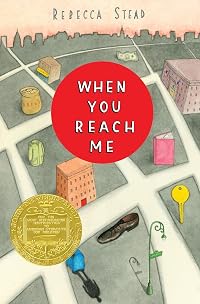
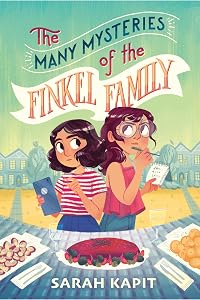
cbl_tn Both books deal with the relationship between an autistic adolescent and a sibling.
Member Reviews
In 1935, the Depression was hitting families hard, and when twelve year old Moose Flanagan’s father is offered a job as an electrician on Alcatraz Island, he doesn't hesitate. Alcatraz Federal Penitentiary had only opened the year before, and the island was said to be safer than San Francisco. Moose’s family, like dozens of others, lived on the island under the watchful eye of the Warden, who was strict but fair. Children took a boat to school every day, and often had the center of attention with their classmates, as they divulged true or imaginary details of life in close proximity with prisoners, especially the notorious Al Capone.
Moose is a good kid, loves baseball, and tries to avoid the intricate machinations of the Warden’s show more pretty daughter. Moose’s family has a secret, however. His sister, Natalie, is, well, different. She has few social skills, has tantrums, rocks, and loves to count and do math, the latter things she is phenomenally good at doing. Mrs. Flanagan has taken her to doctors, to scientists, to psychiatrists, trying to find out what is wrong with Natalie and how to help her. Numerous awful treatments have gotten them nowhere. Mrs. Flanagan is convinced that the only help for her daughter is admittance to a special school for children with differences, but they only accept children under twelve and Natalie is sixteen. Mrs. Flanagan isn't about to let that stop her.
What I loved about this book was the historical accuracy of the details of life on Alcatraz Island. Even the visit by Al Capone’s mother is based on fact. Only the Flanagan family and the laundry caper are inventions. In a lengthy afterward the author writes about her research and about the character of Natalie, who is based on the author’s own sister, who was autistic. Although the term “autism” had first been used in Europe in 1911, it wasn't until the mid-1940s that the term was used in the US and the 1960s before it was uncoupled from schizophrenia. During the time that the book takes place, children with autism were frequently placed in asylums, as parents were often incapable of understanding or managing their child’s behavior. The author writes of the anguish Natalie’s condition causes the Flanagan family and the love that allows them to begin to break through to her. I thought this young adult novel was historically interesting and the story of Moose, told in diary form, to be engaging. I listened to the audio book and thought the reader, Kirby Heyborne, was excellent. show less
Moose is a good kid, loves baseball, and tries to avoid the intricate machinations of the Warden’s show more pretty daughter. Moose’s family has a secret, however. His sister, Natalie, is, well, different. She has few social skills, has tantrums, rocks, and loves to count and do math, the latter things she is phenomenally good at doing. Mrs. Flanagan has taken her to doctors, to scientists, to psychiatrists, trying to find out what is wrong with Natalie and how to help her. Numerous awful treatments have gotten them nowhere. Mrs. Flanagan is convinced that the only help for her daughter is admittance to a special school for children with differences, but they only accept children under twelve and Natalie is sixteen. Mrs. Flanagan isn't about to let that stop her.
What I loved about this book was the historical accuracy of the details of life on Alcatraz Island. Even the visit by Al Capone’s mother is based on fact. Only the Flanagan family and the laundry caper are inventions. In a lengthy afterward the author writes about her research and about the character of Natalie, who is based on the author’s own sister, who was autistic. Although the term “autism” had first been used in Europe in 1911, it wasn't until the mid-1940s that the term was used in the US and the 1960s before it was uncoupled from schizophrenia. During the time that the book takes place, children with autism were frequently placed in asylums, as parents were often incapable of understanding or managing their child’s behavior. The author writes of the anguish Natalie’s condition causes the Flanagan family and the love that allows them to begin to break through to her. I thought this young adult novel was historically interesting and the story of Moose, told in diary form, to be engaging. I listened to the audio book and thought the reader, Kirby Heyborne, was excellent. show less
Choldenko keeps her story as close to historically accurate as possible, and yet, still creates a story that pulls you in, head and heart. It was fascinating to read about the life on Alcatraz for the families of the guards. You really have a better understanding after reading the story about what families go through. It was heartbreaking to read about Natalie, and life for someone with her challenges. Things in those days were so different for people with autism. No one really knew what autism was yet, so it was interesting to see how people dealt with it.
When Moose Flanagan’s dad takes a job as a prison guard at Alcatraz, the family relocates to the infamous island — not as prisoners but as prison employees. With his younger sister Natalie attending a model school for children with autism, Moose struggles to balance protecting her, fitting in at his new school, and dealing with neighborhood legends. That tension escalates when mysterious notes referencing Al Capone appear on their window—and strange things start happening. Packed with humor, historical detail, and emotional complexity, Al Capone Does My Shirts is a heartwarming and socially aware middle-grade story that earned a Newbery Honor and wide critical praise
I had this book tucked in my bag because I was using it for a lesson on footnotes and endnotes, and ended up reading it all in one sitting while I was getting the oil changed in my car. I loved it! This book takes place on Alcatraz in 1935, shortly after 12 year-old Moose Flanagan moves there with his family. Moose hated leaving his school, grandparents, and friends in Santa Monica, but times are hard, and Moose's dad secures a job as a prison guard and electrician on the infamous prison island, and his family desperately hopes his sister Natalie will be accepted to a special school in San Francisco. The families who live on Alcatraz are an interesting bunch, drawn by employment at the prison, and taking the ferry each day to attend show more school in San Francisco. Natalie, who suffers from autism, though this was not understood or labeled in 1935, does not get into the school. Her disability is paralyzing for the family, as she requires full-time care. The stigma of such a disability is daunting, and as it's easier to explain her away as Moose's younger sister, though she is in fact, three years older, and turns 10 every year. Moose experiences a full range of emotions about Natalie -- anger, resentment, fear, fierce loyalty, and intense love. In a way I suspect is common to siblings of individuals with disabilities such as this one, Moose "gets" her more than anyone else, and his devotion to her and resentment of her (and his parents who naturally devote more of their time and energy to her) was beautifully written and very touching. The Alcatraz aspect of the book was also compelling, with its perverse fascination with its most famous inmate Al Capone, its mini-society dominated by Piper, the beautiful but awful warden's daughter, and its daily real or imagined interactions. This book is terrific!
Curriculum: great for historical fiction genre study: 1930s America.
Choldenko, G. (2006). Al Capone Does My Shirts. City: Perfection Learning Prebound. show less
Curriculum: great for historical fiction genre study: 1930s America.
Choldenko, G. (2006). Al Capone Does My Shirts. City: Perfection Learning Prebound. show less
In 1935 Moose Flanagan, a likeable 12-year-old boy, moves with his family to Alcatraz Island. His father has taken a job as an electrician at the famous prison, and his mother hopes to enroll Moose's sister Natalie in a San Francisco school that specializes in helping children who would now be diagnosed as autistic. On the Island, Moose meets an interesting cast of characters, including the warden's daughter Piper and precocious seven-year-old Theresa. He deals with the problems of a normal 12-year-old boy, and he struggles to help his sister live a normal life.
This was a wonderful story. The layers fit together beautifully. Moose's girl troubles (mostly with Piper) and his love of baseball could have been a part of many stories about show more boys this age. But the added elements of having an autistic sister and living in the shadows of Alcatraz set this book apart. Choldenko creates a believable and extremely likeable character in Moose. His relationship with his sister Natalie is touching. His reactions to his parents ring true for a 12-year-old boy. And his frustrations with Piper had me laughing out loud.
I highly recommend this book. For those of you who like audio books, I thought this one was especially well done. The narrator was great, and the story definitely held my attention. show less
This was a wonderful story. The layers fit together beautifully. Moose's girl troubles (mostly with Piper) and his love of baseball could have been a part of many stories about show more boys this age. But the added elements of having an autistic sister and living in the shadows of Alcatraz set this book apart. Choldenko creates a believable and extremely likeable character in Moose. His relationship with his sister Natalie is touching. His reactions to his parents ring true for a 12-year-old boy. And his frustrations with Piper had me laughing out loud.
I highly recommend this book. For those of you who like audio books, I thought this one was especially well done. The narrator was great, and the story definitely held my attention. show less
The main character is Moose Flannigan, 7th grader, who is dragged to Alcatraz for the benefit of his sister getting into a specialized school. Moose is a very likeable character obsessed with baseball and finds it frustrating when he can’t play ball because he has to babysit his older sister.
The interaction between Moose and Natalie is the main focus of the story. Natalie is special and Moose feels very protective of her around strangers. The relationship between Moose and Natalie grows as her behavior changes and normalizes through her special education classes. One of the most memorable scenes in the book is when Moose is trying to keep Natalie in the apartment and it brings on one of her fits and in the end they both understand show more each other a little better.
The one thing missing from this book is responsible adults. Moose’s parents are so absorbed with Natalie and making money to support the family that they forget to be parents to Moose. It also seems the rest of the kids on the island have little parental supervision which gets them into trouble often. However, without the troubles the story wouldn’t have much excitement.
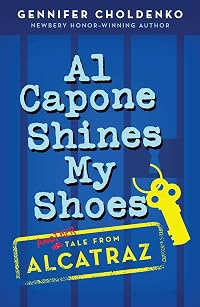
Al Capone is in the title, but really is not a character in this book. They talk about him and allude to his presence, but the book is about the kids living on Alcatraz. However, book number two in the series, AL CAPONE SHINES MY SHOES, provides a closer look at the prisoners themselves. show less
The interaction between Moose and Natalie is the main focus of the story. Natalie is special and Moose feels very protective of her around strangers. The relationship between Moose and Natalie grows as her behavior changes and normalizes through her special education classes. One of the most memorable scenes in the book is when Moose is trying to keep Natalie in the apartment and it brings on one of her fits and in the end they both understand show more each other a little better.
The one thing missing from this book is responsible adults. Moose’s parents are so absorbed with Natalie and making money to support the family that they forget to be parents to Moose. It also seems the rest of the kids on the island have little parental supervision which gets them into trouble often. However, without the troubles the story wouldn’t have much excitement.
Al Capone is in the title, but really is not a character in this book. They talk about him and allude to his presence, but the book is about the kids living on Alcatraz. However, book number two in the series, AL CAPONE SHINES MY SHOES, provides a closer look at the prisoners themselves. show less
Summary: Having to move to a new town is never fun for a kid... but when your new home is Alcatraz Island, the high security prison that's home to the worst criminals in the country, that's a whole different ball game. It's 1935, and seventh-grader Moose Flanagan is happy that his dad is working when so many other people aren't... but he wishes that his dad could have gotten a job anywhere else. Not only does he have to live on the island with the prison, but there are very few other kids, and the only one his age is Piper, the scheming daughter of the warden. And, to make matters worse, Moose is expected to spend all of his free time taking care of his sister Natalie, who is severely autistic. Between Piper's schemes and Natalie's show more condition, how can Moose possibly be expected to have a normal childhood?
Review: I'm not sure where I got the idea that this book was funny - maybe from the title? - but boy, was I wrong on that one. I mean, yes, there were bits that made me laugh, but there were also bits that made me cry, and I was not expecting that at all. Even the back cover doesn't really give you a good sense for it; it only mentions Natalie in passing, with nary a mention of autism (which is never called by name in the story itself, since it wasn't defined as a diagnosis until 1943.) I went in expecting a book about the excitement and challenges of growing up on Alcatraz, and I got a book about the challenges of growing up with an autistic sister... that happened to take place on the famous prison. Don't get me wrong, it's a cool setting for the story, made cooler by the fact that a lot of the details about life on Alcatraz are factually accurate. But it's a lot more serious and moving of a story, and it dealt more weighty issues than it might have seemed at first blush. I particularly thought Moose was a well-done character, and his relationship with his sister felt incredibly real, which was a huge factor in making the story as touching as it ultimately was. 4 out of 5 stars.
Recommendation: I'd recommend this to anyone mid-grade and up who likes historical fiction and/or coming of age novels... but I think it would be particularly relatable to readers with younger siblings. show less
Review: I'm not sure where I got the idea that this book was funny - maybe from the title? - but boy, was I wrong on that one. I mean, yes, there were bits that made me laugh, but there were also bits that made me cry, and I was not expecting that at all. Even the back cover doesn't really give you a good sense for it; it only mentions Natalie in passing, with nary a mention of autism (which is never called by name in the story itself, since it wasn't defined as a diagnosis until 1943.) I went in expecting a book about the excitement and challenges of growing up on Alcatraz, and I got a book about the challenges of growing up with an autistic sister... that happened to take place on the famous prison. Don't get me wrong, it's a cool setting for the story, made cooler by the fact that a lot of the details about life on Alcatraz are factually accurate. But it's a lot more serious and moving of a story, and it dealt more weighty issues than it might have seemed at first blush. I particularly thought Moose was a well-done character, and his relationship with his sister felt incredibly real, which was a huge factor in making the story as touching as it ultimately was. 4 out of 5 stars.
Recommendation: I'd recommend this to anyone mid-grade and up who likes historical fiction and/or coming of age novels... but I think it would be particularly relatable to readers with younger siblings. show less
Members
- Recently Added By
Lists

Best Newbery Honor Books
258 works; 33 members

Best Family Stories
241 works; 22 members

Best Friendship Stories
205 works; 16 members

Newbery Honor Books By year - II - 1981-2035
143 works; 4 members

Carnegie Medal books I've read (shortlist and winners)
86 works; 16 members

Challenged & Banned Books 2015-2016
11 works; 3 members

EGBERTINA's List of Newbery books that I hated or found unnecessary
58 works; 3 members

Books Read in 2022
5,226 works; 115 members

GCS 6th grade summer reading list
171 works; 4 members

Books Read in 2006
424 works; 8 members

Five star books
1,767 works; 110 members

Tagged Great Depression
23 works; 3 members

In or About the 1930s
198 works; 26 members

Books About Boys
175 works; 15 members

Books Set on Islands
190 works; 24 members

BingoDOG - Books About Autism: Fiction
27 works; 14 members
Fictional Characters With Disabilities
43 works; 9 members
Historical Fiction
889 works; 90 members

Deena's Favorites--How Many have you read?
102 works; 3 members
Author Information

25+ Works 12,320 Members
Gennifer Choldenko was born in Santa Monica, California. Gennifer Choldenko is a Newbery Honor-winning American writer of popular books for children and adolescents. Her first novel, Notes From a Liar and Her Dog was named "Best Book of the Year" by School Library Journal and her second, Al Capone Does My Shirts, part of Al Capone on Alcatraz show more series, won the 2005 Newbery Honor citation. (Bowker Author Biography) show less
Awards and Honors
Awards
Distinctions
Notable Lists
Series

Work Relationships
Has as a student's study guide
Has as a teacher's guide
Common Knowledge
- Canonical title
- Al Capone Does My Shirts
- Original publication date
- 2004
- People/Characters
- Al Capone; Matthew Flanagan, aka Moose; Piper Williams; Natalie Flanagan; Annie Bomini; Theresa Mattaman (show all 13); Scout; Jimmy Mattaman; Darby Trixle; Bea Trixle; Janet Trixle; Cam Flanagan; Helen Flanagan
- Important places
- California, USA; San Francisco, California, USA; Alcatraz Island, San Francisco Bay, California, USA; San Francisco Bay, California, USA
- Dedication
- To my sister, Gina Johnson,
and to all of us who loved her--
however imperfectly. - First words
- Today I moved to a twelve-acre rock covered with cement, topped with bird turd and surrounded by water.
- Last words
- (Click to show. Warning: May contain spoilers.)Done, it says.
- Publisher's editor
- Dawson, Kathy
- Blurbers
- Fleischman, Sid
Classifications
- Genres
- Kids, Tween, Children's Books, Fiction and Literature
- DDC/MDS
- 813.54 — Literature & rhetoric American literature in English American fiction in English 1900-1999 1945-1999
- LCC
- PZ7 .C446265 .A — Language and Literature Fiction and juvenile belles lettres Fiction and juvenile belles lettres Juvenile belles lettres
- BISAC
Statistics
- Members
- 6,387
- Popularity
- 1,935
- Reviews
- 342
- Rating
- (3.95)
- Languages
- 7 — Chinese, English, French, German, Italian, Korean, Spanish
- Media
- Paper, Audiobook, Ebook
- ISBNs
- 49
- ASINs
- 21