On This Page
Description
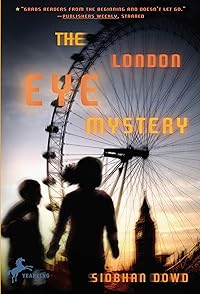
When Ted and Kat's cousin Salim disappears from the London Eye ferris wheel, the two siblings must work together--Ted with his brain that is "wired differently" and impatient Kat--to try to solve the mystery of what happened to Salim.Tags
Recommendations

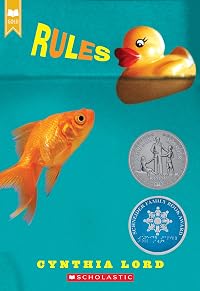
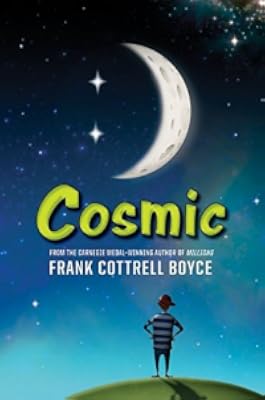
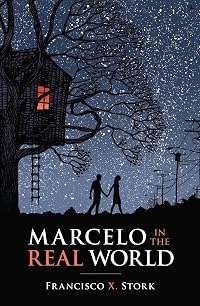
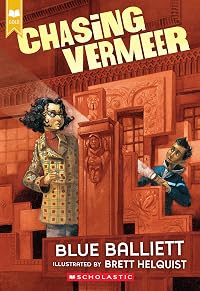








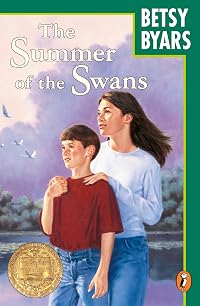
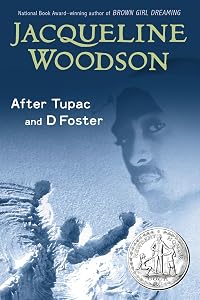
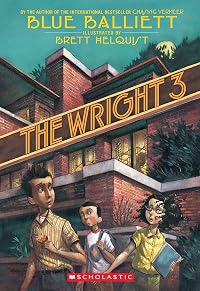
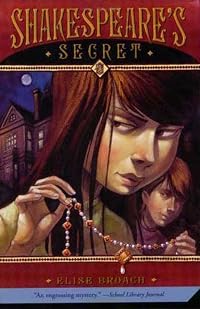



Member Recommendations
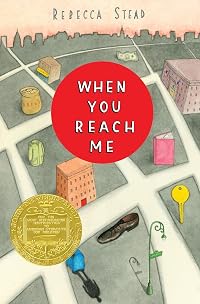
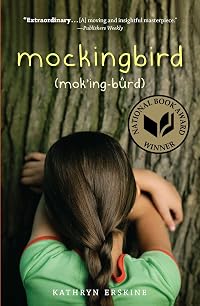
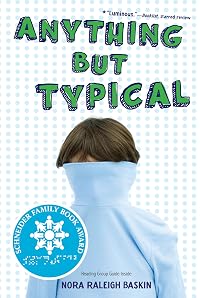
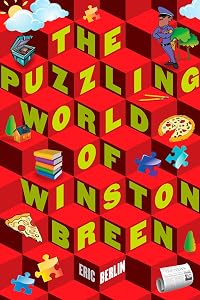
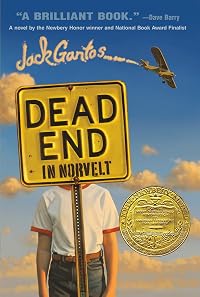
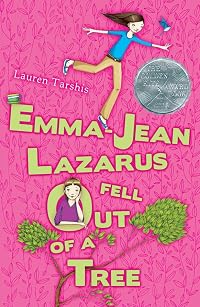
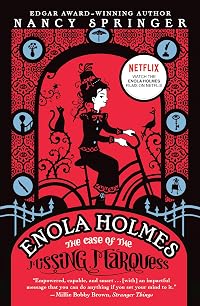
cbl_tn Both books deal with the relationship between an autistic adolescent and a sibling.
Member Reviews
Ted and his sister, Kat, watch as their cousin, Salim, boards a sealed pod on the London Eye. Thirty minutes later, the pod returns, but Salim has disappeared.
Ted has eight theories, but no one is listening. No one except, sometimes, his sister, Kat. Each of them is determined to unravel the mystery. Kat, out of guilt. Ted because his brain doesn't work like anyone else's--it runs "on its own unique operating system"--and he's curious to see if that allows him to piece together clues that no one else even sees.
Never named, the symptoms of Ted's syndrome suggest high-functioning autism, making this the second mystery I'm familiar with solved by an autistic boy (the first being "The Curious Incident of the Dog in the Night-time" by Mark show more Haddon), but certainly not unique in literature for youth emphasizing the unique abilities and contributions of people with "differences."
Perhaps the greatest strength of the book is how well Dowd used the solving of the mystery and Ted's perspective on the world to develop each other. Rather than relying on exposition, Ted's thought process unravels the mystery and the unraveling of the mystery reveals Ted's character. One could argue that the real mystery exposed by the book is the inner world of an autistic person.
As seems to be a trend in more of the youth literature I've been reading this year, the mystery was simpler--within the realm of possibility for a brother and sister (thinker and doer, respectively) team to solve. But as the value of the book lies less in the mystery itself and more in the character of Ted, that's not particularly a detraction. show less
Ted has eight theories, but no one is listening. No one except, sometimes, his sister, Kat. Each of them is determined to unravel the mystery. Kat, out of guilt. Ted because his brain doesn't work like anyone else's--it runs "on its own unique operating system"--and he's curious to see if that allows him to piece together clues that no one else even sees.
Never named, the symptoms of Ted's syndrome suggest high-functioning autism, making this the second mystery I'm familiar with solved by an autistic boy (the first being "The Curious Incident of the Dog in the Night-time" by Mark show more Haddon), but certainly not unique in literature for youth emphasizing the unique abilities and contributions of people with "differences."
Perhaps the greatest strength of the book is how well Dowd used the solving of the mystery and Ted's perspective on the world to develop each other. Rather than relying on exposition, Ted's thought process unravels the mystery and the unraveling of the mystery reveals Ted's character. One could argue that the real mystery exposed by the book is the inner world of an autistic person.
As seems to be a trend in more of the youth literature I've been reading this year, the mystery was simpler--within the realm of possibility for a brother and sister (thinker and doer, respectively) team to solve. But as the value of the book lies less in the mystery itself and more in the character of Ted, that's not particularly a detraction. show less
Siobhan Dowd si serve del punto di vista di un bambino con la sindrome di Asperger per imbastire un giallo per ragazzi divertente e intrigante, riuscendo a toccare temi delicati (il divorzio dei genitori, la solitudine, l'emarginazione) senza appesantire lo sviluppo della storia e soprattutto senza scadere nel patetico o nel moralistico.
Grazie anche a una scrittura brillante e ironica, a una sensibilità speciale e alla lente deformante dell'indimenticabile narratore, l'autrice consegna a giovani e adulti un libro che ha la statura di un classico moderno.
---
Precedente: [b:La notte del drive-in 3|9697840|La notte del drive-in 3|Joe R. show more Lansdale|https://i.gr-assets.com/images/S/compressed.photo.goodreads.com/books/1318837615l/9697840._SY75_.jpg|18554411]
Successivo: [b:La quarta dimensione: Se il nostro universo fosse l'ombra di un altro?|11449706|La quarta dimensione Se il nostro universo fosse l'ombra di un altro?|Raúl Ibáñez Torres|https://i.gr-assets.com/images/S/compressed.photo.goodreads.com/books/1306267845l/11449706._SY75_.jpg|14674691] show less
Grazie anche a una scrittura brillante e ironica, a una sensibilità speciale e alla lente deformante dell'indimenticabile narratore, l'autrice consegna a giovani e adulti un libro che ha la statura di un classico moderno.
---
Precedente: [b:La notte del drive-in 3|9697840|La notte del drive-in 3|Joe R. show more Lansdale|https://i.gr-assets.com/images/S/compressed.photo.goodreads.com/books/1318837615l/9697840._SY75_.jpg|18554411]
Successivo: [b:La quarta dimensione: Se il nostro universo fosse l'ombra di un altro?|11449706|La quarta dimensione Se il nostro universo fosse l'ombra di un altro?|Raúl Ibáñez Torres|https://i.gr-assets.com/images/S/compressed.photo.goodreads.com/books/1306267845l/11449706._SY75_.jpg|14674691] show less
Here's a wonderful variation on the locked-room mystery: how can a boy seen to enter a pod on the famous London Eye wheel disappear when the pod docks again half an hour later? Salim's cousins, Ted and Kat, are left baffled, as are his estranged parents and Ted and Kat's parents, not to mention the police. But by coming up with hypotheses for that disappearance and evaluating them, and by some clever underhand sleuthing, Ted and Kat slowly inch towards a solution; the worry is that, as time goes on, finding him will come too late to save him.
On the surface this sounds like a run-of-the-mill adventure story where children prove more than the equals of the police in solving a mystery. But The London Eye Mystery is not your average show more juvenile crime novel: there is a grounding in reality, in the hopes and fears of family life, in the recklessness that sometimes typifies adolescence, and in aspects of the mental processes someone on the autism spectrum may go through.
Ted Spark has what used to be called Asperger Syndrome, sometimes referred to as high functioning autism, but the boundaries are blurred and the terms even disputed (Asperger's is no longer an official designation in psychiatry), while those on the spectrum are often apt not to see it as a disorder but typically call themselves neurodiverse. However we view Ted, he displays many traits of those on the autism spectrum, from difficulties with social interaction, anxiety (often manifesting as repetitive behaviours, or stimming), sensory overload (from distracting noises and activities) and so-called 'special interests' (in Ted's case, climatology).
His obsession with patterns and logical thinking earns him the respect of Detective Inspector Pierce when he starts to join the dots, though he has a hard time persuading his family of his suspicions and conclusions. Aided and abetted by his older sister, Kat -- though she is not without her doubts as to his reasoning -- he works out what happened at the London Eye and why, and then what happened next. The famous (though often misquoted) dictum of Sherlock Holmes in The Sign of Four -- "When you have eliminated the impossible, whatever remains, however improbable, must be the truth" -- is ever Ted's principle, and luckily Kat is prepared to race across the capital to chase up Ted's insights.
This is a lovely novel with satisfying outcomes. Despite overtones of Hercule Poirot or Miss Marple in the meme of the amateur arriving at the solution, this is as much an exploration of family dynamics and individuals within them as it is a classical mystery. Robin Stevens' introduction for this edition gives us the background to the novel, published in the year of the author's premature death from cancer; all the royalties from The London Eye Mystery go to the Siobhan Dowd Trust which helps bring books and the joy of reading to disadvantaged children, including those in care. show less
On the surface this sounds like a run-of-the-mill adventure story where children prove more than the equals of the police in solving a mystery. But The London Eye Mystery is not your average show more juvenile crime novel: there is a grounding in reality, in the hopes and fears of family life, in the recklessness that sometimes typifies adolescence, and in aspects of the mental processes someone on the autism spectrum may go through.
Ted Spark has what used to be called Asperger Syndrome, sometimes referred to as high functioning autism, but the boundaries are blurred and the terms even disputed (Asperger's is no longer an official designation in psychiatry), while those on the spectrum are often apt not to see it as a disorder but typically call themselves neurodiverse. However we view Ted, he displays many traits of those on the autism spectrum, from difficulties with social interaction, anxiety (often manifesting as repetitive behaviours, or stimming), sensory overload (from distracting noises and activities) and so-called 'special interests' (in Ted's case, climatology).
His obsession with patterns and logical thinking earns him the respect of Detective Inspector Pierce when he starts to join the dots, though he has a hard time persuading his family of his suspicions and conclusions. Aided and abetted by his older sister, Kat -- though she is not without her doubts as to his reasoning -- he works out what happened at the London Eye and why, and then what happened next. The famous (though often misquoted) dictum of Sherlock Holmes in The Sign of Four -- "When you have eliminated the impossible, whatever remains, however improbable, must be the truth" -- is ever Ted's principle, and luckily Kat is prepared to race across the capital to chase up Ted's insights.
This is a lovely novel with satisfying outcomes. Despite overtones of Hercule Poirot or Miss Marple in the meme of the amateur arriving at the solution, this is as much an exploration of family dynamics and individuals within them as it is a classical mystery. Robin Stevens' introduction for this edition gives us the background to the novel, published in the year of the author's premature death from cancer; all the royalties from The London Eye Mystery go to the Siobhan Dowd Trust which helps bring books and the joy of reading to disadvantaged children, including those in care. show less
This is a rollercoaster of a book which I read in one sitting. The action never lets up and the characters are great - the narrator is 12 year old Ted, who is autistic. His brain, he says, functions with a different "operating system" from other people and the narrative is peppered with his observations on weather and time. Kat, his sister, is another terrific character - volatile, impetuous, sometimes mean and feisty. Half-way through the novel, I turned to the back to see whether Dowd had any observations on autism and was saddened to read that she died of cancer at 47 and this was her last complete novel. Well, it's a beauty.
12 year-old Ted has Asperger’s Syndrome, this means his brain runs on a different operating system to the rest of us. While he can effortlessly keep track of facts and figures, knows obscure and complicated weather phenomena, and traces weather patterns and shipping forecasts to rest his mind, small talk really throws him and takes him out of his comfort zone. Ted and his family live in London and while they all love Ted to bits they know that when it comes to a crisis, he is not a person you can rely on.
Ted and his older sister Kat haven’t seen much of their cousin, Salim, but out of the blue the family receives a letter from Salim’s mother, Aunt Gloria, saying they are moving to New York and have planned a family visit in London show more en route. When asked what he’d like to do, Salim, who loves a good view, opts for experiencing a spin on the London Eye. The two mothers opt to have a coffee while Ted, Salim and Kat queue to ride in the London Eye, a huge ferris wheel that allows those locked in the glass-and-steel capsules to see for miles in every direction.
While in the queue a random stranger offers them a free ticket, as Salim is only in London for one day Kat and Ted let him take the ticket. Ted and Kat see Salim enter the capsule and follow his ride, but to their shock, when the capsule returns to the ground half an hour later, Salim is not on board. Salim has gone – but how could he have got out of a locked capsule with no way out once the ride has started? The police are investigating and Ted is intrigued with the mystery. He and Kat decide to investigate as well as Ted has plenty of theories, well nine of them anyway. Can Ted with his differently wired brain, really see connections that everyone else has missed? Kat is willing to give him the chance so Ted has to work with his sister and overcome some of his personal challenges in order to find his cousin.
THE LONDON EYE MYSTERY is a compelling story with plenty of twists and turns, dead ends and red herrings which add up to a fascinating Young Adult mystery adventure. Ted is an endearing narrator, and it is so interesting to follow his lines of reasoning and trying to catch a dropped clue that will help figure out what has happened to Salim. show less
Ted and his older sister Kat haven’t seen much of their cousin, Salim, but out of the blue the family receives a letter from Salim’s mother, Aunt Gloria, saying they are moving to New York and have planned a family visit in London show more en route. When asked what he’d like to do, Salim, who loves a good view, opts for experiencing a spin on the London Eye. The two mothers opt to have a coffee while Ted, Salim and Kat queue to ride in the London Eye, a huge ferris wheel that allows those locked in the glass-and-steel capsules to see for miles in every direction.
While in the queue a random stranger offers them a free ticket, as Salim is only in London for one day Kat and Ted let him take the ticket. Ted and Kat see Salim enter the capsule and follow his ride, but to their shock, when the capsule returns to the ground half an hour later, Salim is not on board. Salim has gone – but how could he have got out of a locked capsule with no way out once the ride has started? The police are investigating and Ted is intrigued with the mystery. He and Kat decide to investigate as well as Ted has plenty of theories, well nine of them anyway. Can Ted with his differently wired brain, really see connections that everyone else has missed? Kat is willing to give him the chance so Ted has to work with his sister and overcome some of his personal challenges in order to find his cousin.
THE LONDON EYE MYSTERY is a compelling story with plenty of twists and turns, dead ends and red herrings which add up to a fascinating Young Adult mystery adventure. Ted is an endearing narrator, and it is so interesting to follow his lines of reasoning and trying to catch a dropped clue that will help figure out what has happened to Salim. show less
For the benefit of Americans: the London Eye isn’t an eye at all, but a Ferris wheel so enormous that riders can see 25 miles in all directions.
Londoners Ted and Kat Spark take their visiting 13-year-old cousin Salim to ride the London Eye; it is Salim who takes a free ticket to ride the attraction, but he never exits the London Eye when the ride is done!
Twelve-year-old Ted struggles with some of the more common effects of autism: He has an obsession (weather); when upset, he flaps his hands and goes “Hrumm”; he struggles with slang and idioms, which he takes literally; he has trouble with hugs, making eye contact and determining facial expressions; he paces when thinking or stressed. (My daughters with autism didn’t grunt or show more flap their hands, but they were beset with the other issues.) But Ted has an advantage over his older sister Kat, his parents, his Aunt Gloria (Salim’s mother) and even the police. As he says at the book’s beginning, “This is how having a funny brain that runs on a different operating system from other people’s helped me to figure out what had happened.”
Siobhan Dowd’s suspenseful middle-grade mystery will enthrall both its target audience and their parents; I couldn’t stop reading this riveting mystery! Fans of The Curious Incident of the Dog in the Night-Time are in for a treat with another novel of a young man with autism and a drive to solve a mystery. Highly recommended. show less
Londoners Ted and Kat Spark take their visiting 13-year-old cousin Salim to ride the London Eye; it is Salim who takes a free ticket to ride the attraction, but he never exits the London Eye when the ride is done!
Twelve-year-old Ted struggles with some of the more common effects of autism: He has an obsession (weather); when upset, he flaps his hands and goes “Hrumm”; he struggles with slang and idioms, which he takes literally; he has trouble with hugs, making eye contact and determining facial expressions; he paces when thinking or stressed. (My daughters with autism didn’t grunt or show more flap their hands, but they were beset with the other issues.) But Ted has an advantage over his older sister Kat, his parents, his Aunt Gloria (Salim’s mother) and even the police. As he says at the book’s beginning, “This is how having a funny brain that runs on a different operating system from other people’s helped me to figure out what had happened.”
Siobhan Dowd’s suspenseful middle-grade mystery will enthrall both its target audience and their parents; I couldn’t stop reading this riveting mystery! Fans of The Curious Incident of the Dog in the Night-Time are in for a treat with another novel of a young man with autism and a drive to solve a mystery. Highly recommended. show less
What absolutely sold me on The London Eye Mystery by Siobhan Dowd was the voice of the main character, Ted, a twelve year old boy with probably Asperger’s Syndrome, although it is never defined as such. Ted just tells us that he has a different brain from other people. When Salim, a cousin comes to visit and disappears while riding the London Eye, it is up to Ted and his older sister, Kat to solve the mystery as they blame themselves for the disappearance. By developing theories that they step-by-step eliminate, along with Ted’s unusual way of looking at things, they are eventually able to put the pieces together. But even then, something is still not quite right, Salim is still missing and as the clock ticks down, Ted and Kat must show more once again put their heads together and figure this out.
This is a great YA mystery that I think would fully draw in kids between 10 and 12, but it is still an enjoyable read for any age. I think the author’s respect for both her target audience and the mystery genre itself shines through the pages, and she is able to deliver a fresh, dynamic story with a unique narrator. show less
This is a great YA mystery that I think would fully draw in kids between 10 and 12, but it is still an enjoyable read for any age. I think the author’s respect for both her target audience and the mystery genre itself shines through the pages, and she is able to deliver a fresh, dynamic story with a unique narrator. show less
Members
- Recently Added By
Lists

A Child's Book Tour of London
51 works; 7 members

BingoDOG - Books About Autism: Fiction
27 works; 14 members

Books Read in 2020
4,379 works; 124 members

Fiction With Familiar Settings
280 works; 94 members
Author Information

10+ Works 3,774 Members
Siobhan Dowd was born on February 4, 1960. She received a degree in Classics at Lady Margaret Hall, Oxford University and an MA with Distinction in Gender and Ethnic Studies at Greenwich University. After a short stint in publishing, she joined the writer's organization PEN. Initially she was a researcher for its Writers in Prison Committee, but show more eventually she became Program Director of PEN American Center's Freedom-to-Write Committee in New York City. After seven years, she returned to the United Kingdom and co-founded an English PEN's readers and writers program, which takes authors into schools in socially deprived areas, as well as prisons, young offender's institutions and community projects. She has written novels, short stories, columns and articles, and edited two anthologies. Her first novel, A Swift Pure Cry, was published in March 2006 and won the Eilis Dillon award in Ireland for a first-time children's author and the Branford Boase Award. Her other novels are The London Eye Mystery, which won NASEN/TES Special Educational Needs Children's Book Award, Bisto Book of the Year prize, and Salford Children's Book Award; Bog Child; and Solace of the Road. She died of breast cancer on August 21, 2007 at the age of 47. Before her death, she set up the Siobhan Dowd Trust, where all the proceeds from her literary work will be used to assist disadvantaged children with their reading skills. (Bowker Author Biography) show less
Awards and Honors
Awards
Distinctions
Series

Common Knowledge
- Canonical title
- The London Eye Mystery
- Original title
- The London Eye Mystery
- Original publication date
- 2007
- People/Characters
- Ted [London Eye Mystery]; Kat [London Eye Mystery]; Salim [London Eye Mystery]
- Important places
- London, England, UK
- Dedication
- For Donal
- First words
- My favorite thing to do in London is to fly the Eye.
- Quotations
- Mum's lips pressed up tight. I figured out that Kat made her cross. But I didn't care. I know I'm a weirdo. My brain runs on a different operating system from other people's. I see things they don't and somethings they s... (show all)ee things I don't. As far as I'm concerned, if Andy Warhol was like me, then one day I'd be a cultural icon too. Instead of soup cans and movie stars, I'd be famous for my weather charts and formal suits and that would be good.
- Last words
- (Click to show. Warning: May contain spoilers.)It's as if the moment he boarded, 11.32 a.m., 24 May, floats on in a time warp somewhere in my brain.
Classifications
Statistics
- Members
- 1,724
- Popularity
- 12,915
- Reviews
- 111
- Rating
- (3.91)
- Languages
- 9 — Chinese, Dutch, English, French, German, Hungarian, Italian, Spanish, Swedish
- Media
- Paper, Audiobook, Ebook
- ISBNs
- 46
- ASINs
- 10