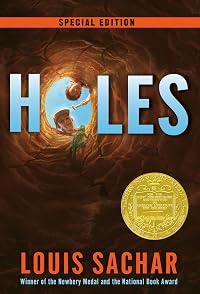
Holes
by Louis Sachar
On This Page
Description
As further evidence of his family's bad fortune which they attribute to a curse, Stanley Yelnats is sent to a correctional camp in the Texas desert where he finds his first real friend, a treasure, and a new sense of himself.Tags
Recommendations
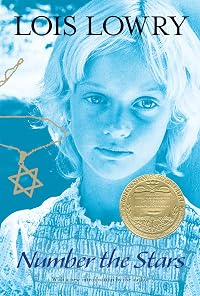
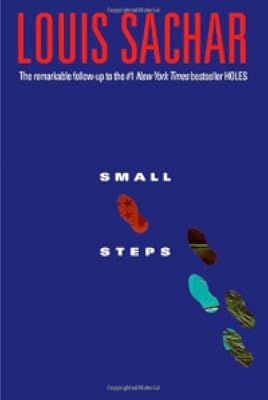
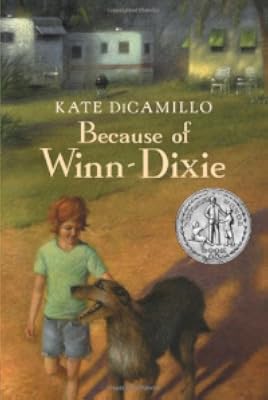
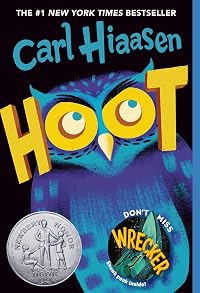
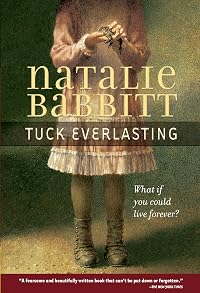
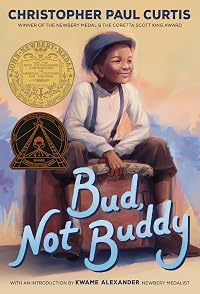
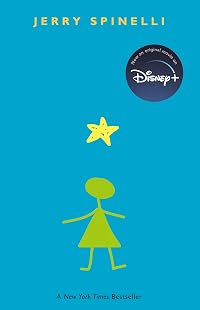
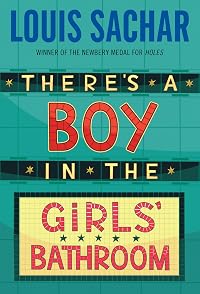
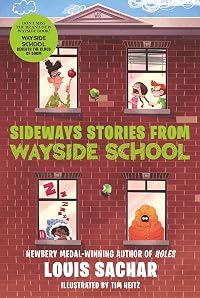
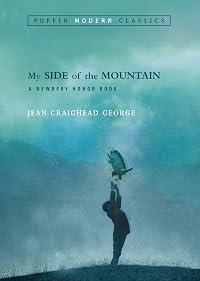
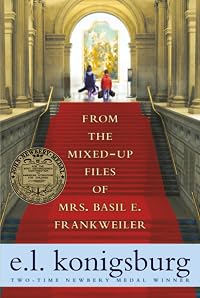
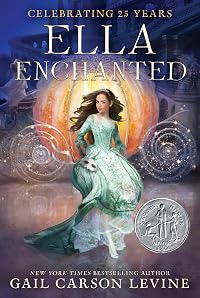
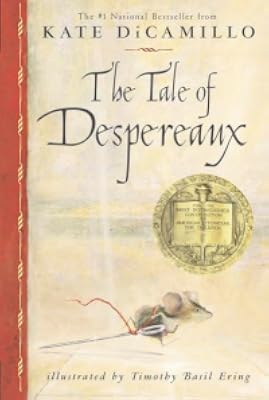
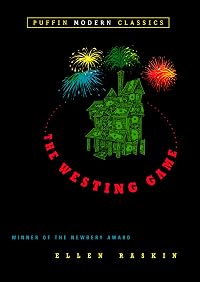
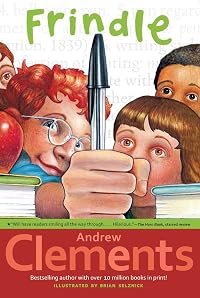
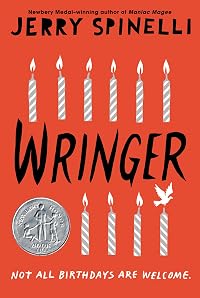
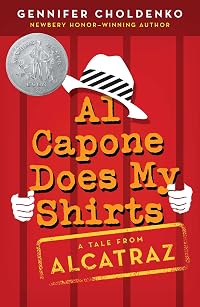
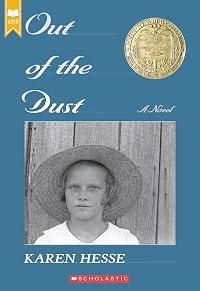
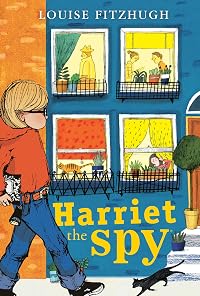
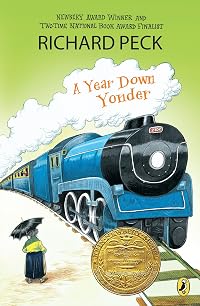
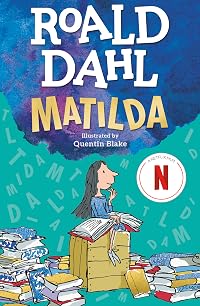
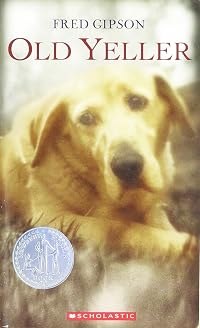
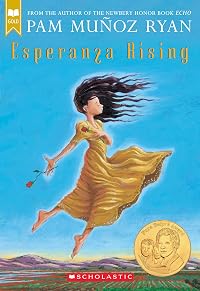
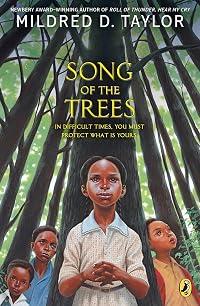
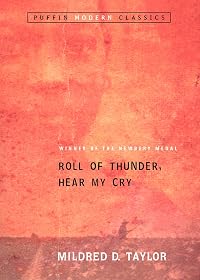
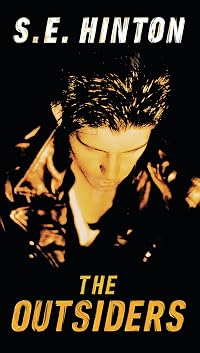

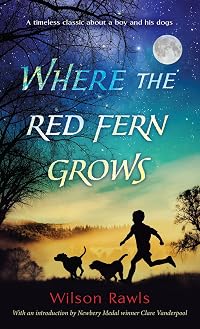
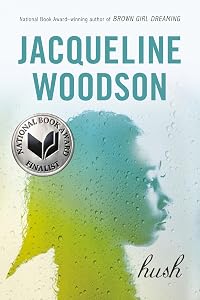
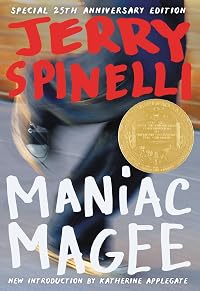
Member Recommendations
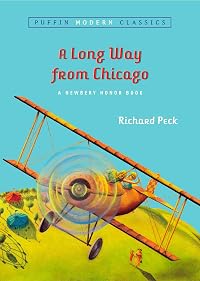
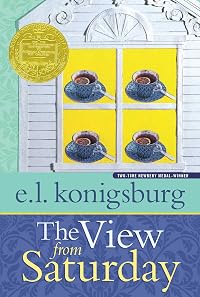
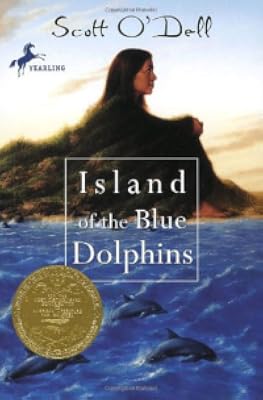
BookshelfMonstrosity With tall-tale elements, quirky characters and serious themes such as racism, these poignant and humorous novels with fully-realized settings are about brave boys who make a big difference in the lives of those around them.
Also recommended by Maiasaura
41
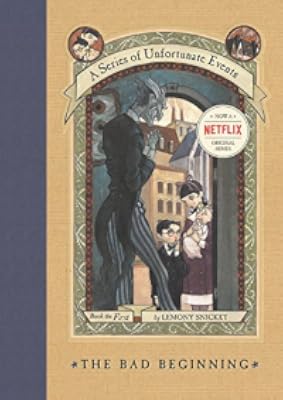
BookshelfMonstrosity With offbeat characters and distinctive settings, these well-paced, affecting and funny novels are about compassionate boys: Moose, caring for his autistic sister on Alcatraz Island (Al Capone); Stanley, who escapes from a juvenile detention camp to help another inmate (Holes).
20
by weener
Savvy by Ingrid Law
kimby365 I can't guarantee that you'll enjoy that book if you enjoyed this one, but I'd say it's a pretty safe bet.
23

Runa Misfit kids bond after being sent away from home to a reform program.
Member Reviews
Camp Green Lake is a juvenile detention facility where there is neither a lake nor any greenery. Stanley Yelnats is sent there when he is accused of a crime he didn't commit. He blames his great-great-grandfather for his bad luck -- ever since that ancestor's pig-stealing incident, all of his family has been unlucky. At Camp Green Lake, the Warden has the boys go out in the wasteland where a lake once was and dig holes. Perhaps the Warden thinks this will build character -- or perhaps there's some other motive. . . .
Part mystery, part adventure story, with a secondary historical narrative woven through, Holes really is a triumph of a book. The plot is tight, the characters are nuanced, the setting is detailed. I'd recommend this to show more anyone who has an interest in juvenile fiction, but I'd also recommend it to anyone who has a low opinion of children's books -- this is the sort of book that might change your mind! show less
Part mystery, part adventure story, with a secondary historical narrative woven through, Holes really is a triumph of a book. The plot is tight, the characters are nuanced, the setting is detailed. I'd recommend this to show more anyone who has an interest in juvenile fiction, but I'd also recommend it to anyone who has a low opinion of children's books -- this is the sort of book that might change your mind! show less
This book arrived on my shelves in that roundabout way that can sometimes yield such excellent results. I noticed that there was a film called Holes. I saw a book called Holes appearing in countdowns of favourite novels, and even on the BBC Big Read list. A few years later, I happened to see the film. Another year or two later and I suddenly thought 'Hey, I want to read that book!' So I ordered it and voila! There it was, on my shelves. And thank heavens this wonderful process went without a hitch, because I'd have missed a treat...
Stanley Yelnats is on his way to Camp Green Lake, a remote correctional facility which runs on the basis that young offenders will become better people by digging holes across the vast empty lake bed. One show more hole every day, five feet across and five feet deep - and for heaven's sake, if you come across a yellow-spotted lizard, run for your life, because you do not want to be bitten by one of those. In between the narrative of Stanley's stay twist the old tales that have become Yelnat family myth: that of his great-great-grandfather Elya, whose broken promise led to an elderly Egyptian woman cursing him and his descendents, and of his great-grandfather, the first Stanley Yelnats, who was robbed by the notorious outlaw Kissin' Kate Barlow and left on the desert plain to die. As the novel progresses these tales begin to echo down the years, whispering clues and engineering coincidences, until Stanley begins to suspect there's more to the increasingly sinister Camp Green Lake than meets the eye...
This book has everything. A wicked sense of humour and a divine sense of the bizarre. A haunting backdrop and a weepie moment or three. A motley crew of heroes and villains sweeping across the generations. Rattlesnakes and magic mountains, onions and sneakers - oh, and LOTS of holes. Look, just take my word for it, okay? Read it! show less
Stanley Yelnats is on his way to Camp Green Lake, a remote correctional facility which runs on the basis that young offenders will become better people by digging holes across the vast empty lake bed. One show more hole every day, five feet across and five feet deep - and for heaven's sake, if you come across a yellow-spotted lizard, run for your life, because you do not want to be bitten by one of those. In between the narrative of Stanley's stay twist the old tales that have become Yelnat family myth: that of his great-great-grandfather Elya, whose broken promise led to an elderly Egyptian woman cursing him and his descendents, and of his great-grandfather, the first Stanley Yelnats, who was robbed by the notorious outlaw Kissin' Kate Barlow and left on the desert plain to die. As the novel progresses these tales begin to echo down the years, whispering clues and engineering coincidences, until Stanley begins to suspect there's more to the increasingly sinister Camp Green Lake than meets the eye...
This book has everything. A wicked sense of humour and a divine sense of the bizarre. A haunting backdrop and a weepie moment or three. A motley crew of heroes and villains sweeping across the generations. Rattlesnakes and magic mountains, onions and sneakers - oh, and LOTS of holes. Look, just take my word for it, okay? Read it! show less
I am the kind of person who loves to think about what the world was like before I knew it and this book paints that picture to perfection. It bounces from time period to time period, following both Stanley's family and the location where he has currently been plopped into. The story practically paints a picture in the present and the past, overlapping each other in an almost theatrical blend. Where we once saw a lake, we now see a barren land, where the boat sank, it is now shelter from the sun, exposed to the air.
There is a moral to the story, of course, dealing with the building of character and being loyal to your friends, but there is also a huge mystery slowly creeping up on the unsuspecting reader. With the turn of each page you show more fall deeper into the plot and discover midway through that questions you never knew you were asking had been answered while answers you had no idea you were looking for begin to dangle tantalizingly in front of you like rain clouds on a hot day in the sun, bringing on more questions.
Easily deserving of the Newbery award, this is a book that should be a must read for all young readers. The creative writing style is sure to inspire while the mystery sucks you in and the story has you reading completely to the end in one awesome sitting. show less
There is a moral to the story, of course, dealing with the building of character and being loyal to your friends, but there is also a huge mystery slowly creeping up on the unsuspecting reader. With the turn of each page you show more fall deeper into the plot and discover midway through that questions you never knew you were asking had been answered while answers you had no idea you were looking for begin to dangle tantalizingly in front of you like rain clouds on a hot day in the sun, bringing on more questions.
Easily deserving of the Newbery award, this is a book that should be a must read for all young readers. The creative writing style is sure to inspire while the mystery sucks you in and the story has you reading completely to the end in one awesome sitting. show less
I have a friend-- herself much more of a young adult literature scholar than I-- who, when she found out that I was assigning Holes in my YA literature class, objected strongly. Holes is not young adult, she said, it's middle grade. And indeed, if you look at the back of my copy it indicates "Ages 10 & up," and ten years is definitely below the somewhat fuzzy middle grade/young adult barrier. I couldn't muster much of a defense of it myself, having not actually read it prior to assigning it, but having had a hole to plug (I needed a male-written YA novel published in the 1990s to balance out my course) and finding it on a list.
Once I read it, though, I realized that age range aside, it's definitely young adult fiction. Something I talk show more about a lot is the difference between the features and the projects of genres, and Holes, I would argue, has the project of young adult fiction. Or, at least, one of them. In her book Disturbing the Universe: Power and Repression in Adolescent Literature (2000), Roberta Seelinger Trites argues that "[t]he chief characteristic that distinguishes adolescent literature from children's literature is the issue of how social power is deployed during the course of the narrative. In books that younger children read [...] much of the action focuses on one child who learns to feel more secure in the confines of her or his environment, usually represented by family and home" (2-3). But in the YA novel, Trites continues, "protagonists must learn about the social forces that have made them what they are. They learn to negotiate the levels of power that exist in the myriad social institutions within which they must function" (3).
Holes is all about power. Stanley confronts all sort of social forces during his time at Camp Green Lake: race, class, childhood, prison, probably many more you can think of (and my students did). And in complicated ways, too-- Stanley is accused of being racist when he uses the labor of a black child, Zero, to relieve his own (in exchange for which he teaches Zero how to read). Was Stanley wrong? Were his accusers? I don't think there are any good answers here; what's more important is how Stanley becomes aware of an entire dimension of racial power of which he was previously unaware. Trites says that "the YA novel teaches adolescents how to exist within the (capitalistically bound) institutions that necessarily define teenagers' existence" (19).
Stanley doesn't just learn about institutions, but he learns how to operate within them to get what he wants. And this goes to Trites' other take on power: it's also "the force that allows for subjectivity and consequently, agency" (5). Your internal power allows you to act. And that's one of the big trajectories of Holes: Stanley starts out seemingly powerless, but as the novel goes on, he finally learns how to act, how to do something instead of having things done to him, and that's how he saves the day. So, in terms of its concerns, I think Holes is much more YA than children's.
In fact, considering Trites's theory of power and YA literature allows us to solve one of the novel's complexities. Something my students were really into was whether the curse placed on the Yelnats family was real or not. It seems real, given that when Stanley solves the historical injustice, the land is regenerates (shades of what Farah Mendlesohn says in Rhetorics of Fantasy, and indeed, the climax of Holes bears some traces of what she calls the portal-quest fantasy). But the narrator deliberately casts doubt on the reality of the curse, and coincidence is a perfectly plausible explanation for the events of the novel, too. When this kind of discussion arises, my inclination is to redirect, away from asking which is real? toward why create the ambiguity? Hopefully it's there for a reason other than just love of ambiguity, and I would argue that in the case of Holes, it is.
By introducing the idea of a curse, Sachar can literalize the kind of institutional power and make it visible: the curse is classism and racism in action, distant institutions turned into concretized force. We can see the real effect these powers have on the world in general, and Stanley and Zero in particular. On the other hand, were the curse to be clearly real, that would remove its power as a symbol, Stanley wouldn't be fighting an institution, but magic, and he would have no real reason to assume personal responsibility (as Trites's formulation tells us he must) because the curse would have predetermined his life. Leaving the curse ambiguous creates a sweet spot, where we know there's something real out there working against Stanley, but it's not no powerful that it can defeat him. show less
Once I read it, though, I realized that age range aside, it's definitely young adult fiction. Something I talk show more about a lot is the difference between the features and the projects of genres, and Holes, I would argue, has the project of young adult fiction. Or, at least, one of them. In her book Disturbing the Universe: Power and Repression in Adolescent Literature (2000), Roberta Seelinger Trites argues that "[t]he chief characteristic that distinguishes adolescent literature from children's literature is the issue of how social power is deployed during the course of the narrative. In books that younger children read [...] much of the action focuses on one child who learns to feel more secure in the confines of her or his environment, usually represented by family and home" (2-3). But in the YA novel, Trites continues, "protagonists must learn about the social forces that have made them what they are. They learn to negotiate the levels of power that exist in the myriad social institutions within which they must function" (3).
Holes is all about power. Stanley confronts all sort of social forces during his time at Camp Green Lake: race, class, childhood, prison, probably many more you can think of (and my students did). And in complicated ways, too-- Stanley is accused of being racist when he uses the labor of a black child, Zero, to relieve his own (in exchange for which he teaches Zero how to read). Was Stanley wrong? Were his accusers? I don't think there are any good answers here; what's more important is how Stanley becomes aware of an entire dimension of racial power of which he was previously unaware. Trites says that "the YA novel teaches adolescents how to exist within the (capitalistically bound) institutions that necessarily define teenagers' existence" (19).
Stanley doesn't just learn about institutions, but he learns how to operate within them to get what he wants. And this goes to Trites' other take on power: it's also "the force that allows for subjectivity and consequently, agency" (5). Your internal power allows you to act. And that's one of the big trajectories of Holes: Stanley starts out seemingly powerless, but as the novel goes on, he finally learns how to act, how to do something instead of having things done to him, and that's how he saves the day. So, in terms of its concerns, I think Holes is much more YA than children's.
In fact, considering Trites's theory of power and YA literature allows us to solve one of the novel's complexities. Something my students were really into was whether the curse placed on the Yelnats family was real or not. It seems real, given that when Stanley solves the historical injustice, the land is regenerates (shades of what Farah Mendlesohn says in Rhetorics of Fantasy, and indeed, the climax of Holes bears some traces of what she calls the portal-quest fantasy). But the narrator deliberately casts doubt on the reality of the curse, and coincidence is a perfectly plausible explanation for the events of the novel, too. When this kind of discussion arises, my inclination is to redirect, away from asking which is real? toward why create the ambiguity? Hopefully it's there for a reason other than just love of ambiguity, and I would argue that in the case of Holes, it is.
By introducing the idea of a curse, Sachar can literalize the kind of institutional power and make it visible: the curse is classism and racism in action, distant institutions turned into concretized force. We can see the real effect these powers have on the world in general, and Stanley and Zero in particular. On the other hand, were the curse to be clearly real, that would remove its power as a symbol, Stanley wouldn't be fighting an institution, but magic, and he would have no real reason to assume personal responsibility (as Trites's formulation tells us he must) because the curse would have predetermined his life. Leaving the curse ambiguous creates a sweet spot, where we know there's something real out there working against Stanley, but it's not no powerful that it can defeat him. show less
"When you spend your whole life living in a hole...the only way you can go is up." (Zero to Stanley, 160)
Read this as a kid when it came out, re-read with my 9yo this month. I barely remembered anything, except for the part where all the boys were digging holes - there is, obviously, much more to the story.
Stanley Yelnats' family has been under a curse for generations, making them very unlucky. Stanley himself falls victim to the curse when he's accused and convicted of stealing a pair of shoes belonging to a famous basketball player ("Sweet Feet"); the shoes were being auctioned to raise money for a food pantry/shelter. Stanley is sent to Camp Green Lake, where all the boys are required to dig a hole in the dry lake bed each day: five show more feet deep, and five feet wide.
It's clear from the fanatical Warden's behavior that the boys are not digging holes simply to "build character": she's looking for something, and it has to do with something that happened in the town over a hundred years ago, when white schoolteacher Kate Barlow and Black onion seller Sam kissed, causing the racist townspeople to rise up and murder Sam (and his innocent donkey, Mary Lou). Kate became an outlaw - the Warden suspects her treasure is buried somewhere nearby - and no rain has fallen on Green Lake since.
So really, there are two curses - or one might think of them as consequences. Stanley and his fellow "camper" Zero - Hector Zeroni - end up putting both curses to rights, and in an epilogue, it's clear that both of them get a well-deserved happy ending. show less
Read this as a kid when it came out, re-read with my 9yo this month. I barely remembered anything, except for the part where all the boys were digging holes - there is, obviously, much more to the story.
Stanley Yelnats' family has been under a curse for generations, making them very unlucky. Stanley himself falls victim to the curse when he's accused and convicted of stealing a pair of shoes belonging to a famous basketball player ("Sweet Feet"); the shoes were being auctioned to raise money for a food pantry/shelter. Stanley is sent to Camp Green Lake, where all the boys are required to dig a hole in the dry lake bed each day: five show more feet deep, and five feet wide.
It's clear from the fanatical Warden's behavior that the boys are not digging holes simply to "build character": she's looking for something, and it has to do with something that happened in the town over a hundred years ago, when white schoolteacher Kate Barlow and Black onion seller Sam kissed, causing the racist townspeople to rise up and murder Sam (and his innocent donkey, Mary Lou). Kate became an outlaw - the Warden suspects her treasure is buried somewhere nearby - and no rain has fallen on Green Lake since.
So really, there are two curses - or one might think of them as consequences. Stanley and his fellow "camper" Zero - Hector Zeroni - end up putting both curses to rights, and in an epilogue, it's clear that both of them get a well-deserved happy ending. show less
Sachar mines the tradition of tall tales while setting his novel in a contemporary US, leavening his storytelling with challenges recognisable to a grade schooler living there today. This approach makes for an entertaining story painted against a backdrop that is realistic and thoughful yet never weighs the story down. W loved both the characters and the mystery, all while reading about the immigrant legacy in US history, racism yesterday and today, peer pressure and bullying, poverty and inequity, and the meaning of family tradition.
A good part of why it works is the gleeful use of coincidence, crazy actions, and jokes at the expense of adults. It's a well-written book with great characterization and clever prose. The film, on the show more other hand, is workmanlike, Disney unable to capture for cinema the magic in Sachar's telling. show less
A good part of why it works is the gleeful use of coincidence, crazy actions, and jokes at the expense of adults. It's a well-written book with great characterization and clever prose. The film, on the show more other hand, is workmanlike, Disney unable to capture for cinema the magic in Sachar's telling. show less
Stanley Yelnats (whose name is a palindrome) was in the wrong place at the wrong time. Some say this was due to a curse placed on his no-good-dirty-rotten-pig-stealing-great-great grandfather because he failed to uphold a promise. Accused of stealing a famous athlete’s shoes which were to be auctioned for charity, he is sent to Camp Green Lake for 18 months. There are no fences at the camp; none are needed as it would be foolish to try to escape with the heat and no water for miles. Boys at Camp Green Lake build character by digging a hole in the dry lake bed every day. Stanley must endure the extreme heat and blisters as he digs his first few holes. The other boys give him a few tips, but also test his worthiness of being in their show more group. He forms a friendship with Zero, a quiet boy who helps dig his hole each day in exchange for lessons in reading. When Zero decides he’s had enough of digging holes, he takes off across the barren lake bed. Stanley makes a bold move to rescue Zero. Little do they know that they have a connection that goes back in time over one hundred years before. Surviving the heat together strengthens their bond and they return to the camp to find what the warden has been looking for- which is precisely why they were digging holes every day. Sachar tells a trio of stories –two of which take place in the past when the lake was full, along with Stanley’s present-day experiences at Camp Green Lake. He skillfully weaves the three stories together with believable characters and intertwining plot lines. The themes of family, honor, integrity, perseverance and hope all mingle and serve to tie the three stories and sets of characters to each other. Overall, the story portrays the realities of today’s teenage boys and the problems they face. Some fantasy elements are thrown in for interest, but do not take away from the plausibility of the story. Race relations and prejudice are explored, but not highly emphasized. The story ends a bit too “cheery” for some readers, but who doesn’t like a happy ending? show less
Members
- Recently Added By
Lists

Best Newbery Medal Winners
97 works; 54 members

Favorite Childhood Books
1,646 works; 514 members
1001 Children's Books You Must Read Before You Grow Up
774 works; 101 members

BBC Big Read
191 works; 46 members

Best middle grade books
130 works; 24 members
NPRs Ultimate Backseat Bookshelf: 100 Must-Reads for kids 9-14
222 works; 30 members

Read the book and saw the movie
1,170 works; 192 members

Best Children's Books You've Read
197 works; 74 members

Favorite Coming of Age Novels.
164 works; 51 members

Best Friendship Stories
205 works; 16 members

Works That Inspired Disney Movies
119 works; 13 members
my children books reading list-from 100 great books
101 works; 7 members

Newbery Medal Winners - By Year
105 works; 7 members

Satori Smiles Children's Book List
262 works; 7 members

Best Young Adult
399 works; 101 members

Blue Pyramid 1,276 Best Books of All Time
1,248 works; 32 members

Movie Adaptations
111 works; 4 members

Geek Dad Read to Your Kids List
79 works; 4 members

Ryan's Books
34 works; 1 member

4th Grade Books
312 works; 5 members

Wilderness Survival (Hatchet readers)
19 works; 1 member

Camping/Summer Camp
15 works; 1 member
Most Popular Young Adult Lit on LT
100 works; 4 members
6th Grade
68 works; 4 members

Carnegie Medal books I've read (shortlist and winners)
86 works; 17 members

SYES Library Wishlist
1,080 works; 4 members

Hazel & Katniss & Harry & Starr Podcast
195 works; 1 member

Speculative Fiction to Read
706 works; 32 members

HMS: Make Your Child a Lover of Books, Books for Boys
28 works; 2 members

Favorite Kids Books (chapter, middle grade)
168 works; 4 members
One Book, Many Authors
441 works; 40 members

1990s
309 works; 17 members

Books Read in 2001
194 works; 4 members

Books Read in 2021
5,361 works; 114 members
My Favorite Books
26 works; 1 member

Young Adult - Books come to Life on the Big Screen!
20 works; 1 member

Bullies
44 works; 2 members
Books We Couldn't Put Down
443 works; 197 members
BitLife
212 works; 4 members
Overdue Podcast
806 works; 9 members
My 100 Favorite Books of All Time
57 works; 2 members

Books tagged favorites
390 works; 30 members

BBC Top Books
78 works; 3 members
Modern Books for Young Adults
87 works; 11 members

Story Within a Story
65 works; 17 members
Treasure Lost and Found
8 works; 5 members

Books About Boys
175 works; 15 members

Books Set in Texas
34 works; 8 members
Favourite Books
1,819 works; 316 members

Most popular YA Fiction in Charles City
25 works; 1 member
Best Book and Movie Combos
70 works; 11 members
Makes Me Want to Eat (or Drink)
39 works; 12 members

Recommend the 20 best books you've read in the last five years
2,168 works; 601 members

Five star books
1,767 works; 110 members

Crime and Mysteries to Read
746 works; 31 members

Books Read in 2015
3,299 works; 126 members

Unshelved Book Clubs
579 works; 5 members

Top Five Books of 2015
811 works; 241 members

Fiction Set Primarily in a Prison
52 works; 24 members

50+ Books for a 6th Grader Who Loves to Read
53 works; 4 members

100 New Classics
101 works; 13 members

Magic Realism
371 works; 52 members
Fate vs. Free Will
63 works; 8 members

storage
51 works; 1 member
Talk Discussions
Past Discussions
Holes, Louis Sachar in World Reading Circle (June 2013)
Author Information

69+ Works 78,727 Members
Louis Sachar was born in East Meadow, New York on March 20, 1954. He attended the University of California, at Berkeley. During his senior year, he helped out at Hillside Elementary School. It was his experience there that led to his first book, Sideways Stories from Wayside School, written in 1976. After college, he worked for a while in a show more sweater warehouse in Norwalk, Connecticut before attending Hastings College of the Law in San Francisco, where he graduated in 1980. Sideways Stories from Wayside School was accepted for publication during his first week of law school. He worked part-time as a lawyer for eight years before becoming a full-time writer in 1989. His other works include There's a Boy in the Girls' Bathroom, the Marvin Redpost books, Fuzzy Mud, and Holes, which won the 1999 Newbery Medal, the National Book Award, and the Boston Globe-Horn Book Award and was made into a major motion picture. (Bowker Author Biography) show less
Some Editions
Awards and Honors
Series
Belongs to Publisher Series
Work Relationships
Is contained in
Has the adaptation
Has as a student's study guide
Has as a teacher's guide
Common Knowledge
- Canonical title
- Holes
- Original title
- Holes
- Original publication date
- 1998-08-20
- People/Characters
- Stanley Yelnats IV (Caveman); Stanley Yelnats; Stanley Yelnats II; Zero; Warden Walker; Madame Zeroni (show all 32); Mr. Sir; X-Ray; Pen-dans-ski; The Warden; Theodore Johnson (Armpit); Kate Barlow; Zigzag; Magnet; Squid; Squid (Alan); X-Ray (Rex); Armpit; Hector Zeroni (Zero); Twitch; Sam; Elya Yelnats; Charles Walker; Stanley Yelnats I; Stanley Yelnats III; Mrs. Yelnats; Katherine Barlow (Kissin' Kate Barlow); Mr. Yelnats; Sam the Onion Man; Mr. Pendanski; Clyde Livingston; Derrick Dunne
- Important places
- Camp Green Lake, Texas, USA; Latvia
- Related movies
- Holes (2003 | IMDb)
- Dedication
- To Sherrie, Jessica, Lori, Kathleen, and Emily
And to Judy Allen, a fifth-grade teacher from whom we all can learn - First words
- There is no lake at Camp Green Lake.
- Quotations
- If you take a bad boy and make him dig a hole everyday in the hot sun, it will turn him into a good boy.
It was all because of his no-good-dirty-rotten-pig-stealing-great-great-grandfather.
But everyone makes mistakes. You may have done some bad things, but that doesn't mean you're a bad kid.
His muscles and hands weren’t the only parts of his body that had toughened over the past several weeks. His heart had hardened as well.
It felt good to walk in the shade of the two oak trees. Stanley wondered if this was how a condemned man felt on his way to the electric chair – appreciating all of the good things in life for the last time.
Stanley was thankful that there were no racial problems. X-Ray, Armpit, and Zero were black. He, Squid, and Zigzag were white. Magnet was Hispanic. On the lake, they were all the same reddish brown color – the color of dirt... (show all).
Things went wrong a lot. They always seemed to be in the wrong place at the wrong time. - Last words
- (Click to show. Warning: May contain spoilers.)Fly high, my baby bird, my angel, my only.
- Publisher's editor
- Foster, Frances
- Original language
- English
- Canonical DDC/MDS
- 813.6
- Canonical LCC
- PZ7.S1185
- Disambiguation notice
- Please distinguish between Louis Sachar's original novel Holes (1998), and other variants of the same or related material. Thank you.
Classifications
Statistics
- Members
- 30,686
- Popularity
- 111
- Reviews
- 1,054
- Rating
- (4.07)
- Languages
- 24 — Arabic, Catalan, Chinese, Czech, Danish, Dutch, English, Estonian, Finnish, French, German, Hebrew, Italian, Japanese, Korean, Latvian, Lithuanian, Norwegian (Bokmål), Farsi/Persian, Slovak, Spanish, Swedish, Thai, Portuguese (Portugal)
- Media
- Paper, Audiobook, Ebook
- ISBNs
- 159
- UPCs
- 1
- ASINs
- 51