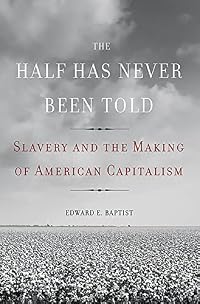
The Half Has Never Been Told: Slavery and the Making of American Capitalism
by Edward E. Baptist
On This Page
Description
Historian Edward Baptist reveals how the expansion of slavery in the first eight decades after American independence drove the evolution and modernization of the United States.Tags
Recommendations





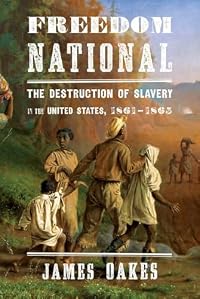
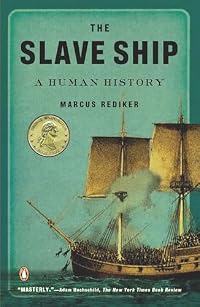

Member Recommendations

Member Reviews
After I read it, I understand why the Economist gave it such a defensive, racist review. This book, more than any I can remember reading, confronts non-black Americans, and to a certain extent citizens of other countries like Britain, with exactly how much of white American wealth and industrialization, which also made many others wealthy or comfortable, depended on the systematic torture of African and African-American people. The book does so both with the horrendous facts, but also with its language, which does not allow readers to gloss over the past. There are no plantations in this book, only slave labor camps. There are no masters, only enslavers—enslavement was an active thing, a thing that kept happening, that was maintained show more regularly and voluntarily, including by lots and lots of people who never enslaved others themselves—and Baptist often speaks of enslaved people rather than slaves, reminding us both of their humanity and the ongoing nature of their mistreatment.
There is rape and there is fucking; Baptist, like other historians, links the violent white male culture of the South with the domination they were pleased to exercise over enslaved people and the necessity they felt of showing other whites that they were “free” and not enslaved. This freedom was freedom to steal (land, people), rape, kill, whip, and otherwise torture blacks as well as freedom to assault and even kill any white man who “insulted” them. The greed of capitalist expansion was funded by ever more efficient extraction of cotton production through the torture of enslaved people, using quantification and individualization of quotas combined with the reduction of slaves to interchangeable “hands.” This greed was connected to the other risk-taking behavior of enslavers as well as to their greed for the bodies of enslaved women, whom they were free to rape. Sexual access to those women also asserted power over white women, functioning as proof that these white men were governed only by themselves: that they did the whipping.
Baptist argues that it’s a reassuring lie to say that slavery was economically inefficient, as we are often taught today. With the mechanisms enslavers developed to break down social bonds between enslaved people; to torture them so terrifyingly that they’d work desperately to avoid the torture; and to create an efficient market for slaves, including credit and securitization, slavery was a wealth-generating machine the likes of which had never been seen before. Slaves learned to innovate and become ever more productive in order to gain some small, temporary protection from the torture. Slavery made some white men very, very wealthy, both in the North and the South, and the institutions we have today are still benefiting from the wealth extracted from enslaved people and allocated to white people. show less
There is rape and there is fucking; Baptist, like other historians, links the violent white male culture of the South with the domination they were pleased to exercise over enslaved people and the necessity they felt of showing other whites that they were “free” and not enslaved. This freedom was freedom to steal (land, people), rape, kill, whip, and otherwise torture blacks as well as freedom to assault and even kill any white man who “insulted” them. The greed of capitalist expansion was funded by ever more efficient extraction of cotton production through the torture of enslaved people, using quantification and individualization of quotas combined with the reduction of slaves to interchangeable “hands.” This greed was connected to the other risk-taking behavior of enslavers as well as to their greed for the bodies of enslaved women, whom they were free to rape. Sexual access to those women also asserted power over white women, functioning as proof that these white men were governed only by themselves: that they did the whipping.
Baptist argues that it’s a reassuring lie to say that slavery was economically inefficient, as we are often taught today. With the mechanisms enslavers developed to break down social bonds between enslaved people; to torture them so terrifyingly that they’d work desperately to avoid the torture; and to create an efficient market for slaves, including credit and securitization, slavery was a wealth-generating machine the likes of which had never been seen before. Slaves learned to innovate and become ever more productive in order to gain some small, temporary protection from the torture. Slavery made some white men very, very wealthy, both in the North and the South, and the institutions we have today are still benefiting from the wealth extracted from enslaved people and allocated to white people. show less
Follow the money
The Half Has Never Been Told: Slavery and the Making of Modern Capitalism by Edward E. Baptist (Basic Books, $35), published 9/9/14.
One of the refrains from uncomfortable white people who don’t want to deal with the frustration and anger of the African American descendants of enslaved people turn to is “Slavery’s over, and it had nothing to do with me!”
(Or, in the case of the reviewer for The Economist, “It wasn’t that bad, anyway.”)
In Edward E. Baptist’s meticulously-researched and clearly written history of the relationship between slavery and the American economic system, The Half Has Never Been Told: Slavery and the Making of Modern Capitalism, there’s more than enough evidence to put lie to any show more soothing claim that the historically-impaired and over-privileged descendants of the people who profited from slavery might make.
Baptist painstakingly makes clear that the United States’ rise to economic powerhouse was built, piece by piece, not simply on the labor of slaves but on their use as securitized assets. Any wealth inherited from our white ancestors most likely has, at its roots, some connection to the profits made off enslaving others—and that’s certainly a piece of evidence worth considering as we conduct our discussions of persistent racial inequality in America.
It’s impossible to state more clearly than this: The Half Has Never Been Told is proof that racial inequality started with the bank book, and that may very well be the only way to address it.
Reviewed on Lit/Rant: www.litrant.tumblr.com show less
The Half Has Never Been Told: Slavery and the Making of Modern Capitalism by Edward E. Baptist (Basic Books, $35), published 9/9/14.
One of the refrains from uncomfortable white people who don’t want to deal with the frustration and anger of the African American descendants of enslaved people turn to is “Slavery’s over, and it had nothing to do with me!”
(Or, in the case of the reviewer for The Economist, “It wasn’t that bad, anyway.”)
In Edward E. Baptist’s meticulously-researched and clearly written history of the relationship between slavery and the American economic system, The Half Has Never Been Told: Slavery and the Making of Modern Capitalism, there’s more than enough evidence to put lie to any show more soothing claim that the historically-impaired and over-privileged descendants of the people who profited from slavery might make.
Baptist painstakingly makes clear that the United States’ rise to economic powerhouse was built, piece by piece, not simply on the labor of slaves but on their use as securitized assets. Any wealth inherited from our white ancestors most likely has, at its roots, some connection to the profits made off enslaving others—and that’s certainly a piece of evidence worth considering as we conduct our discussions of persistent racial inequality in America.
It’s impossible to state more clearly than this: The Half Has Never Been Told is proof that racial inequality started with the bank book, and that may very well be the only way to address it.
Reviewed on Lit/Rant: www.litrant.tumblr.com show less
Probably one of the best non-fiction books I've ever read, definitely the best within the genre of historical subjects (including biographies and memoirs).
The theft of human lives leading to "...the violence of separation... in order to deploy people as commodities at the entrepreneurial edge of the modern world economy." (pg.188)
Author Edward Baptist's thesis that the expansion of the geographic area of practice of enslavement within the young United States and intensification of use of those enslaved drove the country onto the world stage as an economic player and powerhouse. Examination of the political, sociological and psychological rationale, and religious and financial/economic factors abound throughout the text, for which the show more author presents the course of the years from approximately 1790 to 1860 (and beyond) within the analogy of parts of the body.
Effective use of narrative gives the idea that (echoing anther GoodReads reviewer) one is immersed within a novel, and by revisiting events from different perspective in various chapters drives home the calamity, the insensitivity, the brashness and lack of foresight undertaken by the enslavers of the King Cotton era.
Baptist's endnotes/bibliography/references appear to solidly support the presentation, and the text abounds in points that make one step back, breathe deeply, and really think... drawing one into the lives of those about whom you are reading... there's a personal perspective to the events that one really feels about those who lived, existed, died, contributed to or survived that period.
The repercussions of that period are still felt in today's world.
“Slavery permitted unchecked dominance and unlimited fulfillment of unrestrained desire.” (pg.234)
“People rarely have sufficient information to measure the consequences of one act or another... pure rationality does not always drive people's actions, even—and sometimes especially—their “economic” ones.” (pg.235) show less
The theft of human lives leading to "...the violence of separation... in order to deploy people as commodities at the entrepreneurial edge of the modern world economy." (pg.188)
Author Edward Baptist's thesis that the expansion of the geographic area of practice of enslavement within the young United States and intensification of use of those enslaved drove the country onto the world stage as an economic player and powerhouse. Examination of the political, sociological and psychological rationale, and religious and financial/economic factors abound throughout the text, for which the show more author presents the course of the years from approximately 1790 to 1860 (and beyond) within the analogy of parts of the body.
Effective use of narrative gives the idea that (echoing anther GoodReads reviewer) one is immersed within a novel, and by revisiting events from different perspective in various chapters drives home the calamity, the insensitivity, the brashness and lack of foresight undertaken by the enslavers of the King Cotton era.
Baptist's endnotes/bibliography/references appear to solidly support the presentation, and the text abounds in points that make one step back, breathe deeply, and really think... drawing one into the lives of those about whom you are reading... there's a personal perspective to the events that one really feels about those who lived, existed, died, contributed to or survived that period.
The repercussions of that period are still felt in today's world.
“Slavery permitted unchecked dominance and unlimited fulfillment of unrestrained desire.” (pg.234)
“People rarely have sufficient information to measure the consequences of one act or another... pure rationality does not always drive people's actions, even—and sometimes especially—their “economic” ones.” (pg.235) show less
The book very skillfully mixes a wrenching portrayal of individual human suffering, gleaned from oral histories of former slaves, with a solid economic history of the U.S. economy during the slave era. It's a powerful combination. Baptist's strongly supported thesis is that the economic growth of the 18th and 19th centuries was fueled neither by entrepreneurial drive, nor by technical innovation, but instead by the toil of enslaved people. Having read the book, this feels very obvious to me now, but as I was reading it I could feel my own resistance to Baptist's thesis, because I have been taught well over many years to believe otherwise--that the plantation economy of South as well as slavery itself were backward economic institutions show more that were destined to be overwhelmed by the capital-intense North. But who bought all that cotton, who turned it into textiles, who profited from cheap cotton? Who benefitted most from cotton being produced by free labor? Not just the South. By laying out very carefully the flow of money, credit, land development and slave labor, from the late 18th to mid-19th century, Baptist leaves the reader with a very strong understanding of how all white Americans, not just those in the South, benefitted from the subjection of African Americans into slavery.
Baptist, a Cornell history professor, breaks out of academic-speak altogether and presents the material in unique ways. I felt his narrative creativity served to jolt me out of any received wisdom about slavery so I could think in new ways. In one section Baptist writes for example from the point of view of a dying man, a leader of a slave revolt at the moment of his execution. Less flamboyantly but even more effectively for me, Baptist consistently replaces the word "slaves" with "enslaved people." That may sound like a small difference, but it reframed the fact of slavery in a new, more factual way.The word "slave" has been used up, in a way, to the point where it is very hard to divorce the word from the centuries-old idea of a "happy slave" being cared for by paternalistic "masters." "Enslaved people" gets back to the heart of the atrocity, back to the bare fact of a person held against their will and entirely at the mercy of another human being.
It's a book that causes heartache, as it should. It's very hard to look straight at this topic and see it for all its horror. It also left me with the feeling that very little has changed, when I think about how much of U.S. economic growth still depends on the labor of the powerless, whether it be farm workers here in the U.S., or the near-slave labor making everything from shirts to semiconductors overseas. This greater criticism of capitalism is not in any way a part of Baptist's thesis, which is wide-ranging enough as it is...but even so, the book led me to certain kinds of conclusions about how the rapid accumulation of wealth in any capitalist economy seems to depend on the subjugation of others. show less
Baptist, a Cornell history professor, breaks out of academic-speak altogether and presents the material in unique ways. I felt his narrative creativity served to jolt me out of any received wisdom about slavery so I could think in new ways. In one section Baptist writes for example from the point of view of a dying man, a leader of a slave revolt at the moment of his execution. Less flamboyantly but even more effectively for me, Baptist consistently replaces the word "slaves" with "enslaved people." That may sound like a small difference, but it reframed the fact of slavery in a new, more factual way.The word "slave" has been used up, in a way, to the point where it is very hard to divorce the word from the centuries-old idea of a "happy slave" being cared for by paternalistic "masters." "Enslaved people" gets back to the heart of the atrocity, back to the bare fact of a person held against their will and entirely at the mercy of another human being.
It's a book that causes heartache, as it should. It's very hard to look straight at this topic and see it for all its horror. It also left me with the feeling that very little has changed, when I think about how much of U.S. economic growth still depends on the labor of the powerless, whether it be farm workers here in the U.S., or the near-slave labor making everything from shirts to semiconductors overseas. This greater criticism of capitalism is not in any way a part of Baptist's thesis, which is wide-ranging enough as it is...but even so, the book led me to certain kinds of conclusions about how the rapid accumulation of wealth in any capitalist economy seems to depend on the subjugation of others. show less
This is a "must read" book for anyone who is interested in American history, which means anyone who is seriously interested in American politics. Baptist argues that slavery was at the center of the early expansion of the American economy, using both careful research and moving narratives of individual slaves.
Most writing about American history tends to focus on slavery, the "Peculiar Institution" of the ante-bellum South, as a regional issue whose political effects became critical, but whose national economic effects were limited. Baptist turns that view on its head, arguing that the economic effects of slavery dominated the national economy in the fifty years before the civil war. He documents this view with rigorous research, show more focussing on the fact that the amount of cotton produced by each slave rose sharply over the period, reaching levels that free labor could not match. Cotton became America's most important export, and, indirectly, the basis of much of the rest of the economy -- the South was a major market for the North, increasingly so as the South grew richer and richer. This led to the development of a financial system emerged that depended on the continued geographic expansion of slavery, which spilled over into the political sphere and came to dominate Southern priorities.
Baptist's book is carefully researched, solid economic history. But it is also a searing examination of how slavery worked in the cotton fields of the deep South. The rising productivity of slave labor was no accident; it was the result of torture, and the fear of more torture. It is painful to read much of what he writes about how slaves were treated -- punished, humiliated, separated from family -- and he doesn't mince words. For example, he refers to "slave labor camps" instead of "plantations", part of a shift in view that makes what happened stark and real. show less
Most writing about American history tends to focus on slavery, the "Peculiar Institution" of the ante-bellum South, as a regional issue whose political effects became critical, but whose national economic effects were limited. Baptist turns that view on its head, arguing that the economic effects of slavery dominated the national economy in the fifty years before the civil war. He documents this view with rigorous research, show more focussing on the fact that the amount of cotton produced by each slave rose sharply over the period, reaching levels that free labor could not match. Cotton became America's most important export, and, indirectly, the basis of much of the rest of the economy -- the South was a major market for the North, increasingly so as the South grew richer and richer. This led to the development of a financial system emerged that depended on the continued geographic expansion of slavery, which spilled over into the political sphere and came to dominate Southern priorities.
Baptist's book is carefully researched, solid economic history. But it is also a searing examination of how slavery worked in the cotton fields of the deep South. The rising productivity of slave labor was no accident; it was the result of torture, and the fear of more torture. It is painful to read much of what he writes about how slaves were treated -- punished, humiliated, separated from family -- and he doesn't mince words. For example, he refers to "slave labor camps" instead of "plantations", part of a shift in view that makes what happened stark and real. show less
An interesting read on how slavery and the profit it produced were inextricably woven into almost all aspects of early American society. The author demonstrates that slavery wasn't merely a moral failing isolated to a few southern states, it was backbone of American commerce for decades, its implementation and survival were seen as necessary to making white men obscenely rich and indeed keeping the country financially solvent. The half has never been told is an appropriate title for this work, as most Americans (myself included) aren't fully aware of how ubiquitous and monstrous slavery was, nor how complicit the whole country was in its continuance.
While I've been meaning to read this book for years, certainly since about 2016, the right time never quite presented itself. Much of this boils down to not being the sort of person who needs to be proselytized that the institution of slavery was a great evil, and an evil that tends to get shoved under the carpet. However, the moment has come, and I figured that I might as well get the job done before this book starts "disappearing" from library shelves.
Part of the problem with Baptist is that he really is all over the place, and one does need to have a pretty good background in US history to get the most out of it (perhaps more than the imagined general reader).
However, Baptist does two things really well. On one hand, he does keep show more your nose to the grindstone in regards to the constant crushing, violence that was a part of the typical US slave's daily life. Sad to say, this does require constant reiteration.
On the other hand, and the real achievement of this book, is that Baptist provides the reader with a coherent overview of the "chattel-agricultural-finance" complex at its peak in the 1830s, before British bankers pulled the tablecloth out from under the house of cards, and the whole machine came crashing down. Because here's the thing, it's beside the point that slavery was supposedly an inefficient mode of production (which is arguable). The main point is that it was part of a huge, collective, get-rich scheme of the sort that still fires imaginations in the US; it certainly did for the Southern slave-holding class who in 1861 wanted to break out of reservation they found themselves being locked in.
So, while Baptist is still informing people of news that remains news, the people who should be reading this probably aren't. show less
Part of the problem with Baptist is that he really is all over the place, and one does need to have a pretty good background in US history to get the most out of it (perhaps more than the imagined general reader).
However, Baptist does two things really well. On one hand, he does keep show more your nose to the grindstone in regards to the constant crushing, violence that was a part of the typical US slave's daily life. Sad to say, this does require constant reiteration.
On the other hand, and the real achievement of this book, is that Baptist provides the reader with a coherent overview of the "chattel-agricultural-finance" complex at its peak in the 1830s, before British bankers pulled the tablecloth out from under the house of cards, and the whole machine came crashing down. Because here's the thing, it's beside the point that slavery was supposedly an inefficient mode of production (which is arguable). The main point is that it was part of a huge, collective, get-rich scheme of the sort that still fires imaginations in the US; it certainly did for the Southern slave-holding class who in 1861 wanted to break out of reservation they found themselves being locked in.
So, while Baptist is still informing people of news that remains news, the people who should be reading this probably aren't. show less
Members
- Recently Added By
Lists

Top Five Books of 2014
1,064 works; 397 members

Ulysses S. Grant & the American Civil War
24 works; 1 member

Evan's Reading List 2019
15 works; 1 member

Charleston Syllabus (waitingtoderail)
143 works; 2 members

Silent Scream
20 works; 2 members

Slavery and Capitalism
24 works; 1 member

Books Read in 2022
5,164 works; 113 members
Talk Discussions
Past Discussions
#notallslaveowners in Pro and Con (November 2014)
Slavery in America in History: On learning from and writing history (November 2014)
Author Information

4+ Works 1,380 Members
Some Editions
Awards and Honors
Common Knowledge
- Canonical title
- The Half Has Never Been Told: Slavery and the Making of American Capitalism
- Original publication date
- 2014-09-09
- Dedication
- For Ezra and Lillian
- First words
- A beautiful late April day, seventy-two years after slavery ended in the United States. (Introduction)
- Last words
- (Click to show. Warning: May contain spoilers.)"Be good now," Lorenzo Ivy said, and turned back through the open door.
Classifications
- Genres
- History, General Nonfiction, Nonfiction
- DDC/MDS
- 306.3 — Social sciences Social sciences, sociology & anthropology Culture and institutions Economic institutions
- LCC
- E441 .B337 — History of the United States United States Revolution to the Civil War, 1775/1783-1861 Slavery in the United States. Antislavery
- BISAC
Statistics
- Members
- 1,325
- Popularity
- 18,013
- Reviews
- 29
- Rating
- (4.35)
- Languages
- English, Portuguese (Portugal)
- Media
- Paper, Audiobook, Ebook
- ISBNs
- 14
- UPCs
- 1
- ASINs
- 8