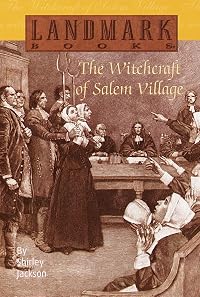
The Witchcraft of Salem Village
by Shirley Jackson
On This Page
Description
A detailed account of one of the strangest and most shocking episodes in American history, written by the author of "The Lottery"Stories of magic, superstition, and witchcraft were strictly forbidden in the little town of Salem Village. But a group of young girls ignored those rules, spellbound by the tales told by a woman named Tituba. When questioned about their activities, the terrified girls set off a whirlwind of controversy as they accused townsperson after townsperson of being show more witches. Author Shirley Jackson examines in careful detail this horrifying true story of accusations, trials, and executions that shook a community to its foundations. show lessTags
Recommendations














Member Recommendations
Member Reviews
Book 167 - Shirley Jackson - The Witchcraft of Salem Village
Told in the form of a historical novel, this wonderful overview of this terrifying time is breathtaking in its simplicity and yet horrific in its reality. A group of preteen girls who are being suppressed by the puritanical views of the time decide the only way to escape is use their rebellious acts is to cry 'Wolf' or in this case ‘Witch'.
It is horrible to think that their acts of 'possession' and cries for ‘help’ are initially seen as pre teen angst but due to the tyrannical behaviour of this time…of the families and indeed of the local clergy, one of the girls being the daughter of the local clergy…soon the hunt begins. They are soon seen as being able to identify show more witches…and so the investigations and the trials begin. The girls love for attention…soon becomes a craving and an addiction. Having a strong faith and belief system is one thing... forcing it on others to the point that they are hunted... imprisoned…punished... executed is another.
How the slow... but inexorable journey from frightened girls… to loving the attention and the theatrics that go with this... plays out... is still jaw dropping today.
'Thou shalt not suffer a witch to live' is a poor translation of a Biblical verse... but the reality is... as has been the case for centuries... it only takes one bad apple to spoil the barrel.
Probably one of the most horrible true stories in history and its spread throughout New England…and back to the homeland of England itself…is devastating. show less
Told in the form of a historical novel, this wonderful overview of this terrifying time is breathtaking in its simplicity and yet horrific in its reality. A group of preteen girls who are being suppressed by the puritanical views of the time decide the only way to escape is use their rebellious acts is to cry 'Wolf' or in this case ‘Witch'.
It is horrible to think that their acts of 'possession' and cries for ‘help’ are initially seen as pre teen angst but due to the tyrannical behaviour of this time…of the families and indeed of the local clergy, one of the girls being the daughter of the local clergy…soon the hunt begins. They are soon seen as being able to identify show more witches…and so the investigations and the trials begin. The girls love for attention…soon becomes a craving and an addiction. Having a strong faith and belief system is one thing... forcing it on others to the point that they are hunted... imprisoned…punished... executed is another.
How the slow... but inexorable journey from frightened girls… to loving the attention and the theatrics that go with this... plays out... is still jaw dropping today.
'Thou shalt not suffer a witch to live' is a poor translation of a Biblical verse... but the reality is... as has been the case for centuries... it only takes one bad apple to spoil the barrel.
Probably one of the most horrible true stories in history and its spread throughout New England…and back to the homeland of England itself…is devastating. show less
This is a wonderfully written, no-nonsense account of the Salem Witch Trials. Jackson didn't have to embellish the horror of the Salem Witchcraft trials. The events as they happened were already horrific enough.
Tween girls are horrid beasts. Seriously, they're awful. Their brain is not quite to the point of seeing past the end of their nose, but they are not yet in that ugly stage of teenage awkwardness. Because of this, they can shamelessly bully a crowd of adults to their knees if they are motivated and clever enough. Each one of those girls should have had a parental smack. One of them did, and she did not persist in her nonsense. Normally, I am against corporal punishment. In this case, it might have stopped capital show more punishment.
Update: Jan. 21
I didn't realize that this was part of a 100+ book series on American history for school kids during the 1950s and 1960s. It says a lot about the writing. Normally, I dislike writing for youth. Granted, it's simplistic in some ways, but Jackson is able to make it say so much more. I might read other books in the series because I'm curious. It's the history that we were taught in school during my days as a kid. If I can find them, it will be interesting. show less
Tween girls are horrid beasts. Seriously, they're awful. Their brain is not quite to the point of seeing past the end of their nose, but they are not yet in that ugly stage of teenage awkwardness. Because of this, they can shamelessly bully a crowd of adults to their knees if they are motivated and clever enough. Each one of those girls should have had a parental smack. One of them did, and she did not persist in her nonsense. Normally, I am against corporal punishment. In this case, it might have stopped capital show more punishment.
Update: Jan. 21
I didn't realize that this was part of a 100+ book series on American history for school kids during the 1950s and 1960s. It says a lot about the writing. Normally, I dislike writing for youth. Granted, it's simplistic in some ways, but Jackson is able to make it say so much more. I might read other books in the series because I'm curious. It's the history that we were taught in school during my days as a kid. If I can find them, it will be interesting. show less
I took my time with this one since I found the whole thing so fascinating and also Jackson did a great job of including new information that I have not heard about before. She ends the book with a theory about the girls who started it all being afflicted by a fungus on a bread, but she doesn't seem to put much weight behind it and neither do I.
I think most Americans are familiar with the Puritans and also the witchcraft hysteria that gripped Salem Village in 1692. Jackson begins at the beginning with how the Puritans were fleeing religious persecution in England, but really were about conformity and insisting that there fellow brethren were not as religious as they were. She also touches upon the poverty in the village and how there was show more very few things for young girls and boys to do besides attend church meetings. Any schooling they received was only about religious texts. So Jackson sets a very nice stage for what happens next.
A group of young girls starts accusing the women around them of witchcraft after one of them starts to have fits. Is it irony that the one girl and cousin who started accusing women were the daughter and niece of the local reverend?
Betty Parris was 9, and her cousin Abigail Williams was 11. Betty's father Reverend Samuel Parris was all too ready to believe that his flock contained witches. Jackson goes on a bit that he was a fan of Cotton Mather. To me that's like being a fan of Stephen Miller.
Eventually these girls were joined by Ann Putnam Jr. and Elizabeth Hubbard. The girls went around falling into fits when examined, saying that they were being pinched and or burned and would howl when coming across people. The scenes that Jackson describes boggle the mind. I would have been calling bullshit left and right. Then again, I would have totally been burned at the stake.
Eventually the girls accused Sarah Good, Sarah Osborne, and Tituba (Reverend Parris's housekeeper). Jackson touches upon how the first three women accused were seen as outsiders by the villagers. Jackson is slightly damning of Tituba who confessed and went on to accuse other women. Eventually other women were named such as Martha Corey and Sarah Good's young daughter (she was 5) Dorcas Good, and Rebecca Nurse.
I think what got me as a reader is that the girls accusations become more and more unbelievable and no one except a few people tried to push back on it. Some people flat out fled to other colonies than deal with the cries of witchcraft that went on.
It is interesting to note that the afflicted girls in Salem Village cried out upon Robert Calef shortly after Mather’s visit. Calef’s answer, which reached them with all possible speed, was an announcement of a slander suit for a thousand pounds. The accusation against Calef was immediately withdrawn, and his name was not mentioned again in Salem Village.
There is some new information here about how the accusations spread to Andover and how the girls even eventually were brought there to identify witches. They ended up finding mostly everyone there to be witches. You think that would have caused everyone to go these girls are full of it.
In the end, things do not start to wind down until after the execution of 19 people on Gallows Hill and one person being pressed to death. Giles Corey's pressing seemed to be finally the end of the witchcraft accusations. His death shamed the community as a whole and they all finally woke up to the fact that they got played by young girls and some women who were out to cast aspersions onto their more well to do neighbors. The hysteria spread from Salem to Andover and they had jails full of people accused of witchcraft. I think Jackson mentions 150 people were jailed.
Jackson cannot find out that much about what happened to some of the accused. We find out that Parris died in poverty (good riddance) after being chased out of the village. Many blamed him and his relatives for what happened. Jackson mentions that his house no longer stands and it's barren ground now. What started cause ripples through the whole community with Salem sliding more into poverty since many people gave up farming or seeing to their homes due to watching the newest accusation or trial. Many who were accused came out of prison and found their homes and belongings lost to them forever.
The Commonwealth of Massachusetts did not formally clear everyone accused of witchcraft until 1957. show less
I think most Americans are familiar with the Puritans and also the witchcraft hysteria that gripped Salem Village in 1692. Jackson begins at the beginning with how the Puritans were fleeing religious persecution in England, but really were about conformity and insisting that there fellow brethren were not as religious as they were. She also touches upon the poverty in the village and how there was show more very few things for young girls and boys to do besides attend church meetings. Any schooling they received was only about religious texts. So Jackson sets a very nice stage for what happens next.
A group of young girls starts accusing the women around them of witchcraft after one of them starts to have fits. Is it irony that the one girl and cousin who started accusing women were the daughter and niece of the local reverend?
Betty Parris was 9, and her cousin Abigail Williams was 11. Betty's father Reverend Samuel Parris was all too ready to believe that his flock contained witches. Jackson goes on a bit that he was a fan of Cotton Mather. To me that's like being a fan of Stephen Miller.
Eventually these girls were joined by Ann Putnam Jr. and Elizabeth Hubbard. The girls went around falling into fits when examined, saying that they were being pinched and or burned and would howl when coming across people. The scenes that Jackson describes boggle the mind. I would have been calling bullshit left and right. Then again, I would have totally been burned at the stake.
Eventually the girls accused Sarah Good, Sarah Osborne, and Tituba (Reverend Parris's housekeeper). Jackson touches upon how the first three women accused were seen as outsiders by the villagers. Jackson is slightly damning of Tituba who confessed and went on to accuse other women. Eventually other women were named such as Martha Corey and Sarah Good's young daughter (she was 5) Dorcas Good, and Rebecca Nurse.
"Mary Walcott and Elizabeth Hubbard stood up in their places. One of them swore solemnly that Goodwife Nurse had come to her at night and sat upon her chest to suffocate her. The other pointed out that a black man stood, even now, whispering in Goodwife Nurse’s ear and that yellow birds were flying about her head."
I think what got me as a reader is that the girls accusations become more and more unbelievable and no one except a few people tried to push back on it. Some people flat out fled to other colonies than deal with the cries of witchcraft that went on.
It is interesting to note that the afflicted girls in Salem Village cried out upon Robert Calef shortly after Mather’s visit. Calef’s answer, which reached them with all possible speed, was an announcement of a slander suit for a thousand pounds. The accusation against Calef was immediately withdrawn, and his name was not mentioned again in Salem Village.
There is some new information here about how the accusations spread to Andover and how the girls even eventually were brought there to identify witches. They ended up finding mostly everyone there to be witches. You think that would have caused everyone to go these girls are full of it.
In the end, things do not start to wind down until after the execution of 19 people on Gallows Hill and one person being pressed to death. Giles Corey's pressing seemed to be finally the end of the witchcraft accusations. His death shamed the community as a whole and they all finally woke up to the fact that they got played by young girls and some women who were out to cast aspersions onto their more well to do neighbors. The hysteria spread from Salem to Andover and they had jails full of people accused of witchcraft. I think Jackson mentions 150 people were jailed.
Jackson cannot find out that much about what happened to some of the accused. We find out that Parris died in poverty (good riddance) after being chased out of the village. Many blamed him and his relatives for what happened. Jackson mentions that his house no longer stands and it's barren ground now. What started cause ripples through the whole community with Salem sliding more into poverty since many people gave up farming or seeing to their homes due to watching the newest accusation or trial. Many who were accused came out of prison and found their homes and belongings lost to them forever.
The Commonwealth of Massachusetts did not formally clear everyone accused of witchcraft until 1957. show less
I was not aware that Shirley Jackson had written any nonfiction books until I ran across this one. Originally published in 1956, this book is considered a children's book and on Amazon is listed for ages 8-12. That in and of itself made me read this book slightly differently. I often stopped and wondered if children in this age group today would read this book. I know there are some but in general there is a lot facts in this book without a lot of action. However, this is exactly the types of books I was reading when I was that age.
I do recommend this book if you have an interest in the Salem witch trials. Although there were no surprising facts in this book, it is important to remember that this book was published not very long after show more Miller wrote the Crucible, which followed on the heels of McCarthyism. The facts which can be backed up with documentation in many cases show just how quickly people can become enamored of easy explanations for difficult problems. Pointing figures and accusing others of causing pain and suffering is unfortunately a human trait that can only be exacerbated when it becomes group think. show less
I do recommend this book if you have an interest in the Salem witch trials. Although there were no surprising facts in this book, it is important to remember that this book was published not very long after show more Miller wrote the Crucible, which followed on the heels of McCarthyism. The facts which can be backed up with documentation in many cases show just how quickly people can become enamored of easy explanations for difficult problems. Pointing figures and accusing others of causing pain and suffering is unfortunately a human trait that can only be exacerbated when it becomes group think. show less
Brilliant. Anyone familiar with Jackson's life and fiction knows that she was the perfect candidate to write a book on this subject. This is an outstanding overview of the Salem trials for readers of any age.
I was a little surprised that she brought up the accusation and imprisonment of Dorcas Goode, aged 4, without going on to tell us more about what happened to her. Also, Jackson tells the story of Giles Corey brilliantly, but does leave out the bit about his being asked if he had anything to say as he was being "pressed" to death. "More weight" was his only reply, and it's a memorable one under the circumstances. (Corey refused to enter a plea when accused; he couldn't save his own life, but he was able to ensure that his property show more was passed down to his sons, rather than forfeited to the state.)
Read this first if you haven't read about the trials; read this *now* if your knowledge of the trials comes primarily from "The Crucible." Not that "The Crucible" isn't brilliant, but it's important to know where Miller shook up the facts. show less
I was a little surprised that she brought up the accusation and imprisonment of Dorcas Goode, aged 4, without going on to tell us more about what happened to her. Also, Jackson tells the story of Giles Corey brilliantly, but does leave out the bit about his being asked if he had anything to say as he was being "pressed" to death. "More weight" was his only reply, and it's a memorable one under the circumstances. (Corey refused to enter a plea when accused; he couldn't save his own life, but he was able to ensure that his property show more was passed down to his sons, rather than forfeited to the state.)
Read this first if you haven't read about the trials; read this *now* if your knowledge of the trials comes primarily from "The Crucible." Not that "The Crucible" isn't brilliant, but it's important to know where Miller shook up the facts. show less
The Witchcraft of Salem Village was an enjoyable text. I admit here that I am not terribly well read on those trials, or that time period - so I can't objectively judge it on historical veracity. What I can say is that Shirley Jackson gave a rather fair overview of the proceedings, and while speculation was present, it didn't seem to overpower reference to the historical facts.
Personally, my first thought upon reading this was that The Crucible suddenly made sense; please don't judge me on that, as I said above, I really didn't know much about the trials beforehand. My second thought was that the book was unduly hilarious for the simple fact that it's intended for children and is focused on rather weighty subject manner. I don't think show more the language was especially child appropriate, simply because the vocabulary is rather large but.. as Mitch Hedberg said, "Every book is a children's book if that child can read."
Man, I really like Shirley Jackson. Her writing about children is just priceless. show less
Personally, my first thought upon reading this was that The Crucible suddenly made sense; please don't judge me on that, as I said above, I really didn't know much about the trials beforehand. My second thought was that the book was unduly hilarious for the simple fact that it's intended for children and is focused on rather weighty subject manner. I don't think show more the language was especially child appropriate, simply because the vocabulary is rather large but.. as Mitch Hedberg said, "Every book is a children's book if that child can read."
Man, I really like Shirley Jackson. Her writing about children is just priceless. show less
This was clearly written for a middle school audience, but Jackson did an excellent job at presenting the subject in an engaging way. It is by no means an in depth examination of the topic, but she gave a good, if brief, overview of some of the social, economic, and political factors that went into adding fuel to the hysteria.
Members
- Recently Added By
Lists

Books Read in 2015
3,299 works; 126 members

1960s
281 works; 16 members

Books Read in 2014
2,344 works; 89 members

Witch Hunts
30 works; 7 members

Club Read's Recommended Nonfiction Written by Women
618 works; 30 members
Author Information

121+ Works 40,146 Members
Shirley Jackson was born in San Francisco, California on December, 14, 1919. She received a Bachelor of Arts degree from Syracuse University in 1940. Much of her writing was done during the years she was raising her children. She is best-known for the short story The Lottery, which was first published in 1948 and adapted for television in 1952 and show more into play form in 1953. Her published works include articles, nonfiction prose, plays, poetry, seven novels, and fifty-five short stories. Her other works include Life among the Savages, Raising Demons, The Haunting of Hill House, which was adapted to film, and We Have Always Lived in the Castle. She died on August 8, 1965 at the age of 45. (Bowker Author Biography) show less
All Editions
Series
Belongs to Publisher Series
Landmark Books (69)
Common Knowledge
- Canonical title
- The Witchcraft of Salem Village
- Original publication date
- 1956
- People/Characters
- Samuel Parris; Tituba; Ann Putnam; Elizabeth Parris; Mary Warren; Abigail Williams (show all 23); Sarah Osburn; Sarah Goode; Cotton Mather; John Hathorne; Jonathan Corwin; Martha Corey; Giles Corey; Rebecca Nurse; Dorcas Goode; Deodat Lawson; Mary Walcott; Sarah Cloyse; John Proctor; Elizabeth Proctor; George Burroughs; William Phips; Samuel Sewall
- Important places
- Salem, Massachusetts, USA; Danvers, Massachusetts, USA
- Important events
- Salem witch trials
- Dedication
- For my son Barry
- First words
- Building a new life in a wilderness is a job for strong and heroic people.
- Last words
- (Click to show. Warning: May contain spoilers.)So far, however, this theory has not achieved wide acceptance.
- Original language
- English
Classifications
Statistics
- Members
- 854
- Popularity
- 32,131
- Reviews
- 13
- Rating
- (3.71)
- Languages
- English
- Media
- Paper, Audiobook, Ebook
- ISBNs
- 15
- ASINs
- 13