On This Page
Description
In 1659, fourteen-year-old Mary Newbury keeps a journal of her voyage from England to the New World and her experiences living as a witch in a community of Puritans near Salem, Massachusetts.Tags
Recommendations
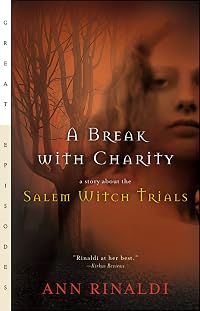
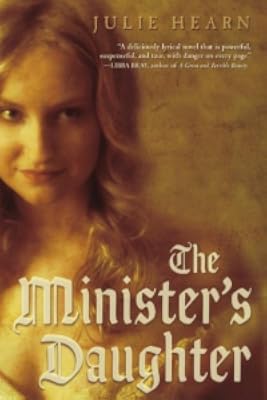
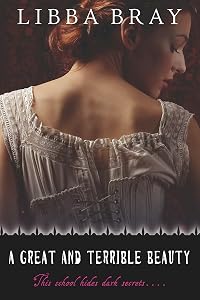
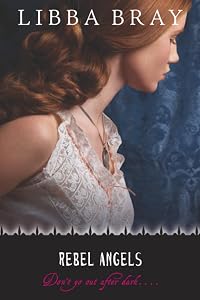

Member Recommendations
Member Reviews
After her grandmother is tortured and murdered as a witch, Mary Newbury escapes England disguised as a Pilgrim headed for the New World. She finds that her new companions can be just as rigid in their rules and narrow-mindedness, and she must watch herself and hide her abilities as best she can.
Written as a series of diary entries found in later years, this YA novel does a good job of giving a sense of urgency to the story; I found myself rooting for Mary from the first page and worrying for her safety in nearly every page thereafter. It also showcases the ridiculous amount of danger the simple fact of being a woman could place you in and the insanely various forms that danger could take, from childbirth to accusations of witchcraft for show more appearing to be too smart or too independent for your gender. show less
Written as a series of diary entries found in later years, this YA novel does a good job of giving a sense of urgency to the story; I found myself rooting for Mary from the first page and worrying for her safety in nearly every page thereafter. It also showcases the ridiculous amount of danger the simple fact of being a woman could place you in and the insanely various forms that danger could take, from childbirth to accusations of witchcraft for show more appearing to be too smart or too independent for your gender. show less
“Words have power. These are mine.”
Mary Nuttall was just sixteen years old when her grandmother Eliza – the only family she’d ever known – was murdered. Accused of practicing witchcraft, the old woman was tortured, stripped naked, bound, and “floated” - tossed into a river to sink or swim. Her buoyancy taken as a sure sign of guilt, Eliza was pulled from the water only so that she could be hanged in public. Once trusted to heal their loved ones, Eliza’s friends and neighbors in this rural English town proved eager witnesses to her execution.
Rescued from similar persecution by her long-lost mother, Mary is sent away to the “New World” in search of a better life. She’s to travel with a group of Puritans bound for show more Salem, where they’ll join their brethren and pastor. Upon arrival, the group is dismayed to discover that their kin have moved on, to the isolated town of Beulah. After much deliberation they decide to follow, forging ahead into the wilderness with two Natives – of the Pennacook tribe – acting as their guides.
Unsurprisingly, Beulah couldn’t be further from the safe haven Mary’s mother envisioned for her child. Ruled by a Puritan preacher so strict and demanding that he proved unwelcome in Salem, Mary is in constant danger, just by virtue of being a newcomer to the community. Though she tries hard to stay under the radar, her “transgressions,” real and imagined – which include befriending members of the opposite sex; spending time alone in the forest to gather food and herbs; harboring anything more than uncharitable thoughts about the “heathen” natives; and proficiency in transcription – don’t escape the notice of Reverend Johnson. When items suggestive of witchcraft are discovered in the forest and several of the town’s teenage girls start exhibiting strange behavior, Mary’s worst fears are realized.
All of this we learn from Mary’s journal, which spans roughly a year from 1659-1660. Urged to burn it by her protector/surrogate mother Martha – its opening sentences (“I am Mary. I am a witch.”) alone being sure proof of guilt – Mary instead hides its pages inside a quilt. Discovered more than three hundred years later by one “Alison Ellman” (one of Mary’s descendents, perhaps), Mary’s journal stands testament to the horrors she and her kind endured.
In Witch Child, Celia Rees has created a work of historical fiction that’s perhaps more honest about the misogyny, racism, and religious bigotry of the time than are many high school textbooks. Women who threaten the patriarchal power structure – those who have special skills or knowledge, such as healing or above average literacy, or who are independent and live outside the bounds of marriage – are threatened with the specter of witchcraft to ensure compliance. Likewise, Puritan attitudes about the native inhabitants of the land are every bit as cruel and barbaric as they accuse the indigenous people of being. Where Reverend Johnson sees the land that will become Beulah and thinks that God has set it aside especially for him, Jaybird and White Eagle recognize it as the summering lands of their people, cleared and cultivated by them and ransacked and stolen by the Puritans while it lay vacant in the winter.
Chilling and captivating, Witch Child is suitable for readers young and old. Though the story drags a little at the beginning – the slowest part being the voyage – the pace picks up once the colonists reach America. While the reader has a vague idea of how the story will end (Mary must survive to have at least one child), this doesn’t detract from the feeling of suspense and urgency. In fact, Mary’s narrative ends rather suddenly, in a jarring conclusion that left me wanting more. Luckily, there’s a sequel (Sorceress) – which I ordered not a half hour after finishing Witch Child.
Trigger warnings for copious amounts of racism, misogyny, and speciesism. In particular, the scene in which Mary sees the whales for the first time broke my heart. Her friend Jack’s reaction to this magnificent sight?
“’One day, I mean to hunt them.’ He mimed picking up a harpoon and flinging it over the side. ‘I mean to have my own ship and I will hire men to go after them, for they are here in abundance and there is great wealth to be made from them….’ […] Maybe it was the sea glittering beneath him, but his eyes seemed full of coins.” (page 78)
http://www.easyvegan.info/2013/02/04/witch-child-by-celia-rees/ show less
Mary Nuttall was just sixteen years old when her grandmother Eliza – the only family she’d ever known – was murdered. Accused of practicing witchcraft, the old woman was tortured, stripped naked, bound, and “floated” - tossed into a river to sink or swim. Her buoyancy taken as a sure sign of guilt, Eliza was pulled from the water only so that she could be hanged in public. Once trusted to heal their loved ones, Eliza’s friends and neighbors in this rural English town proved eager witnesses to her execution.
Rescued from similar persecution by her long-lost mother, Mary is sent away to the “New World” in search of a better life. She’s to travel with a group of Puritans bound for show more Salem, where they’ll join their brethren and pastor. Upon arrival, the group is dismayed to discover that their kin have moved on, to the isolated town of Beulah. After much deliberation they decide to follow, forging ahead into the wilderness with two Natives – of the Pennacook tribe – acting as their guides.
Unsurprisingly, Beulah couldn’t be further from the safe haven Mary’s mother envisioned for her child. Ruled by a Puritan preacher so strict and demanding that he proved unwelcome in Salem, Mary is in constant danger, just by virtue of being a newcomer to the community. Though she tries hard to stay under the radar, her “transgressions,” real and imagined – which include befriending members of the opposite sex; spending time alone in the forest to gather food and herbs; harboring anything more than uncharitable thoughts about the “heathen” natives; and proficiency in transcription – don’t escape the notice of Reverend Johnson. When items suggestive of witchcraft are discovered in the forest and several of the town’s teenage girls start exhibiting strange behavior, Mary’s worst fears are realized.
All of this we learn from Mary’s journal, which spans roughly a year from 1659-1660. Urged to burn it by her protector/surrogate mother Martha – its opening sentences (“I am Mary. I am a witch.”) alone being sure proof of guilt – Mary instead hides its pages inside a quilt. Discovered more than three hundred years later by one “Alison Ellman” (one of Mary’s descendents, perhaps), Mary’s journal stands testament to the horrors she and her kind endured.
In Witch Child, Celia Rees has created a work of historical fiction that’s perhaps more honest about the misogyny, racism, and religious bigotry of the time than are many high school textbooks. Women who threaten the patriarchal power structure – those who have special skills or knowledge, such as healing or above average literacy, or who are independent and live outside the bounds of marriage – are threatened with the specter of witchcraft to ensure compliance. Likewise, Puritan attitudes about the native inhabitants of the land are every bit as cruel and barbaric as they accuse the indigenous people of being. Where Reverend Johnson sees the land that will become Beulah and thinks that God has set it aside especially for him, Jaybird and White Eagle recognize it as the summering lands of their people, cleared and cultivated by them and ransacked and stolen by the Puritans while it lay vacant in the winter.
Chilling and captivating, Witch Child is suitable for readers young and old. Though the story drags a little at the beginning – the slowest part being the voyage – the pace picks up once the colonists reach America. While the reader has a vague idea of how the story will end (Mary must survive to have at least one child), this doesn’t detract from the feeling of suspense and urgency. In fact, Mary’s narrative ends rather suddenly, in a jarring conclusion that left me wanting more. Luckily, there’s a sequel (Sorceress) – which I ordered not a half hour after finishing Witch Child.
Trigger warnings for copious amounts of racism, misogyny, and speciesism. In particular, the scene in which Mary sees the whales for the first time broke my heart. Her friend Jack’s reaction to this magnificent sight?
“’One day, I mean to hunt them.’ He mimed picking up a harpoon and flinging it over the side. ‘I mean to have my own ship and I will hire men to go after them, for they are here in abundance and there is great wealth to be made from them….’ […] Maybe it was the sea glittering beneath him, but his eyes seemed full of coins.” (page 78)
http://www.easyvegan.info/2013/02/04/witch-child-by-celia-rees/ show less
[This is a review I wrote in 2007]
**Captivating well-written story of a young witch in the seventeenth century**
Celia Rees writes beautifully here, literally grabbing you from the first page and dragging you into Mary's story from 1659.
Mary is a young girl growing into womanhood fearful of persecution. The story opens immediately with the witch trial of the woman she calls "grandmother" who has brought her up from when she was a baby. To avoid the same fate, Mary finds herself being shipped off to America, in disguise with a group of migrating Puritans. However, even in America, Mary finds it hard to disguise some of her peculiarities however hard she tries, and the strongly Puritan community she lives amongst needs to find a show more scapegoat...
It's a great fictionalised introduction to the persecution of women in the witch-hunt trials of the seventeenth century. Written as a journal fragment from Mary's own account of her travels, it's really easy to engage with the story and I didn't want the book to end when it did. Mary's story breaks off to leave us guessing about her ultimate fate.
It's a great story and I can recommend it for ages 11+ show less
**Captivating well-written story of a young witch in the seventeenth century**
Celia Rees writes beautifully here, literally grabbing you from the first page and dragging you into Mary's story from 1659.
Mary is a young girl growing into womanhood fearful of persecution. The story opens immediately with the witch trial of the woman she calls "grandmother" who has brought her up from when she was a baby. To avoid the same fate, Mary finds herself being shipped off to America, in disguise with a group of migrating Puritans. However, even in America, Mary finds it hard to disguise some of her peculiarities however hard she tries, and the strongly Puritan community she lives amongst needs to find a show more scapegoat...
It's a great fictionalised introduction to the persecution of women in the witch-hunt trials of the seventeenth century. Written as a journal fragment from Mary's own account of her travels, it's really easy to engage with the story and I didn't want the book to end when it did. Mary's story breaks off to leave us guessing about her ultimate fate.
It's a great story and I can recommend it for ages 11+ show less
Like many women my age, I grew up reading Scholastic paperbacks about the Salem Witch Trials, all with the same underlying message: how terrible that the innocent were (and are) persecuted simply for appearing slightly different. Rees takes this laudable enough idea and stretches it farther - what if the girls really were witches, and therefore, by the standards of a Christian society, not 'innocent' at all? Still not ok to persecute them, right? And to take it yet another step further, what if one of these girls did what all of us young readers hoped those doomed Salem victims would do, and decide she didn't want to just sit around to get crushed with rocks or hanged, and fought to save herself? 100 percent historically accurate it may show more not be, but MAN this book is a satisfying read. And re-read. show less
Witch Child by Celia Rees is a YA historical fiction novel about Mary Newbury, a foundling child who has been raised by a women who was tortured and hung as a witch. Mary’s real mother is able to spirit her away and put her on a ship to America, but unfortunately she has been placed with a group of highly religious Puritans. Although Mary tries to fit in and follow all the rules, she is different. She enjoys her solo wanderings in the forest and she also befriends an Indian boy who teaches her much about the flora and fauna of this new world. When she is recognized as the ward of a witch, fingers start to point at her, those that are jealous of her spout lies and Mary is put in the position of having to flee to the wilderness for her show more life.
The author ties Mary’s story into the actual history of the pilgrim settlements near Salem, Massachusetts and the outcome is quite seamless. Mary’s story is told through the pages of her diary and through it the setting comes vividly to life. I felt the book revealed itself as YA when it came to the characters however as they seemed stereotypical with the Puritans being overly stiff and intolerant, while the two Indian characters, although painted in a positive light, felt like cardboard characters in that one was a wise healer, and the other, an obvious romantic interest, had been raised by whites and spoke perfect English.
These quibbles aside, I enjoyed the story and I even can forgive the abrupt ending as I knew in advance that there is a sequel and I already have it sitting on my shelf. show less
The author ties Mary’s story into the actual history of the pilgrim settlements near Salem, Massachusetts and the outcome is quite seamless. Mary’s story is told through the pages of her diary and through it the setting comes vividly to life. I felt the book revealed itself as YA when it came to the characters however as they seemed stereotypical with the Puritans being overly stiff and intolerant, while the two Indian characters, although painted in a positive light, felt like cardboard characters in that one was a wise healer, and the other, an obvious romantic interest, had been raised by whites and spoke perfect English.
These quibbles aside, I enjoyed the story and I even can forgive the abrupt ending as I knew in advance that there is a sequel and I already have it sitting on my shelf. show less
Right at the beginning of this remarkable novel, Mary's grandmother is tortured, tried and dies for being branded a 'witch'. Rees lets you know exactly what was in store for the poor women who as healers, herbalists and midwives, were routinely denounced as witches when something went wrong in the superstitious Puritan times.
Mary is helped to escape a similar fate by joining a bunch of settlers going to America. She slots into a group with an Apothecary, Jonah and his son, and Martha, a widow who herself has some skills as a midwife. Mary is unused to being confined on the ship although her writing skills, (unusual for a woman at that time) are in demand. When the settlers reach the New World, she is happy to travel on with the others show more to the settlement which the previous shipload of this congregation had established. This is when she meets her first native American, Jaybird and his father guide them, and she is intrigued. Once they have roofs over their heads, she starts to venture into the forest, helping Jonah to research for medicinal plants, but also often meeting Jaybird. But tongues start wagging, and Mary finds herself again the centre of speculation over her wayward ways ...
The novel is written as diary entries 'The Mary Papers' that had been found sewn into a quilt. It shows us what a hard life it was to be an woman with unusual skills in those days; living in a society in which the fear of God was omnipresent, through the ministrations of the Puritan clergy. The settlers life was not easy either, that first year of building, battling the long snowy winter and taming the land to get crops in was particularly hard and many died.
I found this novel richly evocative, it seems very real. It is shocking to encounter the bigotry of the Puritan leaders - their small-town thinking and belief that they are "God's chosen people, just like the Israelites". No wonder it bred the paranoia of the witch-hunts, along with an total disregard for the Native American Indians. This novel was spell-binding (!) from start to finish, as good an adult read as for teens. show less
Mary is helped to escape a similar fate by joining a bunch of settlers going to America. She slots into a group with an Apothecary, Jonah and his son, and Martha, a widow who herself has some skills as a midwife. Mary is unused to being confined on the ship although her writing skills, (unusual for a woman at that time) are in demand. When the settlers reach the New World, she is happy to travel on with the others show more to the settlement which the previous shipload of this congregation had established. This is when she meets her first native American, Jaybird and his father guide them, and she is intrigued. Once they have roofs over their heads, she starts to venture into the forest, helping Jonah to research for medicinal plants, but also often meeting Jaybird. But tongues start wagging, and Mary finds herself again the centre of speculation over her wayward ways ...
The novel is written as diary entries 'The Mary Papers' that had been found sewn into a quilt. It shows us what a hard life it was to be an woman with unusual skills in those days; living in a society in which the fear of God was omnipresent, through the ministrations of the Puritan clergy. The settlers life was not easy either, that first year of building, battling the long snowy winter and taming the land to get crops in was particularly hard and many died.
I found this novel richly evocative, it seems very real. It is shocking to encounter the bigotry of the Puritan leaders - their small-town thinking and belief that they are "God's chosen people, just like the Israelites". No wonder it bred the paranoia of the witch-hunts, along with an total disregard for the Native American Indians. This novel was spell-binding (!) from start to finish, as good an adult read as for teens. show less
Must have been tough to live during the times of witch hunts, especially if you were a real live witch. That’s the essential premise of Witch Child. It’s 1659, and Mary, a young English girl, finds herself on her own and under suspicion after her grandmother’s witch trial. Then, an ever-so-helpful soul sends Mary off to the New World with the Puritans. Talk about going from the frying pan to the fire.
Anyone who has read Arthur Miller’s The Crucible knows how this story is going to go, but for some reason I couldn’t stop turning the pages. Rees is a captivating story-teller, and she’s created a strong and smart character in Mary.
Mary is certainly no Puritan pansy, just waiting for them to come for her with the ropes and the show more implements of torture. She’s a survivor.
The “magic” in Witch Child is understated. Don’t expect any fantabulous displays, but the more subtle approach gave the book a more realistic feel and helped drive home its messages about intolerance and cruelty.
Now, the ending ticked me off a bit because it is so open that it made me feel like this book isn’t complete in itself. I like series, but I feel a somewhat robbed when the first one isn’t a whole story in itself. So if you let Witch Child cast its spell on you, you are going to have to read the next one too: Sorceress.
*Note: the version I read came from my local library and was published in 2000. The version currently on Amazon was published in 2009. show less
Anyone who has read Arthur Miller’s The Crucible knows how this story is going to go, but for some reason I couldn’t stop turning the pages. Rees is a captivating story-teller, and she’s created a strong and smart character in Mary.
Mary is certainly no Puritan pansy, just waiting for them to come for her with the ropes and the show more implements of torture. She’s a survivor.
The “magic” in Witch Child is understated. Don’t expect any fantabulous displays, but the more subtle approach gave the book a more realistic feel and helped drive home its messages about intolerance and cruelty.
Now, the ending ticked me off a bit because it is so open that it made me feel like this book isn’t complete in itself. I like series, but I feel a somewhat robbed when the first one isn’t a whole story in itself. So if you let Witch Child cast its spell on you, you are going to have to read the next one too: Sorceress.
*Note: the version I read came from my local library and was published in 2000. The version currently on Amazon was published in 2009. show less
Members
- Recently Added By
Lists

1001 Children's Books You Must Read Before You Grow Up
774 works; 101 members

Historical Fiction
889 works; 91 members
Author Information

33+ Works 7,363 Members
Some Editions
Awards and Honors
Awards
Distinctions
Series

Common Knowledge
- Canonical title*
- Noitalapsi
- Original title
- Witch Child
- Original publication date
- 2001-07-13
- People/Characters
- Mary Newbury
- Important places
- Salem, Massachusetts, USA; Beulah, Massachusetts, USA
- Important events
- Salem witch trials
- Dedication
- For Rachel
- First words
- I am Mary. I am a witch.
- Last words
- (Click to show. Warning: May contain spoilers.)We will leave word for her, each place we go.
- Original language
- English
*Some information comes from Common Knowledge in other languages. Click "Edit" for more information.
Classifications
- Genres
- Fiction and Literature, Teen, Fantasy, Young Adult
- DDC/MDS
- 823.914 — Literature & rhetoric English & Old English literatures English fiction 1900- 1901-1999 1945-1999
- LCC
- PZ7 .R25465 — Language and Literature Fiction and juvenile belles lettres Fiction and juvenile belles lettres Juvenile belles lettres
- BISAC
Statistics
- Members
- 2,544
- Popularity
- 7,555
- Reviews
- 61
- Rating
- (3.72)
- Languages
- 11 — Danish, Dutch, English, Finnish, French, German, Hungarian, Italian, Norwegian (Bokmål), Portuguese, Swedish
- Media
- Paper, Audiobook, Ebook
- ISBNs
- 55
- UPCs
- 1
- ASINs
- 6