
About the Author
Image credit: via Liberty Books
Series
Works by Jim Pipe
You Wouldn't Want to be Cleopatra!: An Egyptian Ruler You'd Rather Not Be (2006) 193 copies, 5 reviews
You Wouldn't Want to Be a Salem Witch!: Bizarre Accusations You'd Rather Not Face (2009) 106 copies, 5 reviews
You Wouldn't Want to be an Aristocrat in the French Revolution!: A Horrible Time in Paris You'd Rather Avoid (2007) 88 copies, 1 review
You Wouldn't Want to Sail on an Irish Famine Ship!: A Trip Across the Atlantic You'd Rather Not Make (2008) 56 copies, 4 reviews
You Wouldn't Want to Live Without Cell Phones! (You Wouldn't Want to Live Without…) (2014) 40 copies, 4 reviews
Tagged
Common Knowledge
- Other names
- Pipe, James Wilgress Bruce (birth name)
Pipe, Bruce (pseudonym) - Birthdate
- 1966-12-28
- Gender
- male
- Education
- University of Oxford
- Occupations
- historian
children's history book author - Places of residence
- Dublin, Ireland
- Associated Place (for map)
- Dublin, Ireland
Members
Reviews
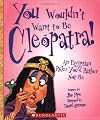
I enjoyed reading this fairly satirical, comical, no-holding-back biography of Cleopatra, but would never read it with a group of children. So much of Cleopatra's life was tragic, horrific, violent, and offensive to the point where I would worry about how each kid was processing the humorous portrayal of these events. However, I would enjoy reading it (with others of the series) with an individual child over a period of days where I can help explain some parts ("Let's talk about sarcasm and show more how it's being used here...") and pick up on cues more effectively. It was a very informative, entertaining read. show less
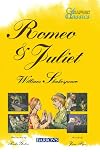
This is one of the worst Shakespearean adaptations on the market today. It simultaneously manages to make Shakespeare--Shakespeare!--seem clumsy and badly written, while also casting aspersions on the entire genre of graphic novels. While one can only applaud Barron's for trying to update classic literature, they seem to have gone about it without having any idea how to present their story according to the conventions and strengths of their chosen format.
Each of the 24 double-page spreads show more is covered in at least 12 small frames of roughly the same size, floating in a grid pattern on a white background. Each frame is still and rigid-- a tableau, not a frozen moment. What's worse, the static, washed-out pencil drawings make this, one of the most overwrought and melodramatic of Shakespeare's plays, seem tinny and hollow, as though it is being acted out by marionettes. A quick perusal of almost any graphic novel, manga, or comic book in print today will show a much more dramatic and dynamic use of space. Playing with the size, shape and borders of individual frames not only make for a much more engaging and entertaining reading experience, but can help convey the tone and subject of the story. Furthermore, any kindergartner can tell you that pictures are meant to show, not tell, but in this adaptation, the words almost swallow up the characters.
The lines of dialogue are printed in word bubbles and small captions beneath most pictures describe what is going on in terse, declarative substances. At the bottom of every page is four to six lines of tiny footnotes explaining the meaning of words like "consent" and "chide", while ignoring such tongue twisters as, "I'll look to like, if looking liking move." Jim Pipe's trite commentary on the scenes manages to make it all, if possible, even more boring. The only saving grace of this book is its appendix-- a rather weighty and bland-looking discussion of the history of the play and the circumstances of its creation which nevertheless contains some interesting historical context. However, the lack of pictures in this section only reinforces my impression that the well-meaning people at Barron's have no idea how to effectively employ the graphic novel format to educate or entertain. show less
Each of the 24 double-page spreads show more is covered in at least 12 small frames of roughly the same size, floating in a grid pattern on a white background. Each frame is still and rigid-- a tableau, not a frozen moment. What's worse, the static, washed-out pencil drawings make this, one of the most overwrought and melodramatic of Shakespeare's plays, seem tinny and hollow, as though it is being acted out by marionettes. A quick perusal of almost any graphic novel, manga, or comic book in print today will show a much more dramatic and dynamic use of space. Playing with the size, shape and borders of individual frames not only make for a much more engaging and entertaining reading experience, but can help convey the tone and subject of the story. Furthermore, any kindergartner can tell you that pictures are meant to show, not tell, but in this adaptation, the words almost swallow up the characters.
The lines of dialogue are printed in word bubbles and small captions beneath most pictures describe what is going on in terse, declarative substances. At the bottom of every page is four to six lines of tiny footnotes explaining the meaning of words like "consent" and "chide", while ignoring such tongue twisters as, "I'll look to like, if looking liking move." Jim Pipe's trite commentary on the scenes manages to make it all, if possible, even more boring. The only saving grace of this book is its appendix-- a rather weighty and bland-looking discussion of the history of the play and the circumstances of its creation which nevertheless contains some interesting historical context. However, the lack of pictures in this section only reinforces my impression that the well-meaning people at Barron's have no idea how to effectively employ the graphic novel format to educate or entertain. show less
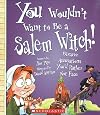
Summary: This book gives a description of the events surrounding the Salem witch trials and the history of witch hunts in parts of Europe around that time as well. The book puts the reader in the shoes of a young girl named Priscilla Bishop and details her life during the time her parents were accused of witchcraft. It gives explanations for why people accused others of witchcraft and why so many people were willing to believe it.
Personal Reaction: I enjoyed this book. The illustrations are show more nice, they're done in almost a comical style which helps ease the tension of an otherwise very serious topic. I think the book does a good job of demystifying the Salem witch trials.
Classroom Extension Ideas:
1. Learn about herbal healing and other medical treatments that were developed during that time that so many midwives were accused of witchcraft for practicing medicine.
2. Hold a mock trial in which students learn to evaluate evidence in order to determine whether someone is innocent or guilty.
3. Journal entry about fear of the unknown show less
Personal Reaction: I enjoyed this book. The illustrations are show more nice, they're done in almost a comical style which helps ease the tension of an otherwise very serious topic. I think the book does a good job of demystifying the Salem witch trials.
Classroom Extension Ideas:
1. Learn about herbal healing and other medical treatments that were developed during that time that so many midwives were accused of witchcraft for practicing medicine.
2. Hold a mock trial in which students learn to evaluate evidence in order to determine whether someone is innocent or guilty.
3. Journal entry about fear of the unknown show less
You Wouldn't Want to Be a Salem Witch!: Bizarre Accusations You'd Rather Not Face (You Wouldn't Want to...) by Jim Pipe
Even kids probably don't need to be told that they wouldn't want to be a Salem witch, but this book from the "You Wouldn't Want to Be a..." series is a engaging, informative, and darkly funny. Illustrations are cartoonish and highly expressive, and the speech and though bubbles add poignant commentary to this grim topic. Also included are plenty of tips on how to avoid being accused or convicted and some very bizarre trivia.
Written in second person, readers are given the identity of show more Priscilla Bishop, daughter of an inn keeper accused of being a witch in 1692. Each spread addresses one topic about the Salem Witch Hunt, such as Puritans, Confessions, Prison, and Trials. In spite of the brevity of each topic, a table of contents and index are included, as well as a glossary; unfamiliar words are also defined in the text.
The Salem Witch Hunt is a perennially popular topic and this volume will satisfy (and likely pique) the curiosity of elementary readers. Its layout, using short, separated paragraphs, text boxes, illustrations, and speech bubbles, make this book more suited to recreational reading than for school reports. It is recommended for elementary school classrooms in which it is relevant to the curriculum to provide more content for curious students, as well as for elementary school libraries and public libraries. show less
Written in second person, readers are given the identity of show more Priscilla Bishop, daughter of an inn keeper accused of being a witch in 1692. Each spread addresses one topic about the Salem Witch Hunt, such as Puritans, Confessions, Prison, and Trials. In spite of the brevity of each topic, a table of contents and index are included, as well as a glossary; unfamiliar words are also defined in the text.
The Salem Witch Hunt is a perennially popular topic and this volume will satisfy (and likely pique) the curiosity of elementary readers. Its layout, using short, separated paragraphs, text boxes, illustrations, and speech bubbles, make this book more suited to recreational reading than for school reports. It is recommended for elementary school classrooms in which it is relevant to the curriculum to provide more content for curious students, as well as for elementary school libraries and public libraries. show less
Awards


You May Also Like


Associated Authors
Statistics
- Works
- 207
- Members
- 2,492
- Popularity
- #10,291
- Rating
- 3.8
- Reviews
- 36
- ISBNs
- 568
- Languages
- 11