
Nicholas J. Saunders
Author of Animal Spirits: An Illustrated Guide (Living Wisdom Series)
About the Author
Nicholas J. Saunders is a leading authority on ancient America
Works by Nicholas J. Saunders
Alexander's Tomb: The Two-Thousand Year Obsession to Find the Lost Conquerer (2006) 124 copies, 1 review
The Peoples of the Caribbean: An Encyclopedia of Archaeology and Traditional Culture (2005) 15 copies
Associated Works
Tagged
Common Knowledge
- Canonical name
- Saunders, Nicholas J.
- Birthdate
- 1953-01-10
- Gender
- male
- Education
- University of Southampton (Ph.D|1991)
University of Cambridge (M.Phil|1981)
University of Sheffield (BA|1979) - Occupations
- archaeologist
anthropologist
professor - Organizations
- University of Bristol
- Nationality
- UK
- Associated Place (for map)
- UK
Members
Reviews
Alexander's Tomb: The Two Thousand Year Obsession to Find the Lost Conquerer by Nicholas J. Saunders
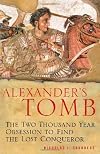
I am mostly disappointed with this book, due to the author's fabrications, and the use of less than reliable sources. He also at the end announces that he isn't really interested in the actual tomb, and hopes it and the body will never be found. Hello, and thank you for getting me to waste my time and money on what I consider a craven point of view.
While it is true that there are not a lot of sources, reliable or not, the book was presented too much as a factual study, when it was no more show more than biased conjecture. I say biased, because everyone is, Saunders seems to have no ax to grind, but I am quite sure he cherry-picked what to use and what to ignore. He seems to rely much too heavily on the Alexander Romances, which most scholars discredit.
When even the iffy sources fall silent about Alex and his tomb, Saunders makes things up. There is a fine line between interpretation and manufacturing whole-cloth. While conjecture is interesting, it doesn't work when there isn't anything solid to connect it to.
Some of the better chapters are those that cover the excavations and interpretations of others, and the look at Alex in the modern world regarding Macedonia, Greece, and the old Yugoslavian province which wants to be formally known as Macedonia. He also looks at how various countries, cultures, and religions have adopted Alex and used his glory to boost their own.
I almost think he wanted to write a factual book about excavations and then found there wasn't enough material and switched to the mythic look at Alex and his impact on those who have come since him.
I really thought the book needed much better maps, since so much of his rambling is about the position of the walls, the palace district and the tomb in Alexandria. I would also have liked to see some pictures of Philip II's tomb in Vergina, especially since some tried to claim it was really Alex and not Philip who was buried there. Same with the Venice installation. show less
While it is true that there are not a lot of sources, reliable or not, the book was presented too much as a factual study, when it was no more show more than biased conjecture. I say biased, because everyone is, Saunders seems to have no ax to grind, but I am quite sure he cherry-picked what to use and what to ignore. He seems to rely much too heavily on the Alexander Romances, which most scholars discredit.
When even the iffy sources fall silent about Alex and his tomb, Saunders makes things up. There is a fine line between interpretation and manufacturing whole-cloth. While conjecture is interesting, it doesn't work when there isn't anything solid to connect it to.
Some of the better chapters are those that cover the excavations and interpretations of others, and the look at Alex in the modern world regarding Macedonia, Greece, and the old Yugoslavian province which wants to be formally known as Macedonia. He also looks at how various countries, cultures, and religions have adopted Alex and used his glory to boost their own.
I almost think he wanted to write a factual book about excavations and then found there wasn't enough material and switched to the mythic look at Alex and his impact on those who have come since him.
I really thought the book needed much better maps, since so much of his rambling is about the position of the walls, the palace district and the tomb in Alexandria. I would also have liked to see some pictures of Philip II's tomb in Vergina, especially since some tried to claim it was really Alex and not Philip who was buried there. Same with the Venice installation. show less
The thinkers of ancient Egypt, Greece and India recognized that numbers governed much of what they saw in their world and hence provided an approach to its divine creator. Robert Lawlor sets out the system that determines the dimension and the form of both man-made and natural structures, from Gothic cathedrals to flowers, from music to the human body. By also involving the reader in practical experiments, he leads with ease from simple principles to a grasp of the logarithmic spiral, the show more Golden Proportion, the squaring of the circle and other ubiquitous ratios and proportions. Art and Imagination These large-format, gloriously-illustrated paperbacks cover Eastern and Western religion and philosophy, including myth and magic, alchemy and astrology. The distinguished authors bring a wealth of knowledge, visionary thinking and accessible writing to each intriguing subject. Source: Publisher show less

You May Also Like


Associated Authors
Statistics
- Works
- 38
- Also by
- 1
- Members
- 827
- Popularity
- #30,853
- Rating
- 3.7
- Reviews
- 3
- ISBNs
- 97
- Languages
- 7