
Susie Hodge
Author of The Arts: A Visual Encyclopedia
About the Author
Susie Hodge is a secondary school teacher, art historian, illustrator and artist. She also writes articles and resources for museums and galleries, and is author of a number of education books.
Series
Works by Susie Hodge
Why Your Five-Year-Old Could Not Have Done That: From Slashed Canvas to Unmade Bed, Modern Art Explained (2012) 204 copies, 9 reviews
The Short Story of Art: A Pocket Guide to Key Movements, Works, Themes, & Techniques (Art History Introduction, A Guide to Art) (2017) 146 copies, 1 review
Monet: His Life and Works in 500 Images: An Illustrated Exploration of the Artist, His Life and Context, Featuring A Gallery of 300 of His Greatest Paintings (2009) 50 copies, 1 review
Art: Everything You Need to Know About the Greatest Artists and Their Work (2014) 37 copies, 1 review
The Children's Interactive Story of Art: The Essential Guide to the World's Most Famous Artists and Paintings (2015) 33 copies
How to Paint Like the Impressionists: A Practical Guide to Re-Creating Your Own Impressionist Paintings (2004) 33 copies
The Short Story of Women Artists: A Pocket Guide to Key Breakthroughs, Movements, Works and Themes (2020) 32 copies
The Short Story of Modern Art: A Pocket Guide to Key Movements, Works, Themes, and Techniques (2019) 28 copies
Cezanne: His life and works in 500 images: An illustrated exploration of the artist, his life and context, with a gallery of 300 of his finest paintings (2010) 19 copies
I Know an Artist: The inspiring connections between the world's greatest artists (2019) 18 copies, 1 review
Goya: His Life & Works in 500 Images: An illustrated account of the artist, his life and context, with a gallery of 300 paintings and drawings. (2015) 14 copies
Artistic Circles: The inspiring connections between the world's greatest artists (2021) 13 copies, 1 review
Raphael: His Life And Works in 500 Images: An Exploration of the Artist, His Life and Context, with 500 Images and a Gallery of His Most Celebrated Works (2013) 11 copies
Gauguin: His Life & Works in 500 Images: An Illustrated Exploration Of The Artist, His Life And Context, With A Gallery Of 300 Of His Finest Paintings (2014) 10 copies
Modern Art Mayhem: Create Your Own Adventure and Save the Gallery from Disaster! (Art Quest) (2017) 9 copies
Rubens: His Life and Works: An Illustrated Exploration of the Artist, His Life and Context, with a Gallery of 300 Paintings and Drawings (2017) 7 copies
Renoir: 500 Görsel Eşliğinde Yaşamı ve Eserleri = [ Renoir His Life And Works in 500 İmages], Çeviren: Mustafa Kemal İz (2020) 3 copies
Historia Secreta de los Caballeros Templarios: The Secret History of the Knights Templar (Spanish Edition) (2008) 2 copies
Titian: His Life and Works in 500 Images: An illustrated exploration of the artist and his context, with a gallery of his paintings and drawings (2024) 2 copies
Eine kurze Geschichte der Architektur: Ein Überblick über die wichtigsten Stile, Bauwerke, Elemente und Materialien (2020) 2 copies
De kleine geschiedenis van vrouwen in de kunst stromingen, werken, doorbraken, thema's 1 copy, 1 review
Petites Histoires de l'Art 1 copy
Petite histoire de l'Art moderne et contemporain: Chefs-d'oeuvre, Mouvements, Techniques (2020) 1 copy
Grandes artistas: Las conexiones artísticas que inspiraron el arte de los siglos XIX y XX (2020) 1 copy
Arte em 30 Segundos 1 copy
Architecture - Constructions, styles, courants, chefs d'oeuvres... en 200 concept clés (2025) 1 copy
Miért van annyi meztelen ember a képeken? és sok más fontos kérdés a művészetről gyerekeknek (2017) 1 copy
(Em Portugues do Brasil) 1 copy
Associated Works
Tagged
Common Knowledge
- Canonical name
- Hodge, Susie
- Other names
- Hodge, S. J.
- Birthdate
- 1960
- Gender
- female
- Education
- Birkbeck, University of London (MA, Art History)
- Occupations
- art historian
artist
author
copywriter - Organizations
- University of London
- Awards and honors
- Royal Society of Arts (Fellow)
- Short biography
- [from Barnes & Noble website]
Susie Hodge has an MA in the History of Art by Research from Birkbeck, University of London. She is author of over 50 books, including studies of Impressionism, Victorian art, Picasso and Monet and is currently writing books on modern art and ancient Egyptian art. Throughout the year she runs workshops and seminars for various institutions and teaches part-time. She is a Fellow of the Royal Society of Arts. - Nationality
- UK
- Places of residence
- Westcliff-on-Sea, Essex, England, UK
- Associated Place (for map)
- England, UK
Members
Reviews
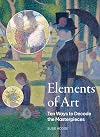
There are innumerable introductions to art. There are bookcases full of them. This new one, Elements of Art: Ten Ways to Decode the Masterpieces by Susie Hodge, promised to be innovative in that it focuses on women artists, a bit of a challenge in art history. The ten elements Hodge collects for these studies are scale, colour, light, movement, medium, technique, content, location, time, and the artist. Then there are seven essentials in any artwork itself: colour, value, line, shape, form, show more texture and space. That pretty much covers it.
For whatever reason, Hodge does not want to make art appealing, it seems. She never says these elements will multiply your enjoyment of art by a factor of ten. That the insights you gain from knowing about these elements will change the way you look at the whole world. And she never pulls things together, like the use of this colour palette in combination with acrylic paints on wood on this kind of day makes for a total and unprecedented feeling of exaltation in the viewer. No, for her, it is all about deconstruction and endless research into every aspect of every piece. From reading this book, I would have say she is a reductionist, not an inspirer.
I got so annoyed by page 50, I wanted out. The book is so full of plodding, dull writing, platitudes and unhelpful direction I could not bear it. Plus, it wastes whole pages with full page reproductions of warhorse art that everyone already knows, like Van Gogh’s Starry Night, or Da Vinci’s Last Supper. The text is resplendent with name dropping. Lots of artists, some known and many unknown, with little or no indication as to why readers should look them up themselves – because there is nothing at all to say about them in the book. She will name a signature work and then not show it. This is not my idea of a book on art.
In a large dot on most right pages, she provides questions the novice should answer: “Who was or is the work of art made for? How does the content reflect this? What is the subject of the work? What do you think is the theme? How has the artist created impact? How does the style of creation affect the content? What is the artist trying to say? Does the content of this work change your mind in any way –if so, how? How would you describe this work of art to someone who has not seen it?” I found this so pedantic and patronizing, I shuddered at the thought I was only on page 41. What further treats awaited?
But a remarkable thing happened. Once readers get past about 60 pages, Hodge settles in to a four page spread on each artist she considers worthy, mostly women, and fairly consistent in points covered. She answers many of the hoary questions herself, demonstrating that mere mortals cannot possibly answer them on their own. The depth that art critics and historians go to is all but infinite, and the details of artists’ lives, historical context, geographical context, technology and fashion mean it takes a small army to provide an appreciation and even try to answer those questions. And that doesn’t even account for the disagreements among the experts. What chance does the novice reader have?
There’s sloppiness in it too. Apparently, the artist Caspar David Friedrich (1774-1840) made a splash at a Berlin exhibition in 1810. She says immediately following the show, two of his paintings were purchased by King Frederick Wilhelm I of Prussia (1688-1740), which was all the more remarkable because it was 70 years after he died!
As far as interpretation and meaning go, it is pointless to ask a novice to evaluate what went on in the artist’s head. Hodge herself ends up offering half a dozen interpretations of various aspects of various works, all conflicting, all total fiction, and all considered important. But Pablo Picasso comes to the rescue. For his gigantic painting Guernica, Picasso grew more than a little impatient with all the interpretations: “This bull is a bull, and this horse is a horse….If you give a meaning to certain things in my paintings it may be very true, but it is not my idea to give this meaning. What ideas and conclusions you have got, I have obtained too, but instinctively, unconsciously. I make the painting for the painting. I paint the objects for what they are.” Bless you, if only for that.
Along the way, Hodge usefully explains the levels of fresco and the stages of woodblock, along with kinds of paint and how they evolved and came into fashion. Her selection of artists through the ages is pleasantly different than most such books, simply because she seeks (and finds) women to demonstrate the styles with.
Bu then, she stays very shallow on the subject of rules. Painting was constrained by religion in Europe. Most subjects were impermissible, and the ways the rest were portrayed was bounded by rules. The canvas had to conform to various rules, dividing the image up into geometric components. Hodge doesn’t even go there, but she does spend some good time on ancient Egypt. The funerary images we are so used to seeing display a lot of rules. The figures in the painting did not conform to a scene; they reflected rank. So the main subject was taller and bigger than everyone else. His wife was smaller. Servants, children and pets were minuscule participants in his lifestory. The Egyptians thought mostly highly of the facial profile, so everyone is always facing left or right, even though their bodies might be facing out. Egyptian painting was cartoonish and flat. A realistic 3D painting would have freaked them out. It was all about the rules.
The closer readers get to the present, the less great the artists seem to be, which is all right, because Hodge never promised her examples to be best in class. Their purpose is to share lives and styles, and demonstrate some of the ten elements. There is a good, wide spread of them.
It is noticeable that a large percentage of the artists came from middle class or wealthy families. Most people think artists start poor and stay poor, and it is only after death that their work becomes valuable. Not so, it seems. Though a lot of even the wealthier ones went through hells of their own, thanks to vicious family, vicious government, and internal torments. How far would Yayoi Kusama have come if she hadn’t started hallucinating at an early age? What if Van Gogh never needed an asylum? What if Frida Kahlo had not been so physically damaged? It is their very torments that led to their great art.
Eventually, Elements of Art settles into a useful, if totally ordinary art appreciation book. But getting there was not really worth it.
David Wineberg show less
For whatever reason, Hodge does not want to make art appealing, it seems. She never says these elements will multiply your enjoyment of art by a factor of ten. That the insights you gain from knowing about these elements will change the way you look at the whole world. And she never pulls things together, like the use of this colour palette in combination with acrylic paints on wood on this kind of day makes for a total and unprecedented feeling of exaltation in the viewer. No, for her, it is all about deconstruction and endless research into every aspect of every piece. From reading this book, I would have say she is a reductionist, not an inspirer.
I got so annoyed by page 50, I wanted out. The book is so full of plodding, dull writing, platitudes and unhelpful direction I could not bear it. Plus, it wastes whole pages with full page reproductions of warhorse art that everyone already knows, like Van Gogh’s Starry Night, or Da Vinci’s Last Supper. The text is resplendent with name dropping. Lots of artists, some known and many unknown, with little or no indication as to why readers should look them up themselves – because there is nothing at all to say about them in the book. She will name a signature work and then not show it. This is not my idea of a book on art.
In a large dot on most right pages, she provides questions the novice should answer: “Who was or is the work of art made for? How does the content reflect this? What is the subject of the work? What do you think is the theme? How has the artist created impact? How does the style of creation affect the content? What is the artist trying to say? Does the content of this work change your mind in any way –if so, how? How would you describe this work of art to someone who has not seen it?” I found this so pedantic and patronizing, I shuddered at the thought I was only on page 41. What further treats awaited?
But a remarkable thing happened. Once readers get past about 60 pages, Hodge settles in to a four page spread on each artist she considers worthy, mostly women, and fairly consistent in points covered. She answers many of the hoary questions herself, demonstrating that mere mortals cannot possibly answer them on their own. The depth that art critics and historians go to is all but infinite, and the details of artists’ lives, historical context, geographical context, technology and fashion mean it takes a small army to provide an appreciation and even try to answer those questions. And that doesn’t even account for the disagreements among the experts. What chance does the novice reader have?
There’s sloppiness in it too. Apparently, the artist Caspar David Friedrich (1774-1840) made a splash at a Berlin exhibition in 1810. She says immediately following the show, two of his paintings were purchased by King Frederick Wilhelm I of Prussia (1688-1740), which was all the more remarkable because it was 70 years after he died!
As far as interpretation and meaning go, it is pointless to ask a novice to evaluate what went on in the artist’s head. Hodge herself ends up offering half a dozen interpretations of various aspects of various works, all conflicting, all total fiction, and all considered important. But Pablo Picasso comes to the rescue. For his gigantic painting Guernica, Picasso grew more than a little impatient with all the interpretations: “This bull is a bull, and this horse is a horse….If you give a meaning to certain things in my paintings it may be very true, but it is not my idea to give this meaning. What ideas and conclusions you have got, I have obtained too, but instinctively, unconsciously. I make the painting for the painting. I paint the objects for what they are.” Bless you, if only for that.
Along the way, Hodge usefully explains the levels of fresco and the stages of woodblock, along with kinds of paint and how they evolved and came into fashion. Her selection of artists through the ages is pleasantly different than most such books, simply because she seeks (and finds) women to demonstrate the styles with.
Bu then, she stays very shallow on the subject of rules. Painting was constrained by religion in Europe. Most subjects were impermissible, and the ways the rest were portrayed was bounded by rules. The canvas had to conform to various rules, dividing the image up into geometric components. Hodge doesn’t even go there, but she does spend some good time on ancient Egypt. The funerary images we are so used to seeing display a lot of rules. The figures in the painting did not conform to a scene; they reflected rank. So the main subject was taller and bigger than everyone else. His wife was smaller. Servants, children and pets were minuscule participants in his lifestory. The Egyptians thought mostly highly of the facial profile, so everyone is always facing left or right, even though their bodies might be facing out. Egyptian painting was cartoonish and flat. A realistic 3D painting would have freaked them out. It was all about the rules.
The closer readers get to the present, the less great the artists seem to be, which is all right, because Hodge never promised her examples to be best in class. Their purpose is to share lives and styles, and demonstrate some of the ten elements. There is a good, wide spread of them.
It is noticeable that a large percentage of the artists came from middle class or wealthy families. Most people think artists start poor and stay poor, and it is only after death that their work becomes valuable. Not so, it seems. Though a lot of even the wealthier ones went through hells of their own, thanks to vicious family, vicious government, and internal torments. How far would Yayoi Kusama have come if she hadn’t started hallucinating at an early age? What if Van Gogh never needed an asylum? What if Frida Kahlo had not been so physically damaged? It is their very torments that led to their great art.
Eventually, Elements of Art settles into a useful, if totally ordinary art appreciation book. But getting there was not really worth it.
David Wineberg show less
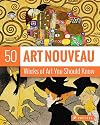
This should have been catnip for me, I'm an Art Nouveau nerd after all but I found it somewhat disappointing. It relied on too many of the same artists and not always on accessible pieces too, of the 50 pieces I count 30 artists, there was so much possible scope here, and with people like Mucha there's not a huge variety, there could have been stained glass (Cathedral of St Wenceslaus, Prague); interiors (Jewellery shop in Paris or Cafe in Prague); Murals (like the immense Mural of Czech show more history in Prague) but instead there are three art pieces, two paintings and a sculpture (which reflects one of the paintings) - none of his Sara Bernhart posters, the pieces that made him very famous. There is so much missed scope here. I went to it hoping that I would find more artists I didn't know only to find that my pinterest board on Art Nouveau probably contains more variety.
And if you include Aubrey Beardsley you really should include Harry Clarke. Several of the pieces aren't quite what I would put in my aforementioned Pinterest board but are of the period. show less
And if you include Aubrey Beardsley you really should include Harry Clarke. Several of the pieces aren't quite what I would put in my aforementioned Pinterest board but are of the period. show less
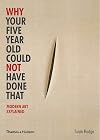
I was visiting the Guggenheim in Venice over the Christmas break; on holidays I tend to make over-emotional decisions about all kinds of things, so it makes sense that at that wonderful building I wanted to buy a book. I chose this one, because it was cheap, and promised easy reading.
So Hodge had to do literally nothing to keep me on team Modernist. I like modern and postmodern art; I have some grasp of what 20th century artists were/are trying to do. The book is nicely laid out: nice show more reproduction of an art work; brief artist's bio; discussion of the work; discussion of influences/d; random fact; and explanation of why your five year could not, in fact, have done that. This makes for repetitive reading, but it's a small format coffee-table book, so that's fine.
And yet Hodge's book is so bad that she managed to convince me that that much modern art is an even bigger sham than your old auntie Joanna Banal believes it is.
Her tactic for each work is the same: admit that a five year old has the skills needed to produce a work, but deny that the five year old has the conceptual capacity needed to properly contextualize it; or suggest that the five year old cannot think the deep thoughts needed to motivate the creation of the work in the first place. Genuinely random example: Giovanni Anselmo's "Untitled (structure that eats salad)." Yes, she says, a five year old could squish a lettuce between two bricks, but
"they would not be scrutinizing so many elements at the same time, including the impermanence of substances and life, and natural and manufactured materials. Anselmo was working on many levels as he explored our place in the world, looking at infinity, vulnerability, power, culture and nature, all the time considering how philosophies, science and everyday experience can be investigated and expressed through art."
I ask you, dear review reader, to ignore the horrific prose, and the conceptual confusion one must be in to use the word 'substances' as if it excluded natural and manufactured materials. Instead, just know that every explanation in this book is essentially the same: there is a conceptual component to this artwork that a five year old could not understand. This is a problem.
i) It doesn't matter what Anselmo was 'scrutinizing' (apparently in Hodge's world artists do not 'think about' anything). The *viewer's reaction* links the art object to thoughts about infinity etc... So a five year old's combination of bricks and lettuce can bring up those ideas as well, *provided they are really there*.
ii) According to Hodge, every work in this book is either 'scrutinizing' a highly abstract noun (e.g., the impermanence of substances) or (from the following page, on Warhol) compelling "viewers to consider what makes something 'art' and why artworks are so revered." But if every piece of modern art is doing one or both of those things, there is nothing about any given piece of modern art that is particularly interesting. Any piece of garbage can make us scrutinize infinity or art institutions, provided we're genuinely interested in doing so. Given that, all modern art is the same, and you don't actually have to look at it.
iii) So Hodge's argument, despite herself, is that there is no connection between any given art object and the ideas it is supposed to embody. Modern art is a sham.
Now luckily I have a few thoughts on this matter, and do not believe that modern art is a sham. Much good modern art exists: those objects are technical feats (insert your favorite figurative painter here), or respond to some specific, concrete noun (e.g., Kienholz's satires on aspects of modern America), or allow for a less cognitive experience (e.g., the beeswax room at Washington D.C.'s Phillips Collection), which can then be thought about productively.
But if you actually gave this book to someone in the hope that they would start thinking that modern art is worthwhile... well, it wouldn't work. Because this book suggests that modern artists are all slightly silly men and women who want to have big thoughts about Big Stuff, but can't actually find a way to put that into a material form (as e.g., Martin Creed), or pigs creating investment opportunities (as e.g., Damien Hirst). And Hodge treats those charlatans no differently from genuinely interesting artists.
Finally, she has no sense of humor, and so fails to get anything out of the Anselmo work suggested above anyway.
Avoid this book at all costs, unless you want a good scratching post.
See http://www.wikipaintings.org/en/giovanni-anselmo/untitled-sculpture-that-eats-19... show less
So Hodge had to do literally nothing to keep me on team Modernist. I like modern and postmodern art; I have some grasp of what 20th century artists were/are trying to do. The book is nicely laid out: nice show more reproduction of an art work; brief artist's bio; discussion of the work; discussion of influences/d; random fact; and explanation of why your five year could not, in fact, have done that. This makes for repetitive reading, but it's a small format coffee-table book, so that's fine.
And yet Hodge's book is so bad that she managed to convince me that that much modern art is an even bigger sham than your old auntie Joanna Banal believes it is.
Her tactic for each work is the same: admit that a five year old has the skills needed to produce a work, but deny that the five year old has the conceptual capacity needed to properly contextualize it; or suggest that the five year old cannot think the deep thoughts needed to motivate the creation of the work in the first place. Genuinely random example: Giovanni Anselmo's "Untitled (structure that eats salad)." Yes, she says, a five year old could squish a lettuce between two bricks, but
"they would not be scrutinizing so many elements at the same time, including the impermanence of substances and life, and natural and manufactured materials. Anselmo was working on many levels as he explored our place in the world, looking at infinity, vulnerability, power, culture and nature, all the time considering how philosophies, science and everyday experience can be investigated and expressed through art."
I ask you, dear review reader, to ignore the horrific prose, and the conceptual confusion one must be in to use the word 'substances' as if it excluded natural and manufactured materials. Instead, just know that every explanation in this book is essentially the same: there is a conceptual component to this artwork that a five year old could not understand. This is a problem.
i) It doesn't matter what Anselmo was 'scrutinizing' (apparently in Hodge's world artists do not 'think about' anything). The *viewer's reaction* links the art object to thoughts about infinity etc... So a five year old's combination of bricks and lettuce can bring up those ideas as well, *provided they are really there*.
ii) According to Hodge, every work in this book is either 'scrutinizing' a highly abstract noun (e.g., the impermanence of substances) or (from the following page, on Warhol) compelling "viewers to consider what makes something 'art' and why artworks are so revered." But if every piece of modern art is doing one or both of those things, there is nothing about any given piece of modern art that is particularly interesting. Any piece of garbage can make us scrutinize infinity or art institutions, provided we're genuinely interested in doing so. Given that, all modern art is the same, and you don't actually have to look at it.
iii) So Hodge's argument, despite herself, is that there is no connection between any given art object and the ideas it is supposed to embody. Modern art is a sham.
Now luckily I have a few thoughts on this matter, and do not believe that modern art is a sham. Much good modern art exists: those objects are technical feats (insert your favorite figurative painter here), or respond to some specific, concrete noun (e.g., Kienholz's satires on aspects of modern America), or allow for a less cognitive experience (e.g., the beeswax room at Washington D.C.'s Phillips Collection), which can then be thought about productively.
But if you actually gave this book to someone in the hope that they would start thinking that modern art is worthwhile... well, it wouldn't work. Because this book suggests that modern artists are all slightly silly men and women who want to have big thoughts about Big Stuff, but can't actually find a way to put that into a material form (as e.g., Martin Creed), or pigs creating investment opportunities (as e.g., Damien Hirst). And Hodge treats those charlatans no differently from genuinely interesting artists.
Finally, she has no sense of humor, and so fails to get anything out of the Anselmo work suggested above anyway.
Avoid this book at all costs, unless you want a good scratching post.
See http://www.wikipaintings.org/en/giovanni-anselmo/untitled-sculpture-that-eats-19... show less
Why I Could Not Have Written This - PG / R rated review
I enjoy visiting art exhibitions, but I do so in an experiential, rather than an intellectual, way. I wander the galleries, looking, feeling, and listening, but without much knowing. (I long to touch as well, especially sculpture.)
Classical, representational art often seems relatively easy to understand: a Venetian merchant, with age etched on his face, wealth displayed in the richly textured and decorated fabrics, and a view of St show more Mark’s glimpsed from his window, with near-perfect perspective. But we don’t always know what we don’t know. The symbolism of a specific flower in a particular part of the picture, or a subtle nod to ancient mythology is lost on many of us nowadays: we just see a pretty bloom or vaguely wonder why there’s a swan in the background.
In contrast, modern art often screams its obscurity or pretentiousness. Sometimes, it just screams. Sometimes we scream. We know that we don’t understand. Is it art, and if so, why? What does it mean? Does it need to mean anything? Can it be art if it’s ugly or apparently lacking in skill?
This is why modern art invariably provokes a reaction, for good or ill - something that endless landscapes, fruit bowls, or portraits of the great and allegedly good don’t always do, however beautifully and skillfully rendered.
And that’s the crux of this book: art is about intent, and more specifically, the intention of causing an effect in the audience.
Each double-page spread considers one piece and tries to demonstrate why it is more than the sum of its parts by describing its style, materials, and history, along with the artist’s background, philosophy and motivation. You may have your eyes opened, laugh, be inspired, moved, or think it a load of clap-trap, but you will feel something. You will react.
A young child may not have the same artistic intent, but they can certainly respond to it in a visceral way, which is perhaps the most profound way.
My adult kid gave me this book for Mothering Sunday 2016. It’s apt, because nearly 20 years earlier, when they were barely two years old, we were pushing them round Tate St Ives in Cornwall, when they suddenly started writhing and crying, as if in physical pain. They were in front of a Bridget Riley, similar to the one below: clashing colours, large and loud, angular and angry - screaming, perhaps. We moved on to a more recognisable pastoral scene, and they were immediately restored to tranquil interest.
Art moves.
Bridget Riley, Fête, 1989 - power to make a toddler cry.
So perhaps I could have written this - if had I intended to provoke.
In which case, bugger off and create your own art and reviews! Does that do it?
Tl;dnr
It’s all about reacting to materialism and political systems (which few five-year-olds worry about). Or sex. And sex. Individuality - that’s important, too. And death.
Just like life, really.
Notes
For a short, humorous take on these ideas, see We Go To The Gallery (a spoof of Ladybird books), reviewed, with illustrations, HERE.
In Yasmina Reza's play, Art, one character's investment in modern art has dramatic ramifications for his relationship with his two closest friends. I've reviewed it HERE.
Miro's tripych, “Painting of a white background for the cell of a recluse”, should probably be in here. It is three white panels, each with a single wiggly line - none of which touch the edge. It took two or three years of drafts for him to get it just right. Nice work if you can persuade people to pay. You can see it in the Miro museum in Barcelona:
or click HERE for a larger version.
Comment #2 refers to my original “review” which merely said:
“Adding mainly because my more-than-five-year-old gave me this for Mothering Sunday, but also because the book I added yesterday took me to 666. This 667. Phew.” show less
I enjoy visiting art exhibitions, but I do so in an experiential, rather than an intellectual, way. I wander the galleries, looking, feeling, and listening, but without much knowing. (I long to touch as well, especially sculpture.)
Classical, representational art often seems relatively easy to understand: a Venetian merchant, with age etched on his face, wealth displayed in the richly textured and decorated fabrics, and a view of St show more Mark’s glimpsed from his window, with near-perfect perspective. But we don’t always know what we don’t know. The symbolism of a specific flower in a particular part of the picture, or a subtle nod to ancient mythology is lost on many of us nowadays: we just see a pretty bloom or vaguely wonder why there’s a swan in the background.
In contrast, modern art often screams its obscurity or pretentiousness. Sometimes, it just screams. Sometimes we scream. We know that we don’t understand. Is it art, and if so, why? What does it mean? Does it need to mean anything? Can it be art if it’s ugly or apparently lacking in skill?
This is why modern art invariably provokes a reaction, for good or ill - something that endless landscapes, fruit bowls, or portraits of the great and allegedly good don’t always do, however beautifully and skillfully rendered.
And that’s the crux of this book: art is about intent, and more specifically, the intention of causing an effect in the audience.
Each double-page spread considers one piece and tries to demonstrate why it is more than the sum of its parts by describing its style, materials, and history, along with the artist’s background, philosophy and motivation. You may have your eyes opened, laugh, be inspired, moved, or think it a load of clap-trap, but you will feel something. You will react.
A young child may not have the same artistic intent, but they can certainly respond to it in a visceral way, which is perhaps the most profound way.
My adult kid gave me this book for Mothering Sunday 2016. It’s apt, because nearly 20 years earlier, when they were barely two years old, we were pushing them round Tate St Ives in Cornwall, when they suddenly started writhing and crying, as if in physical pain. They were in front of a Bridget Riley, similar to the one below: clashing colours, large and loud, angular and angry - screaming, perhaps. We moved on to a more recognisable pastoral scene, and they were immediately restored to tranquil interest.
Art moves.
Bridget Riley, Fête, 1989 - power to make a toddler cry.
So perhaps I could have written this - if had I intended to provoke.
In which case, bugger off and create your own art and reviews! Does that do it?
Tl;dnr
It’s all about reacting to materialism and political systems (which few five-year-olds worry about). Or sex. And sex. Individuality - that’s important, too. And death.
Just like life, really.
Notes
For a short, humorous take on these ideas, see We Go To The Gallery (a spoof of Ladybird books), reviewed, with illustrations, HERE.
In Yasmina Reza's play, Art, one character's investment in modern art has dramatic ramifications for his relationship with his two closest friends. I've reviewed it HERE.
Miro's tripych, “Painting of a white background for the cell of a recluse”, should probably be in here. It is three white panels, each with a single wiggly line - none of which touch the edge. It took two or three years of drafts for him to get it just right. Nice work if you can persuade people to pay. You can see it in the Miro museum in Barcelona:
or click HERE for a larger version.
Comment #2 refers to my original “review” which merely said:
“Adding mainly because my more-than-five-year-old gave me this for Mothering Sunday, but also because the book I added yesterday took me to 666. This 667. Phew.” show less
Lists
Awards


You May Also Like


Associated Authors
Statistics
- Works
- 162
- Also by
- 1
- Members
- 3,349
- Popularity
- #7,626
- Rating
- 3.6
- Reviews
- 34
- ISBNs
- 387
- Languages
- 16