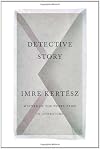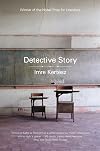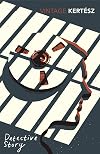
Detective Story
by Imre Kertész
On This Page
Description
The imprisoned former torturer for a defunct South American dictatorship recounts his involvement in the surveillance, torture, and assassination of a prominent man and his son whose principled but passive opposition to the regime left them vulnerable to the secret police.Tags
Recommendations










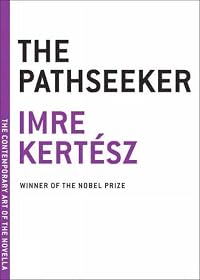
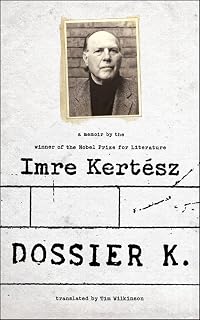










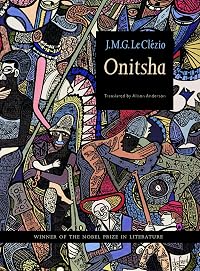


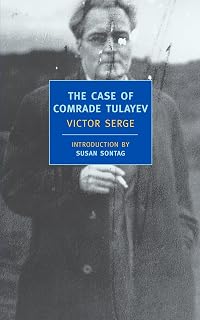
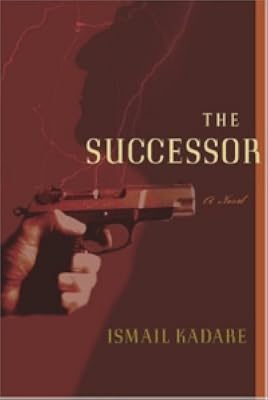


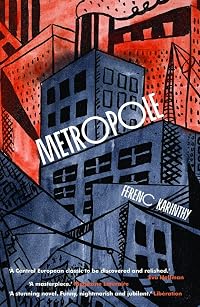





Member Recommendations

Member Reviews
Parlo della mia nausea, parlo del mio disgusto quotidiano. Che odio tutto quello che mi sta attorno, tutto. … Che odio entrare in un ufficio, ma anche in un negozio o anche soltanto in un caffe’. Che odio questi sguardi subdoli intorno a me, questi uomini che oggi festeggiano quello che ieri disprezzavano. Odio la sopportazione, la cupidigia, il nascondino, l’eterno gioco del chi e’, i privilegi e lo starsene acquattati… (53)
Certo, anche la vita e’ un modo per suicidarsi: lo svantaggio e’ che dura formidabilmente a lungo.
Sfoglio.
(29)
Certo, anche la vita e’ un modo per suicidarsi: lo svantaggio e’ che dura formidabilmente a lungo.
Sfoglio.
(29)
Imre Kertész, of course, spent his teenage years in Auschwitz and Buchenwald, and had more reason than most writers to know about the psychology of totalitarianism. In this novella he turns the tables and puts himself inside the head of a secret police officer in an imaginary Latin American dictatorship, who has become fascinated by the case of Enrique Salinas, the idealistic, dilettante student son of a wealthy businessman. Enrique is trying to find a way into opposition to the regime, while the police are trying to find useful evidence against him, and it's anybody's guess who will get there first. In the end, sadly, it doesn't seem to matter: there is a devastating logic that drives the process of Enrique's and the policeman's show more mutual destruction, seemingly independent of what anyone actually does.
Short, brutal and unanswerable in its dark analysis of how absolute power inevitably goes wrong. show less
Short, brutal and unanswerable in its dark analysis of how absolute power inevitably goes wrong. show less
Excellent even enjoyable -- which is not exactly the first word that is meant to spring to mind about a novella narrated in the first person by a low-level torturer/secret policy detective from a recently deposed Latin American dictatorship. Also the "crime" he is part of uncovering is heartbreaking. Altogether, reads like Kafka with more specificity or Kadare set in Latin America. Altogether it appears to have been written from the perspective of the banality of evil, with one cog in the bureaucracy, rather than the monster promised to readers in the inside flap.
Chilling novella of barbaric bureaucracy
A prisoners story. The last protest of a condemned man is to tell his version of events, to let the world understand what led him to a cell. It is the story of the Salinas family, an infamous case that rocked the unnamed totalitarian state and this story is one of a"regular" policeman who was just doing his job.
Chilling and detached. This is a story full of mist, with acts happening off screen. Culpable deniability and throw away statements that leave you to shudder. Martens story is partly one of fate, of Kafkaesque bureaucracy that lets evil in and turns a blind eye. It is a horror of errors (nothing comedic about it), a comment on the evil humanity will stoop to. It is an intriguing detective show more story in which no one can win and is full of reliability. It is also a mini exploration of blame, Martens is the scapegoat after all, low ranking officer whose superiors have escaped.
“Our records had already identified that Enrique was going to perpetuate something sooner or later. As far as we were concerned, his fate was sealed, even if he himself had not yet made up his mind.”
It is not in any way gratuitous, something that enhances the horror in throw away lines. In references to chummy chats between the interrogations, the dead pan descriptions of mechanics of building a case and of diary excerpts from dead men.
Written in 1977 by Novel prize winner Kertesz it feels in a way timeless (if you ignore the technology), it may not be the his most famous book but it certainly packs a punch.
If this sort of thing is your bag, recommended. show less
A prisoners story. The last protest of a condemned man is to tell his version of events, to let the world understand what led him to a cell. It is the story of the Salinas family, an infamous case that rocked the unnamed totalitarian state and this story is one of a"regular" policeman who was just doing his job.
Chilling and detached. This is a story full of mist, with acts happening off screen. Culpable deniability and throw away statements that leave you to shudder. Martens story is partly one of fate, of Kafkaesque bureaucracy that lets evil in and turns a blind eye. It is a horror of errors (nothing comedic about it), a comment on the evil humanity will stoop to. It is an intriguing detective show more story in which no one can win and is full of reliability. It is also a mini exploration of blame, Martens is the scapegoat after all, low ranking officer whose superiors have escaped.
“Our records had already identified that Enrique was going to perpetuate something sooner or later. As far as we were concerned, his fate was sealed, even if he himself had not yet made up his mind.”
It is not in any way gratuitous, something that enhances the horror in throw away lines. In references to chummy chats between the interrogations, the dead pan descriptions of mechanics of building a case and of diary excerpts from dead men.
Written in 1977 by Novel prize winner Kertesz it feels in a way timeless (if you ignore the technology), it may not be the his most famous book but it certainly packs a punch.
If this sort of thing is your bag, recommended. show less
As the story opens, a defense attorney makes public a manuscript written by his client, which looks back on the events that led to his imprisonment, his goal being to understand their logic and by extension, his fate.
As a young investigator in an unnamed Latin American country, Antonio R. Martens is transferred to the Corps, the secret police of a recently empowered dictator. His superior is calculating and self-serving, and his co-worker professes hatred of Jews and delights in use of a torture device referred to as a Boger swing. Martens is troubled by his new assignment, but assumes his role as the new boy without protest, while experiencing increasingly debilitating headaches. Charged with preventing an unnamed atrocity and working show more in a milieu where everyone and everything are suspicious, the team pursues the cynical, rebellious, adolescent son of a prominent and prosperous businessman. We know the conclusion from the beginning. What we do not know is why.
.
Kertész’s short novel reveals little, using vagueness and innuendo to convey its story – the same tactic used by the Corps in pursuing its brutal inquiry. The facts and the setting are ambiguous, but the motivation is not. “Those in power first, then the law.”(21)
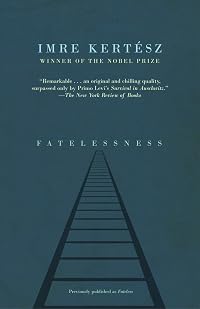
Detective Story is skillfully written, its tension palpable and its message of enduring relevance. Although it lacks the depth and power of Kertész’s autobiographical Fatelessness, the two books share some significant elements. Both are set in a time and place where a dictator’s absolute power results in corruption and indiscriminate brutality, in this instance with the resulting injustices affecting both the victim and the perpetrator. Both feature emotionally detached protagonists who engage in a dispassionate assessment of vile acts, for the expressed purpose of understanding their current circumstances. And underlying both is a theme of determining one’s own fate through the choices one makes, even if such appear at the time to be outside of one’s control and of uncertain significance.
Although not on par with Kertész's more significant, Nobel-worthy works, I enjoyed this as a fast and diverting read. show less
As a young investigator in an unnamed Latin American country, Antonio R. Martens is transferred to the Corps, the secret police of a recently empowered dictator. His superior is calculating and self-serving, and his co-worker professes hatred of Jews and delights in use of a torture device referred to as a Boger swing. Martens is troubled by his new assignment, but assumes his role as the new boy without protest, while experiencing increasingly debilitating headaches. Charged with preventing an unnamed atrocity and working show more in a milieu where everyone and everything are suspicious, the team pursues the cynical, rebellious, adolescent son of a prominent and prosperous businessman. We know the conclusion from the beginning. What we do not know is why.
.
Kertész’s short novel reveals little, using vagueness and innuendo to convey its story – the same tactic used by the Corps in pursuing its brutal inquiry. The facts and the setting are ambiguous, but the motivation is not. “Those in power first, then the law.”(21)
Detective Story is skillfully written, its tension palpable and its message of enduring relevance. Although it lacks the depth and power of Kertész’s autobiographical Fatelessness, the two books share some significant elements. Both are set in a time and place where a dictator’s absolute power results in corruption and indiscriminate brutality, in this instance with the resulting injustices affecting both the victim and the perpetrator. Both feature emotionally detached protagonists who engage in a dispassionate assessment of vile acts, for the expressed purpose of understanding their current circumstances. And underlying both is a theme of determining one’s own fate through the choices one makes, even if such appear at the time to be outside of one’s control and of uncertain significance.
Although not on par with Kertész's more significant, Nobel-worthy works, I enjoyed this as a fast and diverting read. show less
Kertesz has written a chilling novella of fatelessness in a nameless latin american country where suspicion, paranoia and political domination is rife.
Our main narrator is Martens, a police officer for the 'corps', a special division with alarmingly little guidelines as to what behaviour is considered outside the realms of the law. He tells the story of the Salinas family, specifically the father and son of Federigo and Enrique, whose deaths have become a wake-up call to a country who slept-walked through a totalitarian regime.
The pointless actions that garnered them so much suspicion is almost beyond belief and just adds to the impact of this haunting tale. As an Auschwitz survivor, Kertesz has an incredible insight into this theme of show more someone else writing your fate and he does it very well. show less
Our main narrator is Martens, a police officer for the 'corps', a special division with alarmingly little guidelines as to what behaviour is considered outside the realms of the law. He tells the story of the Salinas family, specifically the father and son of Federigo and Enrique, whose deaths have become a wake-up call to a country who slept-walked through a totalitarian regime.
The pointless actions that garnered them so much suspicion is almost beyond belief and just adds to the impact of this haunting tale. As an Auschwitz survivor, Kertesz has an incredible insight into this theme of show more someone else writing your fate and he does it very well. show less
Excellent even enjoyable -- which is not exactly the first word that is meant to spring to mind about a novella narrated in the first person by a low-level torturer/secret policy detective from a recently deposed Latin American dictatorship. Also the "crime" he is part of uncovering is heartbreaking. Altogether, reads like Kafka with more specificity or Kadare set in Latin America. Altogether it appears to have been written from the perspective of the banality of evil, with one cog in the bureaucracy, rather than the monster promised to readers in the inside flap.
Members
- Recently Added By
Published Reviews
The fact that some among us are capable of such atrocities indicates to Kertész that we, as a whole race, have forsaken the divine. God hasn’t abandoned us, we’ve abandoned God, and in doing so we have, at least temporarily, lost our fates.
added by paradoxosalpha
Nobelpristageren Imre Kertesz' "Detektivhistorie" er en præcis og vellykket beskrivelse af diktaturets indre logik ... absolut vedkommende, ikke mindst i kraft af sit implicitte budskab: Det gælder om at sige fra i god tid, inden det, man synes, man styrer, begynder at styre en selv. Det gælder om at sige fra, inden det er for sent. Dette kunne være budskabet, man tager med sig fra show more Kertesz' bog, som er hurtigt læst - og længe husket. show less
added by 2810michael
For totalitarismens offer Kertész, som for totalitarismens bøddel Martens, er det gennem skriften, man kan se skæbnen i øjnene. Selv om Detektivhistorie er et hurtigt fabrikeret bestillingsarbejde, har det ikke desto mindre karakter af den skriftens nødvendighed, som kendetegner hele Kertész' forfatterskab.
added by 2810michael
Author Information

191+ Works 6,021 Members
Imre Kertész was born in Budapest, Hungary on November 9, 1929. He was only 14 years old when he was deported with 7,000 other Hungarian Jews to the Auschwitz concentration camp in Poland in 1944. He survived that camp and later was transferred to the Buchenwald camp from where he was liberated in 1945. After returning to his native Budapest, he show more worked as a journalist and translator. He translated the works of Friedrich Nietzsche, Sigmund Freud, Ludwig Wittgenstein and Elias Canetti into Hungarian. He wrote several novels that drew largely from his experience as a teenage prisoner in Nazi concentration camps. His novels included Fateless, Fiasco, Kaddish for a Child Not Born, Someone Else, The K File, Europe's Depressing Heritage, and Liquidation. He also wrote the screenplay for the film version of Fateless in 2005. While his work was ignored by both the communist authorities and the public in Hungary where awareness of the Holocaust remained negligible, his work was recognized in other parts of the world. He received awards including the Brandenburg Literature Prize in 1995, The Book Prize for European Understanding, the Darmstadt Academy Prize in 1997, the World Literature Prize in 2000, and the Nobel Prize for Literature for fiction in 2002. He died after a long illness on March 31, 2016 at the age of 86. (Bowker Author Biography) show less
Some Editions
Awards and Honors
Awards
Common Knowledge
- Canonical title
- Detective Story
- Original title
- Detektívtörténet
- Original publication date
- 1977 (original Hungarian) (original Hungarian); 2008 (English: Wilkinson) (English: Wilkinson)
- People/Characters
- Antonio Raja Martens; Dias; Rodriguez; Enrique Salinas
- Important places*
- Sudamérica
- First words
- The manuscript that I am hereby making public was entrusted to my care by my client, Antonio R. Martens.
*Some information comes from Common Knowledge in other languages. Click "Edit" for more information.
Classifications
- Genres
- Fiction and Literature, General Fiction
- DDC/MDS
- 894.511334 — Literature & rhetoric Literatures of other languages Literatures of Altaic, Uralic, Hyperborean, Dravidian languages; literatures of miscellaneous languages of south Asia Finno-Ugric languages Ugric languages Hungarian Hungarian fiction 1900–2000 Late 20th century 1945–2000
- LCC
- PH3281 .K3815 .D4813 — Language and Literature Uralic languages. Basque language Uralic. Basque Hungarian
- BISAC
Statistics
- Members
- 378
- Popularity
- 82,804
- Reviews
- 19
- Rating
- (3.53)
- Languages
- 11 — Danish, Dutch, English, French, German, Greek, Hebrew, Italian, Portuguese, Spanish, Turkish
- Media
- Paper, Audiobook, Ebook
- ISBNs
- 20