

On This Page
Description
A New York Times Notable Book and Hugo and Nebula Award Finalist: This epic chronicle of ten immortals over the course of history. The immortals are ten individuals born in antiquity from various cultures. Immune to disease, able to heal themselves from injuries, they will never die of old age-although they can fall victim to catastrophic wounds. They have walked among mortals for millennia, traveling across the world, trying to understand their special gifts while searching for one another show more in the hope of finding some meaning in a life that may go on forever. Following their individual stories over the course of human history and beyond into a richly imagined future, weaves a broad tapestry that is ambitious in scope, meticulous in detail, polished in style. show lessTags
Recommendations














Member Reviews
Oh my great googamunga, what the hell have I been reading all these years, slogging through shit only to finally come upon THIS MAGNUM OPUS OF SF? I'm frankly about as embarrassed as I can possibly be.
I am STUNNED by how smoothly this enormous work slid down my gullet, amazing me with so much delightfully interesting history told so damn well that I had to check a few times to be sure I was reading an actual SF novel, and not a brilliant historical told through an old motif of immortals making their way through time. I kept picking up nuances that were thrilling and I absolutely loved the tension when it came to the possibilities of having these radically different people finally get together, or when they did, things went to hell, like show more ships running with false colors in the night.
But understand this: neither the interesting characters nor the locations and situations make this book the bit of brilliance that it is. It's the undercurrents of mythology, the retellings of old, old, old tales, and the underlying questioning of life that turns this huge novel into an unforgettable tale.
Sure, MANY authors have gone and turned their hands at immortality, and I've even been convinced on occasion that the best long-term space-farers limited by light-speed would inevitably be vampires and wandering jews, but let's face it: A lot of what's out there is dreck.
This novel isn't.
In fact, it's one of the most scrupulously researched and deftly imagined SF titles ever written. I'm absolutely certain that I'm going to have to read this a second and perhaps a third time. I picked up enough references to old gods and messages from other greats of literature to choke a horse, and yet Poul Anderson is so damn experienced and crafty that he never let any of it get in the way of good writing and storytelling. They were practically all below the surface, giving so much damn depth to this novel that I feel like a Phonician in a flimsy boat tempting Thetis or even Ran to capture me in her grand oceanic net.
"Stunning" doesn't really do this novel justice.
I feel like I just read great literature. This is the kind of writing I'd always wished and hoped to see in SF: deep, intelligent, crafty, exploratory, and a damn good yarn to boot. I'm not going to be forgetting any of these immortals any time soon. Heaven willing, I'll be able to meet up with them in a million years, myself, and drink wine with them with all the other biologicals filling all the niches of the universe.
One thing I will say, though, if anyone is considering between the audio version or the text, aim for the text. I tried both and reading it traditionally made a hell of a lot better sense and maintained if not excelled at keeping every ounce of my attention. And this is coming from someone who actually prefers to read by audiobook for convenience.
I'm pretty damn sure I'm going to have to do some serious rearranging of my top 100 list soon to make room for this puppy.
Another thing: there's quite a lot of Heinlein-dropping in the modern section of the tale. I know this is very intentional, from politics to borrowed story ideas. Far from being derivative, though, I think Poul pulled off a Heinlein better than Heinlein. And another thing: this novel was published in 1989, one year after Heinlein died.
As a send-off, it brought real tears to my eyes.
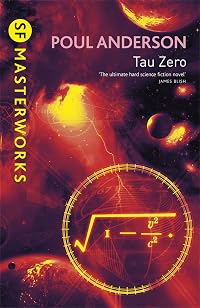
As a side note: I've only read one other work of Poul Anderson's, [b:Tau Zero|240617|Tau Zero|Poul Anderson|https://d.gr-assets.com/books/1389216838s/240617.jpg|598009] , and while I enjoyed the hard SF aspects a ton, ignoring what we now know about physics, I had some serious issues with the characters and sexual dynamics, feeling like the novel was a throwback of misogyny. I'm now sure that it was either Poul trying to speak to his intended audience of the early 70's, or he had gone through a HELL of a big life change between the years, because I had NO PROBLEMS AT ALL with the characters in [b:The Boat of a Million Years|338327|The Boat of a Million Years|Poul Anderson|https://d.gr-assets.com/books/1316130975s/338327.jpg|2705088]. They were complicated and three-dimensional, frail and strong and constantly growing. I loved them. They went down like sweet wine. I'm of the opinion that Poul was following someone else's misguided attempts to try for the apparent spirit of the times in Tau Zero, and for Boat, he was given free reign to make whatever kind of masterpiece he wanted.
THANK googamunga for that!
I've only read two, but he's now up there as one of my favorite authors of all time. That's a big WOW for me. Obviously I've got to get onto the rest of his library, huh? show less
I am STUNNED by how smoothly this enormous work slid down my gullet, amazing me with so much delightfully interesting history told so damn well that I had to check a few times to be sure I was reading an actual SF novel, and not a brilliant historical told through an old motif of immortals making their way through time. I kept picking up nuances that were thrilling and I absolutely loved the tension when it came to the possibilities of having these radically different people finally get together, or when they did, things went to hell, like show more ships running with false colors in the night.
But understand this: neither the interesting characters nor the locations and situations make this book the bit of brilliance that it is. It's the undercurrents of mythology, the retellings of old, old, old tales, and the underlying questioning of life that turns this huge novel into an unforgettable tale.
Sure, MANY authors have gone and turned their hands at immortality, and I've even been convinced on occasion that the best long-term space-farers limited by light-speed would inevitably be vampires and wandering jews, but let's face it: A lot of what's out there is dreck.
This novel isn't.
In fact, it's one of the most scrupulously researched and deftly imagined SF titles ever written. I'm absolutely certain that I'm going to have to read this a second and perhaps a third time. I picked up enough references to old gods and messages from other greats of literature to choke a horse, and yet Poul Anderson is so damn experienced and crafty that he never let any of it get in the way of good writing and storytelling. They were practically all below the surface, giving so much damn depth to this novel that I feel like a Phonician in a flimsy boat tempting Thetis or even Ran to capture me in her grand oceanic net.
"Stunning" doesn't really do this novel justice.
I feel like I just read great literature. This is the kind of writing I'd always wished and hoped to see in SF: deep, intelligent, crafty, exploratory, and a damn good yarn to boot. I'm not going to be forgetting any of these immortals any time soon. Heaven willing, I'll be able to meet up with them in a million years, myself, and drink wine with them with all the other biologicals filling all the niches of the universe.
One thing I will say, though, if anyone is considering between the audio version or the text, aim for the text. I tried both and reading it traditionally made a hell of a lot better sense and maintained if not excelled at keeping every ounce of my attention. And this is coming from someone who actually prefers to read by audiobook for convenience.
I'm pretty damn sure I'm going to have to do some serious rearranging of my top 100 list soon to make room for this puppy.
Another thing: there's quite a lot of Heinlein-dropping in the modern section of the tale. I know this is very intentional, from politics to borrowed story ideas. Far from being derivative, though, I think Poul pulled off a Heinlein better than Heinlein. And another thing: this novel was published in 1989, one year after Heinlein died.
As a send-off, it brought real tears to my eyes.
As a side note: I've only read one other work of Poul Anderson's, [b:Tau Zero|240617|Tau Zero|Poul Anderson|https://d.gr-assets.com/books/1389216838s/240617.jpg|598009] , and while I enjoyed the hard SF aspects a ton, ignoring what we now know about physics, I had some serious issues with the characters and sexual dynamics, feeling like the novel was a throwback of misogyny. I'm now sure that it was either Poul trying to speak to his intended audience of the early 70's, or he had gone through a HELL of a big life change between the years, because I had NO PROBLEMS AT ALL with the characters in [b:The Boat of a Million Years|338327|The Boat of a Million Years|Poul Anderson|https://d.gr-assets.com/books/1316130975s/338327.jpg|2705088]. They were complicated and three-dimensional, frail and strong and constantly growing. I loved them. They went down like sweet wine. I'm of the opinion that Poul was following someone else's misguided attempts to try for the apparent spirit of the times in Tau Zero, and for Boat, he was given free reign to make whatever kind of masterpiece he wanted.
THANK googamunga for that!
I've only read two, but he's now up there as one of my favorite authors of all time. That's a big WOW for me. Obviously I've got to get onto the rest of his library, huh? show less
Anderson, Poul. The Boat of a Million Years. Tor, 1989.
Poul Anderson’s epic space opera, The Boat of a Million Years, was published a year and a half after Robert Heinlein died. One character listening to a friend rail against pacifism asks, “Plagiarizing Heinlein, are you?” Besides this direct homage, the novel as whole is a response to Heinlein’s Lazarus Long stories, especially Methuselah’s Children. We begin with a Phoenician sailor who seems to heal very quickly and does not age. If he loses a tooth, it grows back. He sets out on a quest to find immortals like himself. Unlike Heinlein’s Johnson family, his immortality is not the result of selective breeding but of a very unlikely cluster of genetic anomalies and show more mutations that do not breed true. They show up rarely in multiple cultures. They are not the racially identifiable redheads Heinlein imagined. As the title suggests, his quest takes him from prehistory to the far future. Along the way, Anderson shows us why he is a grandmaster of adventurous space opera and alternate history. He hardens the science of Heinlein’s Lazarus Long series and challenges its libertarian politics. A classic. show less
Poul Anderson’s epic space opera, The Boat of a Million Years, was published a year and a half after Robert Heinlein died. One character listening to a friend rail against pacifism asks, “Plagiarizing Heinlein, are you?” Besides this direct homage, the novel as whole is a response to Heinlein’s Lazarus Long stories, especially Methuselah’s Children. We begin with a Phoenician sailor who seems to heal very quickly and does not age. If he loses a tooth, it grows back. He sets out on a quest to find immortals like himself. Unlike Heinlein’s Johnson family, his immortality is not the result of selective breeding but of a very unlikely cluster of genetic anomalies and show more mutations that do not breed true. They show up rarely in multiple cultures. They are not the racially identifiable redheads Heinlein imagined. As the title suggests, his quest takes him from prehistory to the far future. Along the way, Anderson shows us why he is a grandmaster of adventurous space opera and alternate history. He hardens the science of Heinlein’s Lazarus Long series and challenges its libertarian politics. A classic. show less
Tremendous book, although it must be admitted it falls down a bit in the last third or so. The idea of certain humans being immortal and destined to wander through history cursed by always losing everyone they grow to love is not a new one, but Anderson handles it particularly deftly. His immortals are not particularly likeable characters, but they attract the reader's sympathy because of the weariness of their timeless journey and the losses they endure. The book starts to decline when it reaches the modern era and suddenly the existence of the immortals is revealed to a world which greedily grabs onto the gift of eternal life and promptly begins to abuse it. The idea of the Immortals building a spaceship and using their long life to show more explore the universe is a good one, but sadly it never really grabs the reader's interest. Still an engaging, wistful read. show less
With its theme of immortality and its sheer breadth of vision, this reminded me somewhat of Charles Sheffield's Tomorrow and Tomorrow. However, in other ways it is a very different creature. While Sheffield's immortality is achieved through storing consciousness by artificial means, the characters in this work by Poul Anderson seem determined to preserve the intactness of their humanity, even when it eventually makes them misfits among their own species.
The greater portion of the book concentrates on the efforts of several ageless characters to survive through the centuries. Various places and times in antiquity are beautifully recreated, and the real power and depth of the story lies in its rich undercurrents of history and mythology. show more Anderson is very clever in that he weaves detailed information throughout the text without affecting the flow of the narrative. The lyricism of the writing just carries the reader along.
The characterisation is excellent, and although the names of the main players change at various points (ageless people must constantly change their identities in order not to arouse suspicion), the reader can often intuitively determine who individuals are from their personalities.
I do think that the story weakened a little after the viewpoint changed to the future of mankind. One reason for this might be that the main characters seem to become overly concerned with petty personal squabbles. One could argue, though, that Anderson was implying that even people who had lived for millennia may still find it hard to transcend selfish inclinations and view life from a broader perspective all of the time. This may be an inherent part of the humanity that the ageless ones are loath to relinquish.
As with all great literature, the reader will remember for a long time to come not just the story but also the reading experience itself. show less
The greater portion of the book concentrates on the efforts of several ageless characters to survive through the centuries. Various places and times in antiquity are beautifully recreated, and the real power and depth of the story lies in its rich undercurrents of history and mythology. show more Anderson is very clever in that he weaves detailed information throughout the text without affecting the flow of the narrative. The lyricism of the writing just carries the reader along.
The characterisation is excellent, and although the names of the main players change at various points (ageless people must constantly change their identities in order not to arouse suspicion), the reader can often intuitively determine who individuals are from their personalities.
I do think that the story weakened a little after the viewpoint changed to the future of mankind. One reason for this might be that the main characters seem to become overly concerned with petty personal squabbles. One could argue, though, that Anderson was implying that even people who had lived for millennia may still find it hard to transcend selfish inclinations and view life from a broader perspective all of the time. This may be an inherent part of the humanity that the ageless ones are loath to relinquish.
As with all great literature, the reader will remember for a long time to come not just the story but also the reading experience itself. show less
3/5
My biggest issue with The Boat of a Million Years lies with its structure. The meat of the novel, some 400 pages of it, are a series of historical fiction short stories that follow immortal humans as they progress through the ages of history. Some of these humans become consistent characters, but others appear for one chapter, or story, and are never mentioned again. This wouldn't be a problem on it's own, but is a symptom of the real problem to me, which is that there's simply not enough consistency or flow to get invested in these characters lives. The stories are interesting on their own, but don't really work well together as part of a larger novel, especially since there's no underlying plot to speak of that connects the show more stories. To make matters worse, many of these stories are repetitive, covering the same themes of loss and fragility (both of humans and civilization itself) from only slightly different perspectives. They tend to bleed together into a wash after awhile. Anderson is indulgent with the amount of time spent in this historical fiction section. It was also genuinely tiring for me to have to re-identify the major players, the period of history and the immediate setting every thirty pages or so. I was not allowed to settle into a narrative, and while that I can be a positive, I didn't feel that way about The Boat of a Million Years.
The last 100 pages are a total shift from the rest of the novel, switching into a generation ship SF motif as the immortal humans, now disaffected by the increasingly inhuman Earth, venture out into space to find a place to recreate what they remembered of ancient times. This last section also has the most continuity, both for plot and character, of the entire book. However, because there's so little of it it feels at-odds with the rest of the work. Not only is the setting entirely different, but what Anderson writes about shifts as well, as he gets bogged down in technical specifics of the ship itself, and the complexities of long-term travel.
Then what did I like about it? Anderson is a good writer, and the prose itself was on the stronger side throughout the novel. I found myself touched by the way he describes the inner emotions of these immortal humans, and their fragility in spite of their strength to endure. I can't say that I was entirely drawn in during all five hundred pages, but the fact that I was able to pretty easily stick with it in spite of it's flaws is a testament to his ability to write a good story. The endings to several of the historical fiction chunks were especially well written and noteworthy. I also found the positive and not overly saccharine ending to be good in tone if not great in execution.
I just think it's too darn long for what it is: a well-written historical fiction novel with some science fiction stapled to the end that doesn't have a strong plot or purpose. I want to like it more than I do. It was sometimes chore to get through, especially the middle of the book when the short story formula was already overused. show less
My biggest issue with The Boat of a Million Years lies with its structure. The meat of the novel, some 400 pages of it, are a series of historical fiction short stories that follow immortal humans as they progress through the ages of history. Some of these humans become consistent characters, but others appear for one chapter, or story, and are never mentioned again. This wouldn't be a problem on it's own, but is a symptom of the real problem to me, which is that there's simply not enough consistency or flow to get invested in these characters lives. The stories are interesting on their own, but don't really work well together as part of a larger novel, especially since there's no underlying plot to speak of that connects the show more stories. To make matters worse, many of these stories are repetitive, covering the same themes of loss and fragility (both of humans and civilization itself) from only slightly different perspectives. They tend to bleed together into a wash after awhile. Anderson is indulgent with the amount of time spent in this historical fiction section. It was also genuinely tiring for me to have to re-identify the major players, the period of history and the immediate setting every thirty pages or so. I was not allowed to settle into a narrative, and while that I can be a positive, I didn't feel that way about The Boat of a Million Years.
The last 100 pages are a total shift from the rest of the novel, switching into a generation ship SF motif as the immortal humans, now disaffected by the increasingly inhuman Earth, venture out into space to find a place to recreate what they remembered of ancient times. This last section also has the most continuity, both for plot and character, of the entire book. However, because there's so little of it it feels at-odds with the rest of the work. Not only is the setting entirely different, but what Anderson writes about shifts as well, as he gets bogged down in technical specifics of the ship itself, and the complexities of long-term travel.
Then what did I like about it? Anderson is a good writer, and the prose itself was on the stronger side throughout the novel. I found myself touched by the way he describes the inner emotions of these immortal humans, and their fragility in spite of their strength to endure. I can't say that I was entirely drawn in during all five hundred pages, but the fact that I was able to pretty easily stick with it in spite of it's flaws is a testament to his ability to write a good story. The endings to several of the historical fiction chunks were especially well written and noteworthy. I also found the positive and not overly saccharine ending to be good in tone if not great in execution.
I just think it's too darn long for what it is: a well-written historical fiction novel with some science fiction stapled to the end that doesn't have a strong plot or purpose. I want to like it more than I do. It was sometimes chore to get through, especially the middle of the book when the short story formula was already overused. show less
This is solid, if rambling, Anderson fun: scenes from the lives of a small group of immortals as they learn to hide their nature and cope with the natural suspicions of their short-lived compatriots. The oldest is Hanno, a Phoenicias sailor, and the youngest is an African-American slave who eventually uses the name Corinne Macandal. The others who make it to the end of book are Aliyat (Syrian), Svoboda (Ukrainian), Tu Shan (Chinese), Yukiko (Japanese), John Wanderer (Native American), and Patulcius (Roman). Agelessness is not enough to ensure long lives, and we meet other immortals along the way, who from carelessness, bad luck, or deliberate choice, don't survive to share the ultimate fate of the eight survivors. Or rather, as they show more come to be known, Survivors.
Most of the book consists of the adventures the individual immortals in various well-devoloped ancient settings. Hanno joins a Greek expedition to Britain and Scandinavia. Aliyat lives too long in Palmyra while it is changing from a Christian to a Muslim city, and escapes the harem to become a prostitute--in Constantinople for a while, where she briefly meets Hanno, who has become a Rus trader. (Well, Welsh, really, for certain values of "really," but the Byzantines regard him as Rus.) Svoboda, already a great-grandmother, leaves her village before she can be killed for witchcraft, to become a merchant's wife in Kiev (and briefly meets Hanno), and later a nun, and still later a Cossack and then a soldier for Mother Russia during the Second World War. (Not for the USSR; the Soviets are better than the Nazis for Svoboda's people, but not much.) Hanno meets Richelieu; John Wanderer, under the earlier name of Deathless, survives the great cultural change brought by the arrival of the horse, and later survives the conquest of the Native American tribes by the expanding United States of America (and meets Hanno. Hanno is the unifying theme in this book.)
It's in these visits to different times and cultures that the book is strongest; it's always been one of Anderson's great strengths. Where the book drags a bit is in the late 20th century, where Hanno becomes a remarkably predictable libertarian. Only a particularly petty and unhealthy puritanism, for instance, can possibly explain laws banning smoking in elevators. Hanno's nemesis, Edmund Moriarty, a.k.a. "Neddy," U.S. Senator from some unidentified New England state, is a cartoon, about as subtle as a ton of bricks. Even John Wanderer's mild reminders that there are some real problems that are most usefully addressed at a level beyond rugged individualism carry little weight beside the fact that Moriarty's own aide has complete contempt for Moriarty's hypocrisy, evidenced in such telling signs as the fact that he has quit smoking, and the senator is too smugly oblivious to notice. Despite the fact that this is the section in which all the surviving immortals make contact, and the one in which hiding successfully becomes a serious challenge, this is a dull, draggy interlude. There is no explanation, not even hand-waving, for how clever Hanno hides them all from the nefarious forces of modern civilization for the remaining decades before aging becomes a solved problem for everyone. We then have another not very interesting section, set in the same AI-controlled world as The Stars Are Also Fire and other later Anderson works, before the real story resumes. The immortals leave this boring non-story for a far more entertaining encounter with two alien species.
Not Anderson's best work, by any means, but very enjoyable even with its weaknesses. show less
Most of the book consists of the adventures the individual immortals in various well-devoloped ancient settings. Hanno joins a Greek expedition to Britain and Scandinavia. Aliyat lives too long in Palmyra while it is changing from a Christian to a Muslim city, and escapes the harem to become a prostitute--in Constantinople for a while, where she briefly meets Hanno, who has become a Rus trader. (Well, Welsh, really, for certain values of "really," but the Byzantines regard him as Rus.) Svoboda, already a great-grandmother, leaves her village before she can be killed for witchcraft, to become a merchant's wife in Kiev (and briefly meets Hanno), and later a nun, and still later a Cossack and then a soldier for Mother Russia during the Second World War. (Not for the USSR; the Soviets are better than the Nazis for Svoboda's people, but not much.) Hanno meets Richelieu; John Wanderer, under the earlier name of Deathless, survives the great cultural change brought by the arrival of the horse, and later survives the conquest of the Native American tribes by the expanding United States of America (and meets Hanno. Hanno is the unifying theme in this book.)
It's in these visits to different times and cultures that the book is strongest; it's always been one of Anderson's great strengths. Where the book drags a bit is in the late 20th century, where Hanno becomes a remarkably predictable libertarian. Only a particularly petty and unhealthy puritanism, for instance, can possibly explain laws banning smoking in elevators. Hanno's nemesis, Edmund Moriarty, a.k.a. "Neddy," U.S. Senator from some unidentified New England state, is a cartoon, about as subtle as a ton of bricks. Even John Wanderer's mild reminders that there are some real problems that are most usefully addressed at a level beyond rugged individualism carry little weight beside the fact that Moriarty's own aide has complete contempt for Moriarty's hypocrisy, evidenced in such telling signs as the fact that he has quit smoking, and the senator is too smugly oblivious to notice. Despite the fact that this is the section in which all the surviving immortals make contact, and the one in which hiding successfully becomes a serious challenge, this is a dull, draggy interlude. There is no explanation, not even hand-waving, for how clever Hanno hides them all from the nefarious forces of modern civilization for the remaining decades before aging becomes a solved problem for everyone. We then have another not very interesting section, set in the same AI-controlled world as The Stars Are Also Fire and other later Anderson works, before the real story resumes. The immortals leave this boring non-story for a far more entertaining encounter with two alien species.
Not Anderson's best work, by any means, but very enjoyable even with its weaknesses. show less
My reactions to reading this book in 1992. Spoilers follow.
A classic sf novel and classic Poul Anderson. This book is a masterpiece of structure and almost a catalogue of important sf themes.
Anderson combines his historical interest with the hard science that made up his Tau Zero. (When Phoenician Hanno refuses to turn back from diverting Pytheas to search for the Others, he reminded of the captain in Tau Zero.) Anderson develops the implications of his immortal mutation: the pain of children and lovers and spouses growing old before an eternally young immortal’s eyes, the threat of insanity under the load of centuries’ memory, the need to constantly move about and remain obscure, the caution developed over millenia and the show more attendant long ranging planning, the hazards and restrictions on women immortals who eventually find only careers in prostitution are available to them (and come to despise men like Aliyat), the distance from mortal men and their values and their culture. Not all survive and some episodes in this episodic novel show that: Rusus who dies at Indian hands in the American West, the Danish bard who wills himself to death in the hopes he will be reunited with lovde ones at Christ’s return in 1000, the warrior who hopes for an immortality he already has by a glorious death.
Anderson shows how different cultures react with immortals. Tu Shan and Okura reside in a mountain village in Nepal, revered as wise philosophers guiding the village. John Wanderer is a revered shaman. Hanno becomes a trader. Svobada merely suffers the vagries of Kazak history through Stalin. Aliyat poignantly transforms from a self-confidant Christian (all the immortals tend to view religion with a jauindiced eye since they see so many come and go) to a timid, frightened prostitute. Corinne transforms from ignorant black American slave to leader of a strange religion of self hope. Perhaps most pathetically (but still interesting and logical) Patulcius has been working as a low-level bureaucrat since the days of the Roman Republic, an invisible funtionary preserving civilization’s memory.
The book begins to really pick up when the immortals begain to meet each other, to form their friendships and loves. The part set in 1975 and contemporary times brings in Poul Anderson’s libertarian bent (the immortals have a firm appreciation for freedom given the centuries of war and oppression they’ve seen). The final Thule section takes us far into a “post-biotic”future as many authors go. This is a future of routine sex changes, plentiful energy, nanofactories, and computer mediated communion and fantasies. Capitalism is dead (everyone gets a ration -- the only scarce resource is land), and the immortals, like the rest of man, is having hard time adjusting, finding a purpose in life. Tu Shan finds his art unwanted, totally replicable if wanted. John Wanderer wanders the futile reservations of those who have not accepted the immortality and conveniences of the modern world. (Anderson rightly brings up the analogy of the Shakers. Like that earlier group who retreated from modernity, these groups are dying out. I fully agree with Anderson in that some people would seek this type of retreat.
Still, having immortality at the price of children (something the natural immortals can have) seems a plot contrivance. If you have the biotech for routine sex changes, you can cure sterility.). Hanno longs to explore. Ozuka is trying to find a way to develop new arts, new insights into the meaning of existence. Man seems at a dead end with little curiosity to physically go beyond the moon. The immortals, in their quest, in their very oldness, represent the vital childhood of man. They push outward in the Pytheas and meet aliens and look forward to developing a common insight, gleaned from all sentient races, to explore and farm new worlds. They hear of the leftovers of other races who, like man on Earth, are developing into something beyond ken. These malcontents, like the immortals, are perfectly suited to their universe because, as Anderson points out, only maladopted organisms have to evolve. It is an ironic, intriguing, stirring end to the epic. The immortals have seen so much change yet are changeless, well adapted (more so than normal man). This book has a wealth of sf themes: cultural change, biotech, nanotech, alien contact, machine intelligence, alien contact, immortality, theology. It is quintessential sf is sf is the literature of change. It is quintessential Anderson in its politics, its use of history and science.
The part I liked best, though, was “The Kitten and the Cardinal” section where Hanno reveals his secret to Cardinal Richelieu and asks for official protection. Richelieu wisely refuses citing the fuel such a revelation would put on the fires of religious wars and tells Hanno that he’s seen much history but, unlike Richelieu, he’s never been in it. Hanno, in the final section, drives history forward in his dictatorial explorations. I also liked John Wanderer’s comment that “Change is a medicine bundle. You must refuse it altogether, or take the whole thing.” The Indians realize this when the horse brings new prosperity and a new kind of competition and war between tribes. show less
A classic sf novel and classic Poul Anderson. This book is a masterpiece of structure and almost a catalogue of important sf themes.
Anderson combines his historical interest with the hard science that made up his Tau Zero. (When Phoenician Hanno refuses to turn back from diverting Pytheas to search for the Others, he reminded of the captain in Tau Zero.) Anderson develops the implications of his immortal mutation: the pain of children and lovers and spouses growing old before an eternally young immortal’s eyes, the threat of insanity under the load of centuries’ memory, the need to constantly move about and remain obscure, the caution developed over millenia and the show more attendant long ranging planning, the hazards and restrictions on women immortals who eventually find only careers in prostitution are available to them (and come to despise men like Aliyat), the distance from mortal men and their values and their culture. Not all survive and some episodes in this episodic novel show that: Rusus who dies at Indian hands in the American West, the Danish bard who wills himself to death in the hopes he will be reunited with lovde ones at Christ’s return in 1000, the warrior who hopes for an immortality he already has by a glorious death.
Anderson shows how different cultures react with immortals. Tu Shan and Okura reside in a mountain village in Nepal, revered as wise philosophers guiding the village. John Wanderer is a revered shaman. Hanno becomes a trader. Svobada merely suffers the vagries of Kazak history through Stalin. Aliyat poignantly transforms from a self-confidant Christian (all the immortals tend to view religion with a jauindiced eye since they see so many come and go) to a timid, frightened prostitute. Corinne transforms from ignorant black American slave to leader of a strange religion of self hope. Perhaps most pathetically (but still interesting and logical) Patulcius has been working as a low-level bureaucrat since the days of the Roman Republic, an invisible funtionary preserving civilization’s memory.
The book begins to really pick up when the immortals begain to meet each other, to form their friendships and loves. The part set in 1975 and contemporary times brings in Poul Anderson’s libertarian bent (the immortals have a firm appreciation for freedom given the centuries of war and oppression they’ve seen). The final Thule section takes us far into a “post-biotic”future as many authors go. This is a future of routine sex changes, plentiful energy, nanofactories, and computer mediated communion and fantasies. Capitalism is dead (everyone gets a ration -- the only scarce resource is land), and the immortals, like the rest of man, is having hard time adjusting, finding a purpose in life. Tu Shan finds his art unwanted, totally replicable if wanted. John Wanderer wanders the futile reservations of those who have not accepted the immortality and conveniences of the modern world. (Anderson rightly brings up the analogy of the Shakers. Like that earlier group who retreated from modernity, these groups are dying out. I fully agree with Anderson in that some people would seek this type of retreat.
Still, having immortality at the price of children (something the natural immortals can have) seems a plot contrivance. If you have the biotech for routine sex changes, you can cure sterility.). Hanno longs to explore. Ozuka is trying to find a way to develop new arts, new insights into the meaning of existence. Man seems at a dead end with little curiosity to physically go beyond the moon. The immortals, in their quest, in their very oldness, represent the vital childhood of man. They push outward in the Pytheas and meet aliens and look forward to developing a common insight, gleaned from all sentient races, to explore and farm new worlds. They hear of the leftovers of other races who, like man on Earth, are developing into something beyond ken. These malcontents, like the immortals, are perfectly suited to their universe because, as Anderson points out, only maladopted organisms have to evolve. It is an ironic, intriguing, stirring end to the epic. The immortals have seen so much change yet are changeless, well adapted (more so than normal man). This book has a wealth of sf themes: cultural change, biotech, nanotech, alien contact, machine intelligence, alien contact, immortality, theology. It is quintessential sf is sf is the literature of change. It is quintessential Anderson in its politics, its use of history and science.
The part I liked best, though, was “The Kitten and the Cardinal” section where Hanno reveals his secret to Cardinal Richelieu and asks for official protection. Richelieu wisely refuses citing the fuel such a revelation would put on the fires of religious wars and tells Hanno that he’s seen much history but, unlike Richelieu, he’s never been in it. Hanno, in the final section, drives history forward in his dictatorial explorations. I also liked John Wanderer’s comment that “Change is a medicine bundle. You must refuse it altogether, or take the whole thing.” The Indians realize this when the horse brings new prosperity and a new kind of competition and war between tribes. show less
Members
- Recently Added By
Author Information

692+ Works 53,367 Members
Poul Anderson, November 25, 1926 - July 31, 2001 Poul Anderson was born on November 25, 1926 in Bristol, Pennsylvania to parents Anton and Astrid. After his father's death, Poul's mother took them first to Denmark and then to Maryland and Minnesota. He earned his degree in Physics from the University of Minnesota, but chose instead to write show more stories for science fiction magazines, such as "Astounding." Anderson is considered a "hard science fiction" writer, meaning that his books have a basis in scientific fact. To attain this high level of scientific realism, Anderson spent many hours researching his topics with scientists and professors. He liked to write about individual liberty and free will, which was a well known theme in many of his books. He also liked to incorporate his love of Norse mythology into his stories, sometimes causing his modern day characters to find themselves in fantastical worlds, such as in "Three Hearts and Three Lions," published in 1961. Anderson has written over a hundred books, his last novel, "Genesis" won the John W. Campbell Award, one of the three major science fiction awards. He is a former president of the Science Fiction and Fantasy Writers of America and won three Nebula awards and nine Hugo Awards. In 1997, Anderson was named a Grandmaster by the Science Fiction and Fantasy Writers of America and was also inducted into the Science Fiction Fantasy Hall of Fame. Poul Anderson died on July 31, 2001 at the age of 74. (Bowker Author Biography) show less
Some Editions
Awards and Honors
Awards
Series

Belongs to Publisher Series
Common Knowledge
- Canonical title
- The Boat of a Million Years
- Original title
- The Boat of a Million Years
- Original publication date
- 1989
- Epigraph
- May he go forth in the sunrise boat,
May he come to port in the sunset boat,
May he go among the imperishable stars,
May he journey in the Boat of a Million Years.
—The Book of Going Forth by Daylight
(Th... (show all)eban recension, ca. 18th Dynasty) - Dedication
- To
G. C. and Carmen Edmondson
Salud, amor, dinero y tiempo para gustarlos. - First words
- "To sail beyond the world—"
- Last words
- (Click to show. Warning: May contain spoilers.)"We'll make it be," he promised.
- Blurbers
- Pournelle, Jerry; Zelazny, Roger; Brin, David; Haldeman, Joe; Dickson, Gordon R.
- Original language*
- Englisch
*Some information comes from Common Knowledge in other languages. Click "Edit" for more information.
Classifications
Statistics
- Members
- 1,539
- Popularity
- 14,873
- Reviews
- 30
- Rating
- (3.44)
- Languages
- 6 — Czech, English, German, Italian, Slovak, Spanish
- Media
- Paper, Audiobook, Ebook
- ISBNs
- 27
- ASINs
- 17