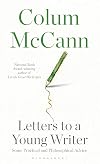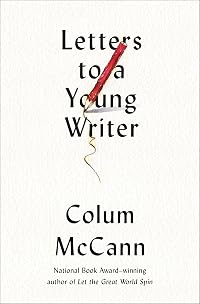
Letters to a Young Writer: Some Practical and Philosophical Advice
by Colum McCann 
On This Page
Description
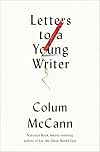
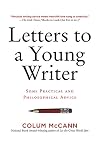
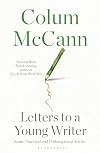
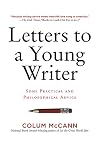
From the bestselling author of the National Book Award winner Let the Great World Spin comes a lesson in how to be a writer—and so much more than that.Intriguing and inspirational, this book is a call to look outward rather than inward. McCann asks his readers to constantly push the boundaries of experience, to see empathy and wonder in the stories we craft and hear.
A paean to the power of language, both by argument and by example, Letters to a Young Writer is fierce and honest in show more its testament to the bruises delivered by writing as both a profession and a calling. It charges aspiring writers to learn the rules and even break them.
These fifty-two essays are ultimately a profound challenge to a new generation to bring truth and light to a dark world through their art. show less
Tags
Recommendations




Member Reviews
I could use more Colum McCann in my life. I'd shell out some money just to have a little Colum figure in my office that dispenses wisdom from time to time. Better yet, I'll make a nice comfy spot in the corner and perhaps the author can stop by once or twice a day and share a tidbit or two. What say you, Mr. McCann? I'll get you a nice desk and you can have half the room and I'll make the coffee the way you like. And if you like my half of the room better, I'll even trade you. I'm amiable and quiet and won't bother you at all. Just every once in a while, share a bit of advice. It's a good trade if you ask me.
I read one McCann novel eight years ago, Let the Great World Spin, and while I enjoyed it, I now realize I've ignored this author show more far too long. Letters to a Young Writer is the most inspirational book about writing I've ever had the pleasure of reading. Nearly every book I've read on the craft of writing has given me an inspirational moment or two, taught me quite a bit, or merely given me the impetus to prove the author wrong, but none has moved me as this one has. McCann doesn't talk down to his reader. He doesn't repeat warnings about how the young writer is never going to make it anyway and might as well accept their fate. Sure, it's a fact that making a life out of writing is very difficult and statistically improbable, but if writers wanted a sure thing, they probably wouldn't be writers. McCann refrains from these warnings that fill other authors' writing manifestos; he doesn't say, “you're not going to get there,” rather, he says, “it's a tough road, but when you get there, here's what it's going to be like.” That 'when' may not always be a reality, but for the first time ever, I feel like someone high in the publishing world believes in me. And that's just what I needed.
We all have our student styles. I see it in my own children who've fallen in love with soccer (they didn't inherit their love of sports from me). One kid crumples under a coach who's hard on his team. Another rises to the challenge of a coach like that. One thrives with encouragement and a guiding hand on the shoulder. Another grows lazy with the same guidance. Perhaps some writers need the hard-ass coach (Sol Stein: Stein on Writing - “You suck and you're never going to amount to anything”) and some need the realist coach (Elizabeth Gilbert: Big Magic - “You're beautiful and you have potential, but it's too hard, so stop dreaming”). Personally, I thrive under McCann's style. That's not to say I didn't learn much from my other coaches. I enjoyed my experience with the authors mentioned here, as well as many others. None of those other authors got me out of my rut, however. None of them changed my outlook. None of them encouraged me to go to my office, rearrange the furniture, and get down to business (I made a spot in the corner for you, Colum, just in case you decide to stop by).
And it wasn't just the coaching style that I loved about Letters to a Young Writer, it was McCann's stories and phrases. This isn't only an inspirational how-to for the writer, it's a gorgeously written volume. These little snippets of advice read almost like poetry. And so, I'm convinced, if I can't have the author in my office, I'll just have to find an audio version of this book and play a segment or two every day. Likely, I'll get sucked in from time to time, listen to the whole thing when I should be writing, but then McCann will gently remind me that time is ticking and that I cannot die until I finish the books that are within me. Thank you, Mr. McCann, for helping me rediscover my purpose. show less
I read one McCann novel eight years ago, Let the Great World Spin, and while I enjoyed it, I now realize I've ignored this author show more far too long. Letters to a Young Writer is the most inspirational book about writing I've ever had the pleasure of reading. Nearly every book I've read on the craft of writing has given me an inspirational moment or two, taught me quite a bit, or merely given me the impetus to prove the author wrong, but none has moved me as this one has. McCann doesn't talk down to his reader. He doesn't repeat warnings about how the young writer is never going to make it anyway and might as well accept their fate. Sure, it's a fact that making a life out of writing is very difficult and statistically improbable, but if writers wanted a sure thing, they probably wouldn't be writers. McCann refrains from these warnings that fill other authors' writing manifestos; he doesn't say, “you're not going to get there,” rather, he says, “it's a tough road, but when you get there, here's what it's going to be like.” That 'when' may not always be a reality, but for the first time ever, I feel like someone high in the publishing world believes in me. And that's just what I needed.
We all have our student styles. I see it in my own children who've fallen in love with soccer (they didn't inherit their love of sports from me). One kid crumples under a coach who's hard on his team. Another rises to the challenge of a coach like that. One thrives with encouragement and a guiding hand on the shoulder. Another grows lazy with the same guidance. Perhaps some writers need the hard-ass coach (Sol Stein: Stein on Writing - “You suck and you're never going to amount to anything”) and some need the realist coach (Elizabeth Gilbert: Big Magic - “You're beautiful and you have potential, but it's too hard, so stop dreaming”). Personally, I thrive under McCann's style. That's not to say I didn't learn much from my other coaches. I enjoyed my experience with the authors mentioned here, as well as many others. None of those other authors got me out of my rut, however. None of them changed my outlook. None of them encouraged me to go to my office, rearrange the furniture, and get down to business (I made a spot in the corner for you, Colum, just in case you decide to stop by).
And it wasn't just the coaching style that I loved about Letters to a Young Writer, it was McCann's stories and phrases. This isn't only an inspirational how-to for the writer, it's a gorgeously written volume. These little snippets of advice read almost like poetry. And so, I'm convinced, if I can't have the author in my office, I'll just have to find an audio version of this book and play a segment or two every day. Likely, I'll get sucked in from time to time, listen to the whole thing when I should be writing, but then McCann will gently remind me that time is ticking and that I cannot die until I finish the books that are within me. Thank you, Mr. McCann, for helping me rediscover my purpose. show less
I first read this book several years ago, a half a year or so after I was privileged to attend a Writer's Conference at which Mr. McCann was one of the keynote speakers and a lecturer in two of the workshops I took that weekend. I enjoyed it then but did not appreciate it as much as I do now, with some distance, because many of the pieces of advice were tidbits I had only recently jotted down in my notebook from the conference and they did not seem so remarkable.
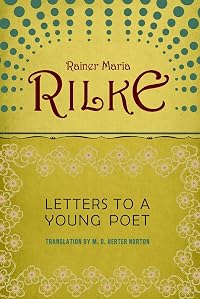
With a little distance, I can now more clearly see the beauty in Mr. McCann's writing and the value in his advice. How could you not be in love with writing that begins a chapter: "Be a camera. 'Language' us into vision. Make us feel as if we are there. Colors, sounds, sights. show more Bring us to the pulse of the moment."? As a long-time writer (although my writing has usually been the service of one job or another, which for the past 24 years has been as a lawyer and before that, a newspaper reporter), I have often read writing magazines, books, and articles to help me improve my writing, and some advice was just plain terrible, but much of it was helpful. Mr. McCann reminds us to "go into" ourselves, borrowing a phrase from poet Rainer Maria Rilke's Letters to a Young Poet, but also to look outward for inspiration. He also reminded readers that even though we should listen to and value advice from successful writers, we still must be true to ourselves, there is no single path to success, and if we don't actually sit down and write what is our own, we will never succeed.
This is a book that I must pick up again and again, to enjoy the language and to spark my creativity. There is still an unwritten novel or two in me and reading this book anew has lit that fire in me again. I am now going to keep it near my computer whenever I feel stuck or in just in need of reading some beautiful language. show less
With a little distance, I can now more clearly see the beauty in Mr. McCann's writing and the value in his advice. How could you not be in love with writing that begins a chapter: "Be a camera. 'Language' us into vision. Make us feel as if we are there. Colors, sounds, sights. show more Bring us to the pulse of the moment."? As a long-time writer (although my writing has usually been the service of one job or another, which for the past 24 years has been as a lawyer and before that, a newspaper reporter), I have often read writing magazines, books, and articles to help me improve my writing, and some advice was just plain terrible, but much of it was helpful. Mr. McCann reminds us to "go into" ourselves, borrowing a phrase from poet Rainer Maria Rilke's Letters to a Young Poet, but also to look outward for inspiration. He also reminded readers that even though we should listen to and value advice from successful writers, we still must be true to ourselves, there is no single path to success, and if we don't actually sit down and write what is our own, we will never succeed.
This is a book that I must pick up again and again, to enjoy the language and to spark my creativity. There is still an unwritten novel or two in me and reading this book anew has lit that fire in me again. I am now going to keep it near my computer whenever I feel stuck or in just in need of reading some beautiful language. show less
Colum McCann offers a series of “letters” in the spirit of Rilke’s Letters to a Young Poet, updated for the 21st century writer primarily of fiction but applicable to all creative writers. His gentle admonitions, remonstrations, chiding and cajoling are a pleasure to read. Though he admits at the outset that nobody can teach you to write, he nonetheless points to a few pitfalls you might avoid, some challenges you might set yourself, and urges you to consider the kind of person — not just writer — you wish to be. He writes with enthusiasm about the writing life — the sitting down in a chair at a desk with a blank piece of paper and just staying there until you’ve done the work. And that’s all there is to it after all. Do show more the work. Write. There’s only one person who can do it and that’s you. Still, it’s nice to encounter a supporter, a coach, if you will, who genuinely wants you to do your best, to reach your potential, for you to just go ahead and write.
Yes, there are some useful tidbits of information here. But this is really a book for inspiration rather than specific guidance. Dip into it when you need a pick-me-up. When you are taking a break from writing. And then get back to it.
Gently recommended. show less
Yes, there are some useful tidbits of information here. But this is really a book for inspiration rather than specific guidance. Dip into it when you need a pick-me-up. When you are taking a break from writing. And then get back to it.
Gently recommended. show less
Colum McCann's advice is practical and heartfelt, with my favorite part being this:
The only true way to expand your world is to inhabit an otherness beyond ourselves. There is one simple word for this: empathy. Don’t let them fool you. Empathy is violent. Empathy is tough. Empathy can rip you open. Once you go there you can be changed.
Remember, the world is so much more than one story. We find in others the ongoing of ourselves. … Believe that your story is bigger than yourself.
The only true way to expand your world is to inhabit an otherness beyond ourselves. There is one simple word for this: empathy. Don’t let them fool you. Empathy is violent. Empathy is tough. Empathy can rip you open. Once you go there you can be changed.
Remember, the world is so much more than one story. We find in others the ongoing of ourselves. … Believe that your story is bigger than yourself.
There are writing books that are instruction manuals, with exercises and chapters on plot, or semi-colons. Then there are the inspirational books about writing, that give little to no instruction, but leave the reader fired up and eager to put pen to paper. This falls somewhere in between, being both advice and inspiration.
Each chapter is brief and to the point, whether the subject is writing dialogue or finding an agent. McCann isn't wasting any words here, so each brief letter is packed full. I read this short book over a period of months -- the chapters run together when read all at once -- and I found it to be full of advice I'd be thinking of throughout the day. This is a generous and useful book.
Each chapter is brief and to the point, whether the subject is writing dialogue or finding an agent. McCann isn't wasting any words here, so each brief letter is packed full. I read this short book over a period of months -- the chapters run together when read all at once -- and I found it to be full of advice I'd be thinking of throughout the day. This is a generous and useful book.
I was given an e-copy of Colum McCann's latest book by the publisher, Random House via NetGalley, in exchange for my honest review. Thank you.
I would give this book more than 5 Stars if I could! It will become the "go-to" reference for both new and experienced writers. There is so much beneficial information and recommendations from Mr. McCann and it's all done in 52 short essays. Each essay is headlined with a meaningful quote from a famous writer.
You don't have to be writing a novel to find this book helpful. We all write at some point even if it's a letter, memo, social media posts, or perhaps a book review. Mr. McCann lists rules for writing and then encourages you to break them! So much useful information in such a small amount of show more space is hard to believe but it's all for real. This is a book to hang onto because each essay is like having a consultation with a splendid teacher! show less
I would give this book more than 5 Stars if I could! It will become the "go-to" reference for both new and experienced writers. There is so much beneficial information and recommendations from Mr. McCann and it's all done in 52 short essays. Each essay is headlined with a meaningful quote from a famous writer.
You don't have to be writing a novel to find this book helpful. We all write at some point even if it's a letter, memo, social media posts, or perhaps a book review. Mr. McCann lists rules for writing and then encourages you to break them! So much useful information in such a small amount of show more space is hard to believe but it's all for real. This is a book to hang onto because each essay is like having a consultation with a splendid teacher! show less
A quick, punchy collection of micro-essays filled with helpful, thought provoking advice for writers. I found myself nodding with appreciation for virtually every piece of hard-won wisdom McCann shares in this gem of a book.
Some key takeaways:
Write towards what you don’t know.
Language is more important than plot.
To write well, you must be a voracious reader.
Spare those in your life the indignity of writing them so directly into your fiction. Give them grace and write away from them so directly.
You must write. Fail. Write again. Don’t be afraid of the grind required. Do the work.
More to come.
—
I found this book online after picking up McCann’s short story collection “Thirteen Ways of Looking” and recognizing the author.
Some key takeaways:
Write towards what you don’t know.
Language is more important than plot.
To write well, you must be a voracious reader.
Spare those in your life the indignity of writing them so directly into your fiction. Give them grace and write away from them so directly.
You must write. Fail. Write again. Don’t be afraid of the grind required. Do the work.
More to come.
—
I found this book online after picking up McCann’s short story collection “Thirteen Ways of Looking” and recognizing the author.
Members
- Recently Added By
Lists


Author Information

23+ Works 14,385 Members
Irish writer Colum McCann was born near Dublin in 1965 and graduated from the University of Texas with a B.A. degree. He has worked as a newspaper journalist in Ireland and written several short stories and bestselling novels. The short film of Everything in this Country Must was nominated for an Academy Award in 2005. McCann's work has appeared show more in publications including The New York Times, The Atlantic Monthly, GQ, The Irish Times, La Repubblica, Die Zeit, Paris Match, the Guardian, and the Independent. He has won numerous awards, such as a Pushcart Prize, the Rooney Prize, the Irish Novel of the Year Award, and the 2002 Ireland Fund of Monaco Princess Grace Memorial Literary Award. In 2009 McCann was inducted into the Irish arts association Aosdana. He teaches in the Master of Fine Arts Creative Writing program at New York's Hunter College. (Bowker Author Biography) show less
Colum McCann is a LibraryThing Author, an author who lists their personal library on LibraryThing.
Awards and Honors
Distinctions
The Guardian Book of the Day (2017-06-06)
Common Knowledge
- Canonical title*
- Brieven aan een jonge schrijver
- Original title
- Letters to a Young Writer
- Original publication date
- 2017
- Original language*
- Engels
*Some information comes from Common Knowledge in other languages. Click "Edit" for more information.
Classifications
- Genres
- Fiction and Literature, Literature Studies and Criticism, Biography & Memoir
- DDC/MDS
- 808.02 — Literature & rhetoric Literature, rhetoric & criticism Rhetoric and collections of literary texts from more than two literatures Rhetoric and anthologies Authorship techniques, plagiarism, editorial techniques
- LCC
- PN187 .M36 — Language and Literature Literature (General) Literature (General) Authorship Technique. Literary composition, etc.
- BISAC
Statistics
- Members
- 230
- Popularity
- 141,640
- Reviews
- 12
- Rating
- (3.95)
- Languages
- 6 — Danish, Dutch, English, French, Portuguese, Spanish
- Media
- Paper, Audiobook, Ebook
- ISBNs
- 20
- ASINs
- 2