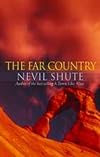
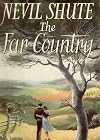
The Far Country
by Nevil Shute
On This Page
Description
When a young Englishwoman named Jennifer Morton leaves London to visit relatives on their sheep ranch in the Australian outback, she falls in love both with the gloriously beautiful country and with Carl, a Czech refugee who was a doctor in his own land and now works as a lumberjack. They are brought together through dramatic encounters and strange twists of fate, but their relationship hangs in the balance when Jennifer is called back to England..
Tags
Recommendations













Member Reviews
In Australia Jane and Jack Dorman own a prosperous sheep farm, or station. For the past few years most of the money they earned has gone to pay off loans and debts, but now, for the first time the wool money is all theirs, and its been a good year for selling wool. But Jane is worried about her aunt back in England. Aunt Ethel was the only family member who supported her in her decision to marry an Australian and leave England, they still exchange letters, and in Ethel’s latest she mentioned little things that begin to worry Jane.
Jane is right to worry. The story moves to England and Jennifer, Ethel’s granddaughter, receives a telephone call from her mother asking her to check in on Ethel. When Jennifer does she discovers that Ethel show more is suffering from starvation and malnutrition. She has been hiding her lack of money from her family and hasn’t asked anyone for help, instead she was selling the furniture and pawning whatever valuables she had.
Back in Australia the Dorman’s decide to send Ethel a cheque, but the money comes too late, Ethel knows she is dying and insists that Jennifer take the money and use it herself to leave England and travel to Australia.
Okay, I’ve already spent longer than I wanted recapping the plot, and I haven’t even gotten to Carl Zlinter yet. But you get how a rough idea of how the story starts out.
And those early chapters set in England are utter misery. Wonderfully written, but just plain miserable. Everyone is still living off ration cards, there is no meat, the damn socialists are in power and no one is happy. And the National Health system, which has just been introduced, is destroying the medical profession. People showing up at the doctors asking questions and getting forms filled out! As though they deserved a responsive doctor.
I’m sure there was plenty of hardship in Britain in the years after WWII, but I think that blaming it on the “socialists” and the nationalisation of the health service is part of Shute’s anti-government spiel. Throughout the novel he seems very much of the opinion that if you work hard you will get rewards, and therefore you’ll deserve them. If you don’t get ahead in life then you haven’t been working hard.
His example of this is Australia, where is you get your head down and do the hard graft you’ll be rich. But even there the government is sticking its nose in, making foreign people do 3 years of college in order have their medical qualifications recognised when anyone can see that they’re good hard working people!
But Australia is there to contrast with the grey, wet, cold, crowded, miserable England that Jennifer leaves. Australia is full of open spaces and opportunity. Its warm and sunny, and there is so much land there for the taking.
Yeah, lets not mention the original inhabitants shall we? Because they don’t get a mention at all in this apart from one comment about “blacks” not being in the frame in a postcard. Well, they don’t get to be in frame in this book either.
So, for me, there are a lot of problems with this novel. It’s almost innocent, in a way, how it seems to believe that hard work is enough. But it is a damaging attitude to have, because it ignore the fact that if you start out life with even a little bit of money then you are way ahead of those in poverty, and for many people no amount of hard work will get them out of poverty.
I’m writing a lot about this because it is a huge part of The Far Country, or at least it seemed to take up a huge amount in my reading of it.
There is also the romance, and the wonderful writing. It’s a very easy read, Shute has a very flowing style that just lets the reader keep on reading, even if they don’t agree with everything he says. I suppose I shouldn’t be too hard on Shute, it was the times he lived and wrote in, but for a modern reader I think there are a lot of issues with the book. It didn’t spoil my enjoyment of the book, or at least, I still enjoyed parts of it, but I don’t think it is one I’d be recommending to a lot of people. show less
Jane is right to worry. The story moves to England and Jennifer, Ethel’s granddaughter, receives a telephone call from her mother asking her to check in on Ethel. When Jennifer does she discovers that Ethel show more is suffering from starvation and malnutrition. She has been hiding her lack of money from her family and hasn’t asked anyone for help, instead she was selling the furniture and pawning whatever valuables she had.
Back in Australia the Dorman’s decide to send Ethel a cheque, but the money comes too late, Ethel knows she is dying and insists that Jennifer take the money and use it herself to leave England and travel to Australia.
Okay, I’ve already spent longer than I wanted recapping the plot, and I haven’t even gotten to Carl Zlinter yet. But you get how a rough idea of how the story starts out.
And those early chapters set in England are utter misery. Wonderfully written, but just plain miserable. Everyone is still living off ration cards, there is no meat, the damn socialists are in power and no one is happy. And the National Health system, which has just been introduced, is destroying the medical profession. People showing up at the doctors asking questions and getting forms filled out! As though they deserved a responsive doctor.
I’m sure there was plenty of hardship in Britain in the years after WWII, but I think that blaming it on the “socialists” and the nationalisation of the health service is part of Shute’s anti-government spiel. Throughout the novel he seems very much of the opinion that if you work hard you will get rewards, and therefore you’ll deserve them. If you don’t get ahead in life then you haven’t been working hard.
His example of this is Australia, where is you get your head down and do the hard graft you’ll be rich. But even there the government is sticking its nose in, making foreign people do 3 years of college in order have their medical qualifications recognised when anyone can see that they’re good hard working people!
But Australia is there to contrast with the grey, wet, cold, crowded, miserable England that Jennifer leaves. Australia is full of open spaces and opportunity. Its warm and sunny, and there is so much land there for the taking.
Yeah, lets not mention the original inhabitants shall we? Because they don’t get a mention at all in this apart from one comment about “blacks” not being in the frame in a postcard. Well, they don’t get to be in frame in this book either.
So, for me, there are a lot of problems with this novel. It’s almost innocent, in a way, how it seems to believe that hard work is enough. But it is a damaging attitude to have, because it ignore the fact that if you start out life with even a little bit of money then you are way ahead of those in poverty, and for many people no amount of hard work will get them out of poverty.
I’m writing a lot about this because it is a huge part of The Far Country, or at least it seemed to take up a huge amount in my reading of it.
There is also the romance, and the wonderful writing. It’s a very easy read, Shute has a very flowing style that just lets the reader keep on reading, even if they don’t agree with everything he says. I suppose I shouldn’t be too hard on Shute, it was the times he lived and wrote in, but for a modern reader I think there are a lot of issues with the book. It didn’t spoil my enjoyment of the book, or at least, I still enjoyed parts of it, but I don’t think it is one I’d be recommending to a lot of people. show less
Jennifer Morton is living in England in 1950. She and her family are still experiencing the difficult conditions that occurred after WWII. Carl Zlinter is a displaced person, who has emigrated from Czechoslovakia to rural Victoria, Australia, where he must work for two years in a lumber camp in exchange for his passage. He is not allowed to practice medicine, though there is an immense need for doctors in the remote countryside. When Jennifer visits her relatives in Australia, the two meet, confront a crisis together, develop a relationship, and encounter obstacles to remaining together.
The descriptions of the Australian “far country” are beautifully rendered. There is a stark contrast between life in England and life in Australia. show more England is still recovering from the war, while Australia has become a prosperous land of opportunity. However, the “new Australians” are unable to contribute in their fields of expertise. This is shown via a talented artist and the doctor working in the lumber camps. The law states that the doctor must attend three years of training in Australia, and, of course, a displaced person is unlikely to be able to afford such retraining.
At the heart of this story is a romance, but it is not syrupy or melodramatic. It contains social commentary, but not in an overpowering manner. There is a rather long lead-in to the main thrust of the storyline, but once it reaches Australia, it shines. The main characters are likeable and believable. It is always a compliment to say I wish it were longer. show less
The descriptions of the Australian “far country” are beautifully rendered. There is a stark contrast between life in England and life in Australia. show more England is still recovering from the war, while Australia has become a prosperous land of opportunity. However, the “new Australians” are unable to contribute in their fields of expertise. This is shown via a talented artist and the doctor working in the lumber camps. The law states that the doctor must attend three years of training in Australia, and, of course, a displaced person is unlikely to be able to afford such retraining.
At the heart of this story is a romance, but it is not syrupy or melodramatic. It contains social commentary, but not in an overpowering manner. There is a rather long lead-in to the main thrust of the storyline, but once it reaches Australia, it shines. The main characters are likeable and believable. It is always a compliment to say I wish it were longer. show less
The first two thirds of this book were a 5 star read for me. It contrasts the flourishing Australian economy (particularly food production) with the austerity of post-World War II Britain. The characters include a mix of native-born Australians, English immigrants to Australia from decades earlier, and Eastern European displaced persons working out two-year commitments in labor camps. Toward the end, the focus narrowed to a romance between a young English visitor and a Czech doctor working out a two-year stint in a lumber camp. I’m not sure if the book’s open ending was intentional or if Shute was just stuck in a corner he wrote himself into.
The Far Country - Nevil Shute ****
Nevil Shute has won a place as one of my favourite authors since I picked up On the Beach a few years ago. His books don’t seem to be much publicised these days which is a shame, especially when you consider the success he had during the 60’s and 50’s. I know that they can appear a little dated but that just adds to the beauty of his world. Here you won’t find and sort of sex or gratuitous violence, even though he is unafraid to confront serious issues that were relevant at that period. It is almost like stepping back in time to world that probably never existed, but we all think did.
The Far Country was written way back in 1952 and set in 1950, we follow a young girl called Jennifer Morton who show more lives in a very harsh London, a city still reeling from the aftermath of a very hard war. At the beginning she is summoned to her grandmother’s home and is shocked to see the poverty she has been allowed to live in. With a pension that has dried up and seemingly lost in the system, she has been allowed to practically starve to death. Just before her inevitable demise the grandmother receives some money from relatives in Australia, and it is her dying wish that Jennifer should visit the ‘Far Country’ before she settles down in Britain. After discussions with her parents Jennifer decides to visit Australia and stay with her extended family whilst experiencing their way of life, and sets off for the outback. Whilst there she meets a foreign doctor and falls in love, but will she be able to adapt to this new life or will she return home to her place of birth?
From the description this novel sounds like something out of a Mills and Boon paperback, but it really is so much more than that. Shute himself immigrated to Australia and left behind a fledgling NHS & a socialist government, he really doesn’t hold anything back and the contempt he feels for his old country drips from every page. The food rationing/shortages and weather paint a very bleak picture of what life was like for the ordinary man and he contrasts this with Australia being the land of plenty, a new life and a new beginning. Several smaller themes are entangled throughout such as belonging, class & loyalty.
Some people may view The Far Country as a fairly vicious attack on everything Shute turned his back on in post war Britain, others may see it as a fairly simple love story. Personally I see it as an adventure in a new land where normal people are forced into less ordinary circumstances (a theme very evident in most of his books) and have to deal with not just their emotions but the environment around them.
Although not my favourite Shute book it is still recommendable, although I think ‘On the Beach’ & ‘Trustee from the Toolroom’ are a better place to discover the author. show less
Nevil Shute has won a place as one of my favourite authors since I picked up On the Beach a few years ago. His books don’t seem to be much publicised these days which is a shame, especially when you consider the success he had during the 60’s and 50’s. I know that they can appear a little dated but that just adds to the beauty of his world. Here you won’t find and sort of sex or gratuitous violence, even though he is unafraid to confront serious issues that were relevant at that period. It is almost like stepping back in time to world that probably never existed, but we all think did.
The Far Country was written way back in 1952 and set in 1950, we follow a young girl called Jennifer Morton who show more lives in a very harsh London, a city still reeling from the aftermath of a very hard war. At the beginning she is summoned to her grandmother’s home and is shocked to see the poverty she has been allowed to live in. With a pension that has dried up and seemingly lost in the system, she has been allowed to practically starve to death. Just before her inevitable demise the grandmother receives some money from relatives in Australia, and it is her dying wish that Jennifer should visit the ‘Far Country’ before she settles down in Britain. After discussions with her parents Jennifer decides to visit Australia and stay with her extended family whilst experiencing their way of life, and sets off for the outback. Whilst there she meets a foreign doctor and falls in love, but will she be able to adapt to this new life or will she return home to her place of birth?
From the description this novel sounds like something out of a Mills and Boon paperback, but it really is so much more than that. Shute himself immigrated to Australia and left behind a fledgling NHS & a socialist government, he really doesn’t hold anything back and the contempt he feels for his old country drips from every page. The food rationing/shortages and weather paint a very bleak picture of what life was like for the ordinary man and he contrasts this with Australia being the land of plenty, a new life and a new beginning. Several smaller themes are entangled throughout such as belonging, class & loyalty.
Some people may view The Far Country as a fairly vicious attack on everything Shute turned his back on in post war Britain, others may see it as a fairly simple love story. Personally I see it as an adventure in a new land where normal people are forced into less ordinary circumstances (a theme very evident in most of his books) and have to deal with not just their emotions but the environment around them.
Although not my favourite Shute book it is still recommendable, although I think ‘On the Beach’ & ‘Trustee from the Toolroom’ are a better place to discover the author. show less
Jennifer Morton is living in England in 1950. She and her family are still experiencing the difficult conditions that occurred after WWII. Carl Zlinter is a displaced person, who has emigrated from Czechoslovakia to rural Victoria, Australia, where he must work for two years in a lumber camp in exchange for his passage. He is not allowed to practice medicine, though there is an immense need for doctors in the remote countryside. When Jennifer visits her relatives in Australia, the two meet, confront a crisis together, develop a relationship, and encounter obstacles to remaining together.
The descriptions of the Australian “far country” are beautifully rendered. There is a stark contrast between life in England and life in Australia. show more England is still recovering from the war, while Australia has become a prosperous land of opportunity. However, the “new Australians” are unable to contribute in their fields of expertise. This is shown via a talented artist and the doctor working in the lumber camps. The law states that the doctor must attend three years of training in Australia, and, of course, a displaced person is unlikely to be able to afford such retraining.
At the heart of this story is a romance, but it is not syrupy or melodramatic. It contains social commentary, but not in an overpowering manner. There is a rather long lead-in to the main thrust of the storyline, but once it reaches Australia, it shines. The main characters are likeable and believable. It is always a compliment to say I wish it were longer. show less
The descriptions of the Australian “far country” are beautifully rendered. There is a stark contrast between life in England and life in Australia. show more England is still recovering from the war, while Australia has become a prosperous land of opportunity. However, the “new Australians” are unable to contribute in their fields of expertise. This is shown via a talented artist and the doctor working in the lumber camps. The law states that the doctor must attend three years of training in Australia, and, of course, a displaced person is unlikely to be able to afford such retraining.
At the heart of this story is a romance, but it is not syrupy or melodramatic. It contains social commentary, but not in an overpowering manner. There is a rather long lead-in to the main thrust of the storyline, but once it reaches Australia, it shines. The main characters are likeable and believable. It is always a compliment to say I wish it were longer. show less
4.5 Stars.
World War Two has ended, but rations are still on in England, and life in Europe seems to have no opportunities left, particularly for the young. Jennifer Morton is one of those young Londoners, working away at a job that has no future and a life that seems unpromising, but a twist of fate provides her with an opportunity to visit Australia, and everything in her life changes.
Carl Zlinter is a Czechoslovakian doctor who emigrated to Australia after the war. As an immigrant, he is not allowed to practice medicine in his new country, and he must work a two-year stint as a laborer with a logging concern. He isn’t allowed to practice, but his skills as a doctor are much needed in the remote area in which he is working, so his show more fellow workers come to know him as a man who can be called on when first aid is needed.
Jenny and Carl meet, but as might be expected, the situation is not ideal, nor is it easy to imagine what future they might have together, given the circumstances they are in. Just the kind of love story that Nevil Shute is so very good at writing!
I was caught up in this tale from beginning to end. It is obvious that Shute, himself a new Australian, was enamored of his adopted land and distressed at the direction he felt his home country of England was taking. This is Australia the way I would have imagined it at this time, and I’m sure it was a land of plenty and a land of opportunity after the ravages of a World War. The descriptions of both the land and its people are part of what pulls you into the novel immediately. The contrasts he draws between Australia and England make it all the more enticing.
Another down in my quest to read all of Shute’s novels. This one earns a thumbs up. show less
World War Two has ended, but rations are still on in England, and life in Europe seems to have no opportunities left, particularly for the young. Jennifer Morton is one of those young Londoners, working away at a job that has no future and a life that seems unpromising, but a twist of fate provides her with an opportunity to visit Australia, and everything in her life changes.
Carl Zlinter is a Czechoslovakian doctor who emigrated to Australia after the war. As an immigrant, he is not allowed to practice medicine in his new country, and he must work a two-year stint as a laborer with a logging concern. He isn’t allowed to practice, but his skills as a doctor are much needed in the remote area in which he is working, so his show more fellow workers come to know him as a man who can be called on when first aid is needed.
Jenny and Carl meet, but as might be expected, the situation is not ideal, nor is it easy to imagine what future they might have together, given the circumstances they are in. Just the kind of love story that Nevil Shute is so very good at writing!
I was caught up in this tale from beginning to end. It is obvious that Shute, himself a new Australian, was enamored of his adopted land and distressed at the direction he felt his home country of England was taking. This is Australia the way I would have imagined it at this time, and I’m sure it was a land of plenty and a land of opportunity after the ravages of a World War. The descriptions of both the land and its people are part of what pulls you into the novel immediately. The contrasts he draws between Australia and England make it all the more enticing.
Another down in my quest to read all of Shute’s novels. This one earns a thumbs up. show less
I'm not sure what I'd call this beyond an historical fiction. A family drama with a romance. Post World War 2 life in Australia and a dissatisfaction with English socialism and rationing that I have encountered in Shute's novels before, but not quite this strongly. The book does go on a bit of a rant against post-war Britain vs the opportunity available in Australia (the 'Far Country'). The author himself had emigrated from England to Australia. Hard working for a new life for those who would try it. The new angle here is that there are a lot of 'New Australians', post War resettlements from across Europe who go there on work programs. Life isn't always easy for them.
A lot of good history in here. I thought this a very good story. It show more becomes very intense and engrossing. Beyond that, the Australian slang and way of speaking circa 1950 had me chuckling.
This portrait of a prosperous Australia of 1950 is quite a contrast to the drought damaged Australia of 2016 painted in Jane Harper's 'The Dry' that I read a month ago.
As an aside, a small part of the novel is set in Ealing, West London with a lot of attention to detail. Ealing happens to be Nevil Shute's birthplace. For those who care about such things, there is a very strong, well written female lead character. show less
A lot of good history in here. I thought this a very good story. It show more becomes very intense and engrossing. Beyond that, the Australian slang and way of speaking circa 1950 had me chuckling.
This portrait of a prosperous Australia of 1950 is quite a contrast to the drought damaged Australia of 2016 painted in Jane Harper's 'The Dry' that I read a month ago.
As an aside, a small part of the novel is set in Ealing, West London with a lot of attention to detail. Ealing happens to be Nevil Shute's birthplace. For those who care about such things, there is a very strong, well written female lead character. show less
Members
- Recently Added By
Lists

Top Five Books of 2020
982 works; 350 members

Stories set on Australian Continent
67 works; 5 members

Books Read in 2022
5,226 works; 115 members

Favorite Childhood Books
1,651 works; 515 members
Author Information

56+ Works 20,311 Members
Nevil Shute Norway was born in Ealing, London, England, on January, 17 1899. At the age of 11, Norway played truant from his first preparatory school in Hammersmith. After he was discovered, he was sent to the Dragon School, Oxford, and from there to Shrewsbury. He was on holiday in Dublin at the time of the Easter rising of 1916 and acted as an show more ambulance driver, winning a commendation for gallant conduct. He then entered the Royal Military Academy, intending to be commissioned into the Royal Flying Corps, but a bad stammer led to his being failed at his final medical examination and returned to civil life. The last few months of the war were spent on home service as a private in the Suffolk Regiment. In 1919, Norway went to Balliol College, Oxford, where he took a third class honors course in engineering science in 1922. During the vacations he worked, unpaid, as an aeronautical engineer, for the Aircraft Manufacturing Company at Hendon, and then for Geoffrey de Havilland's own firm, which he joined as an employee upon finishing at Oxford. He learned to fly and gained experience as a test observer. During the evenings he diligently wrote novels and short stories unperturbed by rejection slips from publishers. In 1924 Norway took the post of Chief Calculator to the Airship Guarantee Company, to work on the construction of the R100. In 1929 he became Deputy Chief Engineer under Barnes Wallis, and in the following year he flew to and from Canada in the R100. After the end of the airship project, jobs were hard to come by due to the depression so Shute started an aircraft manufacturing company, Airspeed Limited. This company was ultimately successful and built a large number of aircraft during the war. Shute remained joint managing director until 1938. When the business became too routine, he decided to get out of the rut and live by writing. The de Havillands, the first aviation job Shute had ever had, wound up buying Airspeed Ltd. He had by then enjoyed some success as a novelist and had sold the film rights of Lonely Road and Ruined City. At the outbreak of war in 1939, Norway joined the Royal Naval Volunteer Reserve as a Sub-Lieutenant in the Miscellaneous Weapons Department. Rising to Lieutenant Commander, he found experimenting with secret weapons a job after his own heart. But he found that his growing celebrity as a writer caused him to be in the Normandy landings on 6th June 1944, for the Ministry of Information, and to be sent to Burma as a correspondent in 1945. He entered Rangoon with the 15th Corps from Arakan. Soon after demobilisation in 1945 he emigrated to Australia and made his home in Langwarrin, Victoria. His output of novels, which began with Marazan (1926) continued to the end. Shute was one of the leading aeronautical engineers in Britain during the 30's and a fellow of the Royal Aeronautical Society. When he began writing in the 20's, he feared that a reputation as a writer of fiction might harm his engineering career. For this reason he published under his two Christian names, Nevil Shute and engineered under his "real" name, Nevil S. Norway. Nevil Shute Norway died in Melbourne on January, 12 1960. (Bowker Author Biography) show less
Series
Belongs to Publisher Series
Work Relationships
Common Knowledge
- Original publication date
- 1952
- People/Characters
- Tim Archer; Carl; Jennifer Morton
- Important places
- Australia
- Related movies
- The Far Country (1986 | IMDb)
- Epigraph
- Into my heart an air that kills
From yon far country blows:
What are those blue remembered hills,
What spires, what farms are those?
That is the land of lost content,
I see it shining plain,
The happy hi... (show all)ghways where I went
And cannot come again.
From the Collected Poems of A. E. Housman, published by Messrs. Jonathan Cape, Ltd., and reproduced by permission of The Society of Authors. - First words
- Tim Archer got into the utility and drove it from the Banbury Feed and General Supply Pty. Ltd., down the main street of the town.
- Last words
- (Click to show. Warning: May contain spoilers.)“We’ll get back to it, all right,” she said. “Some day, somehow, we’ll get back there again.”
- Original language
- English
Classifications
Statistics
- Members
- 634
- Popularity
- 45,966
- Reviews
- 19
- Rating
- (3.98)
- Languages
- 8 — Danish, Dutch, English, Finnish, German, Norwegian (Bokmål), Spanish, Swedish
- Media
- Paper, Audiobook, Ebook
- ISBNs
- 35
- UPCs
- 1
- ASINs
- 35