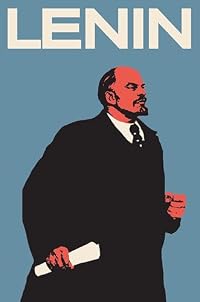
Lenin: The Man, the Dictator, and the Master of Terror
by Victor Sebestyen
On This Page
Description
"Since the birth of Soviet Russia, Vladimir Lenin has been viewed as a controversial figure, revered and reviled for his rigid political ideals. He continues to fascinate as a man who made history, and created the first Communist state, a model that would later be imitated by nearly half the countries in the world. Drawing on new research, including the diaries, memoirs, and personal letters of both Lenin and his friends, Victor Sebestyen's biography--the first in English in nearly two show more decades--is not only a political examination of one of the most important historical figures of the twentieth century, but a portrait of Lenin the man. Lenin was someone who loved nature, hunting, fishing and could identify hundreds of species of plants, a despotic ruler whose closest ties and friendships were with women. The long-suppressed story of the complex love triangle Lenin had with his wife, and his mistress and comrade, reveals a different character to the coldly one-dimensional figure of the legend. Sebestyen also reveals Lenin as a ruthless and single-minded despot and a 'product of his time and place: a violent, tyrannical and corrupt Russia.' He seized power in a coup, promised a revolution, a socialist utopia for the people, offered simple solutions to complex issues and constantly lied; in fact, what he created was more 'a mirror image of the Romanov autocracy.' He authorized the deaths of thousands of people, and created a system based on the idea that political terror against opponents was justified for the greater ideal. One of his old comrades who had once admired him said he 'desired the good... but created evil.' And that would include his invention of Stalin, who would take Lenin's system of the gulag and the secret police to new heights"-- show lessTags
Recommendations








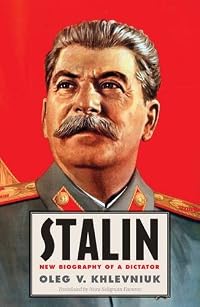


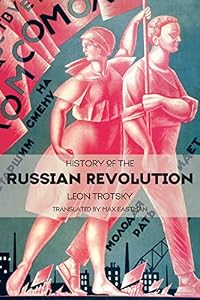
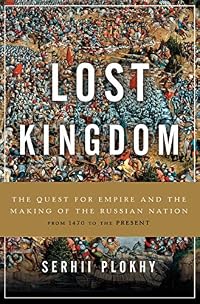
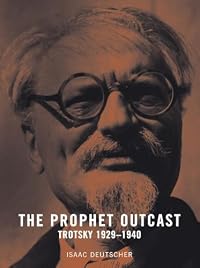


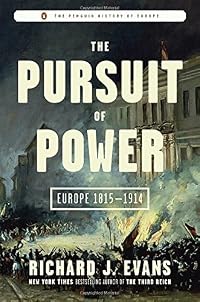
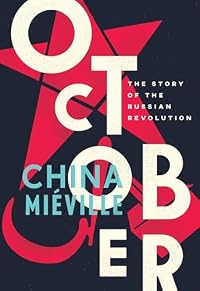
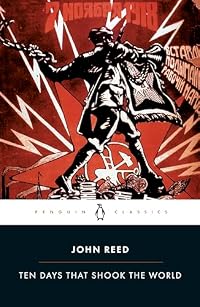
Member Reviews
This is the first major biography of the Soviet leader to appear in two decades, and comes as the world marks the 100th anniversary of the Bolshevik Revolution. It is a tremendous achievement.
Sebestyen has dug deep into the archives, reading through family correspondence, diaries and more to get a sense of who Lenin really was. He points out, for example, that Lenin was very close to a number of women, including his wife Krupskaya and his mistress, Inessa Armand, as well as his sisters. He had few close, long-term male friends.
The book is unsparing in its criticism of Lenin as the leader of Soviet Russia. One story it recounts tells it all:
In October 1919 Lenin asks the leader of his secret police (the Cheka) how many "dangerous show more counter-revolutionaries are being held in its jails at that moment. He's given a written reply, giving the number of about 1,500. Lenin marks the page with an "X" to indicate that he read it. The Cheka interprets that to mean they are to be killed and hundreds of unarmed, defenceless prisoners are killed that very night in Moscow. Oops.
There are still people on the Left, particularly in Britain, who have a soft spot for Lenin. I urge them to read this book now. show less
Sebestyen has dug deep into the archives, reading through family correspondence, diaries and more to get a sense of who Lenin really was. He points out, for example, that Lenin was very close to a number of women, including his wife Krupskaya and his mistress, Inessa Armand, as well as his sisters. He had few close, long-term male friends.
The book is unsparing in its criticism of Lenin as the leader of Soviet Russia. One story it recounts tells it all:
In October 1919 Lenin asks the leader of his secret police (the Cheka) how many "dangerous show more counter-revolutionaries are being held in its jails at that moment. He's given a written reply, giving the number of about 1,500. Lenin marks the page with an "X" to indicate that he read it. The Cheka interprets that to mean they are to be killed and hundreds of unarmed, defenceless prisoners are killed that very night in Moscow. Oops.
There are still people on the Left, particularly in Britain, who have a soft spot for Lenin. I urge them to read this book now. show less
The title of this book might set a prospective reader up for something of a surprise; for a book with a fairly loaded title like Lenin the Dictator, the portrait within its pages is fairly sympathetic to Lenin the man. Indeed, so sympathetic is it that the author's occasional expressions of disgust at the excesses of the post-Leninist Soviet regime tend to stick out quite openly. In his acknowledgements, the author shows that he has read from the anti-Soviet historical texts now well-known to many; but this has not affected his portrait of Lenin.
But neither is it hagiography, although some have accused Sebestyen of relying too much on the biographical writings of Lenin's widow, Nadia Krupskaya. So much has been written about Lenin that show more some degree of the cult of personality is bound to creep in. After all, some of the stories fall into the category of "too good to check" (though indeed, Sebestyen has checked many of them as far as possible). So we get the story, in a footnote, of the British Museum doorman to the Reading Room who once said, when questioned, that yes, he remembered Mr. Ulyanov, and added "Do you know whatever became of him?"; other anecdotes are less affectionate.
We see the young Ulyanov, growing up in minor nobility, but seeing and being touched by the repression of the Tsarist regime, and setting out to make it his life's work to do away with that regime. That he managed to do that is down to his own single-mindedness, but also to the incompetence of many of his opponents of all political colours and on all sides.
There is much in this book that is valuable; for one thing, Sebestyen finally explained to me what the difference was between Marxism and Marxism-Leninism, which was Lenin's adaptation of Marxism to fit the economic and social circumstances of Russia. That this led to the flavour of Marxism promoted by both the Soviet Union and by Communist parties world-wide as the solution to society's ills explains a lot. And the account of Lenin's final exile in Zürich revealed to me that I have stayed in the hotel above the Café Adler where Lenin often took his morning coffee before going to read and write in the Zürich Central Library, just a few streets away.
Many of the supporting characters in the story of the Russian Revolution are mentioned and discussed. There is a brief guide to biographical stories in the back of the book. These help flesh out people like Nikolai Bukharin, Felix Dzerzhinsky, Maxim Gorky, Lev Kamenev, Alexander Kerensky, Leon Trotsky and Grigory Zinoviev, as well as the women in Lenin's life - his mother, his sister Maria, his wife Nadya and his lover, Inessa Armand amongst others.
Sebestyen paints a clear picture of Lenin's austere personal life, which he never abandoned even after he came to power. He shows us his love of nature, of cats, and the struggles he had with his health, not helped by the factional infighting that the Left has been famous for. But the success of the October revolution put Lenin in a position where he held life-and-death powers over very many people; and he certainly exercised them. It has long been my opinion that Russia is a hard country and breeds hard people: Lenin seems no more possessed of the milk of human kindness than many other Russian leaders before or since. Having come up through a revolutionary structure, his views on democracy show an ongoing distrust of that system; Edmund Wilson, in his study of revolutions, To the Finland Station, pointed out that in a fast-moving, revolutionary situation, there is often no time to engage in democratic processes when decisive actions are called for. This book shows that Lenin hardly ever moved beyond seeing the situation in Russia as being one of perpetual revolution, and thus needing a strong-willed leader. That Lenin's successor, Stalin, may have been too strong-willed even for Lenin is drawn out in the story of Lenin's years of declining health.
Sebestyen touches on the growth of the cult of Lenin, in particular on his widow's opposition to Lenin's embalming and his establishment as a figure of reverence. It was certainly what the man himself would not have wanted.
So this book is fairly comprehensive and surprisingly non-judgemental, but probably should not be your only source on the subject. And its sympathetic personal portrait may strain your political credulity if you have been brought up to think of all Communists, and Lenin in particular, as embodiments of evil. show less
But neither is it hagiography, although some have accused Sebestyen of relying too much on the biographical writings of Lenin's widow, Nadia Krupskaya. So much has been written about Lenin that show more some degree of the cult of personality is bound to creep in. After all, some of the stories fall into the category of "too good to check" (though indeed, Sebestyen has checked many of them as far as possible). So we get the story, in a footnote, of the British Museum doorman to the Reading Room who once said, when questioned, that yes, he remembered Mr. Ulyanov, and added "Do you know whatever became of him?"; other anecdotes are less affectionate.
We see the young Ulyanov, growing up in minor nobility, but seeing and being touched by the repression of the Tsarist regime, and setting out to make it his life's work to do away with that regime. That he managed to do that is down to his own single-mindedness, but also to the incompetence of many of his opponents of all political colours and on all sides.
There is much in this book that is valuable; for one thing, Sebestyen finally explained to me what the difference was between Marxism and Marxism-Leninism, which was Lenin's adaptation of Marxism to fit the economic and social circumstances of Russia. That this led to the flavour of Marxism promoted by both the Soviet Union and by Communist parties world-wide as the solution to society's ills explains a lot. And the account of Lenin's final exile in Zürich revealed to me that I have stayed in the hotel above the Café Adler where Lenin often took his morning coffee before going to read and write in the Zürich Central Library, just a few streets away.
Many of the supporting characters in the story of the Russian Revolution are mentioned and discussed. There is a brief guide to biographical stories in the back of the book. These help flesh out people like Nikolai Bukharin, Felix Dzerzhinsky, Maxim Gorky, Lev Kamenev, Alexander Kerensky, Leon Trotsky and Grigory Zinoviev, as well as the women in Lenin's life - his mother, his sister Maria, his wife Nadya and his lover, Inessa Armand amongst others.
Sebestyen paints a clear picture of Lenin's austere personal life, which he never abandoned even after he came to power. He shows us his love of nature, of cats, and the struggles he had with his health, not helped by the factional infighting that the Left has been famous for. But the success of the October revolution put Lenin in a position where he held life-and-death powers over very many people; and he certainly exercised them. It has long been my opinion that Russia is a hard country and breeds hard people: Lenin seems no more possessed of the milk of human kindness than many other Russian leaders before or since. Having come up through a revolutionary structure, his views on democracy show an ongoing distrust of that system; Edmund Wilson, in his study of revolutions, To the Finland Station, pointed out that in a fast-moving, revolutionary situation, there is often no time to engage in democratic processes when decisive actions are called for. This book shows that Lenin hardly ever moved beyond seeing the situation in Russia as being one of perpetual revolution, and thus needing a strong-willed leader. That Lenin's successor, Stalin, may have been too strong-willed even for Lenin is drawn out in the story of Lenin's years of declining health.
Sebestyen touches on the growth of the cult of Lenin, in particular on his widow's opposition to Lenin's embalming and his establishment as a figure of reverence. It was certainly what the man himself would not have wanted.
So this book is fairly comprehensive and surprisingly non-judgemental, but probably should not be your only source on the subject. And its sympathetic personal portrait may strain your political credulity if you have been brought up to think of all Communists, and Lenin in particular, as embodiments of evil. show less
When The Spouse and I visited Russia in 2012 (well before anti-Russian sentiment reached its current peak) we were surprised to see that statues of Lenin were still intact and still in place. And by coincidence, as I was drafting this review, the Twitterfeed of the often hilarious @SovietVisuals offered an example that shows that young people still hold Lenin in regard. Since it goes some way towards explaining this persisting affection for the leader of the Soviet Revolution, this new biography, Lenin the Dictator by Victor Sebestyen is timely, and not just because of the 100th anniversary of the revolution. As I said when reviewing Tony Kevin’s Return to Moscow, IMO in our messy interconnected world, it’s now more important than show more ever to understand countries like Russia.
Lenin the Dictator is also very good reading. From the first chapters about Lenin’s childhood to the story of the revolution itself, this book kept my attention throughout. Just occasionally I had some doubts about the author’s objectivity*, but by and large this biography seems to be a balanced account of the life, achievements and flaws of one of the most significant figures of the twentieth century. Inevitably, the story of Lenin’s life is also the story of the Russian Revolution, and this book is also a clear and lucid explanation of how this remarkable event took place.
Because it was remarkable. The Bolshevik revolution could have faltered at so many different moments in time, but Lenin as its leader was lucky that it happened at all and was then utterly ruthless in maintaining it in its early days. And yet in some ways, revolution of some sort was inevitable: Russia in the early twentieth century was an economic basket case and there had been agitation for reform for decades. Sebestyen makes it clear that the collapse of the Romanov dynasty was brought about by their own stupidity, incompetence, refusal to change and the epic, thoughtless scale of the bacchanal, the drinking and promiscuity, [which] went beyond decadence. One after the other the Tsars had presided over a country that desperately needed political and economic reform, and they maintained their grip on power with ruthless repression that was a model for the Bolsheviks to subsequently follow. Lenin’s own brother was hung at the age of twenty-one for agitating for political reform, and the entire family was one of thousands exiled to keep the activists out of Petrograd (Leningrad/St Petersburg).
To read the rest of my review please visit https://anzlitlovers.com/2017/05/23/lenin-the-dictator-by-victor-sebestyen/ show less
Lenin the Dictator is also very good reading. From the first chapters about Lenin’s childhood to the story of the revolution itself, this book kept my attention throughout. Just occasionally I had some doubts about the author’s objectivity*, but by and large this biography seems to be a balanced account of the life, achievements and flaws of one of the most significant figures of the twentieth century. Inevitably, the story of Lenin’s life is also the story of the Russian Revolution, and this book is also a clear and lucid explanation of how this remarkable event took place.
Because it was remarkable. The Bolshevik revolution could have faltered at so many different moments in time, but Lenin as its leader was lucky that it happened at all and was then utterly ruthless in maintaining it in its early days. And yet in some ways, revolution of some sort was inevitable: Russia in the early twentieth century was an economic basket case and there had been agitation for reform for decades. Sebestyen makes it clear that the collapse of the Romanov dynasty was brought about by their own stupidity, incompetence, refusal to change and the epic, thoughtless scale of the bacchanal, the drinking and promiscuity, [which] went beyond decadence. One after the other the Tsars had presided over a country that desperately needed political and economic reform, and they maintained their grip on power with ruthless repression that was a model for the Bolsheviks to subsequently follow. Lenin’s own brother was hung at the age of twenty-one for agitating for political reform, and the entire family was one of thousands exiled to keep the activists out of Petrograd (Leningrad/St Petersburg).
To read the rest of my review please visit https://anzlitlovers.com/2017/05/23/lenin-the-dictator-by-victor-sebestyen/ show less
'Lenin: The Man, The Dictator and the Master of Terror' is a phenomenal book for a myriad of reasons, but most importantly it manages to effectively fill a void of a modern, well-researched book. With decades now having passed since the dissolution of the USSR, a wholesale update with fresh information is necessary for most books about the topic, and author Victor Sebestyen achieves this splendidly.
This book is just what it promises: a holistic view of Vladimir Lenin's life, from the mundane to the history-making. Sebestyen adds generous context throughout by way of his relations with wife Nadya and mistress Inessa, and from this one gleans the importance of Nadya in his life. One could argue that the Soviet Union would not have become show more what it was without Nadya's influence and 'grounding' effect on Lenin.
The author chooses to focus strictly on Lenin and, while certainly incorporating them, not overwhelmingly dote on the historical events of which Lenin took part in (or inspired altogether), such as the Civil War and the Bolshevik Revolution. Indeed, the latter occurs between the ending sentences of one chapter and the opening sentences of the next. I personally would have enjoyed more context about the Revolution, but I can't fault Sebestyen for keeping this to a Lenin-specific biography and not a broader Russian history publication.
The most striking part of the book was how the author really dug into Lenin's personal life and made sure to emphasize that he was not this monotonous, cold, calculating monster (though to an extent he certainly was). Lenin was a human, just like you and me, and did human things. He liked cats. He was an avid outdoorsman. He hated delays in getting the newspapers while in exile. These might seem like mundane trivia and may seem like boring reading, but these angles are exactly what one needs when reviewing a character as important as Lenin. To understand what he did and why he did it, you need to know the man as a whole person.
This is a rather dense read (in a good way) and took me some time to work through. It can be dry at parts, but this owes to the breadth of research the author put in to this book, and is not a negative. You will come to vividly appreciate who Lenin the man was after reading this book, and I'm proudly placing it alongside Frank Dikotter's Mao Zedong trilogy and Stephen Kotkin's still-pending trilogy as essential readers on historical rulers. Five stars, and a must-read if you want to understand both Vladimir Ilyich Lenin and how the Soviet Union came to be. show less
This book is just what it promises: a holistic view of Vladimir Lenin's life, from the mundane to the history-making. Sebestyen adds generous context throughout by way of his relations with wife Nadya and mistress Inessa, and from this one gleans the importance of Nadya in his life. One could argue that the Soviet Union would not have become show more what it was without Nadya's influence and 'grounding' effect on Lenin.
The author chooses to focus strictly on Lenin and, while certainly incorporating them, not overwhelmingly dote on the historical events of which Lenin took part in (or inspired altogether), such as the Civil War and the Bolshevik Revolution. Indeed, the latter occurs between the ending sentences of one chapter and the opening sentences of the next. I personally would have enjoyed more context about the Revolution, but I can't fault Sebestyen for keeping this to a Lenin-specific biography and not a broader Russian history publication.
The most striking part of the book was how the author really dug into Lenin's personal life and made sure to emphasize that he was not this monotonous, cold, calculating monster (though to an extent he certainly was). Lenin was a human, just like you and me, and did human things. He liked cats. He was an avid outdoorsman. He hated delays in getting the newspapers while in exile. These might seem like mundane trivia and may seem like boring reading, but these angles are exactly what one needs when reviewing a character as important as Lenin. To understand what he did and why he did it, you need to know the man as a whole person.
This is a rather dense read (in a good way) and took me some time to work through. It can be dry at parts, but this owes to the breadth of research the author put in to this book, and is not a negative. You will come to vividly appreciate who Lenin the man was after reading this book, and I'm proudly placing it alongside Frank Dikotter's Mao Zedong trilogy and Stephen Kotkin's still-pending trilogy as essential readers on historical rulers. Five stars, and a must-read if you want to understand both Vladimir Ilyich Lenin and how the Soviet Union came to be. show less
A very reputable biography; Sebestyen's book, as opposed to the book's publicity, is perfectly fair. I was, frankly, surprised by the lack of post-Cold War triumphalism or score settling. Lenin, it turns out, was a person. He was an odd one, and, in sum, a deeply harmful one, but also one who can pretty much be understood like all other human beings. He's marked by his history and the society of his time. His ideas aren't pretty, but they're perfectly comprehensible as reactions to events guided by a reasonable wish to make life better for people. Was he right? No. Was he Satan? No. Of course, if you yourself are full of post-Cold War triumphalist score-settling mania, you'll still get something out of this book, because nothing in it show more precludes you from drawing your own conclusions.
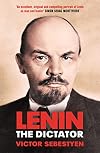
The book is also enjoyable; it's well written, and just flat-out fun. Also, great cover. show less
The book is also enjoyable; it's well written, and just flat-out fun. Also, great cover. show less
https://fromtheheartofeurope.eu/lenin-the-dictator-by-victor-sebestyen/
I got this book a couple of years ago because I was chasing a particular historical fact that had eluded me: precisely where in Brussels was the initial venue of the Second Congress of the Russian Social Democratic Labour Party in 1903, which saw the original Bolshevik / Menshevik split? The Congress met for a few days in a rat-infested flour warehouse, somewhere fairly central, but had to relocate to London because of oppressive surveillance by the Belgian police. The details that we have are entirely from a single account written years later by Lenin’s wife. As with Karl Marx’s residences, I wanted to tie down the historic specificity.
Incidentally, for some show more reason the façade of the house in Brussels where Lenin lived some years earlier is blurred out in Google Streetview. I have never seen that before, for any other building.
Anyway, I emailed a couple of Lenin experts to see if anyone knew where the Second Congress was held, and the author of this biography replied recommending that I buy his book. I did, but it was not my top priority, and I have only now got around to reading it.
Lenin’s life is of course interesting because he changed the world. He created a revolutionary movement and took power in an empire. He inspired generations. He was responsible for the deaths of multitudes, in many cases personally. So we are entitled to ask how this came about.
Sebestyen is good on the basics. Russia was seething with revolutionary movements in the late nineteenth century. Lenin’s genius was to bind them together with a shared ideology and a centralised political direction. He was helped by literacy and by the organisation of printed party newspapers. As a succession of weak governments in Russia collapsed, starting with the Tsar, he was in the right place at the right time, because he had planned to be. And he ruled with terror for a couple of years, before he died.
He had also endured years of exile, along with his wife and his other long-term partner (they knew about each other perfectly well). He was already a celebrated figure; when he was shipped from Zürich to Russia in the famous sealed train, the likes of Stefan Zweig and James Joyce passed sardonic comment. By the time he took power, his health was failing, and his early death was accelerated by wounds from an assassination attempt. There is an interesting human story there.
Unfortunately I cannot really recommend this particular biography. For a start, it does not actually answer my question about the venue of the Second Congress, as the author had assured me it would. I caught several misspellings of names of minor figures, which looked orthographically suspect to me and where Google instantly confirmed my suspicions. A couple of memorably gory incidents of state violence were either not confirmed or flatly contradicted when I checked other sources. Many of the good bits are simply copied without comment from Krupskaya, Lenin’s wife (though I suspect that’s true of a lot of Leninology).
I will have to resign myself to the loss from historical memory of the location of the rat-infested flour warehouse where Lenin and the comrades argued in 1903. But this has scratched my itch to know more about the man. show less
I got this book a couple of years ago because I was chasing a particular historical fact that had eluded me: precisely where in Brussels was the initial venue of the Second Congress of the Russian Social Democratic Labour Party in 1903, which saw the original Bolshevik / Menshevik split? The Congress met for a few days in a rat-infested flour warehouse, somewhere fairly central, but had to relocate to London because of oppressive surveillance by the Belgian police. The details that we have are entirely from a single account written years later by Lenin’s wife. As with Karl Marx’s residences, I wanted to tie down the historic specificity.
Incidentally, for some show more reason the façade of the house in Brussels where Lenin lived some years earlier is blurred out in Google Streetview. I have never seen that before, for any other building.
Anyway, I emailed a couple of Lenin experts to see if anyone knew where the Second Congress was held, and the author of this biography replied recommending that I buy his book. I did, but it was not my top priority, and I have only now got around to reading it.
Lenin’s life is of course interesting because he changed the world. He created a revolutionary movement and took power in an empire. He inspired generations. He was responsible for the deaths of multitudes, in many cases personally. So we are entitled to ask how this came about.
Sebestyen is good on the basics. Russia was seething with revolutionary movements in the late nineteenth century. Lenin’s genius was to bind them together with a shared ideology and a centralised political direction. He was helped by literacy and by the organisation of printed party newspapers. As a succession of weak governments in Russia collapsed, starting with the Tsar, he was in the right place at the right time, because he had planned to be. And he ruled with terror for a couple of years, before he died.
He had also endured years of exile, along with his wife and his other long-term partner (they knew about each other perfectly well). He was already a celebrated figure; when he was shipped from Zürich to Russia in the famous sealed train, the likes of Stefan Zweig and James Joyce passed sardonic comment. By the time he took power, his health was failing, and his early death was accelerated by wounds from an assassination attempt. There is an interesting human story there.
Unfortunately I cannot really recommend this particular biography. For a start, it does not actually answer my question about the venue of the Second Congress, as the author had assured me it would. I caught several misspellings of names of minor figures, which looked orthographically suspect to me and where Google instantly confirmed my suspicions. A couple of memorably gory incidents of state violence were either not confirmed or flatly contradicted when I checked other sources. Many of the good bits are simply copied without comment from Krupskaya, Lenin’s wife (though I suspect that’s true of a lot of Leninology).
I will have to resign myself to the loss from historical memory of the location of the rat-infested flour warehouse where Lenin and the comrades argued in 1903. But this has scratched my itch to know more about the man. show less
Lenin is an excellent up to date modern bio. It's accessible but also based in archival research with new information. This is my first reading on Lenin. It seems appropriately divorced from the Soviet mythology. It gives a picture of Lenin as driven by a single-minded focus (destroy the Empire), intelligent in an OCD way with details, but also deeply flawed by lack of humanity and proportion, a half-baked character whose biggest crime was to allow Stalin to gain power before his death. His success in the revolution was ultimately the result of incompetence of the opposition more than any superior skills. His strength was flexibility in the moment able to quickly change course at a precise moment of weakness in the state.
Members
- Recently Added By
Published Reviews
ThingScore 100
Mit seiner mitreißend erzählten Lenin-Biografie gelingt dem britischen Historiker Victor Sebestyen ein großes Kunststück auf wissenschaftlich wohlbestelltem Boden: Wladimir Iljitsch Uljanow alias "Lenin" war ein russischer Radikaler von kleinbürgerlicher Statur.
added by DeusXMachina
Lists

Woodbine St. Library
2 works; 1 member

All Things Russia
459 works; 11 members
Author Information

14 Works 1,289 Members
Some Editions
Awards and Honors
Awards
Series
Belongs to Publisher Series
Common Knowledge
- Alternate titles
- Lenin: The Man, the Dictator, and the Master of Terror; Lenin the Dictator: An Intimate Portrait
- Original publication date
- 2017
- People/Characters
- Vladimir Lenin
- Important places
- Russia
- Important events
- Russian Revolution
Classifications
- Genres
- History, Nonfiction, Biography & Memoir, General Nonfiction, Politics and Government
- DDC/MDS
- 947.0841092 — History & geography History of Europe Eastern European Counties and Russia Russian & Slavic History by Period 1855- 1917-1953 ; Communist period 1917-1924 (Kerensky, Lenin) History, geographic treatment, biography Biography
- LCC
- DK254 .L4 .S34 — History of Europe, Asia, Africa and Oceania Russia. Soviet Union. Former Soviet Republics – Poland History of Russia. Soviet Union. Former Soviet Republics History House of Romanov, 1613-1917
- BISAC
Statistics
- Members
- 401
- Popularity
- 77,213
- Reviews
- 8
- Rating
- (4.10)
- Languages
- 8 — Czech, Dutch, English, German, Italian, Polish, Portuguese, Spanish
- Media
- Paper, Audiobook, Ebook
- ISBNs
- 23
- ASINs
- 6