On This Page
Description
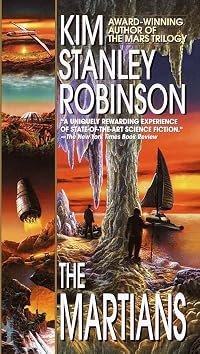
A glorious companion volume to Robinson's world-wide bestselling trilogy. All Colours Mars Red Mars. Green Mars. Blue Mars. The Mars trilogy has rapidly assumed the status of modern science fiction classic, capturing the imagination of hundreds of thousands of readers around the world. Now, with The Martians, comes Kim Stanley Robinson's essential companion to the Mars series. New novellas and short stories head the collection, along with texts on the Martian constitution, maps and Martian show more inspired poetry. In short, The Martians is a unique collection of previously unpublished fiction, a fascinating addition to Robinson's oeuvre, and a must for all lovers of the red planet. show lessTags
Recommendations




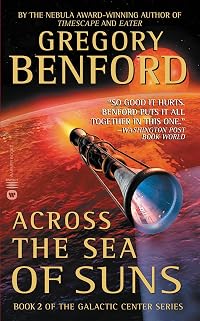

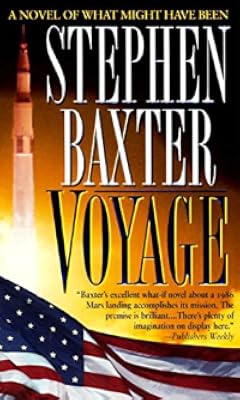

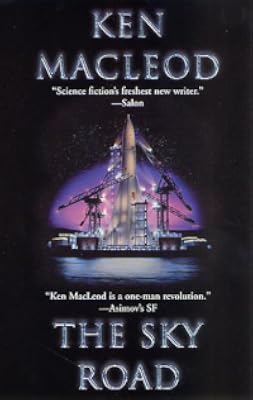
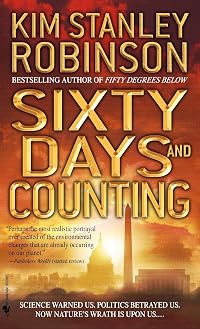

Member Reviews
It had been almost a decade since I read Kim Stanley Robinson's Mars trilogy when I finally picked up the following book The Martians. It contains a quote from Ray Bradbury's Martian Chronicles: "The Martians were here ... Timothy and Robert and Michael and Mom and Dad" (46). And in fact, The Martians feels more like Bradbury's Chronicles than the prior novels ever did, because it is mostly short fiction, including some vignettes and very short pieces. It is even more heterogeneous though, with some essays, fictional abstracts of scientific papers, the Martian governmental Constitution, and a selection of poetry.
Some of the pieces in the book follow the affairs of the First Hundred settlers and other key characters from the trilogy, show more providing new perspectives and plotlines. Maya, Michel, and Coyote feature in several of these, Michel being the focus of the long novella that leads off the collection. There are also a suite of stories concerning the Martian romance between Eileen Monday and Roger Clayborne. A few tales are concerned with the Little Men and the Big Man of Mars who had been introduced in Green Mars.
But none of these threads is segregated from the others. They are all woven together, with no obvious organizing principle to govern the thirty pieces in the volume. There is a recurring theme of sport, including mountain climbing, baseball, and surfing. As the book progresses, some of the shorter pieces and especially the poetry collapse into Robinson's own voice and his situation as a writer in Davis, California at the turn of the millennium.
The Martians is not rigorously chronological, although it starts with the Antarctic experiment before the first colonizing mission of Red Mars, and later pieces do move into future history beyond what is covered in Green Mars. There are a few points of violated continuity, suggesting that Robinson was exploring alternative possibilities in his future history. Some of the items may have been recovered piecemeal from drafts of the novels, and two were actually published separately in magazines during the 1980s before the trilogy.
I enjoyed the book a great deal, although I am sure I would have gotten more out of it if I had read it more closely on the heels of the larger Robinson Mars work. Although it could stand on its own structurally (or anti-structurally), I would not recommend it as an introduction to the larger series, because quite a few of the stories derive their power from the characters and plots already built in the novels. show less
Some of the pieces in the book follow the affairs of the First Hundred settlers and other key characters from the trilogy, show more providing new perspectives and plotlines. Maya, Michel, and Coyote feature in several of these, Michel being the focus of the long novella that leads off the collection. There are also a suite of stories concerning the Martian romance between Eileen Monday and Roger Clayborne. A few tales are concerned with the Little Men and the Big Man of Mars who had been introduced in Green Mars.
But none of these threads is segregated from the others. They are all woven together, with no obvious organizing principle to govern the thirty pieces in the volume. There is a recurring theme of sport, including mountain climbing, baseball, and surfing. As the book progresses, some of the shorter pieces and especially the poetry collapse into Robinson's own voice and his situation as a writer in Davis, California at the turn of the millennium.
The Martians is not rigorously chronological, although it starts with the Antarctic experiment before the first colonizing mission of Red Mars, and later pieces do move into future history beyond what is covered in Green Mars. There are a few points of violated continuity, suggesting that Robinson was exploring alternative possibilities in his future history. Some of the items may have been recovered piecemeal from drafts of the novels, and two were actually published separately in magazines during the 1980s before the trilogy.
I enjoyed the book a great deal, although I am sure I would have gotten more out of it if I had read it more closely on the heels of the larger Robinson Mars work. Although it could stand on its own structurally (or anti-structurally), I would not recommend it as an introduction to the larger series, because quite a few of the stories derive their power from the characters and plots already built in the novels. show less
Bits and bobs, leftovers and what I expect were background writings, along with a little farewell to Mars squib at the end, that is set right in Robinson's back yard, I imagine. Can't be easy to say good-bye when you've written a series like the Mars trilogy. One thing that comes through in this set of stories is the mad passion Robinson has for Mars. It came through in the trilogy too, I think, but I was often so caught up in the story I didn't step back and 'see' it. I love the character of Roger Clayborne who has to come to terms with Mars, past, present and future - he is a rare 'old one' who does not forget his past as most of the people who take the life extension treatments do. The third to last piece (the penultimate piece is show more actually poems) "A Martian Romance" is superb! A fitting end - it should have concluded the book in my view. But that's just me! Don't even think of reading this if you haven't read and loved the trilogy. ***1/2 show less
Short stories from the Mars trilogy, which really must have been read first otherwise these will make no sense at all. Mostly they seem to be out-takes, small sidelines and excerpts from characters who didn't get much voice in the full novels, with perhaps the exception of Eileen Morning who features in a few of these, but whom I don't remember at all. The timeline generally progresses forward, with some skips, and includes major spoilers for all of the novels, as the important events are frequently discussed or reminisced by the characters.
It's always a little difficult to review short story collections because the nature of short stories makes them so variable. That these are all thematically linked the main novels is significant show more factor, but even here they're highly variable from very emotionally driven stories of partnerships across the decades, to a more cerebral philosophical examination of motives. My favourites were perhaps the extended climb up Olympus Mons, which highlights KSRs technical outdoor skills that are a feature in many of his books. Perhaps my least favourite were the collection of poems, mostly non-rhyming without obvious meter, but even here some were notably better.
Well worth reading for anyone who enjoyed the vastness of the Mars trilogy and wants more stories in that world. They are much more personal than the novels which is no bad thing, but without the grand insights that the novels captured. It did make me want to re-read the originals. show less
It's always a little difficult to review short story collections because the nature of short stories makes them so variable. That these are all thematically linked the main novels is significant show more factor, but even here they're highly variable from very emotionally driven stories of partnerships across the decades, to a more cerebral philosophical examination of motives. My favourites were perhaps the extended climb up Olympus Mons, which highlights KSRs technical outdoor skills that are a feature in many of his books. Perhaps my least favourite were the collection of poems, mostly non-rhyming without obvious meter, but even here some were notably better.
Well worth reading for anyone who enjoyed the vastness of the Mars trilogy and wants more stories in that world. They are much more personal than the novels which is no bad thing, but without the grand insights that the novels captured. It did make me want to re-read the originals. show less
The friend who lent me [b:The Martians|40364|The Martians (Mars Trilogy, #3.5)|Kim Stanley Robinson|https://i.gr-assets.com/images/S/compressed.photo.goodreads.com/books/1403182454l/40364._SY75_.jpg|669196] warned me that most of the stories aren't continuations of the Mars trilogy, indeed several are alternate universes in which the first hundred's expedition never happened. I'm glad I knew this when beginning the book, otherwise it would have been confusing. The selection of, mostly brief, stories branching away from the trilogy are interesting although, inevitably, some proved more memorable than others. The longest, which confusingly has the same title as the second book of the trilogy, is the stand-out in my view. This closely show more follows an expedition to climb Olympus Mons. I have no personal interest in rock-climbing, but was nonetheless riveted by the account of ascending the tallest mountain in the solar system. It's so tall that the summit reaches above the breathable atmosphere of terraformed Mars, into space.
My other favourites were the constitution of Mars and reflections thereon. I couldn't help mentally comparing it with the (never implemented) French revolutionary constitution of 1793, which also sought to limit wealth accumulation and private ownership. I also found the reflections on terraforming in the long-term rather fascinating. Insofar as some stories are sequels to the trilogy, they depict Mars in an ice age. The generational differences in responses to this are thought-provoking. An alternative universe story in which none of the trilogy happened includes some excellent reflections on recruitment for space travel:
Not many sci-fi writers analyse these issues as acutely and thoroughly as Kim Stanley Robinson. As ever, his writing is vivid and full of detail. Overall I think [b:The Martians|40364|The Martians (Mars Trilogy, #3.5)|Kim Stanley Robinson|https://i.gr-assets.com/images/S/compressed.photo.goodreads.com/books/1403182454l/40364._SY75_.jpg|669196] is a good collection of fragments but nothing like as satisfying as the trilogy itself, which stands perfectly well without it. show less
My other favourites were the constitution of Mars and reflections thereon. I couldn't help mentally comparing it with the (never implemented) French revolutionary constitution of 1793, which also sought to limit wealth accumulation and private ownership. I also found the reflections on terraforming in the long-term rather fascinating. Insofar as some stories are sequels to the trilogy, they depict Mars in an ice age. The generational differences in responses to this are thought-provoking. An alternative universe story in which none of the trilogy happened includes some excellent reflections on recruitment for space travel:
In short, they had to be sane to be selected, but crazy to want to go.
Many other double binds accompanied that basic one. Applicants had to be extroverted enough to socialise, but introverted enough to have studied a discipline to the point of mastering it. They had to be old enough to have learned these primary, secondary, and sometimes tertiary professions, and yet be young enough to withstand the rigours of the trip out and their work there. They had to do well in groups, but want to leave everyone they knew behind forever. They were being asked to tell the truth, but clearly had to lie to increase their chances of getting what they wanted. They had to be both ordinary and extraordinary.
Yes, the double binds were endless. Nevertheless this nearly final group had come from an initial pool of many thousands of applicants. Double binds? So what! Nothing new to fear there. Everyone on Earth was strung up in a vast network of double binds. Going to Mars might actually reduce their number, decrease their strain! Perhaps that was part of the appeal of going!
Perhaps that was why these men of the first Antarctic explorations had volunteered to come South.
Not many sci-fi writers analyse these issues as acutely and thoroughly as Kim Stanley Robinson. As ever, his writing is vivid and full of detail. Overall I think [b:The Martians|40364|The Martians (Mars Trilogy, #3.5)|Kim Stanley Robinson|https://i.gr-assets.com/images/S/compressed.photo.goodreads.com/books/1403182454l/40364._SY75_.jpg|669196] is a good collection of fragments but nothing like as satisfying as the trilogy itself, which stands perfectly well without it. show less
Since I'm already crazy about Robinson and I've read all his Mars novels, I can't imagine whether someone who wasn't & hadn't would love this collection of stories as much as I did. But I think so! I like those novels a lot, but I think that these things-that-happened-in-between stories make even better use of his good and strange qualities-- he gets to use the colonization of Mars as an all-purpose playground for whatever he might want to say about politics, love, hiking, baseball, etc., without having to worry at all about sustaining a single plot or style (or even a character-- some of the stories are just Transcendentalist travelogues told by no one in particular). Although it's interesting to see what he does with some of his show more existing people, the background isn't necessary to know, and sometimes he just throws it all away to write an alternate history or a memoir or whatever (there's even a dirty Paul Bunyan myth). He's particularly good at writing about small-scale politics, just people dealing with each other, with massive empathy all around. Also, although I'm kind of a sucker, some of the writing in this made me bust out crying on the train. show less
I tell people that short story collections aren't novels. This, you might think, is obvious. Yet many people insist upon reading them as if they were novels; start at page one and carry on until page the last. I think this might be why some people end up not liking the short story form: they think the way to read them is 10 - 20 at a time by one author, one shortly after the other. This may not be the best way. I encourage people to think of each story as the basic element, not each volume. Read them in any order you like, read only one then put it back on the shelf, if you want. They are almost always published individually in magazines prior to collection in paperback volumes. Treat them that way and they might appear in a new show more light.
If my theory were a submarine, this book is the depth charge that sinks it: not only is it necessary to read the stories in order for it all to make sense, it is best read whilst the details of KSR's Mars trilogy are still fresh in the mind (which wasn't the case for me), because we're back on Mars with the First Hundred and others for some stories that didn't quite fit in the novels and they are told in chronological order...except when we aren't, that is. You need to keep your wits about you: some of the stories aren't set on Mars - some are set in an alternative timeline from that set out in the novels. Many assume you know the characters and plot of the novels. Some of the newer characters recurr so that later stories will make much more sense if you've read the earlier ones.
The alternative timeline isn't the only experimental aspect of the collection. Some of the pieces are just documents, e.g. a series of abstracts from scientific papers debating the origin of nanobacteria - native Martian or Earth contaminent? The Martian Constitution in full and a commentary on it. And there's more: a story about KSR finishing writing the Mars novels, a small collection of "poems" - see later.
The quality of the stories varies, some of the experiments are successes, others failures. The best are truely excellent and sometimes shocking. The worst are miserable creatures, not fit for the light of day. I don't like sports stories generally. Baseball stories are the worst of a dire genre. So a "baseball on Mars" story is just awful...the "poems" lack all merit. How many writers have been successful novelists and poets? Scott and Hardy. Can you name another? KSR's verses here don't really seem to demonstrate a grasp of what a poem is, let alone act as exemplars of the form.
But the best stories are great and usually heavily informed by both character and landscape (which will be no surprise to KSR fans). KSR's ability to write about landscape is in fact comparable to Thomas Hardy's. They both make you see it as if you've been there, which makes sense with Hardy's Wessex and KSR's California because they respectively lived in those places. But KSR can make you see the Dry Valleys of Antarctica just as well - OK, he's been there for a few days. But Mars? He makes me see Mars just as well. This is the basis of my theory that KSR is an alien in disguise: he can describe Mars just as well as he can describe the Californian coastline - because he's been there, too!
So that feat never ceases to amaze me and KSR has another talent that is rare - he can write excellently about mountaineering - which is just as well as one of the stories, the longest in fact, is about climbing the solar system's largest mountain, Olympus Mons. The story is thematically like the Mars Trilogy in miniature at least in respect of the whole Red-Green debate. I'm a Red. In fact my Redness is so saturated it is almost black. So I sympathise with that story's main protagonist. (Don't read that story whilst depressed, however - you may not survive to finish it.)
So I rate this volume at three stars - but that is like the mean of the temperature across a year in New York: not much different from that of, say London, but the extremes are much greater. In fact all fans of the Mars Trilogy should read this book remember its triumphs and forget its failures. Kudos to KSR for taking all the risks he did in this book, the ones that pay off are jackpot winners. show less
If my theory were a submarine, this book is the depth charge that sinks it: not only is it necessary to read the stories in order for it all to make sense, it is best read whilst the details of KSR's Mars trilogy are still fresh in the mind (which wasn't the case for me), because we're back on Mars with the First Hundred and others for some stories that didn't quite fit in the novels and they are told in chronological order...except when we aren't, that is. You need to keep your wits about you: some of the stories aren't set on Mars - some are set in an alternative timeline from that set out in the novels. Many assume you know the characters and plot of the novels. Some of the newer characters recurr so that later stories will make much more sense if you've read the earlier ones.
The alternative timeline isn't the only experimental aspect of the collection. Some of the pieces are just documents, e.g. a series of abstracts from scientific papers debating the origin of nanobacteria - native Martian or Earth contaminent? The Martian Constitution in full and a commentary on it. And there's more: a story about KSR finishing writing the Mars novels, a small collection of "poems" - see later.
The quality of the stories varies, some of the experiments are successes, others failures. The best are truely excellent and sometimes shocking. The worst are miserable creatures, not fit for the light of day. I don't like sports stories generally. Baseball stories are the worst of a dire genre. So a "baseball on Mars" story is just awful...the "poems" lack all merit. How many writers have been successful novelists and poets? Scott and Hardy. Can you name another? KSR's verses here don't really seem to demonstrate a grasp of what a poem is, let alone act as exemplars of the form.
But the best stories are great and usually heavily informed by both character and landscape (which will be no surprise to KSR fans). KSR's ability to write about landscape is in fact comparable to Thomas Hardy's. They both make you see it as if you've been there, which makes sense with Hardy's Wessex and KSR's California because they respectively lived in those places. But KSR can make you see the Dry Valleys of Antarctica just as well - OK, he's been there for a few days. But Mars? He makes me see Mars just as well. This is the basis of my theory that KSR is an alien in disguise: he can describe Mars just as well as he can describe the Californian coastline - because he's been there, too!
So that feat never ceases to amaze me and KSR has another talent that is rare - he can write excellently about mountaineering - which is just as well as one of the stories, the longest in fact, is about climbing the solar system's largest mountain, Olympus Mons. The story is thematically like the Mars Trilogy in miniature at least in respect of the whole Red-Green debate. I'm a Red. In fact my Redness is so saturated it is almost black. So I sympathise with that story's main protagonist. (Don't read that story whilst depressed, however - you may not survive to finish it.)
So I rate this volume at three stars - but that is like the mean of the temperature across a year in New York: not much different from that of, say London, but the extremes are much greater. In fact all fans of the Mars Trilogy should read this book remember its triumphs and forget its failures. Kudos to KSR for taking all the risks he did in this book, the ones that pay off are jackpot winners. show less
This book confirms my feeling that Robinson is one of the best sf writers in existence today. He takes the world he created in the Mars trilogy and expands and adds to it so that I can tell it is real to him. For heavens sake, he even has the constitution and notes on the constitution. (And it all makes so much sense that I wish I could live there.) He also gives us a glimpse of his own life and I could see the genesis of some of the story in the climate change trilogy that is his latest work.
If I had to choose a favourite story I think it would be Green Mars, the story of the climbing party on Olympic Mons. It really made me feel like I was there, experiencing the climb. And that also gives me a glimpse into Robinson's life because he show more must be a climber. show less
If I had to choose a favourite story I think it would be Green Mars, the story of the climbing party on Olympic Mons. It really made me feel like I was there, experiencing the climb. And that also gives me a glimpse into Robinson's life because he show more must be a climber. show less
Members
- Recently Added By
Author Information

140+ Works 49,588 Members
Kim Stanley Robinson was born in Orange County, California on March 23, 1952. He received a B. A. and Ph. D. from the University of California at San Diego and an M. A. from Boston University. His first trilogy of books, Orange County, collectively won a Nebula Award and two Hugo Awards. His other works include the Mars trilogy, 2312, and Aurora. show more He has won an Asimov Award, a World Fantasy Award, a Locus Reader's Poll Award, and a John W. Campbell Award. (Bowker Author Biography) show less
Some Editions
Awards and Honors
Awards
Series

Work Relationships
Contains
Is a supplement to
Common Knowledge
- Canonical title*
- Les Martiens
- Original title
- The Martians
- Original publication date
- 1999
- Important places
- Mars
- First words
- At first it was fine.
- Last words
- (Click to show. Warning: May contain spoilers.)Happiness makes him light on his feet, very light, so light that he is almost floating, so light that if you tried to quantify this quality, If you could put him on the scale of human feeling and weigh him, his weight (in Terran kilograms) would clock in at exactly 3.141592653589793238462643383279502884197 . . .
- Blurbers
- Clarke, Arthur C.
- Original language
- English
*Some information comes from Common Knowledge in other languages. Click "Edit" for more information.
Classifications
Statistics
- Members
- 1,240
- Popularity
- 19,978
- Reviews
- 22
- Rating
- (3.39)
- Languages
- 6 — English, French, German, Italian, Russian, Spanish
- Media
- Paper, Ebook
- ISBNs
- 20
- ASINs
- 5