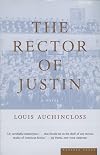
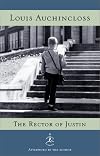
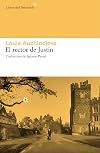
The Rector of Justin
by Louis Auchincloss
On This Page
Description
Widely considered Louis Auchincloss's greatest novel, The Rector of Justin is an astute dissection of the social mores of the Northeast's privileged establishment. The story centers on Rev. Frank Prescott, the charismatic founder and rector of a prestigious Episcopal school for boys. With laser-sharp insight, Auchincloss delivers a prismatic portrait of this commanding and complicated man through the eyes of those who knew-or thought they knew-him best. Seamlessly interweaving multiple show more points of view-from an adoring teacher to that of a rebellious daughter-The Rector of Justin presents a social history of the eighty years of his life: the sources of his virtues and failings, his successes, his love, and his crises of faith. show lessTags
Recommendations























Member Reviews
This novel is considered by many to be a modern classic. Whether you share that opinion or not, I believe it certainly represents the author's best work in the genre. Through his skillful use of multiple narrators and viewpoints, he underscores the elusive nature of human truth, necessarily subjective in our individual perspectives, yet ultimately existing in reality no matter how difficult to discern. In his narrative he highlights the inevitable moral blindness implicit in much human endeavor.
The narrative presents the life story of Francis Prescott, from his youth as a schoolboy to his death at age 85. As Dr. Francis Prescott, he is the Rector (headmaster) and founder of the exclusive New England Episcopalian boys' school Justin show more Martyr (a famous prep school). The multiple narrators' attitudes toward their subject range from veneration to hatred, thus providing a depth of character that infuses the book and elucidates effectively the somewhat larger-than-life central character of the Rector. Through the character, actions, and career of Frank Prescott, Auchincloss shows both the benefits and the dangers of such a character; the dangers are perhaps most evident to Prescott himself who, perceiving the true nature of his accomplishment at the end of his life, honestly believes that he has failed in his appointed task.
Louis Auchincloss, himself a Wall Street attorney and a product of Groton, among the most eminent of American preparatory schools, has often used such schools in his fiction to help delineate the background formation of his characters. Never before or since, however, has he so successfully presented the implicit irony, or even absurdity, of the existence in the United States of an educational alternative frankly based on the elitist British public school yet ostensibly dedicated to the ideals of democracy. The book is both well written and compulsively readable, and a fine introduction to this modern author. If you enjoy this novel I would recommend Auchincloss's short stories. show less
The narrative presents the life story of Francis Prescott, from his youth as a schoolboy to his death at age 85. As Dr. Francis Prescott, he is the Rector (headmaster) and founder of the exclusive New England Episcopalian boys' school Justin show more Martyr (a famous prep school). The multiple narrators' attitudes toward their subject range from veneration to hatred, thus providing a depth of character that infuses the book and elucidates effectively the somewhat larger-than-life central character of the Rector. Through the character, actions, and career of Frank Prescott, Auchincloss shows both the benefits and the dangers of such a character; the dangers are perhaps most evident to Prescott himself who, perceiving the true nature of his accomplishment at the end of his life, honestly believes that he has failed in his appointed task.
Louis Auchincloss, himself a Wall Street attorney and a product of Groton, among the most eminent of American preparatory schools, has often used such schools in his fiction to help delineate the background formation of his characters. Never before or since, however, has he so successfully presented the implicit irony, or even absurdity, of the existence in the United States of an educational alternative frankly based on the elitist British public school yet ostensibly dedicated to the ideals of democracy. The book is both well written and compulsively readable, and a fine introduction to this modern author. If you enjoy this novel I would recommend Auchincloss's short stories. show less
This clunker is about "the greatest figure in American secondary education," Francis Prescott, told through the eyes of his students, colleagues, and family members. This aggregate storytelling makes him seem unknowable. While we are constantly made aware of Prescott's greatness and influence, we never really understand why he is held in such esteem. The novel is at pains to show his foibles and mistakes, as if to counter its otherwise glowing portrait, but these come off as gun shy---showing Prescott not as fallible, but as righteous and misunderstood.
Worse, the novel is melodramatic and saccharine, and it is replete with absurd dialogue: "You couldn't face the idea of letting the world see that I was Charley's mistress!" or "[P]oor show more Day wanted my affection and knew he wasn't getting it, and he accepted this just as he accepted everything else. Just as I'm sure he accepted that last horrible dive into the blue of the Pacific!"
Elsewhere, Auchincloss shows off his lack of imagination. There's a psychoanalyst named Dr. Klaus. The women are mentally ill or rebellious. And there's this chestnut: "Charley had read with passionate interest the first of Proust's novels and had been taken by Mr. Havistock to visit the author in his cork-lined room. I suppose the journal was his own recherche du temps perdu." show less
Worse, the novel is melodramatic and saccharine, and it is replete with absurd dialogue: "You couldn't face the idea of letting the world see that I was Charley's mistress!" or "[P]oor show more Day wanted my affection and knew he wasn't getting it, and he accepted this just as he accepted everything else. Just as I'm sure he accepted that last horrible dive into the blue of the Pacific!"
Elsewhere, Auchincloss shows off his lack of imagination. There's a psychoanalyst named Dr. Klaus. The women are mentally ill or rebellious. And there's this chestnut: "Charley had read with passionate interest the first of Proust's novels and had been taken by Mr. Havistock to visit the author in his cork-lined room. I suppose the journal was his own recherche du temps perdu." show less
Beautifully written, insightful, well-crafted. Auchincloss's subject, Frank Prescott, is the dynamic, devout, idealistic founder of a first-rate boys' school in New England, and Auchincloss richly conveys the singleminded determination that leads to his success. But Prescott's achievement is leavened with deep disillusionment late in his life, as his legacy takes a turn independent of his original vision. Prescott is portrayed through the memoirs of five people he influences, all of which happen to be collected by a sensitive young man who becomes a kind of acolyte of Prescott's later years. Every memoir reveals something new, and each is distinct, interesting, and surprising in its own way.
Here is my favorite paragraph of the book, show more from page 304, as Brian, Prescott's biographer, considers the family life of the wealthy businessman David Griscam:
"Yes, I saw them, those three little rooms, dusky and elegant, polished and neat and efficient, with a small residue of the best bibelots, and Mrs. Griscam writing checks on the cash saved at her slender-legged escritoire. And I saw Sylvester and Doris, happy in a Tudor cottage in Rye and Amy traveling from horse show to horse show. They needed money--oh , yes, they needed plenty of money, more money than I could even visualize--but they didn't need the heavy minted coin in which Mr. Griscam sought to entomb them. They didn't need, or in the least want, the big solid stone house, the shiny town car with the spoked wheels, the thick glass-grilled doors, the pompous porte-cochere, all the external paraphernalia of wealth without which men of Mr. Griscam's generation couldn't quite believe it existed. Poor Mr. Griscam, he had provided all the things that nobody wanted because, as the child of a bankrupt, he couldn't even take in the fact that everybody did not need, like himself, the constant consolation of marble pillars!" show less
Here is my favorite paragraph of the book, show more from page 304, as Brian, Prescott's biographer, considers the family life of the wealthy businessman David Griscam:
"Yes, I saw them, those three little rooms, dusky and elegant, polished and neat and efficient, with a small residue of the best bibelots, and Mrs. Griscam writing checks on the cash saved at her slender-legged escritoire. And I saw Sylvester and Doris, happy in a Tudor cottage in Rye and Amy traveling from horse show to horse show. They needed money--oh , yes, they needed plenty of money, more money than I could even visualize--but they didn't need the heavy minted coin in which Mr. Griscam sought to entomb them. They didn't need, or in the least want, the big solid stone house, the shiny town car with the spoked wheels, the thick glass-grilled doors, the pompous porte-cochere, all the external paraphernalia of wealth without which men of Mr. Griscam's generation couldn't quite believe it existed. Poor Mr. Griscam, he had provided all the things that nobody wanted because, as the child of a bankrupt, he couldn't even take in the fact that everybody did not need, like himself, the constant consolation of marble pillars!" show less
The absorbing fictional story of a man who founded a boarding school for boys near Boston in the early 1900s. I couldn't get enough of the views of this man through the eyes of those orbiting around him - and finding out a lot about those observers as well. Solidifies Mr. Auchincloss' status as one of my favorite authors.
4727. The Rector of Justin, by Louis Auchincloss (read 14 Jul 2010) An account of the rector of a boys' school in Massachusetts (fictional) like Groton, where the author went to school. It shows the Rector in various ways, through the eyes of an admiring young master, an admiring trustee of the school, a non-admiring daughter, a boy who had a major run-in with the Rector, etc. I guess I still identify more with the student, so I did not like the rector, on balance. The book is less bland than Goodbye Mr. Chips, and less sentimental and I admit I liked this book less than I did James HIlton's masterpiece.
Beautifully written.
A finales del siglo XIX, Francis Prescott, un joven brillante y prometedor, licenciado en Harvard y Oxford, decide renunciar a un futuro más mundano y funda St. Justin Martyr, un internado masculino que con el tiempo se convertirá en el colegio más exclusivo de los EE.UU. y en cuyas aulas se educarán muchos de los hombres llamados a regir el destino del país. Cincuenta años más tarde un joven profesor del colegio recibirá el encargo de redactar la biografía del carismático fundador y todavía director. Cada uno de los testimonios que va recogiendo de amigos, ex alumnos, colaboradores y familiares le ofrece una visión distinta, a veces opuesta, de Prescott, de sus motivaciones y de los problemas a los que ha tenido que show more enfrentarse, de sus éxitos y fracasos. A través de esta controvertida figura Auchincloss construye un convincente retrato de las contradicciones de la clase dirigente americana durante la primera mitad del siglo XX. show less
Jul 19, 2022Spanish
Members
- Recently Added By
Lists

Novels from The Guardian's Great American Novelist Tournament
148 works; 24 members

Best School Stories
219 works; 22 members

National Book Award Finalists - Fiction
377 works; 12 members

To Read - Literature / Fiction
26 works; 1 member

Books Read in 2015
3,299 works; 126 members

Publisher's Weekly Bestsellers - Part II - 1940 - 1979
355 works; 5 members

the preppy handbook
36 works; 1 member
Author Information

86+ Works 4,742 Members
Louis Auchincloss was born on September 27, 1917 in New York. He attended Groton College and Yale University and received a law degree from the University of Virginia. He served in the U.S. Navy for four years during World War ll. A practicing attorney, Auchincloss wrote his first novel, "The Indifferent Children," in 1947 under the pseudonym show more Andrew Lee, establishing a dual career as a successful lawyer and writer. Born into a socially prominent family, Auchincloss generally writes about society's upper class. Strong family connections, well-bred manners, and corporate boardrooms are subject matter in such novels as "Portrait in Brownstone" and "I Come As a Thief." He has also written several biographical and critical works on such notable writers as Edith Wharton and Henry James. Auchincloss was President of the Museum of the City of New York. (Bowker Author Biography) show less
Awards and Honors
Awards
Distinctions
Notable Lists
Series
Belongs to Publisher Series
Modern Library (383)
Common Knowledge
- Canonical title
- The Rector of Justin
- Original publication date
- 1964
- People/Characters
- Rev. Thomas Fairchild; Brian Aspinwall
- Important places
- New England, USA; Justin Martyr Boy's School
- Dedication
- For Two John Winthrops
My Son and Brother - First words
- September 10, 1939. I have always wanted to keep a journal, but whenever I am about to start one, I am disuaded by the idea that it is too late.
- Last words
- (Click to show. Warning: May contain spoilers.)And I must shut with a man's firmness a journal which seems the softest of self-indulgences in contrast to the austerely empty notebook that now I open.
Classifications
Statistics
- Members
- 579
- Popularity
- 50,954
- Reviews
- 8
- Rating
- (3.93)
- Languages
- English, German, Spanish
- Media
- Paper, Ebook
- ISBNs
- 14
- UPCs
- 1
- ASINs
- 28