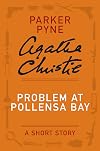
Problem at Pollensa Bay and Other Stories
by Agatha Christie
Parker Pyne (Collections and Selections — short story), Mr. Harley Quin (Collections and Selections — 13-14)
On This Page
Description
A classic from the queen of mystery: Agatha Christie.Tags
Recommendations













Member Recommendations
MissBrangwen The novel was developed from one of the short stories featured in the collection, "Yellow Iris". It is interesting to compare the two.
Member Reviews
I find Problem at Pollensa Bay to be a very underrated collection of stories from Agatha Christie. The title story is terrific, as is Yellow Iris. More importantly, it contains the two Harley Quin and Satterthwaite stories which are not part of The Mysterious Mr. Quin, so if you’re a fan and wish to complete your Quin reading, obtaining Problem at Pollensa Bay is the easiest way to do so. Best of all, both Quin stories are stellar.
I am not a huge fan of Dead Man’s Mirror, feeling it is too long for a Poirot short story, so kind of an oddity. Here we get it in its shorter version, The Second Gong. It’s okay, enjoyable enough, but I find it still isn’t a favorite of mine. There are two surprises here however which more than show more compensate for my somewhat lesser enjoyment of The Second Gong.
Next to a Dog and Magnolia Blossom may be the reason some rate Problem at Pollensa Bay a bit lower, due to expectations, but for me their inclusion actually elevates this collection. Good writing and reader involvement is far more important to me than fitting squarely into a specific genre.
Here are the best stories in this collection:
PROBLEM AT POLLENSA BAY —
Problem at Pollensa Bay is one of the best of the Parker Pyne stories. He is on vacation, very much trying to remain anonymous. Pyne’s reputation as a problem solver appears to be more prevalent once he is outside of his own turf; he takes note that other cultures appear to pay more attention to the ads in the paper than those back across the pond.
Of course someone recognizes Parker and outs him. Soon he is roped into the affairs of a mother and son much too close for the good of either. Enter a flirty but fabulous interloper of a girl with her wild dress and carefree manner. Of course that unhealthy mother/son dynamic is threatened when the boy likes the unsuitable girl and attempts to break free.
Problem at Pollensa Bay is utterly charming. It contains some twists and turns involving an even more outrageously unsuitable girl than the aforementioned. It all ends on a boat, and is very satisfying. Great stuff from Agatha Christie.
YELLOW IRIS —
First published in the July 1937 issue of The Strand, Yellow Iris is a nifty little Poirot outing. Our favorite little Belgian is at home when he receives a strange call from an unknown woman, pleading for him to join her at Jardin des Cygnes. The woman sounds very afraid, and Poirot heads out hoping to this time, prevent a crime.
With the help of Luigi, Poirot locates the table with the yellow iris the woman mentioned on the phone. But Poirot’s acquaintance, Tony Chadell, sits alone at the moment. Young and likable, he seems to be in a bit of romantic trouble. He’s had a spat with lovely young Pauline Weatherby, who is there by invitation of wealthy American Barton Rusell, as is Stephen Carter, who works for the government, and the exotic Spanish dancer, Lola Valdez.
Something is off, and neither female will own up to phoning Poirot. It turns out that Russell’s wife had committed suicide at that very table, but he believes one of the people he’s invited got away with murder. But is something more going on here? It will take some quick thinking by Poirot, and some deception by another at that table to prevent a second murder.
This is fun stuff, my only caveat being that we don’t discover for certain who was responsible for the first suicide — if it indeed was a suicide. Still, great fun!
THE LOVE DETECTIVES —
Onlooker at life Mr. Satterthwaite is visiting Colonel Melrose as The Love Detectives begins. A country gentleman, Colonel Melrose also serves as Chief Constable for the area. During Satterthwaite’s visit, Sir James Dwighton is discovered murdered in his library, sending the colonel and Mr. Satterthwaite rushing off to see about the matter.
Mr. Satterthwaite is excited, ruminating during the frantic drive about the beautiful young red-haired Laura, who disturbingly brings to mind — for no apparent reason — Lucrezia Borgia. Before Satterthwaite can consider the matter at any length however, their frantic pace results in a small smash-up. Guess who is driving the other car? That’s right — Mr. Quin!
Well of course Satterthwaite is delighted, and even more excited, telling Colonel Melrose all about Mr. Quin, and how he concerns himself with matters of love. Of course there is a murder to investigate, but there is a bit lighter tone to this one in regard to the supernaturalness of Mr. Quin.
There is the pretty Laura, who is just as described, reminding Satterthwaite of the Renaissance. But there is also a couple of servants, plus the darkly handsome Paul Delangua. The murder weapon? Well of course it’s a bronze Venus, the Goddess of Love. Then suddenly, everyone is confessing to the crime…
While not as mysterious or as atmospheric as some other Mr. Quin & Mr. Satterthwaite tales, this one is very enjoyable, with some nice interactions between the two old friends in this fine short story.
Chronologically, The Love Detectives falls just after At the Bells and Motley, with Sattherthwaite commenting about his most recent encounter with his old friend Mr. Quin in this one. At one point in fact, Satterthwaite finds a strange similarity between Mr. Quin’s dress and motley. Not included in The Mysterious Mr. Quin collection, completists will want to track it down. It is also available in the Problem at Pollensa Bay collection of stories. Highly recommended for fans.
THE HARLEQUIN TEA SET —
“It was a beautiful early evening and the green of the grass was a soft deep color. The golden light came through the copper beech and the cedar showed the lines of its beauty against a soft pinkish-golden sky.”
There is a tangible wistfulness in this later and final Mr. Quin and Satterthwaite story, which becomes quite moving. Satterthwaite has considerably aged as The Harlequin Tea Set begins. He is on his way to visit a very old friend and the man’s family at a home which holds many fond childhood memories for Satterthwaite.
Memories in fact play a big part in this resonating final entry, with Satterthwaite unable to recall at first his old friend Mr. Quin, and why the splash of color in a shop in the nothing little town of Kingsbourne Ducis stirs him so. But Satterthwaite has grown old, the memory initially just out of his reach.
Satterthwaite’s sentimental rumination about his old friend and the man’s family are captured wonderfully and realistically by Agatha Christie. Time appears to have passed Satterthwaite by as he laments the newer automobiles and their lack of simplicity. But all that is about to change.
Drawn to The Harlequin Café Satterthwaite happens upon his old friend Mr. Quin and the memories return. Their reunion is heartfelt and tender, for they have not seen each other since the haunting Harlequin’s Lane, many years prior. For the supernatural Mr. Quin of course, it has been but a moment, but for Satterthwaite, much more aware of time’s passage, it has been far too long.
Mr. Quin has acquired a small black dog named Hermes who of course is very bright and endearing in this final entry. Quin comforts Satterthwaite in regard to his fears that everything will be changed, tainting the memories Satterthwaite holds so dear. Mr. Quin also assures Satterthwaite that he has it within himself to know what to do when the time comes; whenever Mr. Quin appears, matters of love, and often life and death are sure to follow.
The parting of the two old friends only comes after the new wife of of one of Satterthwaite’s old friend’s sons comes into the shop to acquire some new colored cups for his very visit. She meets Mr. Quin, who begs off an invitation to join them at the large reunion. But Mr. Quin always has a reason for appearing somewhere…
What follows at the reunion is wonderful for a time, but suddenly it becomes exciting. Two young men and a cup, a vast inheritance, and Mr. Quin’s one-word reminder of daltonism aiding Mr. Satterthwaite in preventing tragedy. It turns out Mr. Quin was right all along, yet it has been his reminder to Satterthwaite which once agains brings out the best in Satterthwaite, allowing him to become a participant in life rather than an observer one final time.
A wonderful ending involving Satterthwaite’s enjoyment at being part of something and other people in his latter years, a scarecrow, a burning field, a thankful woman now part of Quin’s world rather than Satterthwaite’s, and of course Quin’s charming little dog Hermes make this one a melancholy final accounting of Mr. Quin and Satterthwaite.
Both bittersweet and wonderful, The Harlequin Tea Set is an absolute must for fans of Agatha Christie’s Satterthwaite and Mr. Quin stories. It is part of The Harlequin Tea Set collection of stories, and also included in the Problem at Pollensa Bay collection. Memorable.
NEXT TO A DOG —
This is a wonderfully poignant story that is a resonating slice of life. In a relatively brief page count, Agatha Christie makes you care deeply for the protagonist Joyce, and her little dog and companion, Terry.
Practically starving, and four weeks behind on her rent to Mrs. Barnes, Joyce cannot find work; all the jobs she could accept would preclude bringing her aging and sometimes grumpy — only with others — little friend. Terry is her connection to Michael, passed now but so fondly remembered that she cannot rely on his parents, less she reveal to them that Michael squandered their nest egg through gambling; she does not wish to tarnish their memory of him.
Desperation leads 29 year old Joyce to accept a proposal of marriage from a man she does not love, in order to prevent starvation and save her beloved little Terry.
A tragic — and painful to read — tragedy, and a kind man who may offer Joyce a real future will leave one wondering if Terry found a way…
This one will choke up anyone who has ever loved a dog so — or cat, or any animal — and understands how strong the bond can be. Both heartbreaking and hopeful, this is a memorable story which is included in the Problem at Pollensa Bay collection. A real gem, and a story never forgotten once read.
MAGNOLIA BLOSSOM —
“He had compared her to a diamond when he first saw her — a thing of flashing fire, reflecting light from a hundred facets. But at that first touch, that first kiss, she had changed miraculously to the clouded softness of a pearl — a pearl like a magnolia blossom, creamy pink.”
A short story of romantic intrigue from Agatha Christie, Magnolia Blossom is very good for what it is, and needs to be judged solely on those merits. The only allusion to the forte for which Agatha Christie became known is a vaguely referenced financial crime. Even then, were the crime to be more front and center rather than secondary, it would only place Magnolia Blossom in that Golden Era of light mystery, where all type of intrigue was classified as mystery. While it certainly isn’t my favorite in Christie’s oeuvre it is involving, and a good example of this type of story.
In essence, Magnolia Blossom is a quietly romantic tale of an affair, focusing on two very different but flawed men, and ta woman whose sense of loyalty and honor and duty dooms her to perhaps a life of loneliness.
The opening is romantic and atmospheric, a lovingly painted moment at a train station in Victoria where Vincent Easton waits for the lovely Theo to meet him, so they can go away together. Being of the old-fashioned mold, true to its time, their embarkment on the love affair has not gone beyond the heart yet.
Vincent is not of the beautiful Theo’s station, and can hardly believe such a lovely and special woman is willing to leave her life of luxury behind and run away with him, enduring the shame and scandal that will ensue.
“The air had been sweet with the scent of magnolia bloom, and one or two petals, velvety-soft and fragrant, had floated down, resting on that upturned face that was as creamy and as soft and as silent as they.”
Vincent’s insecurities bring out the worst in him when a newspaper article about a financial scandal causes Theo to return, placing her own happiness — and especially Vincent’s — below loyalty and duty, despite her knowledge that Richard may have brought it all on himself. How much so, and the depths to which he will go, she does not lean until she returns. Nor does she realize that Vincent will play a part.
Had this been a true romance, we’d have gotten a happy ending, but Christie has fashioned her story in a more mature and realistic manner, making Magnolia Blossom about lost opportunities for happiness, due to integrity and honor.
I really wanted that happy-ever-after here, even though it was about an affair — albeit one of the heart. But it is a very good story nonetheless, and in a way richer and more mature in its conclusion than we’d expect. Not a favorite, but very good.
THE REGATTA MYSTERY —
The premise and setup is actually more engaging and mysterious than the solution in a story which was originally a Poirot. Christie rewrote this story as a Parker Pyne when it became the title story in a collection. I have both versions, but it’s the Parker Pyne one included in Problem at Pollensa Bay.
The story revolves around the Morningstar Diamond, and a rather diverse group which includes a young American girl. She makes a playful bet with the Morningstar’s owner that she can steal it. Some nylons will have to be given out to young Eve if she succeeds in the rather lighthearted experiment. Then she does, but in a twist, cannot produce the Morningstar because it has actually been stolen in earnest, not jest.
A young man in the group who knows he will become a suspect — it had to be one of that little group — seeks out the help of Parker Pyne. There is a slight romantic tie-in as well, but the solution is pulled out of thin air, making this one more of a light adventure than a true mystery puzzle with clues. Still, a good enjoyable read.
FINAL THOUGHTS —
The majority of stories in Problem at Pollensa Bay run the gamut from very good to sublime in my opinion. With only one I wasn’t fond of, and two which were new to me that I discovered, I’m giving this one the highest rating. Good stuff. show less
I am not a huge fan of Dead Man’s Mirror, feeling it is too long for a Poirot short story, so kind of an oddity. Here we get it in its shorter version, The Second Gong. It’s okay, enjoyable enough, but I find it still isn’t a favorite of mine. There are two surprises here however which more than show more compensate for my somewhat lesser enjoyment of The Second Gong.
Next to a Dog and Magnolia Blossom may be the reason some rate Problem at Pollensa Bay a bit lower, due to expectations, but for me their inclusion actually elevates this collection. Good writing and reader involvement is far more important to me than fitting squarely into a specific genre.
Here are the best stories in this collection:
PROBLEM AT POLLENSA BAY —
Problem at Pollensa Bay is one of the best of the Parker Pyne stories. He is on vacation, very much trying to remain anonymous. Pyne’s reputation as a problem solver appears to be more prevalent once he is outside of his own turf; he takes note that other cultures appear to pay more attention to the ads in the paper than those back across the pond.
Of course someone recognizes Parker and outs him. Soon he is roped into the affairs of a mother and son much too close for the good of either. Enter a flirty but fabulous interloper of a girl with her wild dress and carefree manner. Of course that unhealthy mother/son dynamic is threatened when the boy likes the unsuitable girl and attempts to break free.
Problem at Pollensa Bay is utterly charming. It contains some twists and turns involving an even more outrageously unsuitable girl than the aforementioned. It all ends on a boat, and is very satisfying. Great stuff from Agatha Christie.
YELLOW IRIS —
First published in the July 1937 issue of The Strand, Yellow Iris is a nifty little Poirot outing. Our favorite little Belgian is at home when he receives a strange call from an unknown woman, pleading for him to join her at Jardin des Cygnes. The woman sounds very afraid, and Poirot heads out hoping to this time, prevent a crime.
With the help of Luigi, Poirot locates the table with the yellow iris the woman mentioned on the phone. But Poirot’s acquaintance, Tony Chadell, sits alone at the moment. Young and likable, he seems to be in a bit of romantic trouble. He’s had a spat with lovely young Pauline Weatherby, who is there by invitation of wealthy American Barton Rusell, as is Stephen Carter, who works for the government, and the exotic Spanish dancer, Lola Valdez.
Something is off, and neither female will own up to phoning Poirot. It turns out that Russell’s wife had committed suicide at that very table, but he believes one of the people he’s invited got away with murder. But is something more going on here? It will take some quick thinking by Poirot, and some deception by another at that table to prevent a second murder.
This is fun stuff, my only caveat being that we don’t discover for certain who was responsible for the first suicide — if it indeed was a suicide. Still, great fun!
THE LOVE DETECTIVES —
Onlooker at life Mr. Satterthwaite is visiting Colonel Melrose as The Love Detectives begins. A country gentleman, Colonel Melrose also serves as Chief Constable for the area. During Satterthwaite’s visit, Sir James Dwighton is discovered murdered in his library, sending the colonel and Mr. Satterthwaite rushing off to see about the matter.
Mr. Satterthwaite is excited, ruminating during the frantic drive about the beautiful young red-haired Laura, who disturbingly brings to mind — for no apparent reason — Lucrezia Borgia. Before Satterthwaite can consider the matter at any length however, their frantic pace results in a small smash-up. Guess who is driving the other car? That’s right — Mr. Quin!
Well of course Satterthwaite is delighted, and even more excited, telling Colonel Melrose all about Mr. Quin, and how he concerns himself with matters of love. Of course there is a murder to investigate, but there is a bit lighter tone to this one in regard to the supernaturalness of Mr. Quin.
There is the pretty Laura, who is just as described, reminding Satterthwaite of the Renaissance. But there is also a couple of servants, plus the darkly handsome Paul Delangua. The murder weapon? Well of course it’s a bronze Venus, the Goddess of Love. Then suddenly, everyone is confessing to the crime…
While not as mysterious or as atmospheric as some other Mr. Quin & Mr. Satterthwaite tales, this one is very enjoyable, with some nice interactions between the two old friends in this fine short story.
Chronologically, The Love Detectives falls just after At the Bells and Motley, with Sattherthwaite commenting about his most recent encounter with his old friend Mr. Quin in this one. At one point in fact, Satterthwaite finds a strange similarity between Mr. Quin’s dress and motley. Not included in The Mysterious Mr. Quin collection, completists will want to track it down. It is also available in the Problem at Pollensa Bay collection of stories. Highly recommended for fans.
THE HARLEQUIN TEA SET —
“It was a beautiful early evening and the green of the grass was a soft deep color. The golden light came through the copper beech and the cedar showed the lines of its beauty against a soft pinkish-golden sky.”
There is a tangible wistfulness in this later and final Mr. Quin and Satterthwaite story, which becomes quite moving. Satterthwaite has considerably aged as The Harlequin Tea Set begins. He is on his way to visit a very old friend and the man’s family at a home which holds many fond childhood memories for Satterthwaite.
Memories in fact play a big part in this resonating final entry, with Satterthwaite unable to recall at first his old friend Mr. Quin, and why the splash of color in a shop in the nothing little town of Kingsbourne Ducis stirs him so. But Satterthwaite has grown old, the memory initially just out of his reach.
Satterthwaite’s sentimental rumination about his old friend and the man’s family are captured wonderfully and realistically by Agatha Christie. Time appears to have passed Satterthwaite by as he laments the newer automobiles and their lack of simplicity. But all that is about to change.
Drawn to The Harlequin Café Satterthwaite happens upon his old friend Mr. Quin and the memories return. Their reunion is heartfelt and tender, for they have not seen each other since the haunting Harlequin’s Lane, many years prior. For the supernatural Mr. Quin of course, it has been but a moment, but for Satterthwaite, much more aware of time’s passage, it has been far too long.
Mr. Quin has acquired a small black dog named Hermes who of course is very bright and endearing in this final entry. Quin comforts Satterthwaite in regard to his fears that everything will be changed, tainting the memories Satterthwaite holds so dear. Mr. Quin also assures Satterthwaite that he has it within himself to know what to do when the time comes; whenever Mr. Quin appears, matters of love, and often life and death are sure to follow.
The parting of the two old friends only comes after the new wife of of one of Satterthwaite’s old friend’s sons comes into the shop to acquire some new colored cups for his very visit. She meets Mr. Quin, who begs off an invitation to join them at the large reunion. But Mr. Quin always has a reason for appearing somewhere…
What follows at the reunion is wonderful for a time, but suddenly it becomes exciting. Two young men and a cup, a vast inheritance, and Mr. Quin’s one-word reminder of daltonism aiding Mr. Satterthwaite in preventing tragedy. It turns out Mr. Quin was right all along, yet it has been his reminder to Satterthwaite which once agains brings out the best in Satterthwaite, allowing him to become a participant in life rather than an observer one final time.
A wonderful ending involving Satterthwaite’s enjoyment at being part of something and other people in his latter years, a scarecrow, a burning field, a thankful woman now part of Quin’s world rather than Satterthwaite’s, and of course Quin’s charming little dog Hermes make this one a melancholy final accounting of Mr. Quin and Satterthwaite.
Both bittersweet and wonderful, The Harlequin Tea Set is an absolute must for fans of Agatha Christie’s Satterthwaite and Mr. Quin stories. It is part of The Harlequin Tea Set collection of stories, and also included in the Problem at Pollensa Bay collection. Memorable.
NEXT TO A DOG —
This is a wonderfully poignant story that is a resonating slice of life. In a relatively brief page count, Agatha Christie makes you care deeply for the protagonist Joyce, and her little dog and companion, Terry.
Practically starving, and four weeks behind on her rent to Mrs. Barnes, Joyce cannot find work; all the jobs she could accept would preclude bringing her aging and sometimes grumpy — only with others — little friend. Terry is her connection to Michael, passed now but so fondly remembered that she cannot rely on his parents, less she reveal to them that Michael squandered their nest egg through gambling; she does not wish to tarnish their memory of him.
Desperation leads 29 year old Joyce to accept a proposal of marriage from a man she does not love, in order to prevent starvation and save her beloved little Terry.
A tragic — and painful to read — tragedy, and a kind man who may offer Joyce a real future will leave one wondering if Terry found a way…
This one will choke up anyone who has ever loved a dog so — or cat, or any animal — and understands how strong the bond can be. Both heartbreaking and hopeful, this is a memorable story which is included in the Problem at Pollensa Bay collection. A real gem, and a story never forgotten once read.
MAGNOLIA BLOSSOM —
“He had compared her to a diamond when he first saw her — a thing of flashing fire, reflecting light from a hundred facets. But at that first touch, that first kiss, she had changed miraculously to the clouded softness of a pearl — a pearl like a magnolia blossom, creamy pink.”
A short story of romantic intrigue from Agatha Christie, Magnolia Blossom is very good for what it is, and needs to be judged solely on those merits. The only allusion to the forte for which Agatha Christie became known is a vaguely referenced financial crime. Even then, were the crime to be more front and center rather than secondary, it would only place Magnolia Blossom in that Golden Era of light mystery, where all type of intrigue was classified as mystery. While it certainly isn’t my favorite in Christie’s oeuvre it is involving, and a good example of this type of story.
In essence, Magnolia Blossom is a quietly romantic tale of an affair, focusing on two very different but flawed men, and ta woman whose sense of loyalty and honor and duty dooms her to perhaps a life of loneliness.
The opening is romantic and atmospheric, a lovingly painted moment at a train station in Victoria where Vincent Easton waits for the lovely Theo to meet him, so they can go away together. Being of the old-fashioned mold, true to its time, their embarkment on the love affair has not gone beyond the heart yet.
Vincent is not of the beautiful Theo’s station, and can hardly believe such a lovely and special woman is willing to leave her life of luxury behind and run away with him, enduring the shame and scandal that will ensue.
“The air had been sweet with the scent of magnolia bloom, and one or two petals, velvety-soft and fragrant, had floated down, resting on that upturned face that was as creamy and as soft and as silent as they.”
Vincent’s insecurities bring out the worst in him when a newspaper article about a financial scandal causes Theo to return, placing her own happiness — and especially Vincent’s — below loyalty and duty, despite her knowledge that Richard may have brought it all on himself. How much so, and the depths to which he will go, she does not lean until she returns. Nor does she realize that Vincent will play a part.
Had this been a true romance, we’d have gotten a happy ending, but Christie has fashioned her story in a more mature and realistic manner, making Magnolia Blossom about lost opportunities for happiness, due to integrity and honor.
I really wanted that happy-ever-after here, even though it was about an affair — albeit one of the heart. But it is a very good story nonetheless, and in a way richer and more mature in its conclusion than we’d expect. Not a favorite, but very good.
THE REGATTA MYSTERY —
The premise and setup is actually more engaging and mysterious than the solution in a story which was originally a Poirot. Christie rewrote this story as a Parker Pyne when it became the title story in a collection. I have both versions, but it’s the Parker Pyne one included in Problem at Pollensa Bay.
The story revolves around the Morningstar Diamond, and a rather diverse group which includes a young American girl. She makes a playful bet with the Morningstar’s owner that she can steal it. Some nylons will have to be given out to young Eve if she succeeds in the rather lighthearted experiment. Then she does, but in a twist, cannot produce the Morningstar because it has actually been stolen in earnest, not jest.
A young man in the group who knows he will become a suspect — it had to be one of that little group — seeks out the help of Parker Pyne. There is a slight romantic tie-in as well, but the solution is pulled out of thin air, making this one more of a light adventure than a true mystery puzzle with clues. Still, a good enjoyable read.
FINAL THOUGHTS —
The majority of stories in Problem at Pollensa Bay run the gamut from very good to sublime in my opinion. With only one I wasn’t fond of, and two which were new to me that I discovered, I’m giving this one the highest rating. Good stuff. show less
Problem at Pollensa Bay is one of the best of the Parker Pyne stories. He is on vacation, very much trying to remain anonymous. Pyne’s reputation as a problem solver appears to be more prevalent once he is outside of his own turf; he takes note that other cultures appear to pay more attention to the ads in the paper than those back across the pond.
Of course someone recognizes Parker and outs him. Soon he is roped into the affairs of a mother and son much too close for the good of either. Enter a flirty but fabulous interloper of a girl with her wild dress and carefree manner. Of course that unhealthy mother/son dynamic is threatened when the boy likes the unsuitable girl and attempts to break free.
Problem at Pollensa Bay is utterly show more charming. It contains some twists and turns involving an even more outrageously unsuitable girl than the aforementioned. It all ends on a boat, and is very satisfying. Great stuff from Agatha Christie. show less
Of course someone recognizes Parker and outs him. Soon he is roped into the affairs of a mother and son much too close for the good of either. Enter a flirty but fabulous interloper of a girl with her wild dress and carefree manner. Of course that unhealthy mother/son dynamic is threatened when the boy likes the unsuitable girl and attempts to break free.
Problem at Pollensa Bay is utterly show more charming. It contains some twists and turns involving an even more outrageously unsuitable girl than the aforementioned. It all ends on a boat, and is very satisfying. Great stuff from Agatha Christie. show less
Mr. Parker Pyne:
"Nobody's life can be ruined except by themselves"
**
This is a nifty little story. A fast and entertaining read. Good background about Mallorca in the 1930's
I'm looking forward to more of Mr. Parker Pyne.
"Nobody's life can be ruined except by themselves"
**
This is a nifty little story. A fast and entertaining read. Good background about Mallorca in the 1930's
I'm looking forward to more of Mr. Parker Pyne.
While the Poirot and Parker Pyne stories are good, the highlights of this collection are a couple of stories that don't fit the mold of the typical murder mystery generally associated with Christie's name:
"The Harlequin Tea Set"--I can't say much about the plot without giving away the ending (which has an almost surreal quality to it), but this is a brilliant and beautifully crafted tale with a strong emphasis on visual description and color which both enables (almost forces!) the reader to envision the scene in vivid detail and plays an important role in the story;
and
"Next to a Dog"--it's obvious from this heartbreaking but ultimately hopeful story of love, loss and redemption that Christie was a pet lover who deeply felt the loss of show more her own beloved furry friends, and she communicates that exquisitely, as well as (and perhaps better than) any other writer ever has, and though it's a story focused on a dog, it is perhaps her most human story.
Worth the price for these two gems alone, but the other stories nicely round out the set with the kind of fun, intriguing mysteries one expects from Christie. show less
"The Harlequin Tea Set"--I can't say much about the plot without giving away the ending (which has an almost surreal quality to it), but this is a brilliant and beautifully crafted tale with a strong emphasis on visual description and color which both enables (almost forces!) the reader to envision the scene in vivid detail and plays an important role in the story;
and
"Next to a Dog"--it's obvious from this heartbreaking but ultimately hopeful story of love, loss and redemption that Christie was a pet lover who deeply felt the loss of show more her own beloved furry friends, and she communicates that exquisitely, as well as (and perhaps better than) any other writer ever has, and though it's a story focused on a dog, it is perhaps her most human story.
Worth the price for these two gems alone, but the other stories nicely round out the set with the kind of fun, intriguing mysteries one expects from Christie. show less
A collection of odds and ends pubilshed in 1991 in the UK. This volume consists of eight Agatha Christie short stories, mostly from the 1920s and 30s, that had been published in magazines, but not collected in a UK compilation. Some were rewritten for later publication and some of which have been adapted as novellas and full length novels (see the Wikipedia article - https://en.wikipedia.org/wiki/Problem_at_Pollensa_Bay_and_Other_Stories - for more detail into the complicated history).
For the Parker Pyne and Mr Quin/Mr Satterthwaite completists this is a must as it contains two uncollected Parker Pyne stories (originally published a Poirot stories), as well as the earliest and last Quin/Satterthwaite stories (one written in 1926 and show more the other in 1971). It's probable that as the plot for the earliest, "The Love Detectives" (1926), was reworked into the Marple novel "Murder at the Vicarage" (1930) that explains why it was not collected into "The Mysterious Mr Quin" (also published 1930).
The book is completed by two non-mystery short stories from the 20s (and I defy you not to be moved by "Next to a dog").
A great little collection of entertaining, early Christies that can be enjoyed for themselves, but also give some insight into how she developed plots and characters (thanks to the excellent podcast "All About Agatha" for setting me on the track of the complex publication histories!). show less
For the Parker Pyne and Mr Quin/Mr Satterthwaite completists this is a must as it contains two uncollected Parker Pyne stories (originally published a Poirot stories), as well as the earliest and last Quin/Satterthwaite stories (one written in 1926 and show more the other in 1971). It's probable that as the plot for the earliest, "The Love Detectives" (1926), was reworked into the Marple novel "Murder at the Vicarage" (1930) that explains why it was not collected into "The Mysterious Mr Quin" (also published 1930).
The book is completed by two non-mystery short stories from the 20s (and I defy you not to be moved by "Next to a dog").
A great little collection of entertaining, early Christies that can be enjoyed for themselves, but also give some insight into how she developed plots and characters (thanks to the excellent podcast "All About Agatha" for setting me on the track of the complex publication histories!). show less
I found this collection of short stories to be a bit of a grab bag. On the whole, it was a pleasant way to spend some time however, I find several of these stories not really to my taste. In particular, I am not a fan of the hint of supernatural found in the Mr. Satterthwaite stories.
I did like the two Parker Pyne stories "The Problem at Pollensa Bay" and "The Regatta Mystery" and the non-mystery story "Next to a Dog" was very touching.
I did like the two Parker Pyne stories "The Problem at Pollensa Bay" and "The Regatta Mystery" and the non-mystery story "Next to a Dog" was very touching.
Nueve historias cortas
2 de Parker Pyne, una de Miss Marple y todas las demás de Poirot, todas entretenidas, aunque honestamente hubo algunas bastante simplonas y sencillas.
Como siempre Agatha, sea lo que sea que escriba es entretenida de leer y como todas es pequeñas historias son realmente cortas el libro se lee en una sentada.
2 de Parker Pyne, una de Miss Marple y todas las demás de Poirot, todas entretenidas, aunque honestamente hubo algunas bastante simplonas y sencillas.
Como siempre Agatha, sea lo que sea que escriba es entretenida de leer y como todas es pequeñas historias son realmente cortas el libro se lee en una sentada.
Members
- Recently Added By
Lists

Agatha Christie story collections
19 works; 1 member

Books Read in 2017
4,249 works; 130 members

Agatha Christie Chronology
93 works; 1 member
Author Information

2,172+ Works 441,608 Members
One of the most successful and beloved writer of mystery stories, Agatha Mary Clarissa Christie was born in 1890 in Torquay, County Devon, England. She wrote her first novel, The Mysterious Affair at Styles, in 1920, launching a literary career that spanned decades. In her lifetime, she authored 79 crime novels and a short story collection, 19 show more plays, and six novels written under the name of Mary Westmacott. Her books have sold over a billion copies in the English language with another billion in 44 foreign languages. Some of her most famous titles include Murder on the Orient Express, Mystery of the Blue Train, And Then There Were None, 13 at Dinner and The Sittaford Mystery. Noted for clever and surprising twists of plot, many of Christie's mysteries feature two unconventional fictional detectives named Hercule Poirot and Miss Jane Marple. Poirot, in particular, plays the hero of many of her works, including the classic, The Murder of Roger Ackroyd (1926), and Curtain (1975), one of her last works in which the famed detective dies. Over the years, her travels took her to the Middle East where she met noted English archaeologist Sir Max Mallowan. They married in 1930. Christie accompanied Mallowan on annual expeditions to Iraq and Syria, which served as material for Murder in Mesopotamia (1930), Death on the Nile (1937), and Appointment with Death (1938). Christie's credits also include the plays, The Mousetrap and Witness for the Prosecution (1953; film 1957). Christie received the New York Drama Critics' Circle Award for 1954-1955 for Witness. She was also named Dame Commander of the Order of the British Empire in 1971. Christie died in 1976. (Bowker Author Biography) show less
Some Editions
Series

Parker Pyne
4 works (Collections and Selections — short story)

Mr. Harley Quin
3 works (Collections and Selections — 13-14)
Belongs to Publisher Series
SaPo (361)
Work Relationships
Is contained in
Contains
Common Knowledge
- Canonical title
- Problem at Pollensa Bay and Other Stories
- Original title
- The regatta mystery
- Original publication date
- 1991-11-01
- People/Characters*
- Parker Payne
- Important places*
- Mallorca, Pollensa Bay
- First words
- Joan Ashby came out of her bedroom and stood a moment on the landing outside her door. (The Second Gong)
- Original language
- English
*Some information comes from Common Knowledge in other languages. Click "Edit" for more information.
Classifications
Statistics
- Members
- 762
- Popularity
- 36,899
- Reviews
- 16
- Rating
- (3.42)
- Languages
- 16 — Czech, Dutch, English, Estonian, Finnish, German, Hungarian, Indonesian, Lithuanian, Norwegian (Bokmål), Norwegian, Polish, Portuguese, Spanish, Swedish, Turkish
- Media
- Paper, Audiobook, Ebook
- ISBNs
- 48
- ASINs
- 11