
On This Page
Description
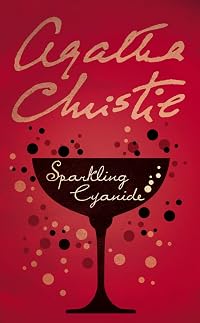
Six people sit down to a sumptuous meal at a table laid for seven. In front of the empty place is a sprig of rosemary-"rosemary for remembrance." A strange sentiment considering no one is likely to forget the night, exactly a year ago, that Rosemary Barton died at exactly the same table, her beautiful face unrecognizable, convulsed with pain and horror. But then Rosemary had always been memorable-she had the ability to arouse strong passions in most people she met. In one case, strong enough show more to kill. . . . This title was previously published as Remembered Death. show lessTags
Recommendations




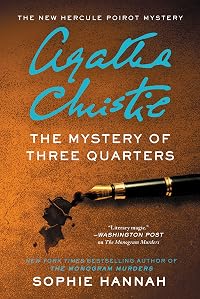
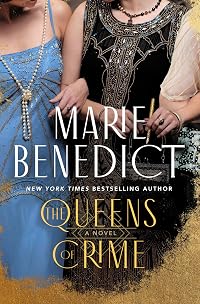

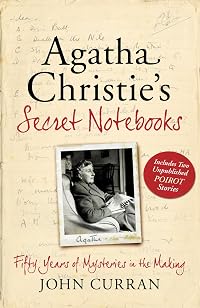
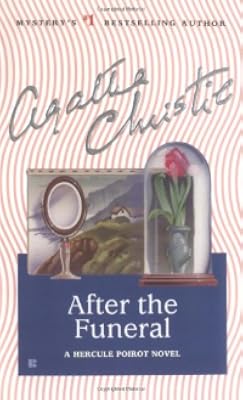

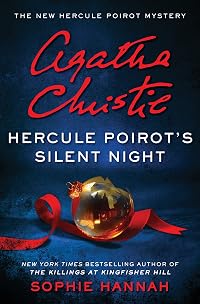
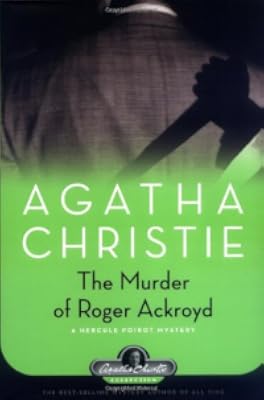




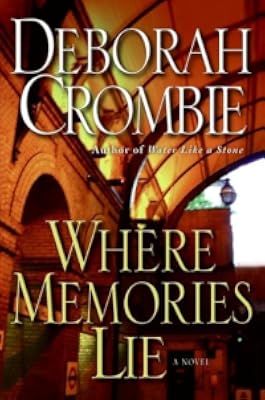
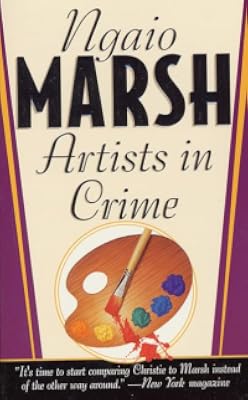


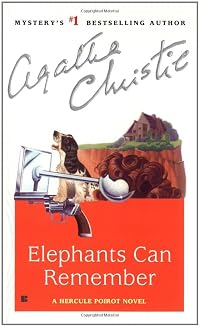
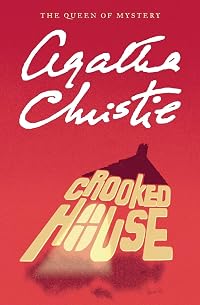
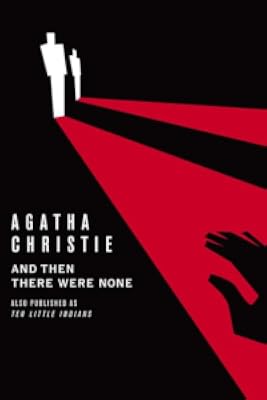



Member Recommendations

MissBrangwen This novel was developed from one of the short stories featured in the collection, "Yellow Iris". It is interesting to compare the two.
MissBrangwen The collection of short stories by Agatha Christie features "Yellow Iris", the short story from which "Sparkling Cyanide" was developed. Well worth the comparison, as there are many differences as well as similarities.
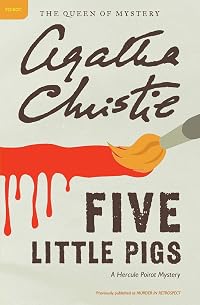
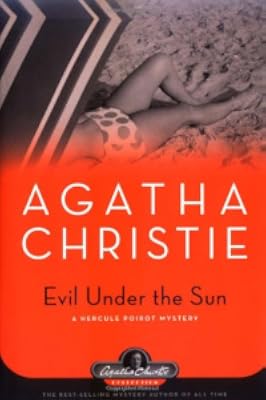
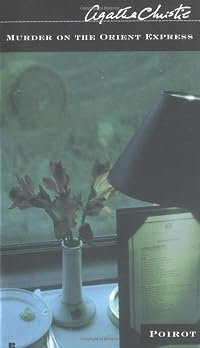
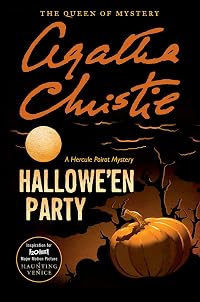
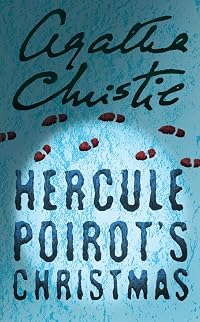
MissBrangwen Both of these Christie mysteries feature an elegant dinner party - and for each of them, the number of guests and a missing one are significant.
Member Reviews
The mystery itself in Sparkling Cyanide was excellent. I had no idea how this one was going to puzzle out, and I was afraid that it would end up being an unrealistically convoluted Christie ending (I just finished Death in the Clouds, which has one of those). Instead, it was a very satisfying ending where a small revelation made everything else fall into place and seem simpler than before. Interesting that Col Race wasn't the one to figure it out, though I suppose he usually plays second fiddle in his stories.
I also really liked the structure of the book-- a chapter for each character in the first half, each remembering Rosemary, their relationship with her, and her death at her birthday party, leading up to the big turning point of the show more second deadly dinner party with the same six guests. show less
I also really liked the structure of the book-- a chapter for each character in the first half, each remembering Rosemary, their relationship with her, and her death at her birthday party, leading up to the big turning point of the show more second deadly dinner party with the same six guests. show less
At a dinner party in a busy restaurant Rosemary Barton dies after drinking champagne laced with cyanide, ruled a suicide due to her depressed state. Some months later her widow George receives a note suggesting the death was murder. On the anniversary of Rosemary's death George arranges another dinner where he hopes to uncover the truth.
The book is neatly structured. The initial murder occurs very quickly and is followed by a long section told from the point of view of each attendee at the murder revealing their relationship with Rosemary. All of them have reasons to want Rosemary dead. Midway through the book George arranges his special dinner where a terrible event occurs. The second half of the book re-examines the stories and show more motives of the suspects based on this event; some suspects seem to be eliminated (why based on the first half of the book would they want the event to occur?) and some become more suspicious. The final resolution is based on a misdirection and a half twist in the motivations of a central character.
Colonel Race, a semi-retired secret service agent, is not really central to solving the murder, but acts more as a catalyst to allow each suspect to reveal a little more about their character and possible motivation for the crime.
This book shows Christie at the height of her powers. Her characterisation is so strong that the whole book rests on descriptions and explanations of the desires of the suspects alone. There is almost no action and little narrative drive.
The only reason I did not give this book five stars is that the solver of the mystery is the lesser Colonel Race rather than one of Christie's big hitters. show less
The book is neatly structured. The initial murder occurs very quickly and is followed by a long section told from the point of view of each attendee at the murder revealing their relationship with Rosemary. All of them have reasons to want Rosemary dead. Midway through the book George arranges his special dinner where a terrible event occurs. The second half of the book re-examines the stories and show more motives of the suspects based on this event; some suspects seem to be eliminated (why based on the first half of the book would they want the event to occur?) and some become more suspicious. The final resolution is based on a misdirection and a half twist in the motivations of a central character.
Colonel Race, a semi-retired secret service agent, is not really central to solving the murder, but acts more as a catalyst to allow each suspect to reveal a little more about their character and possible motivation for the crime.
This book shows Christie at the height of her powers. Her characterisation is so strong that the whole book rests on descriptions and explanations of the desires of the suspects alone. There is almost no action and little narrative drive.
The only reason I did not give this book five stars is that the solver of the mystery is the lesser Colonel Race rather than one of Christie's big hitters. show less
Based on the Hercule Poirot short story, Yellow Iris, Sparkling Cyanide tells the story of Rosemary Marle - a vibrant young woman who seemingly committed suicide after contracting the flu. One year to the date, her husband, George Barton hosts a dinner party with the exact guests that were with her when she died. Like all of his other novels, Colonel Race features only on the periphery, as an old friend to Rosemary's husband, George Barton.
This was good. I had read Yellow Iris previously so I had an inkling where things were going but I enjoyed it all the same. I was particularly fond of Vicky, Sandra Farrady's mum.
His wife still shook her head. “I still say he hasn’t got the nerve. You want someone who’s a gambler and capable show more of being reckless. I’m afraid, William, I’m horribly afraid.” He stared at her.
“Are you suggesting that Sandra—Sandra—?” “I hate even to suggest such a thing—but it’s no use being cowardly and refusing to face possibilities. She’s besotted about that man—she always has been—and there’s a queer streak in Sandra. I’ve never really understood her—but I’ve always been afraid for her. She’d risk anything—anything—for Stephen. Without counting the cost. And if she’s been mad enough and wicked enough to do this thing, she’s got to be protected.”
“Protected? What do you mean—protected?”
“By you. We’ve got to do something about our own daughter, haven’t we? Mercifully you can pull any amount of strings.”
Lord Kidderminster was staring at her. Though he had thought he knew his wife’s character well, he was nevertheless appalled at the force and courage of her realism—at her refusal to blink at unpalatable facts—and also at her unscrupulousness. “If my daughter’s a murderess, do you suggest that I should use my official position to rescue her from the consequences of her act?”
“Of course,” said Lady Kidderminster.
“My dear Vicky! You don’t understand! One can’t do things like that. It would be a breach of—of honour.”
“Rubbish!” said Lady Kidderminster. They looked at each other—so far divided that neither could see the other’s point of view.
Christie, Agatha. Sparkling Cyanide (pp. 186-187). William Morrow Paperbacks. Kindle Edition. I adored the ruthless in her and how absolutely gobsmacked the husband is by her.
The mystery is well plotted and unfolds at a steady pace. I liked the characters and the motives for everything and I was pleasantly surprised by the reveal of how it was all done. It's not my favourite Agatha Christie but it was a solidly written and fun detective story. 3 stars. show less
This was good. I had read Yellow Iris previously so I had an inkling where things were going but I enjoyed it all the same. I was particularly fond of Vicky, Sandra Farrady's mum.
His wife still shook her head. “I still say he hasn’t got the nerve. You want someone who’s a gambler and capable
“Are you suggesting that Sandra—Sandra—?” “I hate even to suggest such a thing—but it’s no use being cowardly and refusing to face possibilities. She’s besotted about that man—she always has been—and there’s a queer streak in Sandra. I’ve never really understood her—but I’ve always been afraid for her. She’d risk anything—anything—for Stephen. Without counting the cost. And if she’s been mad enough and wicked enough to do this thing, she’s got to be protected.”
“Protected? What do you mean—protected?”
“By you. We’ve got to do something about our own daughter, haven’t we? Mercifully you can pull any amount of strings.”
Lord Kidderminster was staring at her. Though he had thought he knew his wife’s character well, he was nevertheless appalled at the force and courage of her realism—at her refusal to blink at unpalatable facts—and also at her unscrupulousness. “If my daughter’s a murderess, do you suggest that I should use my official position to rescue her from the consequences of her act?”
“Of course,” said Lady Kidderminster.
“My dear Vicky! You don’t understand! One can’t do things like that. It would be a breach of—of honour.”
“Rubbish!” said Lady Kidderminster. They looked at each other—so far divided that neither could see the other’s point of view.
Christie, Agatha. Sparkling Cyanide (pp. 186-187). William Morrow Paperbacks. Kindle Edition.
The mystery is well plotted and unfolds at a steady pace. I liked the characters and the motives for everything and I was pleasantly surprised by the reveal of how it was all done. It's not my favourite Agatha Christie but it was a solidly written and fun detective story. 3 stars. show less
I read the first half of this one on a plane ride and it was a fun, quick murder mystery to get pulled into. I lost momentum after being home for a few days. The ending was still satisfying, but it’s not one of my new favorite Christie novels. It’s a slow burn and there was only one twist I really loved. Still a good easy travel read.
Ahh, thank goodness, back to the Agatha Christie I sometimes love and almost always like, where characters exist who say things like this:
"...I don't like the way she does her hair myself - it makes her face look so hard - but I should think she was a hard woman. And nervy, too. Everyone is nervy nowadays. When I was a girl people didn't know what nerves were."
"...I don't like the way she does her hair myself - it makes her face look so hard - but I should think she was a hard woman. And nervy, too. Everyone is nervy nowadays. When I was a girl people didn't know what nerves were."
I must have read this copy of Remembered Death (also published under the way better title of Sparkling Cyanide) several dozen times as a youth. The cover held a fascination for me, featuring a group of three party guests with a grinning skull looming behind them like a sinister moon. The story itself is not actually as creepy as the cover might lead you to believe, but it does provide plenty of guesswork and opportunities to be wrong in identifying the culprit. On this particular reread I remembered who had done it but couldn't remember how or why, but what little foreknowledge I had did not reduce my enjoyment of the story.
This was originally a short story called "Yellow Iris", which served as the basis for the Poirot episode of the show more same name. Poirot is not in Remembered Death, however; the detective role is much smaller and is filled by Colonel Race. Therefore, those who want to try an Agatha that doesn't feature one of her marquee detectives might want to try this one. show less
This was originally a short story called "Yellow Iris", which served as the basis for the Poirot episode of the show more same name. Poirot is not in Remembered Death, however; the detective role is much smaller and is filled by Colonel Race. Therefore, those who want to try an Agatha that doesn't feature one of her marquee detectives might want to try this one. show less
Another good murder in retrospect (2009 reading). Re-read in 2025, this is a Colonel Race book despite it being adapted for the Poirot TV show. The characterisation is what shines in this book - George Barton holds a macabre re-enactment of the dinner party at which his wife had died, supposedly by suicide. Each one of them had a motive to murder her, but instead of unmasking the murderer, George himself dies. There's plenty of misdirection before the denouement.
Members
- Recently Added By
Lists

Crime and Mysteries to Read
746 works; 31 members

Agatha Christie
28 works; 3 members

Books About Murder
313 works; 7 members

Favorite Books from the 1940s
38 works; 3 members

Detective Stories
343 works; 5 members

Books Read in 2014
2,343 works; 86 members

Books Read in 2018
4,360 works; 110 members

Books Read in 2023
5,547 works; 145 members

The 100 Best Crime Novels and Thrillers since 1945
100 works; 6 members

Books Read in 2024
4,623 works; 126 members

TBR
77 works; 1 member

Agatha Christie Chronology
93 works; 1 member

Books Read in 2026
1,858 works; 66 members
Author Information

2,146+ Works 439,767 Members
One of the most successful and beloved writer of mystery stories, Agatha Mary Clarissa Christie was born in 1890 in Torquay, County Devon, England. She wrote her first novel, The Mysterious Affair at Styles, in 1920, launching a literary career that spanned decades. In her lifetime, she authored 79 crime novels and a short story collection, 19 show more plays, and six novels written under the name of Mary Westmacott. Her books have sold over a billion copies in the English language with another billion in 44 foreign languages. Some of her most famous titles include Murder on the Orient Express, Mystery of the Blue Train, And Then There Were None, 13 at Dinner and The Sittaford Mystery. Noted for clever and surprising twists of plot, many of Christie's mysteries feature two unconventional fictional detectives named Hercule Poirot and Miss Jane Marple. Poirot, in particular, plays the hero of many of her works, including the classic, The Murder of Roger Ackroyd (1926), and Curtain (1975), one of her last works in which the famed detective dies. Over the years, her travels took her to the Middle East where she met noted English archaeologist Sir Max Mallowan. They married in 1930. Christie accompanied Mallowan on annual expeditions to Iraq and Syria, which served as material for Murder in Mesopotamia (1930), Death on the Nile (1937), and Appointment with Death (1938). Christie's credits also include the plays, The Mousetrap and Witness for the Prosecution (1953; film 1957). Christie received the New York Drama Critics' Circle Award for 1954-1955 for Witness. She was also named Dame Commander of the Order of the British Empire in 1971. Christie died in 1976. (Bowker Author Biography) show less
Some Editions
Series

Belongs to Publisher Series
Work Relationships
Is contained in
Is an adaptation of
Has the adaptation
Is abridged in
Common Knowledge
- Canonical title
- Sparkling Cyanide
- Original title
- Sparkling Cyanide
- Alternate titles
- Remembered Death
- Original publication date
- 1944-12-01
- People/Characters
- George Barton; Rosemary Marle Barton; Lucilla Drake; Victor Drake; Sandra Hayle Farraday (Lady Alexandra); Stephen Farraday (Member of Parliament) (show all 11); Ruth Lessing; Iris Marle; Colonel Race; Anthony Browne; Chief Inspector Kemp
- Important places
- London, England, UK; England, UK
- Related movies
- Sparkling Cyanide (1983 | IMDb); Sparkling Cyanide (2003 | IMDb)
- Epigraph
- Six people were thinking of
Rosemary Barton
who had died nearly a year ago... - First words
- Iris Marle was thinking about her sister, Rosemary.
- Last words
- (Click to show. Warning: May contain spoilers.)'Pray love remember . . .'
- Original language
- English UK
- Disambiguation notice
- This book was published as Remembered Death in the US and Sparkling Cyanide in the UK. It is based on a short story Yellow Iris... (show all)a>, which featured Hercule Poirot as the detective.
Classifications
Statistics
- Members
- 3,630
- Popularity
- 4,466
- Reviews
- 71
- Rating
- (3.69)
- Languages
- 26 — Catalan, Chinese, Czech, Danish, Dutch, English, Estonian, Finnish, French, German, Greek, Hindi, Hungarian, Italian, Japanese, Norwegian (Bokmål), Norwegian, Polish, Russian, Serbian, Slovak, Slovenian, Spanish, Swedish, Turkish, Portuguese (Portugal)
- Media
- Paper, Audiobook, Ebook
- ISBNs
- 159
- UPCs
- 1
- ASINs
- 96