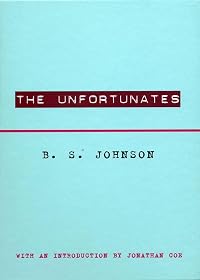
The Unfortunates
by B. S. Johnson
On This Page
Description
A sports journalist, sent to a Midlands town on a weekly assignment, finds himself confronted by ghosts from the past when he disembarks at the railway station. Memories of one of his best, most trusted friends, a tragically young victim of cancer, begin to flood through his mind as he attempts to go about the routine business of reporting a football match. B S Johnson's famous 'book in a box', in which the chapters are presented unbound, to be read in any order the reader chooses, is one of show more the key works of a novelist now undergoing an enormous revival of interest. The Unfortunates is a book of passionate honesty and dark, courageous humour: a meditation on death and a celebration of friendship which also offers a remarkably frank self-portrait of its author. show lessTags
Recommendations
















Member Recommendations
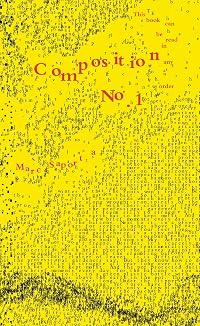
bluepiano An earlier and surprisingly powerful unbound novel.. Saporta's much bolder book is a collection of loose pages with neither beginning nor end specified.
Member Reviews
This is Johnson's famous "book in a box", which comes as twenty-seven separate fascicules, to be read, apart from the ones marked "First" and "Last", in a random order. I don't know what he can do to stop us reading the ones marked "First" and "Last" in a random order as well, if we want to, though. The shortest of the fascicules is only half a page, the longest have twelve pages. Only a few are easily bindable multiples of four, however, so there must have been quite some technical headaches involved in making it. The 1999 re-issue includes a further fascicule with the title page and Jonathan Coe's Introduction, which is probably worth having. It's worth having a close look at the box, by the way, as the book's epigraphs from (Samuel) show more Johnson and Boswell are concealed in unsuspected spots around it.
A football reporter, operating on autopilot, gets off the train in yet another Saturday provincial town to report on a match (which could be anywhere, the teams are simply called "United" and "City"), and it's only as he's leaving the station that he registers that this is actually Nottingham, where he's often come to visit his student friend and literary mentor Tony, who died of cancer not long ago. As we follow the random sequence of the fascicules, the narrator's experiences of his afternoon in Nottingham and the football match are mixed together with memories of Tony, the times they have spent together, and his final illness and death.
The unusual format is probably about one-third interesting experiment and two-thirds publicity stunt, as this is obviously a book that would work perfectly well in conventional form, but it is interesting to catch yourself wondering how he knew you were going to read this particular bit before that bit, or whether there was some subtle trick of suggestion involved in making you choose a particular sequence. Our mind can't help imposing structure on random assemblies, it seems.
As we would expect, there's some clever, witty, touching and very self-critical writing involved, behind the gimmicks. The narrator is digging into his conscience to try to work out how much of his reaction to the death of his friend is purely selfish thoughts about his own loss, and what he could or should have done differently. And there's also a disturbing element of envy — how easy it would be to be dead too. Not now, but...
On the other hand, it's also fascinating to see how Johnson ties in the narrator's seriously literary aspirations (there's no real attempt to pretend that the narrator is anyone other than novelist and part-time sports correspondent B S Johnson) with the more mechanical but still quite demanding work of the football reporter. There's a lovely section in which he takes us through the writing of the match report from kick-off to telephone dictation, including all his false starts, rejected adjectives, tempting puns used and even more tempting ones not used, doubts about apostrophes, and so on. You could probably use it as training material on a journalism course: maybe people do.
Fun! show less
A football reporter, operating on autopilot, gets off the train in yet another Saturday provincial town to report on a match (which could be anywhere, the teams are simply called "United" and "City"), and it's only as he's leaving the station that he registers that this is actually Nottingham, where he's often come to visit his student friend and literary mentor Tony, who died of cancer not long ago. As we follow the random sequence of the fascicules, the narrator's experiences of his afternoon in Nottingham and the football match are mixed together with memories of Tony, the times they have spent together, and his final illness and death.
The unusual format is probably about one-third interesting experiment and two-thirds publicity stunt, as this is obviously a book that would work perfectly well in conventional form, but it is interesting to catch yourself wondering how he knew you were going to read this particular bit before that bit, or whether there was some subtle trick of suggestion involved in making you choose a particular sequence. Our mind can't help imposing structure on random assemblies, it seems.
As we would expect, there's some clever, witty, touching and very self-critical writing involved, behind the gimmicks. The narrator is digging into his conscience to try to work out how much of his reaction to the death of his friend is purely selfish thoughts about his own loss, and what he could or should have done differently. And there's also a disturbing element of envy — how easy it would be to be dead too. Not now, but...
On the other hand, it's also fascinating to see how Johnson ties in the narrator's seriously literary aspirations (there's no real attempt to pretend that the narrator is anyone other than novelist and part-time sports correspondent B S Johnson) with the more mechanical but still quite demanding work of the football reporter. There's a lovely section in which he takes us through the writing of the match report from kick-off to telephone dictation, including all his false starts, rejected adjectives, tempting puns used and even more tempting ones not used, doubts about apostrophes, and so on. You could probably use it as training material on a journalism course: maybe people do.
Fun! show less
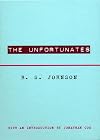
The Unfortunates is B S Johnson’s “infamous” book-in-a-box, and taking it down from the shelf here’s what you get: at first glance, a standard hardback with turquoise cover, title on the front and spine, back-cover blurb and barcode just as you’d expect—except that the whole thing is a small box. Open it out flat, and filling the right-hand tray is a stack of page-bundles which, in a normal hardback, would be bound together of course; but here they’re loose, held by a pink paper band. Facing them in the left-hand tray are your instructions: “NOTE. This novel has twenty-seven sections, temporarily held together by a removable wrapper. Apart from the first and last sections (which are marked as such) the other twenty-five show more sections are intended to be read in random order. If readers prefer not to accept the random order in which they receive the novel, then they may re-arrange the sections into any other random order before reading.” It’s beautifully produced, a lovely thing to have.
Its inner lining also has several quotations, including this one from Laurence Sterne: “It is a history, Sir…of what passes in a man’s own mind”, and that’s what this book is too: what passes through the narrator’s mind, particularly memories of a close friend whose life was cut tragically short by cancer, as he revisits the same city years later. Everywhere he goes—a particular pub, a street-market, a fish-and-chip shop, the main railway station—he remembers details, incidents and snatches of conversation until, in the end, he’s almost overwhelmed.
We still tend to think of memory as accurate and orderly, when it’s becoming plain it isn’t like that at all; the brain edits, infers and rearranges. There’s clearly a lot else going on too, the way memories intrude into consciousness throughout the day, often intelligibly but also randomly and for no apparent reason. The Unfortunates was Johnson’s attempt at a realistic memoir, neither tidied up for the reader nor done to some literary formula of how it’s “supposed” to be done; these are his own memories of an actual former friend, precisely as they came to him. And it works: what emerges from the twenty-five interchangeable sections is a touching picture, not only of his lost friend and of a whole time and place now gone forever, but of the author himself.
Honesty was always Johnson’s watchword as a writer; to attempt, at least, to be as realistic in his writing, as truthful, as he could manage; and this random book in its lovely box—“infamous” to many, “post-modern” and “eccentric”—is arguably the most true to life of all his novels. show less
Its inner lining also has several quotations, including this one from Laurence Sterne: “It is a history, Sir…of what passes in a man’s own mind”, and that’s what this book is too: what passes through the narrator’s mind, particularly memories of a close friend whose life was cut tragically short by cancer, as he revisits the same city years later. Everywhere he goes—a particular pub, a street-market, a fish-and-chip shop, the main railway station—he remembers details, incidents and snatches of conversation until, in the end, he’s almost overwhelmed.
We still tend to think of memory as accurate and orderly, when it’s becoming plain it isn’t like that at all; the brain edits, infers and rearranges. There’s clearly a lot else going on too, the way memories intrude into consciousness throughout the day, often intelligibly but also randomly and for no apparent reason. The Unfortunates was Johnson’s attempt at a realistic memoir, neither tidied up for the reader nor done to some literary formula of how it’s “supposed” to be done; these are his own memories of an actual former friend, precisely as they came to him. And it works: what emerges from the twenty-five interchangeable sections is a touching picture, not only of his lost friend and of a whole time and place now gone forever, but of the author himself.
Honesty was always Johnson’s watchword as a writer; to attempt, at least, to be as realistic in his writing, as truthful, as he could manage; and this random book in its lovely box—“infamous” to many, “post-modern” and “eccentric”—is arguably the most true to life of all his novels. show less
B.S. Johnson’s The Unfortunates is a remarkable book. The novel is broken into 27 pamphlet-sized sections contained within a box. Except for the first and last sections, the remaining 25 sections are intended to be read in random order.
The Unfortunates tells the story of a sportswriter who travels to a town to report on a soccer match only to discover he’s been to the town several times before to visit an old school friend who has since died of cancer. Some of the separate sections of the book are recollections of the dead friend and other poignant memories of the past. Other sections describe the day of the soccer match. The switching back and forth from the present to the past happens at random, depending on the order in which the show more reader reads the sections. This randomness creates a disjointed reading experience that almost perfectly mimics how memories intrude into present consciousness. I doubt I’ve ever encountered a book structure or organizational scheme that has conveyed so much meaning.
In addition to the structure, the prose is a commentary on the mysterious workings of memory: “”I try to invest anything connected with him now with as much rightness, sanctity, almost, as I can, how the fact of his death influences every memory of everything connected with him.” The overall mood is one of sadness, but Johnson inserts some levity by playing with language (“These men on their way to football, they are the same in any city, … on their way to any match, their raincoats, their favours, in some cases, the real fan does not need to show his favour by favours, but by his fervour, and so on.”). The mood is also lightened by the narrator’s obvious enjoyment of day to day pleasures (“The cheese [rolls] had raw onion in them, anyway, a new taste, I enjoyed it, the crispness and the soft dough and clinging cheese. Ah.”).
Without question, this is one of the most interesting books I’ve read in many years. I highly recommend it.
This review also appears on my blog Literary License (short reviews, real opinions): litlicense.blogspot.com. show less
The Unfortunates tells the story of a sportswriter who travels to a town to report on a soccer match only to discover he’s been to the town several times before to visit an old school friend who has since died of cancer. Some of the separate sections of the book are recollections of the dead friend and other poignant memories of the past. Other sections describe the day of the soccer match. The switching back and forth from the present to the past happens at random, depending on the order in which the show more reader reads the sections. This randomness creates a disjointed reading experience that almost perfectly mimics how memories intrude into present consciousness. I doubt I’ve ever encountered a book structure or organizational scheme that has conveyed so much meaning.
In addition to the structure, the prose is a commentary on the mysterious workings of memory: “”I try to invest anything connected with him now with as much rightness, sanctity, almost, as I can, how the fact of his death influences every memory of everything connected with him.” The overall mood is one of sadness, but Johnson inserts some levity by playing with language (“These men on their way to football, they are the same in any city, … on their way to any match, their raincoats, their favours, in some cases, the real fan does not need to show his favour by favours, but by his fervour, and so on.”). The mood is also lightened by the narrator’s obvious enjoyment of day to day pleasures (“The cheese [rolls] had raw onion in them, anyway, a new taste, I enjoyed it, the crispness and the soft dough and clinging cheese. Ah.”).
Without question, this is one of the most interesting books I’ve read in many years. I highly recommend it.
This review also appears on my blog Literary License (short reviews, real opinions): litlicense.blogspot.com. show less
B. S. Johnson's famous (or almost famous) book in a box. However one wants to look at that it's an unique idea and also at least IMHO attractive--but what's it all mean? --because in the end it all comes down to what can be made of the contents--his written words.
Johnson's idea was to give his reader as much freedom in which to read this work as possible. It's 27 loose leaf chapters with the exception of the marked first and last chapters to be read in whatever order the reader sees fit. All the separate parts forming part of the whole can be inserted anywhere--all form fitting parts of the puzzle of the story.
So what's it all about? Set in England in the late 50's--early 60's--an aspiring young novelist sometime journalist makes a trip show more by train from his home in London to a Midlands city to cover a football (soccer) match for a London paper. The city was the home of a former friend who had died of cancer at a relatively young age. Arriving in the city everything reminds him of the past, not only the friendship that ended too soon, but despite his being 'happily' married his own failed love affair which continues to haunt him many years later. He wanders around the city revisiting old haunts, where he and his friend and their respective girlfriends used to go, brooding on the nature of life and death, stopping in here and there--just walking and looking around--all while waiting for the football game to begin.
It is a very somber work, depending almost totally on the journalist/novelist's internal monologue for its direction. There are some very understated touches on the periphery of his self-centeredness as the city (in some way a character in its own right) intrudes itself momentarily here and there back into his awareness. The writer coping with a somewhat familiar/somewhat alien urban enviroment--at the same time trying to sort out his past into some kind of coherence. In some respects it reminds me of Joyce's Ulysses only blacker and without the humor--it's bleakness of tone and urban landscape and main character portrayal also reminded me very much of Camus' Stranger.
Anyway I liked it a lot--but it's not something that's a lot of laughs. So this is a cautionary review. If you're looking for something happy and uplifting you'd best look somewhere else. As for the novelist determined to claim new territory for the novel--who sees creation and/or the creative spark of pushing himself beyond what has already been done and what is already known you have to give Johnson props. He was not stale or stagnant. He was determined to be different and unique and at least for me that is good enough reason to continue to read his work when the opportunity arises. show less
Johnson's idea was to give his reader as much freedom in which to read this work as possible. It's 27 loose leaf chapters with the exception of the marked first and last chapters to be read in whatever order the reader sees fit. All the separate parts forming part of the whole can be inserted anywhere--all form fitting parts of the puzzle of the story.
So what's it all about? Set in England in the late 50's--early 60's--an aspiring young novelist sometime journalist makes a trip show more by train from his home in London to a Midlands city to cover a football (soccer) match for a London paper. The city was the home of a former friend who had died of cancer at a relatively young age. Arriving in the city everything reminds him of the past, not only the friendship that ended too soon, but despite his being 'happily' married his own failed love affair which continues to haunt him many years later. He wanders around the city revisiting old haunts, where he and his friend and their respective girlfriends used to go, brooding on the nature of life and death, stopping in here and there--just walking and looking around--all while waiting for the football game to begin.
It is a very somber work, depending almost totally on the journalist/novelist's internal monologue for its direction. There are some very understated touches on the periphery of his self-centeredness as the city (in some way a character in its own right) intrudes itself momentarily here and there back into his awareness. The writer coping with a somewhat familiar/somewhat alien urban enviroment--at the same time trying to sort out his past into some kind of coherence. In some respects it reminds me of Joyce's Ulysses only blacker and without the humor--it's bleakness of tone and urban landscape and main character portrayal also reminded me very much of Camus' Stranger.
Anyway I liked it a lot--but it's not something that's a lot of laughs. So this is a cautionary review. If you're looking for something happy and uplifting you'd best look somewhere else. As for the novelist determined to claim new territory for the novel--who sees creation and/or the creative spark of pushing himself beyond what has already been done and what is already known you have to give Johnson props. He was not stale or stagnant. He was determined to be different and unique and at least for me that is good enough reason to continue to read his work when the opportunity arises. show less
This book is unlike most books- not only the physical structure of it, but the content as well. It perfectly mimics and recreates the feeling of returning to a town you haven't been to in a while and being slammed with memories you can only half-remember. Unfortunately, it does get a little tedious about 3/4ths of the way through, but the ending brings it home.
I was excited when I saw that this book, something of a "lost work" from the '60s, was going to be re-published. This experimental novel has an open form--the 27 different sections are printed in the form of little pamphlets, with the first and last being marked as such. The other 25 may be shuffled and read in any order. The plot: The protagonist (essentially B.S. Johnson), a sports writer, visits a town where his late friend Tony used to live. He flashes back to many different memories of the times he spent with his friend.
The good: The structure and style work very well. The stream-of-consciousness prose captures the randomness of his wandering mind, as does the non-linear structure of the different sections. What's always most show more interesting to me about open form music is also interesting to me here: the way that one's mind struggles to put events in a linear order. I don't know about other folks, but my brain does not do non-linear; it must construct a linear narrative.
The bad: Unfortunately, style and structure are not the only elements of a book. There's also the material. You know, what makes a book a book. And this material wavers between uninteresting and unlikeable. The biggest problem is that B.S. Johnson is the type of guy who renders even his closest friends in 2-D, as shadows that fall behind the looming figure of himself. The type of guy who evidently still nurses the wounds from when a girlfriend cheated on him many years ago, never explicitly stating it as such, just calling it over and over "the betrayal." Good grief. Beyond this, I can't reconcile the extremely conventional, boring narrative with the structural conceits. I think I have to side with the folks who contend that his structural tinkering is just a gimmick to hide the fact that his material is weak.
The major failing of the novel, for me: it's not about Tony. It's about B.S. Johnson. And if I was going to spend a day in someone else's head, it sure as heck wouldn't be Johnson's.
(4 stars for style, 2 stars for material=3 stars) show less
The good: The structure and style work very well. The stream-of-consciousness prose captures the randomness of his wandering mind, as does the non-linear structure of the different sections. What's always most show more interesting to me about open form music is also interesting to me here: the way that one's mind struggles to put events in a linear order. I don't know about other folks, but my brain does not do non-linear; it must construct a linear narrative.
The bad: Unfortunately, style and structure are not the only elements of a book. There's also the material. You know, what makes a book a book. And this material wavers between uninteresting and unlikeable. The biggest problem is that B.S. Johnson is the type of guy who renders even his closest friends in 2-D, as shadows that fall behind the looming figure of himself. The type of guy who evidently still nurses the wounds from when a girlfriend cheated on him many years ago, never explicitly stating it as such, just calling it over and over "the betrayal." Good grief. Beyond this, I can't reconcile the extremely conventional, boring narrative with the structural conceits. I think I have to side with the folks who contend that his structural tinkering is just a gimmick to hide the fact that his material is weak.
The major failing of the novel, for me: it's not about Tony. It's about B.S. Johnson. And if I was going to spend a day in someone else's head, it sure as heck wouldn't be Johnson's.
(4 stars for style, 2 stars for material=3 stars) show less
This book is worth the effort to find and read. BS Johnson's tale and the unique way it is told (which means no two versions are the same) is wonderful.
Members
- Recently Added By
Lists

The Guardian's 1000 Novels Everyone Must Read
1,005 works; 550 members

50 Tough Books for Extreme Readers
71 works; 40 members

Most difficult novels
68 works; 27 members

Books as Objects & Metatextual Works
32 works; 3 members

TML 200 Best Books 1950-1999
202 works; 10 members

Gimmicks
56 works; 12 members

Ergodic Literature
11 works; 1 member

The Modern Library (The Two Hundred Best Novels....
202 works; 1 member
Author Information

Some Editions
Awards and Honors
Common Knowledge
- Canonical title*
- Les Malchanceux
- Original title
- The Unfortunates
- Original publication date
- 1969; 2009 (traduction française) (traduction française)
- People/Characters
- Tony; June; Wendy; Ginnie; Patrick; Jack (show all 8); Richard; Rhiain
- Important places
- Nottingham, Nottinghamshire, England, UK; Brighton, East Sussex, England, UK; Hove, East Sussex, England, UK; Winchelsea, East Sussex, England, UK; Ewell, Epsom, Surrey, England, UK; England, UK
- First words*
- Maar deze stad ken ik!
Mais je la connais cette ville ! - Last words*
- (Click to show. Warning: May contain spoilers.)Niet hoe hij stierf, niet waaraan hij stierf, nog minder waarom hij stierf, telt voor mij, alleen het feit dat hij stierf, dood is, is belangrijk: het verlies voor mij, voor ons
(Click to show. Warning: May contain spoilers.)Sa mort, la raison de sa mort, les causes non plus, même comment, tout ça, ça ne compte pas, mais c'est sa mort, le fait qu'il le soit, il est mort, c'est tout ce qui compte, il n'est plus là, pour moi, pour nous.
*Some information comes from Common Knowledge in other languages. Click "Edit" for more information.
Classifications
Statistics
- Members
- 457
- Popularity
- 66,832
- Reviews
- 9
- Rating
- (4.06)
- Languages
- 6 — Czech, Dutch, English, French, Italian, Spanish
- Media
- Paper
- ISBNs
- 10
- ASINs
- 7