
The Waterworks
by E. L. Doctorow
On This Page
Description
One rainy morning in 1871 young Martin Pemberton, walking down Broadway in lower Manhattan, sees in a passing horse-drawn omnibus several old men in black, one of whom he recognizes as his supposedly dead and buried father. So begins E.L. Doctorow's astounding new novel of post-Civil War New York, where maimed veterans beg in the streets, newsboys fight for their corners, the Tweed Ring operates the city for its own profit, and a conspicuously self-satisfied class of new wealth and weak show more intellect is all a glitter in a setting of mass misery. As Pemberton tries in vain to track the strange omnibus of old men, he leads us into a city we know and recognize and yet don't know, a ghost city that stands to contemporary New York like a panoramic negative print, reversed in its lights and shadows, its seasons turned round. The increasingly ominous tale is narrated by Pemberton's sometime employer, McIlvaine, the editor of the newspaper for which the young man writes occasional reviews. When Pemberton himself disappears, McIlvaine goes in pursuit of the truth of his freelance's bizarre fate. Layer by layer, he reveals to us a New York more deadly, more creative, more of a genius society than it is now. New technologies transport water to its reservoirs and gaslight to its streetlamps. Locomotives thunder down its streets. Telegraphy sings in its overhead wires, and its high-speed printing presses turn out tens of thousands of newspapers for a penny or two. It is a proudly, heedlessly modern city, and yet ... the scene of ancient, primordial urges and transgressions, a companion city of our dreams ... a moral hologram generated from this celebrated author's electrifying historical imagination. The Waterworks is a haunting tale of genius and madness in a metropolis that is itself a product of these qualities. Masterfully written and promising to be unforgettable, it is a triumphant addition to E.L. Doctorow's remarkable body of work. show lessTags
Recommendations




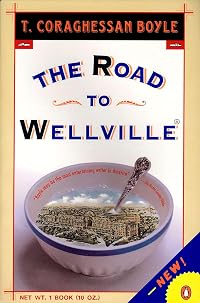
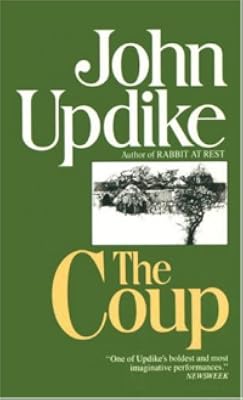

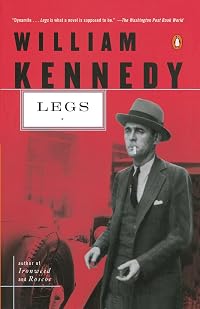
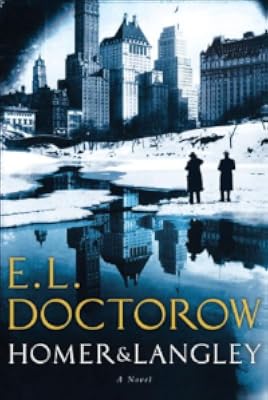




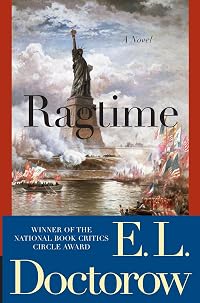
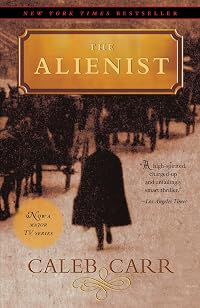
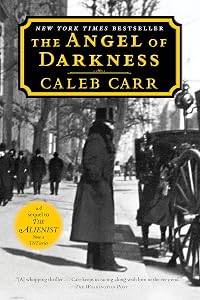


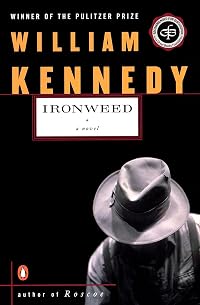
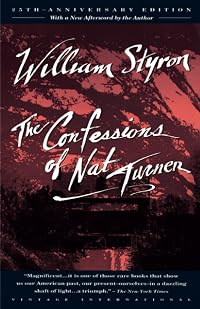





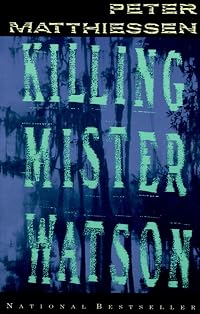




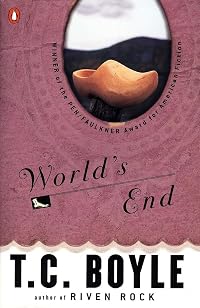

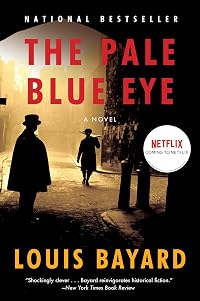





Member Recommendations
Member Reviews
To call Doctorow’s writing merely “atmospheric” is to do the man a disservice. He places his reader squarely in the center of a room and constructs an entire world, like a stage set, around him. Lighting is carefully considered – green light filtering through murky glass, flickering-orange candlelight in a decrepit mansion or the gray, wet darkness of a downpour at night. Doctorow encases the reader in words.
How to classify this novel…a mystery? a horror? literary suspense? steampunk or magical realism? It’s difficult to say. The Waterworks is told in the first person by McIlvaine, a newspaper editor not as far removed from Boss Tweed’s New York City as he’d have us believe. When his favorite freelancer appears at the show more newspaper office disheveled, wild-eyed and claiming to have seen his dead father in a public carriage, McIlvaine doesn’t think too much of it. But when that same freelancer goes missing McIlvaine is quick to realize that an exclusive story has fallen into his lap. He enlists the aid of the only honest cop left in the city, begins interviewing the missing man’s family and friends, and finds himself involved in a Penny dreadful mystery worthy of Wilkie Collins. But like Collins, Doctorow is always skirting the edge of the implausible and ridiculous – and so McIlvaine’s monotone accounting of events is here a boon.
The story is instilled with the feeling of hindsight. McIlvaine is telling his tale long after the events have taken place. He does a lot of second guessing and connecting of the dots. He struggles to understand what really happened – and to answer the more elusive question of why? He is first and foremost a newspaper man, and makes it clear from the start that at the time the events took place he was more interested in the story than the rescue of his missing freelancer. There’s a thread of guilt underlying his words. Did he do enough? Should he, could he, have done more? The Waterworks is a strange story being pieced together by a flawed man with an uncertain grasp of the facts.
For full review, go to: http://booksexy.wordpress.com/2010/03/17/the-waterworks-by-e-l-doctorow/ show less
How to classify this novel…a mystery? a horror? literary suspense? steampunk or magical realism? It’s difficult to say. The Waterworks is told in the first person by McIlvaine, a newspaper editor not as far removed from Boss Tweed’s New York City as he’d have us believe. When his favorite freelancer appears at the show more newspaper office disheveled, wild-eyed and claiming to have seen his dead father in a public carriage, McIlvaine doesn’t think too much of it. But when that same freelancer goes missing McIlvaine is quick to realize that an exclusive story has fallen into his lap. He enlists the aid of the only honest cop left in the city, begins interviewing the missing man’s family and friends, and finds himself involved in a Penny dreadful mystery worthy of Wilkie Collins. But like Collins, Doctorow is always skirting the edge of the implausible and ridiculous – and so McIlvaine’s monotone accounting of events is here a boon.
The story is instilled with the feeling of hindsight. McIlvaine is telling his tale long after the events have taken place. He does a lot of second guessing and connecting of the dots. He struggles to understand what really happened – and to answer the more elusive question of why? He is first and foremost a newspaper man, and makes it clear from the start that at the time the events took place he was more interested in the story than the rescue of his missing freelancer. There’s a thread of guilt underlying his words. Did he do enough? Should he, could he, have done more? The Waterworks is a strange story being pieced together by a flawed man with an uncertain grasp of the facts.
For full review, go to: http://booksexy.wordpress.com/2010/03/17/the-waterworks-by-e-l-doctorow/ show less
The best historical novels read as if they were written in the time they are being written about. It can’t be easy to create that illusion, while at the same time producing a story contemporary readers can appreciate, understand and identify with. E.L. Doctorow does all this nicely in his 1994 novel “The Waterworks.”
Doctorow’s narrator is McIlvaine, a now aged newspaperman remembering his best story, one he couldn’t dare tell in his newspaper back in the 1870s when it all occurred. Now, after so many years, it doesn’t matter whether anyone believes it or not.
Martin Pemberton, a freelance or what we would today call a freelancer, mentions one day that he has seen his father. No big deal, except for the fact that his father, show more Augustus Pemberton (a wealthy, disreputable businessman) is dead and buried. McIlvaine assumes his reporter is just mistaken, until Martin disappears and the newsman learns that when the old man’s grave is opened the body of a boy is found inside. To help find Martin, McIlvaine enlists the services of one of the few honest cops in New York City during the Boss Tweed era, Capt. Edmund Donne. When they find Martin he is being held captive in, of all places, an orphanage.
The shocking story Martin later tells involves a mad doctor of the Doctor Moreau school of medicine who convinces dying old men of great wealth to, in exchange for passing that wealth on to him, gain, if not immortality, at least extra years of blissful existence as guinea pigs in a great scientific experiment. How the doctor makes use of the orphans is another part of the horror.
Other writers might have taken Doctorow’s plot, doubled the length of the novel (Doctorow’s goes barely 250 pages), added more deaths and sex and shocks, and gotten a bestseller in the horror genre. Doctorow earned his bestseller with an understated literary novel in which most of the horror comes secondhand. For someone like me who doesn’t go for horror anyway, secondhand is more than good enough. show less
Doctorow’s narrator is McIlvaine, a now aged newspaperman remembering his best story, one he couldn’t dare tell in his newspaper back in the 1870s when it all occurred. Now, after so many years, it doesn’t matter whether anyone believes it or not.
Martin Pemberton, a freelance or what we would today call a freelancer, mentions one day that he has seen his father. No big deal, except for the fact that his father, show more Augustus Pemberton (a wealthy, disreputable businessman) is dead and buried. McIlvaine assumes his reporter is just mistaken, until Martin disappears and the newsman learns that when the old man’s grave is opened the body of a boy is found inside. To help find Martin, McIlvaine enlists the services of one of the few honest cops in New York City during the Boss Tweed era, Capt. Edmund Donne. When they find Martin he is being held captive in, of all places, an orphanage.
The shocking story Martin later tells involves a mad doctor of the Doctor Moreau school of medicine who convinces dying old men of great wealth to, in exchange for passing that wealth on to him, gain, if not immortality, at least extra years of blissful existence as guinea pigs in a great scientific experiment. How the doctor makes use of the orphans is another part of the horror.
Other writers might have taken Doctorow’s plot, doubled the length of the novel (Doctorow’s goes barely 250 pages), added more deaths and sex and shocks, and gotten a bestseller in the horror genre. Doctorow earned his bestseller with an understated literary novel in which most of the horror comes secondhand. For someone like me who doesn’t go for horror anyway, secondhand is more than good enough. show less
At first I thought the use of ellipses for dialogue pauses was just a quirk of the main character, but then it was used for most characters, and after awhile I felt like I was being told how to read every line, when to pause, when to read. The story seemed to be building to a reveal, and that reveal, while horrible, was made within an environment that left me not caring much about what happened. Given the title, I thought the waterworks might be more central to the plot and was looking forward to some historical technology, but it didn't even come in until page 209, and then just as a building. Great author but I didn't enjoy the book.
Book Circle Reads 21
Rating: 3.5* of five
The Book Description: “An elegant page-turner of nineteenth-century detective fiction.”
–The Washington Post Book World
One rainy morning in 1871 in lower Manhattan, Martin Pemberton, a freelance writer, sees in a passing stagecoach several elderly men, one of whom he recognizes as his supposedly dead and buried father. While trying to unravel the mystery, Pemberton disappears, sending McIlvaine, his employer, the editor of an evening paper, in pursuit of the truth behind his freelancer’s fate. Layer by layer, McIlvaine reveals a modern metropolis surging with primordial urges and sins, where the Tweed Ring operates the city for its own profit and a conspicuously self-satisfied nouveau-riche show more ignores the poverty and squalor that surrounds them. In E. L. Doctorow’s skilled hands, The Waterworks becomes, in the words of The New York Times, “a dark moral tale . . . an eloquently troubling evocation of our past.”
My Review: Mel-O-Drama!! The novel is set in 1871, and like any good sudser pits one lone man against a system of evildoers and manipulators. Adding to the pleasures are steampunky elements like technology out of its time, a villainous doctor aiming to create immortal men, and double-super-secret hidden bases that are in plain sight.
When I read this for my book circle, I was taken with the plot and somewhat flat on the wiritng. Doctorow makes wonderful sentences at his best, specifically thinking of Ragtime here, but this book fell short of the mark for me then. A quick flip-through to blow fifteen years of cobwebs off my memories didn’t so much refute my earlier contention as show me how very spoiled I was by the olden-days craft of editing. If I read a novel this well-made today, I’d yodel from the housetops and dance mazurkas of rapture down the middle of the parkway.
People who have read my reviews for a while might recall how UP I was over The Night Circus, and how much I loved it. So in that context, I say this: Had The Night Circus been edited as well as this far, far less extraordinary book (published in 1994) was, I think I would simply have melted into the fabric of the cosmos from sheer bliss.
Skills are being lost. It is NOT a good thing. I grow sadder with every mediocre book I read that someone somewhere with the talent and ability to edit even the ~meh~ into BETTER ~meh~ isn’t getting the chance, the training, the mentoring, to do so. show less
Rating: 3.5* of five
The Book Description: “An elegant page-turner of nineteenth-century detective fiction.”
–The Washington Post Book World
One rainy morning in 1871 in lower Manhattan, Martin Pemberton, a freelance writer, sees in a passing stagecoach several elderly men, one of whom he recognizes as his supposedly dead and buried father. While trying to unravel the mystery, Pemberton disappears, sending McIlvaine, his employer, the editor of an evening paper, in pursuit of the truth behind his freelancer’s fate. Layer by layer, McIlvaine reveals a modern metropolis surging with primordial urges and sins, where the Tweed Ring operates the city for its own profit and a conspicuously self-satisfied nouveau-riche show more ignores the poverty and squalor that surrounds them. In E. L. Doctorow’s skilled hands, The Waterworks becomes, in the words of The New York Times, “a dark moral tale . . . an eloquently troubling evocation of our past.”
My Review: Mel-O-Drama!! The novel is set in 1871, and like any good sudser pits one lone man against a system of evildoers and manipulators. Adding to the pleasures are steampunky elements like technology out of its time, a villainous doctor aiming to create immortal men, and double-super-secret hidden bases that are in plain sight.
When I read this for my book circle, I was taken with the plot and somewhat flat on the wiritng. Doctorow makes wonderful sentences at his best, specifically thinking of Ragtime here, but this book fell short of the mark for me then. A quick flip-through to blow fifteen years of cobwebs off my memories didn’t so much refute my earlier contention as show me how very spoiled I was by the olden-days craft of editing. If I read a novel this well-made today, I’d yodel from the housetops and dance mazurkas of rapture down the middle of the parkway.
People who have read my reviews for a while might recall how UP I was over The Night Circus, and how much I loved it. So in that context, I say this: Had The Night Circus been edited as well as this far, far less extraordinary book (published in 1994) was, I think I would simply have melted into the fabric of the cosmos from sheer bliss.
Skills are being lost. It is NOT a good thing. I grow sadder with every mediocre book I read that someone somewhere with the talent and ability to edit even the ~meh~ into BETTER ~meh~ isn’t getting the chance, the training, the mentoring, to do so. show less
Great evocation of NY during the Tweed era, coupled with an odd fantasy of scientific callousness, longing for eternal life, cruelty, and an old man's reminiscences.
I've very much enjoyed the two other novels of historical fiction by Doctorow that I've read ([The March] and [Ragtime]), but this one was a disappointment. It was very slow to start, and the affected writing style, including.... way too many... ellipses was ... distracting. The plot is interesting, and the portrait of New York City in the post-Civil War period was vivid, but I mostly felt bored every time I picked it up.
There's something magical about Doctorow's writing. The man truly seems to have been transplanted from Victorian New York City into the present just to spin his tales. This one is typically captivating, a really dark story of the power of wealth to forestall death . . . but with a terrible pricetag.
Members
- Recently Added By
Lists

living room bookshelf
150 works; 1 member
Author Information

57+ Works 25,158 Members
E. L. (Edgar Lawrence) Doctorow was born on January 6, 1931, in the Bronx, New York. He received an A.B. in philosophy in 1952 from Kenyon College and did graduate work at Columbia University. He served in the U.S. Army Signal Corps from 1953-1955. He began his career as a script reader for CBS Television and Columbia Pictures and as a senior show more editor for the New American Library. He was editor-in-chief for Dial Press from 1964 to 1969, where he also served as vice president and publisher in his last year on staff. It was at this time that he decided to write full time. He wrote novels, short stories, essays, and a play. His debut novel, Welcome to Hard Times, was published in 1960 and was adapted into a film in 1967. His other works include, Loon Lake, The Waterworks, The March, Homer and Langley, and Andrew's Brain. He won the National Book Award for Fiction in 1986 for World's Fair and the National Book Critics Circle Award for fiction in 1976 for Ragtime, which was adapted into a film in 1981 and a Broadway musical in 1998. Billy Bathgate received the PEN/Faulkner Award, the National Book Critics Circle Award, and the William Dean Howells Medal in 1990. The Book of Daniel and Billy Bathgate were also adapted into films. He received the 2013 Medal for Distinguished Contribution to American Letters for his outstanding achievement in fiction writing. He died of complications from lung cancer on July 21, 2015 at the age of 84. (Bowker Author Biography) show less
Some Editions
Awards and Honors
Awards
Distinctions
Series
Belongs to Publisher Series
Keltainen kirjasto (281)
Work Relationships
Is contained in
Common Knowledge
- Canonical title
- The Waterworks
- Original title
- The Waterworks
- Original publication date
- 1994; 1995 (Dutch edition, Baarn, Anthos, with title: De Watervang) (Dutch edition, Baarn, Anthos, with title: De Watervang)
- People/Characters
- Martin Pemberton
- Important places
- New York, New York, USA
- Dedication
- For I. Doctorow and Philip Blair Rice
- First words
- People wouldn't take what Martin Pemberton said as literal truth, he was much too melodramatic or too tormented to speak plainly.
- Last words
- (Click to show. Warning: May contain spoilers.)And let me leave you with that illusion... though in reality we would soon be driving ourselves up Broadway in the new Year of Our Lord, 1872.
- Original language
- English
Classifications
- Genres
- Fiction and Literature, General Fiction, Historical Fiction, Mystery
- DDC/MDS
- 813.54 — Literature & rhetoric American literature in English American fiction in English 1900-1999 1945-1999
- LCC
- PS3554 .O3 .W3 — Language and Literature American literature American literature Individual authors 1961-
- BISAC
Statistics
- Members
- 1,529
- Popularity
- 15,067
- Reviews
- 26
- Rating
- (3.52)
- Languages
- 13 — Czech, Danish, Dutch, English, Finnish, French, German, Italian, Norwegian (Bokmål), Portuguese, Russian, Spanish, Swedish
- Media
- Paper, Audiobook, Ebook
- ISBNs
- 37
- ASINs
- 19