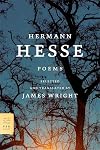
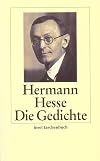
Poems
by Hermann Hesse, James Wright (Translator)
On This Page
Description
31 lyric poems with the single theme of homesickness.Tags
Recommendations

























Member Reviews
James Wright has done the world a service in translating this slight but potent volume of Hesse's verse. The dreamy tone and fantasy of Hesse's poems are well-reserved, and his lyricism shines brightly as ever through the translation. While some will find these poems to be simplistic, even juvenile, I think that seeming naivety and emotional honesty is exactly what gives them power. Where his novels explore the heights and depths of the mind and spirit, his poetry is pure, heartfelt and impulsive. My only disappointment is the meager size of the offering. I've no doubt that Wright chose well when selecting which poems to translate, but it would be nice to see a new talent take the baton and translate ALL of Hesse's poetry for an English show more audience.
"The Lake has died down,
The reed, black in its sleep,
Whispers in a dream.
Expanding immensely into the countryside,
The mountains look, outspread.
They are not resting.
They breathe deeply, and hold themselves,
Pressed tightly to one another.
Deeply breathing,
Laden with mute forces,
Caught in a wasting passion." show less
"The Lake has died down,
The reed, black in its sleep,
Whispers in a dream.
Expanding immensely into the countryside,
The mountains look, outspread.
They are not resting.
They breathe deeply, and hold themselves,
Pressed tightly to one another.
Deeply breathing,
Laden with mute forces,
Caught in a wasting passion." show less
These are not the best poems you will ever read. They are repetitive, juvenile, and excessively obsessed with flowers and death. I find such vulnerability appealing, but even I had to chuckle a bit at the third or fourth nature allegory to the impermanence of a man's life. Hesse is a long-time favorite of mine, and I bought this book mainly to help complete my collection of his works, but this book is way down on the bottom of my list of Hesse favorites.
Starting with the disclaimer that I have absolutely no interest in dissecting poems with respect to rhyme, structure, symbolism, whether the author was suffering from a headache when he/she wrote it, and what-not. A poem either speaks to me (on whatever level) or it doesn't.
With Hesse, I was curious to see how his poetry compared to his novels and how his poetry reflected the themes of his novels, because to my mind Hesse's novels are works of beauty but they are also very complex. I've been trying to write a review of Steppenwolf for several months now and just don't know where to start...
Anyway, the great thing about this collection is that it is a complete collection of all of the poems that Hesse wanted to publish. I have not show more counted but there seem to be 700 of them and they are in chronological order. The order helps to relate the poems to different events in Hesse's life (if you want to do that) and to his novels.
What is stark with Hesse is there is not just the expected change in the themes and complexity of his work if you compare the early works with the later ones, but there is a marked differentiation of his approach to dealing with themes of darkness and isolation which interchange with other themes. The poems that tend to be on the "existential" side are the ones that draw me in most, simply because it seems Hesse doesn't need to try to compose them, they just seem to flow. It is this seemingly effortless expression of doubt, anger, frustration, anxiety and the simplicity in which he expresses them that are captivating.
By comparison, his love poetry (especially the early ones) kinda fail to persuade me that they were anything but writing exercises.
3.5* show less
With Hesse, I was curious to see how his poetry compared to his novels and how his poetry reflected the themes of his novels, because to my mind Hesse's novels are works of beauty but they are also very complex. I've been trying to write a review of Steppenwolf for several months now and just don't know where to start...
Anyway, the great thing about this collection is that it is a complete collection of all of the poems that Hesse wanted to publish. I have not show more counted but there seem to be 700 of them and they are in chronological order. The order helps to relate the poems to different events in Hesse's life (if you want to do that) and to his novels.
What is stark with Hesse is there is not just the expected change in the themes and complexity of his work if you compare the early works with the later ones, but there is a marked differentiation of his approach to dealing with themes of darkness and isolation which interchange with other themes. The poems that tend to be on the "existential" side are the ones that draw me in most, simply because it seems Hesse doesn't need to try to compose them, they just seem to flow. It is this seemingly effortless expression of doubt, anger, frustration, anxiety and the simplicity in which he expresses them that are captivating.
By comparison, his love poetry (especially the early ones) kinda fail to persuade me that they were anything but writing exercises.
3.5* show less
I think this has been on my list since I was a broke teen scanning the very-used-book shelves for deals from authors I loved. Interesting to finally get to it. I don't know that I'd pick this up just as a book of poetry, but I enjoyed the added insight into Hesse.
2 Bände
May 18, 2020German
Ratings
Members
- Recently Added By
Author Information

1,013+ Works 93,626 Members
Hermann Hesse (July 2, 1877 -- August 9, 1962) was a German poet, novelist, essayist and painter. His best-known works included Steppenwolf, Siddhartha, and The Glass Bead Game, each of which explores an individual's search for authenticity, self-knowledge and spirituality. In 1946, he received the Nobel Prize in Literature. Hess publicly show more announced his views on the savagery of World War I, and was considered a traitor. He moved to Switzerland where he eventually became a naturalized citizen. He warned of the advent of World War II, predicting that cultureless efficiency would destroy the modern world. His theme was usually the conflict between the elements of a person's dual nature and the problem of spiritual loneliness. His first novel, Peter Camenzind, was published in 1904. His masterpiece, Death and the Lover (1930), contrasts a scholarly abbot and his beloved pupil, who leaves the monastery for the adventurous world. Steppenwolf (1927), a European bestseller, was published when defeated Germany had begun to plan for another war. It is the story of Haller, who recognizes in himself the blend of the human and wolfish traits of the completely sterile scholarly project. During the 1960s Hesse became a favorite writer of the counter culture, especially in the United States, though his critical reputation has never equaled his popularity. Hermann Hesse died in 1962. (Bowker Author Biography) show less

Series
Belongs to Publisher Series
Common Knowledge
- Original publication date
- 1970 (First Edition) (First Edition)
- Original language
- German
Classifications
Statistics
- Members
- 571
- Popularity
- 51,555
- Reviews
- 6
- Rating
- (3.59)
- Languages
- English, German, Italian, Swedish
- Media
- Paper, Ebook
- ISBNs
- 17
- ASINs
- 20