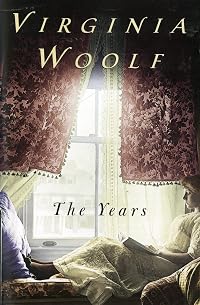
The Years
by Virginia Woolf
On This Page
Description
The principal theme of this ambitious book is Time, threading together three generations of an upper-class English family, the Pargiters. The characters come and go, meet, talk, think, dream, grow older, in a continuous ritual of life that eludes meaning.Tags
Recommendations
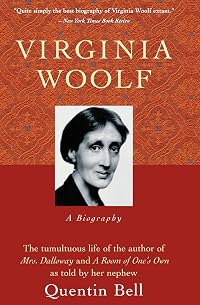
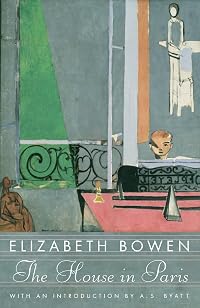
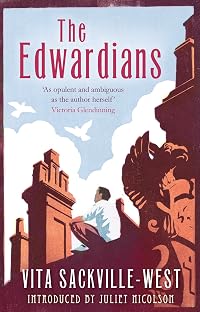

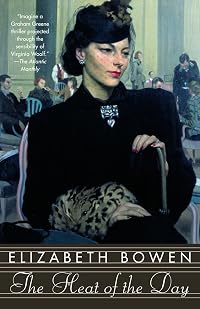








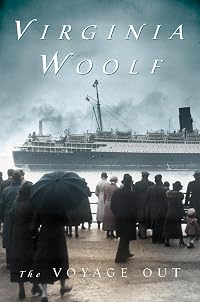
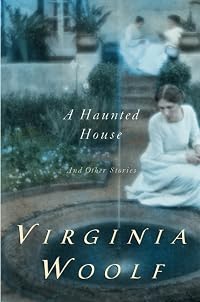

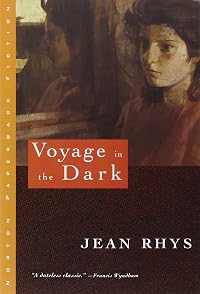
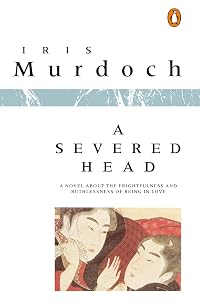


Member Recommendations

_eskarina Similar method of writing: capturing and re-writing "History" on the basis of detailed, fragmentary scenes from everyday life.
Member Reviews
De jaren zijn momentopnames, te vergelijken met herinneringen aan ons eigen leven: er zijn jaren die eruit springen, waarvan we ons hele periodes voor de geest kunnen halen, als bergtoppen in de verte. Daartussen liggen de mistige dalen van de jaren die vergeten zijn.In een serie schetsen, van 1880 tot de jaren dertig, verweeft Virginia Woolf de geschiedenis van de familie Pargiter met gebeurtenissen uit de wereldgeschiedenis: de Boerenoorlog, de Eerste Wereldoorlog, de suffragette-beweging, de Ierse kwestie, India en het kolonialisme, de benzinemotor die het paard verdrong, elektrisch licht dat de gaslamp verdrong, de avant-garde, de nieuwe atoomtheorie. De jaren is een prachtig geschreven reeks portretten van een familie, tegen de show more achtergrond van een samenleving die je voor je ogen ziet veranderen.Bij Woolf is de geschiedenis geen continuüm. Ze vervlecht het publieke met het persoonlijke en zoekt naar de essentie van geschiedenis, met de beleefde tijd en de herinnering als rode draad. net als bij Tolstoi en Proust gaat het niet alleen over de lotgevallen van een familie, maar ook over geschiedenis en herinnering. show less
I was greatly surprised at how much I enjoyed this novel. What impressed me was Woolf's understanding of how poorly equipped we humans are at discerning our condition. Her characters, well off though they mostly are, appear overcome with reticence and sheer inability to express how they see themselves in the world.
As the two families involved live and grow through the years 1880 to the mid Nineteen Thirties, their expanding self knowledge reveals their own and their relatives altered perceptions of themselves, until all that remains finally are the vagaries of specific memories that have survived.
The physical atmosphere, weather, London, house interiors is perfectly drawn with the most wonderful descriptions of morning and evening show more skies, the energy in the streets and the contemporary dress fashions.
A great book; I'm glad I read it because it seems a serious attempt at examination of how mysterious life truly is. show less
As the two families involved live and grow through the years 1880 to the mid Nineteen Thirties, their expanding self knowledge reveals their own and their relatives altered perceptions of themselves, until all that remains finally are the vagaries of specific memories that have survived.
The physical atmosphere, weather, London, house interiors is perfectly drawn with the most wonderful descriptions of morning and evening show more skies, the energy in the streets and the contemporary dress fashions.
A great book; I'm glad I read it because it seems a serious attempt at examination of how mysterious life truly is. show less
I will not call the early going a slog, but the novel did fail to engage me until page 140 or so. After that, all was well. The novel took off as a proper Virginia Woolf novel should. By the end of the long party scene which closes the book I was familiarly dazzled. I have to admit that I find the content almost unsummarizable. There's no plot to speak of. It's the technique that astonishes. Woolf's concern is not the quotidian, and often not the particular, but the structural. There are any number of exchanges between characters, sometimes arguments, in which the reader has no idea of the issues involved. Woolf deliberately takes the emphasis off the particular here and this somehow pulls the characterizations into the foreground more show more strongly. I'm not sure how she does it. It's impressive. She uses the technique throughout. As for the timeline, it seems almost capricious. Here are the years which form the chapter heads: 1880, 1891, 1907, 1908, 1910, 1911, 1913, 1914, 1917, 1918 and Present Day. As with a bildungsroman, Woolf's interest is in the developmental arc over time. The overwhelming feature of the novel is the sense of the result of experience. But unlike the bildungsroman there is no movement toward a set goal, life being thinly plotted. Neither is there a single central character but rather an ensemble effect. Much takes place offstage: births and deaths and weddings and childbirth. Woolf's concern is with the interstitial moments, when the effect of time, certainly Proustian time though without the flashbacks, has its collective impact. This novel is certainly a candidate for rereading, so enigmatic are its means of advancing the narrative. Highly recommended. show less
A glorious opening paragraph sets the tone for Woolf's descriptions in this long survey of London society 1887-1937, but the narrative flags in the middle years. The close, though, set in an all-night party in the miasma of the late 1930s, is absolutely brilliant, a return to the impressionist modernism of Jacob's Room with the added insight of a great novelist's insights.
I hadn't read any woolf in a while, and I forgot how human-but-not-human she makes me feel. when I'm reading her work, it always seems like I've stepped out of myself to just watch, but at the same time, all the little things that connect me to other people are intensified.
And with that I've completed all of Virginia Woolf's novels. My next Woolf project will be to read the massive [[Hermione Lee]] biography and reread all or most of the novels. I also want to delve into some of her essays and short stories. I've only read [A Room of One's Own] of those.
So what about [The Years]? Well, I recognized Woolf's impeccable writing style and her introspective character writing, but I didn't love this one. [The Years] follows two branches of the Pargiter family, beginning in 1880. The first part of the book is a series of vignettes from 1880-1918 where one or two characters are developed (almost as in a short story). Then the final section is in the "present day" (probably some point in the 1930s) where many of show more the family members come together at a party.
The book is smart and sophisticated and has a couple of memorable characters, but I didn't find the connection that I have had with some of Woolf's novels and didn't find the message as dramatic as I hope for in her writing. show less
So what about [The Years]? Well, I recognized Woolf's impeccable writing style and her introspective character writing, but I didn't love this one. [The Years] follows two branches of the Pargiter family, beginning in 1880. The first part of the book is a series of vignettes from 1880-1918 where one or two characters are developed (almost as in a short story). Then the final section is in the "present day" (probably some point in the 1930s) where many of show more the family members come together at a party.
The book is smart and sophisticated and has a couple of memorable characters, but I didn't find the connection that I have had with some of Woolf's novels and didn't find the message as dramatic as I hope for in her writing. show less
Virginia Woolf is always good at showing a particular moment, through the patchy impressions it makes inside a character's head. In The Years she shows how the steady accretion of particular moments adds up to make history - personal history, family history - and how the history of the wider world influences that and is, in very small, barely noticeable ways, influenced by individuals. It follows members of the Pargiter family from 1880 through to the early 1930s, with the attitudes one might expect. It's a complicated, layered, book, and I'm sure I missed loads of references, both internal and external. Particularly good if you know London well, I think.
Members
- Recently Added By
Lists

1001 Books You Must Read Before You Die
1,448 works; 1,133 members

20th Century Literature
1,161 works; 55 members

Stream of Consciousness
87 works; 8 members

Western World's Greatest Books - Project Gutenberg
295 works; 15 members

Experimental Literature
141 works; 19 members

Woolf ranked
9 works; 3 members

1930s
262 works; 5 members

Schwob Nederland
207 works; 2 members

Books referenced in A Very Great Profession: The Woman's Novel 1914-39
199 works; 6 members

Publisher's Weekly Bestsellers Part I - 1895-1939
399 works; 8 members
Author Information

652+ Works 119,146 Members
Virginia Woolf was born in London, England on January 25, 1882. She was the daughter of the prominent literary critic Leslie Stephen. Her early education was obtained at home through her parents and governesses. After death of her father in 1904, her family moved to Bloomsbury, where they formed the nucleus of the Bloomsbury Group, a circle of show more philosophers, writers, and artists. During her lifetime, she wrote both fiction and non-fiction works. Her novels included Jacob's Room, Mrs. Dalloway, To the Lighthouse, Orlando, and Between the Acts. Her non-fiction books included The Common Reader, A Room of One's Own, Three Guineas, The Captain's Death Bed and Other Essays, and The Death of the Moth and Other Essays. Having had periods of depression throughout her life and fearing a final mental breakdown from which she might not recover, Woolf drowned herself on March 28, 1941 at the age of 59. Her husband published part of her farewell letter to deny that she had taken her life because she could not face the terrible times of war. (Bowker Author Biography) show less
Some Editions
Awards and Honors
Awards
Distinctions
Series
Belongs to Publisher Series
Gallimard, Folio (4651)
Work Relationships
Is contained in
Is expanded in
Common Knowledge
- Canonical title*
- Gli anni
- Original title
- The Years
- Original publication date
- 1937
- People/Characters
- Colonel Abel Pargiter; Mira; Lulu; Eleanor Pargiter
- Important places
- Oxford, Oxfordshire, England, UK; London, England, UK
- Important events
- World War I
- Related movies*
- The Hours?
- First words
- It was an uncertain spring.
- Last words
- (Click to show. Warning: May contain spoilers.)The sun had risen, and the sky above the houses wore an air of extraordinary beauty, simplicity and peace.
- Original language
- English
*Some information comes from Common Knowledge in other languages. Click "Edit" for more information.
Classifications
Statistics
- Members
- 1,810
- Popularity
- 12,050
- Reviews
- 31
- Rating
- (3.77)
- Languages
- 15 — Catalan, Czech, Dutch, English, Finnish, French, German, Greek, Italian, Polish, Portuguese, Romanian, Slovenian, Spanish, Swedish
- Media
- Paper, Audiobook, Ebook
- ISBNs
- 84
- ASINs
- 50