On This Page
Description
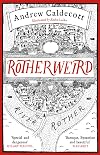
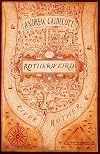
The town of Rotherweird stands alone, there are no guidebooks, despite the fascinating and diverse architectural styles cramming the narrow streets, the avant garde science and offbeat customs. Cast adrift from the rest of England by Elizabeth I, Rotherweird's independence is subject to one disturbing condition: nobody, but nobody, studies the town or its history. For beneath the enchanting surface lurks a secret so dark that it must never be rediscovered, still less reused. But secrets have show more a way of leaking out. Two inquisitive outsiders have arrived: Jonah Oblong, to teach modern history at Rotherweird School (nothing local and nothing before 1800), and the sinister billionaire Sir Veronal Slickstone, who has somehow got permission to renovate the town's long-derelict Manor House. show lessTags
Recommendations











Member Recommendations
Member Reviews
A deeply English bit of fantasy that draws as much from The Wind In The Willows as from Gormenghast, with its band of decent sort heroes and the eccentric architecture of its secluded and insular namesake town, not as gothic as the architecture of its plot, which initially stretches back to Elizabethan times, and later proves to have roots in Roman times, and hints at deeper still. Twelve gifted children are born, though how it is they came to be identified as such remains obscure. Have being presuably spawned by God or the Devil, they are sent to a distant valley to be raised and educated, but the worm is already in the apple.
Modern Rotherweird is an independant city-state that supplies the outside world with technologies both show more delightful and horrifying, while obeying strict laws against any study of history. When the consummately corrupt mayor sells the centuries-deserted manor in the heart fo the town to a wealthy outsider, he isn't quite prepared for what follows, but a disparate group of men and women gradually gather to oppose him. Lots of mysteries and incidents that swing between the tragic and the comic. There's a murder, though every knows whodunnit, and a Narnian otherworld, albeit a Darwinian nightmare. Mad science and magic jostle with boat races and school pageants, and everyone knows the bad guy is really bad when he shuts down the local. A long, enjoyable, rolling read. show less
Modern Rotherweird is an independant city-state that supplies the outside world with technologies both show more delightful and horrifying, while obeying strict laws against any study of history. When the consummately corrupt mayor sells the centuries-deserted manor in the heart fo the town to a wealthy outsider, he isn't quite prepared for what follows, but a disparate group of men and women gradually gather to oppose him. Lots of mysteries and incidents that swing between the tragic and the comic. There's a murder, though every knows whodunnit, and a Narnian otherworld, albeit a Darwinian nightmare. Mad science and magic jostle with boat races and school pageants, and everyone knows the bad guy is really bad when he shuts down the local. A long, enjoyable, rolling read. show less
During Mary Tudor's reign ten child prodigies come to the attention of the authorities and are removed to the Tower of London. Because the Queen believes these children to be the spawn of the Devil, the Constable of the Tower removes them to Rotherweird, to the manor house of one of his old friends, before they can be executed. But over the years terrible events occur in Rotherweird, and so Elizabeth I casts the town adrift from the realm and declares it a self-governing entity, forbidden to look into its own past.
In the present time two outsiders come to Rotherweird, for very different reasons, and though they have very few things in common, each will act as catalyst in a chain of events that will bring to light long-forgotten show more secrets.
From the ratings I gather that this can be considered a Marmite book, though I loved it and raced through it in a matter of days. This doesn't mean that it isn't without flaws, but the book seen as a whole more than makes up for it. Andrew Caldecott, as the omniscient narrator, describes the unfolding of events with a wry and gentle humour and often beautiful prose, despite the horrors one encounters; the characters (a large cast, thankfully with a list of principal characters included in the prelims) are carefully drawn and stand out as individuals, and one can read the author's good-natured mocking between the lines.
The town of Rotherweird comes across as a character in its own right, and the plot is an inspired puzzle: the past illuminates events in the present, while the present sheds light on events in the past – a circle, which is, probably not coincidentally, one of the key themes in the novel. Towards the end the reader discovers that Andrew Caldecott has added a whole additional layer to the plot, which only adds to the mystery.
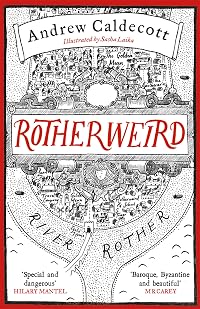
Sasha Laika's illustrations are inspired and help to turn reading Rotherweird into an experience.
The book ends on a semi-cliffhanger and prepares the reader for the events in Wyntertide, the sequel; I for one can't wait to travel to Rotherweird again. show less
In the present time two outsiders come to Rotherweird, for very different reasons, and though they have very few things in common, each will act as catalyst in a chain of events that will bring to light long-forgotten show more secrets.
From the ratings I gather that this can be considered a Marmite book, though I loved it and raced through it in a matter of days. This doesn't mean that it isn't without flaws, but the book seen as a whole more than makes up for it. Andrew Caldecott, as the omniscient narrator, describes the unfolding of events with a wry and gentle humour and often beautiful prose, despite the horrors one encounters; the characters (a large cast, thankfully with a list of principal characters included in the prelims) are carefully drawn and stand out as individuals, and one can read the author's good-natured mocking between the lines.
The town of Rotherweird comes across as a character in its own right, and the plot is an inspired puzzle: the past illuminates events in the present, while the present sheds light on events in the past – a circle, which is, probably not coincidentally, one of the key themes in the novel. Towards the end the reader discovers that Andrew Caldecott has added a whole additional layer to the plot, which only adds to the mystery.
Sasha Laika's illustrations are inspired and help to turn reading Rotherweird into an experience.
The book ends on a semi-cliffhanger and prepares the reader for the events in Wyntertide, the sequel; I for one can't wait to travel to Rotherweird again. show less
This is Rotherweird: an autonomous enclave of England where cutting-edge technology rubs shoulders with rural magic; a region inhabited by geniuses who somehow cling on to a neo-Elizabethan way of life. It does not take long to realise that Rotherweird is, well... rather weird...
Jonah Oblong, an "outsider from wider England" has just been employed as history teacher at Rotherweird School. He soon learns that the residents of Rotherweird town and the surrounding countryside are barred from enquiring into the region's past and, particularly, from researching the dark reasons for which Elizabeth I granted Rotherweird its special status. Oblong also discovers that his predecessor Robert Flask disappeared after showing an unhealthy interest show more in this forbidden subject. Desperate times, however, require desperate measures. "Outsider" Sir Veronal Slickstone has strangely been invited to purchase the town Manor, and his arrival brings with it the threat of ancient evil. Will an ill-assorted bunch of anti-heroes manage keep these dangers at bay?
I often read supernatural fiction although I generally avoid fantasy. This might soon change thanks to this highly entertaining novel, the first of a projected trilogy. The plot is dense but gripping, occasionally threatening to burst at the seams (like the Town's tangled buildings), but somehow managing to remain on track. What impressed me most (apart from the diverse case of eccentric characters) is the way in which various genres are seamlessly combined. Nominally a "fantasy novel", it also involves elements of crime/mystery, steampunk (courtesy of the curious inventions of Boris and Bert Polk), historical fiction/alternative history and various shades of horror (including body horror in the shape of a man-eating spider, eco-Gothic and folk-horror). There is also an underlying streak of good-natured English humour of the Wodehouse type, featuring witty wordplay and inept bachelors besotted with strong-willed women. On paper it shouldn't work. Somehow, it does.
The text is complemented by imaginative illustrations by Aleksandra Laika, which help to put the reader in the mood of this strange book.
Allow me three questions...
- It turns out that author Andrew Caldecott is a high-flying QC. When does he manage to write novels this complex? Any time-management tips welcome.
- when is the sequel out? I'm already looking forward to it.
- And the movie?
I received this book as a free eBook ARC via NetGalley in return for an honest review show less
Jonah Oblong, an "outsider from wider England" has just been employed as history teacher at Rotherweird School. He soon learns that the residents of Rotherweird town and the surrounding countryside are barred from enquiring into the region's past and, particularly, from researching the dark reasons for which Elizabeth I granted Rotherweird its special status. Oblong also discovers that his predecessor Robert Flask disappeared after showing an unhealthy interest show more in this forbidden subject. Desperate times, however, require desperate measures. "Outsider" Sir Veronal Slickstone has strangely been invited to purchase the town Manor, and his arrival brings with it the threat of ancient evil. Will an ill-assorted bunch of anti-heroes manage keep these dangers at bay?
I often read supernatural fiction although I generally avoid fantasy. This might soon change thanks to this highly entertaining novel, the first of a projected trilogy. The plot is dense but gripping, occasionally threatening to burst at the seams (like the Town's tangled buildings), but somehow managing to remain on track. What impressed me most (apart from the diverse case of eccentric characters) is the way in which various genres are seamlessly combined. Nominally a "fantasy novel", it also involves elements of crime/mystery, steampunk (courtesy of the curious inventions of Boris and Bert Polk), historical fiction/alternative history and various shades of horror (including body horror in the shape of a man-eating spider, eco-Gothic and folk-horror). There is also an underlying streak of good-natured English humour of the Wodehouse type, featuring witty wordplay and inept bachelors besotted with strong-willed women. On paper it shouldn't work. Somehow, it does.
The text is complemented by imaginative illustrations by Aleksandra Laika, which help to put the reader in the mood of this strange book.
Allow me three questions...
- It turns out that author Andrew Caldecott is a high-flying QC. When does he manage to write novels this complex? Any time-management tips welcome.
- when is the sequel out? I'm already looking forward to it.
- And the movie?
I received this book as a free eBook ARC via NetGalley in return for an honest review show less
This is Rotherweird: an autonomous enclave of England where cutting-edge technology rubs shoulders with rural magic; a region inhabited by geniuses who somehow cling on to a neo-Elizabethan way of life. It does not take long to realise that Rotherweird is, well... rather weird...
Jonah Oblong, an "outsider from wider England" has just been employed as history teacher at Rotherweird School. He soon learns that the residents of Rotherweird town and the surrounding countryside are barred from enquiring into the region's past and, particularly, from researching the dark reasons for which Elizabeth I granted Rotherweird its special status. Oblong also discovers that his predecessor Robert Flask disappeared after showing an unhealthy interest show more in this forbidden subject. Desperate times, however, require desperate measures. "Outsider" Sir Veronal Slickstone has strangely been invited to purchase the town Manor, and his arrival brings with it the threat of ancient evil. Will an ill-assorted bunch of anti-heroes manage keep these dangers at bay?
I often read supernatural fiction although I generally avoid fantasy. This might soon change thanks to this highly entertaining novel, the first of a projected trilogy. The plot is dense but gripping, occasionally threatening to burst at the seams (like the Town's tangled buildings), but somehow managing to remain on track. What impressed me most (apart from the diverse case of eccentric characters) is the way in which various genres are seamlessly combined. Nominally a "fantasy novel", it also involves elements of crime/mystery, steampunk (courtesy of the curious inventions of Boris and Bert Polk), historical fiction/alternative history and various shades of horror (including body horror in the shape of a man-eating spider, eco-Gothic and folk-horror). There is also an underlying streak of good-natured English humour of the Wodehouse type, featuring witty wordplay and inept bachelors besotted with strong-willed women. On paper it shouldn't work. Somehow, it does.
The text is complemented by imaginative illustrations by Aleksandra Laika, which help to put the reader in the mood of this strange book.
Allow me three questions...
- It turns out that author Andrew Caldecott is a high-flying QC. When does he manage to write novels this complex? Any time-management tips welcome.
- when is the sequel out? I'm already looking forward to it.
- And the movie?
I received this book as a free eBook ARC via NetGalley in return for an honest review show less
Jonah Oblong, an "outsider from wider England" has just been employed as history teacher at Rotherweird School. He soon learns that the residents of Rotherweird town and the surrounding countryside are barred from enquiring into the region's past and, particularly, from researching the dark reasons for which Elizabeth I granted Rotherweird its special status. Oblong also discovers that his predecessor Robert Flask disappeared after showing an unhealthy interest show more in this forbidden subject. Desperate times, however, require desperate measures. "Outsider" Sir Veronal Slickstone has strangely been invited to purchase the town Manor, and his arrival brings with it the threat of ancient evil. Will an ill-assorted bunch of anti-heroes manage keep these dangers at bay?
I often read supernatural fiction although I generally avoid fantasy. This might soon change thanks to this highly entertaining novel, the first of a projected trilogy. The plot is dense but gripping, occasionally threatening to burst at the seams (like the Town's tangled buildings), but somehow managing to remain on track. What impressed me most (apart from the diverse case of eccentric characters) is the way in which various genres are seamlessly combined. Nominally a "fantasy novel", it also involves elements of crime/mystery, steampunk (courtesy of the curious inventions of Boris and Bert Polk), historical fiction/alternative history and various shades of horror (including body horror in the shape of a man-eating spider, eco-Gothic and folk-horror). There is also an underlying streak of good-natured English humour of the Wodehouse type, featuring witty wordplay and inept bachelors besotted with strong-willed women. On paper it shouldn't work. Somehow, it does.
The text is complemented by imaginative illustrations by Aleksandra Laika, which help to put the reader in the mood of this strange book.
Allow me three questions...
- It turns out that author Andrew Caldecott is a high-flying QC. When does he manage to write novels this complex? Any time-management tips welcome.
- when is the sequel out? I'm already looking forward to it.
- And the movie?
I received this book as a free eBook ARC via NetGalley in return for an honest review show less
This is Rotherweird: an autonomous enclave of England where cutting-edge technology rubs shoulders with rural magic; a region inhabited by geniuses who somehow cling on to a neo-Elizabethan way of life. It does not take long to realise that Rotherweird is, well... rather weird...
Jonah Oblong, an "outsider from wider England" has just been employed as history teacher at Rotherweird School. He soon learns that the residents of Rotherweird town and the surrounding countryside are barred from enquiring into the region's past and, particularly, from researching the dark reasons for which Elizabeth I granted Rotherweird its special status. Oblong also discovers that his predecessor Robert Flask disappeared after showing an unhealthy interest show more in this forbidden subject. Desperate times, however, require desperate measures. "Outsider" Sir Veronal Slickstone has strangely been invited to purchase the town Manor, and his arrival brings with it the threat of ancient evil. Will an ill-assorted bunch of anti-heroes manage keep these dangers at bay?
I often read supernatural fiction although I generally avoid fantasy. This might soon change thanks to this highly entertaining novel, the first of a projected trilogy. The plot is dense but gripping, occasionally threatening to burst at the seams (like the Town's tangled buildings), but somehow managing to remain on track. What impressed me most (apart from the diverse case of eccentric characters) is the way in which various genres are seamlessly combined. Nominally a "fantasy novel", it also involves elements of crime/mystery, steampunk (courtesy of the curious inventions of Boris and Bert Polk), historical fiction/alternative history and various shades of horror (including body horror in the shape of a man-eating spider, eco-Gothic and folk-horror). There is also an underlying streak of good-natured English humour of the Wodehouse type, featuring witty wordplay and inept bachelors besotted with strong-willed women. On paper it shouldn't work. Somehow, it does.
The text is complemented by imaginative illustrations by Aleksandra Laika, which help to put the reader in the mood of this strange book.
Allow me three questions...
- It turns out that author Andrew Caldecott is a high-flying QC. When does he manage to write novels this complex? Any time-management tips welcome.
- when is the sequel out? I'm already looking forward to it.
- And the movie?
I received this book as a free eBook ARC via NetGalley in return for an honest review show less
Jonah Oblong, an "outsider from wider England" has just been employed as history teacher at Rotherweird School. He soon learns that the residents of Rotherweird town and the surrounding countryside are barred from enquiring into the region's past and, particularly, from researching the dark reasons for which Elizabeth I granted Rotherweird its special status. Oblong also discovers that his predecessor Robert Flask disappeared after showing an unhealthy interest show more in this forbidden subject. Desperate times, however, require desperate measures. "Outsider" Sir Veronal Slickstone has strangely been invited to purchase the town Manor, and his arrival brings with it the threat of ancient evil. Will an ill-assorted bunch of anti-heroes manage keep these dangers at bay?
I often read supernatural fiction although I generally avoid fantasy. This might soon change thanks to this highly entertaining novel, the first of a projected trilogy. The plot is dense but gripping, occasionally threatening to burst at the seams (like the Town's tangled buildings), but somehow managing to remain on track. What impressed me most (apart from the diverse case of eccentric characters) is the way in which various genres are seamlessly combined. Nominally a "fantasy novel", it also involves elements of crime/mystery, steampunk (courtesy of the curious inventions of Boris and Bert Polk), historical fiction/alternative history and various shades of horror (including body horror in the shape of a man-eating spider, eco-Gothic and folk-horror). There is also an underlying streak of good-natured English humour of the Wodehouse type, featuring witty wordplay and inept bachelors besotted with strong-willed women. On paper it shouldn't work. Somehow, it does.
The text is complemented by imaginative illustrations by Aleksandra Laika, which help to put the reader in the mood of this strange book.
Allow me three questions...
- It turns out that author Andrew Caldecott is a high-flying QC. When does he manage to write novels this complex? Any time-management tips welcome.
- when is the sequel out? I'm already looking forward to it.
- And the movie?
I received this book as a free eBook ARC via NetGalley in return for an honest review show less
Rotherweird. You’ll laugh, you’ll cry, it will change your life. Okay, it probably won’t perform any of those plastic airport clichés but I wouldn't be reading it if it did. This series it is a photogenic little ramble through the mind of a writer who intended the most audacious thing an author can do – give us a new legend. Is it eccentric enough to earn that though?
Firstly, the author: Andrew Caldecott is a retired QC (senior legal mind in the UK system) with a good vocabulary who seems to have picked up the pen as a hobby to keep his brain buzzing. He’s clearly a classicist and a puzzle solver, so if the blurb had said this was the first literary outing of the crossword compiler ‘Cyclops’, I would have believed that show more too, without question. He’s also, very obviously, deeply influenced by Mervyn Peake’s Gormenghast trilogy. He’s not on the wrong path. Anecdote warning. There was once a woman who watched a terrible play and said to a television producer “I could write a play as good as that”, which she went on to do, then no one wanted to make it and she had no idea why. The thing is, we shouldn’t aspire to be slightly better than the worst; we should try to be up there with the most descriptive, imaginative and emotive writers of all time. Then, when we inevitably fall slightly short, on account of being mortal, what’s on paper is still something to be proud of.
I read all three books in this series (Rotherweird, Wyntertide, Lost Acre) and could misremember which scene was in which, so I’ll generalise. The author’s professional background is reflected in structure, as the autonomous town of Rotherweird (within England) is a manifestation of the concept of a legal loophole. The place has its own laws and independence, which the nation around it could be expected to threaten under normal conditions but does not do so because an Elizabethan queen has granted them exclusive status under a Royal Charter. This is a toy train set concept, where if a writer makes and claims their own place (e.g. Pratchett owned Discworld), where they can set the rules without anyone else putting their hand up and saying “actually that’s not how it’s done because I spent last weekend there, glamping”. Fantasy needs a concept setting and this is one.
The other legally-minded thing that happens a lot in this book is the very English pattern of resolution being achieved by gathering the town together, listening to speakers putting cases for and against a proposal, then voting on it. In the long run, money and threats are not as effective as public consensus. Although loser’s consent is a principle which has collapsed badly in recent times, the passive systems of progression through an impasse under ‘the right way of doing things’ assumes everyone has the same respect for procedure that the legal profession adheres to. Maybe people with the intelligence to read will be reliable and fair too – but the rest of society has learned from politics the somewhat murky matter of the midnight moving of goal posts. Take me back to simpler times.
Okay, so we’ve got a town in a valley that is within but not administratively part of a host country. There are too many characters, I have to say (more than the Iliad), making it hard to follow each of their motivations. There’s not just an Amber and an Ember but a couple of the shape-shifting characters go through 3 and in one case 5 personas. If you want to understand the story accurately, a notebook and pencil would help. If you subscribe to the Rotherweird = Gormenghast motif, I counted no less than 5 Steerpikes (separate murderous antagonists). There’s one everyman character (reactor), who matures only slightly over the course of the series and, duck, three dangerously capable women. Valourhand is the most inspiring for me, a gifted opponent/ally who propels herself around town with a vaulting pole. Now that’s a memorable image.
All three books are very well copy edited, credit due, with nothing annoying left undetected to interrupt the daydream. Being picky, there was a ‘Hayman Salts’ (unnecessary plural) toward the end but it’s amazing to find so few typos in about 1,200 pages. There’s a scene, in I think book 2, where an ice dragon swoops to strafe two characters then no more is said about it. It is very dissatisfying because it feels to the reader like there was further material on the escape from peril which got snipped out of the approved draft. The creature turns up much later and more information becomes available but if you encounter this section in a linear progression, as for the first time, it’s as if an event started and then – blink – the problem has vanished and let’s pour tea. As an editor, I would have told him to write another page to satisfy it. Also, what happened to the comet? Did it just evaporate? Why did I prefer Rotherweird and Lost Acre to the bridging book Wyntertide? Probably because of this cauterised scene.
I would recommend that people buy, borrow and read this series because it is an attempt to be unique (which should always be encouraged), written with some intelligence and originality (even better for the mind candy). You have to be the kind of person who doesn’t mind a cat’s cradle of a tale though, where the plot makes sense to the author but doesn’t fit neatly into an ordinary, predictable narrative arc. Like the town it portrays, Rotherweird’s story and that of its people has grown organically and you get the sense this has happened over the span of hundreds of years, so of course the journey has to be complex to convey this feeling; you just have to keep up. I kept thinking things were red herrings or Chekov’s guns, but they weren’t because the characters would then go on to use them. You can’t read this without the feeling that the story is running ahead of you, digging strange new tunnels, only debatably under control, and then the mole trap goes off and we find the plot lined up again.
All in all, I liked the imaginative quality and the tying-up between the world of Celtic/Norse myth and the new reality. The idea you can pass through an interface into ‘the other side of the glass’ is two thousand years old now (at least) but it still holds its appeal when presented slightly differently. I had to suspend disbelief that a secret of this magnitude could be kept for so long and the last battle appeared as if to fulfil an expectation of the publishing industry (fear if the trees and locations inverting would have been enough) but I can see that palpable catastrophic danger is the regular way to conclude thrillers.
Probably the most glorious thing I can say in its favour is that Rotherweird is unlike any other place in fiction. It is layered real but unreal. I could make an oblique comparison to Atlantis or Gormenghast as other fantasy independent states, but Rotherweird had a civilised ‘home counties’ sense to it, with the pub and a pint of Sturdy as the centre of community, which the aforementioned flights of conception lacked. Rotherweird is certainly a place you could move to and never want to leave, but outsiders would soon spoil the magic, wouldn’t they? I can see why Queen Bess would want to keep it safe. She was a smart bitch, that one. show less
Firstly, the author: Andrew Caldecott is a retired QC (senior legal mind in the UK system) with a good vocabulary who seems to have picked up the pen as a hobby to keep his brain buzzing. He’s clearly a classicist and a puzzle solver, so if the blurb had said this was the first literary outing of the crossword compiler ‘Cyclops’, I would have believed that show more too, without question. He’s also, very obviously, deeply influenced by Mervyn Peake’s Gormenghast trilogy. He’s not on the wrong path. Anecdote warning. There was once a woman who watched a terrible play and said to a television producer “I could write a play as good as that”, which she went on to do, then no one wanted to make it and she had no idea why. The thing is, we shouldn’t aspire to be slightly better than the worst; we should try to be up there with the most descriptive, imaginative and emotive writers of all time. Then, when we inevitably fall slightly short, on account of being mortal, what’s on paper is still something to be proud of.
I read all three books in this series (Rotherweird, Wyntertide, Lost Acre) and could misremember which scene was in which, so I’ll generalise. The author’s professional background is reflected in structure, as the autonomous town of Rotherweird (within England) is a manifestation of the concept of a legal loophole. The place has its own laws and independence, which the nation around it could be expected to threaten under normal conditions but does not do so because an Elizabethan queen has granted them exclusive status under a Royal Charter. This is a toy train set concept, where if a writer makes and claims their own place (e.g. Pratchett owned Discworld), where they can set the rules without anyone else putting their hand up and saying “actually that’s not how it’s done because I spent last weekend there, glamping”. Fantasy needs a concept setting and this is one.
The other legally-minded thing that happens a lot in this book is the very English pattern of resolution being achieved by gathering the town together, listening to speakers putting cases for and against a proposal, then voting on it. In the long run, money and threats are not as effective as public consensus. Although loser’s consent is a principle which has collapsed badly in recent times, the passive systems of progression through an impasse under ‘the right way of doing things’ assumes everyone has the same respect for procedure that the legal profession adheres to. Maybe people with the intelligence to read will be reliable and fair too – but the rest of society has learned from politics the somewhat murky matter of the midnight moving of goal posts. Take me back to simpler times.
Okay, so we’ve got a town in a valley that is within but not administratively part of a host country. There are too many characters, I have to say (more than the Iliad), making it hard to follow each of their motivations. There’s not just an Amber and an Ember but a couple of the shape-shifting characters go through 3 and in one case 5 personas. If you want to understand the story accurately, a notebook and pencil would help. If you subscribe to the Rotherweird = Gormenghast motif, I counted no less than 5 Steerpikes (separate murderous antagonists). There’s one everyman character (reactor), who matures only slightly over the course of the series and, duck, three dangerously capable women. Valourhand is the most inspiring for me, a gifted opponent/ally who propels herself around town with a vaulting pole. Now that’s a memorable image.
All three books are very well copy edited, credit due, with nothing annoying left undetected to interrupt the daydream. Being picky, there was a ‘Hayman Salts’ (unnecessary plural) toward the end but it’s amazing to find so few typos in about 1,200 pages. There’s a scene, in I think book 2, where an ice dragon swoops to strafe two characters then no more is said about it. It is very dissatisfying because it feels to the reader like there was further material on the escape from peril which got snipped out of the approved draft. The creature turns up much later and more information becomes available but if you encounter this section in a linear progression, as for the first time, it’s as if an event started and then – blink – the problem has vanished and let’s pour tea. As an editor, I would have told him to write another page to satisfy it. Also, what happened to the comet? Did it just evaporate? Why did I prefer Rotherweird and Lost Acre to the bridging book Wyntertide? Probably because of this cauterised scene.
I would recommend that people buy, borrow and read this series because it is an attempt to be unique (which should always be encouraged), written with some intelligence and originality (even better for the mind candy). You have to be the kind of person who doesn’t mind a cat’s cradle of a tale though, where the plot makes sense to the author but doesn’t fit neatly into an ordinary, predictable narrative arc. Like the town it portrays, Rotherweird’s story and that of its people has grown organically and you get the sense this has happened over the span of hundreds of years, so of course the journey has to be complex to convey this feeling; you just have to keep up. I kept thinking things were red herrings or Chekov’s guns, but they weren’t because the characters would then go on to use them. You can’t read this without the feeling that the story is running ahead of you, digging strange new tunnels, only debatably under control, and then the mole trap goes off and we find the plot lined up again.
All in all, I liked the imaginative quality and the tying-up between the world of Celtic/Norse myth and the new reality. The idea you can pass through an interface into ‘the other side of the glass’ is two thousand years old now (at least) but it still holds its appeal when presented slightly differently. I had to suspend disbelief that a secret of this magnitude could be kept for so long and the last battle appeared as if to fulfil an expectation of the publishing industry (fear if the trees and locations inverting would have been enough) but I can see that palpable catastrophic danger is the regular way to conclude thrillers.
Probably the most glorious thing I can say in its favour is that Rotherweird is unlike any other place in fiction. It is layered real but unreal. I could make an oblique comparison to Atlantis or Gormenghast as other fantasy independent states, but Rotherweird had a civilised ‘home counties’ sense to it, with the pub and a pint of Sturdy as the centre of community, which the aforementioned flights of conception lacked. Rotherweird is certainly a place you could move to and never want to leave, but outsiders would soon spoil the magic, wouldn’t they? I can see why Queen Bess would want to keep it safe. She was a smart bitch, that one. show less
Rather an oddity, and somewhat hard to classify. I badged it as an urban fantasy, but it's as much magical realism and secret history with some portal fantasy thrown in. It took me a little while to get into it, especially as I started reading it on my iPhone, and the layout was distinctly odd on the small screen (I think because of the text flow around the illustrations). Switching to the e-reader helped a lot.
The set-up is a self-governing English country town by virtue of a statute from Elizabeth I; this is because of the presence of a portal to another dimension (with Lovecraftian elements) and the fact that Queen Mary exiled a group of child prodigies there. The prodigies were cared for and educated by the kindly Lord of the Manor, show more but after his death, most of the group started meddling with the other dimension, creating monstrous fusions of different animals, and animals and human. Following the breaking up of the group by Elizabeth, the town if divorced from the outside world, and the study of history strictly banned.
Skipping to the present day, Rotherweird keeps it's traditions and is governed by the Lord Mayor. The Manor is acquired by an outsider who restores and reopens it. However, he has a secret - he is one of the group of child prodigies who had their memories wiped and were exiled in the New World by Drake (where most promptly died). He is trying to get back through the portal to reverse what has been done to him; but there is a millennial crisis happening through the portal. A disparate group of townspeople and country people band together to try and stop him, along with an outsider - the modern history teacher at the Rotherweird school.
As I said, a deeply strange story, but well worth the read. Recommended. show less
The set-up is a self-governing English country town by virtue of a statute from Elizabeth I; this is because of the presence of a portal to another dimension (with Lovecraftian elements) and the fact that Queen Mary exiled a group of child prodigies there. The prodigies were cared for and educated by the kindly Lord of the Manor, show more but after his death, most of the group started meddling with the other dimension, creating monstrous fusions of different animals, and animals and human. Following the breaking up of the group by Elizabeth, the town if divorced from the outside world, and the study of history strictly banned.
Skipping to the present day, Rotherweird keeps it's traditions and is governed by the Lord Mayor. The Manor is acquired by an outsider who restores and reopens it. However, he has a secret - he is one of the group of child prodigies who had their memories wiped and were exiled in the New World by Drake (where most promptly died). He is trying to get back through the portal to reverse what has been done to him; but there is a millennial crisis happening through the portal. A disparate group of townspeople and country people band together to try and stop him, along with an outsider - the modern history teacher at the Rotherweird school.
As I said, a deeply strange story, but well worth the read. Recommended. show less
Members
- Recently Added By
Published Reviews
ThingScore 100
A fantasy trilogy might seem an unlikely venture for a distinguished QC, but Andrew Caldecott has already tried his hand at drama, and received good notices. And on closer acquaintance, there are congruences between the first episode, Rotherweird and his day job. Though it resembles the love child of Gormenghast without the rancour, and Hogwarts without the rightful heir, it diverges from the show more usual fantasy templates. show less
added by private library
Lists

Morphy Pick!
24 works; 1 member
Author Information

6 Works 1,050 Members
All Editions
Series

Common Knowledge
- Original title
- Rotherweird
- Original publication date
- 2017-05-17
- People/Characters
- Veronal Slickstone; Lady Imogen Slickstone; Rodney Slickstone; Jonah Oblong; Boris Polk; Angela Trimble (show all 39); Rhombus Smith; Sidney Snorkel; Orelia Roc; Deirdre Banter; Hayman Salt; Aggs; Vesey Bolitho; Vixen Valourhand; Hengest Strimmer; Gregorius Jones; Godfery Fanguin; Bomber Fanguin; Marmion Finch; Gorhambury; Bert Polk; Mors Valett; Bill Ferdy; Megan Ferdy; Gwen Ferdy; Ferensen; Cindy Snorkel; Ned Guley; Angie Bevins; Collier; Sir Robert Oxenbridge; Geryon Wynter; Calx Bole; Hubert Finch; Hieronymus Seer; Morval Seer; Master Malise; Robert Flask; Thibo Fortemain
- Important places
- Rotherweird, England, UK (fictional)
- Dedication
- For Rosamund
- First words
- One for sorrow: Mary Tudor, a magpie queen – dress black, face chill white, pearls hanging in her hair like teardrops – stands in the pose of a woman with child, her right palm flat across her swollen belly.
- Quotations
- How more knowledge can deepen a mystery, he reflected ruefully. (p. 195)
You discuss the present, but you cannot begin to grasp it, and the future it holds, without reliving the past. (p. 303)
History had her claws in the present and, he did not doubt, in what was yet to come. (p. 318) - Last words
- (Click to show. Warning: May contain spoilers.)encircled by a river.
- Publisher's editor
- Fletcher, Jo; Budd, Nicola; Bradbury, Sam
- Blurbers
- Carey, M. R.; Mantel, Hilary
- Original language
- English UK
Classifications
Statistics
- Members
- 632
- Popularity
- 46,245
- Reviews
- 22
- Rating
- (3.53)
- Languages
- Czech, English, Polish
- Media
- Paper, Audiobook, Ebook
- ISBNs
- 14
- ASINs
- 5