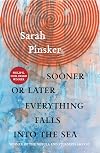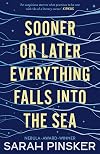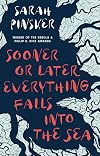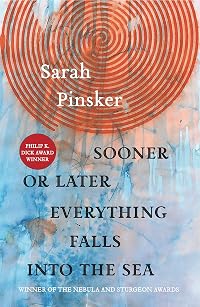
Sooner or Later Everything Falls Into the Sea: Stories
by Sarah Pinsker
On This Page
Description
A wide-ranging debut collection from a writer whose musicality and humor shine through even when plumbing the darkest depths of space.Tags
Recommendations






Member Reviews
Overall, a great collection of SF short stories. I didn’t care much for the first three or four, which tended toward very short koan-like weird little stories of the sort I dislike that present little vignettes without resolution. Just, “here’s this weird situation. Isn’t it sad/ironic/outrageous?” But then we get to the longer stories with more meat on their bones, and they tended to be terrific, stories with plot and character development and the sorts of narrative things I like. These were some of my favorites:
"The Low Hum of Her" - A more contemporary golem story. Touching. ****
"In Joy, Knowing the Abyss Behind" - A heart-rending story of a marriage and a burden of guilt and a missed chance but ultimately about love. show more *****
"Wind Will Rove" - The travelers on a generational ship are torn between preserving and forgetting the past, and a history teacher considers what’s worth saving and why. ****
"Our Lady of the Open Road" - In the near, not necessarily dystopic but certainly bleak future, a band perpetually on the road, going from one dive or make-shift live-music venue to the next in their barely legal cooking grease–powered van, stay true to their punk values in the face of the rise of holographic performances. ****1/2
"The Narwhal" - A gig worker takes a job driving what turns out to be a rather extraordinary whale of a car. It won me over with this: “Scenic routes would take too long, even the kind you drove through on your way to your destination. Ditto state parks and national monuments and reptile museums. She added them to her collection, for another trip she’d take someday. She’d spend two months, she told herself. She’d stop at every historic house, every kitschy roadside attraction. Every single one.” I really felt that. ****
"And Then There Were (N-One)" - Last but not least, a murder mystery. The protagonist gets an invitation to SarahCon, traveling through a multiverse portal to a hotel on a remote island where hundreds of Sarah Pinskers from alternate realities congregate. When one of the Sarahs turns up dead, hundreds of other Sarahs are suspects. Cleverly plotted, but best for its philosophical look at the roads not taken.
Some wry easter eggs from this alternate-reality story:
“Two of the awards looked like they had the shape to be the murder weapon, and one of them looked like it had the weight as well: the Nebula, a three-dimensional rectangular block of Lucite, shot through with stars and planets.”
“The rest of the bag was filled with the usual odds and ends I carried: pens, gum, emergency flashlight, loose change. A dog-eared paperback novel called Parable of the Trickster.”
***** show less
"The Low Hum of Her" - A more contemporary golem story. Touching. ****
"In Joy, Knowing the Abyss Behind" - A heart-rending story of a marriage and a burden of guilt and a missed chance but ultimately about love. show more *****
"Wind Will Rove" - The travelers on a generational ship are torn between preserving and forgetting the past, and a history teacher considers what’s worth saving and why. ****
"Our Lady of the Open Road" - In the near, not necessarily dystopic but certainly bleak future, a band perpetually on the road, going from one dive or make-shift live-music venue to the next in their barely legal cooking grease–powered van, stay true to their punk values in the face of the rise of holographic performances. ****1/2
"The Narwhal" - A gig worker takes a job driving what turns out to be a rather extraordinary whale of a car. It won me over with this: “Scenic routes would take too long, even the kind you drove through on your way to your destination. Ditto state parks and national monuments and reptile museums. She added them to her collection, for another trip she’d take someday. She’d spend two months, she told herself. She’d stop at every historic house, every kitschy roadside attraction. Every single one.” I really felt that. ****
"And Then There Were (N-One)" - Last but not least, a murder mystery. The protagonist gets an invitation to SarahCon, traveling through a multiverse portal to a hotel on a remote island where hundreds of Sarah Pinskers from alternate realities congregate. When one of the Sarahs turns up dead, hundreds of other Sarahs are suspects. Cleverly plotted, but best for its philosophical look at the roads not taken.
Some wry easter eggs from this alternate-reality story:
“Two of the awards looked like they had the shape to be the murder weapon, and one of them looked like it had the weight as well: the Nebula, a three-dimensional rectangular block of Lucite, shot through with stars and planets.”
“The rest of the bag was filled with the usual odds and ends I carried: pens, gum, emergency flashlight, loose change. A dog-eared paperback novel called Parable of the Trickster.”
***** show less
The whole point of me reading all the Hugo finalists every year was to expose myself to what's happening in contemporary sf. It's given me some good novelists to follow, but when it comes to short sf, my favorite discovery has been Sarah Pinsker, whose "And Then There Were (N-One)" captivated me, and which I reckon deserved to win Best Novella in 2018. This collection brings together thirteen of her short stories, a small sampling of her prolific oeuvre (as of 2018, she had published 45 short works).
Pinsker's writing tends to the literary, which is to my taste. A lot of these are subtle stories, where the sf element isn't the focus as much as the characters. "Talking with Dead People," for example, is about a woman who makes interactive show more replicas of houses where famous murders happened, and the only sf element is the AI that makes interactivity possible. Or "In Joy, Knowing the Abyss Behind" is about a marriage, and the sf element is super-slight (and also a spoiler, so I won't say it). And in "The Narwhal," the sf element is buried at the end and not particularly clear. Except for "Narwhal," though, this approached worked for me. Especially "In Joy": the sf element is small, sure, and you could probably take it out and have a story almost as moving, but it adds something, an immensity to the themes and ideas of the story.
Other stories are more blatantly sf. "And We Were Left Darkling" is a beautifully creepy story about alien babies coming to Earth. "Wind Will Rove" is a story about a generation ship and the role of cultural memory. (I thought this was just okay when it was a finalist for Best Novelette, and ranked it fourth, but on rereading, I think I did it a disservice. It has more to say than some of the stories I ranked over it.) This is the third time I've read "And Then There Were (N-One)," and it's still brilliant: a postmodern murder mystery set at a convention of alternate reality duplicates of Sarah Pinsker, a clever meditation on identity and self.
Lots of stories here deal with music and/or climate change. The aforementioned "Wind Will Rove" is one that deals with both, but so do the title story and "Our Lady of the Open Road." "Sooner or Later Everything Falls into the Sea" is about two women in a world where rising sea levels have taken their toll; one is a musician on the cruise ships the wealthy use to avoid consequences. It's a great story of friendship and adversity. "Our Lady" is about one of the last live bands in a world where holographic recordings and plague have made concerts a relic of the past; again, it's a great, well-observed story about holding on to what's meaningful, and learning to let go of what's not. I'm a little skeptical about stories about music (they sometimes get very self-indulgent, I think), but Pinsker excels with this as her topic, and almost makes me want to buy her forthcoming novel about a band. Almost.
They aren't all hits, of course. Some I found a little too abstruse, or there wasn't enough story-- I didn't really get the opening story, "A Stretch of Highway Two Lanes Wide," while "The Low Hum of Her" (a girl and her robot grandmother) and "The Sewell Home for the Temporally Displaced" (what the title says) seemed like they had promising premises, but didn't really deliver on them. But on the whole, this is a great book. Pinsker is a master of the short sf form, and if she publishes more collections, you can bet I will buy them. show less
Pinsker's writing tends to the literary, which is to my taste. A lot of these are subtle stories, where the sf element isn't the focus as much as the characters. "Talking with Dead People," for example, is about a woman who makes interactive show more replicas of houses where famous murders happened, and the only sf element is the AI that makes interactivity possible. Or "In Joy, Knowing the Abyss Behind" is about a marriage, and the sf element is super-slight (and also a spoiler, so I won't say it). And in "The Narwhal," the sf element is buried at the end and not particularly clear. Except for "Narwhal," though, this approached worked for me. Especially "In Joy": the sf element is small, sure, and you could probably take it out and have a story almost as moving, but it adds something, an immensity to the themes and ideas of the story.
Other stories are more blatantly sf. "And We Were Left Darkling" is a beautifully creepy story about alien babies coming to Earth. "Wind Will Rove" is a story about a generation ship and the role of cultural memory. (I thought this was just okay when it was a finalist for Best Novelette, and ranked it fourth, but on rereading, I think I did it a disservice. It has more to say than some of the stories I ranked over it.) This is the third time I've read "And Then There Were (N-One)," and it's still brilliant: a postmodern murder mystery set at a convention of alternate reality duplicates of Sarah Pinsker, a clever meditation on identity and self.
Lots of stories here deal with music and/or climate change. The aforementioned "Wind Will Rove" is one that deals with both, but so do the title story and "Our Lady of the Open Road." "Sooner or Later Everything Falls into the Sea" is about two women in a world where rising sea levels have taken their toll; one is a musician on the cruise ships the wealthy use to avoid consequences. It's a great story of friendship and adversity. "Our Lady" is about one of the last live bands in a world where holographic recordings and plague have made concerts a relic of the past; again, it's a great, well-observed story about holding on to what's meaningful, and learning to let go of what's not. I'm a little skeptical about stories about music (they sometimes get very self-indulgent, I think), but Pinsker excels with this as her topic, and almost makes me want to buy her forthcoming novel about a band. Almost.
They aren't all hits, of course. Some I found a little too abstruse, or there wasn't enough story-- I didn't really get the opening story, "A Stretch of Highway Two Lanes Wide," while "The Low Hum of Her" (a girl and her robot grandmother) and "The Sewell Home for the Temporally Displaced" (what the title says) seemed like they had promising premises, but didn't really deliver on them. But on the whole, this is a great book. Pinsker is a master of the short sf form, and if she publishes more collections, you can bet I will buy them. show less
This collection of Sarah Pinsker's stories includes several with a minimum of near-future speculation, set in the likely advances of technology and the unraveling of our civilization. There are a few outright fantasies riffing on established mythemes: golem, sirens, costumed superheroine. There is one story set on an interstellar generation ship, and one is a locked-room murder mystery at an inter-dimensional hotel conference.
Pinsker is a musician, and this attribute is key to several of her protagonists, particularly in the longer stories. The murder mystery "And Then There Were (N-One)" has the author's identity reflected into the prohibitive majority of its many characters, and thus may serve as an allegory of her writing process. show more The emotional richness of her stories must be a projective result of introspection. In the generation ship story "Wind Will Rove," music serves as an emblem of the complex relationship between cultural continuity and creativity.
The focus on the moral dilemmas of characters in transformed worlds was central to many of these stories. "Remembery Day" is one I could easily imagine being written by James Morrow. Although there is a recurrent sense of whimsy, all of these stories are within reach of a deep vein of sadness. I was especially impressed with the piece "In Joy, Knowing the Abyss Behind," for the way that it managed to evoke a positive emotional tone at the end of a tale of sorrow compounded through reminiscence.
On the whole, this is an admirable assortment of stories. I think they will speak powerfully to any intelligent reader, not just genre fans. show less
Pinsker is a musician, and this attribute is key to several of her protagonists, particularly in the longer stories. The murder mystery "And Then There Were (N-One)" has the author's identity reflected into the prohibitive majority of its many characters, and thus may serve as an allegory of her writing process. show more The emotional richness of her stories must be a projective result of introspection. In the generation ship story "Wind Will Rove," music serves as an emblem of the complex relationship between cultural continuity and creativity.
The focus on the moral dilemmas of characters in transformed worlds was central to many of these stories. "Remembery Day" is one I could easily imagine being written by James Morrow. Although there is a recurrent sense of whimsy, all of these stories are within reach of a deep vein of sadness. I was especially impressed with the piece "In Joy, Knowing the Abyss Behind," for the way that it managed to evoke a positive emotional tone at the end of a tale of sorrow compounded through reminiscence.
On the whole, this is an admirable assortment of stories. I think they will speak powerfully to any intelligent reader, not just genre fans. show less
 This review was written for LibraryThing Early Reviewers.
This is quite contemporary in many of its assumptions and interests, but also felt comfortably familiar in tone and style to a one-time reader of old-school SF by the likes of Asimov, Wyndham, Bradbury, and le Guin. Paranormal experiences, human-robot encounter, secret alien visitation, interstellar colonization, cyberculture and counterculture, post-collapse society: it's all here, but with a recurrent slightly geeky interest in music, and a tacit assumption that a female character is just as likely to have a female partner as a male one (perhaps more likely). One tale explicitly hangs off the bigendered experience of an intersex protagonist. I picked it off the library shelf simply because I was intrigued by the title, but it was show more definitely a worthy read. MB 20-xii-2024 show less
I received this galley through LibraryThing Early Reviewers.
Sarah Pinsker is among my favorite writers, and I was thrilled to read her new collection from Small Beer Press a few months in advance of release. When I say she's among my favorites, that also means I'd read most of the stories in this book before; four were new to me, but one sees its first publication in this book.
All of these stories are worth re-reading. Actually, they are worth studying on a technical level to understand why stories work. Pinsker doesn't write about big drama. She writes about people being people in sometimes extraordinary circumstances. There's a sense of subtlety to her works. In "A Stretch of Highway Two Lanes Wide," a man loses his arm, and along show more with his prosthetic he gains an awareness of being a road in remote Colorado. "Remembery Day" addresses PTSD and the effects of war on the next generation, without ever becoming preachy. In "And Then There were (n-one)," one of my very favorite novellas, period, she brings a brilliant spin to Agatha Christie's "And Then There Were None" by envisioning a cross-dimensional conference of hundreds of Sarah Pinskers on an isolated island in a storm--and one of them is murdered.
Because of this collection, I started my document to track my favorite 2019 releases to nominate for awards in 2020. Yes, this collection is that good. show less
Sarah Pinsker is among my favorite writers, and I was thrilled to read her new collection from Small Beer Press a few months in advance of release. When I say she's among my favorites, that also means I'd read most of the stories in this book before; four were new to me, but one sees its first publication in this book.
All of these stories are worth re-reading. Actually, they are worth studying on a technical level to understand why stories work. Pinsker doesn't write about big drama. She writes about people being people in sometimes extraordinary circumstances. There's a sense of subtlety to her works. In "A Stretch of Highway Two Lanes Wide," a man loses his arm, and along show more with his prosthetic he gains an awareness of being a road in remote Colorado. "Remembery Day" addresses PTSD and the effects of war on the next generation, without ever becoming preachy. In "And Then There were (n-one)," one of my very favorite novellas, period, she brings a brilliant spin to Agatha Christie's "And Then There Were None" by envisioning a cross-dimensional conference of hundreds of Sarah Pinskers on an isolated island in a storm--and one of them is murdered.
Because of this collection, I started my document to track my favorite 2019 releases to nominate for awards in 2020. Yes, this collection is that good. show less
This review was written for LibraryThing Early Reviewers.Sooner or Later Everything Falls into the Sea - what a genius title! It captures the theme of every story in this collection, all written by Sarah Pinsker. Actually, only a third of the thirteen stories have anything to do with water: "And We Were Left Darkling”, in which wished-for babies appear on rocks near the sea shore; “Sooner or Later Everything Falls into the Sea”, in which a castaway from a shipwreck is very reluctantly rescued; "No Lonely Seafarer", with sirens (yep, the mythological variety) harassing a town which makes its living from the sea; and “The Narwhale”. That last story actually has nothing to do with the sea except that a car who plays a major role in the plot has been decked-out with a fiberglass body of show more a whale, the tail curling up over the back end and a ten-foot unicorn horn deployed above the windshield. Really, water and the sea only play incidental roles in those four stories.
The genius in the title lies in the metaphor. "Everything" changes the lens from the local and specific to the general, practically inviting a metaphorical reading. "Sooner or Later" adds in the notion of time and inevitability. "Falls into the Sea" is deliciously ambiguous: it can be interpreted somewhat optimistically as a return to the origin, or in the more common manner as the demise of something, its loss. Both are true in each of the stories. They all deal with loss of things dear to the characters, from lovers lost (the title story) to livelihoods ("No Lonely Seafarer") to privacy (a nice critique on social media in "Talking with Dead People") to memory ("Remembery Day") and more - AI and robotics, Golems, time, multiple dimensions, musical instruments, creativity and remorse.
However, the optimistic note also plays in each of the stories. Returning to an origin, to a place of comfort, to a family or community, to a resolution, frames a recovery from the loss in each of the stories. This collection explores the dynamics of many kinds of loss and recovery, happening to all kinds of people living in circumstances ranging from the normal and contemporaneous (a rock band on the road who gets an important piece of equipment stolen - "Our Lady of the Open Road") to the just plain weird (a detective in a murder investigation where she, the victim, and all the suspects are the same person, just each from different dimensions - "And Then There Were (N-One)")
In my view, the optimism wins out and the stories, even though they deal with loss, are also somehow comforting. I’m looking forward to the day when my initial impressions have dissipated with time and I can reread these stories, savoring each fully again!
I received a free copy of this book from the publisher in exchange for an honest review. show less
The genius in the title lies in the metaphor. "Everything" changes the lens from the local and specific to the general, practically inviting a metaphorical reading. "Sooner or Later" adds in the notion of time and inevitability. "Falls into the Sea" is deliciously ambiguous: it can be interpreted somewhat optimistically as a return to the origin, or in the more common manner as the demise of something, its loss. Both are true in each of the stories. They all deal with loss of things dear to the characters, from lovers lost (the title story) to livelihoods ("No Lonely Seafarer") to privacy (a nice critique on social media in "Talking with Dead People") to memory ("Remembery Day") and more - AI and robotics, Golems, time, multiple dimensions, musical instruments, creativity and remorse.
However, the optimistic note also plays in each of the stories. Returning to an origin, to a place of comfort, to a family or community, to a resolution, frames a recovery from the loss in each of the stories. This collection explores the dynamics of many kinds of loss and recovery, happening to all kinds of people living in circumstances ranging from the normal and contemporaneous (a rock band on the road who gets an important piece of equipment stolen - "Our Lady of the Open Road") to the just plain weird (a detective in a murder investigation where she, the victim, and all the suspects are the same person, just each from different dimensions - "And Then There Were (N-One)")
In my view, the optimism wins out and the stories, even though they deal with loss, are also somehow comforting. I’m looking forward to the day when my initial impressions have dissipated with time and I can reread these stories, savoring each fully again!
I received a free copy of this book from the publisher in exchange for an honest review. show less
This review was written for LibraryThing Early Reviewers.It is a rare collection where I love every story -- this is very close to being that rare collection. A few of these stories I've read before, but even the two I knew already I'd read were still a joy to read. The stories are a glorious mish-mash of ideas and settings, but every single one is full of rich detail and glorious characters. As a collection, it works beautifully.
Normally, I try and pull out a few notable stories from a collection. But I loved them all, so I'm just going to work through them in order.
A stretch of highway two lanes wide and And we were left darkling were quirky, and cute, and short, although a bit dark future-ish. Remembery Day was heart breaking, about the way that society treats veterans, and who lets show more them.
The titular story is fourth, and manages to be cosy, and domestic, and post-apocalyptic. I'm very fond of post-apocalyptic stories, and this one is all too credible. This segues into two stories (The Low Hum of Her; Talking with dead people) that appear to be about what makes someone human, with the first a positive story (content warning: although I can find no specific references, this story very much reads as a Jewish family escaping Europe in WWII) and the second very creepy.
The Sewell Home for the temporally displaced is another quirky one, with just a touch of time travel, and very very short. In joy, leaving the abyss behind is quite a bit longer, and best read with some tissues to hand.
No lonely place is an interesting take on sirens, gender, and sexuality. Wind will rove is one of the rereads - about the utility of history, with some commentary on preserving it at the cost of the present. A real love for music shines through this story.
Our Lady of the open road might be my least favourite of these stories, but that isn't saying much. It is just a bit bleak about what it means to be punk, and stay true to that. And it does a very good job of instilling despair. Fortunately, it is followed up by The Narwhal which is a combination of road trip and something much less mundane.
The final story is And then there were (N-one). This might be the first Pinsker story I read -- certainly the most memorable of the ones that I have. Another long one, it does interesting things with story, alternative realities, and the many possible lives of Sarah Pinsker. show less
Normally, I try and pull out a few notable stories from a collection. But I loved them all, so I'm just going to work through them in order.
A stretch of highway two lanes wide and And we were left darkling were quirky, and cute, and short, although a bit dark future-ish. Remembery Day was heart breaking, about the way that society treats veterans, and who lets show more them.
The titular story is fourth, and manages to be cosy, and domestic, and post-apocalyptic. I'm very fond of post-apocalyptic stories, and this one is all too credible. This segues into two stories (The Low Hum of Her; Talking with dead people) that appear to be about what makes someone human, with the first a positive story (content warning: although I can find no specific references, this story very much reads as a Jewish family escaping Europe in WWII) and the second very creepy.
The Sewell Home for the temporally displaced is another quirky one, with just a touch of time travel, and very very short. In joy, leaving the abyss behind is quite a bit longer, and best read with some tissues to hand.
No lonely place is an interesting take on sirens, gender, and sexuality. Wind will rove is one of the rereads - about the utility of history, with some commentary on preserving it at the cost of the present. A real love for music shines through this story.
Our Lady of the open road might be my least favourite of these stories, but that isn't saying much. It is just a bit bleak about what it means to be punk, and stay true to that. And it does a very good job of instilling despair. Fortunately, it is followed up by The Narwhal which is a combination of road trip and something much less mundane.
The final story is And then there were (N-one). This might be the first Pinsker story I read -- certainly the most memorable of the ones that I have. Another long one, it does interesting things with story, alternative realities, and the many possible lives of Sarah Pinsker. show less
Members
- Recently Added By
Lists

Favorite Science Fiction by Women Authors
737 works; 202 members

Favorite Short Fiction
228 works; 99 members

Best Beach Reads
99 works; 61 members

2017 Hugo Eligible Novelettes
2 works; 1 member

Top Five Books of 2018
802 works; 265 members

Books Read in 2021
5,361 works; 114 members

Books With Water Words in the Title
186 works; 12 members

Books With the Most Memorable Titles
478 works; 158 members

Books That Made Us Cry
278 works; 145 members

Books We Discovered On LibraryThing
530 works; 130 members

Books With Complete Sentence Titles
501 works; 17 members
Author Information

34+ Works 1,608 Members
Sarah Pinsker is based in Baltimore, Maryland. She is the author of the novelette In Joy, Knowing the Abyss Behind. It won a 2014 Sturgeon Award. Her novelette Our Lady of the Open Road won the 2016 Nebula Award for Best Novelette. She is a singer/songwriter with three albums on various independent label. The third album was made with her rock show more band, the Stalking Horses. (Bowker Author Biography) show less
Awards and Honors
Awards
Notable Lists
Work Relationships
Contains
Common Knowledge
- Original publication date
- 2019-03-19
- Dedication
- To my parents, for feeding me stories.
- Blurbers
- Fowler, Karen Joy
- Disambiguation notice
- This work is the collection of stories by Sarah Pinsker. Please do NOT combine it with the entry for the story itself.
Classifications
Statistics
- Members
- 309
- Popularity
- 103,756
- Reviews
- 27
- Rating
- (4.15)
- Languages
- English
- Media
- Paper, Audiobook, Ebook
- ISBNs
- 9
- ASINs
- 4